RIYADH — Iran’s UN ambassador told the Security Council on May 1 that six Arab states — Saudi Arabia, the UAE, Bahrain, Qatar, Kuwait, and Jordan — owe Tehran reparations for enabling American and Israeli strikes that killed more than 3,375 Iranians and caused an estimated $270 billion in damage. The claim’s most remarkable feature is not the figure, which Tehran itself called “initial and very approximate,” but the evidentiary hook: Amir-Saeid Iravani cited Admiral Brad Cooper’s public praise of those same six nations as “exceptional teammates” in the CENTCOM campaign, converting a US military commendation into a UN liability document in a single paragraph.
The demand creates a mutually assured grievance ledger that structurally prevents any accountability-based ceasefire from being ratified by both Abu Dhabi and Riyadh simultaneously. The UAE wants Iran held liable for 2,819 missiles and drones; Iran wants the UAE held liable for hosting the strikes that provoked them. Saudi Arabia, named as a defendant by Iran but making no counter-claim of its own, is the quietest party in the room — and, as the evidence increasingly suggests, the most strategically positioned. This editorial maps how Iran’s reparations demand, far from strengthening Tehran’s negotiating hand, may have delivered precisely the diplomatic architecture Saudi Arabia needed: a grievance deadlock that makes accountability impossible and zero-accountability ceasefires the only viable exit.
Table of Contents
- How Did a Pentagon Commendation Become Iran’s Evidence at the UN?
- Why Did Iran Add Kuwait Between Its April and May Filings?
- What Is the Legal Basis for Iran’s Co-Belligerence Claim?
- The Cross-Claim Trap
- Why Has Saudi Arabia Filed No Counter-Claim Against Iran?
- Who Can Mediate When the Mediator Is a Defendant?
- Can Gulf Reparations Claims Ever Be Enforced?
- Frequently Asked Questions
How Did a Pentagon Commendation Become Iran’s Evidence at the UN?
The provenance of Iran’s reparations claim is, by any measure, one of the more improbable legal manoeuvres of the conflict — because the central piece of evidence was produced not by Iranian intelligence but by the United States Central Command’s own public affairs office. Admiral Brad Cooper, CENTCOM commander, publicly hailed Bahrain, the UAE, Saudi Arabia, Qatar, Kuwait, and Jordan as “exceptional teammates” who worked “side-by-side” with American forces during operations against Iran. The statement was routine military diplomacy, the kind of coalition-praise language that appears in press releases after every joint exercise, every shared intercept, every allied logistics contribution.
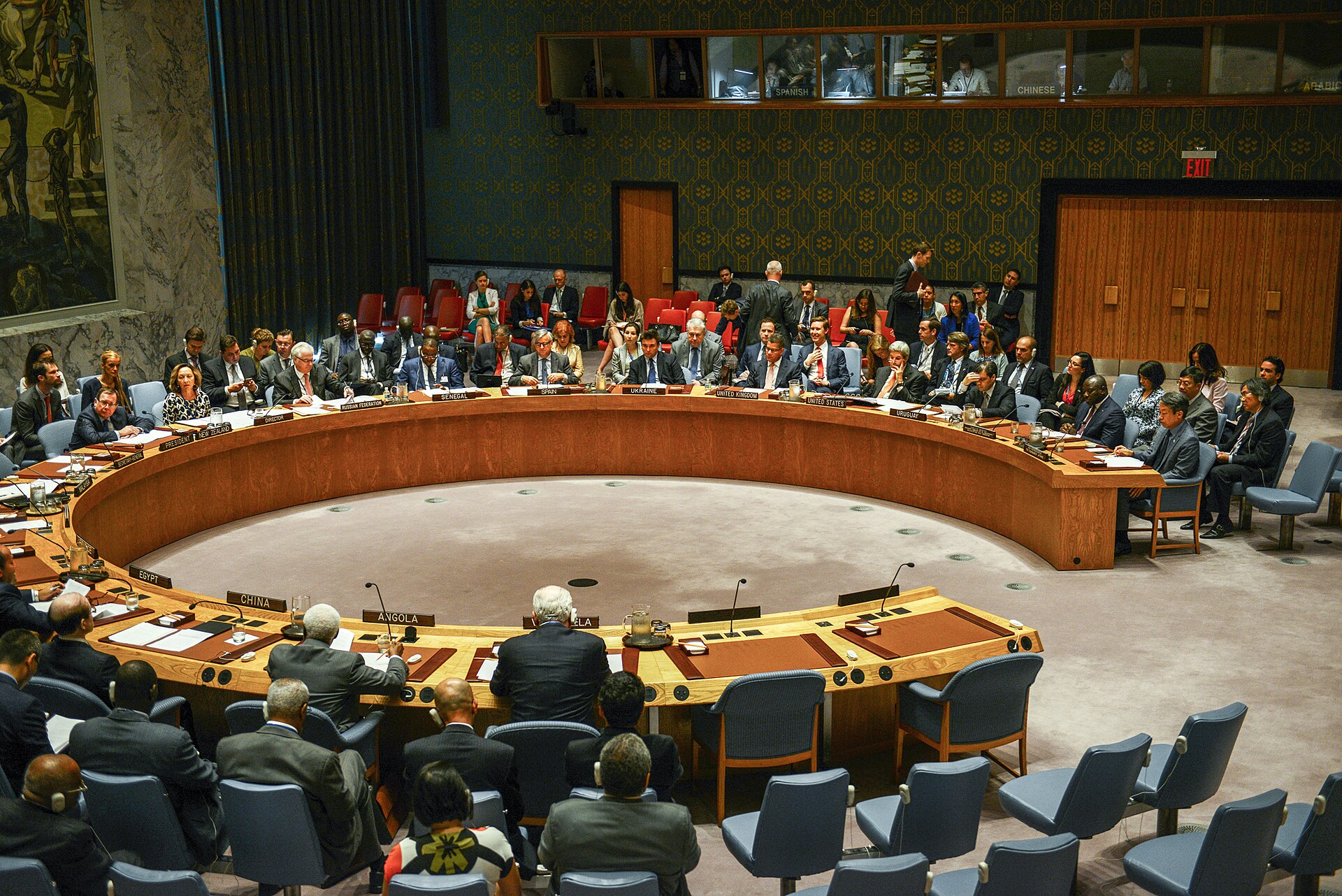
Iravani quoted it verbatim in his May 1 letter to the UN Secretary-General and the Security Council President. “All States whose internationally wrongful acts have played a role in the United States’ and the Israeli regime’s aggression against its sovereignty and territorial integrity must be held accountable,” Iravani wrote, before citing Cooper’s enumeration of “exceptional teammates” as evidentiary proof that the six states were not passive bystanders but active co-belligerents. The Pentagon, in attempting to credit its coalition partners, had produced the prosecution’s exhibit A.
The manoeuvre inverted a familiar logic — normally, an accused state denies involvement, and the accuser must prove participation. Iravani argued that the six states’ own denials, their insistence that “attacks were not launched from their territories,” “only serve to confirm that Iran has been targeted by aggressors operating from military bases situated within those States.” Denial, in Iravani’s framing, was itself an admission: the bases existed, the operations flew, and the host governments’ protestations of innocence merely confirmed the geography without contesting the material fact.
Whether this argument would survive a formal legal proceeding is a separate question — and, for Iran’s purposes, almost irrelevant. The letter was filed at the UN, not at the International Court of Justice. It establishes a negotiating position, not a binding claim, and its value lies less in its enforceability than in its architectural effect on every ceasefire framework currently under discussion, from Iran’s own 14-point proposal to the Islamabad track that Pakistan has been brokering since April.
The Middle East briefing 3,000+ readers start their day with.
One email. Every weekday morning. Free.
Why Did Iran Add Kuwait Between Its April and May Filings?
Iran’s reparations demand did not arrive fully formed. The April 14 letter, reported by PressTV and The National, named five states — Saudi Arabia, the UAE, Bahrain, Qatar, and Jordan. The May 1 letter added Kuwait, expanding the defendant list to six, and the escalation was not arbitrary: it tracked, with a precision that suggests deliberate legal engineering, the exact roster Admiral Cooper had praised as “exceptional teammates.”
Kuwait’s addition closed the gap between Iravani’s legal filing and CENTCOM’s public record. Cooper named six states; Iran’s April letter covered five of them; the May letter matched the list exactly, as though checking off names from a Pentagon press release and converting each commendation into a liability entry. Kuwait’s own UN ambassador, Naser Abdullah Alhayen, had warned in March that the Gulf faced “an existential threat to international and regional security” — language that, in Iravani’s reading, constituted a self-identification as a participant in a conflict rather than a bystander observing one.
The inclusion of Jordan on both letters is equally instructive. Jordan is not a Gulf state, has no Hormuz-adjacent coastline, and was not directly in the line of Iranian fire. Its presence signals that Iran’s liability theory extends beyond geography to function: any state that provided basing, airspace, or operational support qualifies as a co-belligerent, regardless of proximity to the Strait. Jordan co-signed the GCC’s collective defence declaration despite not being a GCC member, giving Iran the jurisdictional hook it needed to treat the coalition as a single legal entity.
When the six states issued a joint statement on March 26 reserving the right to take “all necessary measures” for self-defence under UN Charter Article 51, Iran’s legal response was that this collective invocation was itself void: states that facilitated the initial aggression cannot claim self-defence against the retaliation, Iravani argued, making the Article 51 declaration not a shield but — under Tehran’s theory — a signed confession.
What Is the Legal Basis for Iran’s Co-Belligerence Claim?
Iran’s legal citations were filed in diplomatic correspondence, not before a tribunal. They draw on three pillars of international law — none of which require a court to function as negotiating architecture, and all of which are textually defensible enough to sustain a deadlock even if they could never sustain a judgement.
The first is UNGA Resolution 3314 (1974), specifically Article 3(f), which defines as an act of aggression “the action of a State in allowing its territory, which it has placed at the disposal of another State, to be used by that other State for perpetrating an act of aggression against a third State.” Iran’s application is textually straightforward: the six states placed their territory at the disposal of the United States, which used it to strike Iranian soil, making the host governments parties to the aggression under the General Assembly’s own definition.
The second is the International Law Commission’s Articles on State Responsibility, particularly Article 16, which holds that a state aiding or assisting another state in an internationally wrongful act bears responsibility if it had knowledge of the circumstances. The knowledge threshold is, in practice, trivially met — the six states were not unaware that American fighter jets were flying from bases within their borders, and Cooper’s “exceptional teammates” language confirmed they were not merely aware but actively coordinating.
The third, and least conventional, is Iravani’s inversion of Article 51 itself. The six-state joint statement of March 26 explicitly invoked the right of self-defence under the UN Charter; Iravani treated the invocation as a legal admission of participation, arguing that you cannot claim self-defence when your contribution to the initial aggression disqualifies you from invoking it. It is a circular argument, but it is precisely the kind of circular argument that bogs down ceasefire negotiations for years, because resolving it requires first agreeing on who attacked whom and when the conflict began — the one question no party to this war can answer identically.
Whether these arguments would survive a formal legal proceeding is, for Iran’s purposes, almost irrelevant. What matters is whether they are strong enough to prevent consensus on accountability — and the answer to that question is unambiguous. A joint letter signed by over 100 international law experts in April, stating that the February 28 US-Israeli strikes violated the UN Charter without evidence of imminent threat, gave Tehran’s claims an academic foothold well beyond its own diplomatic submissions.
The Cross-Claim Trap
The structural absurdity of the reparations standoff becomes visible when the competing demands are placed side by side — not as legal arguments to be adjudicated, but as negotiating positions that, by their nature, cannot coexist in any settlement framework that requires mutual ratification.
| Dimension | Iran’s Claim (May 1) | UAE’s Counter-Claim (March 29) |
|---|---|---|
| Defendants | Saudi Arabia, UAE, Bahrain, Qatar, Kuwait, Jordan | Iran |
| Legal basis | UNGA Res. 3314 Art. 3(f); ILC Art. 16 | Strict liability / premeditated aggression |
| Damage figure | $270 billion (self-assessed, “approximate”) | ~$6 billion (third-party estimate) |
| Casualty basis | 3,375+ killed; 125,630 structures damaged | 13 killed; 221 injured |
| Core argument | Host states enabled aggression | Iran’s strikes were premeditated |
| Enforcement mechanism | Hormuz transit tolls (14-point proposal) | None specified |
| Filed at | UN Secretary-General / Security Council | UNHRC resolution (non-binding) |
The UAE formally declared Iran “fully liable for damages and reparations” for 2,819 missiles and drones fired over 40 days of conflict. Anwar Gargash, the UAE’s presidential diplomatic adviser, called the strikes “a premeditated plan, not a decision made in 24 or 48 hours” — language calibrated to establish strict liability by proving intent, the same evidentiary standard used in the highest-stakes tort litigation. Iran, moving in the opposite direction, demands reparations from the UAE as one of six co-belligerents whose territory hosted the American strikes that started the war in the first place.
The UAE is simultaneously plaintiff and defendant, suing and being sued, in a conflict where no court has jurisdiction and no enforcement mechanism exists. This is not a conventional diplomatic standoff — it is a mutually assured grievance ledger in which each side’s claim validates the other’s refusal to concede, and any attempt to adjudicate one claim requires first resolving the competing claim that contradicts it. The UAE cannot accept Iran’s liability theory without undermining its own demand; Iran cannot accept the UAE’s accountability framework without conceding that its retaliation was disproportionate.
“Unfortunately, the GCC’s position is the weakest in history, considering the nature of the attack and the threat it poses to everyone.”— Dr Anwar Gargash, UAE Presidential Diplomatic Adviser, April 27, 2026
That admission, from the UAE’s own diplomatic architect, is a measure of how far the reparations deadlock has eroded whatever collective bargaining power the Gulf states once possessed. Abu Dhabi cannot build a coalition for Iranian accountability when half its potential allies are named as defendants in Iran’s counter-claim — and the UAE’s ambassador to the US, insisting that “a simple ceasefire is not enough,” has staked a position that demands accountability as a precondition for any settlement, making the cross-claim trap not a temporary inconvenience but a structural feature of the negotiations themselves.
Why Has Saudi Arabia Filed No Counter-Claim Against Iran?
Saudi Arabia absorbed hundreds of Iranian missile and drone strikes during the conflict. Ras Tanura oil infrastructure was hit. March production crashed from 10.4 million barrels per day to 7.25 million — a 30 percent collapse that the IEA called “the largest disruption on record.” The Eastern Province took direct ballistic missile fire, the King Fahd Causeway was shut when seven missiles hit early on April 7, and the kingdom’s Asian crude exports fell 38.6 percent according to Kpler tracking data. By any material measure, Saudi Arabia has a reparations case at least as strong as the UAE’s.
Riyadh has filed no reparations demand against Iran, issued no liability declaration, endorsed no accountability framework, and joined no counter-claim. The Saudi ambassador to the UNHRC in March said only that “to target a neighbour is a violation of the principles of good neighbourly relations” — a statement notable for what it omitted: no reparations language, no demand for compensation, no accountability architecture of any kind. ACLED’s April assessment captured the posture directly: “Saudi Arabia’s priority appears to be supporting the talks, with the minimum aim of reopening the Strait of Hormuz and securing guarantees against direct attacks.” The strategic logic behind that posture — and why Saudi Arabia cannot publicly endorse Project Freedom even as the convoy benefits Riyadh — is examined in depth in the two-chokepoint trap constraining Saudi Arabia.

This is not passivity — it is the most calculated silence in the Gulf since the war began, and Iran’s reparations demand made it structurally unassailable. By naming Saudi Arabia as a defendant, Tehran accomplished something the MBS government could not have done on its own initiative: it disqualified Riyadh from any accountability architecture without Riyadh having to vote against one. Saudi Arabia does not need to oppose the UAE’s demand for Iranian liability; it simply cannot participate in the adjudication, because it is named in the counter-claim.
The recusal is imposed from outside, and the effect — freedom from accountability commitments that would complicate Riyadh’s parallel diplomatic track with Tehran — is precisely what Saudi foreign policy required.
The behavioural evidence is consistent. Saudi Arabia’s foreign minister called Iranian counterpart Araghchi on April 13, the day the US naval blockade took effect, and again on April 27 — maintaining a backchannel that would be functionally impossible if Riyadh were simultaneously pursuing formal reparations. The private Iranian disclosure to Saudi interlocutors in early May, signalling intent to “crush the UAE,” further suggests that Tehran understood the Saudi-Emirati fracture and was actively targeting it, offering Riyadh intelligence about a mutual competitor while simultaneously naming it as a legal defendant — a combination that only works if both parties understand the reparations filing as diplomatic architecture rather than a genuine intention to collect.
The question the evidence cannot definitively answer, but which the pattern of Saudi silence strongly implies, is whether Riyadh anticipated that Iran’s reparations demand would provide this cover — or whether MBS simply recognised the gift when it arrived and had the discipline not to complicate it with a counter-claim of his own. Either reading confirms the same structural outcome: Saudi Arabia’s zero-accountability posture, which would have been diplomatically costly to maintain against Emirati pressure alone, is now imposed by the geometry of competing claims rather than by Saudi choice, and that distinction matters enormously when the UAE-Saudi relationship is already under strain from Abu Dhabi’s unilateral OPEC exit on May 1.
Who Can Mediate When the Mediator Is a Defendant?
The reparations claims have not merely complicated ceasefire negotiations — they have structurally disqualified most of the parties who would ordinarily broker them. Saudi Arabia is a named defendant. The UAE is locked in a cross-claim. Bahrain, Qatar, Kuwait, and Jordan are all on Iran’s list. Oman co-sponsored the March 25 UNHRC reparations resolution against Iran but simultaneously acknowledged that US-Israeli strikes “were the spark that ignited the escalation” — a split position that compromises its neutrality without securing its immunity from future Iranian filings.
Pakistan is the exception, and the exception is not a coincidence. Islamabad is not on Iran’s reparations list, hosts no US bases — the distinction that separates it from all six named states — and has positioned itself as the ceasefire’s operational broker since the Islamabad Accord framework emerged in April. Pakistan’s viability as mediator exists precisely because it has no reparations exposure. The Saudi-Pakistan SMDA signed in September 2025 makes Islamabad simultaneously Tehran’s interlocutor and Riyadh’s treaty ally, a dual role that functions only because Pakistan sits outside the liability architecture Iran has constructed.
But Pakistan’s capacity has visible limits. The Islamabad Accord has no enforcement clause. Pakistan’s 27th Constitutional Amendment means ceasefire diplomacy runs through Army Chief Munir’s office, not through the elected government — a structural constraint that makes the mediator’s mandate dependent on a single individual’s credibility with both the IRGC and the Saudi defence establishment. If reparations become a precondition for settlement, as Iran’s 14-point proposal demands, Pakistan has no mechanism to adjudicate cross-claims between states it cannot compel to the table.
Andrew Leber of the Carnegie Endowment noted that “Gulf commentary has publicly welcomed the ceasefire yet doubted whether it will hold.” The reparations deadlock explains the doubt: the ceasefire mechanism requires a mediator, but the liability architecture has turned every potential mediator into a party to the dispute, and the one mediator who escaped — Pakistan — lacks the institutional authority to resolve the claims that created the deadlock. The result is a negotiating structure in which the parties who need a deal most urgently are the parties least able to broker one, a configuration that Iran’s fractured command structure makes even harder to navigate.
Can Gulf Reparations Claims Ever Be Enforced?
The precedent that haunts every reparations demand in this conflict is the UN Compensation Commission, established after Iraq’s 1990 invasion of Kuwait. The UNCC processed 2,686,131 claims with an asserted value of $352.5 billion, awarding $52.4 billion — and Iraq made its final payment in January 2022, a full 31 years after the invasion that triggered the claims. The process required three conditions: a Chapter VII Security Council mandate, a clearly defeated state, and UN-supervised oil revenues from which payments could be deducted over decades.
None of those conditions exist in 2026, and none of them can be created by the parties currently filing claims. Iran has not been defeated; Saudi Arabia is not a defeated state. Russia and China would veto any compensation framework that targeted Iran; the United States would veto any that targeted its coalition partners. The Security Council architecture that made the UNCC possible — a rare alignment of all five permanent members against a single universally condemned aggressor — is not merely absent but structurally impossible in a conflict where the P5 are distributed across both sides of the war.
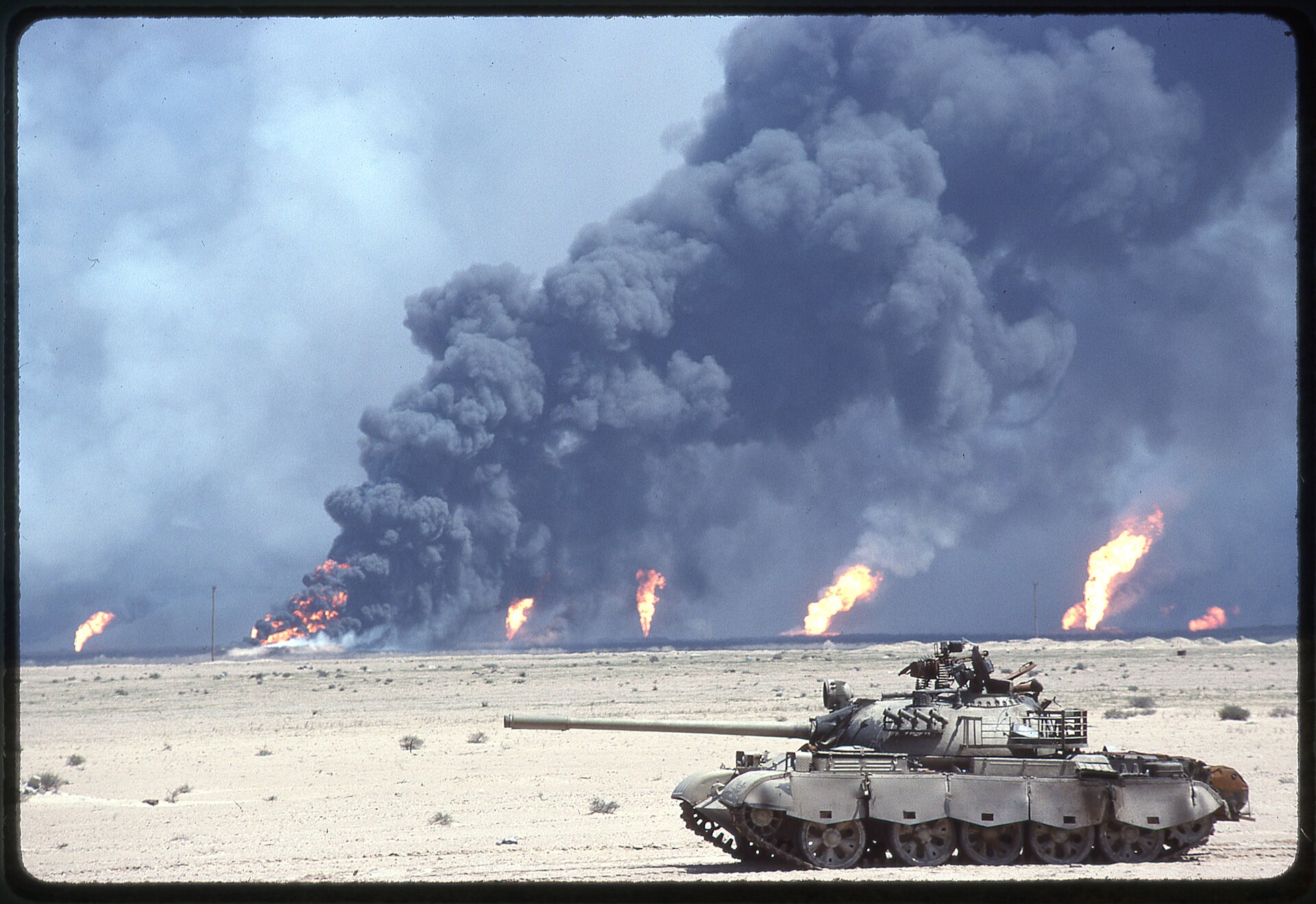
The more directly analogous precedent is the Iran-Iraq war of 1980-88, and it is worse. Iran pursued reparations claims against Iraq through the UN Secretary-General’s office for decades after the ceasefire, but no functioning tribunal was ever established and no payments were ever made. Iraq subsequently paid $52.4 billion to Kuwait via the UNCC but paid zero to Iran for a war that killed an estimated 500,000 Iranians — an asymmetry that Tehran has manifestly not forgotten and that informs every reparations demand it makes in the current conflict. Two states with mutual grievances, no clear victor, no enforcement mechanism, and three decades of unresolved claims: the 1988 template is the 2026 structural analogue.
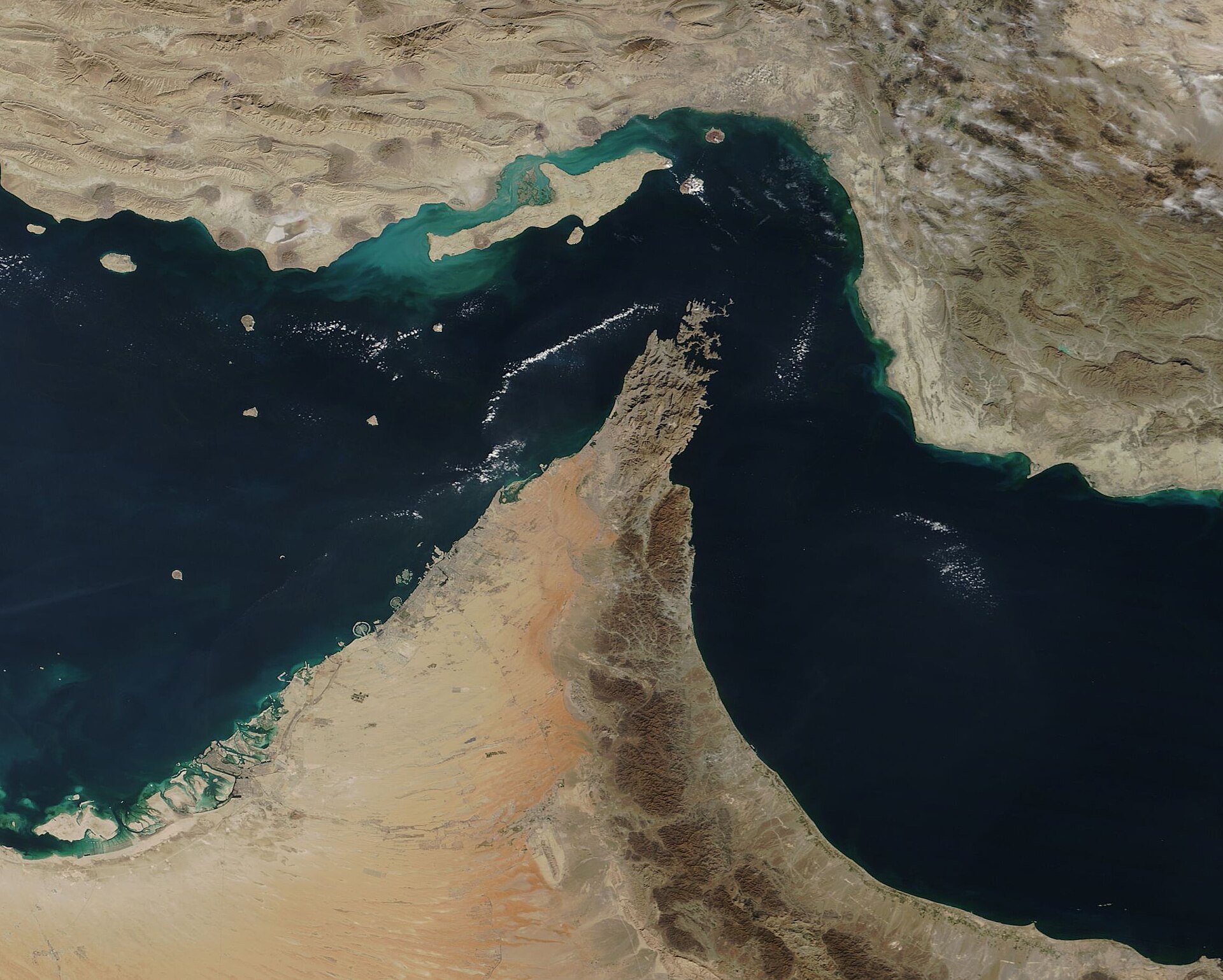
Daniel Byman of CSIS identified the operational workaround Iran has devised: rather than pursuing reparations through a tribunal that does not exist, Iran “will demand payment for tankers seeking to transit the Strait of Hormuz,” embedding the reparations claim into the chokepoint pressure it already exerts. The 14-point proposal submitted May 1-2 makes this explicit — ships from “hostile countries” must pay war reparations as a condition of obtaining a transit permit through the Strait, operationalising the claim into a toll mechanism that Trump rejected on May 3 but that remains Iran’s most credible enforcement architecture. The Hormuz toll is not a legal remedy; it is an extrajudicial one, and it is the only reparations mechanism in this conflict with an enforcement infrastructure already in place — the IRGC Navy, which controls the Strait regardless of what any tribunal might eventually decide. The architecture is operational, not theoretical: on May 4, as Project Freedom’s first US-escorted convoy completed its transit, IRGC drones struck ADNOC’s M.V. Barakah tanker 78 nautical miles north of Fujairah — demonstrating that non-escorted UAE state vessels remain subject to Iranian enforcement irrespective of what convoy protection Washington can provide.
“Under international law — if anyone still pays attention to such things — the Iranians have a strong case.”— Eugene Doyle, international law analyst, April 2026
The Doyle caveat — “if anyone still pays attention” — carries the weight of the whole dispute. Reparations in this conflict will not be adjudicated by a court, because no court has jurisdiction that all parties recognise. They will be settled, if they are settled at all, by the balance of coercion at the Strait, the appetite of external powers for enforcement, and the willingness of named defendants to accept liability in exchange for Hormuz access. Saudi Arabia’s refusal to enter a counter-claim is, in this context, the most rational response available: why participate in a legal architecture that cannot produce a verdict but can prevent a ceasefire, when silence achieves both immunity from accountability and freedom to negotiate a parallel track with the state that named you as a defendant?
Frequently Asked Questions
Why did Iran file reparations demands at the UN rather than the International Court of Justice?
Filing at the ICJ requires either both parties’ consent to jurisdiction or a pre-existing treaty clause granting compulsory jurisdiction — neither of which exists between Iran and any of the six named states. UN General Assembly resolutions and Security Council letters require no such procedural prerequisites, which makes them ideal for establishing negotiating markers on the public record. Iran’s goal is diplomatic pressure and the structural disruption of ceasefire frameworks, not a judicial remedy that would take years to produce and could not be enforced even if it succeeded.
Has any state in history successfully collected reparations from a military coalition’s host nations?
No precedent exists for a reparations claim against a coalition’s basing states as co-belligerents. The closest historical parallel is the Treaty of Versailles (1919), which assessed reparations jointly against Germany and its allies — but those claims were imposed by victors on defeated states after a total military surrender, not filed by a combatant against its adversary’s support network during an active conflict. Iran’s approach, targeting the basing infrastructure rather than the striking power, is legally novel and has no enforcement template to draw on.
What happens to reparations claims if a ceasefire holds?
Claims persist regardless of ceasefire status — the UNCC operated for 31 years after the Gulf War ceasefire, and Iran’s reparations claims against Iraq from 1980-88 remain unresolved 38 years later. The practical question is whether reparations become a precondition for lifting Hormuz transit restrictions, in which case they actively prevent normalisation of shipping and energy markets, or whether they are parked as a permanent background grievance that both sides reference but neither enforces. Iran’s 14-point proposal links reparations directly to Hormuz transit permits, suggesting Tehran intends the former.
Could the UAE and Iran’s competing claims cancel each other out in a negotiated settlement?
Mutual cancellation — where both sides withdraw their claims as part of a comprehensive deal — is theoretically possible but practically requires both parties to abandon their core legal positions simultaneously, which neither has incentive to do first. The UAE has staked its post-war diplomatic identity on the “premeditated aggression” thesis that demands Iranian accountability, while Iran has framed the six-state claim as a matter of sovereignty and deterrence against future coalition operations from Gulf bases. Withdrawal by either side would be read domestically as conceding the other’s narrative of who started the war.