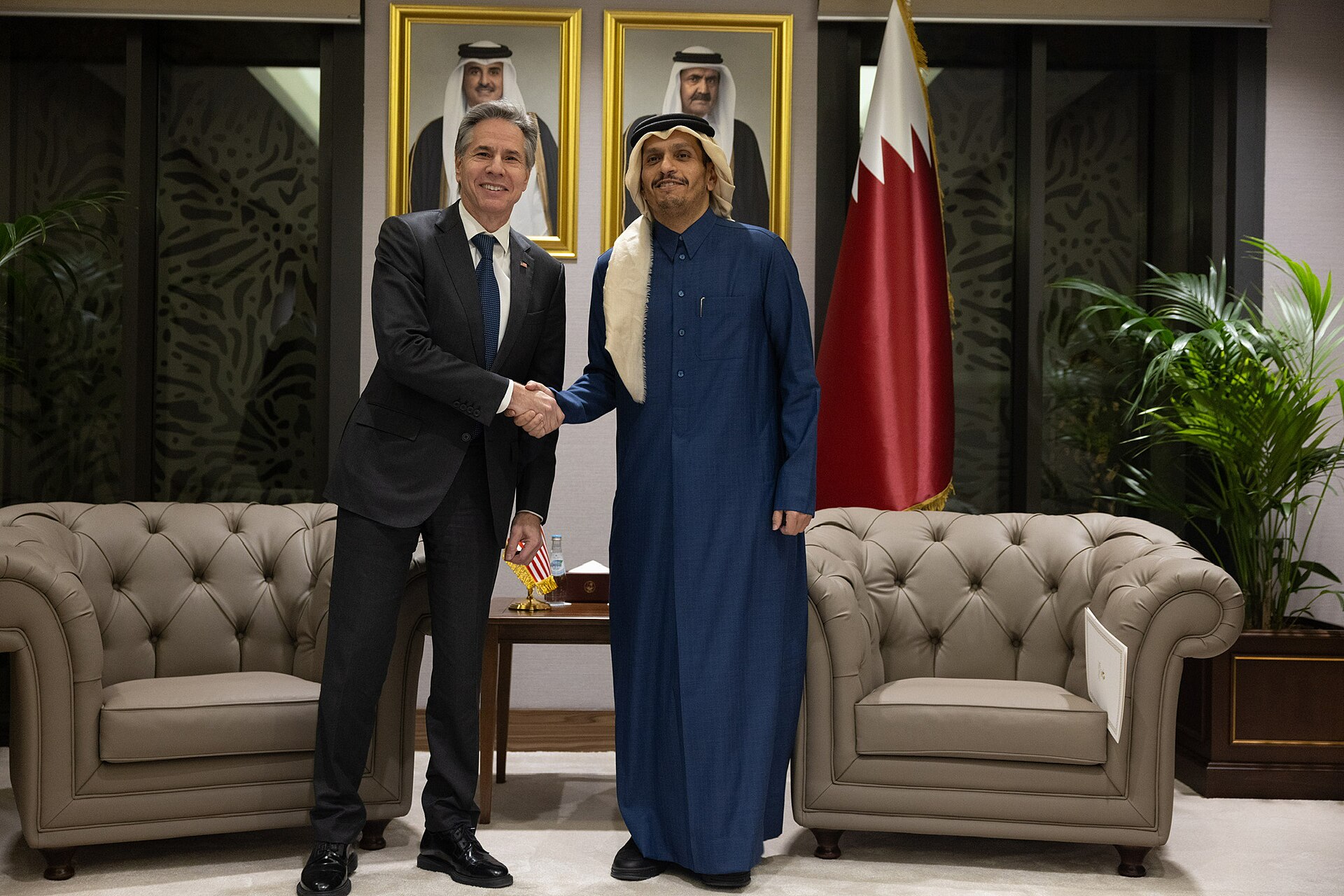
MUSCAT — The fourth round of US-Iran nuclear talks ended in Oman on May 11 with a communiqué so diplomatically anodyne — “difficult but useful” — that it functions as a confession: no breakthrough was produced, no memorandum signed, and no technical framework advanced, which means that when Donald Trump boards his plane for Riyadh in the coming days, Mohammed bin Salman will greet him not as the man who brokered a deal but as the man who publicly constrained American military power and has nothing to show for it. The forcing function was always the flight schedule, not the negotiating calendar — and the schedule was written in Washington, not Riyadh.
What the Muscat session revealed is not that diplomacy failed but that the talks were never structured to succeed before Trump’s Gulf visit. High-level delegations without technical negotiators do not produce compromise language on enrichment timelines; they produce political signals about who blinks first. Neither side blinked, and MBS now inherits the consequences of both outcomes simultaneously — credited with constraining American force projection, yet unable to deliver the diplomatic result that would justify the constraint.
Table of Contents
- What Happened in Muscat on May 11?
- The Enrichment Gap That Cannot Close
- Why Did Trump Call Iran’s Proposal ‘Totally Unacceptable’ the Day Before?
- Project Freedom and the Public Record
- How Does MBS Inherit the Liability?
- The Authorization Ceiling in Tehran
- What Does MBS Need From Trump’s Plane?
- The Fiscal Arithmetic of Being Indispensable
- The Flight Schedule as Forcing Function
- Oman as Messenger, Not Guarantor
- Frequently Asked Questions
What Happened in Muscat on May 11?
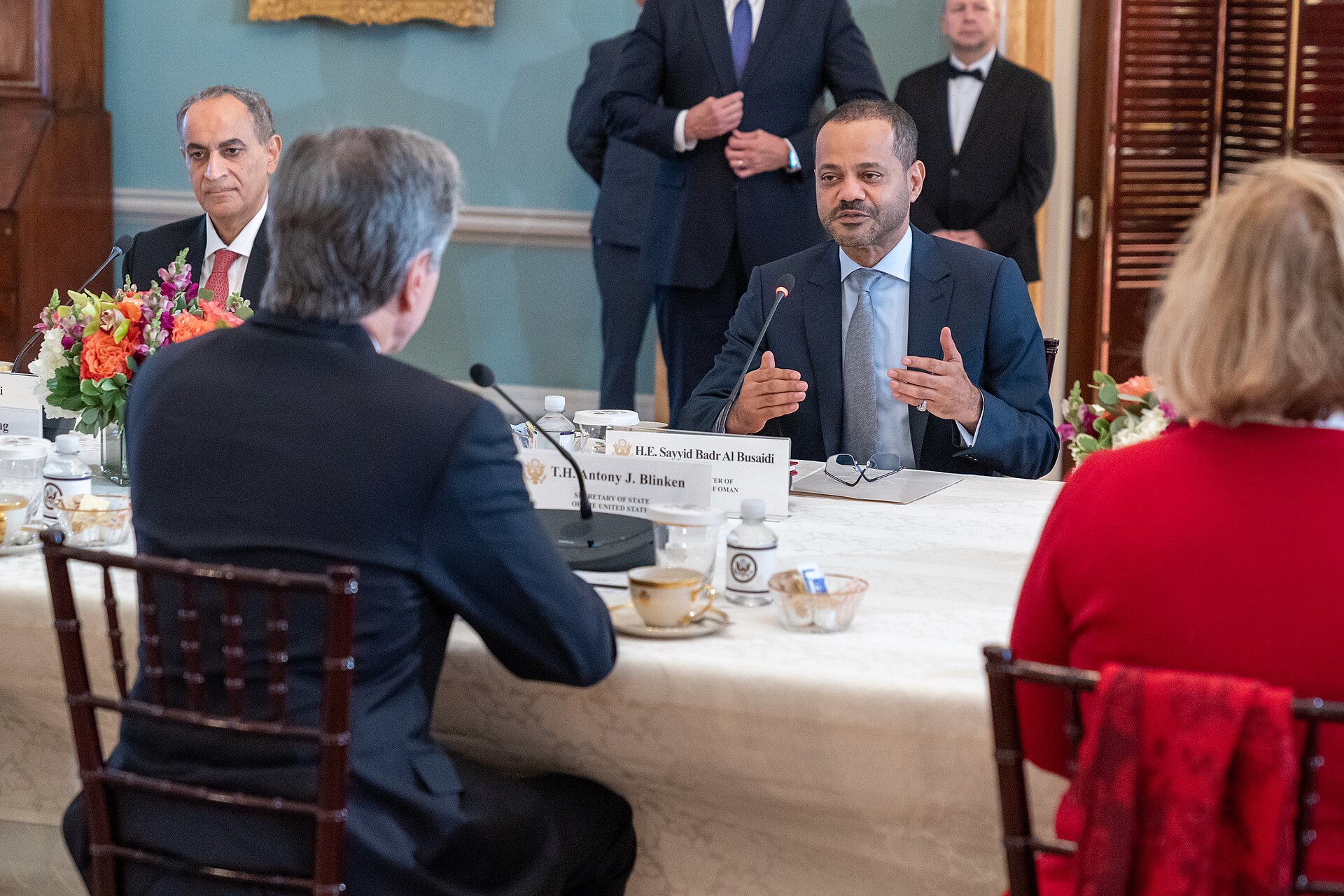
Steve Witkoff led the American delegation, Abbas Araghchi led the Iranian one, and Omani Foreign Minister Badr al-Busaidi shuttled between them for over three hours in a session described as “both direct and indirect” — meaning the two sides were sometimes in the same room and sometimes not, which is itself a diagnostic detail about the state of the relationship after thirteen months and four rounds. No technical negotiators were present, no memorandum of understanding was signed, and both sides agreed only to continue talking — the diplomatic equivalent of agreeing that the other party exists.
Iranian Foreign Ministry spokesman Esmaeil Baqaei called it “difficult but useful talks to better understand each other’s positions and to find reasonable and realistic ways to address the differences.” Al-Busaidi, writing on X after the session closed, offered that the discussions included “useful and original ideas reflecting a shared wish to reach an honorable agreement.” The gap between the Axios report five days earlier — which claimed the US and Iran were “closing in” on a one-page MOU to end the war and begin 30 days of nuclear talks — and the actual outcome is the gap between what Washington wanted Riyadh to believe and what Muscat actually delivered.
The round progression tells its own story. Round 1 in Muscat last April was indirect, with Witkoff and Araghchi separated by Omani mediators. Round 2 in Rome, also April 2025, was indirect and lasted four hours. Round 3 in Geneva last February focused on the nuclear program. Thirteen months later, the substantive distance on enrichment has not narrowed by a single centrifuge — and now Trump is days from landing in Riyadh expecting something to show for the architecture MBS built around these talks.
The Enrichment Gap That Cannot Close
The distance between the American and Iranian positions on enrichment is not a negotiating gap — it is a structural impossibility dressed in diplomatic language. Witkoff’s stated position: “An enrichment program can never exist in the state of Iran ever again. That’s our red line. No enrichment. That means dismantlement, it means no weaponization, and it means that Natanz, Fordow, and Isfahan — those three enrichment facilities — have to be dismantled.” Araghchi’s stated position, delivered on Iranian state television the same day he sat in Muscat: “From our viewpoint, enrichment is a subject that should definitely continue and there is no room for compromise on that.”
The Middle East briefing 3,000+ readers start their day with.
One email. Every weekday morning. Free.
“Uranium enrichment capability is a source of pride and accomplishment for the Iranian nation, achieved at a great cost, including the blood of our nuclear scientists; this achievement is unequivocally non-negotiable.”Abbas Araghchi, Iranian Foreign Minister, May 11, 2026
Between these two positions, Iran reportedly offered a five-year moratorium. The American floor, according to multiple sources, was twelve years minimum, with fifteen as the likely landing zone for any final agreement. But Witkoff’s public demand — full dismantlement, zero enrichment, permanent — makes even the twelve-year floor look like a concession he cannot publicly own. The Arms Control Association reported to Congress that US negotiators arrived in earlier rounds “ill-prepared for serious nuclear talks,” and that Witkoff’s position oscillated between apparent openness to constrained enrichment and the maximalist dismantlement demand — confusion that gave Tehran space to harden its own line without consequence.
Behind those positions sits a physical reality: 440.9 kilograms of highly enriched uranium at 60 percent, the last count the IAEA was able to conduct before Iran terminated access on February 28, 2026. Approximately 25 days of work through an IR-6 cascade separates that stockpile from weapons-grade material — a timeline so short that any moratorium agreement without immediate, intrusive verification would be functionally meaningless. And verification is precisely what Iran has made impossible since the war began.
Why Did Trump Call Iran’s Proposal ‘Totally Unacceptable’ the Day Before?
On May 10 — the day before the fourth round — Trump posted on Truth Social: “I have just read the response from Iran’s so-called ‘Representatives.’ I don’t like it — TOTALLY UNACCEPTABLE!” followed by “They will be laughing no longer!” The timing was not accidental; it was pre-negotiation positioning designed to ensure that whatever emerged from Muscat on May 11, the American president could not be accused of accepting terms he had already publicly rejected.
Iran’s counter-proposal, transmitted via Pakistan, demanded: an end to the US naval blockade, unrestricted oil exports, a permanent end to hostilities including in Lebanon, continued Iranian sovereignty over Hormuz navigation, and complete sanctions relief including frozen asset release. These are not negotiating positions — they are preconditions that require the United States to concede its entire strategic posture in the Gulf before nuclear talks can begin. The Iranian Parliamentary Security Committee vice-chair Behnam Saeedi formalized these as red lines on May 7: enrichment, Hormuz sovereignty, complete sanctions relief, frozen asset release. When the IRGC’s political deputy Brigadier General Yadoleh Javani declared that Iran’s “new management” of the Strait would be “the foundation of the global and international order,” he was announcing that Hormuz is not a bargaining chip to be traded for sanctions relief — it is the permanent condition under which any future agreement must operate.
The same day Iran submitted this counter-proposal, Iranian drones struck a cargo vessel off Qatar’s coast, were intercepted over the UAE, and engaged Kuwaiti air defenses simultaneously. The UAE Defense Ministry blamed Iran directly. As this publication has previously documented, the coordination between the civilian negotiating track and the IRGC military track is not merely poor — it is deliberately contradictory, with peace proposals and Hormuz threats issued on the same day as a matter of institutional practice. Trump’s “TOTALLY UNACCEPTABLE” was, in this context, the only honest response available — though its honesty is precisely what makes it dangerous for anyone who staked credibility on the talks producing a result.
Project Freedom and the Public Record
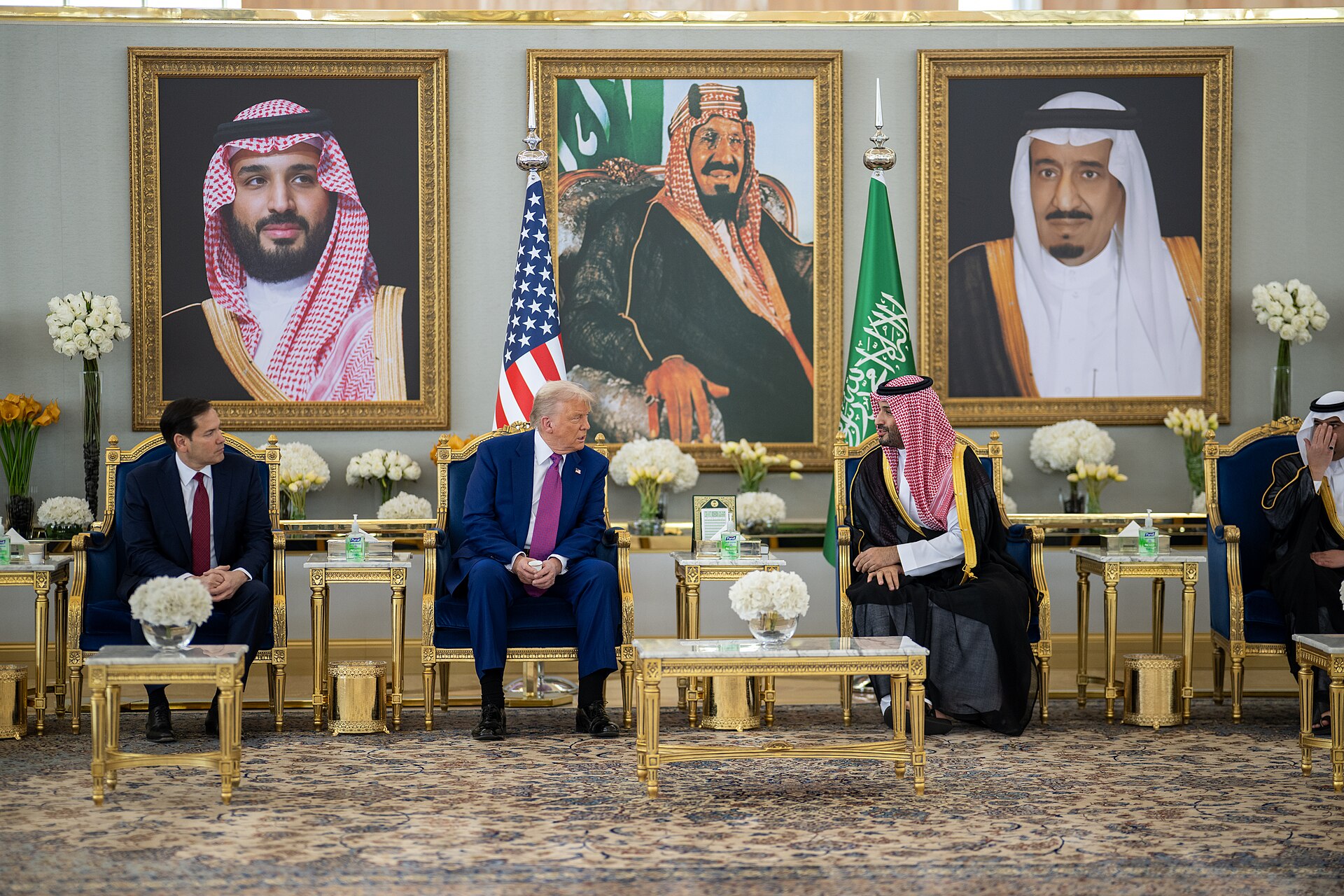
On May 4, the United States launched Project Freedom — a naval escort operation to shepherd merchant vessels through the Strait of Hormuz. Within 48 hours, it was suspended. Saudi Arabia denied the US access to Prince Sultan Airbase and Saudi airspace; Kuwait denied base access. The operation resumed May 7 or 8 only after a second phone call between Trump and MBS, on terms that remain undisclosed. The suspension and restoration are both facts; the terms that converted a “no” into a “yes” are the black box at the centre of whatever understanding MBS believes he reached with Washington.
Pakistan’s Prime Minister Shehbaz Sharif then did something extraordinary: he publicly credited “the Kingdom of Saudi Arabia and my dear brother Crown Prince and Prime Minister, Prince Mohammed bin Salman” as a co-author of the request to pause the operation. This is the single most dangerous sentence in the diplomatic record for Saudi Arabia. It creates a public attribution — from a US interlocutor, in an on-the-record statement carried by Al Arabiya and the Express Tribune — that MBS personally intervened to constrain American military force projection against Iran.
The structural problem is not that MBS made the request. Regional leaders routinely ask Washington to modulate military operations that affect their airspace, their populations, their domestic politics. The problem is that the request is now on the record, attributed by name, in a context where MBS has not delivered the diplomatic alternative — a deal, a framework, even a credible timeline — that would justify the constraint. Trump can now walk into Riyadh carrying that public record as a receipt: you asked me to pause, I paused, and what did I get for the pause? The answer, after Muscat, is nothing. Not yet, and possibly not ever.
“Reopening routes is not the same as normalising a market that has been deprived of about one billion barrels of oil.”Amin Nasser, Aramco CEO, Bloomberg, May 10, 2026
How Does MBS Inherit the Liability?
The argument is structural, not personal. MBS positioned Saudi Arabia as the indispensable mediator in a conflict that has cost the kingdom more than any other party except Iran itself — production down from 10.4 million barrels per day in February to 7.25 million in March, a 30 percent drop; the largest quarterly deficit since 2020 at 126 billion riyals; Hormuz transit reduced to approximately 45 sailings since the April 8 ceasefire against a pre-war baseline of 3,000 per month. Michael O’Hanlon of the Brookings Institution told CNBC on May 8 that the Saudis are “likely feeling neglected and tired of improvisation by U.S. diplomacy” — a polite formulation of a harsher reality, which is that Saudi Arabia has been absorbing the costs of a mediation architecture designed to serve Washington’s timeline, not Riyadh’s interests.
The trap operates regardless of outcome. If the talks had produced a breakthrough in Muscat — the one-page MOU that Axios reported was close on May 6 — Trump would have arrived in Riyadh claiming personal credit for a deal that MBS merely facilitated. The 123 nuclear agreement, the F-35 sale, the security guarantees would flow as Trump’s reward to a loyal broker, not as payment for Saudi strategic sacrifice. If the talks fail, as they did, Trump arrives carrying the receipt of MBS’s constraint on American force projection and nothing to offset it — making the 123 agreement and the F-35s into a debt instrument rather than an expression of gratitude.
As the Arab Center Washington DC framed it in their pre-visit analysis, Trump’s Gulf trip is “structurally transactional with uncertain guarantees for Saudi Arabia.” The Georgetown Journal of International Affairs was blunter: “More Transactional Than Ever.” What both analyses miss — and what the Riyadh script cannot fully control — is that the transaction was always asymmetric. Trump needs a photo opportunity and a defence contract announcement; MBS needs a nuclear cooperation framework that does not expressly forbid Saudi enrichment, a fighter aircraft that fundamentally alters the regional balance, and an implicit security guarantee that the United States will not withdraw protection in the next crisis. One of these wish lists can be satisfied with a signing ceremony. The other requires structural commitment that no American president has offered a Gulf state since 1991.
The Authorization Ceiling in Tehran
Even if MBS could deliver Trump a willing Iranian counterpart, the counterpart cannot deliver Iran. This is the authorization ceiling that has defined every round since Geneva: Abbas Araghchi can negotiate, but he cannot sign anything that Ahmad Vahidi — the founding IRGC member who emerged as effective military and political commander after IRGC chief Pakpour was killed on Day 1 of the conflict — does not authorize. President Pezeshkian publicly accused Vahidi and Abdollahi of wrecking the April Islamabad talks. Article 110 of Iran’s constitution gives the president zero authority over the IRGC. An MOU signed by Araghchi is worth exactly what Vahidi decides it is worth the following morning.
Parliament Speaker Ghalibaf, himself an IRGC veteran of the Aerospace Force (1997-2000), announced on May 5 that “the new equation of the Strait of Hormuz is in the process of being solidified” — language that treats Hormuz control not as a temporary wartime measure but as a permanent institutional gain that the IRGC will not relinquish regardless of what the Foreign Ministry agrees to in Muscat or anywhere else. The two-voice problem — a civilian negotiating track that says “difficult but useful” and a military track that says “foundation of the global and international order” — is not a coordination failure. It is the system working as designed, with the IRGC holding veto power over any agreement that threatens its institutional gains from the war.
For MBS, the authorization ceiling means that his mediation capital — the airspace denial, the Project Freedom pause, the public positioning as broker — was always being spent against a counterpart who cannot close. He was building diplomatic architecture toward a door that opens from the inside, and the man holding the handle has an INTERPOL red notice for the 1994 AMIA bombing in Buenos Aires. Vahidi’s incentive structure does not include “help MBS look good before Trump arrives.”
| Round | Date | Location | Format | Outcome |
|---|---|---|---|---|
| 1 | April 12, 2025 | Muscat | Indirect only | “Constructive” — no framework |
| 2 | April 19, 2025 | Rome | Indirect, 4 hours | No advancement |
| 3 | February 26, 2026 | Geneva | Nuclear-focused | Positions restated |
| 4 | May 11, 2026 | Muscat | High-level only, no technical staff | “Difficult but useful” — no MOU |
What Does MBS Need From Trump’s Plane?
The US-Saudi 123 civilian nuclear agreement is the centrepiece of what MBS expects from the Riyadh visit — and it arrives pre-loaded with a structural asymmetry that neither side can publicly acknowledge. The draft, as reported by the Arms Control Association and confirmed through congressional briefings, does not expressly forbid Saudi uranium enrichment. This falls short of the “Gold Standard” established by the UAE model, which required Abu Dhabi to forgo enrichment entirely as a condition of nuclear cooperation. Trump has simultaneously approved the sale of 48 F-35 aircraft to Saudi Arabia. Together, the nuclear agreement and the fighter sale represent a generational upgrade in Saudi strategic capability — the kind of package that transforms a client relationship into something closer to a genuine security partnership.
The problem is positioning. Trump’s negotiating style is transactional to a degree that previous American presidents disguised behind alliance language, and the Muscat failure hands him a specific piece of pressure he did not have a week ago: MBS publicly constrained American military options, the constraint produced no diplomatic result, and now the items MBS most needs from Washington arrive in the context of an outstanding debt rather than a shared achievement. The 123 agreement becomes something Trump is granting despite Saudi interference, not because of Saudi contribution — a framing that allows Washington to extract additional concessions on price, access, or political alignment that Riyadh would not otherwise offer.
This is the deeper structure that the seventy-two hours in Riyadh must navigate. The Carnegie Endowment assessed MBS’s previous Washington visit as delivering “personal rehabilitation as a valued U.S. security partner, reinforcing his claims to domestic and regional leadership.” Rehabilitation is not partnership; it is a status that can be withdrawn. The 123 agreement converts rehabilitation into institutional commitment — but only if MBS can receive it without appearing to have paid for it with concessions that damage Saudi regional standing.
The Fiscal Arithmetic of Being Indispensable
Saudi Arabia’s first-quarter 2026 deficit reached 126 billion riyals — approximately $33.5 billion — the largest quarterly shortfall since the pandemic year of 2020. Government expenditure rose 20 percent year-on-year to 387 billion riyals, driven by war-related military spending and the accelerated infrastructure requirements of maintaining export capacity through the Yanbu bypass while Hormuz remains functionally closed. The official full-year deficit projection of 165 billion riyals ($44 billion, representing 3.3 percent of GDP) is, by Goldman Sachs estimates, roughly half the actual figure: the bank projects a realistic deficit of 6 to 6.6 percent of GDP, implying a funding gap of $80-90 billion when PIF commitments and off-balance-sheet obligations are included.
Aramco’s CEO Amin Nasser told Bloomberg on May 10 — the day before Round 4 — that the world has lost approximately one billion barrels of oil since the conflict began, and that “reopening routes is not the same as normalising a market that has been deprived of about one billion barrels of oil.” Even if Hormuz fully reopened tomorrow, recovery may not occur until 2027. Aramco reported Q1 net income of $32.5 billion, up 25 percent — achieved by prioritizing lighter crude through the inland pipeline system despite a two-million-barrel-per-day production reduction. The company is making more money per barrel while the kingdom bleeds revenue from reduced volume, a divergence that works only as long as war-premium pricing holds. Saudi fiscal break-even sits at $108-111 per barrel on a PIF-inclusive basis; Brent opened Sunday at approximately $104.50.
The fiscal position means MBS cannot afford an extended period as a mediator without results. Every month that Hormuz remains functionally closed, the bypass architecture absorbs capacity that would otherwise serve volume growth, the deficit widens, and Vision 2030 timelines slip. Being indispensable is expensive when the indispensability produces diplomatic process rather than diplomatic outcomes, and the Muscat session produced nothing but a commitment to continue producing process.
The Flight Schedule as Forcing Function
The Axios report on May 6 — that the US and Iran were “closing in” on a one-page MOU — was not intelligence reporting. It was expectation-setting, designed to frame Round 4 as the session that would bless a nearly-finished agreement and allow Trump to arrive in Riyadh with a diplomatic package rather than a diplomatic process. The collapse of that framing within 96 hours — from “closing in” to “TOTALLY UNACCEPTABLE” to “difficult but useful” — traces the gap between Washington’s desired narrative and the actual state of negotiations.
That the round was conducted at high level only, without technical negotiators, confirms its function. Technical tracks produce compromise language on centrifuge numbers, inspection protocols, timeline phasing — the granular work of converting political will into implementable agreements. Political-only tracks produce one of two things: a blessing on work already completed at the technical level, or a signal about whether either side will move from its stated position. Given that Trump had publicly rejected Iran’s terms 24 hours earlier and Araghchi had declared enrichment “non-negotiable” the morning of the talks, Round 4 was neither a blessing session nor a genuine test of movement. It was a performance of diplomatic engagement timed to the Trump travel schedule — a performance that allows both Washington and Tehran to claim talks are ongoing without either having conceded anything.
The Riyadh-Beijing sprint that Trump is now executing — Gulf visit followed immediately by China engagement — was designed with the assumption that the Iran file would be in a different state by mid-May. It is not, and the adjustment falls on MBS: the host who must now produce the appearance of progress from a visit whose diplomatic predicate evaporated in a conference room in Muscat twelve hours before the advance team finalised the motorcade route.
Oman as Messenger, Not Guarantor
Oman’s role in these talks carries historical weight that both sides consciously invoke — it was in Muscat that the secret 2013 US-Iran channel operated that eventually produced the JCPOA — but the institutional reality is narrower than the symbolism suggests. Oman is a message-shuttle service. It is not a guarantor, not a signatory, and not a party with enforcement capacity. Al-Busaidi’s post-session praise for ideas “reflecting a shared wish to reach an honorable agreement” is the language of a host who must keep both parties willing to return; it is not an assessment of substantive progress by someone with visibility into the actual positions.
The choice to return to Muscat for Round 4 — after Geneva for Round 3 — was itself a signal. Geneva carried the institutional weight of the UN system and the implicit suggestion of multilateral engagement. Muscat carries the weight of bilateral secrecy and the 2013 precedent, but also the limitation: what happens in Oman stays in Oman, with no institutional mechanism to convert a bilateral understanding into a binding framework. For MBS, the Omani venue is additionally telling because it places the talks physically outside Saudi Arabia’s mediation architecture — Qatar’s own diplomatic manoeuvres on the Iran file have already demonstrated that Saudi centrality in Gulf diplomacy is not guaranteed, and Oman’s hosting role is another reminder that the actual negotiations happen in spaces MBS does not control.
The round ended with agreement to continue, which in diplomatic grammar means neither side is prepared to accept responsibility for collapse. This preserves the fiction that talks are progressing — a fiction that serves Trump’s Riyadh visit by allowing him to claim the process is alive without requiring him to claim success. For MBS, “agreement to continue” is the worst possible outcome: it denies him the clarity of either triumph or failure, leaving him suspended in a mediation role that accumulates cost without producing resolution.
Frequently Asked Questions
What specific terms were discussed in the Oman Round 4 session?
While both sides maintained confidentiality on specifics, the structural framework involved Iran’s reported offer of a five-year enrichment moratorium against the US demand for full dismantlement — a gap so wide that the session focused on whether either side’s political leadership had authority to move from stated positions rather than on technical compromise language. The absence of technical negotiators confirms that no centrifuge-level discussions occurred; the session operated at the level of political signalling about whether movement was possible, and both sides signalled that it was not. Oman’s FM al-Busaidi referenced “useful and original ideas,” which diplomatic analysts interpret as potential face-saving frameworks — possibly a phased approach that avoids the word “dismantlement” while achieving functional constraints — though no such framework was announced or agreed.
How does the US-Saudi 123 nuclear agreement differ from the UAE “Gold Standard”?
The UAE’s 123 agreement, signed in 2009, explicitly requires Abu Dhabi to forgo domestic uranium enrichment and plutonium reprocessing — the so-called Gold Standard that the Obama administration established as the benchmark for Gulf nuclear cooperation. The Saudi draft, as reported through congressional briefings and Arms Control Association analysis, does not contain an equivalent prohibition. This creates a structural asymmetry: the United States is simultaneously demanding that Iran dismantle all enrichment capability while offering Saudi Arabia a nuclear cooperation framework that preserves Riyadh’s option to enrich domestically in the future. The asymmetry is not publicly exploitable by MBS — acknowledging it would complicate the anti-Iran coalition narrative — but it represents a long-term strategic gain embedded in the 123 architecture that makes the agreement’s completion a generational priority for Saudi foreign policy.
What is Iran’s “authorization ceiling” and why does it matter for these talks?
The authorization ceiling refers to the structural reality that Iran’s elected civilian government — President Pezeshkian and Foreign Minister Araghchi — cannot finalize any agreement that the IRGC does not authorize. After IRGC chief Pakpour was killed on the first day of the conflict, Ahmad Vahidi emerged as the effective military and political commander. Article 110 of Iran’s constitution gives the president zero authority over the IRGC. Pezeshkian publicly accused Vahidi and IRGC Khatam al-Anbiya commander Abdollahi of deliberately wrecking the Islamabad talks in April 2026 by issuing instructions that contradicted the civilian delegation’s mandate. For Saudi mediation specifically, this means that any diplomatic capital MBS spends — airspace denials, base-access restrictions, public positioning — is spent against a negotiating counterpart (Araghchi) who cannot deliver the institution (IRGC) that controls the assets (Hormuz, enrichment facilities) being negotiated.
Why did Saudi Arabia initially deny US access to Prince Sultan Airbase for Project Freedom?
The denial — which suspended US naval escort operations within 48 hours of launch — reflected MBS’s calculation that visible US force projection from Saudi territory would collapse his positioning as neutral mediator and invite direct Iranian retaliation against Saudi infrastructure already weakened by earlier strikes (Saudi production had fallen 30 percent from February to March). The reversal, after a second Trump-MBS phone call on undisclosed terms, suggests that Washington’s pressure — likely tied to the 123 agreement timeline and F-35 delivery schedule — was sufficient to override Riyadh’s preference for distance. The episode created the public record (via Pakistan PM Sharif’s attribution) that now functions as a receipt in the Riyadh bilateral: Trump can point to a specific instance where MBS constrained American options and ask what was received in return.
What happens to the US-Iran talks if no agreement is reached during Trump’s Gulf visit?
The talks continue in their current form — political-level engagement without technical frameworks, shuttled through Oman, with both sides maintaining publicly incompatible positions while preserving the diplomatic fiction of progress. The practical consequence falls on the Hormuz double blockade: the US controls Arabian Sea entry (since April 13), the IRGC controls Gulf of Oman exit (since March 4), and the approximately 45 transits since April 8 against a pre-war baseline of 3,000 per month remains the operative reality. For Saudi Arabia specifically, continued stalemate means continued reliance on the Yanbu bypass at 4-5.9 million barrels per day against a 7-7.5 million bpd pre-war Hormuz throughput — a structural gap of 1.1-1.6 million bpd that cannot be closed without Hormuz reopening, which cannot happen without IRGC authorization, which cannot be secured through the civilian diplomatic track that Muscat represents.