TEHRAN — Iran formally submitted its response to the US peace proposal via Pakistani mediators on May 10, 2026, while three separate branches of its military issued public threat statements against countries complying with American sanctions — making the gap between Tehran’s diplomatic and operational tracks visible in a single news cycle. Brigadier General Mohammad Akraminia, the Iranian Army spokesperson, told IRNA that “countries that comply with the United States by imposing sanctions on the Islamic Republic of Iran will certainly face difficulties crossing the strait,” hours after Pakistan confirmed receipt of Tehran’s written reply to Washington’s 14-point memorandum of understanding.
The simultaneity is the story. Iran’s civilian foreign ministry delivered a document through Islamabad while the Army (Artesh), the IRGC Navy, and the IRGC Aerospace Force each issued separate public threats — none coordinated through Foreign Minister Abbas Araghchi, none subject to presidential authority under Article 110 of Iran’s constitution. If the pattern holds from April’s authorization ceiling crisis, the written response is a diplomatic event and the threat statements are the operational reality — both true at the same time, which is precisely why any agreement Araghchi signs may be structurally unenforceable from Tehran’s side.
Table of Contents
- Three Military Statements, Three Separate Chains of Command
- What Does Iran’s Response Actually Demand?
- The Sea Star III Trigger — Kinetic Enforcement Inside a Ceasefire
- Why Can’t Pezeshkian Enforce What Araghchi Negotiates?
- Saudi Arabia’s Silence and the Asian Cargo Trap
- The 1982 Pattern — When Military Tracks Override Diplomacy for Years
- FAQ
Three Military Statements, Three Separate Chains of Command
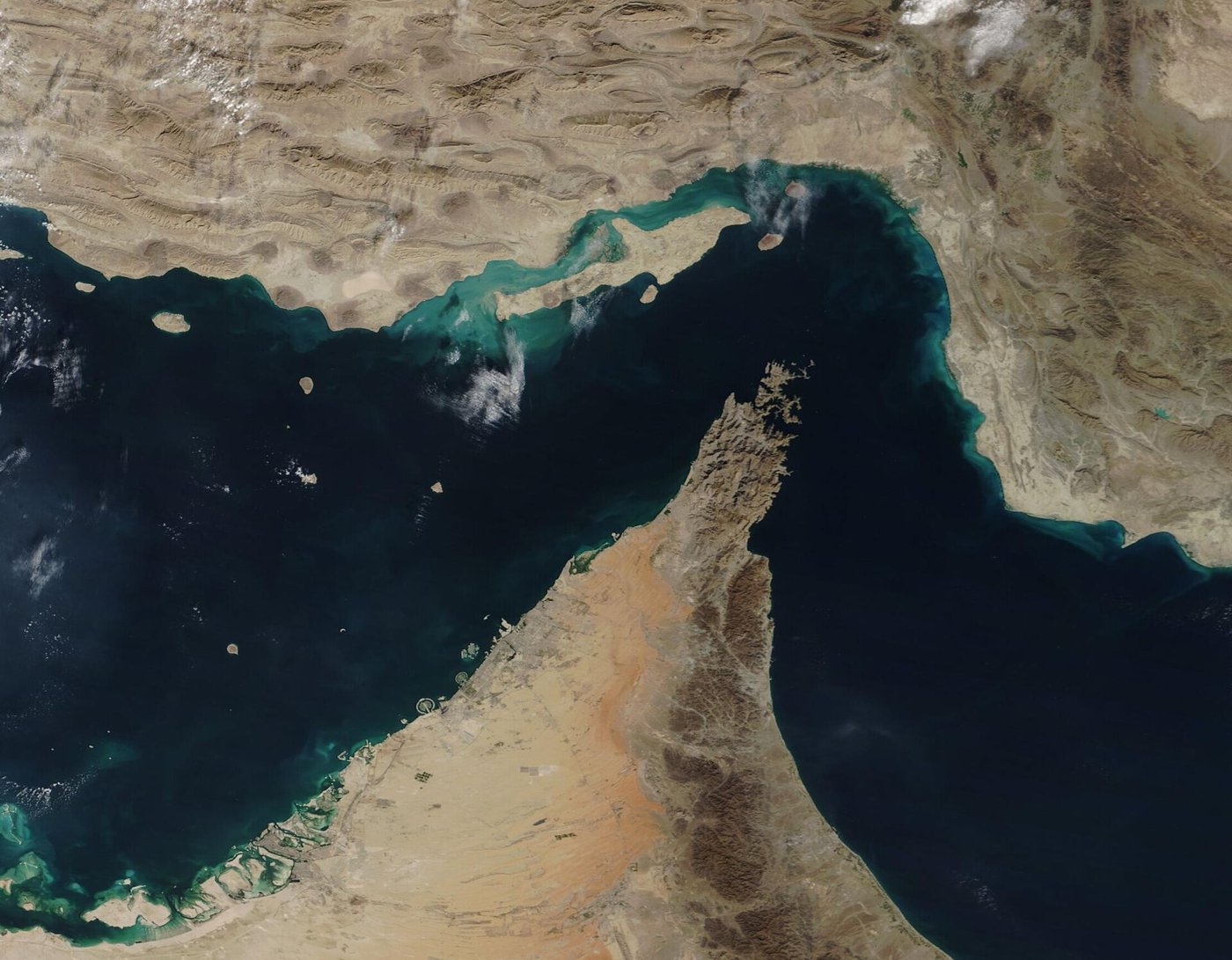
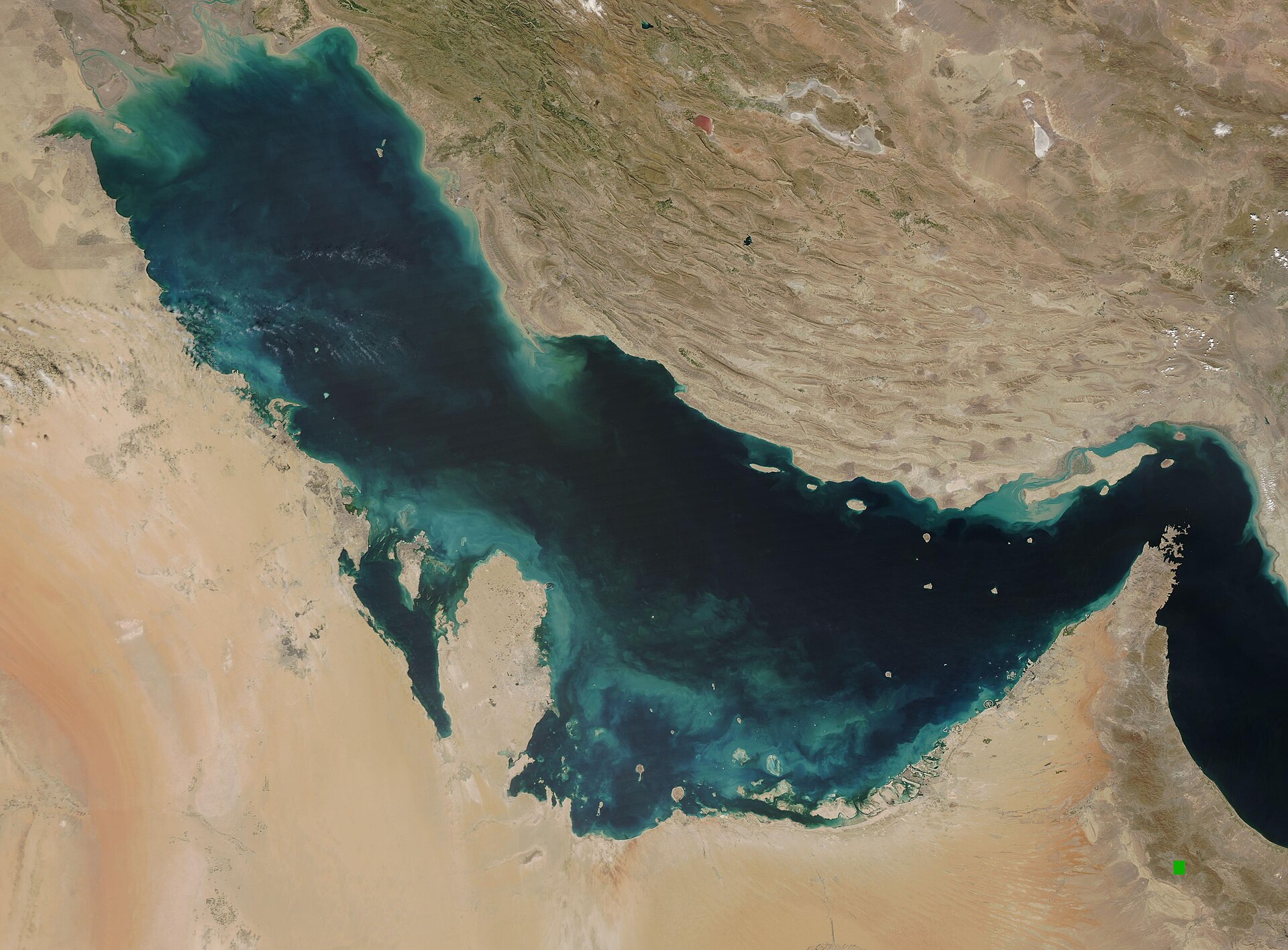
On May 10, three distinct Iranian military institutions made public threats against the United States and its partners — a parallel escalation that operated entirely outside the diplomatic channel submitting Iran’s peace response on the same day. The Army’s Akraminia told IRNA that Iran has “established a new legal and security system in the Strait of Hormuz” and that “any vessel wishing to pass through it must coordinate with us.” The IRGC Navy Command posted on X that “any aggression against Iran’s oil tankers and commercial vessels will result in a heavy assault against one of the American centres in the region and the enemy’s ships.” And Brigadier General Seyyed Majid Mousavi, IRGC Aerospace Force commander, stated publicly that “the missiles and aerospace drones are locked on the enemy and we are waiting for the firing order.”
The institutional separation matters more than the rhetoric. The Artesh — Iran’s regular army — and the Islamic Revolutionary Guard Corps are constitutionally separate organizations with no shared reporting line below the Supreme Leader. Akraminia speaks for the Army; the IRGC Navy and Aerospace Force speak for the parallel revolutionary military. Neither answers to President Masoud Pezeshkian or Foreign Minister Araghchi. Under Article 110, the Supreme Leader alone commands armed forces, appoints military chiefs, and appoints IRGC leadership — the elected civilian government is structurally excluded from the chain.
Akraminia added a sovereignty claim that goes beyond threat: “This war allowed us to use the geopolitical potential of the Strait of Hormuz, and today we have exercised our sovereignty over the Strait based on the law of the sea and waterways.” That framing — sovereignty exercised, not sovereignty claimed — converts wartime disruption into permanent legal architecture. PressTV’s headline treated the statement not as a military threat but as a regulatory announcement about a “new legal and security system,” language designed to normalize what UNCLOS Article 26 prohibits.
The Middle East briefing 3,000+ readers start their day with.
One email. Every weekday morning. Free.
The three statements share one feature: specificity of targeting. Akraminia names sanction-compliant countries. The IRGC Navy names “American centres in the region.” Mousavi names “enemy aggressor ships” and claims weapons are locked. This is not generalized deterrence language — it is pre-attack justification rhetoric, published on an official timeline that coincides exactly with the peace response submission.
What Does Iran’s Response Actually Demand?
Iran’s formal submission — confirmed by IRNA but with no substantive content released publicly — maintains the sequencing framework Tehran established in prior rounds: end the war first, address the nuclear file second. Al Jazeera reported on May 6 and 8 that Iran’s position demands the US naval blockade be lifted, frozen Iranian assets released, reparations paid, sanctions removed, and a new Hormuz mechanism established — all before any nuclear negotiations begin. Iran “strongly rejected” the transfer of its highly enriched uranium stockpile, which the IAEA last measured at 440.9 kilograms enriched to 60 percent before Iran terminated agency access on February 28, 2026.
The American 14-point MOU demands the inverse sequence. According to Atalayar and Axios reporting from May 6-7, Washington requires Iran to halt all uranium enrichment for a minimum of 12 years — one source cited 15 — cap post-moratorium enrichment at 3.67 percent, close underground enrichment facilities, and accept snap IAEA inspections. These nuclear concessions would precede, not follow, any agreement on ending hostilities. The structural incompatibility is not a negotiating gap that creative diplomacy can bridge; it is two frameworks that each require the other side to concede its primary leverage before talks on the other side’s primary concern can begin.
Pakistan confirmed receipt of the response without releasing content. Foreign Minister Ishaq Dar stated on May 9 that “new dialogue in coming days” would follow, language that suggests Islamabad sees its role as relay rather than mediator with independent leverage. The response itself, whatever it contains, arrives into a diplomatic environment where the US disabled two Iranian-linked tankers — M/T Sea Star III and M/T Sevda — by firing precision munitions into their smokestacks on May 8, two days before the submission. Vice President Vance called the broader situation a “fragile truce” on May 9, speaking to Euronews.
The Sea Star III Trigger — Kinetic Enforcement Inside a Ceasefire
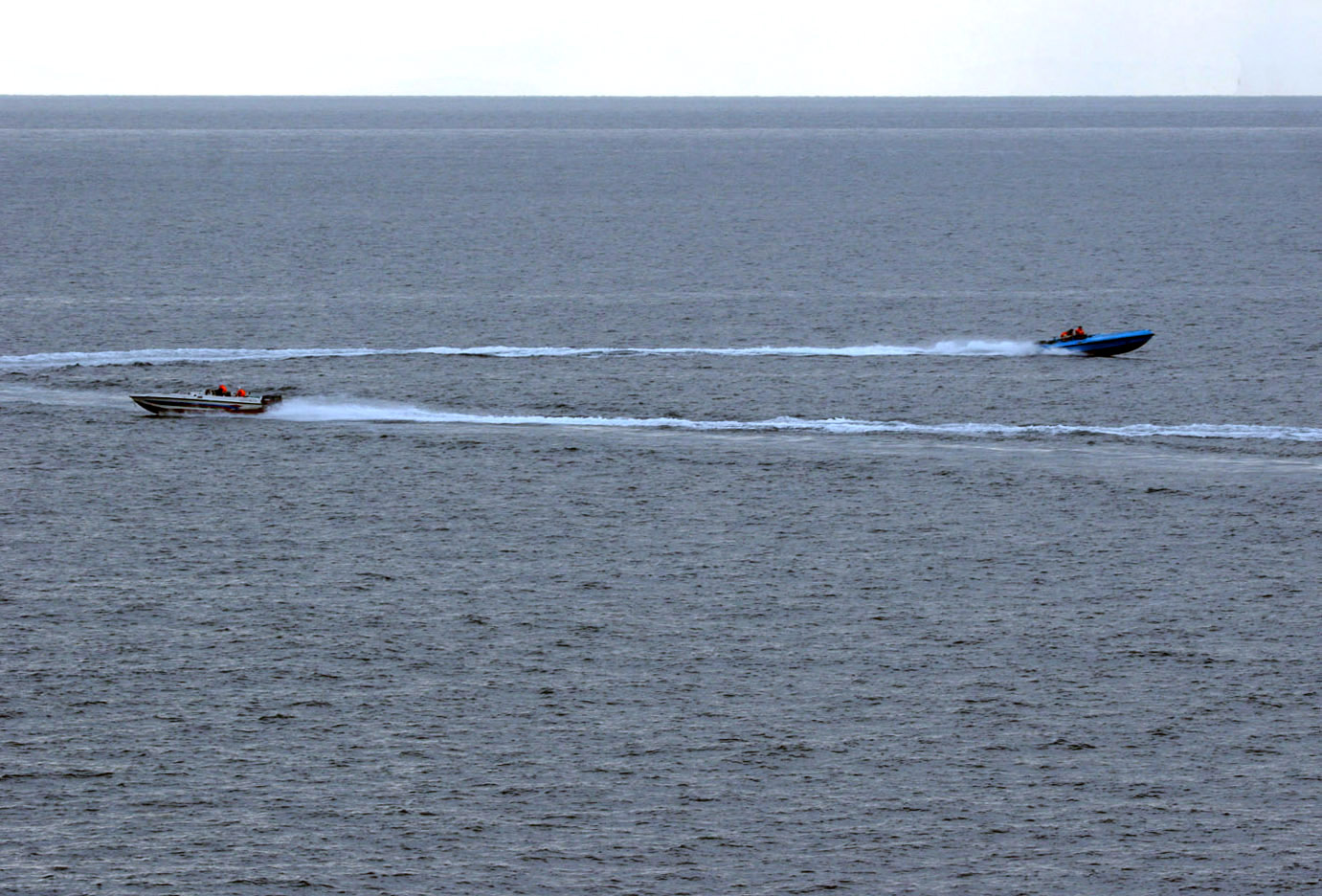
The proximate trigger for the May 10 military statements was the US Navy’s disabling of the M/T Sea Star III and M/T Sevda on May 8. The Washington Post reported that precision munitions were fired into the vessels’ smokestacks — a targeted disabling method that stops a ship without sinking it, inside what remains nominally a ceasefire window. The IRGC’s “any aggression against Iran’s oil tankers” language directly references this action, converting a specific enforcement event into a general threat against American regional infrastructure.
The US blockade — effective since April 13, applied to Iranian ports and toll-collecting vessels rather than all Hormuz transit — has produced a cumulative chokepoint crisis that General Dan Caine of the Joint Chiefs quantified on May 6: 1,550 ships stranded and 22,500 mariners trapped. Against this backdrop, Akraminia’s claim that “the Americans tried to break Iran’s control on the Strait of Hormuz by escorting destroyers and ships, but they encountered the Iranian armed forces whose strong resistance led Trump to abandon his military campaign 24 hours after its launch” reads as post-hoc victory framing designed for domestic consumption — but the Hormuz access threat attached to it targets international shipping.
The IRGC Aerospace Force’s “awaiting the firing order” statement from Mousavi is the sharpest escalation. Unlike Akraminia’s sovereignty framing or the IRGC Navy’s conditional warning, Mousavi’s language claims weapons are already locked on targets and only a command decision separates current posture from attack. The IRGC’s underground manufacturing capacity — running three-shift cycles producing 150-200 missiles per month and recovering approximately 85 percent of pre-conflict capacity, according to Iran International — gives that claim material substance beyond rhetoric.
Why Can’t Pezeshkian Enforce What Araghchi Negotiates?
President Pezeshkian answered this question himself on April 4, when he publicly named SNSC Secretary Ali Akbar Ahmadian’s deputy Mohammad Reza Vahidi and Khatam al-Anbiya commander Abdollahi as the officials who wrecked the ceasefire — while simultaneously acknowledging he has zero constitutional authority to discipline them. The Institute for the Study of War described Vahidi as “practically controlling the country.” He blocked Pezeshkian’s appointment of a new intelligence minister. He demanded his deputy Zolghadr join the Islamabad negotiating team. When the president of Iran publicly accuses his own security establishment of sabotage and admits he cannot stop them, the structural problem is not hidden.
Article 110 of Iran’s constitution creates a system where the Supreme Leader appoints and commands both the IRGC and the regular Army. The president is excluded from military chains entirely — not by convention or by political weakness but by constitutional design. Khamenei has been absent from public view for over 70 days. His son Mojtaba has appeared in audio-only format. No authoritative voice has arbitrated between the diplomatic and military tracks because the only person constitutionally empowered to do so has not been visible.
The institutional bridge that previously connected Iran’s foreign ministry to its military establishment — Ali Larijani, former SNSC secretary, former nuclear negotiator, former parliament speaker — was removed from the equation in the opening weeks of the conflict. No replacement has emerged. The gap between Araghchi’s diplomatic channel and the IRGC/Army operational commands is not merely political disagreement; it is an institutional void where the connective tissue between negotiation and enforcement used to exist. Any MOU Araghchi signs faces the same problem the April Islamabad talks faced: the people who command the missiles and the strait do not report to the people who sign the documents.
Saudi Arabia’s Silence and the Asian Cargo Trap
Saudi Deputy Minister Rayed Krimly’s statement from May 8-10 — “The Kingdom of Saudi Arabia maintains its position supporting de-escalation and negotiations efforts” — is the diplomatic equivalent of a holding pattern. Riyadh lifted restrictions on US military access on May 7-8 alongside Kuwait, reversing an earlier block on Operation Project Freedom, which NBC News reported as a significant shift in Gulf posture. But the Kingdom has not publicly responded to Akraminia’s threat, which targets Saudi Arabia’s primary customers by design.
Akraminia’s statement that sanction-compliant countries “will certainly face difficulties crossing the strait” implicates the precise nations that buy Saudi crude. Approximately 84 percent of crude oil and 83 percent of LNG transiting Hormuz goes to Asia, according to Stimson Center data. Nearly 70 percent of pre-war oil flow went to China, India, Japan, and South Korea — the same countries that are Iran’s own remaining crude customers under various sanctions arrangements and waivers. The threat is structurally self-defeating in one sense (Iran threatens its own buyers) but devastating in another: it tells Saudi Arabia’s customers that purchasing from any Gulf exporter carries physical risk if those customers comply with American sanctions pressure on Iran.
The Yanbu bypass ceiling compounds this exposure. Saudi Arabia’s East-West Pipeline can move 4-5.9 million barrels per day to Red Sea terminals, but pre-war Hormuz throughput was 7-7.5 million bpd — leaving a structural gap of 1.1-1.6 million bpd that cannot reach markets if Hormuz remains contested. Saudi production already crashed from 10.4 million bpd in February to 7.25 million bpd in March according to IEA data — a 30 percent drop the agency called “the largest disruption on record.” Akraminia’s threat does not need to close the strait entirely to damage Saudi revenues; it needs only to raise insurance premiums and rerouting costs enough that Asian buyers hesitate.
The 1982 Pattern — When Military Tracks Override Diplomacy for Years
In June 1982, Saddam Hussein proposed an immediate ceasefire after Iranian forces had recaptured most Iranian territory lost in the initial Iraqi invasion. A faction within Iran’s leadership — including Prime Minister Mousavi and then-President Khamenei — favored acceptance. Hardline commanders favored continuation of the war into Iraqi territory. The military track overrode the diplomatic option for six more years, until economic collapse and battlefield reverses in 1988 forced Khomeini to accept UN Resolution 598 — what he called “drinking poison.” The structural dynamic was identical to May 2026: a diplomatic window existed, military commanders preferred to continue fighting, and no institutional mechanism forced the military to accept what diplomats negotiated.
The parallel is not perfect — Iran in 2026 faces a US naval blockade that 1982 Iran did not, and the economic ceiling Pezeshkian warned of (“collapse in 3-4 weeks,” stated in April) arrives faster than 1980s attrition economics. But the authorization ceiling problem is structurally identical. Araghchi can submit a document. The IRGC and Army can issue threat statements the same day. Both actions are legitimate within their respective institutional lanes. Neither constrains the other. The only person who can arbitrate — Khamenei — has been absent from public decision-making for over two months.
Tasnim News, the IRGC-aligned outlet, framed a Qatari tanker transiting Hormuz on May 10 as confirmation of Iranian sovereignty: “passage indicates that Iran’s sovereignty over the Strait of Hormuz continues.” The framing is revealing — selective permission of individual transits presented as evidence of control rather than openness. This is the same pattern from April’s IRGC “full authority” declaration: sovereignty through selective enforcement, where the ability to grant or deny transit constitutes the legal claim itself. The peace response travels through diplomatic channels while the strait operates under military logic that the diplomatic channel cannot modify.
Background: The Authorization Ceiling
The term “authorization ceiling” describes a structural feature of Iran’s constitutional system that has defined every diplomatic interaction since the war began on February 28, 2026. The Supreme Leader alone can authorize the IRGC and Army to stand down; the president cannot order it, the foreign minister cannot negotiate it, and the SNSC cannot enforce it without Khamenei’s direct involvement. When Vance met Ghalibaf face-to-face in Islamabad on April 11 — the first direct US-Iran contact since 1979 — Vahidi was not in the room. The talks collapsed because the person who could authorize concessions was absent, and the person present (Ghalibaf, a former IRGC Aerospace Force commander) lacked authority to bind the security establishment.
The May 10 dual-track signal confirms the ceiling remains intact. Iran’s diplomatic apparatus produced a written response — a genuine document delivered through a legitimate channel. Iran’s military apparatus produced three public threats on the same day. The response does not constrain the threats. The threats do not invalidate the response. They coexist because they emerge from parallel systems with no shared authority below a Supreme Leader who has not been visibly governing. Saudi Arabia’s Krimly spoke of “de-escalation and negotiations efforts” — language that assumes a unified Iranian interlocutor. The May 10 evidence suggests that interlocutor does not exist.
FAQ
Who is Brigadier General Mohammad Akraminia?
Akraminia was appointed as the Iranian Army (Artesh) spokesperson in January 2026, according to Mehr News Agency. He holds a PhD in Strategic Management and serves as an associate professor at the Army’s Command and Staff University. His prior role was Deputy Coordinator of the Army’s Ideological-Political Organization — a position responsible for political indoctrination within the regular military. His April 29 statement — “do not consider the war over” — preceded the May 10 Hormuz threat by 11 days, establishing a pattern of escalatory public messaging that operates on a separate timeline from Araghchi’s diplomatic communications.
What happens if Iran’s peace response is accepted but its military doesn’t comply?
This is the core structural problem that has no institutional answer. The Islamabad Accord from April contained no enforcement clause — Pakistan’s role was relay and venue, not guarantor. Pakistan FM Dar visited Khatam al-Anbiya headquarters (Abdollahi’s operational command) on April 16 in what appeared to be an attempt to build a direct enforcement relationship with IRGC commanders, but Pezeshkian’s April 4 admission that he cannot control those commanders makes any presidential commitment non-binding on the military. The only historical resolution to this dynamic in Iran was Khomeini’s direct order in 1988 — and that required economic collapse plus military defeat to force it.
How does this affect Gulf oil shipments specifically?
Akraminia’s threat targets “countries that comply with the United States by imposing sanctions on the Islamic Republic of Iran” — a category that includes Japan and South Korea (full compliance), India (partial compliance under OFAC General License U), and potentially European buyers. These are simultaneously the primary buyers of Saudi, Qatari, Emirati, and Kuwaiti exports, so the threat creates a risk premium on all Gulf-origin cargoes regardless of whether Iran actually interdicts specific vessels. The double blockade mechanism — where the US controls Arabian Sea entry and the IRGC controls Gulf of Oman exit — means vessels theoretically need both approvals to transit, and Iran’s threat adds a third condition: sanction non-compliance.
Why did all three statements come on the same day as the peace response?
The timing is deliberate dual-track signaling. The IRGC chose to make Mousavi’s “missiles locked” statement public on the same day the diplomatic channel delivered Iran’s response — not the day before, not the day after. Similarly, Akraminia’s IRNA interview was published the same day. The coordinated timing across three separate military institutions suggests a deliberate decision — likely at SNSC or Supreme Leader office level — to pair diplomatic engagement with military escalation. The message to Washington is: we are responding to your proposal and we are simultaneously telling you that our military posture has not softened. The message to domestic hardliners is: engagement does not mean capitulation.
The significance of that timing — and why broadcasting Iran’s $270 billion reparations demand and Hormuz sovereignty terms on IRNA before Washington could respond was itself the negotiating act — is examined in Iran’s Peace Proposal Wasn’t Designed to Be Accepted. Publication preceded response because public delivery was designed to make any Pezeshkian compromise irreversible.
What is the US likely to do next?
The May 8 tanker disabling established that Washington is willing to use military force against Iranian maritime assets while simultaneously maintaining a diplomatic channel through Pakistan. Defense Secretary Hegseth’s “as long as it takes” framing of the blockade, combined with the 14-point MOU’s demand for nuclear concessions before war-end, suggests Washington views the diplomatic track as parallel to — not a replacement for — ongoing military pressure. The cumulative shipping crisis creates time pressure that Iran’s military statements appear designed to exploit rather than resolve.
ISW’s May 13 “upper hand” assessment provided the strategic frame for that posture: Iranian leaders perceive they hold the advantage and are “trying to dictate the terms for ending the war” rather than seeking relief from pressure. That framing, combined with the PGSA fait accompli examined above, is analyzed in ISW Says Iran Believes It Holds the Upper Hand. The CIA Data Supports It.