LONDON — Saudi Foreign Minister Prince Faisal bin Farhan arrived in the UK on May 11 for a bilateral with Foreign Secretary Yvette Cooper, the final stop in a three-capital diplomatic sprint — Ankara on May 6, Doha on May 9, London on May 11 — sequenced to land before Donald Trump’s state visit to Beijing begins on May 13. Riyadh is assembling a parallel diplomatic architecture around Washington, channeling its Hormuz reopening demand through voices that carry multilateral weight without Saudi Arabia appearing self-interested.
The capstone coincided with the UK and France announcing a defense ministers’ meeting on Hormuz bringing forty-plus nations into operational military planning, while on the same day Aramco CEO Amin Nasser warned investors that even if Hormuz opened immediately it would take months to rebalance — and that any further delay would push global oil-market normalization into 2027. Cooper represents a government that has deployed Sky Sabre batteries on Saudi soil, convened the only non-American Hormuz coalition, and declared publicly that “there can be no place for tolls on an international waterway,” and Faisal chose her on the day the coalition crossed from rhetoric into operations.
Table of Contents
- The Sprint: Six Days, Three Capitals, One Window
- Why Did Faisal Visit London the Day Before Trump Landed in Beijing?
- What Does Each Stop Deliver That Riyadh Cannot Say Publicly?
- The Cooper Doctrine: How Britain Became the Hormuz Coalition’s Center
- How Does Project Freedom’s Collapse Shape the London Visit?
- The Fiscal Paradox: Record Profit, Record Deficit, Same Quarter
- Iran’s Counter-Architecture and the Sovereignty Trap
- Can Forty Nations Turn Diplomatic Pledges into Mine Clearance?
- Frequently Asked Questions
The Sprint: Six Days, Three Capitals, One Window
The sprint began in Ankara on May 6, where Faisal co-chaired the third meeting of the Saudi-Turkish Coordination Council alongside Turkish Foreign Minister Hakan Fidan, a body established in 2016 that has met only three times — Ankara 2017, Riyadh 2025, and now Ankara again — making its convening a signal in itself. Fidan’s agenda for the session centered explicitly on “the blockade of the Strait of Hormuz and efforts to prevent further regional escalation,” and Faisal was received afterward by President Erdogan at the presidential palace, a protocol elevation that placed the Hormuz file at the head-of-state level. The two governments signed a visa exemption agreement for diplomatic and service passport holders, a small bureaucratic deliverable that serves to regularize a relationship that, after the Khashoggi rupture of 2018-2021, is being rebuilt deliberately and quickly.
Three days later, on May 9, Faisal took a call from Qatari Prime Minister and Foreign Minister Sheikh Mohammed bin Abdulrahman Al Thani, who stressed “the importance of all parties responding positively to mediation efforts in order to address the root causes of the crisis through dialogue and peaceful means.” Qatar’s PM had said publicly on May 7 that Doha was working “in coordination with its brothers in the Gulf countries” to “provide space for diplomacy” — language that positions Qatar as acting on a Gulf-wide brief, not as a freelance intermediary, and that implicitly places Saudi Arabia’s interests inside Qatar’s diplomatic mandate.
Then came May 11 — not one call but three, and then a flight. Faisal spoke with Pakistan’s Deputy Prime Minister and Foreign Minister Ishaq Dar, exchanging views on “safeguarding maritime security, including in the Strait of Hormuz.” He spoke with Iranian Foreign Minister Araghchi to discuss “the latest developments related to Pakistani mediation efforts and the ongoing diplomatic talks between Iran and the US.” And he boarded a plane to London, arriving the same evening — the phone diplomacy that morning was not preparation for the Cooper meeting so much as a final calibration, testing the temperature in Islamabad and Tehran before walking into a room where the conversation would shift from mediation to military planning.
| Date | Stop | Counterpart | Agenda |
|---|---|---|---|
| May 6 | Ankara (in person) | Hakan Fidan / Erdogan | Saudi-Turkish Coordination Council; Hormuz; visa exemption signed |
| May 9 | Doha (phone) | Sheikh Mohammed bin Abdulrahman | Ceasefire mediation; Gulf coordination |
| May 11 | Islamabad (phone) | Ishaq Dar | Maritime security; Hormuz safeguarding |
| May 11 | Tehran (phone) | Araghchi | Pakistan mediation; US-Iran talks |
| May 11-12 | London (in person) | Yvette Cooper | UK-Saudi bilateral; coincides with UK-France defense ministers’ meeting |
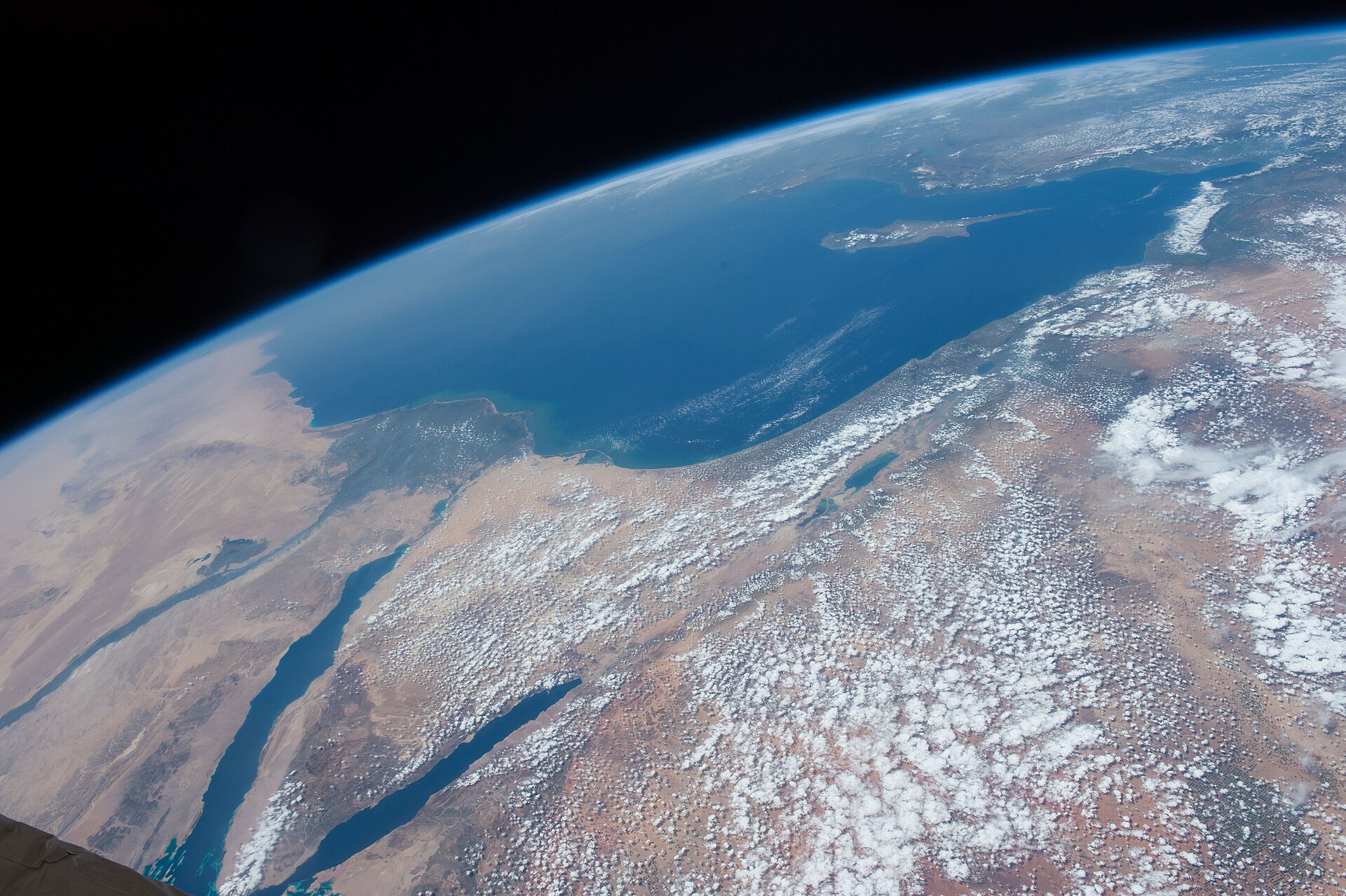
The sequencing is dense enough to read as a circuit, not a calendar — six days, five interlocutors, two in-person stops and three phone calls, and one unmistakable window: the forty-eight hours before Trump lands in Beijing on May 13 for the first US presidential visit to China in nine years, carrying an agenda that includes Iran, Hormuz, and whether Beijing will finally join pressure on Tehran to accept a deal. The sprint was designed so that by the time Air Force One touches down at Beijing Capital International Airport, the Hormuz reopening demand is already being advanced on three separate institutional tracks that do not require American participation.
The Middle East briefing 3,000+ readers start their day with.
One email. Every weekday morning. Free.
Why Did Faisal Visit London the Day Before Trump Landed in Beijing?
Faisal arrived in London on May 11 because the Trump-Xi summit creates a seventy-two-hour window in which Washington’s attention and bandwidth are consumed by the most consequential bilateral relationship in geopolitics, and because Saudi Arabia — which has no seat at the Beijing table and no formal role in the US-Iran negotiations — needs its interests represented in absentia. Trump declared on May 11 that the US-Iran ceasefire was on “massive life support” with “approximately a one per cent chance of living” and called Iran’s latest proposal “totally unacceptable,” a statement that makes the Beijing summit simultaneously the last plausible venue for diplomatic traction on Iran and the moment when the ceasefire framework is most likely to collapse entirely.
Saudi Arabia cannot insert itself into a US-China bilateral, but it can ensure that the Hormuz reopening demand — the interest on which Riyadh’s fiscal survival, export recovery, and regional credibility all depend — is being advanced on parallel tracks while Trump is otherwise occupied. The London visit does this in three ways: it puts the Saudi FM in the same building as the government leading the non-American Hormuz coalition; it coincides with the UK-France defense ministers’ meeting that moves that coalition from diplomatic statement to operational planning; and it arrives less than a week after Saudi Arabia demonstrated, through the Project Freedom basing denial, that it is willing to absorb real costs to prevent uncoordinated American military action in the Gulf.
The sprint’s timing also forces a structural comparison that frames Riyadh’s absence from the Trump-Xi table as an action rather than an omission. While Trump sits with Xi in Beijing — asking for Chinese help on Iran, Hormuz, and the broader war — Faisal is in London with the government that has already built the institutional architecture Trump never attempted: a forty-nation virtual convening without the United States, a fifty-one-nation summit co-chaired with France, and now a defense ministers’ planning session with warships pre-positioned. Faisal’s presence in London is the answer Riyadh has constructed.
What Does Each Stop Deliver That Riyadh Cannot Say Publicly?
Each capital delivers a specific institutional output that Saudi Arabia cannot produce on its own without appearing self-interested: Ankara brings regional legitimacy and the Turkish-Pakistani architecture, Doha brings Chinese-intermediated Hormuz access, Islamabad brings enforcement capacity, and London brings UN Security Council weight and the only non-American Hormuz coalition in existence. Saudi Arabia’s structural problem is that it is the country most damaged by Hormuz’s closure, and it cannot publicly demand reopening without appearing to act from economic desperation rather than principle. Its Q1 2026 budget deficit hit 126 billion riyals ($34 billion), the largest quarterly shortfall on record, and its pre-war export throughput of 7-7.5 million barrels per day through the strait has been compressed to the East-West Pipeline’s ceiling of roughly 5.9 million at Yanbu.
Ankara delivers institutional weight alongside regional credibility. Turkey sits on NATO, has a working relationship with Tehran through the Astana process, and commands attention in a way that a Saudi spokesperson making the same arguments could not. Fidan’s public framing of Hormuz as a matter for “permanent conflict resolution” puts the closure into an institutional context that elevates it above Gulf parochialism, and Erdogan’s head-of-state reception broadcasts that the message carries presidential authority.
Doha delivers the Chinese intermediation channel. Qatar’s LNG tankers — the Al Daayen transited Hormuz at 8.8 knots in April on a Chinese-brokered arrangement — have already demonstrated that Beijing, not Washington, operates the only functioning transit mechanism through the strait. When Qatar’s PM tells Faisal that “all parties” must “respond positively to mediation efforts,” the subtext is that Doha has access to the Chinese channel that Riyadh does not, and that this access is being offered as part of a Gulf-coordinated effort that Saudi Arabia quietly steers.
Islamabad delivers the enforcement architecture. Pakistan is the only country that has served as both venue and enforcer for Iran-US ceasefire talks, and Dar’s discussion with Faisal of “safeguarding maritime security, including in the Strait of Hormuz” formalizes a role that has been de facto since Pakistan’s foreign minister visited IRGC-affiliated headquarters in April. The September 2025 Saudi-Pakistan Mutual Defense Agreement means Islamabad is simultaneously Iran’s interlocutor and Saudi Arabia’s treaty ally — a structural dual role that makes Pakistan indispensable to any enforcement mechanism.
London delivers UN Security Council weight, a government that has already built the coalition infrastructure, and a military presence on Saudi soil that makes it the Western power with the most at stake. Cooper’s bilateral with Faisal converts all three preceding stops — Turkish regional standing, Qatari mediation access, Pakistani enforcement capacity — into the institutional language of the security architecture that MBS has been building around Washington for weeks. The question of whether this architecture can deliver what Washington has not is no longer theoretical — it is being tested in real time, with real warships moving into position.
The Cooper Doctrine: How Britain Became the Hormuz Coalition’s Center
The UK’s institutional ownership of the Hormuz file did not emerge by accident — it was constructed in six weeks through a sequence of escalating convening power that no other government — including the United States — has matched. On April 2, Cooper brought forty-plus foreign ministers from every continent into a virtual meeting on Hormuz reopening, pointedly without American participation, and accused Iran of blockading the waterway “to hold the global economy hostage.” On April 8, Starmer met MBS in Jeddah, discussed Hormuz and defense industrial cooperation, and invoked the approaching centenary of the Treaty of Jeddah — the 1927 agreement that was the first international recognition of the Saudi state — establishing executive-level contact that gave subsequent FM meetings unusual bilateral authority. On April 17, Cooper and Macron co-chaired an International Summit on the Strait of Hormuz that convened fifty-one countries, the largest multilateral gathering on a single maritime chokepoint in modern diplomatic history.
“We are turning diplomatic agreement into practical military plans to restore confidence for shipping through the Strait of Hormuz. When I co-chair this meeting of nations from around the world, our job will be to make sure we are not just talking, we are ready to act.”
— John Healey, UK Defence Secretary, May 11, 2026
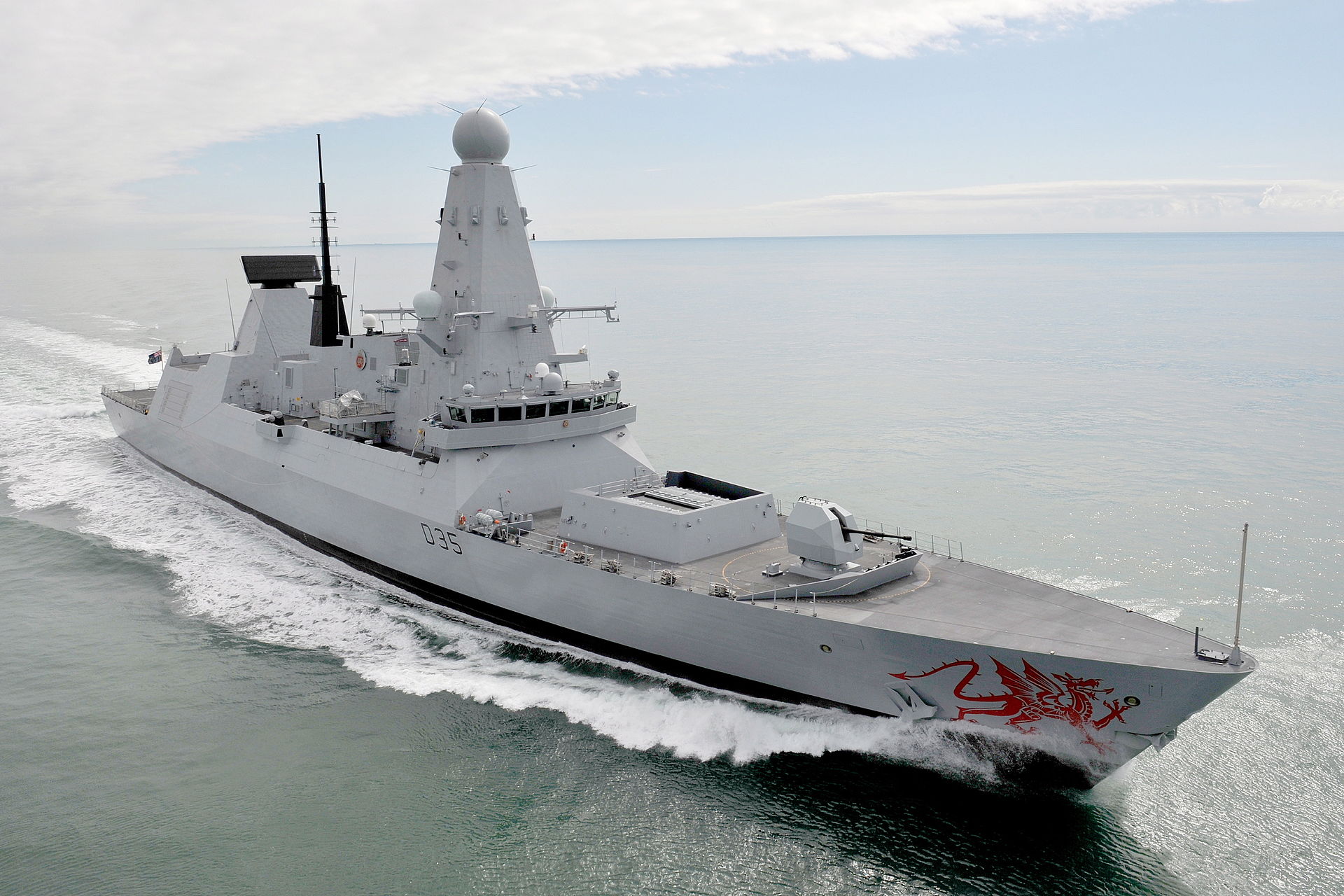
The May 11-12 defense ministers’ meeting marks the fourth step in this escalation: from virtual diplomacy to executive bilateral to international summit to operational military planning. Healey has directed HMS Dragon, a Type 45 destroyer, to pre-position in the Middle East, and announced the establishment of a joint UK-France military headquarters in the region to coordinate future Hormuz operations. France, for its part, transited the Charles de Gaulle carrier strike group through the Suez Canal on May 6 and into the Red Sea, placing a nuclear-powered aircraft carrier and its escorts within range of the Gulf of Oman.
The UK’s position carries a credibility that other potential coalition leaders lack. Sky Sabre — the Giraffe-radar, Land Ceptor air defense system deployed by the Royal Artillery to Saudi bases in late March — represents the first British military deployment outside NATO territory and outside any NATO mandate, a decision that creates a domestic political exposure for Starmer that is itself a form of commitment. The UKEF-PIF memorandum of understanding, making $6.8 billion available to fund Saudi public investment projects, and bilateral trade that hit £16.6 billion in 2024 with a target of £30 billion by 2030, mean that Cooper sits across from Faisal representing not just diplomatic solidarity but deep financial entanglement.
The structural paradox is that Saudi Arabia is not a formal member of the coalition whose existence serves its interests — Riyadh was not a signatory to the forty-one-nation joint statement issued from the April 17 summit pledging contributions to safe passage, and it has not joined the UK-led coalition as a participating state. This is deliberate: Saudi Arabia benefits more from a multilateral demand for Hormuz reopening than from a Saudi demand for the same, and the three-capital sprint is the mechanism by which Riyadh ensures the coalition reflects its priorities without bearing its name. The event that transformed this parallel-track mechanism from a useful option into an operational necessity happened on May 4, when Donald Trump launched Project Freedom.
How Does Project Freedom’s Collapse Shape the London Visit?
The London bilateral carries a weight it would not have carried two weeks ago, because in the interval Saudi Arabia demonstrated — at real cost — that it will deny the United States operational access to its territory rather than accept uncoordinated American military action in the Gulf. When Trump launched Project Freedom on May 4, deploying guided-missile destroyers through Hormuz alongside over a hundred land and sea-based aircraft and 15,000 service members, Saudi Arabia was not informed in advance — a decision that, as NBC News reported, “angered leadership in Saudi Arabia.” Within thirty-six hours, Riyadh denied US access to Prince Sultan Air Base and Saudi airspace, and a Trump-MBS phone call failed to resolve the disagreement; Saudi leadership feared the operation was “not well thought-out and could result in an escalation with Iran.” Reuters’ May 12 investigation confirms that the covert dimension of Riyadh’s posture preceded the veto by six weeks: Reuters confirmed Saudi Arabia launched covert air strikes on Iranian soil in late March 2026, and why Riyadh then vetoed Project Freedom is examined in full.
This sequence transformed the London meeting: before Project Freedom, Cooper represented a useful multilateral partner for Saudi Arabia; after it, she represents the leader of an alternative military track that Riyadh has active reason to prefer. The UK-France coalition is explicitly defensive — Macron said on May 10 that France “never envisaged” a Hormuz deployment but rather a security mission “coordinated with Iran” — and it operates through a forty-nation framework that distributes risk and legitimacy in ways that a unilateral American operation cannot. For a Saudi government that has absorbed the diplomatic cost of publicly opposing a US military operation, the UK-led coalition offers something Washington cannot: a Hormuz reopening track that does not make Riyadh a target of Iranian retaliation by association with American coercion. But preferences cost money, and the figures released the same day Faisal arrived in London measure exactly how much.
The Fiscal Paradox: Record Profit, Record Deficit, Same Quarter
Aramco’s Q1 2026 results, released on May 11 — the same day Faisal arrived in London — present the economic foundation of the entire diplomatic sprint in a single set of numbers. Adjusted net income hit $33.6 billion, up twenty-six percent year on year, driven by elevated crude prices and the East-West Pipeline reaching its maximum capacity of 7 million barrels per day. Nasser called the pipeline “a critical supply artery, helping to mitigate the impact of a global energy shock,” and told investors the market was losing roughly 100 million barrels of supply every week Hormuz remains closed.
“If the Strait of Hormuz opens today, it will still take months for the market to rebalance, and if its opening is delayed by a few more weeks, then normalization will last into 2027.”
— Amin Nasser, CEO, Saudi Aramco, May 11, 2026
But Aramco’s record quarter is Saudi Arabia’s fiscal trap. The Q1 deficit was driven by military spending that rose at the same rate as Aramco’s profits — around a quarter, year on year — while export volumes fell sharply. That 7-million-barrel pipeline ceiling is itself evidence of the constraint: pre-war Hormuz throughput ran at 7-7.5 million barrels per day, meaning the bypass cannot fully replace what was lost. Saudi production fell from 10.4 million barrels per day in February to 7.25 million in March, according to the IEA — a 3.15-million-barrel drop that the bypass geometry cannot close.
| Metric | Figure | Source |
|---|---|---|
| Aramco Q1 adjusted net income | $33.6B (+26% YoY) | Aramco |
| Saudi Q1 budget deficit | $34B (record) | Saudi MoF |
| Brent crude (May 12) | $104.97/bbl | TradingEconomics |
| Saudi fiscal break-even | $108-111/bbl (PIF-inclusive) | Bloomberg |
| Pre-war Saudi production (Feb) | 10.4M bpd | IEA |
| March 2026 production | 7.25M bpd | IEA |
| Weekly supply loss (Hormuz) | ~100M barrels | Aramco CEO |
| East-West Pipeline capacity | 7.0M bpd (max reached) | Aramco |
| Hormuz closure duration | 10 consecutive weeks | — |
| Jet fuel inventories (on water) | -58% (38M → 16M bbl, Feb 28 – May 4) | Aramco CEO |
Nasser warned that jet fuel inventories on water outside the Arabian Gulf had plummeted fifty-eight percent — from 38 million barrels on February 28 to just 16 million by May 4 — a drawdown that risks critical shortages before the summer travel season, and that gasoline supplies face the same trajectory. The diplomatic sprint is an attempt to collapse that timeline before the fiscal arithmetic becomes irreversible. What Iran has done to weaponize the timeline is the subject of its own institutional project.
Iran’s Counter-Architecture and the Sovereignty Trap
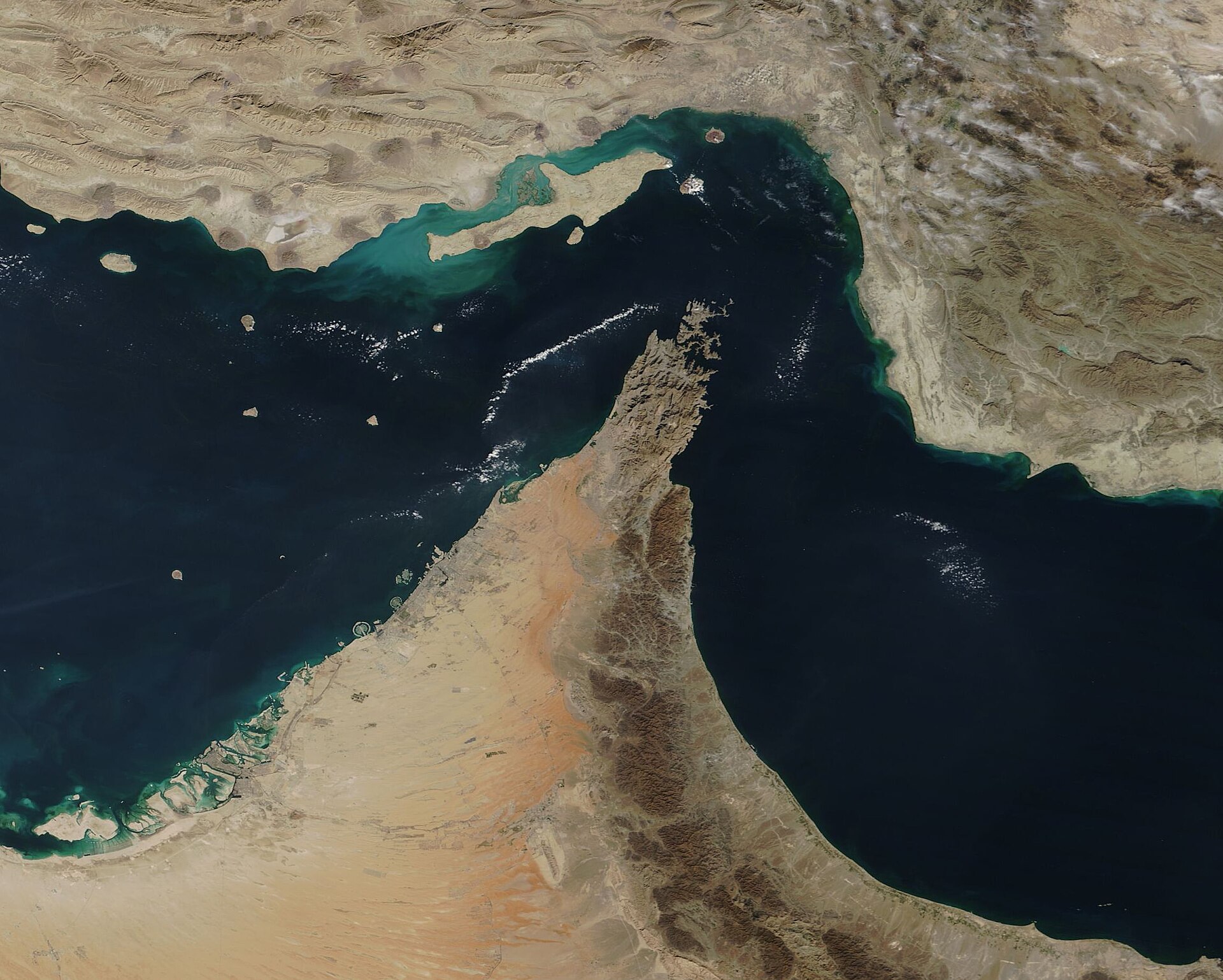
Iran launched the Persian Gulf Strait Authority on May 5 — the same day Project Freedom was paused — converting Hormuz from an international waterway into a bureaucratic toll regime administered by the IRGC. The PGSA requires all transiting vessels to complete a multi-page declaration covering vessel identity, ownership nationality, crew nationality, cargo details, and insurance, with fees of up to $2 million per ship and a blanket ban on Israeli-flagged vessels. Vessels from nations Iran deems to have “damaged” it are denied passage until compensation is paid, and ships from countries complying with US sanctions face what Iran’s army called “certain difficulties crossing the strait.”
The PGSA is a sovereignty claim dressed in administrative language, designed to create facts on the water that will be harder to reverse than any military deployment. Every vessel that submits an application and pays an IRGC transit fee implicitly accepts Iran’s authority over international waters, which is precisely why the enrichment consortium proposal follows the same structural logic: Tehran offers an institutional framework that, once accepted, redefines the legal baseline. The PGSA turns Hormuz into a permit system; the enrichment consortium turns the nuclear file into a sovereignty framework; both are designed to make reversal more expensive than acceptance.
Iran is also tracking the Saudi diplomatic circuit in real time. Araghchi’s call with Faisal on May 11 — the same day the Saudi FM arrived in London — was calibrated to demonstrate that Tehran maintains its own parallel channel with Riyadh and that no amount of coalition-building in London or Ankara changes the bilateral reality that Saudi Arabia and Iran share a neighborhood, a war, and an interdependence that no Western-led institution can dissolve. The UAE’s exit from OPEC on May 1 adds a dimension the sprint cannot address. Gargash declared publicly that every Gulf state’s containment policy toward Iran had “failed miserably” and that the GCC response to Iranian attacks was “the weakest historically” — the Gulf’s own institutional architecture is fragmenting under the pressure of a war that has exposed its limits, and Iran is constructing alternative institutions to fill what collapses.
Can Forty Nations Turn Diplomatic Pledges into Mine Clearance?
The forty-plus-nation defense ministers’ meeting co-chaired by Healey and Vautrin is designed to answer a question the coalition has so far avoided: whether this institutional architecture can produce operational outcomes, or whether it will remain a diplomatic statement that Iran can safely ignore. Healey’s language on May 11 was deliberately operational — “we are not just talking, we are ready to act” — and the announcement that HMS Dragon would pre-position in the Middle East alongside the already-deployed French carrier strike group suggests the UK and France are treating the meeting as a commitment device, not a consultation.
The operational challenge is substantial. The Hormuz mine threat requires clearance capacity that the coalition does not currently possess in theater: the four Avenger-class mine countermeasure ships that were based in Bahrain were decommissioned in September 2025, leaving only two in the region, and the 1991 Kuwait benchmark suggests approximately fifty-one days to clear two hundred square miles of mined waters under permissive conditions. The defense ministers’ meeting discussed contributions to minesweeping, commercial ship escorts, and aerial support, but converting pledges from forty countries into a coordinated clearance operation — against an adversary that controls the shoreline on both sides of the strait’s narrowest point and has already demonstrated its willingness to seize commercial vessels — is a military planning problem that no amount of diplomatic convening power can shortcut.
Macron’s framing introduces its own constraint. By insisting that France “never envisaged” a deployment and instead envisions a mission “coordinated with Iran,” the French president has drawn a line between the UK-France coalition and Project Freedom that benefits Saudi Arabia’s preference for a non-coercive approach but also limits the coalition’s freedom of action. If the mission requires force — to escort vessels past IRGC interdiction, to clear mines under fire, to operate in waters that Iran’s PGSA now claims as its administrative domain — coordination with Iran becomes either a veto Tehran can exploit or a fiction that collapses at first contact, and the gap between Healey’s “ready to act” and Macron’s “coordinated with Iran” is where the operational reality of Hormuz reopening will be determined.
Faisal’s three-capital sprint was designed to ensure that when that determination is made, Saudi Arabia’s interests are embedded in every institutional layer — Turkish regional standing, Qatari mediation access, Pakistani enforcement capacity, British coalition leadership — without Riyadh having to choose between Washington’s coercive track and London’s multilateral one. As of day 73 of the war, with Hormuz closed for ten consecutive weeks and Brent at $104.97, the sprint is complete, the architecture is visible, and the question is whether any of it can open a strait.
Frequently Asked Questions
What is the Saudi-Turkish Coordination Council?
Established in 2016 during the institutional deepening of the Saudi-Turkish relationship, the Coordination Council is a ministerial-level body that has met only three times in a decade — Ankara 2017, Riyadh 2025, and Ankara again on May 6, 2026 — with its rarity making each session a political signal as much as a policy forum. Bilateral trade reached $8.5 billion by the end of 2025, and defense cooperation has expanded to include a Baykar drone procurement agreement signed in 2023, making Turkey a defense-industrial partner whose relationship with Saudi Arabia now extends well beyond NATO’s traditional supply chains.
What military assets has the UK deployed for the Hormuz mission?
Beyond the Sky Sabre air defense system already stationed at Saudi bases, the UK has directed HMS Dragon — a Portsmouth-based Type 45 air-defense destroyer carrying the Sea Viper missile system and Wildcat helicopters from 815 Naval Air Squadron armed with Martlet anti-surface missiles for counter-drone operations — to pre-position in the Middle East. The ship completed weapons and sensor testing at a NATO facility off Crete, including live firing, before heading south. France has deployed the Charles de Gaulle carrier strike group, which transited the Suez Canal on May 6 carrying Rafale Marine fighters and E-2C Hawkeye airborne early-warning aircraft, accompanied by FREMM-class frigates, the air-defense frigate Chevalier Paul, fleet oiler Jacques Chevallier, and at least one nuclear-powered attack submarine.
What does Iran’s PGSA require from transiting vessels?
The Persian Gulf Strait Authority, launched May 5, requires vessels to complete a declaration form of more than forty questions covering vessel name, identification number, all previous names, country of origin and destination, the nationalities of registered owners and operators, the nationalities of every crew member, full cargo manifests, and complete insurance documentation. The form carries the warning that “any incorrect or incomplete information provided will be the sole responsibility of the applicant, and any resulting consequences will be borne accordingly” — language that effectively makes the vessel operator liable for whatever enforcement action the IRGC chooses to take. Israeli vessels are banned outright, vessels from nations Iran considers “hostile” require Supreme National Security Council approval, and ships flagged to countries deemed to have “damaged Iran” are denied passage until Tehran considers compensation to have been paid — a condition with no defined threshold or mechanism.
How did Macron distinguish France’s position from the US approach?
Speaking at a joint press conference in Nairobi alongside Kenyan President William Ruto on May 10, Macron used the phrase “never envisaged” — rendered as “never considered” in some English-language wire translations from the French original — to describe France’s position on a military deployment to Hormuz, framing the UK-France coalition mission instead as one that had “brought together 50 countries and international organizations to enable, in a coordinated way with Iran and by deconflicting the situation with all the countries of the region and the United States, the resumption of maritime traffic as soon as conditions allow.” He explicitly opposed “any blockade, from whichever side it originates” — language that distances France from both Iran’s PGSA toll regime and the US naval blockade of Iranian ports — and rejected “any tolls or fees, regardless of their source.” Iran’s state media covered the statement extensively, with PressTV framing it as evidence of Western division over Hormuz, though France remained a co-chair of the defense ministers’ meeting announced the following day. The UN Security Council dimension of Saudi diplomatic strategy — co-sponsoring two Hormuz resolutions it knew Russia and China would veto in order to build the record for post-UN coalition action — is analysed in Saudi Arabia’s Hormuz Resolution Was Designed to Fail.