
CHANGED: True
{“content”: “
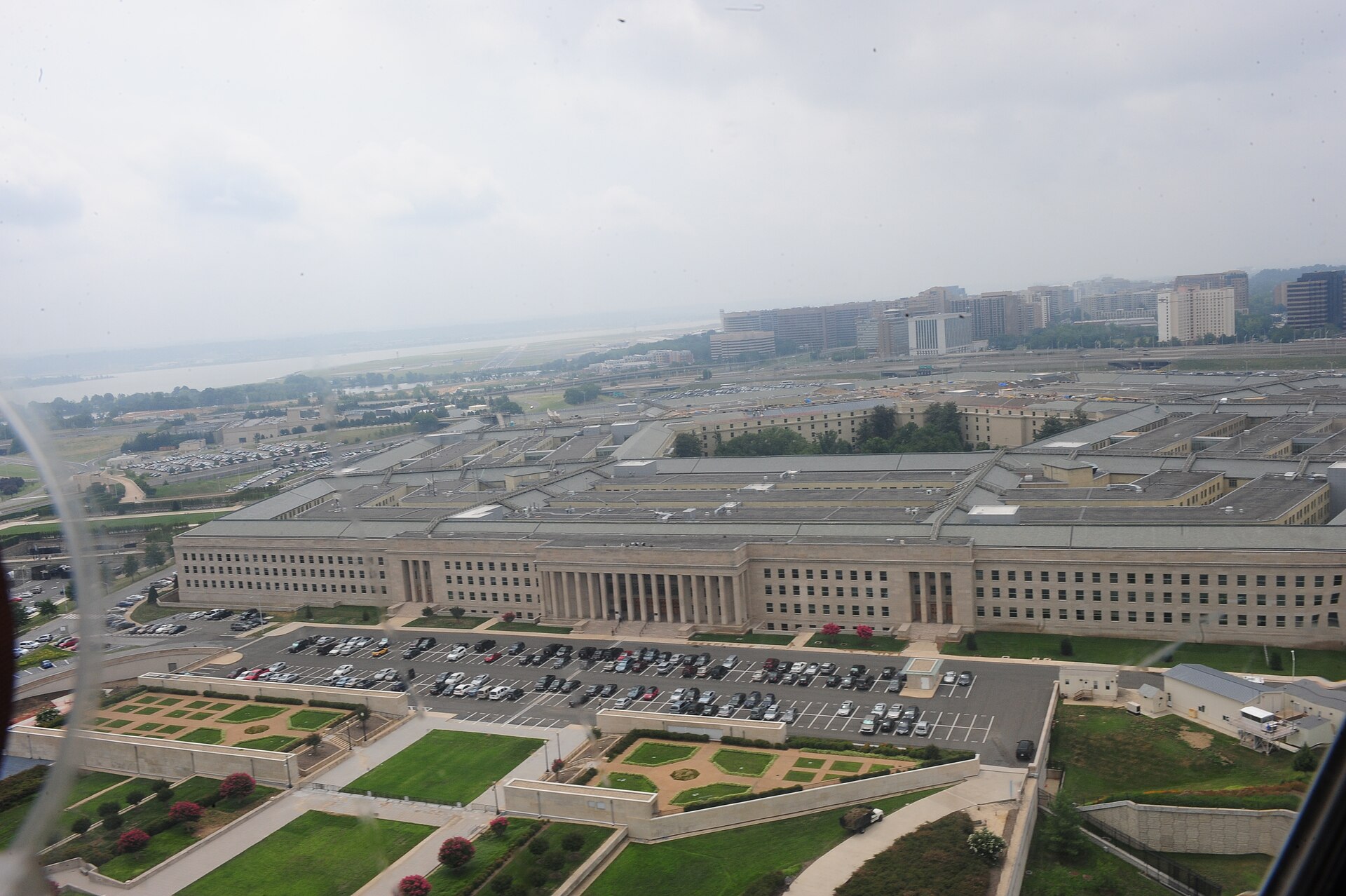
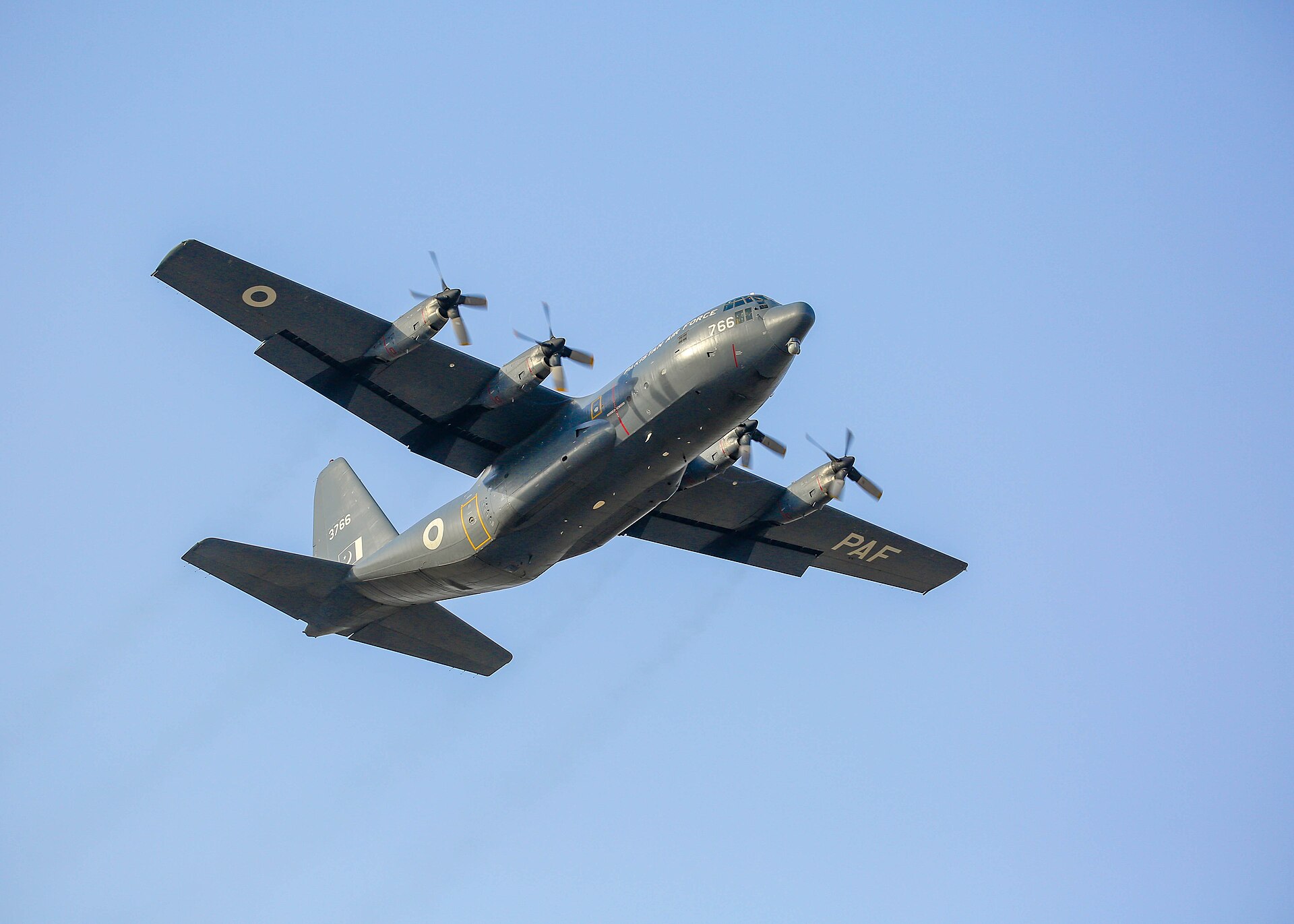
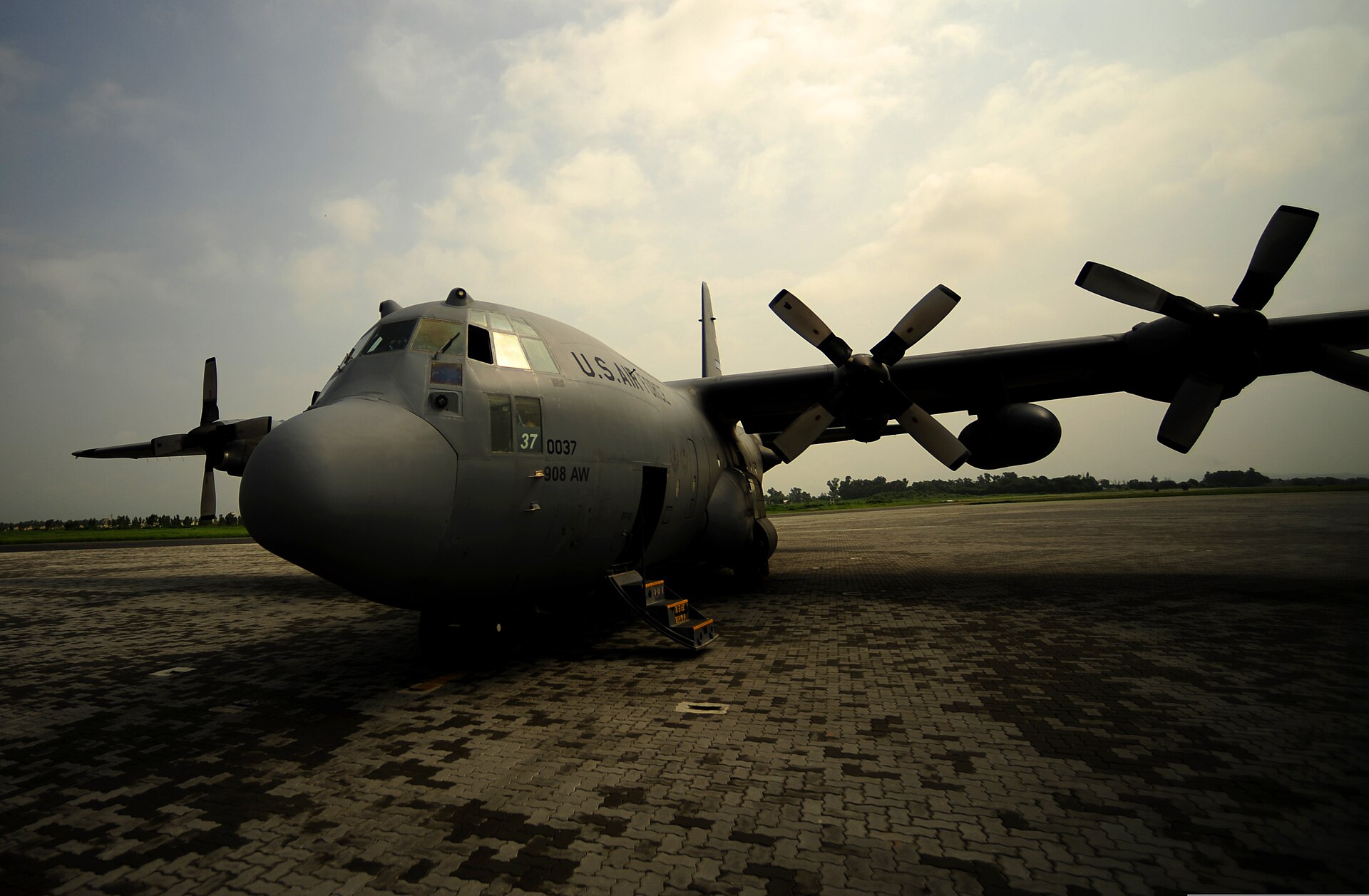
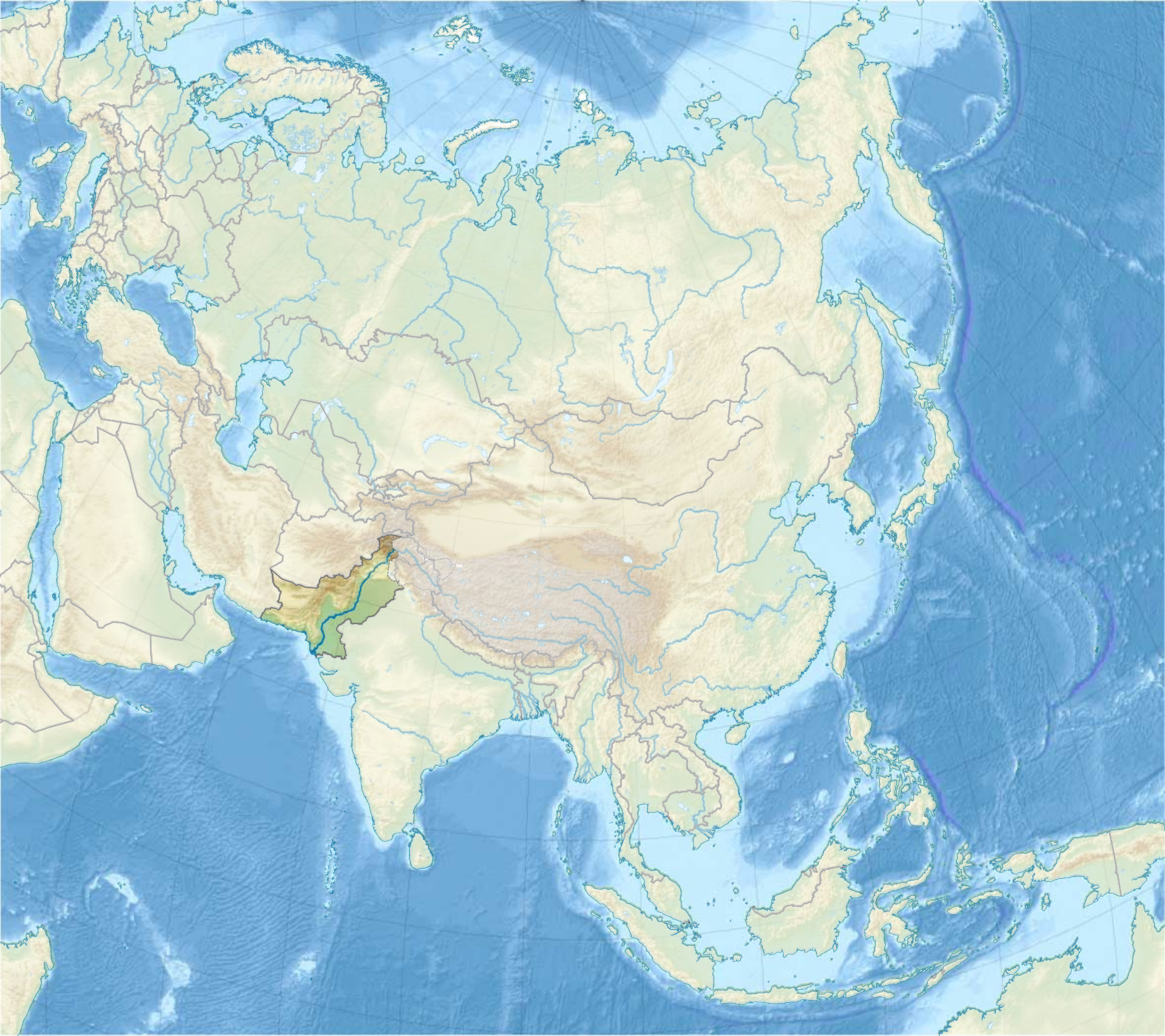
ISLAMABAD u2014 Saudi Arabia committed more than eight billion dollars in deposits, facility extensions, and joint financial packages to bind Pakistan into the scaffolding of its ceasefire diplomacy u2014 and CBS News confirmed on May 12 that Pakistan was simultaneously hosting Iranian military aircraft at an air base in the garrison city adjacent to its own capital. The planes, including at least one Iranian Air Force RC-130, arrived at PAF Base Nur Khan in Rawalpindi days after the April 8 ceasefire, relocated to shield them from potential American airstrikes according to US officials with direct knowledge of the arrangement.
n
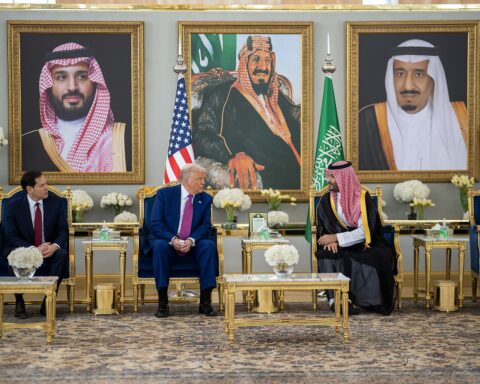
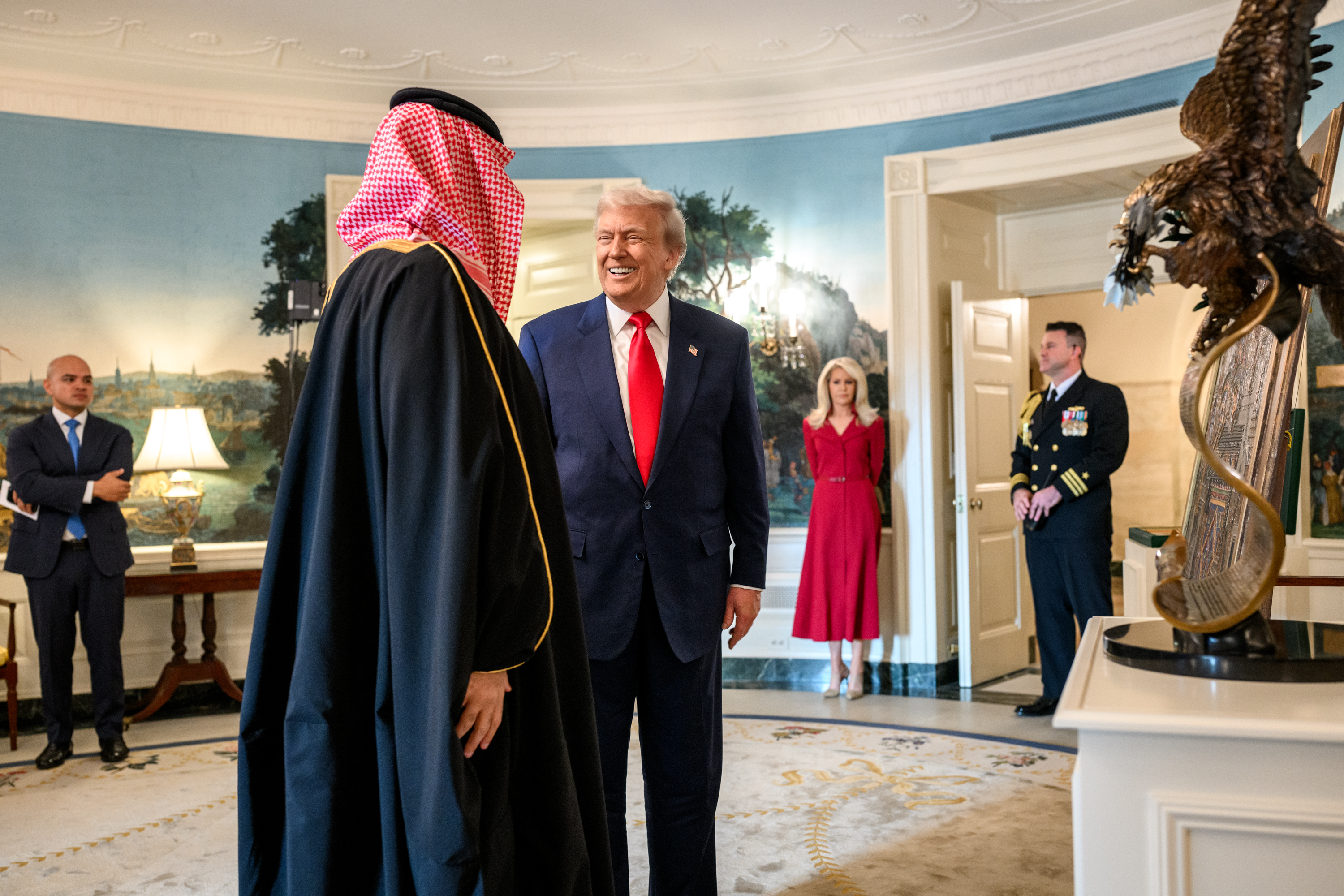
Senator Lindsey Graham’s demand for a “complete reevaluation” of Pakistan’s role as mediator landed within hours, but Graham is the Washington sideshow. The real damage is in Riyadh. Crown Prince Mohammed bin Salman publicly endorsed Pakistan’s mediation through a formal SPA statement, pressed Army Chief Munir into an enforcement role using sovereign debt as a constraint, and built Saudi Arabia’s entire post-April diplomatic strategy around the Islamabad framework. If Pakistan was operationally sheltering Iranian reconnaissance assets during that same period, MBS financed a structurally compromised enforcer with Saudi Arabia’s own reserves u2014 and the three paths now available to him are all painful.
n
The Middle East briefing 3,000+ readers start their day with.
One email. Every weekday morning. Free.
Table of Contents
n
- n
- What Did CBS News Actually Reveal?
- The $8 Billion Architecture
- How Was Pakistan on Both Sides of the Same War?
- Did Iran Even Want Pakistan as Mediator?
- Why Is Qatar in Every Room Now?
- What Does MBS Do Now?
- The Quartet Without Its Load-Bearing Wall
- Frequently Asked Questions
- n
n
n
n
n
n
n
n
n
n
n
n
What Did CBS News Actually Reveal?
n
CBS News, publishing May 12 from US officials with direct knowledge, confirmed multiple Iranian military aircraft at PAF Base Nur Khan in Rawalpindi u2014 including at least one RC-130, a mission-capable reconnaissance platform, not a diplomatic transport. The aircraft were relocated there to shield them from potential American strikes, according to those officials.
n
The RC-130 is a surveillance variant of the C-130 Hercules, not a cargo plane shuttling diplomats, and its presence transforms the narrative from routine basing courtesy to deliberate asset preservation. Nur Khan sits in the garrison city of Rawalpindi u2014 the administrative spine of Pakistan’s military establishment and the city directly adjacent to Islamabad, where ceasefire negotiations were being conducted.
n
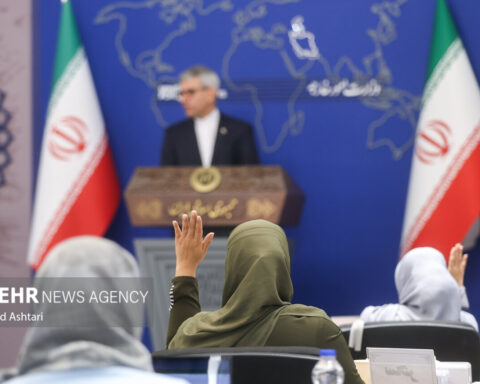
Pakistan’s response arrived in two contradictory installments that compounded the damage rather than containing it. A senior official told CBS that “Nur Khan base is right in the heart of the city, a large fleet of aircraft parked there can’t be hidden from the public eye” u2014 a categorical denial resting on the premise that concealment was physically impossible. The Ministry of Foreign Affairs then issued a statement that abandoned the denial entirely and pivoted to reframing.
n
n
“The Iranian aircraft currently parked in Pakistan arrived during the ceasefire period and bear no linkage whatsoever to any military contingency or preservation arrangement.”
n
u2014 Pakistan Ministry of Foreign Affairs statement, May 2026n
n
The shift from “there are no planes” to “the planes are here for diplomatic purposes” is the kind of messaging collapse that strips a mediator of credibility in real time. Graham, who had already been skeptical of Pakistan’s posture toward Israel, seized on the gap within hours: “If this reporting is accurate, it would require a complete reevaluation of the role Pakistan is playing as mediator between Iran, the United States and other parties.” Jewish Insider reported plural senators raising separate concerns, though Graham’s was a conditional statement rather than a formal legislative action. Open the Magazine, an Indian publication, branded the pattern “Pakistan’s Double Game” u2014 though the framing that matters most for this story is not the American one.
n
The detail that will carry the most weight in Riyadh is the timing window. The aircraft arrived “days after” the April 8 ceasefire, placing them at Nur Khan in approximately the April 10-15 range u2014 the same window in which Saudi Arabia and Qatar were finalizing a joint five billion dollar financial package to Islamabad, and in which Pakistan was deploying troops and fighter jets to Saudi Arabia’s Eastern Province under the mutual defense pact signed seven months earlier. Iran was parking reconnaissance aircraft in Pakistan at the same moment Saudi Arabia was writing the checks.
n
n
The $8 Billion Architecture
n
To understand why the aircraft at Nur Khan matter more to Riyadh than to Washington, you have to understand what Saudi Arabia bought and how much it paid. The financial architecture binding Pakistan to Saudi Arabia’s ceasefire strategy was constructed in layers across 2025 and 2026, each one deepening Islamabad’s dependence and narrowing its room to maneuver independently.
n
| Commitment | Amount | Date | Source |
|---|---|---|---|
| Saudi-Qatar joint financial package | $5 billion | April 11-12, 2026 | Bloomberg / The Researchers |
| Fresh Saudi deposit to Pakistan central bank | $3 billion | April 2026 | Bloomberg |
| Existing Saudi facility extension | $5 billion (through 2028) | April 2026 | Bloomberg |
| SMDA military deployment to Saudi Arabia | 13,000 troops + fighter jets | April 11-12, 2026 | Al Jazeera |
n
n
The total direct Saudi financial exposure exceeds eight billion dollars in deposits and facility extensions alone, before accounting for Riyadh’s share of the joint Saudi-Qatar package. This money was not foreign aid u2014 it was the mechanism that bound Pakistan to an enforcement role Saudi Arabia could not perform itself, because the kingdom had severed its own direct line to Tehran. By April 2026, Islamabad owed Riyadh so much that refusing a Saudi request on ceasefire enforcement would have risked a sovereign debt crisis, and both capitals understood this perfectly well.
n
The SPA statement endorsing Pakistan’s mediation formalized the arrangement in public. Saudi Arabia, which had expelled Iran’s military attachu00e9 and four embassy staff on March 22 u2014 with Foreign Minister Prince Faisal bin Farhan declaring “What little trust there was before has completely been shattered” u2014 chose Pakistan as the proxy through which it would engage a country it had declared persona non grata. The kingdom pressed Munir, whose authority under the 27th Constitutional Amendment gave him direct control over ceasefire diplomacy without needing civilian government approval, into the role of enforcer-in-chief.
n
Iran continued transmitting formal ceasefire documents through the Pakistan channel as recently as May 10 u2014 the response Trump dismissed as “a piece of garbage” u2014 confirming the arrangement was still operational even after the aircraft story had been circulating among US officials for weeks. The problem with purchasing an enforcer is that you have created someone whose compliance depends on financial pressure rather than conviction, and who has every incentive to keep the diplomatic process flowing u2014 regardless of whether the process is producing anything u2014 because the payments are tied to the role, not the result.
n
How Was Pakistan on Both Sides of the Same War?
n
The simultaneity is the part that will be hardest for Riyadh to absorb, and a timeline of the April 10-15 window makes the problem impossible to dismiss as coincidence or compartmentalization. What emerges is a country fulfilling contradictory military commitments to opposing belligerents in the same seven-day stretch.
n
| Date | Event |
|---|---|
| April 8 | US-Iran ceasefire announced; all talks channeled through Pakistan |
| ~April 10-15 | Iranian military aircraft including RC-130 arrive at PAF Nur Khan, Rawalpindi |
| April 11-12 | Saudi-Qatar $5B financial package to Pakistan announced |
| April 11-12 | Pakistan deploys 13,000 troops and fighter jets to Saudi Eastern Province under SMDA |
| April 14 | PM Sharif begins Gulf tour (Saudi Arabia, Qatar, Turkey) to build second-round framework |
| April 16 | Army Chief Munir visits Khatam al-Anbiya HQ (IRGC economic/military arm) |
| April 27 | Iran’s Rezaei publicly questions Pakistan’s neutrality |
| May 10 | Iran transmits formal 14-point MOU response through Pakistan |
| May 11-12 | CBS confirms aircraft; Graham demands “complete reevaluation” |
n
n
In that compressed window, Pakistan was sending fighter jets westward to defend Saudi oil infrastructure at King Abdulaziz Air Base while Iranian reconnaissance aircraft sat protected at a Pakistani base forty minutes from the room where ceasefire talks were being held. An Al Jazeera analyst captured the official intended reading of Pakistan’s posture: Islamabad, the analyst said, “is signalling to Iran that if Iran is not willing to make the types of concessions that lead to a deal… there is a chance that Pakistan could move itself closer to Saudi Arabia and conceivably invoke the mutual defence pact.” The troop deployment was supposed to be coercive messaging u2014 telling Tehran to be flexible while demonstrating to Riyadh that commitments were real.
n
But hosting Iranian reconnaissance aircraft at the same time collapses that framing entirely, because you cannot credibly threaten to invoke a mutual defense pact against one party while sheltering that party’s surveillance assets on your own soil. The juxtaposition of Pakistani jets flying west to defend Saudi Arabia while Iranian jets sat protected at a Pakistani base is the kind of image that does not require diplomatic translation.
n
n
Pakistan’s dual posture is structural, not novel. Islamabad has served as Iran’s “protecting power” in the United States since 1992 u2014 formally representing Iranian diplomatic interests in Washington for 34 years, a role that predates the current war by a generation and that was never suspended when Pakistan accepted the mediator role. Army Chief Munir visited Khatam al-Anbiya headquarters on April 16, the IRGC’s economic and military construction arm commanded by Abdollahi u2014 the same commander President Pezeshkian had publicly accused of wrecking the ceasefire two weeks earlier. The enforcement architecture Saudi Arabia paid for depended on Pakistan appealing to the very commanders Iran’s civilian president identified as the obstacle, and Munir was conducting those appeals from inside IRGC facilities while Iranian aircraft sat at his own base back home.
n
n
“Pakistan’s initiative is undermined by its own political limitations vis-u00e0-vis both Iran and the United States… Islamabad lacks decisive leverage over either principal party, and Iran may come to view Pakistan as a channel for American pressure rather than a neutral facilitator.”
n
u2014 Stimson Center analysis, 2026n
n
The Delhi Policy Group put it differently but arrived at the same conclusion: Pakistan’s mediation role had been enabled “not by its neutrality, but by its utility and compulsions on the one hand and its access and acceptability on the other.” The RC-130 at Nur Khan has not changed what Pakistan is u2014 it has made it visible to anyone who was choosing not to look.
n
Did Iran Even Want Pakistan as Mediator?
n
The aircraft revelation has predictably been read in Washington as evidence of Pakistani duplicity directed toward the United States, but Iran’s own establishment had already begun questioning Pakistan’s utility from the opposite direction weeks before CBS published. On April 27, Ebrahim Rezaei u2014 spokesperson for Iran’s National Security and Foreign Policy Commission, one of the most powerful parliamentary bodies in the Islamic Republic u2014 publicly questioned Islamabad’s suitability as a broker, citing Pakistan’s “reluctance to challenge Washington’s stance” and a “widening trust deficit” that he said had accumulated over the course of negotiations.
n
Rezaei’s statement came before the aircraft story broke, which means Iran’s parliamentary wing had concluded that Pakistan was tilting toward Washington at the exact same time that US officials were concluding Pakistan was tilting toward Tehran. CNN’s report that Trump officials believed Pakistan “was conveying a more positive version of Iran’s position to Washington than the reality” completes the symmetry u2014 both principals suspected the mediator of favoring the other side, which is either evidence of extraordinary neutrality or evidence that neither party found the process credible and both were looking for someone to blame.
n
Yet Iran continued using the channel regardless of these doubts. Tehran transmitted its formal 14-point MOU response to the American ceasefire proposal through Islamabad on May 10 u2014 not through Qatar, not through Oman, not through any of the other back channels that Axios has confirmed are now operating between Washington and Tehran. Iran’s semi-official Tasnim news agency published the response the same day, confirming the state media apparatus was fully aligned with continued use of the Islamabad conduit regardless of what Rezaei and his parliamentary colleagues were saying publicly.
n
The explanation is less flattering than it sounds for either Islamabad or Tehran. Iran used Pakistan because the bureaucratic machinery was already running, because the channel existed and building a new one mid-crisis would have cost time Tehran could not afford, and because transmitting the MOU through Pakistan preserved the fiction that Iran was negotiating with the United States indirectly rather than admitting it wanted direct talks. The Chatham House analysis published in April had framed Pakistan’s role as “transactional rather than principled,” structured around what Islamabad could extract from both sides of a war it could not end. Neither Saudi Arabia nor Iran expected genuine neutrality u2014 and the aircraft at Nur Khan have turned that shared private understanding into a public fact neither side can pretend it doesn’t see.
n
Why Is Qatar in Every Room Now?
n
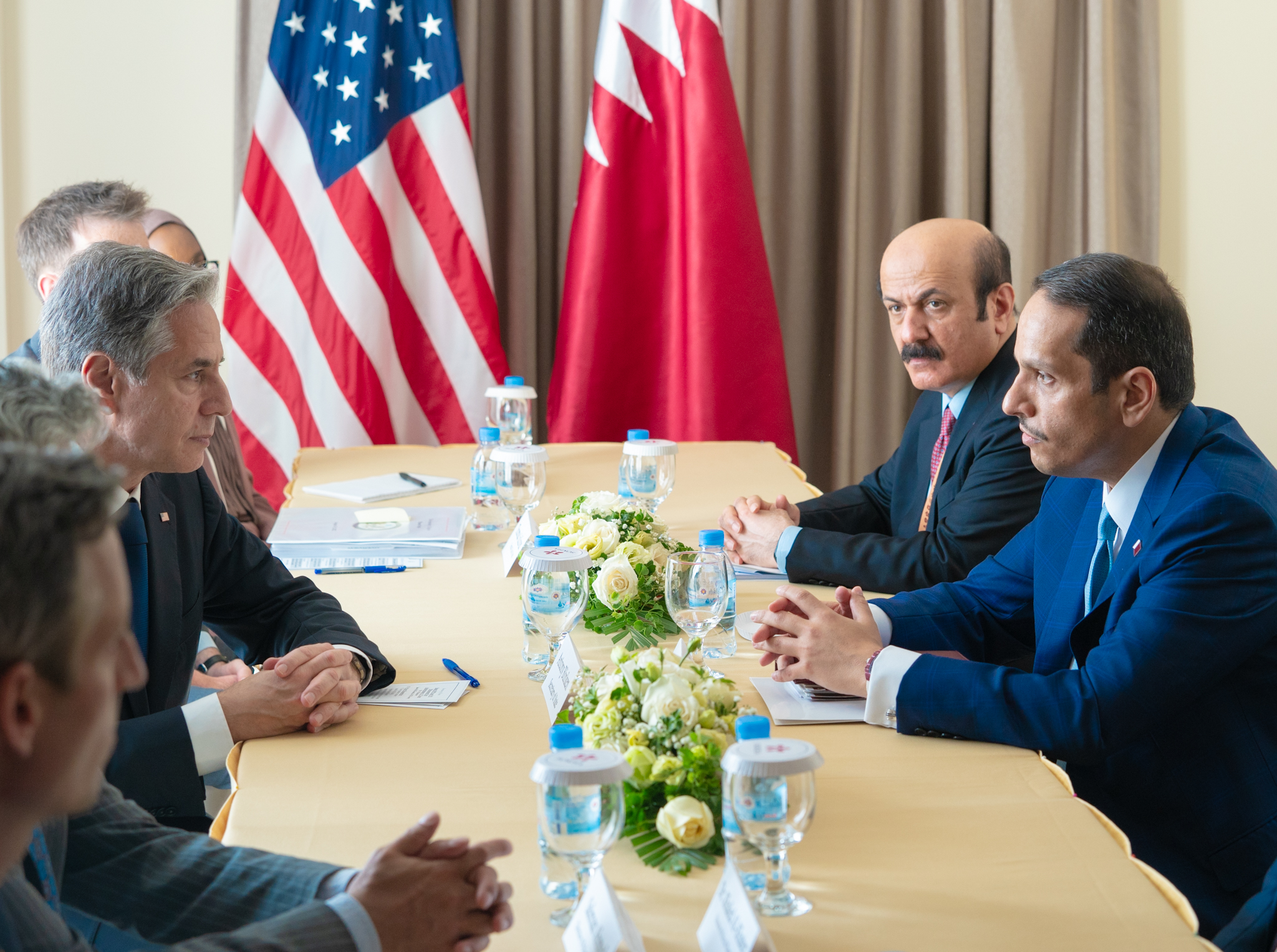
Qatar’s rise as Washington’s primary Iran back channel accelerated while US officials already knew about Nur Khan. Vice President Vance met Qatar’s PM Mohammed bin Abdul Rahman al-Thani at the White House on May 8 u2014 four days before CBS published u2014 followed the next day by Secretary of State Rubio and special envoy Witkoff meeting the same official in Miami. Two meetings in two days is active channel-building, not diplomatic courtesy.
n
The shift was not accidental, and the velocity of it tells you how seriously Washington is treating the Pakistan credibility problem. Axios reported that Qatar is now “one of at least three back channels” between Washington and Tehran and that the White House views Doha as “especially effective.”
n
The structural reason is specific and damning for Pakistan: Qatar has direct access to IRGC generals involved in Iran’s decision-making u2014 the kind of contacts Pakistan has never been able to deliver. Pakistan’s access runs through the foreign ministry and through the civilian-military interlocutors that Munir cultivated during his visits to IRGC facilities; Qatar’s runs through the same IRGC command structure that has repeatedly overridden Iranian civilian diplomacy at every critical juncture of this war.
n
Qatar, during the Vance meeting, explicitly stressed Pakistan’s ongoing importance as a mediator u2014 the diplomatic equivalent of praising the starter you’ve already replaced, a signal offered precisely because the substitution is already underway and the departing party needs to be managed rather than confronted. The Washington Times reported that Qatar mentioned Pakistan’s mediation role as continuing, though nothing in the White House readout or subsequent reporting suggested Washington had any interest in pausing the Qatar channel while Islamabad sorted out its credibility problem.
n
n
For Saudi Arabia, Qatar’s rise presents a problem MBS built his post-war architecture specifically to prevent. The kingdom has spent a year constructing a security framework designed to place Riyadh at the center of Gulf diplomacy, with Pakistan u2014 not Qatar u2014 as the primary conduit to Tehran. Shifting the mediation center of gravity from Islamabad to Doha hands diplomatic advantage to a Gulf neighbor whose alignment with Saudi preferences is conditional, whose own relationship with Tehran operates entirely outside Riyadh’s oversight, and whose interests in the post-war Gulf order do not automatically align with what MBS has been building. Qatar is not a Saudi proxy, and unlike Pakistan, it cannot be made into one with a three billion dollar deposit.
n
What Does MBS Do Now?
n
Crown Prince Mohammed bin Salman has three paths forward from the Nur Khan revelation, and none of them are good. The question is which kind of damage Riyadh is prepared to absorb u2014 to its diplomacy, to its credibility, or to the institutional architecture MBS has spent years and billions constructing.
n
The first option is to pivot to Qatar. This is the path of least American resistance, since Washington is already building the Doha channel and Doha’s IRGC-level contacts are ones Pakistan cannot match. But Qatar will not accept the enforcement role Pakistan filled under the SMDA: Doha has no mutual defense pact with Riyadh, no troops deployed to the Eastern Province, and no eight billion dollars in financial dependence that Saudi Arabia can use as a constraint on Qatari behavior. Pivoting to Qatar gives MBS a better interlocutor and a weaker enforcer, which is the inverse of what the post-April architecture was designed to produce.
n
The second option is to prop up Pakistan anyway u2014 absorb the embarrassment, maintain the existing framework, and calculate that the alternative of publicly abandoning it would require Riyadh to explain what replaces it at a moment when no replacement is ready. Pakistan’s troops are still in the Eastern Province, the SMDA is still in force, and Islamabad is still the only channel through which Iran has been willing to transmit formal diplomatic documents. The IISS Islamabad Quartet u2014 the nascent security formation linking Egypt, Pakistan, Saudi Arabia, and Turkey u2014 would lose its most strategically positioned member if Riyadh pulled the financial plug. MBS has shown throughout this war that he will tolerate embarrassment when the alternative is losing institutional architecture he spent years constructing, and the sunk cost here is not just money but diplomatic credibility that cannot be rebuilt by switching channels mid-crisis.
n
The third option is a direct Saudi-Iran backchannel that bypasses the Pakistan problem entirely, but it requires reversing something Riyadh has publicly declared irreversible. Prince Faisal said in March that trust had been “completely shattered” after Iranian strikes on Saudi territory, and the kingdom expelled Iran’s military attachu00e9 with 24 hours’ notice in a move designed to signal that the diplomatic door was closed. Reopening a direct channel would mean acknowledging that the entire Pakistan-mediated framework u2014 the financial commitments, the SMDA deployment, the Quartet, the SPA endorsement u2014 was elaborate staging for a conversation Saudi Arabia could have had without intermediaries if it had been willing to accept the political cost of talking to Tehran directly.
n
n
“What little trust there was before has completely been shattered.”
n
u2014 Saudi FM Prince Faisal bin Farhan, March 22, 2026, on expulsion of Iran’s military attachu00e9n
n
The probable outcome is a combination of the first two paths: maintain the Pakistan architecture publicly while building the Qatar channel privately, and bet that the diplomatic process moves fast enough that the contradiction never becomes unsustainable. This is, in its essentials, what Pakistan itself was doing with the Iranian aircraft u2014 running parallel commitments in opposite directions and trusting that neither principal would look too closely at what was happening on the other side. The difference is that MBS watched in real time what happened when Pakistan’s version of that strategy was exposed, and now he is calculating whether his own version can survive the same scrutiny.
n
n
The Quartet Without Its Load-Bearing Wall
n
The IISS analysis published in May 2026 identified what it called the “Islamabad Quartet” u2014 Egypt, Pakistan, Saudi Arabia, and Turkey u2014 as a nascent security formation that had crystallized from the war’s diplomatic wreckage. Foreign ministers met in Riyadh on March 18, in Islamabad on March 29, and in Antalya on April 17, each session building institutional depth and broadening the framework beyond the bilateral Saudi-Pakistan relationship into something designed to outlast the current crisis. The broader Saudi diplomatic architecture u2014 the UNSC Hormuz resolution, the Quartet, the SMDA u2014 was engineered to embed MBS’s preferences in multilateral structures that any future American president would have to engage with regardless of bilateral relationships.
n
Pakistan’s role in the Quartet was specific and irreplaceable: the member with dual-access to both Iran and the United States, the member whose army chief had constitutional authority to negotiate ceasefire terms without civilian government approval, the member whose protecting-power status in Washington since 1992 gave it institutional memory of the US-Iran relationship that no other Quartet member possessed. Egypt has no comparable Iranian channel, and while Turkey maintains its own relationship with Tehran, Ankara’s access operates through different power brokers and carries the accumulated baggage of Syrian and Kurdish policy disagreements that limit its utility on the nuclear and Hormuz files.
n
Without Pakistan’s credibility as an interlocutor, the Quartet becomes a three-party discussion about Iran in which nobody present has a functioning relationship with the IRGC command structure that actually controls Iranian war policy. The RC-130 at Nur Khan does not destroy that architecture on its own u2014 but it fractures the foundation at the worst possible moment, with Trump dismissing Iran’s latest MOU, the April 22 ceasefire expiration already past without extension, and the White House visibly shifting its attention to Doha. The eight billion dollars is already committed, and every alternative to the Islamabad framework leads through Doha, Muscat, or Ankara u2014 capitals where MBS would be a guest at someone else’s table rather than the host at his own.
n
Frequently Asked Questions
n
What is the RC-130 and why does the aircraft variant matter?
n
The RC-130 is a reconnaissance and intelligence-gathering variant of the Lockheed C-130 Hercules, modified with electronic surveillance equipment and signals intelligence (SIGINT) collection capability u2014 a meaningfully different platform from the standard C-130 cargo variant that Pakistan’s MoFA statement implied by linking the aircraft to “diplomatic personnel and security teams.” Iran’s air force operates a small fleet of C-130 variants dating to pre-revolution American sales from the 1970s, and the RC-130 designation confirms the relocated aircraft had active intelligence-collection capability that Iran considered worth preserving from potential US strikes. The distinction matters because it transforms the narrative from “Iran parked transport planes at a friendly base” to “Iran relocated mission-capable surveillance assets to a mediator’s military facility during active negotiations.”
n
Has Pakistan hosted foreign military aircraft at its bases before?
n
Pakistan has an extensive history of foreign military basing arrangements, often running in contradictory directions simultaneously. During the Soviet-Afghan war from 1979 to 1989, CIA operations ran through Pakistani airbases with full ISI cooperation, and Shamsi Airfield in Balochistan hosted American drone operations until Pakistan ordered its closure in December 2011 following the Salala border incident that killed 24 Pakistani soldiers. Pakistan and Iran share a deeper military cooperation history than the current framing suggests u2014 during the 1974-77 Balochistan insurgency, Pakistani and Iranian troops operated jointly against separatist forces, and Iran has since ordered MFI-17 Mushshak trainer aircraft from Pakistan’s defence production facilities. The precedent for dual-use basing exists; what is unprecedented is doing it while simultaneously serving as the paid mediator between the country whose aircraft you are hosting and the country paying you to mediate.
n
Could the United States impose sanctions on Pakistan over the aircraft hosting?
n
Graham’s statement called for “reevaluation” rather than specific legislative action, but Pakistan’s financial vulnerability makes even the implicit threat potent through channels that do not require a congressional vote. Pakistan’s economy depends on a $7 billion IMF Extended Fund Facility approved in July 2024, and the United States holds effective veto power on the Fund’s executive board u2014 conditioning future tranches on a satisfactory explanation of the Nur Khan arrangement would not require new legislation. CAATSA (the Countering America’s Adversaries Through Sanctions Act) provides a statutory framework for sanctioning countries that engage in “significant transactions” with Iran’s defense sector, though applying it to temporary aircraft hosting would require creative legal interpretation that the administration may prefer to hold in reserve as informal pressure rather than formal action.
n
What is the SMDA and can it survive this revelation?
n
The Saudi-Pakistan Strategic Mutual Defense Agreement, signed in September 2025, is a formal mutual defense pact obligating both countries to assist each other against external military threats u2014 the legal basis for Pakistan’s deployment of 13,000 troops and fighter aircraft to Saudi Arabia’s Eastern Province. The pact itself survives the aircraft revelation because it operates on a separate legal track from Pakistan’s mediator role: Saudi Arabia needs the military deployment regardless of whether Islamabad is credible as a ceasefire broker, and withdrawing the troops would create a security gap in the Eastern Province that Riyadh cannot afford. The real risk is not legal but political u2014 if Pakistani bases are available to Iranian military assets, the Saudi royal court and military command will inevitably ask whether SMDA-deployed Pakistani troops would actually fight if IRGC forces struck Saudi infrastructure from the east, and the pact’s carefully drafted text cannot answer a question about loyalty that the RC-130 at Nur Khan has now made impossible to avoid. On the SMDA’s relationship to the broader US-Saudi security architecture — and why $142 billion in American weapons does not close the Article 5 gap — see Saudi Pakistan SMDA and the limits of MNNA status. The Reuters and Bloomberg confirmation on May 18 that Pakistan deployed 8,000 troops and a Chinese HQ-9 battery to King Abdulaziz Air Base — with figures below the April 13,000-troop estimate — indicates the force was drawn down to a combat-ready expeditionary footprint rather than a full surge deployment.
n”}