
JEDDAH — Saudi Arabia has roughly 400 PAC-3 MSE interceptors left from a pre-war inventory of 2,800 rounds, and 1.8 million pilgrims are walking into the Hejaz to find out what that number means in practice. The Custodian of the Two Holy Mosques cannot publicly admit which cities his interceptors will not cover, because the title that legitimises his crown is the same title that forbids cancelling Hajj.
That trap, set in October 1986 when King Fahd adopted the Custodian formula in answer to Khomeini and the Grand Mosque seizure, has now collided with the arithmetic of a 38-day air war. Mark Cancian and John Park at the CSIS Missile Defense Project put the depletion at 86 per cent of stockpile between March 3 and early April. The Hejaz allocation — Mecca, Madinah, the Jamaraat bridges, the Mina tent city — sits at somewhere between 80 and 150 PAC-3 rounds. Day of Arafah falls on May 26. That is eleven days away, and Iran’s missile launchers, by the admission of IRGC Aerospace Force commander Brigadier General Majid Mousavi, have already been replenished beyond pre-war levels.
Table of Contents
- The Intercept Math Is Not a Scenario
- How Many PAC-3 Rounds Defend Mecca Right Now?
- The Five-Layer System on Paper, the One Layer That Matters
- Why Can’t MBS Publicly Disclose the Interceptor Shortfall?
- The Greek Battery Extension Saudi Arabia Asked For But Has Not Got
- What Does Iran’s 30,000-Pilgrim Decision Actually Mean?
- IRGC Replenishment Numbers and the May 26 Window
- Washington Said Don’t Go. Riyadh Said Come Anyway.
- THAAD, 2027 and the Production Line in Camden, Arkansas
- Frequently Asked Questions
The Intercept Math Is Not a Scenario
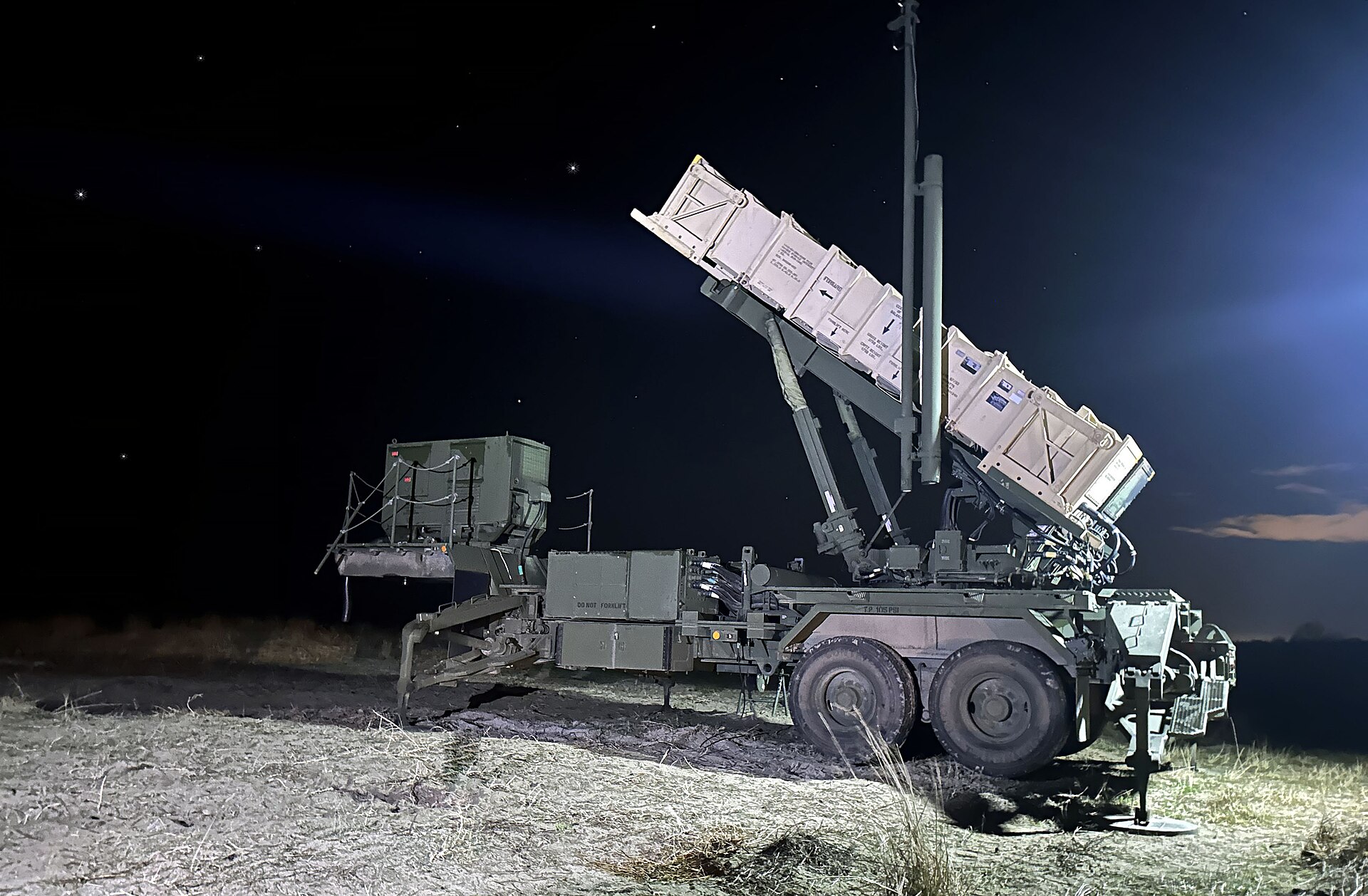
Cancian and Park’s “Last Rounds” assessment, published April 24, calls the Saudi PAC-3 drawdown a depletion rate with no comparable precedent in the system’s operational history. The number behind that sentence is the one Riyadh will not publish: about 2,400 rounds expended across 38 days of high-intensity combat, with the survivors split across six battalions and a coastline that runs from Tabuk to the Empty Quarter. The Hejaz, where the pilgrims are, gets a fraction.
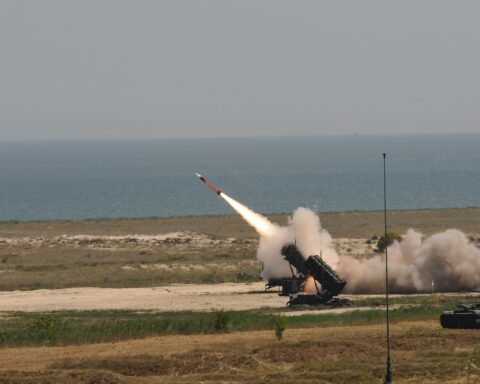
Standard Patriot engagement doctrine is two interceptors per inbound ballistic missile, and Saudi gunners through March and April consistently ran 22 rounds per engagement event when targets came in waves. Plug 80 to 150 rounds into that ratio and the Hejaz has somewhere between three and seven full salvo cycles before the magazine is bare. The April 7 IRGC strike on Jubail used 11 ballistic missiles in two sequential waves — four, then seven — plus 18 drones; the Saudi Ministry of Defence claimed all 11 intercepts, although a SABIC fire on the Jubail petrochemical perimeter the same night told a more complicated story to anyone reading Asharq Al-Awsat.
One Jubail-scale event over the Hejaz, repeated three times across five days of Hajj, exhausts the allocation. That is not a war-game tabletop. It is the consumption curve Saudi gunners actually printed during the last week before the ceasefire pause, when CSIS modelling put the burn rate at roughly 63 rounds a day — a rate at which the entire national PAC-3 reserve covers fewer than seven days of sustained combat.
How Many PAC-3 Rounds Defend Mecca Right Now?
Between 80 and 150 PAC-3 MSE interceptors are physically present in the Hejaz allocation as of mid-May 2026, derived from the 400 surviving rounds distributed across six Royal Saudi Air Defence battalions on a geographic-priority basis. That figure assumes the Makkah-Madinah corridor takes the largest share. It also assumes nothing else gets shot at this week.
The Middle East briefing 3,000+ readers start their day with.
One email. Every weekday morning. Free.
The 400-round national floor comes from CSIS’s April 24 reconstruction of the 38-day Saudi expenditure curve. Riyadh has not contested the number publicly, and it has not republished its own. The $9 billion DSCA-approved sale of 730 fresh PAC-3 MSE rounds, cleared January 30, will deliver zero missiles before mid-2027, because the Lockheed Martin Camden, Arkansas line currently produces 620 PAC-3 rounds a year for every customer on earth, including the US Army’s own war reserve, Ukraine, Poland, Japan, Romania, the Netherlands and the United Arab Emirates. The waiting list is queued ahead of the delivery date, not behind it. The piece HOS published on the Hegseth congressional testimony on munitions shortages walked through that production-rate ceiling in detail.
What that means for the Hejaz is straightforward: replenishment between now and Day of Arafah is mathematically excluded. The defence at the Plain of Arafat on May 26 will be conducted entirely with rounds already sitting on Saudi soil, and there is no airlift that can change the figure.
The Five-Layer System on Paper, the One Layer That Matters
Saudi MOD press releases since late March have repeatedly named a five-layer architecture defending the Hejaz: THAAD for exo-atmospheric intercepts above 150 kilometres, PAC-3 MSE for terminal-phase ballistic intercepts, the South Korean KM-SAM Block II Cheongung-II for medium-range coverage, the Chinese-supplied Silent Hunter 30-kilowatt fibre-optic laser, and the Oerlikon Skyguard twin-35mm cannon as the point-defence floor. Read out loud at a Riyadh press briefing the list runs to five items. Read against the physics of an IRGC ballistic missile arriving on a depressed trajectory over the Najd, it runs to one.
THAAD, where it is fielded, engages above the atmosphere. Four of seven planned Saudi THAAD sites are scheduled to reach operational capability by the end of 2026 — none are confirmed live for Hajj 2026, and the engagement envelope above 150 kilometres altitude does not address the cluster of short-range ballistic threats the IRGC has demonstrated against Saudi targets since March. KM-SAM Block II is the system Riyadh paid Hanwha and LIG Nex1 $3.2 billion for; operational delivery status into Royal Saudi Air Defence Force inventory in 2026 remains unclear from open South Korean and Saudi sources, and there is no public confirmation of a combat-ready Cheongung-II battery on Hejaz soil. Silent Hunter is rated for drones and unmanned aerial systems out to about four kilometres; it does not kill ballistic warheads. Skyguard kills cruise missiles and low-altitude drones at point-defence range; it does not engage hypersonic re-entry vehicles tipped with a high-explosive warhead.
The one layer with a genuine engagement envelope against an IRGC Khorramshahr or Emad coming down on Mecca is PAC-3. The rest of the architecture is real hardware engineered for the wrong threat curve. As HOS noted on the co-belligerent legal exposure piece, the kit Saudi Arabia is brandishing in its public posture is partially decorative against the specific weapons Iran has fielded.
Why Can’t MBS Publicly Disclose the Interceptor Shortfall?
The Custodian of the Two Holy Mosques cannot triage Hajj geographically without surrendering the title’s legitimacy claim. Adopting that formula in October 1986 was King Fahd’s direct answer to Khomeini’s revolutionary Islamism and to the November 1979 Juhayman al-Otaybi seizure of Masjid al-Haram. The title commits the throne to total protection of the pilgrimage as the precondition for ruling Saudi Arabia at all.
That commitment is the structural reason no Saudi official can say on the record what every Saudi air-defence officer knows on the inside of his operations room: the rounds will not stretch. If MBS were to say publicly that PAC-3 coverage of Madinah on the Day of Tarwiyah will be thinner than coverage of Mecca on the Day of Arafah, he would be acknowledging that the Custodian cannot custody every site in the Hejaz at the same time. That is not a defensible posture for a Saudi king. It is the kind of admission that 1979 was built to make impossible.
So the public-facing message stays uniform. Royal Saudi Air Defence Force commander statements emphasise the layered system; the Ministry of Hajj emphasises the 1.8 million capacity; the General Authority for Statistics publishes daily arrival numbers — 850,000-plus already on the ground as of May 14, per The National, with 820,000 by air, 35,000 by land and 4,000 by sea — and nobody in Riyadh is going to tell the camera that the interceptor inventory beneath the pilgrims at Mina has a finite floor measured in single-digit salvo cycles. The trap is closed.
The Greek Battery Extension Saudi Arabia Asked For But Has Not Got
Greece’s ELDYSA mission to Saudi Arabia is the rounds gap made geopolitical. About 120 to 130 Hellenic Air Force personnel, a single Patriot battery configured for PAC-2 and PAC-3 firings, an AN/MPQ-53 radar, and the legal cover of a bilateral mission rather than a NATO operation. ELDYSA arrived in early March, was given a public-facing protective brief over the Yanbu industrial corridor, and on March 19 at 04:30 local time fired two PAC-3 interceptors against two Iranian ballistic missiles inbound on Yanbu. Janes and GreekReporter both confirmed the engagement; the Hellenic Air Force has not commented publicly on the kill confirmation, but Greek media treated it as the first combat intercept on the unit’s record. The bilateral architecture behind those intercepts is reconstructed in the HOS piece on the Greek-Saudi air defence deal.
Saudi Arabia formally requested an extension of the ELDYSA deployment through November 2026 at the May 14 Athens bilateral. The Greek defence ministry has not confirmed agreement. The Ukrainian government, through several public statements and at least one private demarche in Athens reported by Defence Express and Defence Security Asia, has been lobbying against the extension on the grounds that every PAC-3 round Greece expends defending Yanbu is a round Greece does not have to defend Kyiv or to satisfy NATO Article 3 readiness obligations. That is not theoretical. The Hellenic PAC-3 inventory is small, and each ELDYSA engagement debits it.
The structural problem visible in the Athens delay is that the rounds-supply geography of the entire alliance now runs through a queue at Camden, Arkansas, and every customer wanting to top up is competing for the same 620 missiles a year. The HOS piece on Ukraine’s Sky Map at PSAB traced the same arithmetic from the opposite end: Saudi Arabia is now buying Ukrainian air-defence integration software because the underlying interceptor stockpile is no longer available in volume.
What Does Iran’s 30,000-Pilgrim Decision Actually Mean?
Iran is sending approximately 30,000 pilgrims to Hajj 2026, 34 per cent of its official quota of 87,550, with Tasnim reporting on April 25 that the dispatch is going forward “in accordance with the command, approval, and viewpoint” of Ayatollah Mojtaba Khamenei. That formula is the operational answer to a structural question: how many Iranian citizens does Tehran want sitting inside the IRGC’s own targeting envelope?
The 1987 precedent matters here. On July 31, 1987, clashes between Iranian pilgrims and Saudi security in Mecca killed 402 people, broke Saudi-Iranian diplomatic relations, and triggered a three-year Iranian Hajj boycott followed by an 87 per cent quota cut. The shock that produced the boycott was the discovery that an Iranian pilgrim population on Saudi soil functioned, in extremis, as a hostage population — a constituency Tehran could not protect from a Saudi response and could not weaponise without sacrificing.
The 30,000 figure is the inverse calculation. It is large enough to maintain the appearance of Iranian participation in the rites of Islam, which the regime cannot afford to forfeit publicly, and small enough that the IRGC is not constrained by a hostage-population problem if it chooses to resume missile strikes against Saudi territory during Hajj. A 66 per cent quota reduction in 2026 mirrors the post-1987 retraction in numerical scale, but with the political vector reversed: in 1987 Tehran was punishing Riyadh by withdrawing; in 2026 Tehran is preserving operational freedom by under-deploying.
The Tasnim invocation of Mojtaba Khamenei is itself telling. Ayatollah Ali Khamenei has been absent from public position for more than 70 days at this stage. Decisions citing Mojtaba — which include this Hajj dispatch — are decisions visibly being routed through the succession-track architecture rather than the office of the Supreme Leader. That tells you who in Tehran is authorising the calibration, and it tells you the calibration is treated as a sensitive item.
IRGC Replenishment Numbers and the May 26 Window
The threat side of the equation has not been static. US intelligence assessments cited by Euronews on May 13 put Iran’s surviving missile stockpile at roughly 70 per cent of pre-war strength, with 30 of 33 IRGC missile sites along the Hormuz corridor having regained operational access by early May. IRGC Aerospace Force commander Brigadier General Majid Mousavi, in remarks after the April 8 ceasefire, said Iran’s capacity to replenish missile and drone launchers during the pause “had outpaced pre-war levels.” That phrasing is not bluster boilerplate; it is calibrated to communicate to Saudi and US analysts that the launcher inventory has improved in absolute terms during the negotiation window.
The IRGC Aerospace Command’s public posture on April 8 — “should the enemy commit the slightest error, it will be met with a response in full power” — establishes the doctrinal language under which a missile strike during Hajj would be framed as a response, not an initiation. That framing matters because it is the framing IRGC press services will use if salvo events occur during the May 26 Arafah window. As HOS documented in the Operation Epic Fury reconstruction, the Saudi side has spent the ceasefire period conducting strikes Riyadh has not publicly acknowledged, which is exactly the kind of activity the Mousavi formula is designed to characterise after the fact as an enemy “error.”
Eleven days is a short window for the Saudi side and a long window for the Iranian side. The arithmetic favours the side with more rounds. The calendar was confirmed on May 17, when Saudi Arabia’s moon-sighting committee fixed Dhul Hijjah — the calendar was confirmed on May 17, locking Day of Arafah to May 26 the same forty-eight hours that US and Israeli forces were reported to be seeking strike readiness.
Washington Said Don’t Go. Riyadh Said Come Anyway.
On April 7, 2026, the US Overseas Security Advisory Council issued a Level 3 “Reconsider Travel” advisory against Hajj 2026 attendance — the first such advisory against the pilgrimage in modern US diplomatic history. The text references regional missile activity, air-defence saturation, and unresolved ceasefire status. The State Department has not retracted the advisory in the five weeks since, which inside the inter-agency means CENTCOM, DIA and INR all consider the underlying threat picture unchanged.
The advisory is operationally embarrassing for Riyadh. Saudi Arabia’s diplomatic position is that Hajj 2026 will proceed normally; the OSAC bulletin is the US government saying, in writing, that American citizens should reconsider whether normal is an accurate description. Pakistan, with 179,000-plus pilgrims expected and a Religious Affairs Ministry that has prepared an emergency airlift evacuation contingency reported by Arab News and NewsX, is sending its people anyway — but it is sending them with a written evacuation plan in the drawer of the embassy in Riyadh, which is the diplomatic equivalent of arriving at a wedding with a fire extinguisher.
Iran’s 30,000-pilgrim deployment, by contrast, is structured to require no evacuation plan, because the political theatre of preservation of Iranian pilgrim safety has been decoupled from any operational obligation. Tehran’s pilgrims are deployed at a volume the IRGC can write off without the regime’s domestic legitimacy taking a hit, which is the dynamic that makes the OSAC advisory so damaging for Riyadh: it documents the gap that MBS cannot acknowledge.
THAAD, 2027 and the Production Line in Camden, Arkansas
Four of seven Saudi THAAD sites are scheduled to reach operational capability by the end of 2026, per Army Recognition. None are publicly confirmed live for the May 26 Arafah window. The system’s engagement floor at 150 kilometres altitude is mismatched for the threat envelope; a ballistic missile arriving on a depressed trajectory from western Iran spends most of its terminal phase below that altitude. THAAD is a real capability when it works, but it does not substitute for the PAC-3 layer in the geometry that Hajj 2026 actually has to defend against.
That leaves Camden. Lockheed Martin’s PAC-3 production line in Camden, Arkansas, is publicly stated at 620 rounds per year for all customers globally, with a stated multi-year ramp toward 650-plus, contingent on second-source supply-chain components. The January 30 DSCA-approved Saudi sale of 730 fresh PAC-3 MSE missiles is physically incapable of clearing in less than approximately fourteen months even if Saudi Arabia took 100 per cent of allocated output, which it cannot, because the queue includes the US Army war reserve and seven other foreign military sales customers ahead of it.
| Layer | System | Role on paper | Status for Hajj 2026 |
|---|---|---|---|
| Exo-atmospheric | THAAD | Above 150 km ballistic intercepts | 4 of 7 sites IOC end-2026; none confirmed live May 26 |
| Terminal ballistic | PAC-3 MSE | Endo-atmospheric ballistic kill | ~400 rounds national, ~80-150 in Hejaz allocation |
| Medium range | KM-SAM Block II | Medium-range air defence | $3.2 bn contract; operational status unclear |
| Counter-drone | Silent Hunter 30 kW laser | Counter-UAS at ~4 km | Drones only; no ballistic capability |
| Point defence | Oerlikon Skyguard 35mm | Low-altitude air defence | Drones and cruise only; no ballistic capability |
The economics of replenishment compound the geometry. Saudi Arabia is currently paying war-time premiums in the secondary missile market, attempting back-channel approaches to MNNA partners with surplus inventory, and lobbying inside the US arms-export bureaucracy to be moved ahead in the Camden queue. The MNNA arms package piece HOS published tracked how $142 billion in approved sales has not translated into available interceptors during the window that matters, because the metal that gets shipped is the metal that exists, not the metal that has been paid for.
The Custodian Trap Closing on May 26
Eleven days from the Day of Arafah, the public-facing posture in Riyadh holds: pilgrimage proceeds, defences are layered, Custodian duty is observed. The internal posture, visible only through the documents Cancian and Park have reconstructed and the operational records of the March-April air war, is a magazine running on single-digit salvo cycles for the holiest geography on earth. The Greek battery extension is unresolved. The Iranian pilgrim deployment is calibrated to allow IRGC operational freedom. The OSAC advisory has not been retracted. The Pakistani evacuation contingency has not been put away.
MBS will not acknowledge the gap in public, and he cannot acknowledge it in private without it leaking inside 48 hours, which is why no foreign defence attaché in Riyadh has heard a Saudi acknowledgement of the interceptor floor. What he can do is hope — hope that Tehran sees a Hajj-period missile strike as politically costly enough across the Muslim world that the IRGC stays its hand; hope that ELDYSA gets extended in time; hope that none of the four THAAD sites that are supposed to be live by end-2026 are needed before they are.
The 1.8 million pilgrims arriving in Mecca are walking into a defended airspace whose defenders know the numbers and cannot say them. That asymmetry — between what the operations room knows and what the throne room can say — is the operational reality of Hajj 2026, and it is the position King Fahd’s 1986 title now traps his nephew into holding without complaint until May 26 passes.
Frequently Asked Questions
How does the 2026 Hajj situation compare numerically to the 1987 Mecca crisis aftermath?
The 1987 Iranian boycott produced an 87 per cent quota reduction sustained for three years. Iran’s 2026 voluntary under-deployment of 30,000 against an 87,550 quota is a 66 per cent reduction by share but is single-year and unilateral, not Saudi-imposed. The structural inversion is that 1987 was Iran withdrawing as protest; 2026 is Iran withdrawing to preserve military latitude, with Mojtaba Khamenei rather than the Supreme Leader’s office cited as the authorising authority.
Could ELDYSA’s PAC-3 inventory in Saudi Arabia be reinforced by other NATO Patriot operators?
In principle yes, in practice no in the May 26 window. The Netherlands, Romania, Germany and Poland each operate PAC-3-capable Patriot batteries, but none has publicly indicated willingness to detach a battery to a non-NATO Article 5 theatre on eleven days’ notice. Spain operates Patriot at the older PAC-2 standard. The institutional pathway for a NATO Patriot battery to fire under bilateral Saudi cover does not exist in fielded doctrine; ELDYSA itself was structured as a bilateral Greek-Saudi mission rather than a NATO operation precisely to avoid that legal architecture.
What is the Mina-Arafat geography that makes air defence particularly difficult?
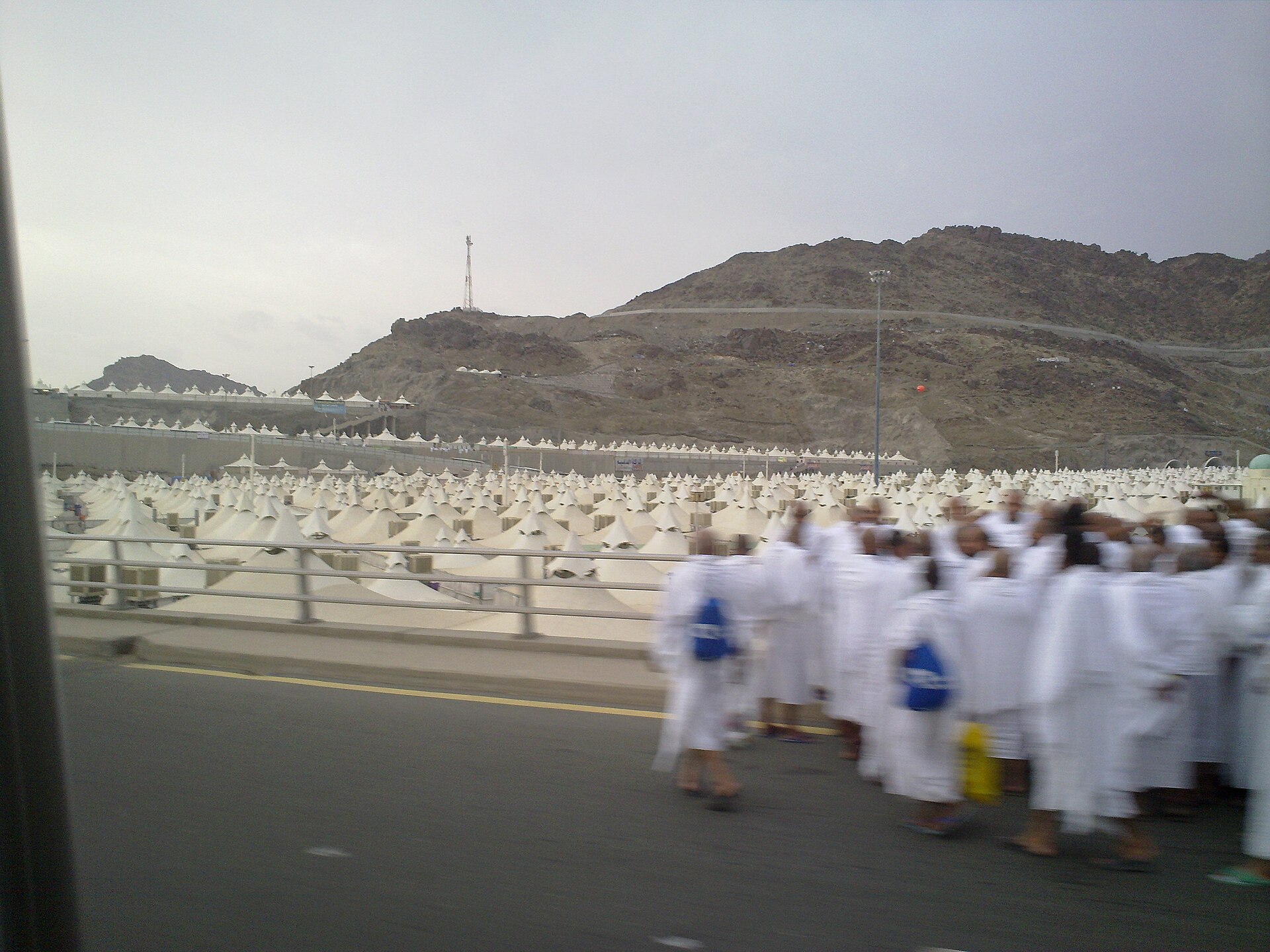
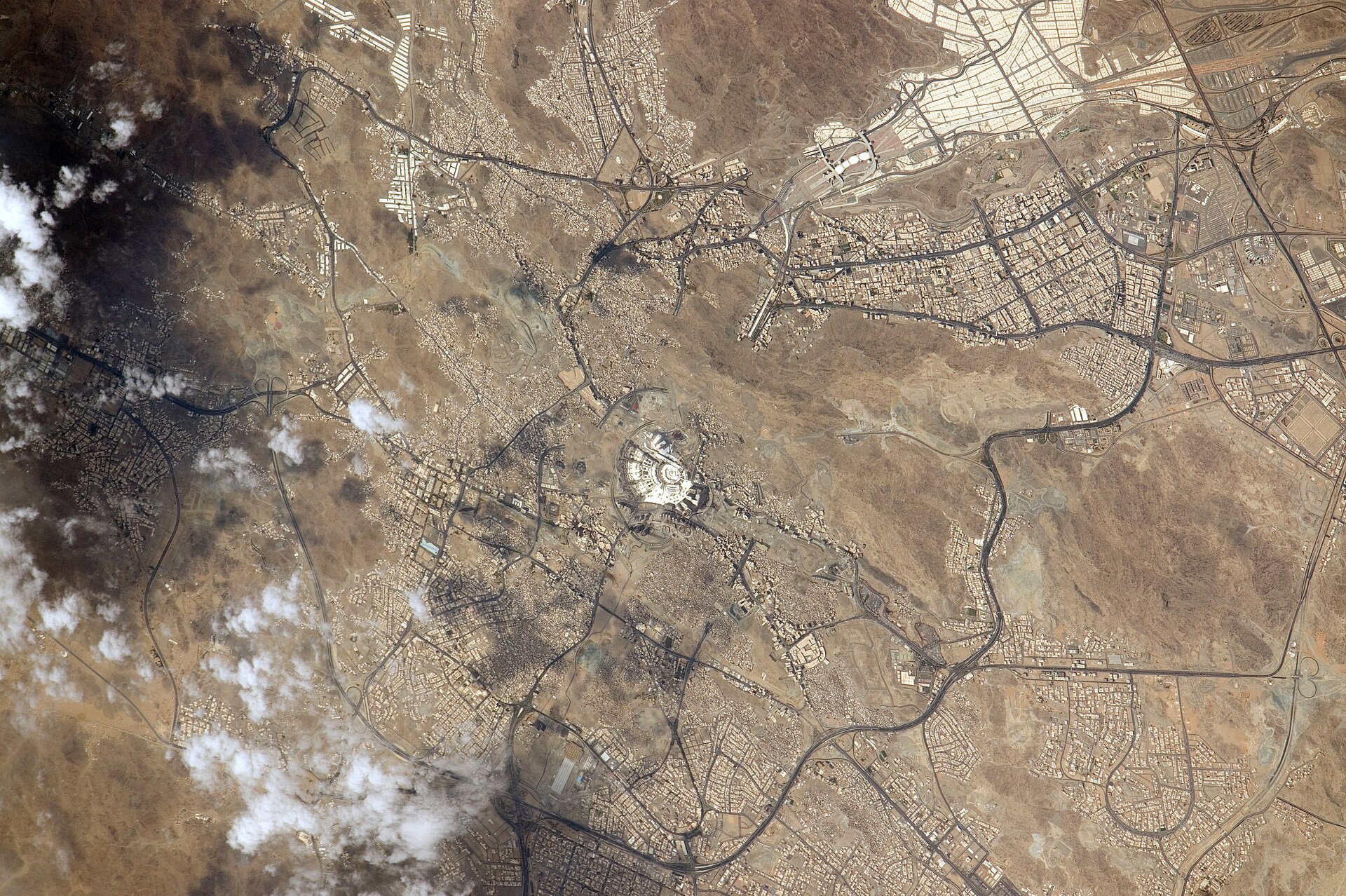
The Plain of Arafat sits approximately 20 kilometres east of Mecca; Mina is between the two; the Jamaraat bridges connect the encampments. On the Day of Arafah, roughly 1.8 million pilgrims are concentrated into less than 20 square kilometres of open terrain with limited cover and no hardened structures. A ballistic warhead detonation over that footprint, or a single Patriot intercept producing debris fall onto the encampments, produces a casualty figure measured in thousands regardless of which side the warhead came from. That geography is the reason the Custodian title was historically defended with overwhelming presence rather than calibrated defence, and the reason 80 to 150 PAC-3 rounds is the wrong number for the task.
Has Saudi Arabia ever publicly disclosed its PAC-3 inventory under prior crises?
No. Saudi Arabia has never published interceptor stockpile figures under any prior security event including the 2019 Abqaiq attack, the 2022 Houthi missile strikes on Riyadh and Jeddah, or the Houthi cruise missile incidents on Aramco facilities through 2023-2024. The Cancian-Park reconstruction is the first public quantification of Saudi PAC-3 expenditure under wartime conditions, and Riyadh has neither confirmed nor contested the numbers, which by the conventions of Saudi defence communications is closer to confirmation than to denial.
What does the OSAC Level 3 advisory mean for US citizen Hajj attendance numbers?
Level 3 “Reconsider Travel” is not a prohibition; US citizens can legally travel and the State Department will issue Hajj visas where the Saudi government has issued the underlying invitation. What Level 3 does is shift insurance, employer-permission and consular-protection postures: many US-based employers will not approve duty-of-care for travel into Level 3 jurisdictions, certain travel insurance products void coverage above Level 2, and the US embassy in Riyadh’s consular emergency response posture is constrained from operating outside diplomatic premises in Level 3 conditions. The net effect on attendance is suppression at the margin, not prohibition.
What would a confirmed THAAD live site add to Hejaz defence on May 26?
Relatively little for the specific threat Iran has demonstrated. THAAD engages above 150 kilometres altitude and is optimised for medium and intermediate-range ballistic missiles on standard trajectories. The IRGC strikes on Jubail and Eastern Province through March and April have been predominantly short-range ballistic missiles and large drone salvoes on depressed trajectories that spend minimal time in the THAAD engagement envelope. A live THAAD site would add genuine depth against a longer-range strike, but the Hejaz gap in the May 26 window is primarily a PAC-3 shortage, not a THAAD shortage. For the implications for Saudi air defense if strikes restart following the NYT May 16 report, see Saudi Arabia’s Reverse Co-Belligerent Trap: The Veto MBS Won’t Get Twice. For the latest reporting on the May 18-22 strike window and what a US-Israeli strike resumption means for Hajj pilgrims already in Makkah, see the May 17 news analysis.