
WASHINGTON — Admiral Brad Cooper told the US Senate Armed Services Committee on May 14 that American strikes had degraded 85 percent of Iran’s missile and drone industrial base. Within forty-eight hours of that testimony, classified intelligence assessments reported to the New York Times showed Iran retains 70 percent of its pre-war missile stockpile and has restored operational access to 30 of 33 Hormuz-area launch sites. These figures do not technically contradict each other — one measures factories destroyed, the other measures warheads preserved — but the administration presented them to Congress and the public as though they described the same reality, and Saudi Arabia’s abrupt veto of Project Freedom suggests Riyadh’s intelligence picture matches the classified one, not the televised version.
The gap matters because it determines whether the war achieved its stated objective — foreclosing Iranian reconstitution — or merely destroyed production lines while the arsenal that threatens Gulf infrastructure remained dispersed underground and untouched. Cooper’s hearing was polished, confident, and delivered to a committee that had been denied access to the Office of Legal Counsel opinion justifying the war itself. His declared victory metrics are already collapsing against the classified picture.
Table of Contents
- The Two Numbers That Cannot Both Be Victory
- What Did Cooper Actually Tell Congress?
- What Does the Classified Assessment Show?
- Why Can You Destroy 85% of the Factory and Keep 70% of the Warehouse?
- How Did Saudi Arabia’s Veto Confirm the Classified Picture?
- The CRINK Pipeline and the Reconstitution Clock
- Is Congress Receiving Calibrated Testimony?
- The Iraq WMD Precedent Nobody Wants to Discuss
- What Happens When Production Returns but Stockpiles Never Left?
The Two Numbers That Cannot Both Be Victory
The administration’s war narrative rests on a single implied syllogism: strike the factories, destroy the capability, foreclose the threat. Cooper’s testimony — “In 38 days, we rolled back 40 years of Iranian military investment” — is the capstone of that argument, the kind of sentence designed to travel from C-SPAN to cable news to appropriations markup without anyone pausing to examine what precisely was rolled back. The answer, according to multiple collection streams including satellite imagery reviewed by the Times, is that what was rolled back was production capacity, not existing inventory.
This distinction is not academic. A country that has lost 85 percent of its missile factories but retains 70 percent of its missile stockpile is not a disarmed country — it is a country with a finite but still enormous arsenal and a temporarily disabled resupply pipeline. IRGC Aerospace Force Commander Brigadier General Majid Mousavi’s claim to Tasnim that the IRGC is restocking platforms “even greater than before the war” would be simple propaganda if the classified assessment did not corroborate the premise. Cooper, when pressed by senators about the 70 percent figure already circulating in open source, responded: “The numbers that I’ve seen in open source are not accurate.” He declined further specifics, citing classification — which is precisely the wall that prevents the contradiction from being resolved in public.
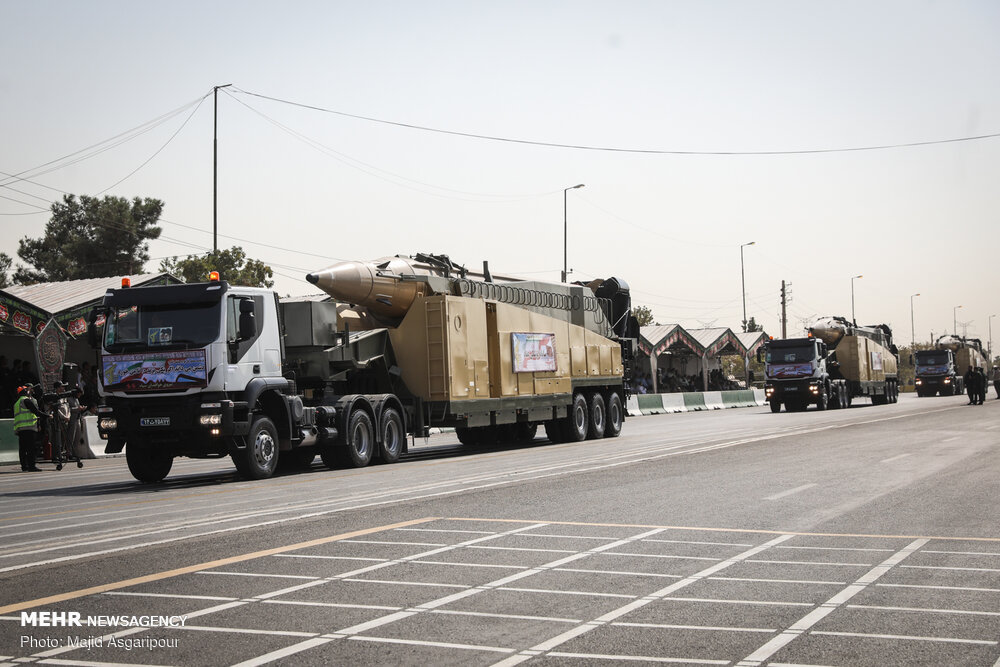
The intelligence community’s own figures tell a story of underground preservation. Approximately 90 percent of Iran’s underground missile storage and launch facilities nationwide remain “partially or fully operational.” Only three of thirty-three Hormuz-area missile sites are assessed as entirely inaccessible. Seventy-five percent of pre-war mobile launchers — the platforms that make targeting hardest — remain in Iranian hands. These are the numbers that explain Saudi behavior, not Cooper’s. When Riyadh suspended US base and airspace access within thirty-six hours of Trump announcing Project Freedom, it was not because the kingdom doubted American military capability; it was because Saudi intelligence assessed that Iran retained sufficient capability to retaliate against Saudi infrastructure, and Washington had made clear it “would likely not respond to Iranian strikes on infrastructure in the region” while focused on a peace deal, according to NBC News.
What Did Cooper Actually Tell Congress?
Cooper’s testimony was specific where it served the narrative and vague where specificity would undermine it. He told the committee that more than 1,450 strikes had “damaged or destroyed more than 85% of Iran’s ballistic missile, drone and naval industrial base.” He cited 161 Iranian naval vessels destroyed across 16 classes. He claimed more than 90 percent of Iran’s 8,000-plus naval mines had been eliminated through 700-plus mine-related strikes. He described a navy that would take “a generation” to rebuild and a missile production apparatus that would require “years” to reconstitute. The framing was consistent and deliberate: Iran as a post-industrial military threat, its offensive infrastructure in rubble, its future capability mortgaged to a reconstruction timeline measured in decades.
The Middle East briefing 3,000+ readers start their day with.
One email. Every weekday morning. Free.
When challenged on whether degraded production translated to degraded present-day threat, Cooper pivoted to command-and-control: “It’s more than just the numbers. It’s the command and control that’s been shattered… and it’s the lack of any ability to then produce any missiles on the back end.” The pivot was revealing. Command-and-control degradation is unfalsifiable in an unclassified setting — you cannot prove communications networks are intact or shattered without showing the signals intelligence — and it performs the rhetorical work of bridging the factory-warehouse gap without acknowledging it exists. Iran’s residual strike capability, Cooper conceded, remains “very moderate if not small,” a phrase doing extraordinary work to describe a country that retains thousands of ballistic missiles and three-quarters of its mobile launcher fleet.
The White House reinforced the line with characteristic subtlety. Spokeswoman Olivia Wales said anyone who “thinks Iran has reconstituted its military is either delusional or a mouthpiece” for the IRGC. The formulation is instructive: she said “reconstituted,” not “retained.” Iran does not need to reconstitute what it never lost.

What Does the Classified Assessment Show?
The classified intelligence assessment, drawn from multiple collection streams including satellite imagery and reported by the New York Times around May 12-13, paints a picture that is compatible with Cooper’s factory numbers but devastating to the narrative those numbers were deployed to support. Iran retains 70 percent of its pre-war missile stockpile — not production capacity, but the actual warheads sitting in dispersal tunnels and underground facilities across the country’s mountainous interior. The mobile launcher inventory stands at 75 percent of pre-war levels, meaning the platforms that make Iran’s missile force survivable against pre-emptive strike remain overwhelmingly intact.
The Hormuz-specific data is particularly stark. Thirty of thirty-three missile sites in the strait area have restored operational access — a 91 percent reconstitution rate for the precise geography that determines whether Gulf oil flows or doesn’t. The assessment finds approximately 90 percent of underground facilities nationwide “partially or fully operational,” a finding consistent with the Defense Intelligence Agency’s preliminary report that bunker-busters dropped on Fordow, Natanz, and Isfahan “did not collapse the underground facilities.” Iran invested four decades dispersing, hardening, and burying its strategic assets precisely for this scenario. The strikes validated the investment.
The DIA report also found that Iran moved much of its enriched uranium stockpile before strikes landed, setting back nuclear capability by “only a matter of months” according to CSIS analysis — a timeline that Energy Secretary Jennifer Granholm appeared to confirm on May 13 when she said Iran remains “frighteningly close” to a nuclear weapon “despite Operation Epic Fury.” She said this on the same day Trump and MBS signed a $142 billion arms deal, a juxtaposition whose irony the administration did not acknowledge. Responsible Statecraft characterized Cooper’s broader CENTCOM posture as “serial threat inflation of the highest order” — a phrase that gains weight when the inflation runs in both directions, simultaneously overstating destruction achieved and overstating the residual threat to justify continued operations.
Why Can You Destroy 85% of the Factory and Keep 70% of the Warehouse?
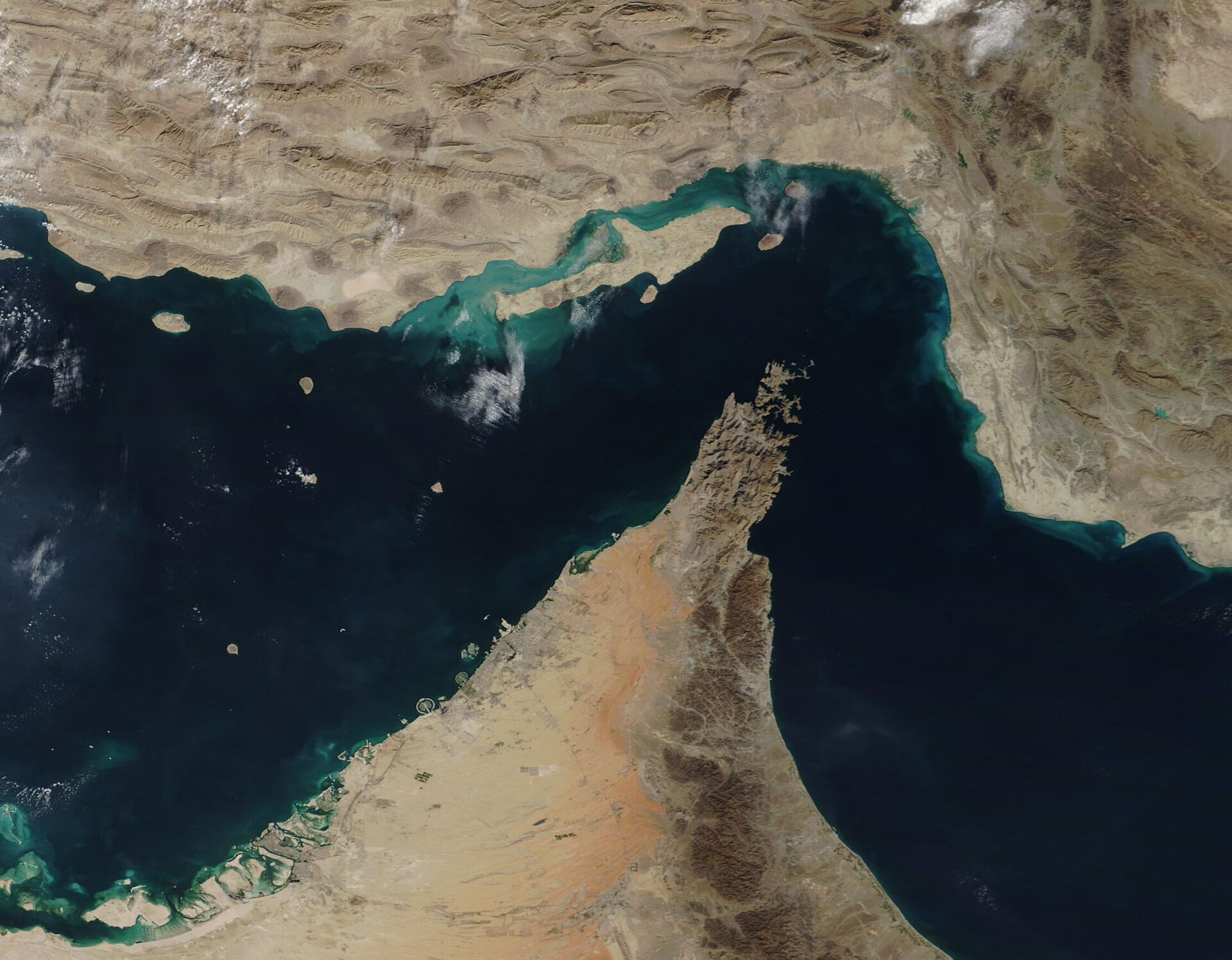
The answer is architectural, and it explains everything about why the war’s metrics are structurally misleading. Iran’s missile production facilities — the factories, machine shops, propellant mixing plants, and assembly lines — are largely above-ground or in shallow hardened structures visible to satellite reconnaissance. They are targetable, and CENTCOM targeted them effectively. The 1,450-strike campaign against manufacturing infrastructure represents genuine kinetic achievement; Cooper is not lying about what was hit. But Iran’s missile storage doctrine, developed over decades of anticipating exactly this scenario, disperses completed weapons into deep underground tunnel networks, mountain facilities, and mobile platforms that are neither visible from orbit nor reachable by current penetrating munitions.
The analogy is a car manufacturer whose every factory has been bombed but whose dealer lots remain full. The customers can still drive — they simply cannot order new vehicles. The question becomes how long the existing inventory lasts, and whether the factory can be rebuilt before the lot empties. Iran’s answer to the second question is already underway. China, Russia, and North Korea are providing distinct capabilities Tehran cannot source domestically — what analysts call the CRINK pipeline — accelerating reconstitution on a timeline that may be far shorter than Cooper’s “years.” The IRGC’s own claims about restocking speed are propaganda in tone but may be directionally accurate if external suppliers are substituting for destroyed domestic production.
The CSIS/CFR/ISW consensus holds that the US achieved significant tactical damage to Iran’s visible military infrastructure but could not reach underground infrastructure, eliminate the Strait of Hormuz threat, suppress proxy networks, or drain reconstitution capacity. That consensus, unlike Cooper’s testimony, tracks with Saudi Arabia’s revealed preferences. When a country that hosts Prince Sultan Air Base — the critical hub for aerial refueling and surveillance that Project Freedom required — denies access to the air force that just claimed to have destroyed 85 percent of the enemy’s industrial base, it is telling you something about whose numbers it believes.
| Metric | CENTCOM Public Testimony (Cooper, May 14) | Classified Assessment (NYT, ~May 12-13) |
|---|---|---|
| Manufacturing / DIB | 85% damaged or destroyed | Not separately measured |
| Missile stockpile | Implied degraded (not separately quantified) | 70% of pre-war stockpile retained |
| Mobile launchers | Not specified | 75% of pre-war inventory retained |
| Hormuz missile sites | Not specified | 30 of 33 with restored operational access |
| Underground facilities | Not specified | ~90% partially or fully operational |
| Mine inventory | 90%+ of 8,000+ destroyed | Not assessed |
| Naval vessels | 161 destroyed, 16 classes | Not assessed |
| Reconstitution timeline | “Years” / “a generation” | Not assessed (CRINK acceleration noted) |
How Did Saudi Arabia’s Veto Confirm the Classified Picture?
Trump announced Project Freedom publicly via social media around May 4-5, 2026, without notifying Gulf allies. The operation required Prince Sultan Air Base for aerial refueling and surveillance — the same infrastructure that had supported Operation Epic Fury’s 1,450 strikes. Within twenty-four to thirty-six hours, Saudi Arabia and Kuwait suspended US base and airspace access. A Trump-MBS phone call failed to resolve it. Saudi access was restored around May 7-8 only after Trump backed down, the entire episode lasting less than a week — but revealing more about the intelligence picture than either Cooper’s testimony or the Times report.
NBC News reported two distinct Saudi rationales from separate sources. The first: “Saudi Arabia was against the operation because it felt it would just escalate the situation and would not work.” The second: Riyadh feared Iran retained sufficient capability to retaliate against Saudi infrastructure, and the US had signaled it “would likely not respond to Iranian strikes on infrastructure in the region” while pursuing a peace deal. The second rationale is the one that confirms the classified assessment. A Saudi Arabia that believed Cooper’s public testimony — that Iran retained only “very moderate if not small” residual strike capability — would not veto an American operation over retaliation fears. Riyadh vetoed because its own intelligence picture, drawn from its own covert strikes against Iran in late March that achieved a 76 percent reduction in Iranian attacks within one week, told the kingdom that Iran’s retaliatory capability remained substantial and specifically oriented toward Gulf infrastructure.
The veto is behavioral confirmation of a kind that testimony cannot provide. States reveal their true assessments through costly actions, not through words, and denying the United States access to your most important military facility — while simultaneously signing a $142 billion arms deal with the same administration — is among the costliest signals a Gulf monarchy can send. MBS did not need the New York Times to tell him what Iran retained. He knew, because his own forces had been operating against those retained assets for weeks, and the operational returns told him the arsenal was not 80 percent degraded but very much alive.
The CRINK Pipeline and the Reconstitution Clock
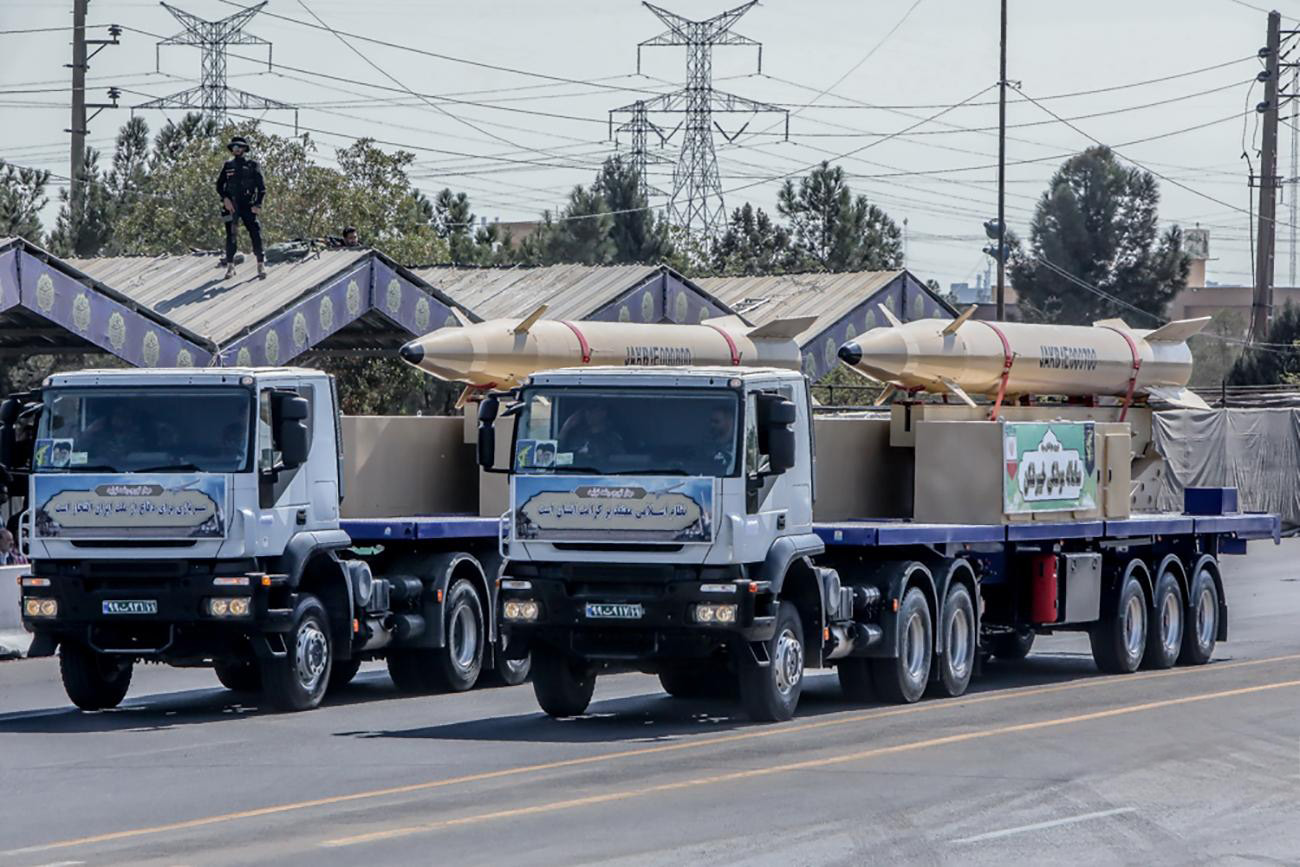
Even if Cooper’s factory numbers are accurate — and the satellite evidence suggests they largely are — the reconstitution question does not end at Iran’s borders. China, Russia, and North Korea are each providing capabilities Tehran cannot currently manufacture domestically: guidance systems, solid-fuel propellant precursors, machine tools for airframe production, and complete drone subsystems. The CRINK pipeline operates through commercial front companies, free-trade zones, and overland routes through Central Asia that are structurally resistant to interdiction. Cooper’s “years” timeline assumes a closed-system rebuild. The system is not closed.
Mousavi’s April 19 statement to Tasnim — “we have information that the enemy is incapable of creating such conditions for itself and is forced to bring in ammunition from the other side of the world in a drip-feed manner” — is an information warfare inversion, projecting Iran’s own supply-chain vulnerability onto the United States while simultaneously signaling that the IRGC is aware its own resupply depends on external partners. The statement’s operational content, stripped of propaganda framing, reveals an IRGC that views the reconstitution race as a logistics competition rather than a manufacturing rebuild — who can resupply faster through their respective networks. The US ships ammunition 7,000 miles from continental depots through congested sea lanes. Iran receives components from neighboring states or states accessible by rail and road.
The intelligence community’s failure to reach underground facilities is the structural enabler of the CRINK pipeline’s effectiveness. You do not need to rebuild a factory if your storage tunnels are intact and your partners can ship you completed subsystems. With the DIA’s own assessment confirming most underground storage is still operational, the infrastructure to receive, store, and deploy externally sourced weapons exists right now. Cooper’s generation-long timeline collapses if Iran can import rather than manufacture, and every indication — from satellite-tracked cargo flows to sanctions evasion patterns — suggests that is exactly what is happening.
US intelligence assessments have since confirmed the pace: within 40 days of the April 8 ceasefire, Iran has restored 30 of its 33 Hormuz missile sites to operational status — a 91% reconstitution rate that validates the CRINK pipeline thesis and renders Cooper’s “generation-long” timeline structurally untenable.
Is Congress Receiving Calibrated Testimony?
Senator Tim Kaine’s intervention during the May 14 hearing cut to the constitutional question beneath the intelligence one: “We’re being asked to fund a $1.5 trillion budget, but our request of the DOJ to see the OLC opinion justifying this war — they have refused to allow members of the Armed Services Committee to see it.” The committee responsible for authorizing military operations cannot access the legal basis for those operations, and the same committee is receiving threat assessments from the commander executing those operations — a commander whose institutional interest lies in demonstrating success. This is not conspiracy; it is incentive structure.
Cooper’s metrics are optimized for the committee hearing format. Numbers like “85 percent” and “1,450 strikes” perform well in five-minute question rounds. They are concrete, quotable, and directionally true in the narrow domain they describe. What they omit — stockpile preservation, underground survivability, mobile launcher retention, external resupply — requires the classified briefing that Kaine’s question reveals is not being shared even in closed session. The Armed Services Committee is making authorization and appropriations decisions based on the public testimony, because the public testimony is all most members have.
The pattern has a name in intelligence studies: threat calibration. A commander testifying before a committee that controls his budget has competing incentives to demonstrate both success (justifying past expenditure) and ongoing threat (justifying future expenditure). Cooper achieved both simultaneously by presenting maximum destruction metrics for industrial base while preserving the “residual threat” framing for continued operations. The $142 billion arms deal signed the day before his testimony demonstrates the downstream effect: Congress sees 85 percent success and funds 100 percent of the next phase because a “moderate” residual threat still requires response. The classified picture — 70 percent retention, 91 percent site access, 90 percent underground survival — would complicate that arithmetic considerably.
The Iraq WMD Precedent Nobody Wants to Discuss
UNSCOM had achieved significant qualitative disarmament of Iraq’s WMD production capacity by 1997 — no meaningful quantities of chemical or biological agents remained, and industrial production had been eliminated. The intelligence community continued to assess Iraq as a WMD threat, conflating destroyed production with continuing stockpile, because the absence of evidence for stockpiles was interpreted as evidence of concealment rather than evidence of absence. David Kay, the weapons inspector tasked with finding WMD after the invasion, testified to Congress on January 28, 2004: “We were almost all wrong.”
The Iran case inverts the Iraq error but arrives at a similar structural failure. In Iraq, production was destroyed but stockpiles were assumed to persist — they did not. In Iran, production is destroyed but stockpiles genuinely do persist — yet public testimony implies they do not. The Iraq error was believing warehouses were full when they were empty. The Iran error is testifying that warehouses are empty when they are 70 percent full. Both errors serve the same institutional function: maintaining the threat narrative that justifies the operational posture. Both are detectable through the gap between public statement and classified assessment. And both rely on a Congress unwilling or unable to interrogate the gap.
The structural difference is that Iran’s underground dispersal program actually worked in ways that Iraq’s concealment never did. Iraq’s WMD concealment was a bluff maintained past the point of utility; Iran’s missile dispersal is an engineering achievement validated by the very strikes meant to destroy it. The near-total underground survival rate is not a failure of American targeting — American targeting hit everything it could reach — but a success of Iranian civil defense investment that pre-war planning appears to have catastrophically underestimated. When the Cooper testimony is read in ten years, the question will not be whether he lied — he likely did not — but whether the metrics he chose to present constituted an accurate picture of strategic reality. Kay’s answer, applied forward: probably not.
What Happens When Production Returns but Stockpiles Never Left?
The endstate the administration described — Iran disarmed through industrial destruction, incapable of threatening Gulf infrastructure, years from reconstitution — is already empirically false on the stockpile dimension and likely false on the reconstitution timeline given CRINK acceleration. The endstate the classified assessment implies is far more dangerous: an Iran that retains the majority of its pre-war arsenal right now, has restored operational access to nearly every Hormuz launch site right now, and is rebuilding production capacity with external assistance on a timeline shorter than “years.” This is not a disarmed adversary. It is an adversary whose current arsenal exceeds what it can fire in any plausible engagement, buying time until production resumes.
Saudi Arabia’s decision-making reflects this reality with uncomfortable clarity. The $142 billion arms deal was not signed because the kingdom feels safe — it was signed because the kingdom feels exposed. The Project Freedom veto was not risk-aversion — it was rational threat calculation by a government that cannot afford to absorb retaliatory strikes against oil infrastructure already operating below capacity. And the covert strikes Saudi Arabia conducted independently in late March, achieving tactical results that the far larger American campaign could not replicate against underground assets, demonstrate that Riyadh trusts its own intelligence picture over Washington’s public version.
“Saudi Arabia was against the operation because it felt it would just escalate the situation and would not work.”
— Saudi source to NBC News, May 2026
The war’s declared objective was not factory destruction — it was capability denial. Cooper’s testimony claims capability denial while the classified evidence shows capability preservation. The gap between those two positions is not a measurement dispute. It is either the largest intelligence failure since Iraq, or the most consequential calibration of Congressional testimony since the Gulf of Tonkin resolution. Neither possibility is comfortable, and the administration’s response — attacking the credibility of anyone who cites the classified numbers rather than addressing the substance — suggests it knows which one it is. The missiles are still in the mountain, and the mountain is still standing. The man who told Congress otherwise did so twelve hours after his government signed the arms deal that only makes sense if the mountain is still full.
Frequently Asked Questions
How many missiles does Iran currently possess compared to pre-war levels?
The classified assessment reported by the New York Times indicates Iran retains approximately 70 percent of its pre-war ballistic missile stockpile. Pre-war estimates from the International Institute for Strategic Studies placed Iran’s arsenal at 3,000-plus ballistic missiles of various ranges, suggesting a current inventory in the range of 2,100 operational warheads — enough to saturate Gulf air defenses many times over, even without the production base that Cooper testified was 85 percent destroyed.
Could Iran strike Saudi oil infrastructure today despite Operation Epic Fury?
The mobile launcher retention rate — 75 percent of pre-war inventory according to classified assessments — combined with 30 of 33 Hormuz-area sites maintaining operational access means Iran’s ability to strike Gulf infrastructure is functionally intact for any single retaliatory exchange. Saudi Arabia’s own behavior confirms this: the Patriot and THAAD batteries protecting Ras Tanura, Abqaiq, and Yanbu remain on heightened alert status, and the kingdom’s interception rate in the early war period averaged 85-90 percent — meaning 10-15 percent of incoming missiles penetrated defenses, a proportion that remains lethal against concentrated energy infrastructure.
What is the legal basis for Operation Epic Fury and why can’t Congress see it?
The administration authorized the operation under an Office of Legal Counsel opinion that has been withheld from the Senate Armed Services Committee, which is constitutionally responsible for military authorization. Senator Kaine’s public complaint — that members cannot see the OLC document while being asked to fund a $1.5 trillion budget — echoes the 2001-2002 period when AUMF interpretations were progressively stretched beyond Congressional intent. No War Powers Resolution notification has been made public, and the 60-day clock question remains legally unresolved because the administration classifies the engagement start date itself.
What role are China, Russia, and North Korea playing in Iran’s reconstitution?
Each CRINK partner supplies distinct capabilities: China provides guidance electronics and dual-use machine tools through commercial front companies; Russia supplies solid-fuel propellant precursors and radar components; North Korea transfers complete missile subsystems and production know-how through established channels dating to the Nodong/Shahab-3 lineage of the 1990s. The pipeline operates primarily through Central Asian overland routes and maritime transfers in the Indian Ocean, exploiting the same sanctions-evasion infrastructure that maintained Iranian oil exports at 1.2-1.5 million barrels per day throughout the maximum-pressure era.
Has the US military previously provided misleading testimony about Middle East operations?
The structural parallel is not individual dishonesty but institutional incentive. General Tommy Franks told Congress in July 2003 that “we have found weapons of mass destruction” in Iraq — referring to two mobile trailers later determined to be hydrogen generators for weather balloons. CENTCOM’s 2017 Raqqa civilian casualty estimates (under 100) were later revised to over 1,600 by independent investigation. In both cases, operational commanders presented optimistic metrics shaped by institutional incentives — demonstrating success to the budget-approving body — rather than the complete picture available in classified channels. The same institutional gap between public statements and operational reality runs through the War Powers debate: the Pentagon’s decision to rename Epic Fury as Operation Sledgehammer — resetting the 60-day clock with the same forces in the same theatre — and why Saudi Arabia’s basing veto is the constraint that cannot be legally renamed, is examined in Operation Sledgehammer Is a War Powers Clock-Reset. The Saudi Veto Is What Decides Whether It Runs.
With Trump signalling renewed strikes after his Beijing trip yielded no breakthrough, Saudi Arabia now faces a second escalation round with degraded defences and no production buffer. Trump returns threatening Iran — Saudi Arabia has no margin for a second round maps the structural constraints Riyadh will be operating under if the ceasefire collapses. The reconstitution picture now has a strategic corollary: Iran’s drone strike on Barakah Nuclear Power Plant on May 17 — the first attack on an active Gulf atomic facility — suggests the retained missile stockpile is not the only instrument in play, as Iran Hit Barakah Nuclear Plant. No Gulf Reactor Has a Shield Now. examines.