
ISTANBUL — Iran sent deputy foreign ministers to negotiate with Europe in Istanbul this week while simultaneously routing a revised nuclear proposal to Washington through Pakistan. The two tracks are not competing paths to the same destination. They are a single strategy in which the European channel exists to make the American channel structurally harder to close.
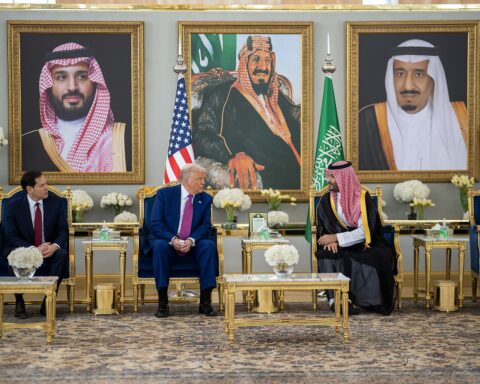
The Istanbul session — held around May 16–19 at deputy level with EU foreign policy chief Kaja Kallas present — was the first formal E3-Iran nuclear meeting since the April 7 ceasefire. Tehran dispatched Majid Takht-Ravanchi and Kazem Gharibabadi, seasoned diplomats with deep JCPOA institutional memory, while Foreign Minister Abbas Araghchi stayed home. On May 18, while the Istanbul talks were still active, Iran’s revised ceasefire-and-nuclear proposal arrived in Washington via Pakistan, the IRGC Navy’s new Persian Gulf Strait Authority published its first post on X from an email address ending in @irgcn.ir, and three Gulf leaders — Mohammed bin Salman, the Emir of Qatar, and Mohammed bin Zayed — persuaded Trump to postpone a planned strike. Three moves on the same weekend, calibrated for three different audiences, and only one of them was about nuclear diplomacy.
Table of Contents
- The Deputy-Level Signal
- Why Did Iran Reverse Its Own Verdict on European Irrelevance?
- What Pressure Can Europe Apply After the Snapback Expired?
- “Coordinated With the U.S.” and Its Structural Limits
- The PGSA and the Revised Proposal Arrived on the Same Day
- Can Anyone in Tehran Guarantee What the Negotiators Promise?
- The 440 Kilograms No One Can Verify
- What Does Iran Want From Istanbul If Not a Deal?
- Frequently Asked Questions
The Deputy-Level Signal
The composition of Iran’s Istanbul delegation was a message in itself. Takht-Ravanchi, the deputy foreign minister for political affairs, and Gharibabadi, the deputy for legal and international affairs, are both experienced negotiators with years of JCPOA institutional memory. They are also both subordinate to Araghchi, who by staying in Tehran ensured the Istanbul talks could not produce anything binding. Deputy-level talks can explore, probe, and signal — they cannot close.
Compare this with the US track. Iran’s May 18 proposal to Washington was not delivered by deputies. It was transmitted through Pakistan’s intelligence establishment — Interior Minister Mohsin Naqvi had arrived in Tehran on May 17 for a two-day visit specifically aimed at preventing ceasefire talks from collapsing, meeting both President Pezeshkian and Parliament Speaker Ghalibaf. The Pakistani channel carries the weight of a state guarantor. Istanbul carries the weight of an exploratory seminar.
Germany’s Foreign Ministry spokesperson Martin Giese told PBS NewsHour that “this course of action is also coordinated with the U.S.” That statement is revealing in its defensiveness — Berlin felt the need to reassure Washington that the Istanbul talks were not freelancing. But coordination describes process, not interest alignment. The E3 and the United States share a nonproliferation objective; they do not share a coercive timeline, a sanctions architecture, or a war. Germany cannot unilaterally offer Iran sanctions relief — that requires a unanimous EU Council vote — so the only thing Germany can realistically deliver from Istanbul is political pressure on Washington for terms Tehran finds more tolerable.
Why Did Iran Reverse Its Own Verdict on European Irrelevance?
Iran returned to the E3 table not because it changed its assessment of European diplomatic capacity but because European weakness serves Iranian strategy. A channel that cannot deliver a deal but can deliver political pressure on the party that can — Washington — is instrumentally useful in exact proportion to its diplomatic limitations. The reversal from Araghchi’s February dismissal to May’s Istanbul presence is explicable only through this structural logic.
The Middle East briefing 3,000+ readers start their day with.
One email. Every weekday morning. Free.
On February 15, 2026, Araghchi had declared Europe finished as an interlocutor. “The paralysis and irrelevance of the EU/E3 is displayed in the dynamics surrounding the current talks over Iran’s nuclear program,” he told Al Jazeera. “Once a key interlocutor, Europe is now nowhere to be seen. Instead, our friends in the region are far more effective and helpful than an empty-handed and peripheral E3.” Abas Aslani of the Center for Middle East Strategic Studies read the February statement as “a policy shift from the Iranian side that the E3 mechanism is no longer a valid channel for resolution.” He was right about the assessment and wrong about the permanence.
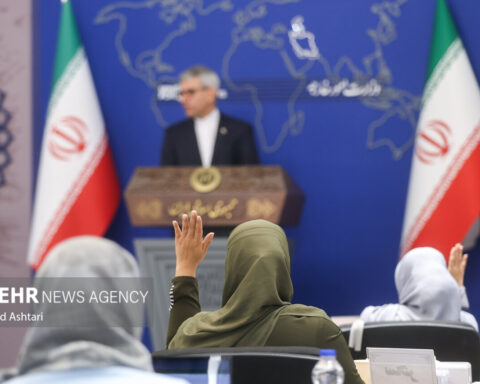
Iran did not return to the E3 because it changed its mind about European capacity. It returned because European incapacity is precisely the point. Iran’s foreign ministry spokesman Esmaeil Baghaei framed Istanbul as “an opportunity for the three European countries to rectify their attitude towards Iran and test their approach to the country’s nuclear program.”
The language of testing positions Iran as the evaluator, not the evaluated — the examiner administering a pass-fail quiz on European seriousness. But the quiz has no passing grade, because Iran’s 14-point counterproposal of April 28 explicitly excluded nuclear issues from any first-phase agreement. If nuclear topics cannot be resolved in Istanbul by design, the talks serve a function that is structural rather than substantive.
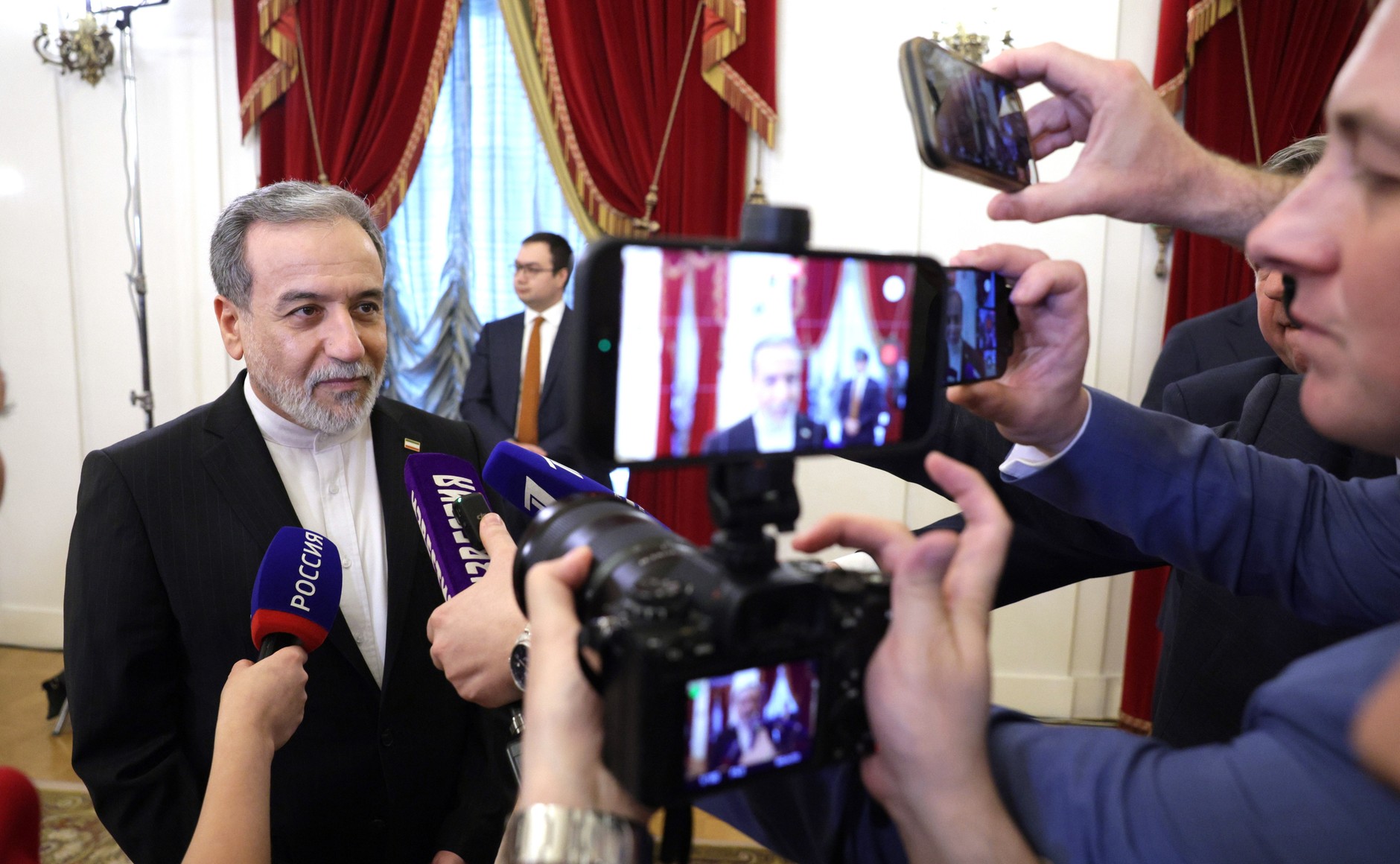
Araghchi himself told the Tehran Times around the Istanbul session: “We are prepared to negotiate, but unfortunately, Europe has isolated itself through its own policies.” Then, a sentence later: “The decisions we make now will shape Iran-Europe relations in ways that go far beyond this agreement.” The first sentence is theater. The second is a threat — aimed not at a negotiating table but at European capitals calculating the economic cost of enforcement.
What Pressure Can Europe Apply After the Snapback Expired?
The E3’s most powerful nonproliferation tool — the JCPOA snapback mechanism — expired permanently after October 18, 2025. Europe retains bilateral EU and UK sanctions and diplomatic standing as original JCPOA parties, but any new UN-level sanctions now require a Security Council vote subject to Russian and Chinese veto. The asymmetry between what Europe can threaten and what Iran needs lifted is what makes Istanbul useful to Tehran.
Britain, France, and Germany triggered the snapback on August 28, 2025, accusing Iran of sustained non-performance under the JCPOA. UN sanctions were reimposed on September 27–28, 2025. The October 18 sunset then passed, extinguishing the mechanism for good. There is no reload, no second invocation, no procedural workaround.
| Date | Event | Effect |
|---|---|---|
| Aug 28, 2025 | E3 triggers JCPOA snapback | 30-day reimposition clock starts |
| Sept 27–28, 2025 | UN sanctions reimposed | Full pre-JCPOA sanctions architecture restored |
| Oct 18, 2025 | UNSCR 2231 sunset | Snapback mechanism expires permanently |
| May 2026 | E3 Istanbul talks | No veto-proof UN sanctions instrument remains |
Any new UN sanctions on Iran now require an affirmative Security Council vote. China and Russia already fought the reimposition — they attempted a counter-resolution in September 2025 proposing a six-month JCPOA extension to April 18, 2026, which failed. They will not vote to strengthen what they tried to prevent. The E3’s residual tools are bilateral: EU-level sanctions requiring unanimous Council approval to lift, UK sanctions on a separate track, and diplomatic standing as original JCPOA parties. These matter, but they do not coerce.
Araghchi’s original “irreversible consequences” language, published in a Le Point op-ed in May 2025, warned that “abusing the snapback mechanism will lead to consequences — not only terminating Europe’s role in the deal but escalating tensions beyond repair.” The threat was calibrated to deter the trigger. The E3 triggered anyway, and Iran did not walk away — it kept talking.
That partially called bluff does not mean the threat is dead — it means the threat has migrated. The new version is not about preventing sanctions reimposition (that already happened) but about deterring the E3 from enforcing sanctions already on the books, or from tightening bilateral measures further. Every European diplomat in Istanbul this week understood that pressing harder could mean losing the channel entirely, and losing the channel means losing visibility into Iranian nuclear intentions at a moment when the IAEA has none.
Araghchi drove this point publicly, telling PBS NewsHour and AFP that E3 nations lack “any legal, political, and moral standing” to invoke snapback sanctions, accusing them of failing to uphold their own 2015 deal commitments and providing support to Israeli military operations. The accusation serves a dual purpose: it reframes Europe as a violator rather than an enforcer, and it supplies domestic ammunition for Iranian hardliners who oppose the talks entirely. The E3 sits in Istanbul simultaneously defending its right to be at the table and wondering what it can put on it.
“Coordinated With the U.S.” and Its Structural Limits
Giese’s statement that the Istanbul talks were “coordinated with the U.S.” invites a question: coordinated how? Coordination can mean Washington was informed, or it can mean Washington endorsed the agenda, set parameters, and receives readouts. The difference matters because the E3 and the United States are operating under fundamentally different constraints and exposure.
The United States has a naval blockade in effect since April 13. It has military assets on “moment’s notice” readiness after Trump’s May 18 postponement of a planned strike. Its demands include a 20-year enrichment moratorium, transfer abroad of roughly 400 kilograms of highly enriched uranium at 60%, and dismantling of the Natanz, Isfahan, and Fordow facilities. Trump called Iran’s latest written response — which offered partial HEU transfer while deferring nuclear negotiations until after a permanent ceasefire — “totally unacceptable.” That word carries the weight of a US military posture that Europe does not share and cannot match.
Europe is not blockading anyone. Europe is not threatening strikes. Europe’s commercial exposure to Gulf energy transit makes it a net loser from every week the crisis continues — a structural interest that diverges from Washington’s coercive timeline even when the nonproliferation objective nominally aligns. When Iran conditions nuclear discussions on ceasefire-first sequencing, it is betting that European economic pain will convert into European diplomatic pressure for Washington to accept that sequencing. The Istanbul talks are the transmission mechanism for that conversion.
The three-source Axios framework from May 6 reported a likely landing zone of 12 years on the enrichment moratorium, with one source placing it at 15. Iran offered five years; the US demanded twenty. That gap — between five and twenty, with a center of gravity around twelve to fifteen — is exactly the space where European intermediation could matter, nudging Washington down or nudging Tehran up by a few years in exchange for phased sanctions relief. But the intermediation only works if both tracks stay alive. Kill the E3 track and Iran loses its pressure amplifier. Kill the US track and the E3 track becomes what Araghchi already called it in February: irrelevant.
The PGSA and the Revised Proposal Arrived on the Same Day
May 18, 2026, was the most information-dense day of the crisis since the ceasefire. Iran sent its revised proposal to Washington through Pakistan. Trump announced he had postponed a “very major attack” at the request of Gulf leaders, giving two to three days for negotiations while keeping the military on immediate readiness. And the IRGC Navy’s Persian Gulf Strait Authority launched its official presence on X, operating through pgsa@irgcn.ir — an email domain that publicly confirmed what shipping analysts already suspected: the toll mechanism is an IRGC Navy operation, not a civilian regulatory body.
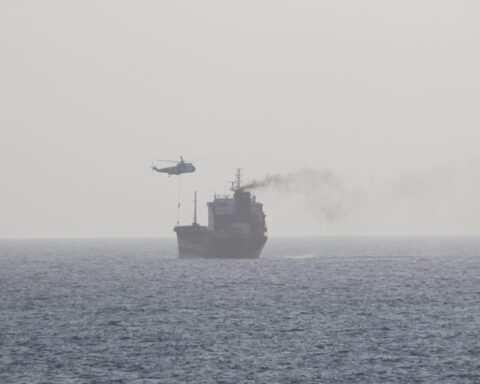
The PGSA requires vessels seeking Hormuz transit to apply in advance, disclosing ownership, insurance, crew manifests, and cargo details. Reports indicate some transits have cost up to $2 million, paid in Chinese yuan — a payment structure that carries inherent OFAC secondary sanctions risk for any entity with US financial exposure. The timing was not coincidental. Launching an institutional Hormuz toll authority on the same day as a softened nuclear proposal is a hedge: if the nuclear track produces a deal that constrains enrichment, the Hormuz revenue mechanism ensures Iran retains economic power independent of the nuclear file.
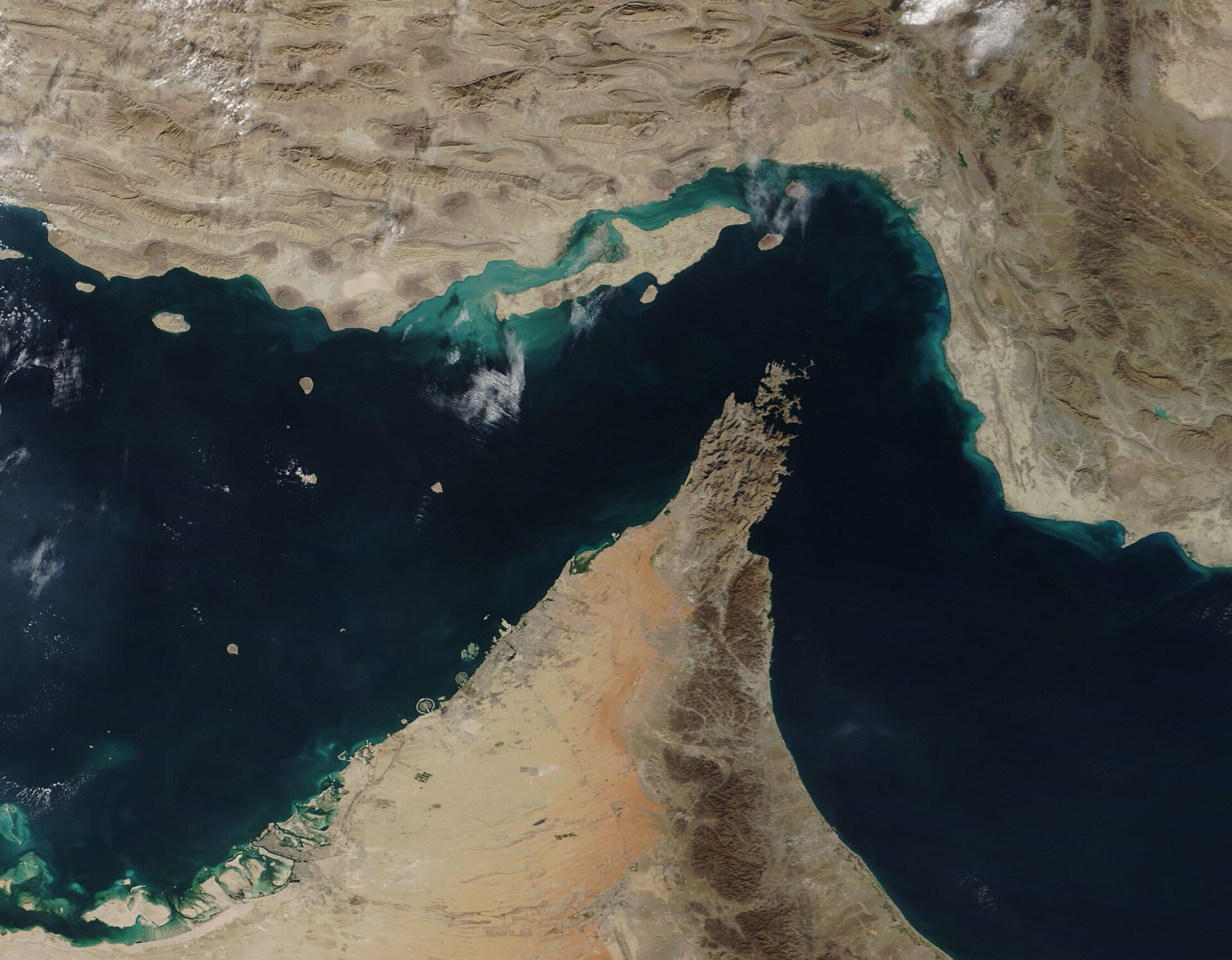
This is the architectural logic behind the two-track strategy extended to its physical expression. The nuclear file and the Hormuz file are supposed to be linked — American demands treat them as a package — but Iran is methodically delinking them by institutionalizing Hormuz control through a body that will outlast any negotiation. The PGSA is not a bargaining chip to be traded. It is a permanent fixture being assembled while the bargaining is still underway, and its IRGC Navy provenance means it sits outside the authority of any Iranian civilian negotiator who might agree to concessions in Istanbul or through Pakistan.
Can Anyone in Tehran Guarantee What the Negotiators Promise?
No. Under Article 110 of Iran’s constitution, the president has zero authority over the IRGC. President Pezeshkian publicly accused SNSC Secretary Vahidi and Khatam al-Anbiya commander Abdollahi of overriding the negotiating team’s mandate. A parliamentary revolt on April 28 — 27 MPs refusing to endorse the talks, including seven from Saeed Jalili’s ultraconservative faction, according to Iran International — exposed the fracture between civilian diplomacy and military command.
The Jalili episode went further than mere dissent. In a now-deleted post, Jalili called on Supreme Leader Mojtaba Khamenei to publicly clarify whether the ongoing negotiations reflected his directives. If they did not, Jalili wrote, “there is one hundred percent a sedition of officials” — implying Parliament Speaker Ghalibaf was freelancing without supreme authorization. Hardline MP Mahmoud Nabavian alleged that “Mojtaba Khamenei’s red lines had been violated” by the negotiating team. The deletion of Jalili’s post suggests the question itself was treated as dangerous, which in turn suggests the answer is either unknown or unspeakable.
Mojtaba Khamenei’s only relevant public statement came on April 30, when he declared Iran would protect its “nuclear and missile capabilities” as national assets. He has not addressed whether his father’s religious fatwa prohibiting nuclear weapons remains in force — a silence that functions as strategic ambiguity. If the fatwa holds, Iran’s 440.9 kilograms of uranium enriched to 60% (the last IAEA-verified figure, from June 2025) is negotiable material. If it does not, the same stockpile becomes something else entirely.
The E3 diplomats in Istanbul and the Pakistani interlocutors carrying proposals to Washington are both negotiating with a government that may not control its own security establishment. RUSI’s Darya Dolzikova identified this dynamic before the war: “Iran will be incentivised to give Trump just enough to keep him at the table, while dragging out talks.” The incentive structure has not changed. What has changed is that the IRGC’s retained conventional deterrent — approximately 70 percent of pre-war missile capacity, with 30 of 33 Hormuz missile sites still operational per ISW’s May 2026 assessment — reduces the military establishment’s urgency on any nuclear deal. The IRGC does not need a nuclear weapon to hold Hormuz at risk. It already controls the strait.
The 440 Kilograms No One Can Verify
The IAEA terminated access to Iran’s nuclear facilities on February 28, 2026. The Agency’s last comprehensive assessment, GOV/2026/8 dated February 27, confirmed it “cannot verify whether Iran has suspended all enrichment-related activities” and has no current data on stockpile size or enrichment levels. The last confirmed measurement: 440.9 kilograms of uranium enriched to 60% U-235, recorded in June 2025 before the Twelve-Day War struck Natanz, Isfahan, and Fordow.
| Metric | Last Verified Value | Date | Current Status |
|---|---|---|---|
| HEU stockpile (60% U-235) | 440.9 kg | June 2025 | Unknown — IAEA access terminated |
| Enrichment infrastructure | Natanz, Isfahan, Fordow struck | June 2025 | Carnegie: clandestine reconstitution possible |
| IAEA verification access | Active | Pre-Feb 28, 2026 | Terminated by Iran |
| SWU to weapons-grade from 60% | ~564 SWU | Technical estimate | Achievable with single IR-6 cascade |
The US strikes during the Twelve-Day War rendered Iran’s declared enrichment infrastructure “largely inoperable,” according to multiple assessments. But Jane Darby Menton of the Carnegie Endowment’s Nuclear Policy Program warned in May 2026 that Iran retains the “ability and perhaps greater desire to reconstitute these capabilities, including in smaller, clandestine facilities.” The Carnegie analysis also flagged the possibility that Iran transferred HEU to Isfahan before the June 2025 strikes — meaning the verified stockpile figure may not reflect what was actually destroyed or what survived.
“Iran’s demonstrated ability to disrupt the global economy may convince its leaders that they already possess sufficient deterrence to begin covert nuclear reconstruction.”— Jane Darby Menton, Carnegie Endowment Nuclear Policy Program, May 2026
CSIS’s Daniel Byman was more direct: Iran likely believes “only a nuclear weapon can protect it” given the conventional military disadvantages exposed during the Twelve-Day War. The 30 percent of missile capacity destroyed in those twelve days demonstrated both that Iran’s conventional deterrent is degradable and that degrading it does not eliminate the Hormuz threat. If Iran concludes that conventional deterrence is sufficient for the strait but insufficient for regime survival, the nuclear file becomes an insurance policy that no Istanbul communiqué can address.
This is why the IAEA verification gap matters more than any diplomatic framework currently on either table. The US demands dismantlement and full HEU transfer; Iran offers partial transfer contingent on a ceasefire. The E3 sits in Istanbul without the ability to verify what exists, what was destroyed, and what might have been rebuilt in facilities no international inspector has entered since February. Every proposal on both tracks is, in effect, negotiating over a stockpile whose current state is unknown to all parties except Iran — and possibly unknown even to Iran’s civilian leadership, given the authorization ceiling that separates the president from the IRGC’s nuclear-adjacent infrastructure.
What Does Iran Want From Istanbul If Not a Deal?
Iran wants the E3 channel to exist, not to produce an agreement. Its 14-point counterproposal of April 28 excluded nuclear issues entirely, making Istanbul structurally incapable of delivering nuclear outcomes. The talks serve one function: converting European investment in diplomacy into European pressure on Washington to accept Iran’s ceasefire-first sequencing, which demands a permanent ceasefire within 30 days, US military withdrawal, blockade lifting, asset unfreezing, and war reparations — all before nuclear discussions begin.
President Pezeshkian’s May 11 statement captured the domestic framing: “We will never bow our heads before the enemy, and if talk of dialogue or negotiation arises, it does not mean surrender or retreat.” That sentence was aimed at Tehran’s hardliners, not at Istanbul’s diplomats. The negotiation itself must be framed domestically as resistance, which means any concession must be invisible or deniable. A 12-year moratorium that Iran’s state media can describe as a voluntary temporary measure is politically survivable in Tehran. A 20-year moratorium imposed under American military threat is not. The E3’s structural role is to help produce terms that Iran’s civilian government can sell at home — terms that look like European mediation rather than American coercion.
| Track | Channel | Iranian Delegation Level | Can Deliver Nuclear Deal? | Structural Function for Iran |
|---|---|---|---|---|
| US (primary) | Pakistan intelligence relay | State-level proposals via ISI | Yes, if authorization ceiling clears | Ceasefire and sanctions relief |
| E3 (secondary) | Istanbul direct talks | Deputy foreign ministers | No — nuclear excluded by Iran’s own sequencing | Pressure amplifier on Washington |
Saudi Arabia has already spent its annual deficit in ninety days. The Gulf states that stopped Trump’s strike on May 18 bought two to three days, not a resolution. The Hajj airlift closes this week, leaving 1.5 million pilgrims inside Saudi Arabia with diminishing exit options.
Iran does not need the E3 to deliver a deal. It needs the E3 to sit at a table long enough that walking away becomes politically more expensive than accommodating. Araghchi understood this in February, when he declared Europe irrelevant — and again in May, when he sent his deputies to prove it.
Frequently Asked Questions
What is the current status of Iran’s nuclear stockpile?
The last IAEA-verified measurement recorded 440.9 kilograms of uranium enriched to 60% U-235 in June 2025, before US strikes during the Twelve-Day War hit Natanz, Isfahan, and Fordow. Since Iran terminated IAEA access on February 28, 2026, no independent verification has occurred. From 60% enrichment, a single IR-6 cascade requires approximately 564 separative work units to reach weapons-grade — a process measured in weeks, not months. Carnegie analysts have raised the additional possibility that Iran transferred material between facilities before the June 2025 strikes, meaning the pre-war stockpile figure may not accurately reflect what survived or where it is now held.
Why did Iran exclude nuclear issues from its 14-point counterproposal?
Iran’s April 28 counterproposal demanded ceasefire-first sequencing: permanent ceasefire within 30 days, US withdrawal, blockade lifting, asset unfreezing, and war reparations — all before any nuclear discussions. This reflects both a consistent Iranian position that military and economic pressure must be removed before enrichment talks and a domestic political constraint. Pezeshkian cannot survive making nuclear concessions while Iran remains under active military threat without being accused of capitulation by the IRGC-aligned parliamentary bloc that already refused to endorse the negotiating team on April 28.
Could Russia or China block new UN sanctions on Iran?
Yes. With the JCPOA snapback mechanism permanently expired after October 18, 2025, any new UN Security Council sanctions on Iran require an affirmative resolution subject to veto. Russia and China both opposed the E3’s August 2025 snapback trigger and attempted a counter-resolution proposing a JCPOA extension to April 18, 2026, which was not adopted. They would almost certainly veto any new sanctions resolution. This is why the E3’s post-snapback instruments are limited to bilateral EU and UK measures rather than multilateral UN enforcement — and why Iran’s willingness to engage the E3 in Istanbul partly reflects confidence that the multilateral sanctions ceiling has been reached.
What role is Pakistan playing in the US-Iran negotiations?
Pakistan has evolved from venue host to active intermediary carrying proposals between Tehran and Washington. Interior Minister Mohsin Naqvi’s May 17–18 Tehran visit — meeting both Pezeshkian and Ghalibaf — preceded Iran’s revised proposal reaching Washington the same day. Pakistan has simultaneously deployed 8,000 troops and Chinese-origin air defense systems to Saudi Arabia, making it Iran’s diplomatic channel to the US, Saudi Arabia’s security partner, and Iran’s protecting power in Washington since 1992. This triangulated position gives Islamabad unique access but also means each stakeholder can question whether the relay is neutral or shaped by competing obligations.
Has Araghchi’s “irreversible consequences” threat been carried out?
Partially. Araghchi warned in May 2025 that triggering snapback would “lead to consequences — not only terminating Europe’s role in the deal but escalating tensions beyond repair.” The E3 triggered anyway in August 2025, and Iran did not terminate the European channel — it is actively engaging the E3 in Istanbul — which diminishes the credibility of the original deterrent. However, the threat has evolved rather than disappeared: Iran’s current posture warns against enforcement of existing sanctions rather than their reimposition. The PGSA Hormuz toll mechanism, operating through the IRGC Navy’s own domain and collecting transit fees in Chinese yuan, represents an institutional escalation that did not exist when the original warning was issued — a new form of consequence that bypassed the rhetorical framework entirely.