
JEDDAH — Iran has placed 30,000 nationals inside Saudi Arabia for Hajj 2026, entering through the Jadidat Arar border crossing from Iraq starting April 27 — twenty-two days before the Gulf state veto that stopped an American strike on Iran and six days before the Day of Arafah exposes up to 1.8 million pilgrims on an open plain with depleted air defenses overhead. The premise of prior analysis on this site that “zero Iranian pilgrims inverts 1987 deterrence logic” was wrong. Iran negotiated 30,000 pilgrims into the Kingdom under a bilateral agreement signed November 12, 2025, reauthorized for wartime conditions by the Supreme National Security Council and — according to Tasnim News Agency — “in accordance with the command, approval, and viewpoint” of Mojtaba Khamenei.
No major Western outlet has published a dedicated analysis of what 30,000 Iranian nationals inside the most sacred and most politically volatile territory on earth means for the kinetic window closing May 26.
Table of Contents
- A Correction
- How Did 30,000 Iranian Pilgrims Enter Saudi Arabia During a War?
- The November 2025 Agreement and Its Wartime Afterlife
- Who Authorized the Dispatch — and What Does That Reveal?
- The Arar Corridor Problem
- What Happened in 1987 — and Why Iran Remembers
- How Does Iran’s Pilgrim Presence Change the Kinetic Calculus?
- Six Days to Arafah
- Frequently Asked Questions
A Correction
Two analyses published in April — “Hajj 2026: The Unmovable Deadline” on April 17 and “Hajj 2026: The Ceasefire’s Kinetic Constraint” on April 18 — constructed a deterrence framework around the absence of Iranian pilgrims. The framework was sound. The factual premise was not.
Gulf News reported on April 27 that the first 260 Iranian pilgrims landed at Prince Mohammad bin Abdulaziz International Airport in Madinah. Ali Reza Enayati, Iran’s Ambassador to Saudi Arabia, confirmed that additional groups would follow, receiving “the same level of care and services extended to pilgrims from other countries.” By mid-May, Iranian nationals numbered in the thousands across Saudi Arabia’s holy cities.
The April analyses assumed Iran would not send pilgrims during a war. Iran not only sent them — it routed them through a land corridor in Iraq where the Popular Mobilization Forces’ 7th Brigade operates, authorized the dispatch at the highest level of its fractured command structure, and completed the initial deployment before MBS, MBZ, and Sheikh Tamim called Trump to stop a scheduled strike on Iran.
The error was one of factual premise, not analytical method. The deterrence framework holds: Iran’s pilgrim presence or absence shapes Saudi Arabia’s kinetic decision space. Iran chose not to invert 1987. It replayed it under conditions of active war.
The Middle East briefing 3,000+ readers start their day with.
One email. Every weekday morning. Free.
How Did 30,000 Iranian Pilgrims Enter Saudi Arabia During a War?
Direct commercial flights between Iran and Saudi Arabia are suspended. Iranian pilgrims travel by rail and bus through Iraq to the Jadidat Arar border crossing in Anbar Governorate, then fly from Arar to Madinah. The return reverses the route: Jeddah to Arar by air, then overland through Iraq to Iran.
The Arar crossing was closed for 27 years after the Gulf War, from 1990 until a partial reopening in 2017. Full operations resumed November 18, 2020. It sits in Saudi Arabia’s Northern Borders Province (Al-Hudud al-Shamaliyah), bordering Iraq’s Anbar Governorate — a geography that routes every Iranian pilgrim through territory where Iran-aligned forces operate before reaching Saudi sovereign soil.
The route itself traces a line through contested space. Iranian pilgrims cross into Iraq and travel through Karbala — the holiest city in Shia Islam, site of Husayn ibn Ali’s martyrdom, and a city whose shrine infrastructure is administered by organizations with deep IRGC ties. From Karbala, the route runs northwest through Anbar Governorate to the Jadidat Arar crossing point. The transit through southern and western Iraq takes pilgrims through provinces where PMF units operate as a parallel security structure alongside Iraqi federal forces. By the time an Iranian pilgrim reaches Saudi border control at Arar, the passage has already covered approximately 900 kilometers of territory where Iran’s military, religious, and logistical networks are embedded in the ground.
Akbar Rezaei, Iran’s Hajj and Umrah Deputy, announced the operation’s readiness on April 18: “We are ready to send Iranian pilgrims to the Land of Revelation based on the agreements made.”
The 30,000 represent 34 percent of Iran’s official quota of 87,550 — a number set by the Organization of Islamic Cooperation’s formula of approximately one pilgrim per thousand Muslim population. In 2025, the last pre-war Hajj season, Iran filled its quota entirely, and Saudi airline flynas resumed direct Iran-Saudi Hajj charter flights for the first time in approximately a decade. That route is now closed. The Arar corridor is what remains.
The November 2025 Agreement and Its Wartime Afterlife
The bilateral Hajj agreement was signed on November 12, 2025, in a meeting between Alireza Rashidian, head of Iran’s Hajj and Pilgrimage Organization, and Tawfiq bin Fawzan Al-Rabiah, Saudi Arabia’s Minister of Hajj and Umrah. Rashidian called for “systematic, transparent, and coordinated planning” and described serving pilgrims as “a shared honor.” Al-Rabiah expressed that “constructive cooperation” would enhance services for all pilgrims. Mehr News Agency covered the signing as routine administration — which, on November 12, it was.
Three and a half months later, Iran launched cruise missiles at Saudi oil infrastructure.
The November agreement was a pre-war document. Its survival into active conflict required specific reauthorization. The Supreme National Security Council approved the wartime dispatch. Mojtaba Khamenei separately authorized it. The bureaucratic document that Mehr News framed as logistics acquired different properties between February 28 and April 27.
Saudi Arabia had its own precedent for wartime pilgrim management. When the war began on February 28, approximately 77,000 Iranian nationals — most of them Umrah visitors — were inside the Kingdom. MBS personally directed the Ministry of Hajj to “provide all necessary support to ensure the safe return of Iranian pilgrims and to facilitate their departure given the conflict between Tehran and Tel Aviv.” Evacuation operations through Arar processed approximately 3,000 pilgrims per day.
The same crossing that moved 77,000 Iranians out of Saudi Arabia now brings 30,000 back in. On April 24, the Saudi Foreign Ministry conveyed MBS’s public position: “We are waiting for the guests of God with utmost enthusiasm and respect.”
Who Authorized the Dispatch — and What Does That Reveal?
The dispatch was authorized “in accordance with the command, approval, and viewpoint” of Mojtaba Khamenei, according to Tasnim News Agency. The Supreme National Security Council separately approved it. President Pezeshkian’s name does not appear in the authorization chain — a detail that illuminates the command fragmentation that has defined the war from its first week.
On April 4, Pezeshkian publicly accused SNSC Secretary Ali Akbar Ahmadian Vahidi and Khatam al-Anbiya commander Abdollahi of deviating from the Islamabad negotiating delegation’s mandate — an extraordinary confession that Iran’s elected president cannot control the IRGC’s military operations. Under Article 110 of Iran’s constitution, the president has zero authority over the armed forces. The Supreme Leader commands the military directly.
It is this same fragmented command structure that authorized placing 30,000 Iranian nationals inside Saudi Arabia. Mojtaba Khamenei approved the dispatch. But IRGC field commanders in Iraq possess autonomous strike authority — a survival adaptation from the early war’s degradation of Tehran’s centralized command infrastructure. A missile strike on a Saudi target, ordered by a field commander operating within his delegated authority, could produce Iranian civilian casualties whose presence was authorized by the Supreme Leader’s son.
The political authority that placed 30,000 nationals under Saudi Arabia’s security guarantee cannot operationally enforce that guarantee against its own military’s field decisions. Mojtaba’s authorization is a political instrument. It is not an operational one.
The Arar Corridor Problem
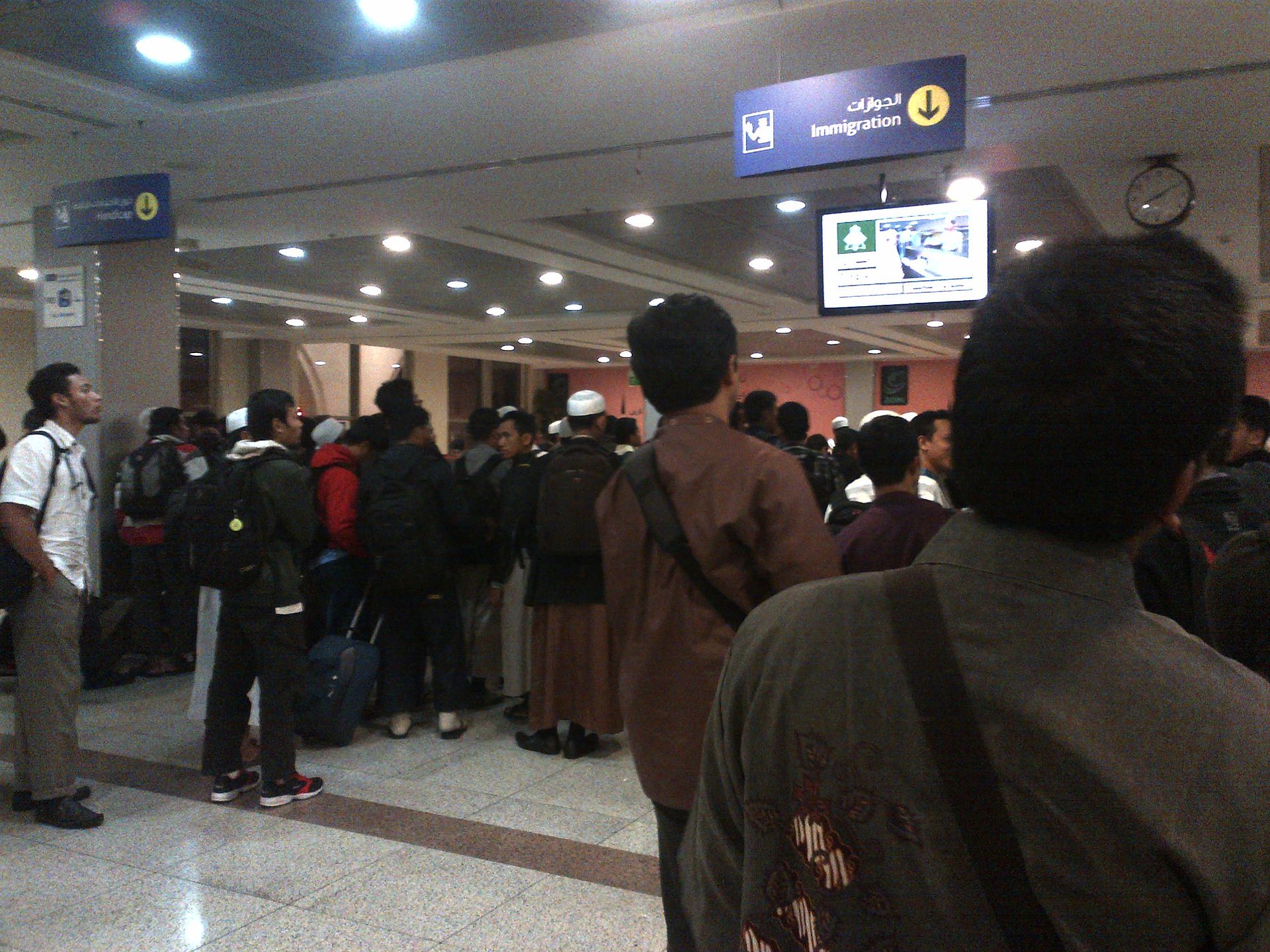
The PMF’s 7th Brigade is positioned at the Jadidat Arar border crossing — the same crossing through which 30,000 Iranian pilgrims transit. PMF units in the area operate wearing Iraqi government uniforms and drawing Iraqi government salaries. Their operational commanders take phone calls from the IRGC’s Quds Force.
Saudi security services face a screening problem with no clean solution. Thirty thousand Iranian nationals entering through a border corridor that simultaneously serves Iran-backed militia operations must be processed without a visible incident — no detentions, no prolonged delays, no confrontations that Iranian state media could broadcast. The political cost of mistreating Iranian pilgrims at Arar, even unintentionally, would hand Tehran the narrative it has spent 39 years constructing since 1987.
The route through Iraq is not simply the only option available with direct flights suspended. It is a route that maximizes Saudi Arabia’s exposure at the point of entry. Every pilgrim who crosses at Arar passes through a space where Iran’s military and religious infrastructure overlap — where the same organizational ecosystem that launched ballistic missiles at Saudi oil facilities in February and March also manages the ground logistics that get elderly Iranian pilgrims onto buses bound for Madinah.
The crossing’s geography compounds the problem. Jadidat Arar sits in Iraq’s Anbar Governorate, a province where the Iraqi central government’s writ competes with PMF influence. Saudi planners must secure the corridor without appearing to restrict Iranian pilgrims’ access to Hajj — an impossible optics equation with no neutral posture available.
What Happened in 1987 — and Why Iran Remembers
On July 31, 1987, Iranian pilgrims staged a political demonstration inside the Grand Mosque in Mecca. Saudi security forces established a cordon. The confrontation escalated into a stampede that killed 402 people — 275 Iranian pilgrims, 85 Saudi security personnel, and 42 pilgrims from other countries. Between 649 and 2,000 were injured, depending on the source.
Ayatollah Khomeini called on Saudis to overthrow the House of Saud to avenge the dead. Ali Khamenei, then the President of Iran, framed the event not as a sectarian confrontation but as “a war between the American perception of Islam and true revolutionary Islam” — a formulation designed to transcend the Sunni-Shia divide and position Iran as the defender of all Muslims against a Western-aligned monarchy.
The aftermath reshaped the Hajj for a generation. Saudi Arabia cut Iran’s quota from 150,000 to 45,000 — a 70 percent reduction. Iran boycotted Hajj for three consecutive years: 1988, 1989, and 1990. Riyadh severed diplomatic relations in April 1988. The rupture lasted three years until Oman brokered a restoration agreement in Muscat in March 1991, setting Iran’s quota at 115,000.
The 1987 incident gave Iran something that has appreciated in political value for 39 years: a martyrdom narrative situated inside Islam’s holiest site, with Saudi Arabia cast as the perpetrator. Four hundred and two deaths — of pilgrims, inside the Haram — produced a propaganda instrument of unmatched potency in the politics of Islamic legitimacy.
Thirty thousand Iranian nationals inside Saudi Arabia during a shooting war gives Iran the option of constructing that narrative again, at a scale Khomeini did not have access to. The presence alone creates the possibility. Tehran does not need to act on it for the deterrence to function.
| Year | Event | Iranian Pilgrim Status |
|---|---|---|
| 1987 | Mecca incident: 402 killed | Quota cut from 150,000 to 45,000 |
| 1988–1990 | Iranian Hajj boycott; diplomatic ties severed April 1988 | Zero pilgrims for three consecutive years |
| 1991 | Oman-mediated restoration (Muscat, March) | Quota restored to 115,000 |
| 2016 | Nimr al-Nimr execution; Saudi embassy in Tehran stormed | Hajj visas suspended; relations severed |
| 2023 | China-brokered rapprochement (March) | Diplomatic relations restored |
| 2024 | First post-2016 Iranian Hajj pilgrims return | Partial quota resumed |
| 2025 | flynas resumes direct flights; war begins Feb. 28 | 87,550 pilgrims; ~77,000 stranded post-outbreak |
| 2026 | Combined land-air route via Arar; wartime Hajj | 30,000 pilgrims (34% of 87,550 quota) |
How Does Iran’s Pilgrim Presence Change the Kinetic Calculus?
The deterrence operates on three layers, each running in both directions. Iran holds a potential martyrdom narrative of extraordinary power. Saudi Arabia faces constraints on kinetic action with Iranian nationals inside its borders. And the Arar corridor creates a dual-use infrastructure problem that neither side can resolve without cost.
The Propaganda Asset — Both Ways
If Iranian pilgrims are harmed during Hajj — by Saudi action, by IRGC-triggered collateral damage, or by accident — Iran holds the most potent martyrdom claim in Islamic politics since 1987. Khomeini used 402 deaths to mobilize the Iranian state for three years and humiliate Riyadh before the global Muslim community. Thirty thousand Iranian nationals in a war zone offers Tehran a potential narrative of vastly greater magnitude. But the deterrence is not unidirectional. Saudi Arabia can portray the Iranian pilgrim presence as a good-faith gesture that Tehran exploited or endangered. MBS’s April 24 statement through the Foreign Ministry — “guests of God” — prepares that framing. Any Iranian attempt to weaponize a pilgrim incident would face Saudi Arabia’s counter-narrative: that the Kingdom welcomed Iranians during a war that Iran started.
The Authorization Ceiling Paradox
Mojtaba Khamenei authorized the dispatch. The SNSC approved it. But IRGC field commanders in Iraq operate under autonomous strike authority — a structural adaptation from the early war’s disruption of centralized command. A field commander in western Iraq, acting within his delegated authority, could order a strike that produces Iranian civilian casualties in Saudi Arabia, casualties whose presence was approved by the person that commander reports to through three layers of command hierarchy. The deterrent works only if Iran’s command structure is more coherent than the available evidence suggests. Pezeshkian’s April 4 accusation against Vahidi and Abdollahi — that they deviated from the Islamabad negotiating mandate — demonstrated that it is not.
The Dual-Use Corridor
Saudi border security must process 30,000 Iranian nationals through a crossing where the PMF’s 7th Brigade operates, screening pilgrims without creating an incident that Iranian media would broadcast as Saudi hostility toward Muslim worshippers. Iran benefits from the friction inherent in the arrangement. Every pilgrim detained or delayed becomes potential content. The Arar corridor places Saudi Arabia in a position where the security imperative and the hospitality imperative pull in opposite directions — and Iran chose the route.
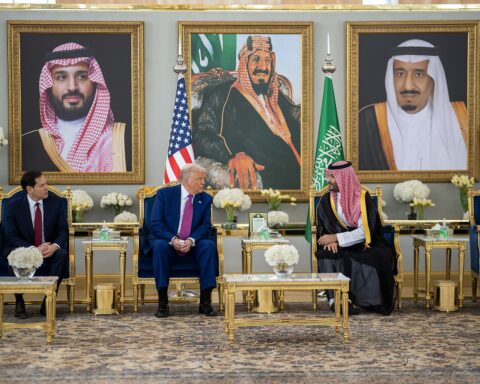
The Gulf state veto of May 18–19 — in which MBS, MBZ, and Sheikh Tamim called Trump to stop a scheduled American strike — was made with Iranian pilgrims already inside Saudi Arabia for 22 days. The veto reflected multiple pressures: the fiscal risk of oil-price collapse, the IRGC’s stated readiness to retaliate, the diplomatic cost of hosting the strike’s launching pad. The presence of 30,000 Iranian nationals on Saudi sovereign territory was part of the decision environment, whether or not it was named in the phone calls. Within the same week, IRGC operations on Kuwaiti soil demonstrated that Iran’s operational reach extended to every Gulf state simultaneously. The full implications for Saudi Arabia — 400 PAC-3 rounds, 860,000 pilgrims, and no channel to Jerusalem — are examined in MBS Spent 52 Days Building a Ceasefire Netanyahu Never Signed.
Six Days to Arafah
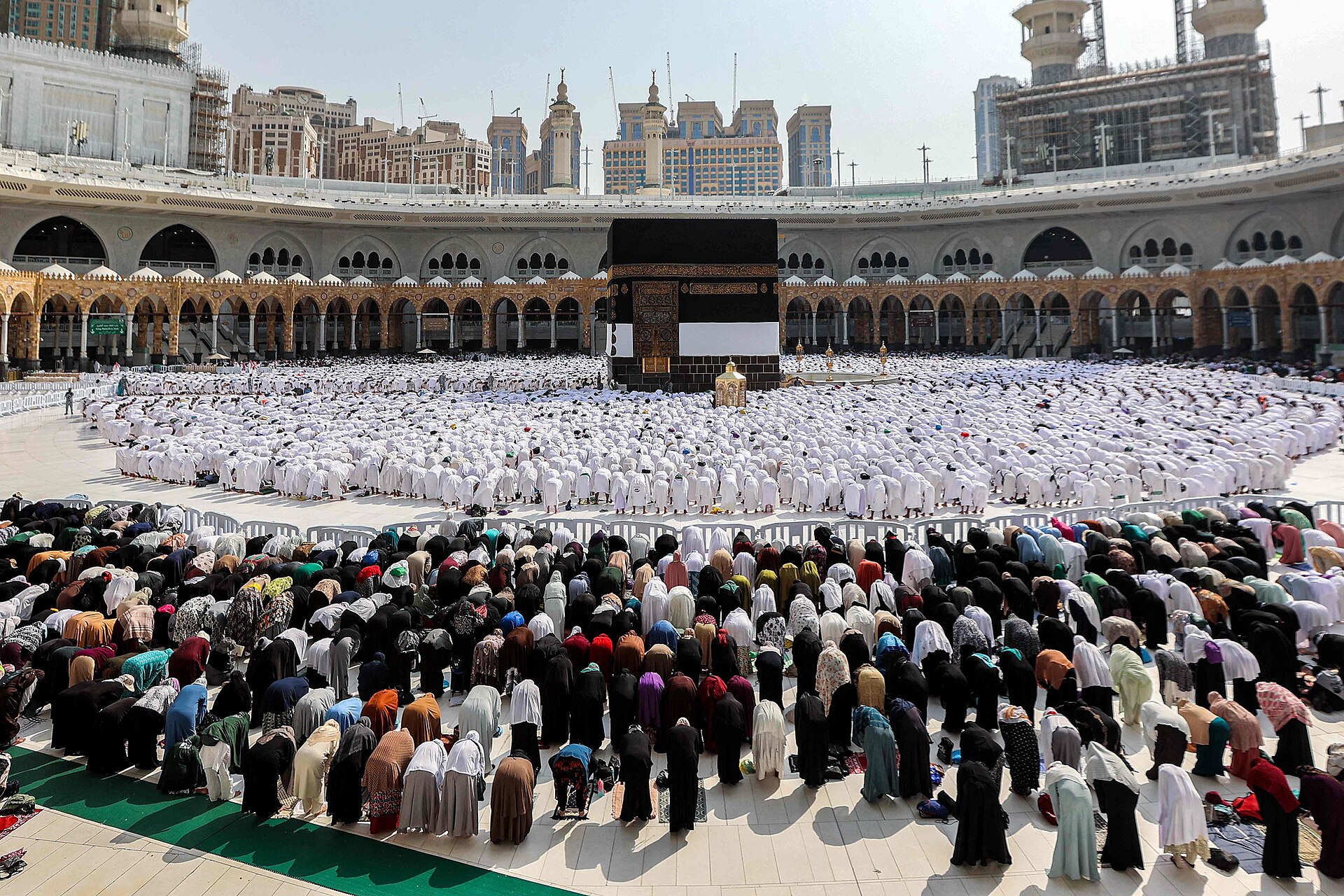
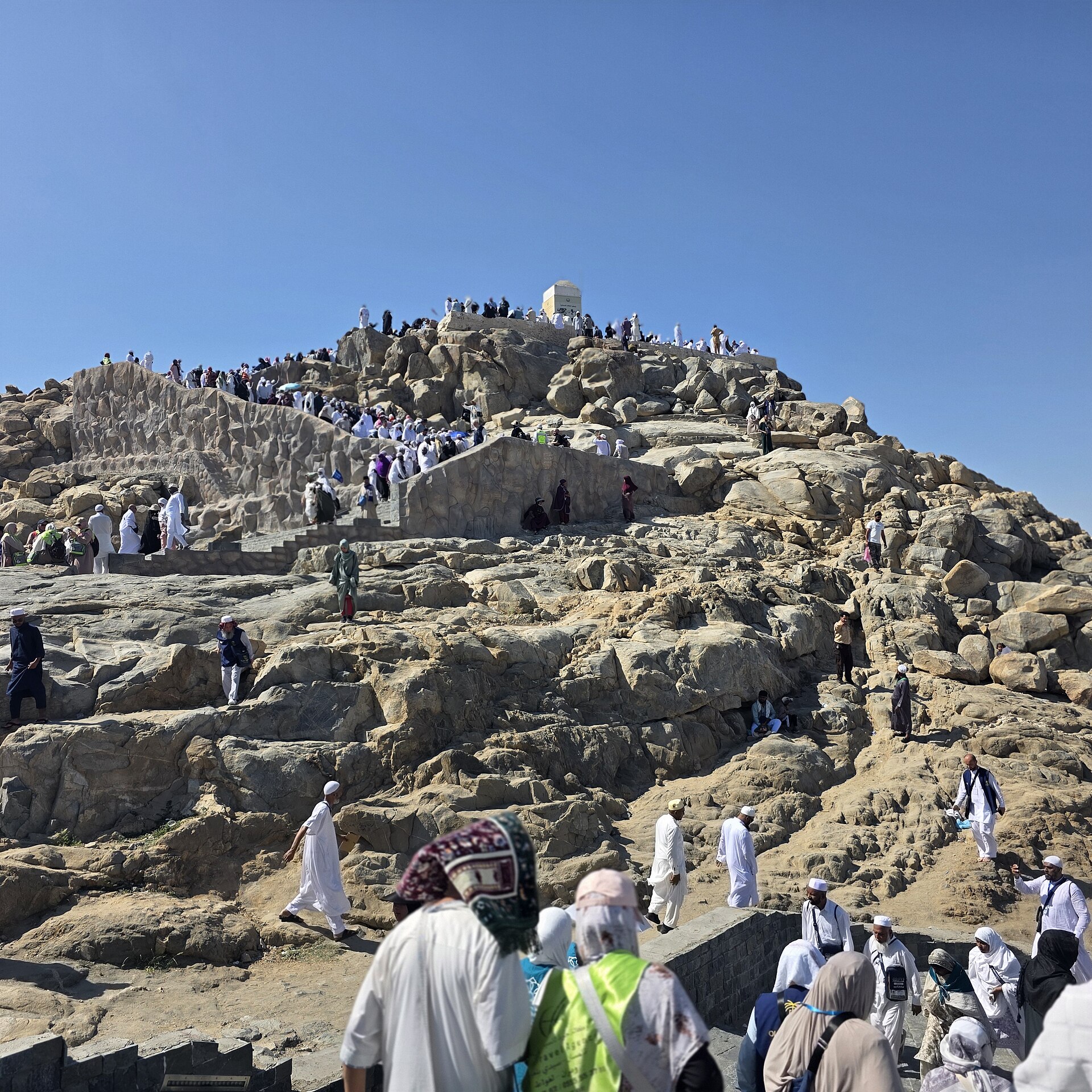
The Day of Arafah falls on May 26, 2026. Between 1.2 and 1.8 million pilgrims will converge on the Plain of Arafah — an open area of approximately 20 square kilometers, outside the Haram’s physical perimeter, with no overhead cover. The standing at Arafah (wuquf) is the single essential rite of Hajj. A pilgrim who misses Arafah has not performed Hajj.
Saudi Arabia’s PAC-3 MSE interceptor inventory stands at approximately 400 rounds — 14 percent of the pre-war level of roughly 2,800. The $9 billion sale of 730 additional interceptors, approved January 30, 2026, will not deliver a single round before mid-2027. The gap between the threat envelope and the available air-defense shield is the widest it has been since the war began, at the precise moment the greatest concentration of exposed civilians assembles on open ground.
The Hajj airlift is closing. Pilgrims who are inside Saudi Arabia will remain through the Day of Arafah. The seven-day countdown began with Iranian nationals already distributed across the holy cities.
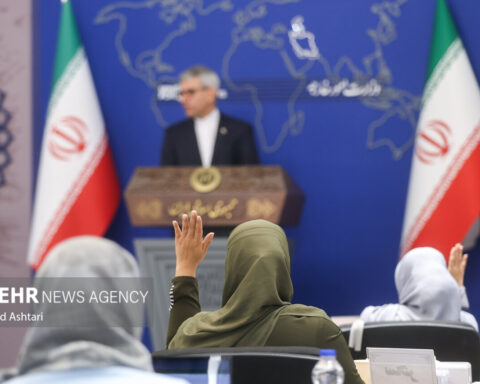
Iran’s public posture on the pilgrims has been one of studied normalcy. Tasnim News Agency ran a warm headline on April 24: “Saudi Arabia Eager to Host Iranian Hajj Pilgrims.” Zero mention of the ongoing war, IRGC strikes on Saudi infrastructure, or strategic dimensions. Mehr News Agency covered the logistics as routine procedure. IRNA confirmed the agreement with both sides “emphasizing the importance of facilitating administrative and service procedures.” Bureaucratic framing throughout.
No Iranian state outlet has described the 30,000 pilgrims as a deterrent, a constraint on Saudi military behavior, or a strategic asset. This silence is itself the mechanism. Iran extracts maximum deterrence value precisely by not naming it. To publicly claim the pilgrims as a shield would be to acknowledge the use of civilians for military advantage — a framing that would collapse the religious legitimacy of the entire operation. By saying nothing, Iran allows the math to operate unspoken: 30,000 nationals, inside the sacred perimeter, six days before the kinetic window closes.
The first Iranian pilgrims arrived April 27. By May 18, when MBS called Trump to block the scheduled strike, they had been inside Saudi Arabia for 22 days. By May 20, the 30,000 were distributed across Madinah, Makkah, and the transit points between them. The deployment preceded the Gulf veto. It preceded the closing of the Hajj airlift. It preceded the IRGC’s latest operations on Kuwaiti territory. Iran placed its nationals inside Saudi Arabia before any of these events, and each subsequent development increased the weight those 30,000 carry in the decisions of three capitals.
Those 30,000 nationals are part of the Iranian leverage architecture that MBS must now navigate. The same 48-hour window that opened when Trump cancelled the strike is the window in which Hajj deterrence, FM-level contacts, and back-channel commitments all converge — what Saudi Arabia has promised, what Iran is holding back, and why the clock runs out before Arafah.
The last time Iran had a comparable number of nationals inside Saudi Arabia during a crisis, it was 1987 — with 150,000 pilgrims. That ended with 402 dead, a three-year boycott, and a diplomatic rupture that required Omani mediation and four years to repair. In 2026, Iran has sent 30,000 into an active war zone. Fewer pilgrims, but a conflict orders of magnitude more destructive, with a Saudi air-defense shield at 14 percent capacity, an IRGC command structure that its own president says he cannot control, and the Day of Arafah six days away.
The bilateral Hajj agreement signed in November 2025 was negotiated as routine administration between Rashidian and Al-Rabiah. By April 27, it had placed 30,000 Iranian nationals inside a country Iran was simultaneously striking with ballistic missiles. They entered through a border crossing where Iran-backed paramilitaries operate, on the personal authority of the Supreme Leader’s son.
Frequently Asked Questions
How many Iranians were traveling to Saudi Arabia before the war?
Approximately 200,000 Iranians performed Umrah in the year before the war, according to Abdolfattah Navvab, the Supreme Leader’s Hajj Representative, who publicly lobbied for an increase in Iran’s annual Hajj quota citing population growth. Combined with the 87,550 Hajj pilgrims in 2025, Iran was sending roughly 290,000 religious travelers to Saudi Arabia annually. The 30,000 dispatched for wartime Hajj 2026 represent a fraction of that pre-war volume.
Has Saudi Arabia suspended Iran’s Hajj access before?
Twice. After the 1987 Mecca incident, the quota was cut from 150,000 to 45,000, and Iran boycotted Hajj from 1988 to 1990. Diplomatic relations, severed in April 1988, were not restored until Oman brokered an agreement in Muscat in March 1991 — the restored quota of 115,000 included a designated zone for political demonstrations, a concession acknowledging Iran’s demand to express political views during pilgrimage. In January 2016, Saudi Arabia executed Shia cleric Nimr al-Nimr along with 46 others; Iranian protesters subsequently stormed the Saudi embassy in Tehran and the consulate in Mashhad. Riyadh suspended Hajj visas and severed ties. Seven years passed before the China-brokered rapprochement of March 2023 restored relations, with Iranian pilgrims returning in 2024.
Why did Iran send only 30,000 pilgrims instead of the full 87,550 quota?
Iran has not publicly explained the reduction. The combined land-air route through Iraq imposes logistical constraints that direct flights did not — the Arar crossing processes travelers by bus and rail, not by aircraft, limiting daily throughput. Security screening requirements on both sides of the border further constrain capacity. The reduced number also limits Iran’s humanitarian exposure: fewer nationals at risk means a smaller evacuation obligation if conditions deteriorate, while 30,000 remains sufficient to constrain Saudi military options during Hajj.
What happens to Iranian pilgrims if hostilities escalate during Hajj?
No evacuation mechanism exists for wartime conditions during Hajj. The Arar crossing processes approximately 3,000 travelers per day — at that rate, evacuating 30,000 would take a minimum of 10 days, assuming the crossing remains operational and Iraq’s Anbar Governorate stays accessible. Saudi Arabia’s experience evacuating the 77,000 Iranian nationals stranded after February 28 required weeks of sustained operations. During the 1987 crisis, repatriation of the dead and evacuation of the injured were handled through diplomatic channels over months, not days. The Hajj calendar itself compounds the problem: the rites of Mina (days 10–13 of Dhul Hijjah) follow immediately after Arafah, dispersing pilgrims across multiple sites and making organized extraction operationally difficult.