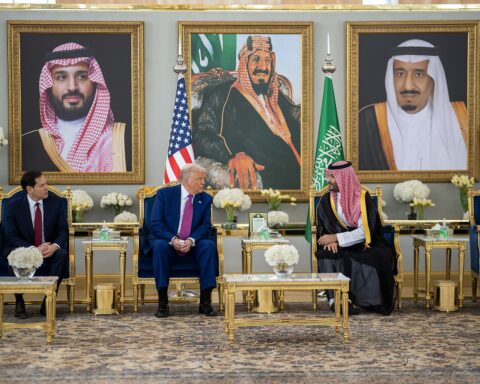

RIYADH — Mohammed bin Salman called Donald Trump on May 18 and stopped an American airstrike on Iran scheduled for the following morning — the most consequential phone call between Riyadh and Washington since the two countries’ oil-for-security compact was first sealed in 1945. He has no number in Jerusalem that produces the same result, and Benjamin Netanyahu is not waiting for one.
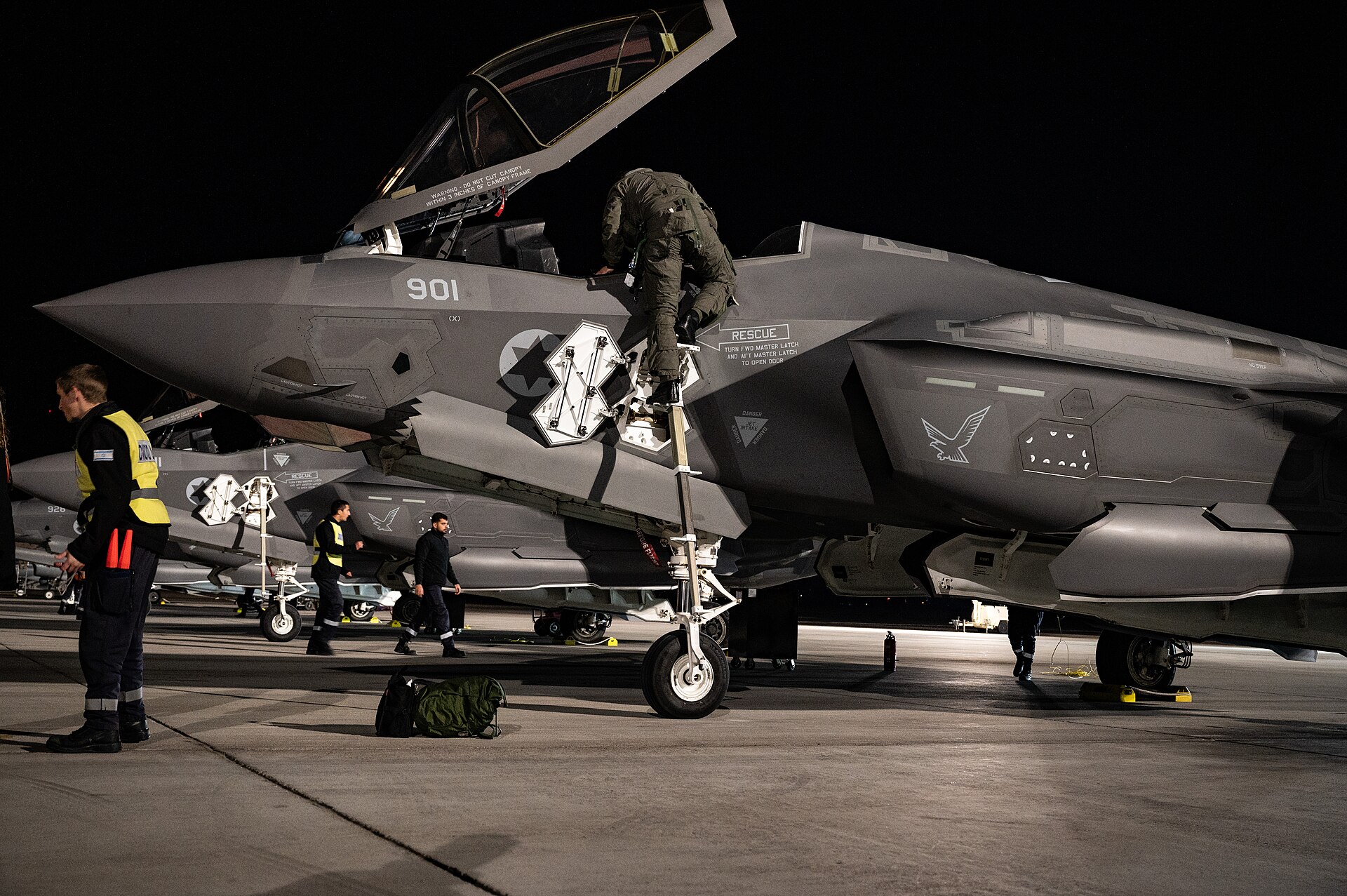
The 72-hour diplomatic pause that MBS, Mohamed bin Zayed, and Qatar’s Emir Tamim secured through coordinated calls to the White House removed the United States as immediate first-mover against Iran’s nuclear programme, but it did not remove Israel. Four days before those phone calls, on May 14, Israel’s Ministry of Defence signed a $34 million contract with Elbit Systems for extended-range fuel tanks designed to put the F-35I Adir over Iranian targets without aerial refuelling — a procurement decision that makes strategic sense only if you intend to fly without American tanker support. The instrument MBS wielded to halt the US strike — base denial, airspace closure, diplomatic pressure — is architecturally specific to American operations, and Saudi Arabia may have traded a calibrated American escalation with built-in off-ramps for an Israeli-initiated one over which Riyadh exercises zero restraint.
Table of Contents
- What Did MBS’s 72-Hour Pause Actually Achieve?
- The Begin Doctrine Has Never Asked Permission
- How Would Israel Strike Iran Without Saudi Airspace?
- Can Israel Destroy Fordow Without the GBU-57?
- The Nuclear Clock Netanyahu Keeps Citing
- Why Would Israeli Strikes Produce Iranian Missiles Over Riyadh?
- Does Saudi Arabia Have Any Mechanism to Restrain Israel?
- The Trade MBS May Not Have Intended
- Frequently Asked Questions
What Did MBS’s 72-Hour Pause Actually Achieve?
MBS’s coordinated calls with MBZ and Tamim on May 18 halted a planned US strike by using Saudi control over Prince Sultan Air Base and Saudi airspace — the same denial mechanism deployed during Operation Project Freedom on May 4–7. The pause removed America’s immediate kinetic option while leaving Israel’s independent strike architecture entirely unaffected, a distinction that may prove to be the defining asymmetry of this war’s next phase.
The mechanism is well understood because Riyadh had already deployed it seventeen days earlier. When the United States launched Operation Project Freedom on May 4, Saudi Arabia denied American aircraft the use of Prince Sultan Air Base and closed its airspace to US and Israeli military traffic, effectively grounding the operation within 72 hours. Washington reversed course, the restrictions were lifted by approximately May 7, and the episode established a template: Saudi Arabia can impose real costs on US military operations that route through the Kingdom, because those operations physically depend on Saudi infrastructure.
That template worked again on May 18 when the three Gulf leaders called Trump in sequence, arguing a deal was close and that strikes would kill it. Trump relented, granting what amounted to a multi-day extension of a diplomatic process Riyadh has been trying to slow since February, according to Al Jazeera’s near-real-time reporting of the calls. The fact that three Gulf heads of state could halt an American military operation in its final planning stages confirmed what the Project Freedom episode had already demonstrated: the GCC’s three wealthiest members retain a functional veto over American kinetic action that depends on regional basing and overflight permissions.
But that veto is architecturally specific to the United States — it works because American strike packages require forward bases, aerial refuelling corridors, and overflight rights that Gulf states physically control. Israel has spent the past year systematically removing every one of those dependencies from its own operational planning, and the evidence is sitting in a dry lake bed in western Iraq.
The Middle East briefing 3,000+ readers start their day with.
One email. Every weekday morning. Free.
The Begin Doctrine Has Never Asked Permission
Israel’s willingness to strike nuclear threats unilaterally is not a theoretical proposition but a documented pattern with a 45-year operational record and a zero-failure rate. On June 7, 1981, eight Israeli F-16s flew 1,100 kilometres from Etzion Air Base to destroy Iraq’s Osirak reactor in what Menachem Begin called the exercise of Israel’s right to prevent any hostile state from acquiring nuclear weapons. The United States condemned the strike, the UN Security Council unanimously censured it, and the reactor stayed destroyed — the only outcome that mattered in Jerusalem.
The pattern repeated with even less friction on September 6, 2007, when eight Israeli F-15s crossed into Syria and destroyed the Al-Kibar plutonium reactor, a facility modelled on North Korean designs that the CIA had been monitoring for months. Washington was informed but did not participate, did not authorise, and did not object after the fact, while the international response was so muted that Damascus did not publicly acknowledge the site’s existence for months. Both operations shared an identical architecture: Israeli intelligence identified a nuclear threshold, Israeli planners built a mission within indigenous capabilities, and Israeli leaders executed without permission from Washington — let alone from states that would bear the consequences of Iranian retaliation.
Netanyahu has made clear he considers the current moment another such threshold, and his timeline for action does not align with the diplomatic pause MBS secured. He discussed “round two” strikes on Iran with Trump as early as December 31, 2025, according to Axios, and his public statements since have grown more operationally specific with each passing week. In May, he told Iran International that the conflict is “not over” as long as Iran retains enriched uranium and active enrichment facilities — language that maps directly onto the formal red line published by Israel’s Institute for National Security Studies in March 2026.
“There’s still nuclear material, enriched uranium, that has to be taken out of Iran. There are still enrichment sites that have to be dismantled.”Benjamin Netanyahu, Iran International, May 11, 2026
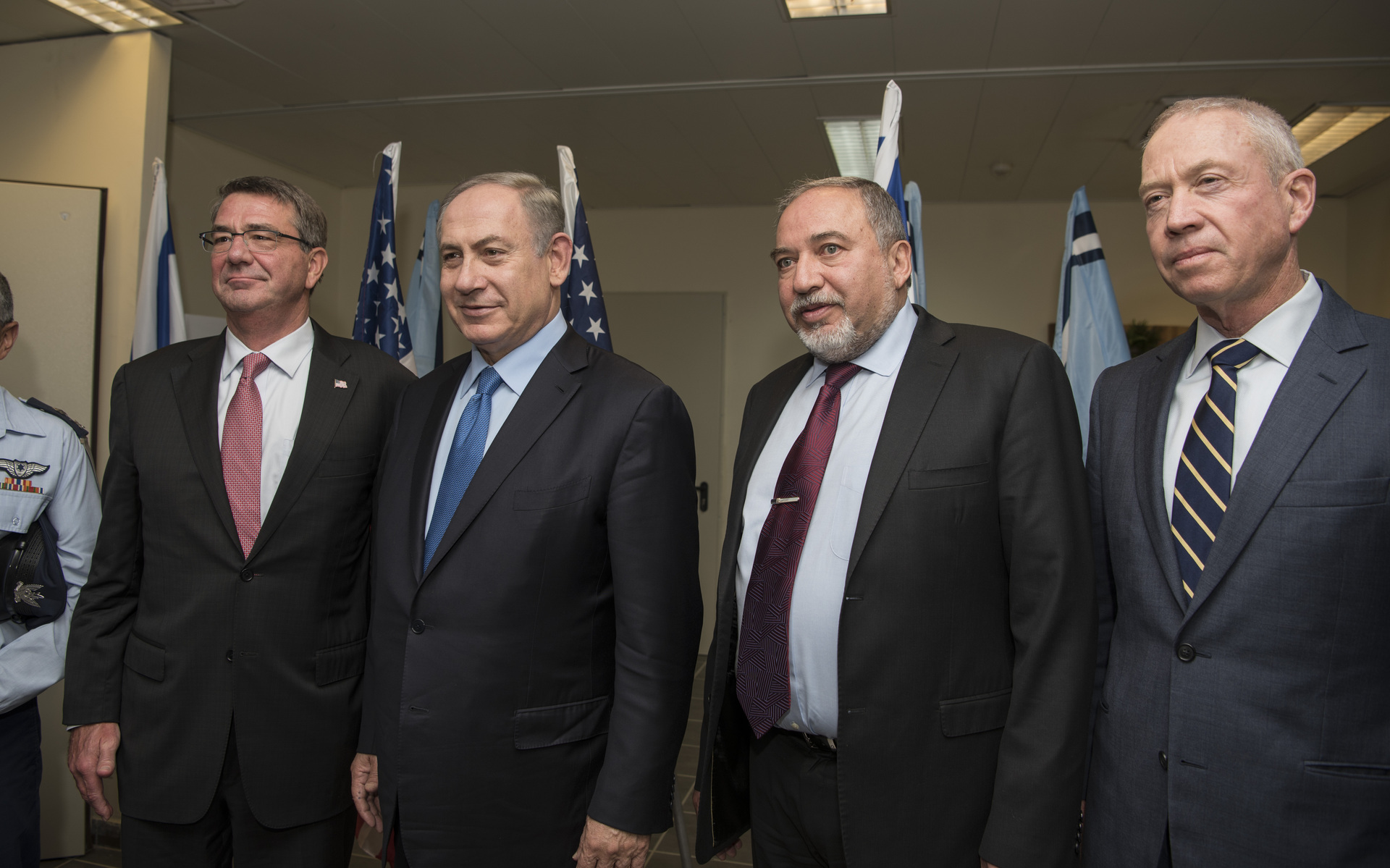
That language is not posturing. The INSS paper — which functions as semi-official Israeli strategic doctrine — stated explicitly that Israel should not agree to any ceasefire without the dismantlement of “all underground enrichment sites that provide immunity from conventional attack” and the removal of all uranium enriched above low levels. The congruence between Netanyahu’s public statements and the INSS formulation points to a settled national position, not a negotiating opener, and the question for Saudi Arabia is whether anyone in Riyadh fully grasps that when Israel says “dismantled,” it means the jets fly regardless of who is on the phone to Washington.
How Would Israel Strike Iran Without Saudi Airspace?
Israel has built a forward military outpost in western Iraq — coordinates approximately 31.67°N, 42.45°E, roughly 180 kilometres west of Najaf — with a temporary airstrip of approximately 1.6 kilometres carved into a dry lake bed, operational before February 28, according to the Wall Street Journal’s May 9 reporting. The base served as a logistics hub through the 40-day Operation Roaring Lion campaign, routing Israeli aircraft entirely outside Saudi-controlled airspace and eliminating the dependency that gives Riyadh its veto over American operations.
The outpost was built with US knowledge but is Israeli-operated, with special forces, search-and-rescue capability, and forward logistics that allow Israeli aircraft to stage, refuel, and recover without touching Gulf state territory. Its existence means Saudi airspace denial — the mechanism that grounded Operation Project Freedom — is operationally irrelevant to Israeli strike planning, because the Iraq corridor routes around the Kingdom entirely through airspace where US-coalition rules of engagement apply rather than Saudi sovereign permissions. Saudi Arabia can close every air corridor it controls, and an F-35I flying out of western Iraq never enters one.

The F-35I Adir fleet has already demonstrated what this architecture enables: approximately 1,500 sorties flown over Iranian territory since February 2026, according to open-source reporting compiled by 19FortyFive through April. The Elbit Systems fuel tank contract signed on May 14 is designed to push that capability further still, eliminating the last dependency — aerial refuelling from American tanker aircraft — that might give Washington indirect restraining influence over an Israeli strike package. Israel is not merely routing around Saudi Arabia; it is engineering the ability to route around the United States.
Saudi Arabia can close its airspace, deny its bases, and call every number in Washington, and an Israeli strike package can still reach every Iranian nuclear facility by routing through Jordanian and US-controlled Iraqi airspace from a forward base that the Wall Street Journal revealed to the world eleven days ago. The only constraint remaining on an Israeli unilateral operation is not access but armament — whether the weapons Israel carries can crack the mountains Iran buried its centrifuges beneath.
Can Israel Destroy Fordow Without the GBU-57?
Israel cannot crack Fordow’s mountain, and that single limitation defines the ceiling on what a unilateral Israeli strike can achieve against Iran’s nuclear programme. The Fordow Fuel Enrichment Plant sits 80 to 90 metres underground beneath limestone near Qom, and only the American GBU-57/B Massive Ordnance Penetrator — a 30,000-pound weapon deliverable exclusively by the B-2 Spirit — has confirmed capability against targets at that depth. Israel does not possess the GBU-57 and has no aircraft rated to carry it.
The problem extends beyond Fordow. Western intelligence has assessed that Pickaxe Mountain — a new underground facility approximately 1.5 kilometres from Natanz, buried more than 100 metres beneath granite — is “beyond the reach” of existing bunker-buster munitions including the GBU-57 itself, according to PBS Frontline and the New York Times. Iran’s decision to bury its most sensitive enrichment cascades under progressively harder geology is producing sites that exist beyond the kinetic reach of any state on earth, a fact that accelerates the timeline for action against the facilities that remain vulnerable.
| Facility | Depth | Geology | Israeli Strike Capability | US Strike Capability |
|---|---|---|---|---|
| Natanz (above-ground halls) | Surface | Standard structures | F-35I / GBU-28 — confirmed effective | Any precision munition |
| Natanz (underground cascades) | 40-50 metres | 7.6m reinforced concrete | Marginal — tandem strike required | GBU-57 — confirmed effective |
| Fordow | 80-90 metres | Limestone mountain | Beyond current capability | GBU-57 — uncertain full penetration |
| Pickaxe Mountain (new Natanz annex) | 100+ metres | Granite mountain | Beyond capability | Assessed beyond GBU-57 reach |
| Isfahan (UCF) | Surface | Standard industrial | F-35I — confirmed effective | Any precision munition |
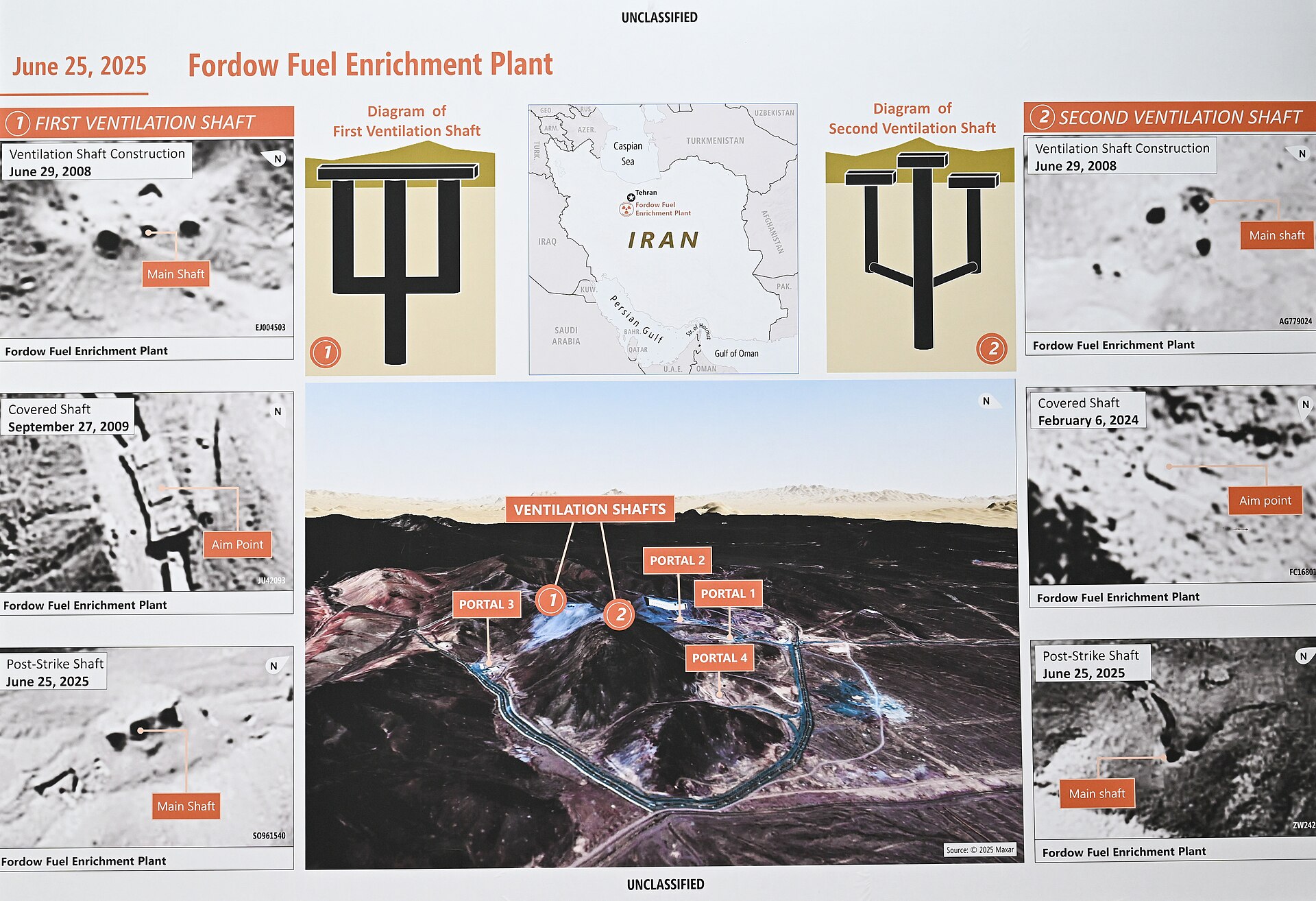
But Israel does not need to crack Fordow to achieve meaningful operational objectives — a distinction that matters enormously for understanding what a unilateral strike would actually target. The joint US-Israeli campaign that began on February 28 already struck Natanz entrances, Isfahan’s uranium conversion facility, the Minzadehei weapons site, Lavisan 2, Mojdeh, Yazd uranium processing, and the Khondab heavy water reactor, according to FDD and ISIS post-attack assessments. CSIS assessed that these strikes “significantly set back Iran’s nuclear programme” and that “it would take Iran at least one to two years to regain threshold status.” Israel can destroy facility entrances, ventilation shafts, power supply infrastructure, and centrifuge manufacturing sites without collapsing the mountain above Fordow — degradation rather than destruction, buying years rather than ending the programme.
The question is whether degradation satisfies the red line Netanyahu and INSS have articulated. The INSS paper called for dismantlement of underground sites, not damage to their access tunnels, and the gap between what Israel can achieve alone and what its own doctrine demands is precisely the width of the GBU-57 — a weapon that only America can deliver and that MBS’s phone calls just made harder to deploy.
The Nuclear Clock Netanyahu Keeps Citing
The urgency driving Israeli planning is not rhetorical but radiological, measured in kilograms and centrifuge-hours rather than diplomatic calendar days. Iran’s stockpile of high-enriched uranium stands at approximately 400 kilograms at 60 percent purity, according to IAEA assessments compiled before inspectors lost access, and US Energy Secretary Chris Wright has stated publicly that Iran is “a small number of weeks away” from enriching to weapons-grade material. At 60 percent, the technical step to 90 percent weapons-grade requires approximately 25 days per device via Iran’s IR-6 advanced centrifuge cascades — a timeline that shrinks with every cascade Iran brings online and that does not pause because Gulf diplomats are making phone calls.
This arithmetic dominates Israeli threat assessment and explains why Netanyahu’s language has shifted from strategic patience to operational specificity over the past three months. CNN reported on April 7 that the US and Israel were “determined to wipe out Iran’s nuclear expertise” before winding down the war — framing the objective as the destruction of knowledge and human capital, not just hardware. Israel’s Defence Minister Katz went further, declaring the dismantlement of Iran’s enrichment infrastructure a “precondition” to ending the conflict, language that forecloses the kind of phased diplomatic framework Gulf mediators have been pushing since the Islamabad talks.
IAEA access to Iranian nuclear sites was terminated on February 28 — the day the war began — which means the international community is operating on intelligence frozen nearly three months ago while Iran’s surviving centrifuges continue to spin behind a wall of uncertainty. Every day without verification is a day the 25-day breakout window may be compressing, and Netanyahu has made clear he does not intend to discover the answer after the fact. The diplomatic pause MBS secured buys time for negotiators, but the nuclear clock and the diplomatic clock run at different speeds — and Israel is watching the one that Riyadh cannot slow down.
Why Would Israeli Strikes Produce Iranian Missiles Over Riyadh?
An Israeli strike on Iran’s nuclear facilities would trigger Iranian retaliation against Gulf Arab states regardless of whether those states participated in, enabled, or even supported the operation — a linkage mechanism already demonstrated at catastrophic scale during this war. After Khamenei’s killing on March 1, Iran launched more than 400 ballistic missiles and approximately 1,000 drones at Arab Gulf targets simultaneously, striking Riyadh, the Eastern Province, Manama, Kuwait International Airport, Abu Dhabi, and US Fifth Fleet headquarters in Bahrain in what CNN confirmed was the first time in history Iran attacked all six GCC members at once.
The linkage intensified as the war continued. When Israel struck a key Iranian gas field, Iran responded not against Israel but against Gulf energy infrastructure, driving Saudi oil production from 10.4 million barrels per day in February down to 7.25 million in March — a collapse the IEA called “the largest disruption on record.” The mechanism is explicit in Iranian operational doctrine: Gulf states hosting forces that attack Iran are co-belligerents regardless of their diplomatic posture, and the IRGC has demonstrated repeatedly that it will override its own foreign ministry to enforce that logic. When Araghchi declared Hormuz “completely open” in April, the IRGC reversed him within hours; when Pezeshkian publicly accused IRGC commanders Vahidi and Abdollahi of sabotaging the ceasefire, it confirmed that Iran’s elected government does not control Iran’s military retaliation patterns.
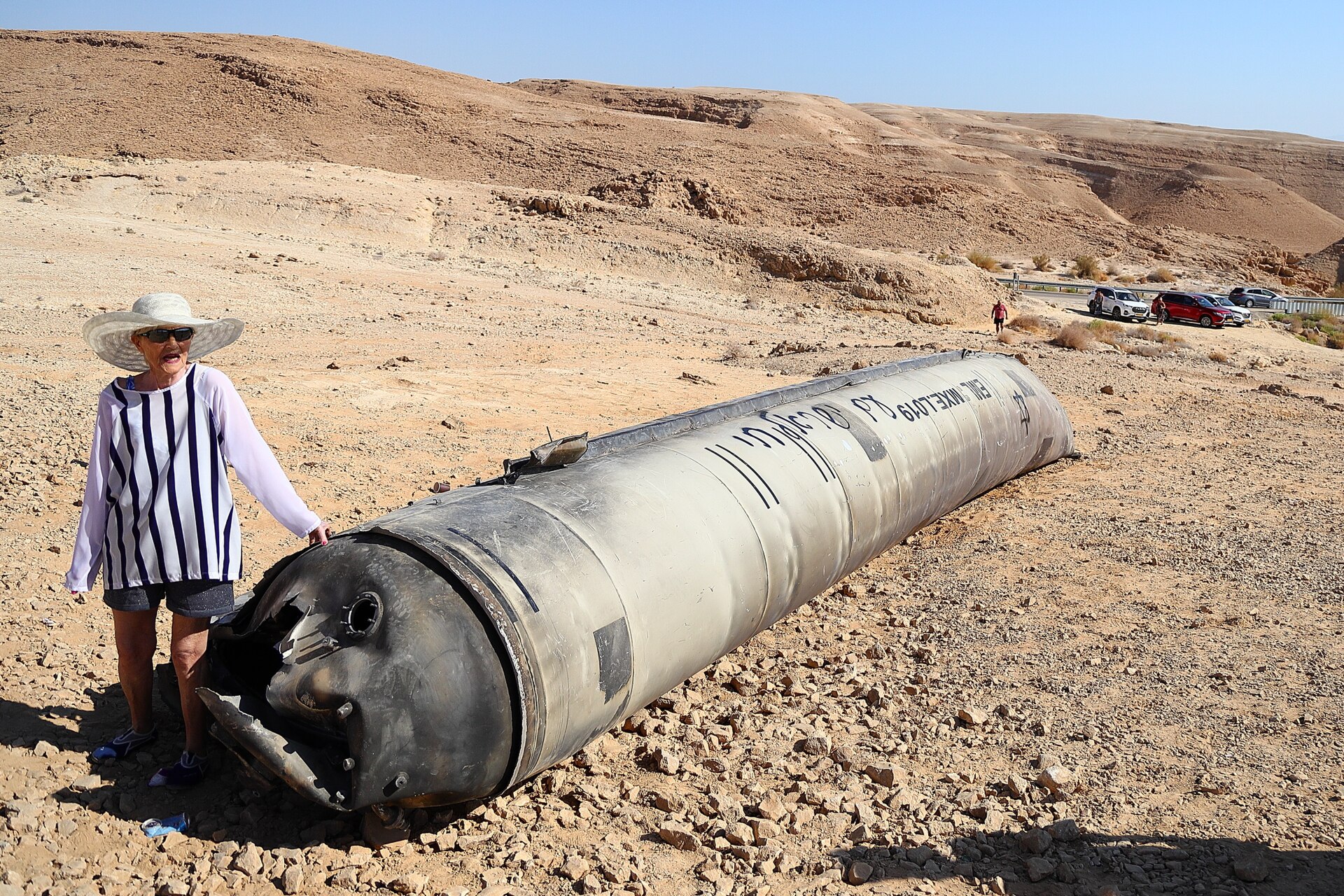
Three drones from Iraqi airspace were intercepted over Saudi Arabia on May 17 — the day before MBS made his call to Trump — and Reuters confirmed that Saudi Arabia had secretly struck Iranian-backed militia positions in Iraq near the Saudi border around May 13–14. The war’s retaliation cycles are already active and escalating independently of any diplomatic pause, and an Israeli unilateral strike would trigger them with a ferocity proportional to the target set regardless of what Saudi Arabia says, does, or refuses to do. The question is not whether Iran would hit the Gulf after an Israeli nuclear strike — that is established doctrine reinforced by three months of operational precedent — but whether MBS has calculated the cost of removing America’s restraining hand from an Israeli leadership that has already concluded the nuclear threat warrants action.
Does Saudi Arabia Have Any Mechanism to Restrain Israel?
Saudi Arabia has no diplomatic channel, no military deterrent, and no economic instrument capable of altering Israeli decision-making on what Jerusalem considers an existential nuclear threat — a void that MBS’s May 18 phone calls to Washington did nothing to fill. The normalisation process that might have created such channels has collapsed: MBS now insists on a “fully sovereign Palestinian state” as a precondition for recognition, a demand that CSIS and FDD analysts have described as “politically impossible” for any Israeli government to accept. The Abraham Accords framework that once promised a Saudi-Israeli strategic partnership has been replaced by what the French Foundation for Strategic Research called, in a 2026 paper, a trajectory “towards an Israeli-Saudi standoff.”
“Saudi Arabia cowered in silence and begged Iran for mercy, issuing ritual denunciations of Tehran’s belligerence and summoning the Iranian ambassador, yet refusing to sever diplomatic ties.”Hussain Abdul-Hussain, Foundation for Defense of Democracies, May 12, 2026
FDD’s May analysis separately noted “renewed hostility toward Israel” in Saudi political conduct — a characterisation that captures the strategic incoherence limiting Saudi options on both fronts simultaneously. Riyadh has attempted to position itself as a neutral mediator — former intelligence chief Turki al-Faisal claimed that by not retaliating against Iran, Saudi Arabia “foiled an Israeli conspiracy to destroy the region” — while simultaneously hosting US military assets that Israel has used for regional operations. The result is a posture that satisfies neither side: too hostile toward Israel to serve as an interlocutor, too accommodating of American basing to claim neutrality with Tehran, and too militarily exposed to Iranian missiles to afford the luxury of either position.
The International Institute for Strategic Studies identified in May 2026 a new regional alignment forming between Egypt, Pakistan, Saudi Arabia, and Turkey — four states positioning explicitly outside the US-Israel framework — but this quadrilateral has no military dimension capable of deterring Israeli action and no diplomatic channel capable of influencing it. MBS can form coalitions, issue statements, convene summits, and manage Iran’s efforts to fracture the GCC from within, but none of these instruments produce a phone call that stops Israeli jets the way his May 18 call stopped American ones. The asymmetry is structural, not circumstantial, and no amount of diplomatic creativity can bridge it as long as Israel maintains independent basing in western Iraq, independent overflight routes through non-Saudi airspace, and an intelligence assessment that the nuclear clock has weeks left on it. A full accounting of what Saudi Arabia has built and cannot translate into Israeli restraint — fifty-two days of phone calls, coalition management, base-denial, and record deficit spending — is detailed in MBS Spent 52 Days Building a Ceasefire Netanyahu Never Signed.
The Trade MBS May Not Have Intended
The 72-hour pause MBS secured on May 18 may prove to be a trade rather than a victory — the removal of the United States as first-mover against Iran’s nuclear programme while the actor with fewer constraints, more maximalist objectives, and no diplomatic architecture for restraint remains fully operational. An American strike, for all its destructive power, would arrive embedded in a coalition framework with phased escalation, diplomatic off-ramps negotiated in advance, and a superpower’s institutional incentive to manage consequences for regional partners. An Israeli strike under the Begin Doctrine comes with none of those features, because Israel’s 45-year record of unilateral nuclear operations has never included post-strike consequence management for third parties as a design consideration.
The difference matters operationally for Saudi Arabia in ways that are measurable in barrels and riyals. A US-led strike would involve American management of Gulf state exposure — Washington has every incentive to protect its own regional basing network from Iranian retaliation, which means protecting the Gulf states where those bases sit. An Israeli unilateral strike would produce Iranian retaliation against Gulf states while Israel absorbs its own consequences through indigenous missile defence and geographic distance, and the IRGC’s standing declaration of “full authority” over the Strait of Hormuz means any new escalation cycle could trigger the closure of a waterway through which the Kingdom’s remaining export capacity still partially flows.
Saudi Arabia’s fiscal position leaves almost no margin for this outcome. Bloomberg estimates the Kingdom’s war-adjusted deficit at 6.6 percent of GDP against an official projection of 3.3 percent, and the break-even oil price that the Public Investment Fund’s spending commitments require — somewhere between $108 and $111 per barrel — sits above current Brent prices that would collapse further under renewed hostilities. The double blockade at Hormuz, where US forces control the Arabian Sea entry and the IRGC controls the Gulf of Oman exit, means that even Yanbu-routed Red Sea exports operate under a ceiling of 4 to 5.9 million barrels per day against pre-war Hormuz throughput of 7 to 7.5 million. Each Israeli strike that triggers Iranian retaliation against Saudi energy infrastructure widens a fiscal gap that is already consuming PIF reserves at a rate the Kingdom has never experienced.
The February–March campaign already demonstrated the mechanism: Iran hit all six GCC states simultaneously in the days after Khamenei’s killing, retaliation for operations Riyadh neither authorised nor participated in. MBS proved on May 18 that he can stop the American version of this war, the one that comes with coalition oversight, phased escalation, and a phone number to call; what arrives from Israeli airspace will come without any of those.
Frequently Asked Questions
Does Israel possess the GBU-57 Massive Ordnance Penetrator?
No. The GBU-57/B is a 30,000-pound weapon deliverable only by the US Air Force B-2 Spirit bomber, and approximately 20 units are held in American inventory. Israel’s heaviest bunker-busters are variants of the GBU-28 at 5,000 pounds and domestically developed munitions in the MPR-500 series. Israeli defence officials have publicly discussed a tandem-warhead approach — multiple precision munitions striking the same penetration shaft in rapid sequence — as a potential workaround, but this technique has never been confirmed against targets at Fordow-level hardening, and the physics of sequential detonation through 80-plus metres of limestone remain unproven in any operational context.
How many F-35I Adir aircraft does Israel currently operate?
Israel fields approximately 50 F-35I Adir variants across three operational squadrons: the 140th “Golden Eagle,” the 116th “Lions of the South,” and the 117th “First Jet,” with a total order pipeline of 75 aircraft. The Adir is the only F-35 variant authorised to integrate non-US weapons systems, featuring Israeli-developed electronic warfare suites manufactured by Elbit and Israel Aerospace Industries that give Israeli planners munition options unavailable to any other F-35 operator, including the extended-range strike configurations that the May 14 Elbit fuel tank contract is designed to support.
Does the US-Saudi 123 nuclear agreement prohibit Saudi enrichment?
The draft US-Saudi 123 nuclear cooperation agreement, still under negotiation, does not include a prohibition on Saudi uranium enrichment — a deliberate ambiguity that Riyadh has refused to concede despite sustained American pressure. MBS told CBS in a 2018 interview that Saudi Arabia would pursue a nuclear weapon if Iran obtained one, a statement that remains operative Saudi policy. The Stimson Center’s 2026 assessment found that Saudi nuclear hedging is proceeding on its own trajectory regardless of Israeli or Iranian actions, positioning the Kingdom as simultaneously a potential proliferation risk and a casualty of the proliferation competition between Jerusalem and Tehran.
Could Jordan or Turkey block Israeli overflights to reach Iran?
Jordan’s airspace has served as an Israeli transit corridor before — Jordanian radar operators were reportedly aware of the 1981 Osirak flight path but did not intercept — and during the current conflict, Jordan has intercepted Iranian drones and missiles transiting its territory in tactical coordination with Israel. Amman has not publicly authorised Israeli offensive overflights, but the western Iraq forward base bypasses the question entirely by routing through US-controlled Iraqi airspace where coalition rules of engagement apply rather than Jordanian sovereign permissions. Turkey, which manages NATO’s southeastern air defence zone, has no demonstrated capability or apparent willingness to interdict Israeli operations transiting Iraqi airspace south of the Turkish border.
What is the IISS quadrilateral and could it restrain Israel?
The International Institute for Strategic Studies identified in May 2026 an emerging alignment between Egypt, Pakistan, Saudi Arabia, and Turkey — four states coordinating diplomatic positions outside the US-Israel strategic framework. The grouping has no formal treaty, no integrated command structure, and no mutual defence commitment, making its restraining power over Israeli nuclear decision-making effectively nil. Pakistan’s participation is analytically significant as the only member with an operational nuclear deterrent, and its unique position as Iran’s protecting power in Washington since 1992 gives it diplomatic access to both sides of the conflict — but no kinetic influence over Israeli planning.