
TEHRAN — Iran’s IRGC-linked Fars News Agency announced on May 24 that “tankers have been suspended from passing through the Strait of Hormuz after Israeli attacks on Lebanon,” reprising the exact language and mechanism it deployed on April 8 — the day the first ceasefire was declared and then immediately breached. The Sunday deadline for the US-Iran memorandum of understanding, which Secretary of State Marco Rubio had framed as delivering “good news in the coming hours,” passed without a signature, and the 60-day framework that was supposed to reopen the strait toll-free now exists only as a leaked Axios document with no party bound by its terms.
The shift is not rhetorical. On April 17, Iranian Foreign Minister Abbas Araghchi formally declared Hormuz “completely open for the remaining period of ceasefire” in Lebanon — a statement whose positive form made its negative inverse structurally operative. If the ceasefire holds, tankers pass. If Israel strikes Lebanon, tankers stop. On May 15, the day a 45-day ceasefire extension was announced, an Israeli airstrike on Harouf killed six people including three paramedics. Iran now treats that extension as void in everything but name, and the Persian Gulf Sovereignty Authority — operational since May 18 with a $2 million per-transit toll — is collecting fees in the gap where the unsigned MOU was supposed to govern.
Table of Contents
The April Precedent and Its May Replay
What happened on May 24 is not new. On April 8, 2026, when the initial US-Iran ceasefire was declared, Iran allowed two tankers through Hormuz and then halted further passage within hours, citing Israeli strikes on Lebanon. Fars News Agency — not the foreign ministry, not the president’s office, but the IRGC-linked outlet that has served as the operational signal channel throughout the crisis — used the word “suspended.” On May 24 it used the same word, in the same construction, citing the same trigger. The pattern has now repeated twice in 46 days, and both times the physical reality on the water matched the announcement.
The distinction between an IRGC-linked media statement and a formal ministerial order matters legally but not operationally. No tanker captain distinguishes between the two when deciding whether to enter a strait where throughput has fallen sharply, where 27 tankers sit in the Kharg Island queue — a 93% increase in vessel congestion between May 14 and May 21 — and where Kharg itself went six consecutive days without crude offtake by May 17 according to Windward AI satellite data. The announcement is the order because the physical infrastructure of enforcement already exists.
Araghchi’s April 17 statement formalised the connection between Lebanon and Hormuz in language that leaves no interpretive room. “In line with the ceasefire in Lebanon, the passage for all commercial vessels through Strait of Hormuz is declared completely open for the remaining period of ceasefire,” he said. The conditional structure — open during ceasefire, closed when ceasefire is violated — was the point. It was not an improvised threat; it was a policy declaration whose operational consequences were designed to be triggered by a third party’s actions in a theatre Iran does not directly control but claims as a condition.
Parliament speaker Mohammad Bagher Ghalibaf, who also served as a negotiator in the US-Iran talks, reinforced the linkage by stating that any negotiations with the United States would be “unreasonable” if the Israel-Hezbollah conflict continued. NBC News reported that Araghchi sent a separate message to Hezbollah confirming Iran “would not drop its support for the Lebanese militant group” and that Tehran’s latest proposal “reaffirmed its demand that Lebanon be included in any ceasefire agreement.” The Lebanon clause is not a negotiating position Iran is willing to trade away. It is the mechanism by which Tehran has made Hormuz’s operational status contingent on a conflict in which the United States is not the belligerent and Saudi Arabia is not a party.
The Middle East briefing 3,000+ readers start their day with.
One email. Every weekday morning. Free.
What Does the Unsigned MOU Actually Contain?
Axios reported on May 24 that the draft MOU framework includes a 60-day ceasefire extension during which Hormuz would reopen toll-free, mines would be cleared, Iran would sell oil freely, and the United States would lift its port blockade and issue sanctions waivers. Nuclear talks — the moratorium on enrichment that has consumed every prior round — are explicitly deferred to a Track 2 channel with a 30-day window post-signing. The document also “makes clear that the war between Israel and Hezbollah in Lebanon would end” as a condition of the agreement.
The nuclear deferral at the heart of the MOU framework has since produced a direct contradiction between US and Iranian signals: a White House official told CBS News on Saturday that Iran had “agreed in principle to dispose of highly enriched uranium,” a claim Iran’s Tasnim News Agency immediately denied in all-capitals. ‘Under No Circumstances’: Iran Denies HEU Agreement the White House Says Already Exists maps the discrepancy and what it means for the Track 2 window.
The US response to the Lebanon clause was that any ceasefire would not be “one-sided” — if Hezbollah tried to rearm or instigate attacks, Israel would retain the right to act. This is the fracture line that has prevented signature. Netanyahu told Trump directly that “Israel maintains freedom of action against threats in all arenas, including Lebanon,” according to an official familiar with the call, a position that CBS News, the Times of Israel, and Fox News all reported on May 24. Netanyahu’s objection has hardened from a diplomatic reservation into an operational veto: he will not accept language that constrains Israeli strikes in Lebanon, and Iran will not sign without it.
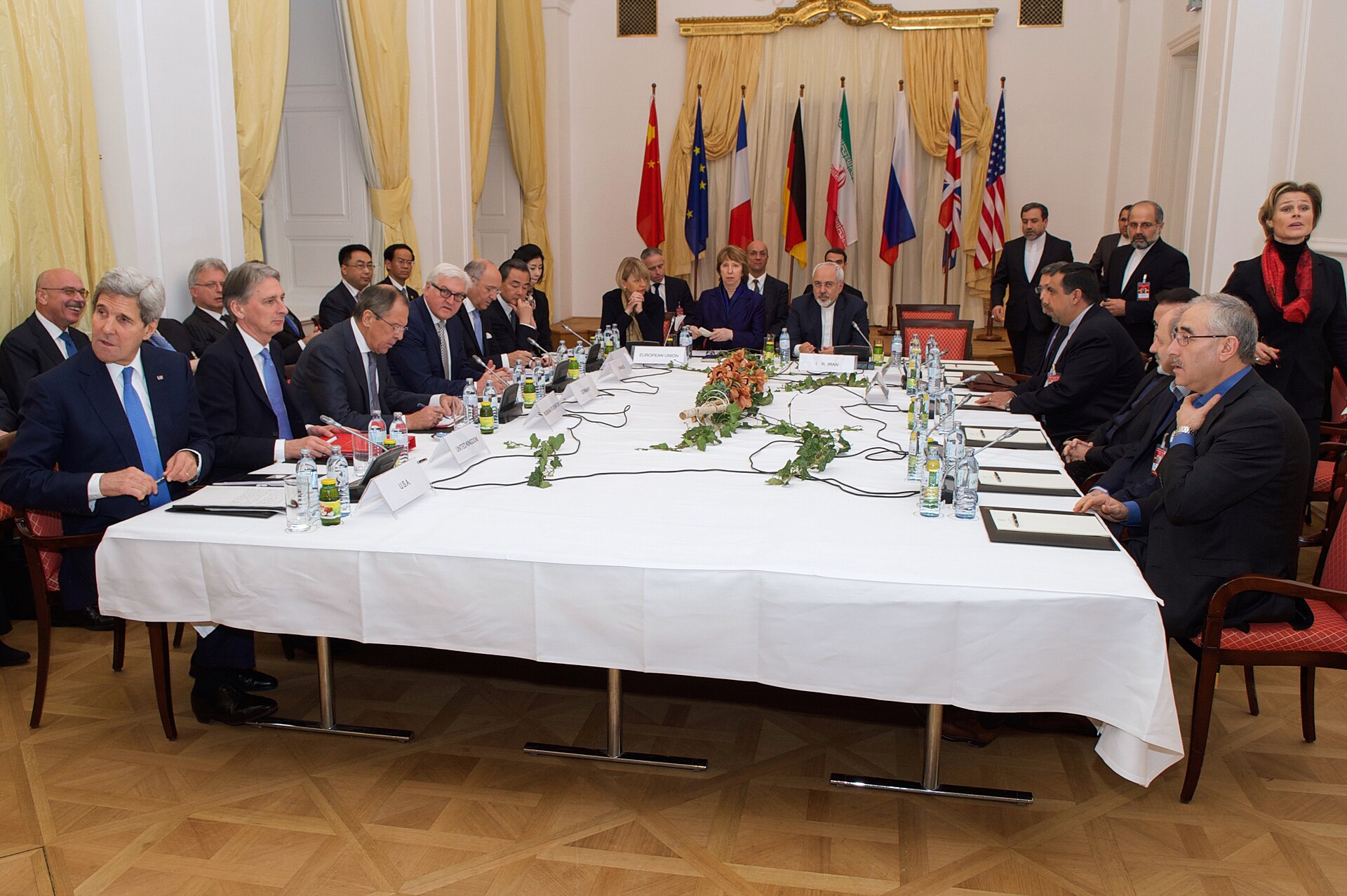
Trump’s own position shifted within 24 hours. On May 23, his Truth Social post described the deal as “largely negotiated, subject to finalization.” By May 24, he told reporters he was “in no rush.” Rubio, speaking from what should have been a triumphant press conference, said only that “significant progress, although not final progress has been made.” Fars News Agency disputed Trump’s characterisation as “incomplete and inconsistent with reality” and indicated “wide disagreements” remain including on Hormuz governance terms. Iranian state media simultaneously insisted the Strait of Hormuz “will stay under Iran’s management” regardless of any deal — a position that contradicts the MOU’s toll-free Hormuz provision on its face.
The three-document problem persists. The Axios 14-point MOU, the Al-Arabiya 8-point “final draft” (which contained zero nuclear specifics and was retracted then republished within 24 hours), and the Munir letter of intent from Pakistan’s special envoy all describe different agreements. The two-stage sequencing trap that was already visible in the framework — Stage 1 before nuclear performance, Track 2 nuclear with a 30-day window — is now compounded by the fact that Stage 1 itself cannot begin because the Lebanon clause blocks signature.
PGSA Fills the Vacuum
While diplomats failed to sign a document that would have reopened Hormuz toll-free, the Persian Gulf Sovereignty Authority continued operating as if no such document existed. PGSA went live on May 18, five days before Rome’s Round 5 talks and six days before Sunday’s unsigned deadline. Its toll regime — reportedly $2 million per transit, payable in Chinese yuan or Bitcoin, with no formal tariff published — applies to all vessels except those flagged to Russia, China, India, Iraq, or Pakistan. The exemption list maps precisely onto the states that vetoed the UN Security Council resolution on Hormuz (Russia and China on April 7) and the states whose energy purchases Iran cannot afford to lose.
The 12-article “Law on Establishing Iran’s Sovereignty over the Strait of Hormuz,” which passed Iran’s National Security and Foreign Policy Committee on April 21 and awaits a full chamber vote, authorises PGSA to ban entities “hostile to Iran” and prohibit all Israeli-flagged or Israeli-owned vessels. A Vessel Information Declaration is required before any transit permit is issued. Windward AI, the maritime intelligence firm tracking satellite data through the crisis, described the transformation plainly: Iran is “converting the strait from a disrupted transit corridor into a state-administered permit and toll regime.” The strait, Windward concluded, is “no longer a transit corridor but a tanker queue.”
There is no stated escalation ladder in the PGSA statute tying its fee levels or suspension authority to MOU failure. The authority is self-standing — it does not reference the bilateral negotiations, does not expire upon signature of any agreement, and does not contain a sunset clause. That omission matters most when read alongside the mine-clearance clause that leaves the PGSA toll architecture intact through Phase 1 — a provision the MOU assigns to Iran as a deliverable without mentioning the statutory regime that gives Tehran the authority to reimpose tolls the moment Phase 1 ends. Senator Tom Cotton’s May 22 letter demanding sanctions on PGSA and Oman represents the first Congressional attempt to target the toll architecture, but Treasury has not responded. The MOU’s promise of a toll-free Hormuz during its 60-day window presumes PGSA would be suspended or dissolved — a concession Iran has never publicly made and whose enforcement mechanism does not appear in any leaked draft.
Kelly A. Grieco of the Stimson Center captured the structural problem: even with a ceasefire, Iran has effectively established itself as gatekeeper of the strait, “giving Tehran a durable form of economic leverage.” The unsigned MOU does not change this. The operating PGSA does not pause while diplomats draft language. Iran’s published jurisdiction maps — the second issued within 18 days on May 22, each expanding the claimed zone — define a permanent legal architecture, not a temporary negotiating posture.
Why Can’t Saudi Arabia Influence Either Side of This?
The Lebanon clause is a dispute between Israel and Iran, mediated by the United States, with Hezbollah as the subject and Lebanon as the geography. Saudi Arabia has no bilateral channel to Netanyahu on this issue, no role in the ceasefire monitoring mechanism, no troops in southern Lebanon, and no diplomatic relationship with Hezbollah. The MOU signing timeline is a US-Iran bilateral process from which Saudi Arabia has been excluded from all five rounds of talks, as Carnegie’s Leber and Worby noted: “GCC has no seat at the table.”
The kingdom’s fiscal exposure is severe — a Q1 2026 deficit of $33.5 billion representing 194% of the full-year target — and every day Hormuz remains under PGSA administration deepens that exposure — a dynamic that Trump Can Wait on Iran — Saudi Arabia Cannot maps against Washington’s stated willingness to decelerate the talks. But fiscal urgency does not create diplomatic leverage when the relevant decisions are being made in Tehran, Washington, and Jerusalem. Saudi Arabia’s decision to co-sponsor the UNSC resolution that Russia and China vetoed on April 7 closed the military-authorisation path; it cannot now reverse that position to pursue unilateral action through a body that has already voted. It endorsed the diplomatic track and the diplomatic track has stalled over a clause in a theatre where Riyadh has no standing.
The Hajj calendar adds a further constraint. With approximately 30,000 Iranian pilgrims on Saudi soil moving to Mina for Tarwiyah Day on May 24-25 and Arafah on May 26, the kingdom operates within a 96-hour no-escalation window that it cannot violate without triggering a religious crisis that would dwarf any diplomatic one. Saudi Arabia’s most vulnerable window since 1987 coincides precisely with the moment Iran’s Lebanon-Hormuz linkage has reactivated. The Saudi Ministry of Foreign Affairs has issued no statement on the Lebanon clause, the Hormuz suspension, or the unsigned MOU. Day 87 of the crisis finds the kingdom silent, excluded, and exposed — the deficit accumulating at roughly $370 million per day while a bilateral dispute between Israel and Hezbollah determines whether Saudi oil can reach Asian markets.
The Legal Architecture Iran Is Building
Araghchi’s choice of “innocent passage” framing over UNCLOS “transit passage” is the clearest signal that Iran’s Hormuz strategy is designed for permanence, not crisis leverage. Under UNCLOS transit passage (Part III, Section 2), ships have an essentially unrestricted right to continuous and expeditious passage through international straits. Under innocent passage — the pre-1982 legal order that governed straits before UNCLOS entered force — coastal states retain broad authority to regulate, suspend, or prohibit traffic that is not “innocent.” Iran’s reversion to this framework grants itself the legal basis to determine which passages qualify as innocent and which do not.
Mark Nevitt of Emory Law, a retired Navy Judge Advocate General Corps officer, identified three specific UNCLOS violations in the PGSA architecture: Article 37 obstruction of transit passage through straits used for international navigation, Article 26 imposition of discriminatory charges on foreign ships, and a false Montreux Convention analogy under Article 35 (the Montreux Convention governs the Turkish Straits under a specific historical treaty regime that has no parallel at Hormuz). The legal violations are clear. They are also, in the absence of enforcement, academic. The UNSC resolution that would have authorised “all necessary means” was vetoed. NATO’s Maritime Freedom Construct, announced at Helsingborg on May 21, does not include GCC participation. Rubio himself said PGSA tolls were “unfeasible” — but offered no mechanism for making them cease.
The PGSA statute’s passage through committee on April 21 and its pending full chamber vote represent the conversion of an operational reality into domestic law. Once enacted, PGSA’s authority will not require renewal, will not depend on executive decision, and will survive any change in Iranian government. The JINSA analysis warned precisely this: “The ceasefire agreement appeared to have been dictated by Iran as a condition for further negotiations with the United States and/or reopening the Strait of Hormuz.” Their conclusion — “Lebanon Ceasefire Cannot Become Iranian Leverage” — described what has already occurred. Carnegie’s Marwan Muasher identified the structural consequence: the region faces “a temporarily weakened but angry Iran that could rebuild its conventional military capability in a few years, and an emboldened Israel that has stated it is not bound by the ceasefire.”
The 1987 Tanker War offers no useful precedent for what Iran is building. In 1987, Iran threatened Hormuz closure repeatedly but never followed through because its own economy depended on oil exports through the strait; at peak, Tanker War disruption affected only about 2% of Gulf shipping by volume. In 2026, Iran followed through — on March 2, IRGC officially confirmed the strait was closed, and traffic dropped to near zero. More critically, 1987 was operational disruption with no jurisdictional claim. 2026 escalated to a juridical assertion: formal maps, a domestic statute, a toll collection apparatus, and a legal framing that claims sovereignty rather than belligerent rights. The 60-day framework that was supposed to reverse this has not been signed, and PGSA operates in its absence as if it were permanent law.
Where Does the 60-Day Framework Go Now?
The unsigned MOU’s 60-day window was supposed to begin on signature — Hormuz toll-free, mines cleared, oil flowing, sanctions waived, nuclear talks deferred to Track 2. Without signature, the window does not open. The deadline’s passage means the framework exists only as a reference document, its terms unenforceable, its promises uncollectable. Iran has not indicated when or whether it would sign without resolution of the Lebanon clause. The United States has not indicated how it intends to resolve Netanyahu’s objection. Netanyahu has not indicated any willingness to accept constraints on Israeli operations in Lebanon.
Rubio’s formulation — “significant progress, although not final progress” — describes a negotiation that has produced convergence on paper and deadlock in practice. The three-party veto structure is clear: Iran will not sign without a Lebanon ceasefire commitment, Israel will not accept one, and the United States cannot compel either. The enrichment deadlock that consumed Round 5 in Rome is now secondary; even if Araghchi’s “zero enrichment = no deal” position were somehow resolved, the Lebanon clause would still block signature independently.
On May 24, the Houthis launched a triple-strike — hitting the Yannis in the Red Sea, targeting the Essex in the Mediterranean, and striking the MSC Alexandra in the Arabian Sea. CENTCOM confirmed two anti-ship ballistic missiles into the Red Sea. The Houthis are not addressed as a separate party in the Axios MOU framework; their operations fall entirely outside the bilateral US-Iran structure that is itself unsigned. The maritime environment is degrading on multiple axes simultaneously, and the document that was supposed to arrest that degradation is a PDF with no signatories.
A senior IRGC military spokesperson stated in May, in remarks reported by NPR and CBS News, that “we will not allow American weapons to transit the Strait of Hormuz and regional bases… Any country wishing to transit the waterway must do so under the supervision of Iran’s armed forces.” This is not conditional language. It does not reference the MOU, the Lebanon clause, or the ceasefire. It describes a permanent posture. The 60-day framework, if it is ever signed, will have to contend not only with the Lebanon clause that prevents its activation but with an Iranian military establishment that has publicly committed to perpetual supervision of the strait regardless of any diplomatic outcome.
Background
The Iran war began on February 28, 2026. The Strait of Hormuz was officially closed by IRGC on March 2. Five rounds of US-Iran negotiations have taken place — in Muscat, Istanbul, Baghdad, Geneva, and Rome — with Saudi Arabia excluded from all of them. The PGSA was announced in late April and went operational on May 18. Commercial throughput through Hormuz stands at approximately 38% of pre-disruption levels by volume as of mid-May, with roughly 20 tankers at drift or anchor east of Kharg Island on May 16 alone. Brent crude closed at $103.94 on May 22. Saudi Arabia’s Q1 deficit of $33.5 billion represents 194% of the full-year budget target. The OPEC+ JMMC meeting on June 7 is the next hard catalyst. Pakistan’s special envoy Amer Munir cancelled his planned Tehran trip on May 22, and Round 6 in Islamabad post-Hajj remains unconfirmed.
Frequently Asked Questions
Is the Fars News Agency announcement equivalent to a formal Iranian government order?
No. Fars is IRGC-linked media, not a government ministry. However, its April 8 announcement in identical language proved operationally accurate — tanker traffic halted within hours. The distinction between an IRGC media signal and a ministerial order matters for international law but not for commercial shipping decisions. No insurer or tanker operator treats the two differently when assessing transit risk, and Lloyd’s List war-risk premiums respond to Fars statements as if they were government orders.
Could the MOU still be signed after the Sunday deadline?
The deadline was informal — a target set by Rubio’s “good news in the coming hours” framing and Trump’s May 23 characterisation of the deal as “largely negotiated.” There is no legal mechanism that invalidates the framework upon deadline expiry. However, every day without signature is a day PGSA operates as the de facto governing authority of Hormuz, a day its institutional permanence deepens, and a day its domestic legal foundation advances toward full parliamentary enactment. The practical window is shaped by the Hajj no-escalation buffer (through May 27) and the OPEC+ JMMC meeting on June 7.
What would resolve the Lebanon clause dispute?
Three theoretical paths exist: Israel accepts constraints on Lebanon operations (Netanyahu has explicitly refused), Iran drops the Lebanon condition (Araghchi’s message to Hezbollah confirming “would not drop support” forecloses this), or the United States finds language ambiguous enough to satisfy both parties while committing neither (the approach that has failed across five rounds). A fourth path — the Lebanon ceasefire simply holds without Israeli violations, making the clause moot — was tested on May 15 when the 45-day extension was announced and an airstrike killed six people the same day.
How does Hajj affect the timeline?
Approximately 30,000 Iranian pilgrims are on Saudi soil. Arafah Day is May 26 and Eid al-Adha is May 27. Neither Iran nor Saudi Arabia can afford an escalation that endangers pilgrims or politicises the holiest days of the Islamic calendar. This creates a de facto 96-hour freeze on both military and diplomatic escalation — after which the constraints dissolve and the unsigned MOU’s vulnerability to collapse resumes without the calendar buffer.
What happens to Saudi oil exports if the suspension continues?
Saudi Arabia’s East-West pipeline to Yanbu on the Red Sea has a practical export ceiling of approximately 5 million barrels per day — less than Saudi Arabia’s full production capacity and insufficient to replace Hormuz-dependent exports entirely. The Houthi triple-strike on May 24 simultaneously threatens the Red Sea alternative route that was supposed to serve as a bypass. Saudi Arabia cannot export at full capacity through either corridor under current conditions, and the fiscal deficit is accumulating without a diplomatic channel that Riyadh controls to resolve either threat. Two days later, on Arafah Day (May 26), IRGC spokesman Brigadier General Shekarchi widened the declared threat perimeter, warning that Iran would strike “beyond the region” — a doctrine with explicit reach across all six GCC states — if escalation continued. What Iran Means by ‘Beyond the Region’ documents the full escalation framework and the Feb–April 2026 precedents that gave it operational credibility.