
ABU DHABI — Since February 28, 2026, the United Arab Emirates has absorbed 2,819 discrete Iranian strikes — 537 ballistic missiles intercepted, 2,256 drone attacks, 26 cruise missiles — more than the other five GCC states combined, and Saudi Arabia has absorbed precisely zero. That single asymmetry, kinetic exposure versus kinetic absence, has done more to restructure the Gulf than any diplomatic summit, OPEC vote, or defence pact in the bloc’s forty-five-year history. The two economies that underwrote Gulf security as a shared enterprise now occupy different wars: one fought with Iron Dome batteries and covert airstrikes on Iranian refineries, the other fought with diplomatic exclusions and a quintet that was engineered around a single subtraction. The fracture is not a policy disagreement that summitry can paper over, it is a structural bifurcation of risk, doctrine, and strategic identity so deep that even the oil they sell now competes barrel-for-barrel in the same Asian spot markets.
The divergence now spans five domains — military exposure, energy competition, diplomatic alignment, institutional collapse, and the paradox of Abu Dhabi’s simultaneous war with and payments to Tehran. What Riyadh lost when the UAE stopped being its partner is not a coalition member but the only other economy in the Gulf capable of underwriting collective security.
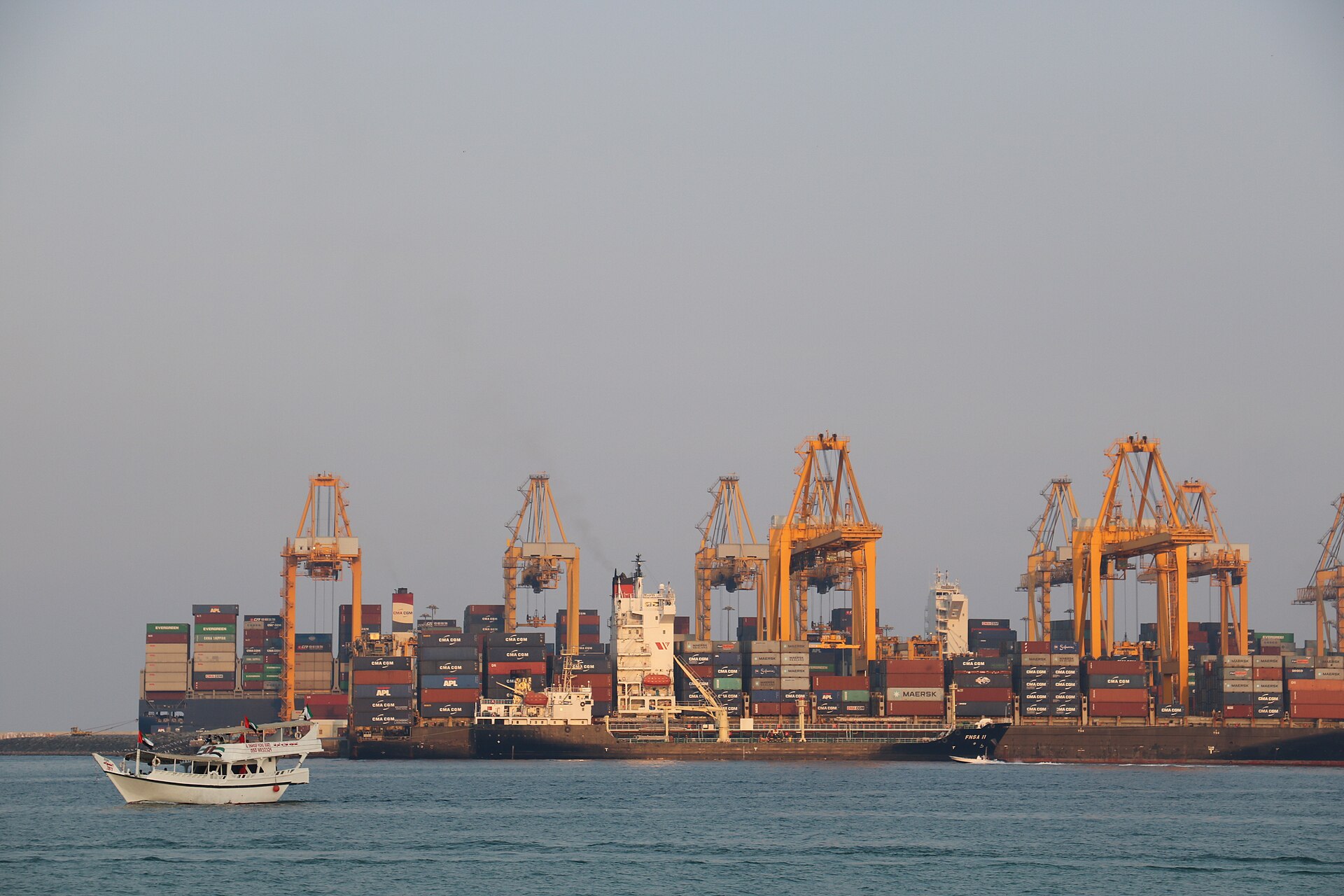
Table of Contents
- What the UAE Did That Saudi Arabia Did Not
- Why Did the GCC Collective Defence Framework Fail?
- The Pre-War Scaffold
- Two Oil Strategies, One Market
- The Iran-UAE Paradox
- What Does the Quintet Cost Saudi Arabia Without the UAE?
- Who Owns the Abraham Accords Now?
- The Hormuz Classification Problem
- The Cost of Leading Alone
What the UAE Did That Saudi Arabia Did Not
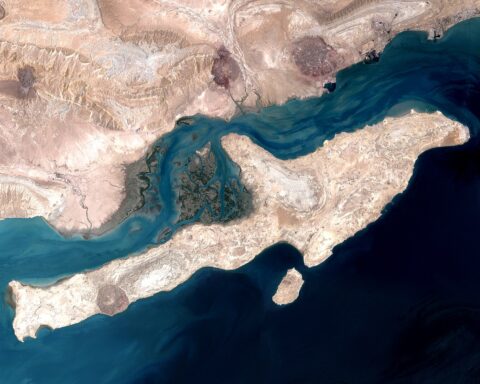
Three operational facts define the divergence, and none of them can be walked back. The UAE conducted dozens of covert airstrikes on Iranian territory — Lavan Island’s oil refinery (capacity knocked out for months, confirmed by US officials), Qeshm Island, Abu Musa Island, Bandar Abbas port, the Asaluyeh petrochemical complex — with Israeli intelligence support and US coordination, according to the Wall Street Journal, Bloomberg, and the Times of Israel. Saudi Arabia struck none of these targets, authorised no equivalent sorties, and has not publicly acknowledged that the UAE campaign occurred.
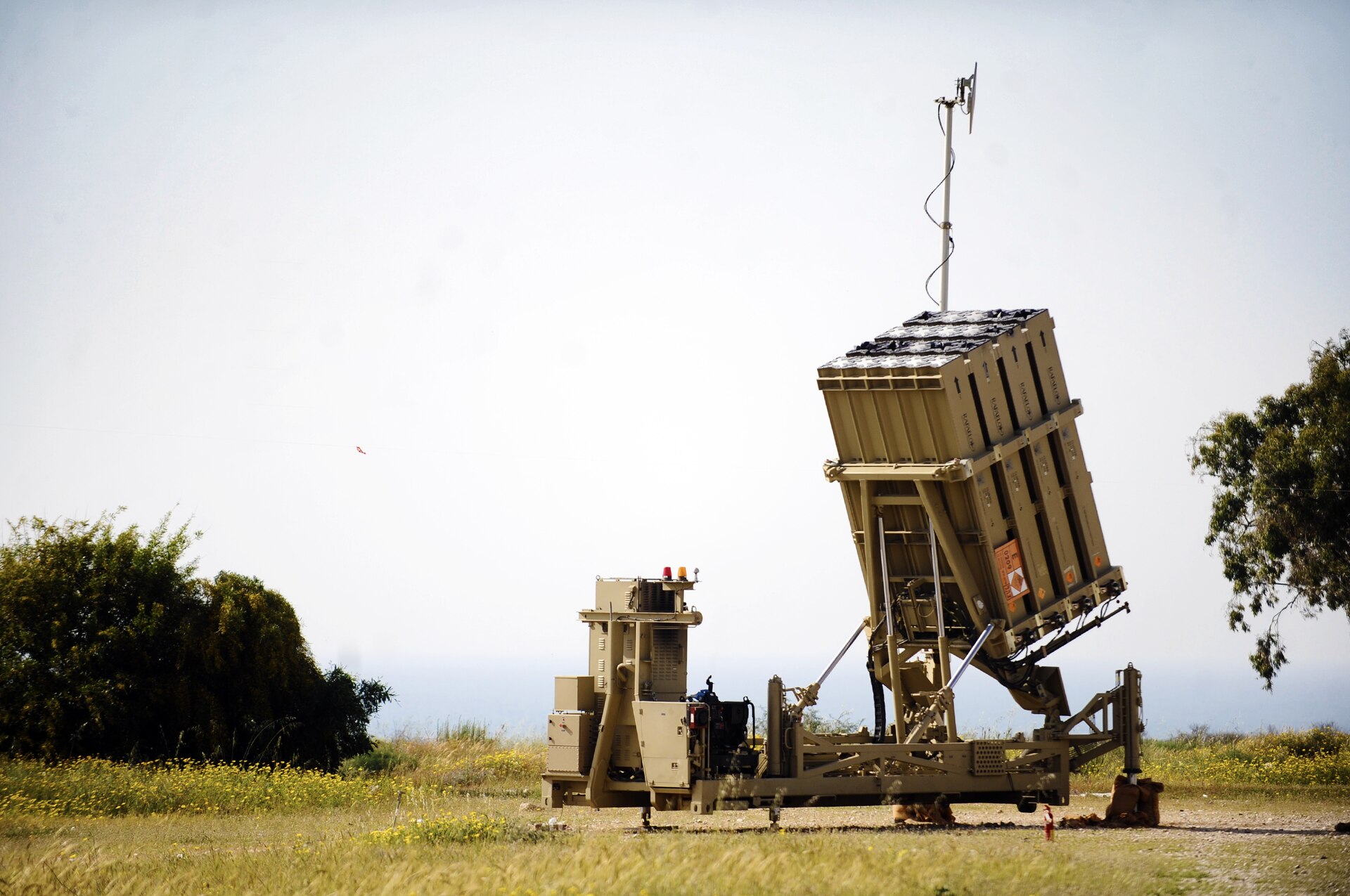
The second fact is more consequential for the region’s future geometry. In late April 2026, Netanyahu ordered an Iron Dome battery with IDF operators deployed to UAE soil — the first time Israel had deployed that system outside Israel and the United States, confirmed by an Israeli minister and reported by Axios. Dozens of IDF soldiers are operating on Emirati territory. Israel also sent a laser intercept system. The Abraham Accords, which began as a normalisation framework built on investment memoranda and airline routes, have, in the Joint Institute for National Security Affairs’ formulation, “transformed from an economic framework into a hardened, operational military alliance.” Saudi Arabia has no equivalent Israeli deployment, no normalisation agreement, and — after the regime-change request to Washington that went nowhere — no operational military partnership with any non-US power on its own soil.
The third fact is the one that makes diplomats reach for their water glasses. The UAE agreed to release approximately $10 billion in frozen Iranian funds, with more than $3 billion already delivered as of June 12, according to Reuters; some reporting, including the Kyiv Post, puts the total figure closer to $20 billion. The UAE Foreign Ministry denied the Reuters report, which is what foreign ministries do when the number is accurate and the optics are catastrophic. No other Gulf state occupies the triple position Abu Dhabi has engineered: simultaneously striking Iran, hosting Israeli troops, and paying Tehran billions.
Why Did the GCC Collective Defence Framework Fail?
The GCC’s collective defence architecture was activated for the first time in its history in March 2026 — the Peninsula Shield Force, the organisation’s notional rapid-reaction capability, was mobilised to share radar returns, not to intercept, not to deploy. The gap between what the treaty promises and what the institution delivered is the gap between a mutual defence pact and a conference call.
The Middle East briefing 3,000+ readers start their day with.
One email. Every weekday morning. Free.
The Joint Defence Agreement, as the Washington Institute has documented, “remains contingent on the political decision of each state” — there is no automatic enforcement mechanism, no Article 5 equivalent, no tripwire that converts an attack on one member into a collective military response. The same analysis describes the treaty as “an exercise in ambiguity,” which is generous language for a document that has now been tested by 2,819 strikes on a member state and produced precisely zero collective kinetic responses. The UAE intercepted Iranian missiles with its own THAAD batteries, its own Patriot systems, and — in a development that would have been unthinkable three years ago — Israeli Iron Dome assets operated by IDF personnel. The GCC contributed radar data.
The structural reason this cannot be fixed is straightforward, and the Carnegie Endowment stated it plainly in April 2026: “Any effort to develop a NATO-like alliance among the GCC states is not likely to get off the ground because both Saudi Arabia and the UAE would want to lead it and neither would accept the other as head.” That sentence describes a problem that predates the war, but the war has made it irreversible, because the UAE has now demonstrated that it can prosecute a kinetic conflict — offensive and defensive — without GCC structures, without Saudi participation, and with an Israeli partner that Riyadh has no equivalent for. The question is no longer whether the GCC can build a collective defence. The question is whether the institution has a function beyond communiqués.
The Pre-War Scaffold
The fracture did not begin on February 28, 2026. It was scaffolded across at least three theatres and two years of competing strategic doctrines that the war merely exposed as incompatible. In Yemen, the UAE-backed Southern Transitional Council seized territory in southern Yemen toward the Saudi border in December 2025, and Saudi Arabia responded by bombing al-Mukalla port in January 2026, targeting a UAE-linked weapons shipment destined for the STC — the first direct military action by one coalition partner against the other’s proxies, confirmed by CNN and Middle East Eye. The UAE subsequently withdrew its remaining forces from the Saudi-led Yemen coalition entirely. The Soufan Center documented this as a formal “weapons-supply rupture” in a January 6, 2026 analysis titled “Saudi–UAE Strategic Friction and Regional Fragmentation.”
In Sudan, the divergence is doctrinal rather than territorial. Saudi Arabia and Egypt backed the Sudan Armed Forces — the state, the sovereign government, the institution. The UAE backed the Rapid Support Forces — the non-state actor, the paramilitary challenger, the instrument of force projection through proxies. As CSIS has documented, this is not a disagreement about Sudan; it is a disagreement about what kind of power a Gulf state should be. Saudi Arabia’s doctrine privileges state sovereignty and institutional legitimacy. The UAE’s doctrine privileges force projection through flexible, deniable, non-state instruments. Both doctrines worked when they were pointed at the same adversary. They cannot coexist when they are pointed at each other.
Then came the OPEC rupture. The UAE announced the end of its fifty-nine-year OPEC membership on April 28, 2026, effective May 1, after years of frustration with a production cap that held Emirati output at roughly 3.4 million barrels per day — approximately 30 percent below capacity. Al Jazeera’s analysis was unsparing: “The UAE’s OPEC exit is not about oil; it is the end of Gulf solidarity.” That is editorial commentary, but it captures the structural reality — the production cap was the last institutional mechanism through which Saudi Arabia exercised meaningful coordination authority over UAE energy policy, and it is gone.
Two Oil Strategies, One Market
ADNOC’s June 2026 Murban Official Selling Price — $104.44 per barrel — is not merely a price. It is a declaration of independence, set without OPEC+ coordination, benchmarked against its own futures contract on the ICE Futures Abu Dhabi exchange, and competing directly against Saudi Arab Light for Asian buyers who until recently had no reason to choose between them. Saudi Aramco, by contrast, is still pricing within OPEC+ discipline, still absorbing successive 188,000-barrel-per-day quota hikes that the market barely registers, and still operating against an IMF breakeven of $86.60 per barrel that Brent has not touched since early May.
The pipeline asymmetry tells the same story in infrastructure. Saudi Arabia’s Petroline East-West system carries 7 million barrels per day of capacity — enormous, but priced against a breakeven that makes every barrel a fiscal question. The UAE’s ADCOP Habshan-Fujairah pipeline carries 1.8 million barrels per day, and Iran targeted Fujairah itself in the February strikes, fires confirmed at the terminal. Sultan Al Jaber, ADNOC’s CEO, confirmed in May 2026 that a new West-East Pipeline is approximately 50 percent complete, with a 2027 target that will double Fujairah’s export capacity. Iran struck the bypass infrastructure that threatened its Hormuz leverage — strategic logic, not indiscriminate targeting — and the UAE is building it back larger.
| Metric | Saudi Arabia | UAE |
|---|---|---|
| OPEC+ membership | Active, leading quota coordination | Exited April 28, 2026 |
| Benchmark crude OSP (June 2026) | Arab Light: declining (−$6/bbl from peak) | Murban: $104.44/bbl (independent pricing) |
| IMF fiscal breakeven | $86.60/bbl | ~$60–65/bbl (est.) |
| Bypass pipeline capacity | Petroline: 7M bpd | ADCOP: 1.8M bpd (doubling by 2027) |
| Q1 2026 fiscal position | SAR 125.7B deficit; Aramco FCF 0.85x dividend | Surplus; Mubadala/ADIA expanding |
| Production cap vs. capacity | Operating near quota ceiling | Former cap ~30% below capacity |
| Iran strike damage to energy infra | None direct | Fujairah fires confirmed; Habshan targeted |
The competitive dynamic is sharpest in Asia, where Sinopec has purchased zero Saudi crude for two consecutive months while Murban — lighter, sweeter, and now independently priced — competes for the same refinery slots. Saudi Arabia built the world’s largest oil company around the assumption that OPEC+ discipline would protect its price. The UAE has bet that volume at a competitive independent price, freed from quota constraints, will generate more revenue than cartel membership ever did. Both cannot be right, and the market is already choosing.
The Iran-UAE Paradox
Approximately one-third of all goods entering Iran pass through the UAE — more than $20 billion per year in trade flows through Dubai’s free zones, exchange houses, and re-export networks, making the emirate Iran’s single most important commercial gateway to the global economy. Iran struck this gateway. Iran International’s April 23 assessment captured the paradox precisely: “Rapid deterioration of Iran-UAE ties threatens a critical trade lifeline.” The Jerusalem Post was blunter, describing Iran’s decision to attack the UAE as “strategic desperation” — a regime striking its own economic oxygen supply.
But the weapons Iran chose reveal a more calculated logic than desperation suggests. Against US military targets, Iran deployed precision cruise missiles. Against the UAE, Iran used predominantly drones and ballistic missiles — a weapons selection that signals coercion, not destruction. The distinction matters because it means Tehran was not trying to eliminate the UAE’s capacity; it was trying to change Abu Dhabi’s behaviour, to break the emirate from the US-Israeli operational framework without destroying the commercial infrastructure that Iran itself depends on. The April 2026 freeze of Iranian exchange house accounts, the shuttering of offices, the detention of operators — these were Abu Dhabi’s response to the coercion, and they hurt Iran far more than any intercepted missile.
The $10 billion (or $20 billion, depending on the source) in frozen Iranian funds that the UAE agreed to release is not a ransom and it is not generosity — it is the price of a particular strategic position. Abu Dhabi is the only capital in the Gulf that can simultaneously prosecute covert airstrikes against Iranian territory, host Israeli military assets on its soil, maintain (however tenuously) the commercial architecture that keeps Iranian imports flowing, and write cheques to Tehran large enough to keep the channel from closing permanently. This is not hypocrisy. It is the foreign policy of a state with enough economic leverage to hold contradictory positions simultaneously, and it is a position that Saudi Arabia, with its binary diplomatic posture and its exclusion from both negotiation tracks, cannot replicate.
What Does the Quintet Cost Saudi Arabia Without the UAE?
The Saudi-led quintet — Saudi Arabia, Qatar, Egypt, Pakistan, Turkey — was, as Foreign Policy reported on July 1, 2026, engineered around a “single subtraction”: the UAE’s conspicuous absence. The framing is revealing because it confirms that the quintet is not a new alliance built on shared strategic vision; it is the old GCC minus the partner that made the old GCC functional, plus three non-Gulf states recruited to fill a gap that cannot be filled by recruitment.
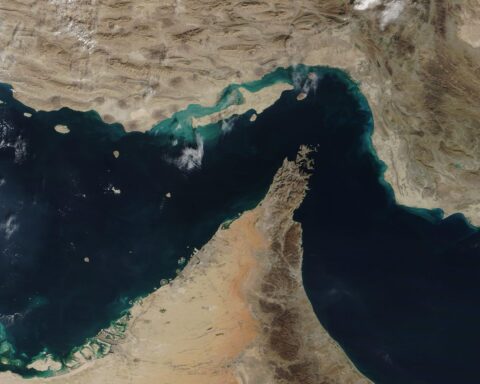
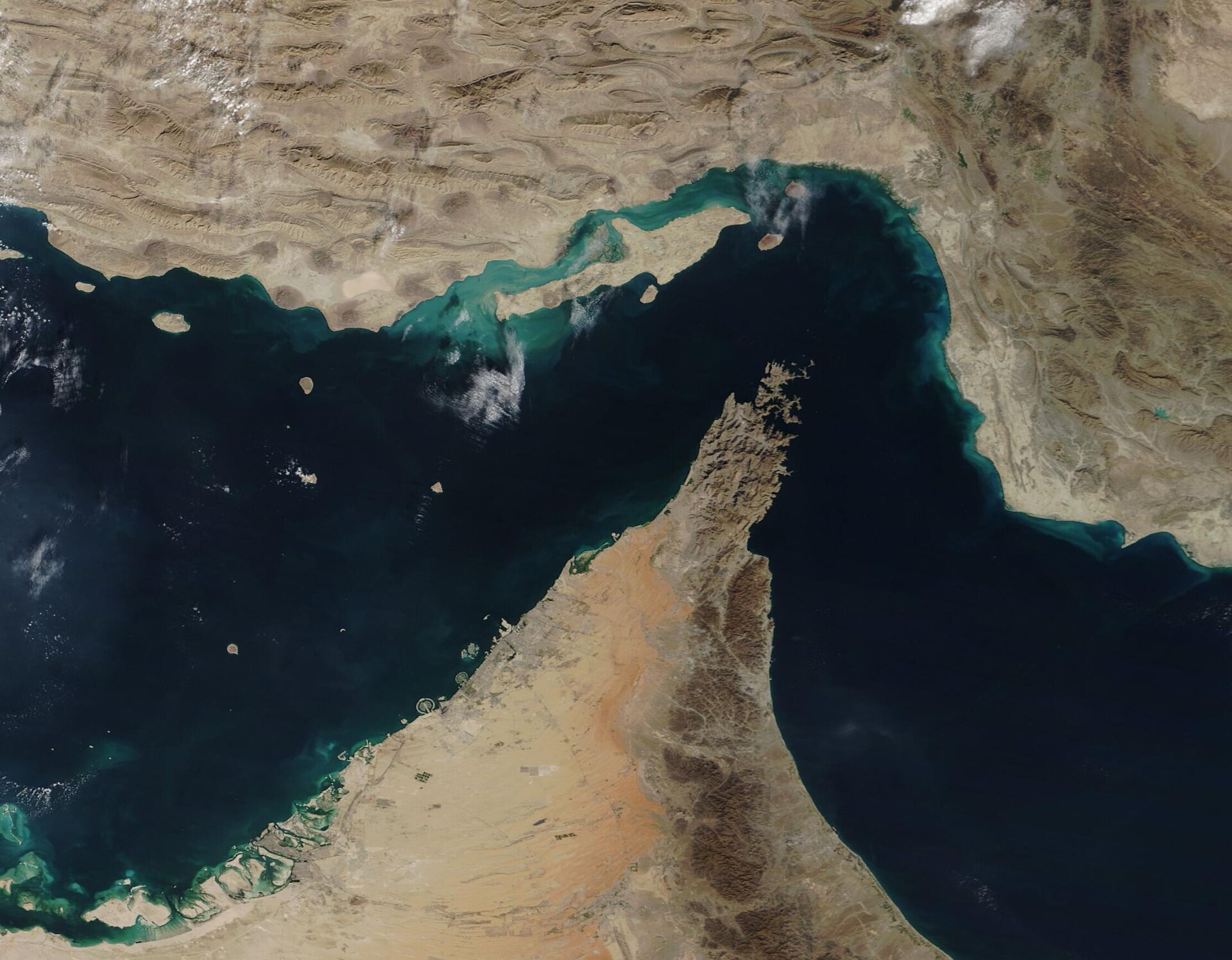
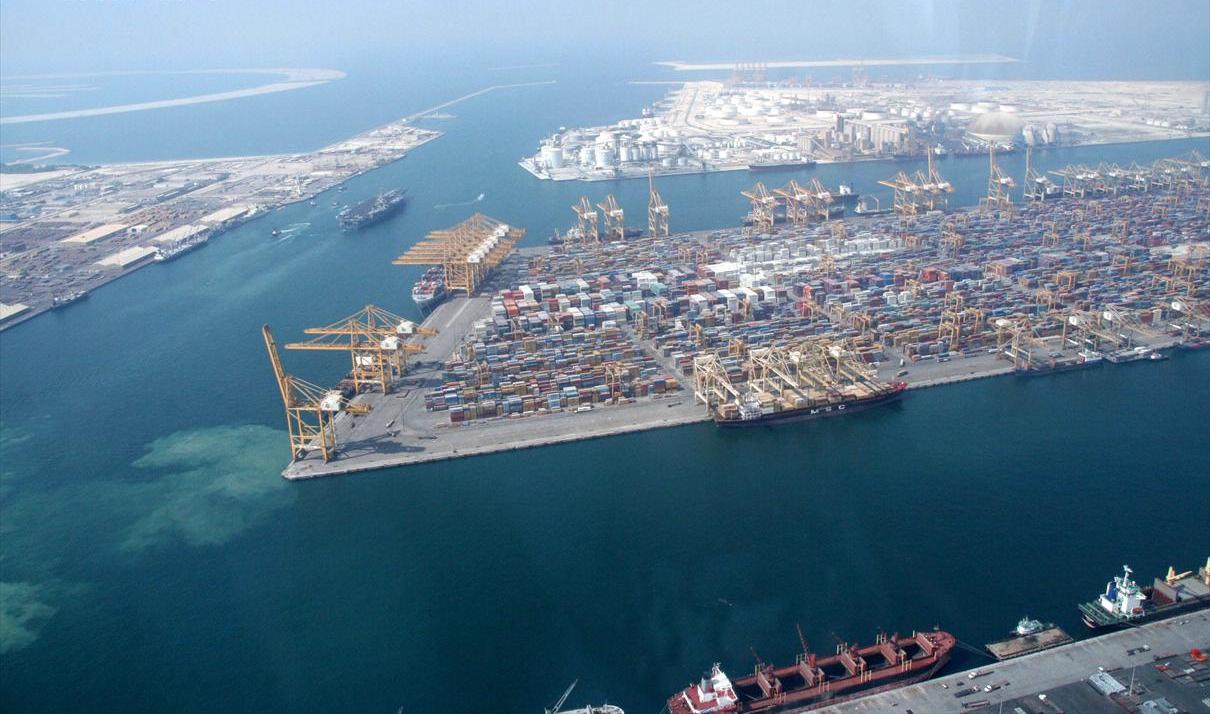
Start with Hormuz. Saudi Arabia’s Petroline and the UAE’s Fujairah bypass are the only two meaningful alternatives to Strait of Hormuz transit for Gulf crude exports. They were designed as complementary infrastructure — Saudi crude west through Yanbu, Emirati crude east through Fujairah — and their complementarity was what gave the GCC its collective answer to Iranian Hormuz threats. They are now owned by competitors, not partners. Iran’s friendly-nation carve-out for Hormuz transit fees classified China as “friendly” and left Saudi Arabia facing potential “hostile” classification, while the UAE’s status was kept deliberately ambiguous by Rahmani Fazli — reflecting Tehran’s recognition that Abu Dhabi occupies a different coercive relationship than Riyadh does.
The investment architecture has bifurcated in parallel. PIF and Mubadala previously co-invested across global markets as complementary sovereign wealth vehicles; ADQ’s restructuring into the new L’imad vehicle creates a competing platform that directly challenges PIF’s positioning in technology, logistics, and infrastructure — sectors where Riyadh assumed Gulf capital would flow through Saudi-anchored structures. The Atlantic Council’s assessment is worth quoting at length: “The states are unlikely to become more unified because of this war, as the relationship between the two states’ leaders is too frayed, their policy disagreements in Yemen and Sudan remain, they will continue to compete head-to-head in multiple business sectors.”
The Red Sea corridor completes the picture. Saudi trade routes through Bab el-Mandeb depend on stability in areas where UAE-backed proxies — the STC in southern Yemen, the RSF in Sudan — are actively destabilising the institutional order that Riyadh’s doctrine requires. Saudi Arabia needs state sovereignty respected in exactly the territories where Abu Dhabi’s non-state partners are contesting it. The quintet cannot solve this because Qatar, Egypt, Pakistan, and Turkey have no equities in the Red Sea littoral that would allow them to substitute for what the UAE provided — and withdrew.
Who Owns the Abraham Accords Now?
The answer is Abu Dhabi, and it is not close. The deployment of IDF personnel and Iron Dome systems to UAE soil converted the Abraham Accords from a diplomatic normalisation framework into an operational military alliance — JINSA’s characterisation, not editorial speculation — and the conversion happened on Emirati territory, under Emirati authority, with Israeli assets defending Emirati cities. Saudi Arabia, which spent years calibrating the political cost of its own potential normalisation with Israel, conditioning it on Palestinian statehood progress that has not materialised, now faces the reality that the Abraham Accords’ military dimension has been built without Saudi participation and cannot be accessed without Abu Dhabi’s consent.
This matters for the PSAB drawdown calculations because the UAE’s Israeli security partnership provides exactly the kind of redundancy that Saudi Arabia lacks. When the United States considers punitive drawdowns from Prince Sultan Air Base — withdrawing IESP contractors, Link-16 maintenance, PAC-3 support — the question of who backfills that capability has a different answer for each country. For the UAE, Israel has already demonstrated willingness to deploy defensive systems. For Saudi Arabia, which grounded 43 US warplanes in May and has no alternative security partner of comparable capability, the answer is no one.
The INSS assessment from 2026 frames this as a structural condition rather than a diplomatic phase: “Absent a recalibration of Emirati regional behavior, Saudi–UAE relations are likely to remain fraught with friction, with implications for Gulf unity, Red Sea security, and broader Middle Eastern stability.” The word “recalibration” is doing heavy lifting in that sentence, because what it means in practice is the UAE reversing its Israeli military integration, its OPEC exit, its independent pricing strategy, and its proxy doctrine — none of which Abu Dhabi has any incentive to reverse, because all four are working.
The Hormuz Classification Problem
Iran’s Persian Gulf Security Architecture — the PGSA, with its $253 million in outstanding obligations and its $5.5 million daily accrual rate toward the August 18 deadline — contains a classification system that treats the UAE and Saudi Arabia as fundamentally different entities. Rahmani Fazli named China a “friendly nation” exempt from Hormuz transit fees. Saudi Arabia faces the risk of “hostile” classification, a designation that would formalise Tehran’s treatment of the Kingdom as an adversary in the strait’s emerging fee architecture. The UAE’s status was left deliberately ambiguous — and deliberate ambiguity, in Iranian diplomatic grammar, means the door is open.
The ambiguity is itself a weapon, because it means Abu Dhabi can negotiate bilaterally with Tehran on terms that Riyadh cannot access. The $10-billion-plus fund release, the continued (if reduced) trade flows through Dubai, the covert-strike-then-pay architecture — these are the instruments of a relationship that is adversarial and transactional simultaneously, and Iran’s classification ambiguity reflects that duality. Saudi Arabia’s position is simpler and worse: Prince Faisal’s public statement that “the strait worked without trouble before the war and needs no new arrangement” is a rejection of the PGSA framework that leaves Riyadh with no seat at the table if Tehran’s architecture becomes the operating reality.
The practical consequence is that the two Gulf states’ Hormuz bypass strategies, once complementary, now serve competing interests. Saudi crude flowing west through Petroline avoids Hormuz entirely but sells into a market where Brent sits well below the Kingdom’s fiscal breakeven. UAE crude flowing east through Fujairah — including the expanded capacity due in 2027 — transits toward the same Asian buyers at a Murban price set independently of OPEC+ constraints. Iran targeted Fujairah because the bypass threatened its Hormuz leverage; the UAE is rebuilding it because the bypass is more valuable than the leverage Iran can exert against it.
| Domain | Saudi Arabia | UAE |
|---|---|---|
| Iranian strikes absorbed | 0 direct | 2,819 (537 ballistic, 2,256 drones, 26 cruise) |
| Covert strikes on Iran | None | Dozens (Lavan, Qeshm, Abu Musa, Bandar Abbas, Asaluyeh) |
| Israeli military presence | None | Iron Dome + IDF operators + laser intercept |
| Payments to Iran | None | $10–20B frozen funds released |
| OPEC+ status | Leading member | Exited (April 28, 2026) |
| Multilateral alignment | Quintet (SA, Qatar, Egypt, Pakistan, Turkey) | Bilateral (Israel, US; Iran transactional) |
| Iran Hormuz classification | Potential “hostile” | Deliberately ambiguous |
| Yemen proxy posture | Coalition leader (diminished) | Withdrew; STC proxy independent |
| Sudan posture | SAF (state sovereignty) | RSF (non-state force projection) |
The Cost of Leading Alone
The quintet is not a replacement for the Saudi-UAE axis; it is an admission that the axis no longer exists. Qatar brings LNG wealth and Al Jazeera’s reach but no military capability relevant to Gulf territorial defence. Egypt brings a large conscript army and a $165 billion GDP that requires $10 billion in annual Gulf subsidies to remain solvent. Pakistan brings nuclear capability and a seat at the Islamabad negotiating table — the same table from which Saudi Arabia has been excluded. Turkey brings NATO interoperability and a neo-Ottoman strategic vision that competes with Saudi regional leadership as directly as Abu Dhabi’s does. None of these partners can do what the UAE did: absorb 2,819 strikes, prosecute covert operations against Iranian territory, host Israeli defensive systems, maintain a commercial channel to Tehran, and still show up at the next summit with a functioning economy and a sovereign wealth fund expanding into sectors that PIF considers its own.
The cost is not abstract. It is the Petroline priced against a breakeven Brent will not reach. It is PAC-3 interceptors at 400 of 2,800 with no Israeli Iron Dome backstop. It is a Red Sea corridor destabilised by proxies Riyadh cannot control because the patron state that backs them is no longer a partner. It is an OPEC+ framework that the UAE’s exit has weakened at exactly the moment Saudi Arabia needs cartel discipline most. It is an Abraham Accords military architecture that deepens monthly on Emirati soil while the Kingdom’s normalisation remains conditional on Palestinian progress that neither Washington nor Tel Aviv is pursuing.
The question Riyadh has not answered — and that the quintet’s formation suggests it may not have asked — is whether Saudi Arabia has correctly assessed the cost of leading a regional security architecture without the GCC’s only other military-capable economy. The UAE absorbed 13 killed and 224 injured on its own soil, struck back across Iranian territory, hosted foreign military assets, paid billions to its attacker, exited the cartel its neighbour leads, and emerged with an independent energy strategy, an operational Israeli alliance, and a commercial relationship with Tehran that gives Abu Dhabi options Riyadh does not have. Saudi Arabia, which took zero direct strikes, has a depleted interceptor inventory, a diplomatic exclusion from both Iran negotiation tracks, a quintet built around an absence, and a fiscal position that makes every barrel of unsold crude a line item in a deficit the Kingdom cannot sustain at current prices — a fracture the war exposed and will not close when the war ends.
Frequently Asked Questions
Has the UAE formally left the GCC?
No. The UAE remains a GCC member state and continues to participate in GCC ministerial meetings and technical coordination. The departure was from OPEC, not the GCC itself. However, the practical content of GCC membership has been hollowed out — the Peninsula Shield Force’s activation produced radar-sharing rather than collective military action, the Joint Defence Agreement lacks an automatic enforcement mechanism, and the UAE’s bilateral security relationship with Israel now provides defensive capabilities that the GCC framework never delivered. Formal membership persists; functional integration has collapsed.
Could the UAE’s OPEC exit trigger other departures?
Iraq publicly threatened OPEC exit before reversing to a quota-demand posture, and several smaller producers have expressed frustration with production caps that constrain their fiscal capacity. The UAE exit is structurally different because Abu Dhabi has the pipeline bypass infrastructure, the sovereign wealth reserves, and the independent pricing architecture (Murban on ICE Futures Abu Dhabi) to sustain production outside OPEC+ discipline. Most other dissatisfied members lack one or more of these prerequisites, making copycat exits less viable but the precedent more damaging to OPEC’s credibility as a coordination mechanism.
What is Iran’s PGSA and why does the August 18 deadline matter?
The Persian Gulf Security Architecture is Iran’s unilateral framework for imposing transit fees and security classifications on Strait of Hormuz shipping. The $253 million in outstanding obligations accrues at $5.5 million per day, with August 18 as the payment deadline Tehran has set. The framework’s classification system — “friendly” (China), potentially “hostile” (Saudi Arabia), deliberately ambiguous (UAE) — functions as a coercive instrument that treats Gulf states differently based on their bilateral relationship with Tehran, bypassing any multilateral GCC or UN framework.
How does the UAE’s Israeli military relationship affect Gulf-wide security?
The IDF deployment to UAE soil — Iron Dome battery, laser intercept system, dozens of military operators — creates an asymmetric security architecture within the Gulf. The UAE now has access to Israeli missile defence technology and intelligence sharing that no other GCC state possesses. For Saudi Arabia specifically, this means the Abraham Accords’ military dimension has been operationalised without Saudi participation, and any future Saudi attempt to access comparable Israeli security cooperation would require normalisation on terms that Riyadh has consistently conditioned on Palestinian statehood — a condition Abu Dhabi abandoned in 2020.
Is the Saudi-UAE fracture reversible?
The Atlantic Council concluded that the war has deepened rather than resolved the leaders’ personal estrangement, leaving Yemen and Sudan disputes intact and sector-by-sector competition intensifying. The structural factors — competing oil pricing strategies, divergent proxy doctrines, the UAE’s Israeli military integration, Abu Dhabi’s bilateral channel to Tehran — are self-reinforcing rather than self-correcting, each creating incentives that widen rather than narrow the divergence. Diplomatic reconciliation is always possible at the summit level, but the institutional, military, and commercial architectures that defined the Saudi-UAE partnership have been rebuilt along separate lines, and rebuilding them jointly would require one or both states to abandon strategies that are currently delivering results.
On July 12, the UAE’s Ministry of Foreign Affairs issued a formal multi-country condemnation naming Iran as responsible for attacks on Bahrain, Kuwait, Qatar, Jordan, and Oman — a move that further severed Abu Dhabi’s bilateral channel with Tehran and confirmed that the UAE and Saudi Arabia, despite divergent strategies, had arrived at the same public posture on Iranian military action. That condemnation and its context are examined in UAE Condemned Iran for Attacks on Five Gulf States.