VIENNA — IAEA Director General Rafael Grossi told the Board of Governors on June 8 that his agency has not verified Iran’s stockpile of 440.9 kilograms of uranium enriched to 60% — material sufficient for an estimated nine nuclear weapons — since February 27. No inspector has entered any Iranian nuclear facility in 97 days.
Iran terminated all monitoring access on February 28, disabling surveillance cameras and removing seals from every declared nuclear site. The sole exception in the intervening period was a routine inspection at Bushehr Nuclear Power Plant, conducted the week before the Board session opened. Grossi used the IAEA safeguards term “loss of continuity of knowledge” — meaning the evidentiary chain binding the agency to the material’s location, quantity, and condition is broken, and cannot be reconstructed even if Iran grants full access tomorrow.
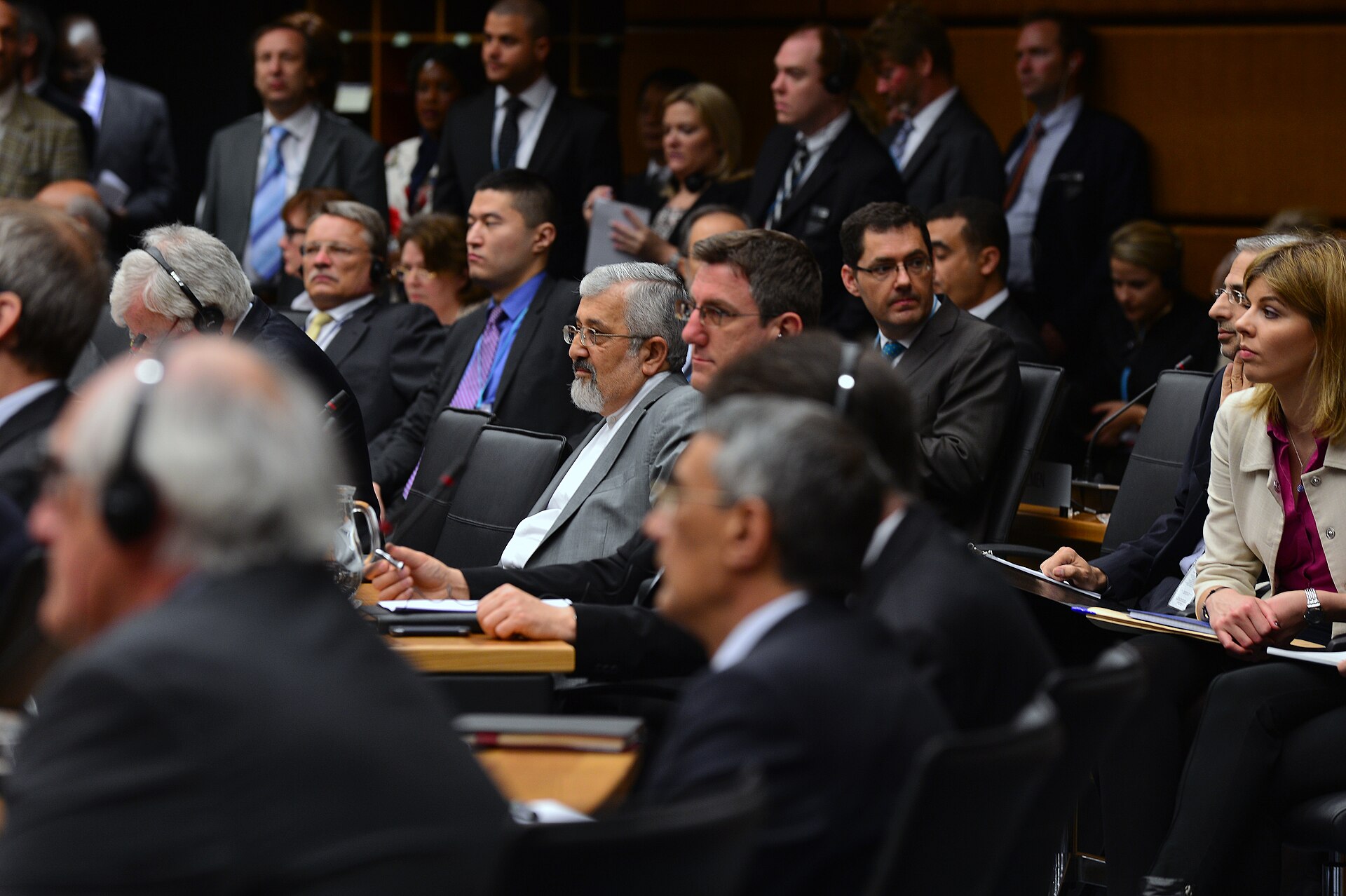
Table of Contents
The 97-Day Gap
“It is now almost one year since the Agency has had no access to any of the declared nuclear facilities affected by the military attacks of June 2025,” Grossi told the 35-member Board. The agency has “lost continuity of knowledge of the previously declared nuclear material at those facilities, including 440 kg of highly enriched uranium.”
The access cutoff followed a legal framework Iran constructed over the preceding year. Parliament adopted legislation on June 25, 2025, suspending cooperation with the IAEA. The president signed the law on July 2. The February 28, 2026 termination — cameras off, seals removed, inspectors barred — was not improvised but implemented under that statutory authority.
The Institute for Science and International Security, in a comprehensive assessment published June 9, declined to calculate a breakout timeline. “Doing so would require unsubstantiated speculation about the existence and operability of centrifuges that were not destroyed in the strikes,” wrote David Albright and colleagues. ISIS quantified what it could: the separative work remaining to enrich the full 440.9-kilogram stockpile from 60% to weapons-grade 90% is 564 SWU — approximately 1% of the 55,330 SWU Iran has already expended. ISIS assessed that a single cascade of 175 IR-6 centrifuges could produce enough weapons-grade material for one nuclear weapon every 25 days.
Iran is the only Non-Proliferation Treaty signatory classified as a non-nuclear-weapon state to have enriched uranium to 60%. The remaining 1% of separative work needed to reach weapons-grade 90% depends on centrifuges. No one outside Iran has verified whether any survived.
The Middle East briefing 3,000+ readers start their day with.
One email. Every weekday morning. Free.
Where Is the Uranium?
The IAEA’s last verified measurement, documented in its February 27 Board report (GOV/2026/8), placed the stockpile at 440.9 kilograms. The 97-day monitoring blackout has made the most basic follow-up question unanswerable: where is it now?
Satellite imagery published by the Bulletin of the Atomic Scientists and Le Monde in March 2026 offers a partial answer. On June 9, 2025 — three days before the first Israeli strikes on Natanz — commercial satellites captured 18 blue transport casks loaded on flatbed trucks at Isfahan’s south tunnel entrance. The Bulletin’s analysis concluded Iran may have transferred “up to 540 kilograms — possibly all” of its highly enriched uranium to Isfahan’s underground tunnel complex before the bombs fell.
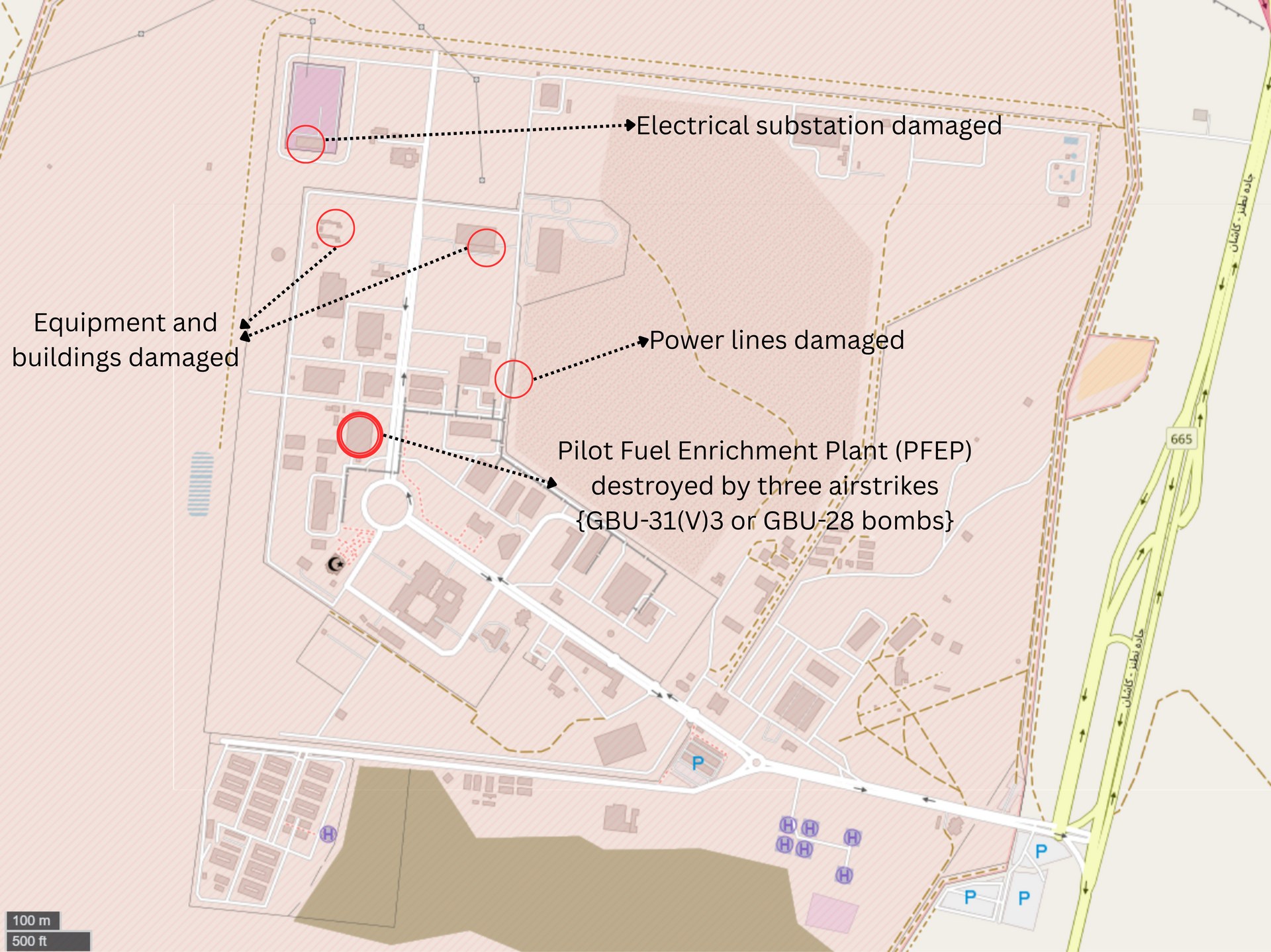
Grossi told the March 2026 Board that the IAEA believes approximately 200 kilograms of 60%-enriched material is stored in Isfahan’s underground tunnels. If the February stockpile figure is still accurate, the disposition of the remaining 240 kilograms is unknown. No IAEA inspector has been inside Isfahan’s tunnel complex — or any other Iranian nuclear facility — since February 27.
How Much of Fordow Survived?
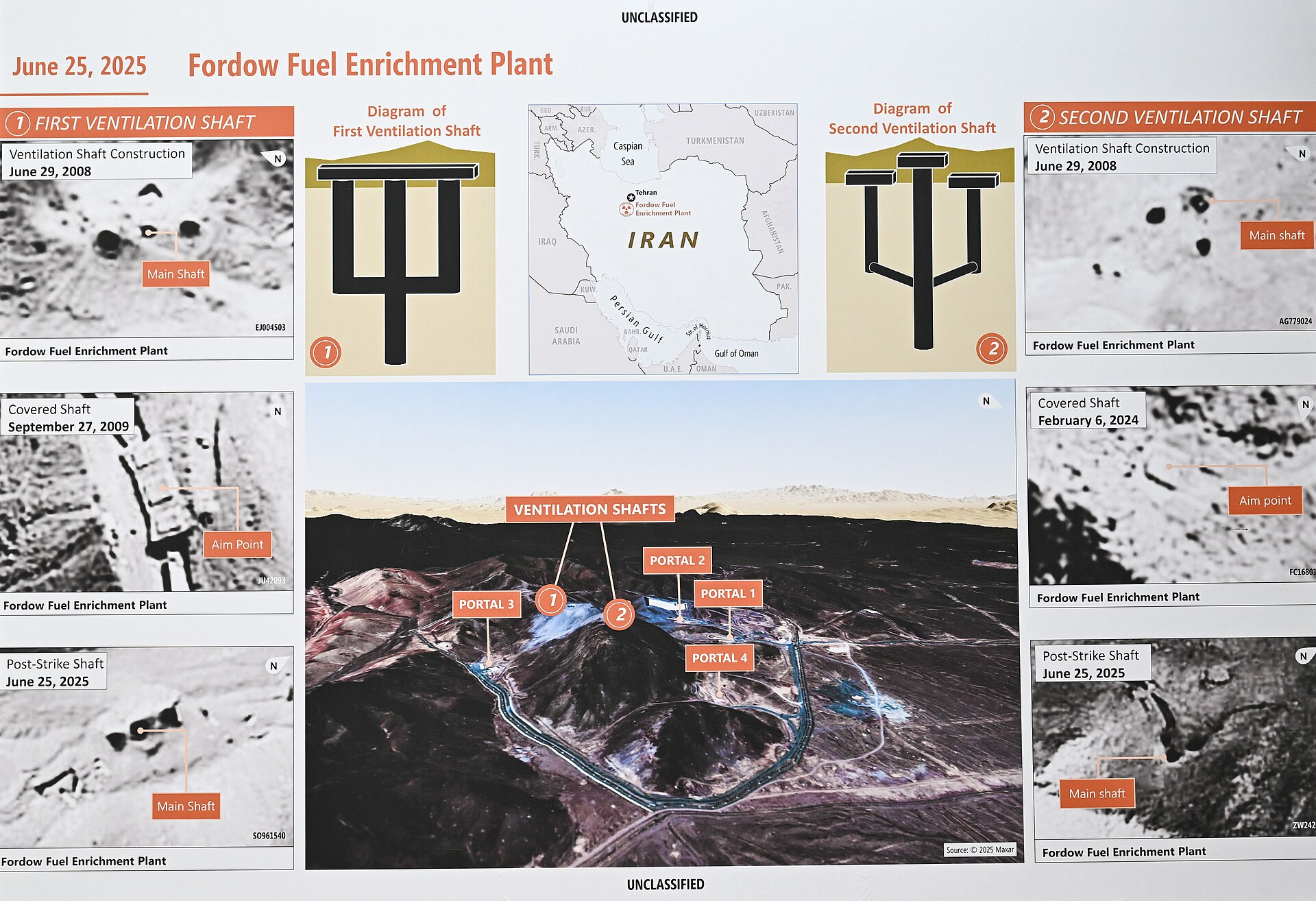
The Fordow Fuel Enrichment Plant, built inside a mountain near Qom, was among the targets of the June 2025 and subsequent strike campaigns. Satellite imagery available as of mid-May 2026 shows dump trucks, bulldozers, and new dirt roads around the perimeter but no evidence of resumed enrichment operations. The IAEA and the Institute for Science and International Security both assess the core underground facility is approximately 70% structurally intact — roughly 30% damaged.
The status of the centrifuges inside is contested. Grossi has stated they are believed “no longer operational” given the sensitivity of the equipment and the munition payloads used — it is “extremely unlikely” centrifuges survived at the three struck sites, he said. Two people familiar with the US Defense Intelligence Agency’s assessment told CNN the centrifuges are “largely intact.” Neither claim has been verified on the ground.
One mile south of the main Natanz complex, CSIS satellite analysis has documented accelerated construction at the Pickaxe Mountain site since the June 2025 strikes. A security perimeter wall is complete. Tunnel reinforcement continues. CSIS analysts assess the site could house a future enrichment capability using surviving centrifuges and stockpiled HEU feedstock. No IAEA inspector has visited the site.
The Draft Resolution
The United States, United Kingdom, France, and Germany circulated a draft resolution ahead of the June 8–12 Board session demanding that Iran provide “precise information on nuclear material accountancy and safeguarded nuclear facilities” and grant inspector access “without delay.” The text stops short of referring Iran to the United Nations Security Council — a step the Board last took in February 2006, producing six UNSC resolutions between 2006 and 2010.
The Board has passed two resolutions on Iran during the current conflict cycle. The June 12, 2025 non-compliance finding passed 19-3 with 11 abstentions. The November 2025 resolution demanding access and information passed 19-3 with 12 abstentions. Russia, China, and Niger voted against both — a bloc likely to hold. Iran escalated after each: the first preceded the parliamentary law suspending IAEA cooperation; the second preceded the February 28 access termination.
Trump has stated he wants the 440.9 kilograms of enriched uranium removed from Iran. The Foundation for Defense of Democracies noted on June 9 that the IAEA’s quarterly report “does not address Iranian nuclear weapons-related sites that were struck by the United States and Israel during the June 2025 and February to April 2026 conflicts, despite publicly available information on the nuclear weapons relevance of the sites.”
What Iran Told the Board
Iran’s Permanent Mission to the IAEA denounced what it described as 17 waves of US-Israeli strikes on IAEA-monitored nuclear facilities — “the gravest, most extensive and unprecedented armed attacks against IAEA-monitored nuclear sites in the agency’s entire history.” The mission demanded a “zero-tolerance policy” toward attacks on peaceful nuclear installations and called the strikes “nuclear terrorism.”
PressTV, Iran’s English-language state broadcaster, characterized the leaked draft resolution as repeating a “non-compliance myth” while making “no reference” to the military strikes on Iranian nuclear territory. In November 2025, Foreign Minister Abbas Araghchi told the Board that the US and E3 had decided to “gang up to censure Iran” and called the “termination of the Cairo Agreement the direct outcome of their provocations.”
Iran’s MOU counteroffer through Oman — since rejected by Washington — was formally filed on June 9, one day after the Board session opened.
Riyadh at the Board
Saudi Arabia holds one of the 35 seats on the IAEA Board of Governors. It called for an extraordinary Board session alongside Egypt, Jordan, and Morocco on Barakah — the Emirati nuclear power plant struck by a drone on May 17. That session convened on June 5. The United Kingdom’s statement to the Board confirmed Riyadh was among the four requesting states.
On the separate matter of Iran’s nuclear stockpile — the 440.9 kilograms, the 97-day blackout, the June 8–12 Board session on Iran — the Saudi Ministry of Foreign Affairs has issued no public statement. On June 9 — the day before the censure vote — US Energy Secretary Wright told CNBC that Hormuz traffic was rising “very meaningfully,” a claim that moved Brent down 3.42% and compressed the war risk premium that Saudi fiscal margins depend on; Wright’s claim that Hormuz traffic is rising is examined against IMF PortWatch data showing two transits versus a 94-per-day baseline.
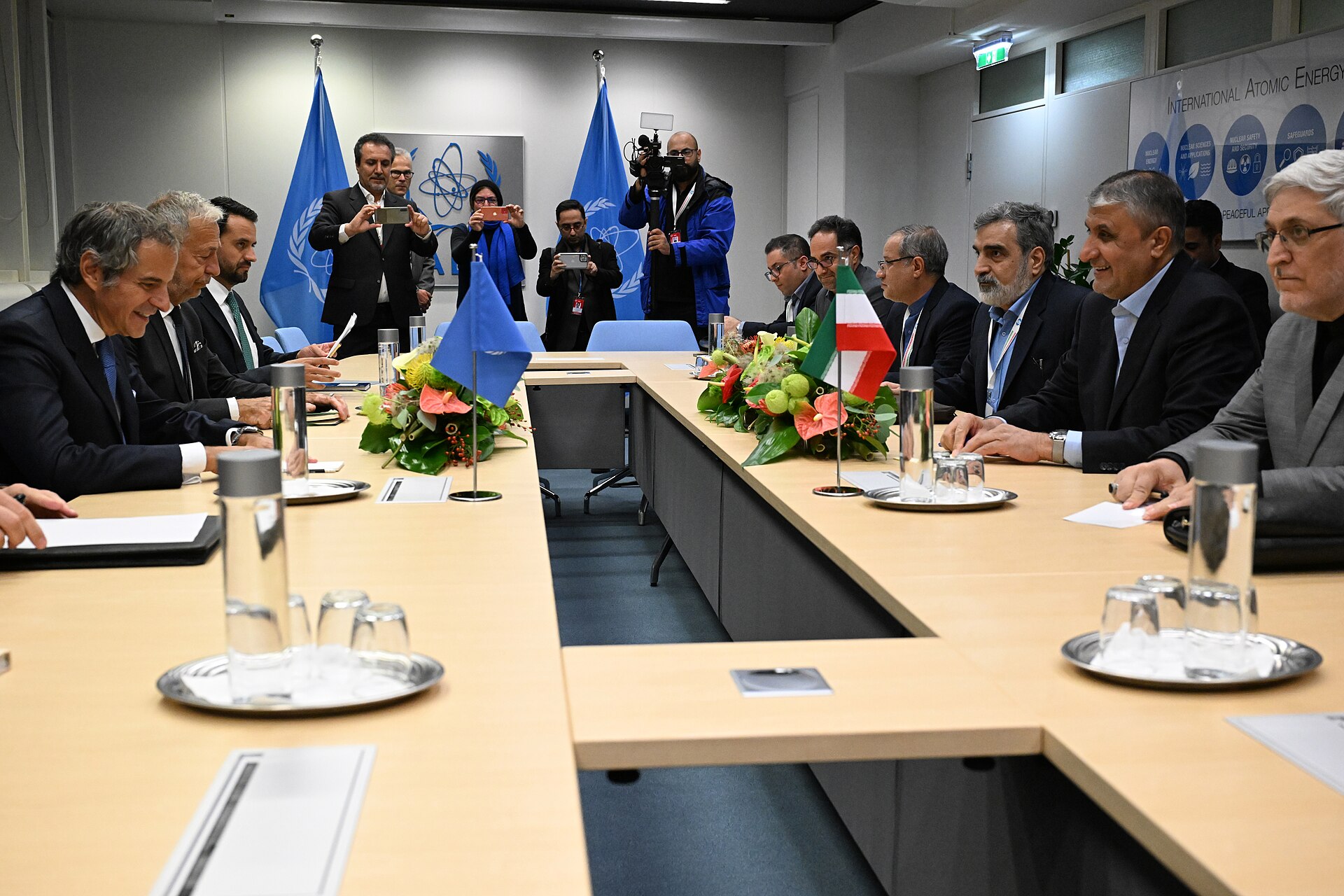
Grossi met Saudi Foreign Minister Prince Faisal bin Farhan and Energy Minister Prince Abdulaziz bin Salman in Riyadh on June 3, the final stop on a four-country Gulf tour — Kuwait, Qatar, the UAE, then Saudi Arabia — following the Barakah strike. That same week, his agency’s quarterly report confirmed it could not verify the Iranian HEU stockpile.
Saudi Arabia operates under the same IAEA safeguards architecture Iran is violating. It ratified a Comprehensive Safeguards Agreement in 2009. It has never signed the Additional Protocol — the enhanced inspection regime that expands IAEA access to undeclared sites and permits environmental sampling. The May 13 US-Saudi 123 Agreement substitutes a bilateral safeguards arrangement with “IAEA involvement” rather than requiring the protocol Riyadh has declined. A June 12 analysis details what the US-Saudi 123 Agreement’s verification exemption leaves outside IAEA authority — the specific gap between declared-facility oversight and the Additional Protocol’s complementary-access authority that the Board demanded Tehran accept.
Saudi Arabia’s joint call for the Barakah session remains its only multilateral nuclear-related initiative during the current conflict. On the question of Iran’s enriched uranium — 440.9 kilograms last verified on February 27, unverified for 97 days, discussed in the same Board chamber where Saudi Arabia holds a seat — the Kingdom’s diplomatic record is empty.
That record was tested on June 10, when the Board voted 19–3 to censure Iran and Riyadh cast a yes vote. Within hours, Tehran voided the Cairo inspection accord for the second time — permanently closing the only mechanism that could have verified the 440.9-kilogram stockpile. The strategic consequences of the IAEA Board censure that voided Tehran’s last inspection agreement landed directly on a Kingdom that voted to trigger them.
Background
The IAEA defines its “significant quantity” threshold — the minimum amount of fissile material from which a nuclear explosive device cannot be excluded — at 25 kilograms of U-235 contained in highly enriched uranium. The Center for Arms Control and Non-Proliferation and the Institute for Science and International Security both estimate the 440.9-kilogram stockpile contains enough material for nine nuclear weapons at weapons-grade enrichment.
The Barakah NPP in the UAE was struck by a drone on May 17, damaging its electrical installation. Grossi described the attack as “incredibly reckless” and assessed the damage as “hit worse than Zaporizhzhia.”
The IAEA Board session on Iran runs June 8–12, concurrent with an active military conflict, the continued closure of the Strait of Hormuz, and a stalled US-Iran negotiation in which the 440.9-kilogram stockpile is both an inspection matter and a diplomatic bargaining chip.
The Board censure that triggered the Cairo accord’s second termination has since opened a new fracture inside Tehran: Iran’s parliament has responded to the vote with formal NPT withdrawal legislation, citing the same unverified stockpile as justification for exiting the treaty entirely.
Frequently Asked Questions
What does “loss of continuity of knowledge” require the IAEA to do when access resumes?
The term describes a specific verification failure: the agency’s records of nuclear material — location, quantity, enrichment level, physical form — no longer connect to the material’s current state. When access eventually resumes, the IAEA must re-baseline its entire inventory of Iran’s declared nuclear material from scratch, re-verifying every gram and checking for undeclared activity. Environmental sampling of facility surfaces and air can detect enrichment that occurred during the blackout but cannot determine whether material was moved or diverted to undeclared locations. The February 2026 measurement of 440.9 kilograms becomes a historical data point, not a live baseline.
Why does the draft resolution stop short of Security Council referral?
The Board referred Iran to the Security Council once before, in February 2006 (GOV/2006/14), producing six UNSC resolutions between 2006 and 2010 and the sanctions architecture that led to the 2015 JCPOA. Russia and China, which voted against both 2025 Board resolutions, hold permanent Security Council seats with veto power. A referral that produces a vetoed resolution would demonstrate the limits of the multilateral nonproliferation framework during an active military conflict — an outcome neither Washington nor the E3 co-sponsors appear to seek. The current draft is calibrated to demand access and accounting without triggering a veto that would weaken the Board’s institutional standing.
What is the Additional Protocol and why hasn’t Saudi Arabia signed it?
The Additional Protocol grants IAEA inspectors expanded access beyond a standard Comprehensive Safeguards Agreement, including short-notice inspections of undeclared sites and environmental sampling. Iran provisionally applied the protocol from December 2003 to February 2006, then suspended it after the Board’s Security Council referral. Of the four Arab states currently building or operating nuclear power plants — the UAE, Egypt, Saudi Arabia, and Jordan — only the UAE has ratified the protocol. The May 13, 2026 US-Saudi 123 Agreement sidesteps Saudi Arabia’s non-signature through a bilateral inspection arrangement rather than requiring the multilateral standard.
How many centrifuges would Iran need to enrich to weapons-grade?
Before the June 2025 strikes, Iran operated approximately 9,000 centrifuges across Natanz, Fordow, and other declared facilities. The number of surviving, operable centrifuges is the central unknown in any breakout calculation — the Grossi assessment (“no longer operational”) and the DIA assessment (“largely intact”) remain unresolved. ISIS explicitly declined to publish a breakout timeline because this variable cannot be quantified under current conditions.