
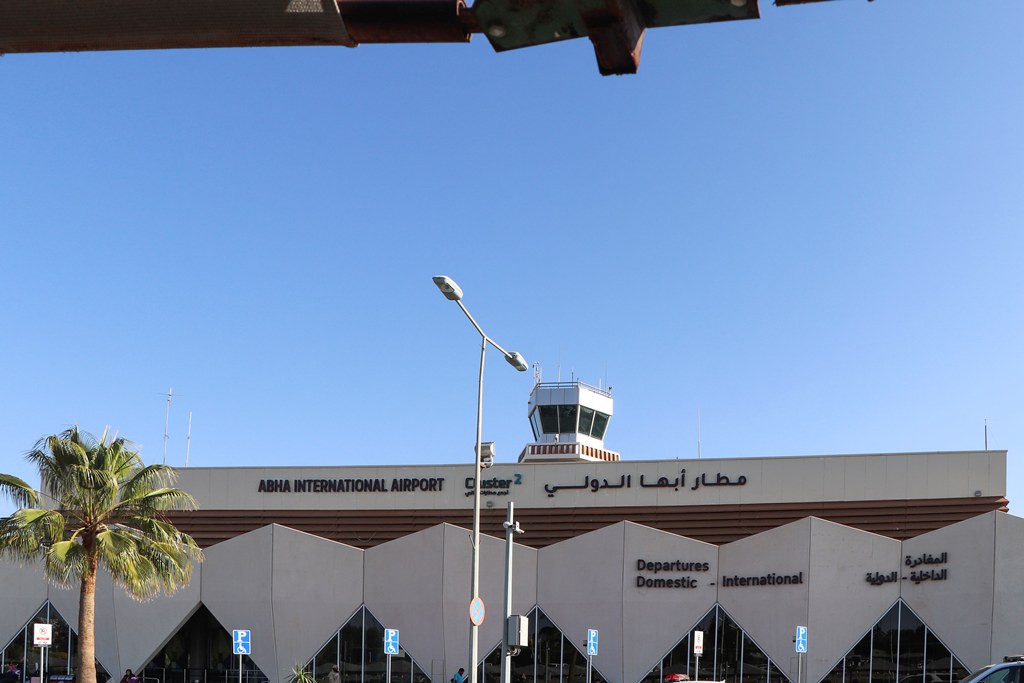
RIYADH — Ansarullah’s political bureau has named Saudi Aramco’s oil infrastructure as a target set — oil wells, transmission lines, tankers, refineries, exporting ports, and petrochemical plants — in a statement timed to arrive when Saudi Arabia’s air defenses cannot answer the threat. Hizam al-Assad published the list on July 18, one day after Abdul Malik al-Houthi declared all Saudi oil facilities legitimate targets in a televised address, and five days after six Houthi ballistic missiles struck Abha International Airport without drawing a single coalition airstrike in response.
The statement is not posturing. Saudi Arabia’s PAC-3 interceptor stockpile sits at 400 rounds of an original 2,800 — fourteen percent — with no Lockheed Martin resupply projected before 2028. The coalition has not launched an airstrike against Yemen since July 13. Pakistan’s HQ-9 battery operates outside Saudi Arabia’s integrated air defense system. Yanbu, the kingdom’s only Red Sea oil export terminal bypassing the Strait of Hormuz, is running above its sustainable capacity ceiling. The threat exploits a defense vacuum that is structural, not temporary. Pakistan’s HQ-9 battery at PSAB has yet to record a confirmed combat intercept.
Table of Contents
- What Did Ansarullah Threaten on July 18?
- The Defense Vacuum Behind the Statement
- Why Did Four Years of Quiet End Over a Funeral Flight?
- Abqaiq, Yanbu, Ras Tanura — Seven Million Barrels Under Threat
- Can Saudi Arabia Stop What It Failed to Intercept in 2019?
- The Yanbu Double Bind
- What Does Five Days Without an Airstrike Tell Iran?
- The Fiscal Line Behind the Defense Line
- Frequently Asked Questions
What Did Ansarullah Threaten on July 18?
Hizam al-Assad, a member of Ansarullah’s political bureau, named “oil wells, transmission lines, tankers, refineries, oil exporting ports, stations and petrochemical plants” as targets in a July 18 statement carried by PressTV and Mehr News Agency. The threat followed Abdul Malik al-Houthi’s July 17 televised declaration that “all Saudi oil facilities and vital installations” are within range of Houthi missiles and drones if Riyadh “moves towards escalation.”
The language represents a deliberate shift in targeting logic. Al-Houthi’s July 17 address framed the escalation in symmetrical terms: airports for airports, ports for ports, a blockade for a blockade. That formulation maintained a logic of proportionality — Saudi Arabia struck Sanaa International Airport’s runway; the Houthis struck Abha. Tit-for-tat, military-to-military.
The equation is airports for airports, ports for ports, and a blockade for a blockade.
— Abdul Malik al-Houthi, televised address, July 17, 2026
The HOS Daily BriefThe Middle East briefing 3,000+ readers start their day with.
One email. Every weekday morning. Free.
Al-Assad’s statement the following day abandoned that symmetry. Oil wells and refineries are not airbases. The target list is industrial, not military. The framing moved from retaliation to economic warfare — and al-Assad’s specific mention of “the intense blaze and thick black plumes of smoke” as an environmental consequence Riyadh must bear reads as a preemptive attribution of liability, directed at Aramco’s shareholders and the global energy market as much as at the Saudi government.
The target categories are not aspirational. “Transmission lines” — the East-West Pipeline runs 1,200 km above ground across the Empty Quarter. “Tankers” — the Houthis have already sunk two commercial vessels in the Red Sea in 2026. “Oil exporting ports” — Ras Tanura and Yanbu are both within demonstrated Houthi strike range. The Washington Institute for Near East Policy confirmed that the Sammad-3 loitering munition can reach Saudi targets as far as 900 miles from northern Yemen, and the Zulfiqar ballistic missile — a Fateh-110 derivative — has a range of 1,400 km, placing every named category inside the engagement envelope.
The Eurasia Review described Iran’s escalation architecture as “three circles of deterrence” — the Strait of Hormuz, Bab al-Mandeb, and Aramco — each activated sequentially as US pressure intensifies. Al-Assad’s July 18 statement positions Ansarullah inside the third circle. Whether the Houthis are freelancing upward within Iranian strategic permission or acting on private authorization from Tehran, the statement exceeds what Iran itself publicly established as its conditional threshold: on July 16-17, Tehran instructed the Houthis to prepare Bab al-Mandeb closure if the United States strikes Iranian power infrastructure. Naming Aramco goes further. PressTV ran its own analysis three days before al-Assad’s statement, framing Bab al-Mandeb closure and Aramco disruption as instruments capable of “sending oil to $200 and triggering a global economic shock.” Al-Assad’s target list was published 24 hours before the window on Mohsen Rezaei’s early-July ultimatum closes around July 19-20, layering the Houthi threat onto an already-taut Iranian escalation calendar.
The Defense Vacuum Behind the Statement
Three conditions converged in the five days before al-Assad’s statement, and each is independently verifiable.
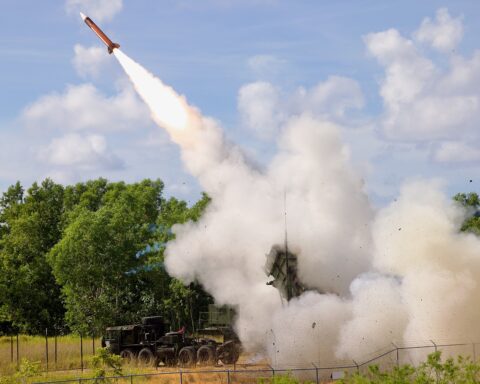
Saudi Arabia’s PAC-3 interceptor stockpile has fallen to approximately 400 rounds from an original inventory of 2,800 — a drawdown of 86 percent over roughly 38 days of high-intensity combat in March and April 2026. CSIS analysts described the depletion rate as without precedent in the system’s operational history. Lockheed Martin’s Camden, Arkansas production facility cannot deliver replacement rounds before 2028. At the consumption rates observed during the March-April period, the remaining 400 interceptors could be exhausted within two to six weeks of renewed high-intensity engagement.
The coalition has not launched a single airstrike against Yemen since July 13. On that date, six Houthi ballistic missiles and drones struck Abha International Airport and King Khalid Air Base at Khamis Mushait. Saudi Arabia closed four airports — Abha, Jizan, Najran, Sharurah — under a single NOTAM window. Maj. Gen. Turki al-Maliki confirmed only that air defenses “dealt with” the incoming missiles. No retaliatory strike followed, extending a four-year air pause that had held since the 2022 UN-brokered truce.
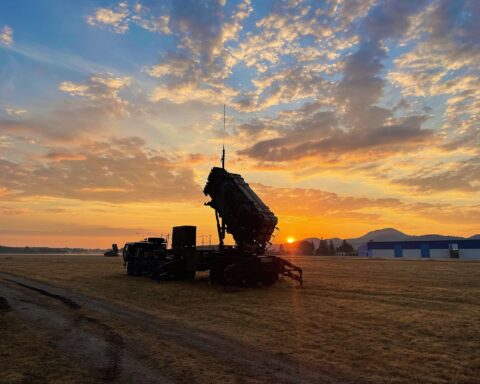
Pakistan’s HQ-9 battery — the sole supplementary air defense system inside Saudi territory — is not data-linked into Saudi Arabia’s integrated air defense system. It operates independently under Pakistani-only personnel, with a maximum engagement range exceeding 200 km but no capacity to share tracking data with Saudi fire-control networks. One battery cannot compensate for depleted PAC-3 coverage across multiple simultaneous threat vectors.
The defense vacuum is not a gap that opened gradually. It is the product of 38 days of attrition, a coalition that has not fired a weapon since a truce it helped collapse, and a supplementary system that was never architecturally integrated into the force it was meant to reinforce.
Why Did Four Years of Quiet End Over a Funeral Flight?
The four-year informal truce between Saudi Arabia and the Houthis ended on July 13, 2026, when Saudi Arabia struck the runway at Sanaa International Airport to prevent an Iranian aircraft carrying the Houthi delegation from Ali Khamenei’s funeral from landing. Yemen’s defense minister confirmed the rationale publicly. Yahya Saree declared the “de-escalation phase” over. The Houthis retaliated with ballistic missiles at Abha within hours.
The original truce was brokered by UN Special Envoy Hans Grundberg on April 2, 2022. Its formal terms expired in October 2022, but the ceasefire held — maintained, as RAND assessed in 2023, through “informal understandings rather than any binding agreement.” The March 2023 China-brokered Saudi-Iran rapprochement helped consolidate the pause but produced no formal Yemen settlement. For four years, neither side tested the arrangement. Saudi Arabia did not fly combat missions over Yemen. The Houthis did not fire on Saudi territory.
The Houthis treated the runway strike as a casus belli. The internationally recognized Yemeni government — at whose request the Saudi-led coalition operates — had ordered the strike; Yemen’s defense minister stated publicly that the objective was “to stop an Iranian plane transporting the Houthi delegation from returning from the funeral.” Six ballistic missiles and drones were fired at Abha International Airport and King Khalid Air Base. No casualties were reported. Four airports were closed. The four-year de-escalation was over — ended by a decision to prevent a single aircraft from landing, at the cost of reopening a front Saudi Arabia no longer has the interceptor inventory to sustain.
The strategic consequence extends beyond the immediate military risk. For four years, the informal ceasefire allowed Saudi Arabia to redirect defense resources away from the Yemen front. Air defense systems were repositioned. Intelligence collection shifted. The assumption that the southern front was dormant informed procurement timelines, deployment decisions, and the rate at which PAC-3 interceptors were committed to the Iran-theater engagements that consumed 86 percent of the stockpile. The truce’s collapse reopened a front that Saudi Arabia had, in operational terms, already deprioritized.
Abqaiq, Yanbu, Ras Tanura — Seven Million Barrels Under Threat
The three facilities that carry the most weight on al-Assad’s target list are the three that carry the most oil.
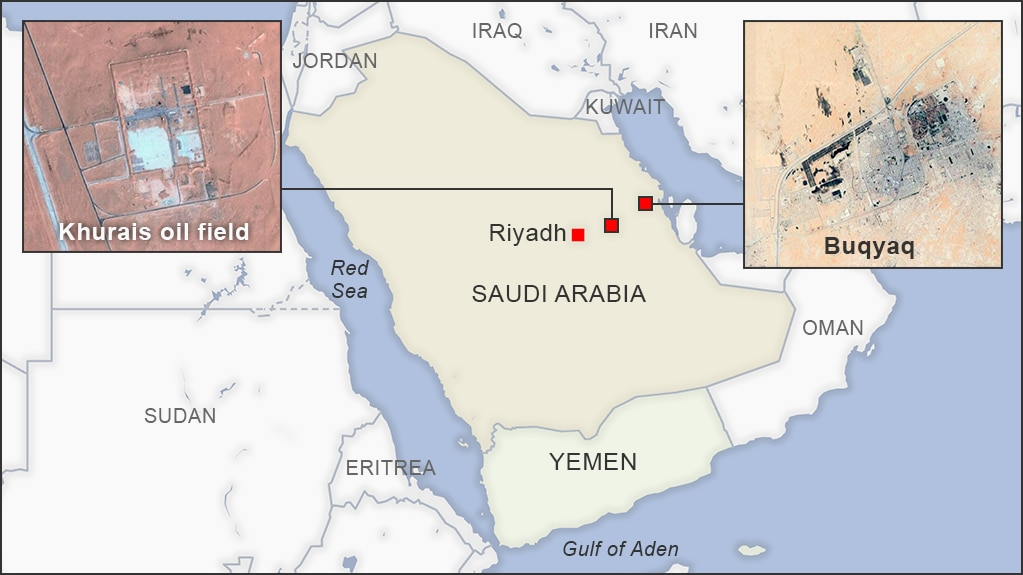
Abqaiq is the world’s largest crude oil processing and stabilization plant. Its capacity — 7 million barrels per day — accounts for more than half of Saudi Arabia’s total crude output. Every barrel of Saudi crude from the Eastern Province’s Ghawar, Shaybah, and Khurais fields passes through Abqaiq before reaching an export terminal or the East-West Pipeline. The facility is not one node among many. It is the single point through which the majority of Saudi production flows.
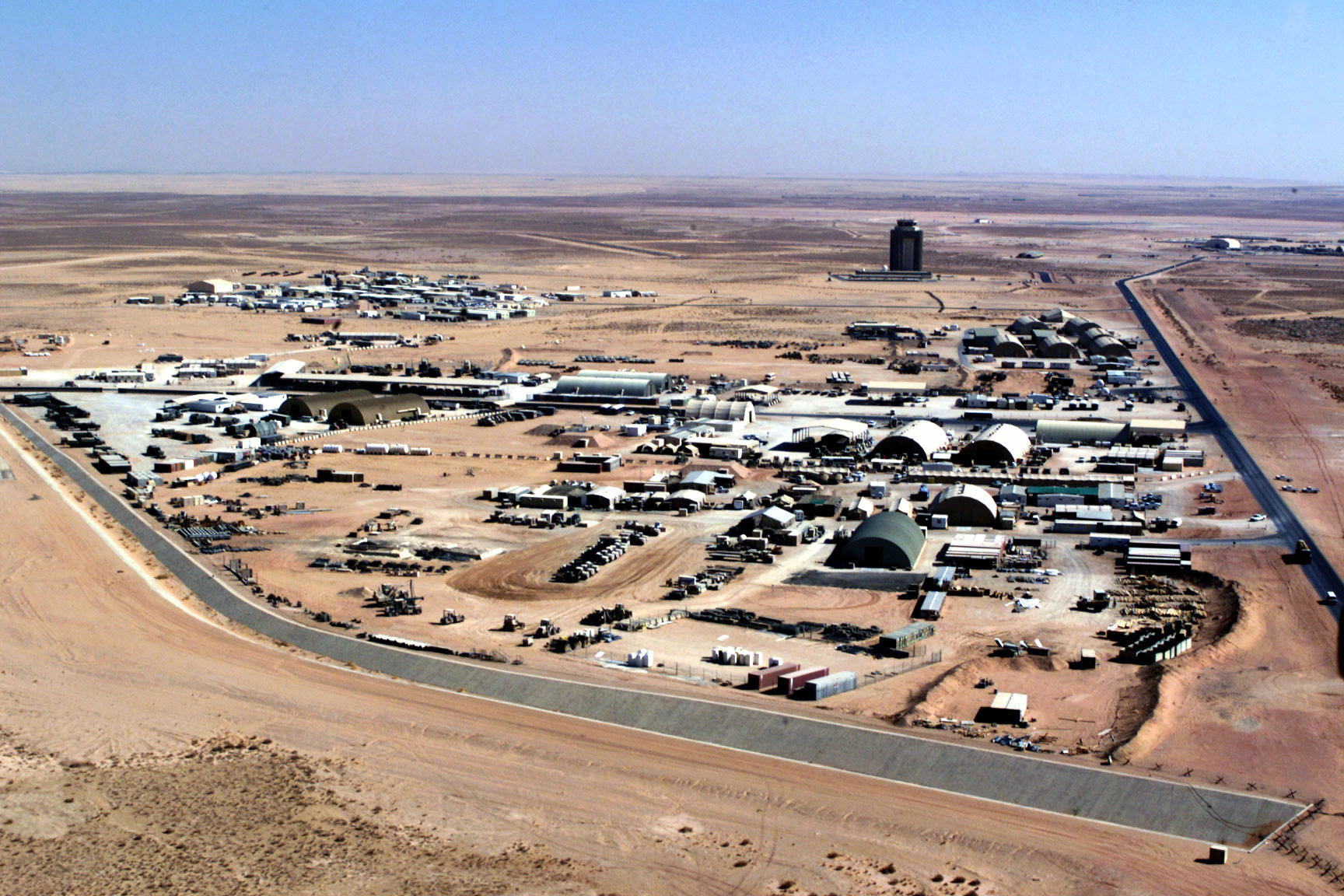
Ras Tanura is the world’s largest offshore oil loading facility, with throughput capacity of approximately 5 million barrels per day. It sits on the Persian Gulf coast, 900 miles from Houthi-controlled territory in northern Yemen — within the demonstrated range of the Sammad-3 loitering munition, according to the Washington Institute for Near East Policy. The Houthis struck Ras Tanura with a drone in March 2021 and attempted another strike in March 2026.
Yanbu, on the Red Sea coast, has become Saudi Arabia’s only functional export bypass around the Strait of Hormuz. The 1,200-km East-West Pipeline carries crude from Abqaiq to Yanbu for Red Sea loading. As of July 13, Yanbu loadings had reached 4.7 million barrels per day — above the approximately 4 to 4.5 million bpd sustainable ceiling — with the East-West Pipeline running at a record 7 million bpd.
| Facility | Function | Capacity | Distance from N. Yemen | Prior Attack History |
|---|---|---|---|---|
| Abqaiq | Crude processing and stabilization | 7 million bpd | ~750 mi (1,200 km) | Sep 2019: 5.7M bpd disrupted, 0 of 25 weapons intercepted |
| Ras Tanura | Offshore crude loading | ~5 million bpd | ~900 mi (1,450 km) | Mar 2021: drone hit, minimal damage; Mar 2026: intercepted |
| Yanbu | Red Sea crude export terminal | 4.7M bpd (above ceiling) | ~650 mi (1,050 km) | No prior attack; currently at max load as Hormuz bypass |
| East-West Pipeline | Crude transport, Abqaiq to Yanbu | 7 million bpd (record) | 1,200 km above-ground length | No prior attack; feedstock dependent on Abqaiq |
Every major Saudi oil export pathway passes through a facility the Houthis have already struck, or through one they have now named. The September 2019 attack on Abqaiq temporarily disrupted 5.7 million barrels per day. The facility was restored within weeks, but at a cost — Aramco diverted engineering teams from expansion projects and relied on emergency crude drawdowns from storage. A repeat attack in July 2026 would face the same restoration challenge with fewer resources: Aramco’s free cash flow is already negative relative to its dividend commitment, and engineering capacity is stretched across Vision 2030 megaproject commitments.
Can Saudi Arabia Stop What It Failed to Intercept in 2019?
The 2019 Abqaiq-Khurais attack demonstrated that Saudi Arabia’s air defenses cannot stop low-altitude cruise missiles and drone swarms — even at full capacity. Eighteen drones and seven cruise missiles struck from the north without a single intercept. PAC-2 Patriot and Shahine batteries at the facility were described by defense analysts as “irrelevant” against the attack profile.
On September 14, 2019, the weapons — Iranian-manufactured, Houthi-claimed, later attributed to Iran by the United States, United Kingdom, and France — approached from the north and northeast, bypassing Saudi Arabia’s south-facing air defense posture entirely. PAC-2 Patriot batteries at Abqaiq did not engage. Shahine (Crotale) short-range systems did not engage. A CNBC report cited defense analysts describing Saudi operators as having “low readiness, low competence,” with the PAC-2 system characterized as structurally incapable of engaging the low-altitude, low-radar-cross-section threat profile the attackers employed.
The current threat arrives into a worse defensive position. In 2019, the attack bypassed the IADS from an unexpected direction; today’s Houthi threat comes from the south, where Saudi PAC-3 batteries are positioned — but those batteries are at 14 percent capacity. The Houthi arsenal includes the Sammad-3 loitering munition, the Quds-2 land-attack cruise missile (range approximately 1,400 km), and the Zulfiqar ballistic missile, a Fateh-110 derivative with the same range. All three place Abqaiq, Ras Tanura, and Yanbu inside the engagement envelope.
The saturation problem compounds the stockpile problem. PAC-3 is designed to engage one target per interceptor — each incoming drone, cruise missile, or ballistic reentry vehicle requires its own round. A saturation attack combining Sammad-3 drones, Quds-2 cruise missiles, and Zulfiqar ballistic missiles across multiple Aramco facilities simultaneously would force PAC-3 operators to allocate from a finite pool across multiple axes. At 400 remaining rounds distributed across the kingdom’s entire air defense network, the arithmetic does not support sustained defense of even one major facility against a multi-vector saturation attack.
Saudi Arabia purchased counter-drone systems after 2019 but has been unable to operationalize them at the pace the current threat requires. The 2019 attack proved that Saudi air defenses could not stop this threat profile at full capacity. PAC-3 depletion removes any residual ambiguity about the outcome.
The Yanbu Double Bind
Saudi Arabia’s contingency for a Strait of Hormuz closure has always been the East-West Pipeline — 1,200 kilometers of infrastructure running from Abqaiq on the Persian Gulf to Yanbu on the Red Sea. When Iran’s naval posture and the Persian Gulf Surcharge Agreement began constraining Hormuz transits in mid-2026, Saudi Arabia activated the bypass at maximum capacity. By July 13, the pipeline was running at a record 7 million bpd, and Yanbu was loading 4.7 million bpd — above what Argus and Middle East Online described as a sustainable ceiling of 4 to 4.5 million bpd.
The Houthi threat creates a problem with no geometric solution. Yanbu sits on the Red Sea, inside the range of Houthi weapons capable of reaching 1,400 km. But Yanbu is also the terminal end of a pipeline that originates at Abqaiq — the processing node that sits at the top of al-Assad’s target categories. A strike on Abqaiq does not merely disrupt Gulf-coast exports; it eliminates the feedstock for Yanbu. The Hormuz bypass and the Hormuz-facing export infrastructure share a single upstream processing node.
Iran instructed the Houthis on July 16-17 to prepare Bab al-Mandeb closure if the United States strikes Iranian power infrastructure. Bab al-Mandeb is the Red Sea chokepoint through which Yanbu’s exports must transit to reach European and Asian buyers. If the Houthis close Bab al-Mandeb and strike Abqaiq simultaneously — or even credibly threaten both — Saudi oil exports face disruption from three directions: Hormuz blocking Eastern Province loadings, Bab al-Mandeb blocking Red Sea exports, and an Abqaiq strike severing the processing node that feeds both routes.
Each of these threat vectors has been reported in isolation by Reuters, Al Jazeera, and the Eurasia Review. None has connected them as a convergent system. Together, they describe a strategic encirclement of Saudi oil export capacity — three chokepoints, one processing node, and a depleted air defense layer stretched across all of them.
What Does Five Days Without an Airstrike Tell Iran?
On July 4, al-Maliki explicitly named Hodeidah, Ras Isa, As-Salif, and Sanaa Airport as potential targets and warned the Houthis of “unprecedented force.” Nine days later, six ballistic missiles struck Saudi airports. The coalition responded with a statement confirming interception. No retaliatory airstrike followed.
The non-response has an operational explanation. Saudi Arabia may judge that retaliatory airstrikes against Yemen would trigger the Aramco attacks the kingdom cannot absorb. Every use of force against Houthi territory since the truce collapse has been a Yemeni government action — the Sanaa runway strike — not a coalition air campaign. The distinction may be deliberate: Riyadh permits the internationally recognized government to act while the kingdom itself does not cross the threshold al-Houthi named as his trigger for industrial escalation.
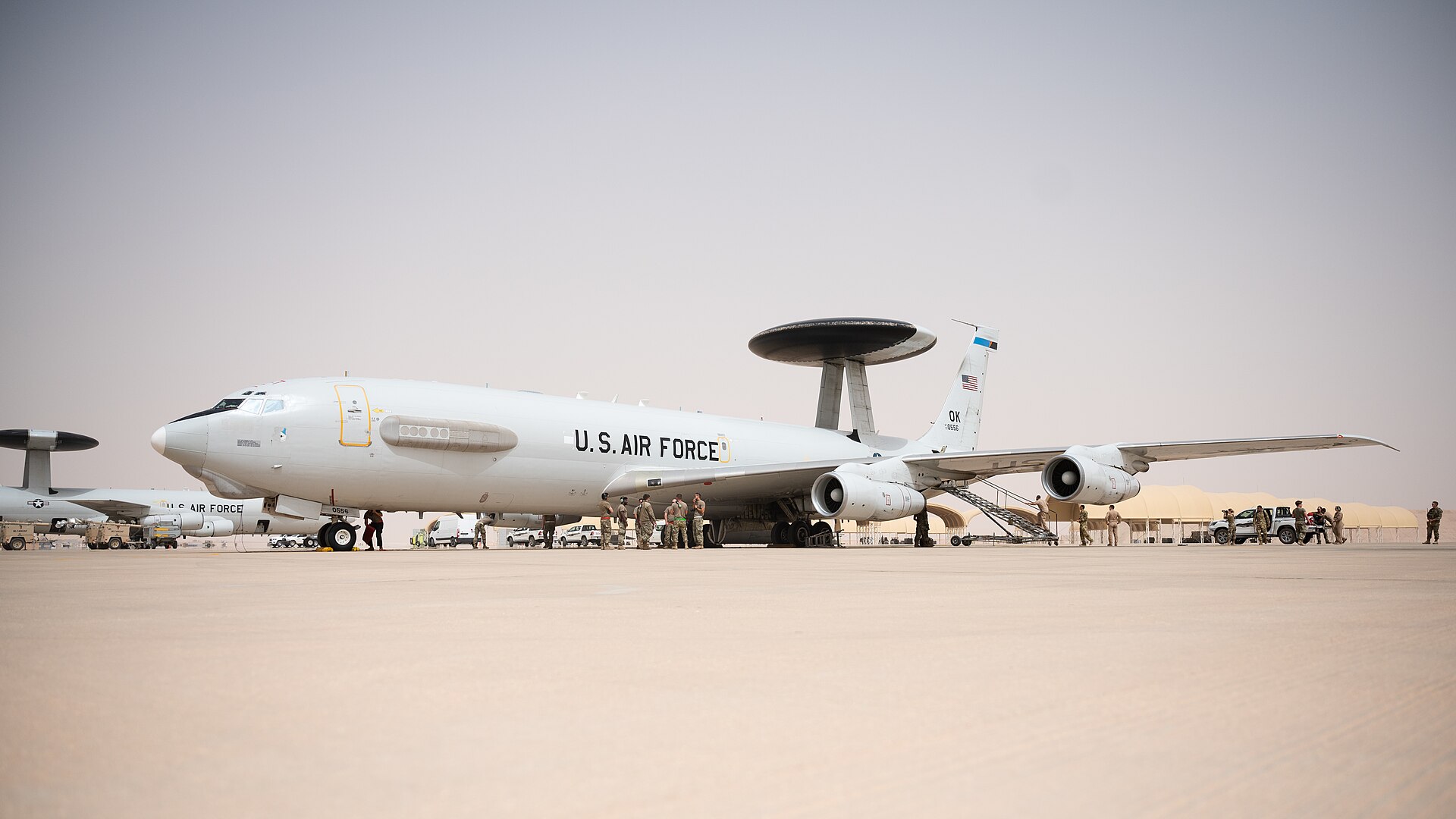
The non-response also has a capability dimension. The coalition has not flown offensive air operations over Yemen since 2022. Reconstituting a sustained air campaign after four years requires intelligence, surveillance, and reconnaissance infrastructure that has atrophied. The E-3G Sentry AWACS — the coalition’s airborne battle management platform — was destroyed at Prince Sultan Air Base on March 27, 2026, and has not been replaced. Forty-three US warplanes at PSAB remain grounded under the terms of Saudi Arabia’s Operation Project Freedom shutdown from May. The air component that Saudi Arabia would need to strike Yemen is parked, unserviced, and diplomatically frozen.
Whether the five-day silence reflects restraint or incapacity, the signal it sends is identical: Saudi Arabia is absorbing strikes without returning them. For a threat actor calculating whether to escalate from airports to Aramco, that signal is permissive. The Houthis observed five days of coalition silence, and Hizam al-Assad published his target list on day six.
The Fiscal Line Behind the Defense Line
Brent crude traded at approximately $88.10 per barrel in mid-July 2026. Saudi Arabia’s IMF-estimated fiscal breakeven price is $86.60. The margin is $1.50 per barrel. Aramco’s free-cash-flow-to-dividend ratio stood at 0.85x as of the most recent reporting quarter, meaning the company paid more in dividends than it generated in free cash flow. The kingdom’s Q1 2026 fiscal deficit reached SAR 126 billion — approximately $34 billion.
A successful strike on Abqaiq replicating the 2019 disruption profile — 5.7 million barrels per day temporarily removed from global supply — would land on a different Saudi Arabia than the one that absorbed the first attack. In September 2019, the kingdom held comfortable fiscal reserves and Aramco’s dividend was fully covered by operating cash flow. In July 2026, the kingdom is running a quarterly deficit larger than many countries’ annual budgets, Aramco’s dividend coverage is below 1.0x, and crude is barely above the price at which the government can fund its expenditures.
| Metric | September 2019 (Abqaiq Attack) | July 2026 (Current) |
|---|---|---|
| Brent crude price | ~$60/bbl | ~$88.10/bbl |
| IMF fiscal breakeven | ~$80/bbl | $86.60/bbl |
| Aramco FCF-to-dividend | >1.0x (fully covered) | 0.85x (uncovered) |
| Quarterly fiscal balance | Modest surplus | SAR 126B deficit ($34B) |
| PAC-3 interceptor stock | Full inventory (2,800) | 400 (14%) |
| Coalition air posture vs Yemen | Active (Operation Decisive Storm legacy) | Four-year pause; zero strikes since Jul 13 |
The paradox is familiar to any energy-exporting state under military threat: a strike on its own infrastructure would likely spike crude prices and increase revenue per barrel on surviving output — but only if the disruption is temporary and the market trusts the restoration timeline. A sustained disruption, or one that damages the East-West Pipeline’s Abqaiq origin point, would reduce both volume and market confidence simultaneously. The 2019 attack took weeks to repair into a benign fiscal environment. The 2026 version has no such buffer.
Al-Assad’s inclusion of “petrochemical plants” alongside oil facilities extends the threat beyond crude. Saudi Arabia’s downstream petrochemical sector — SABIC, SATORP, and the broader Jubail-Yanbu industrial complex — represents the diversification revenue that Vision 2030 was designed to expand. The Jubail industrial city alone hosts over 100 petrochemical and manufacturing plants — and sits well within the Zulfiqar’s 1,400 km range from northern Yemen.
Frequently Asked Questions
Have the Houthis previously struck Saudi oil infrastructure?
The Houthis have struck or attempted to strike Saudi oil facilities on multiple occasions beyond the 2019 Abqaiq-Khurais incident. In March 2021, a Houthi drone confirmed impact at Ras Tanura’s offshore loading facility, causing minimal damage but demonstrating range. Between 2019 and 2022, the Jizan Aramco distribution terminal in southwestern Saudi Arabia was hit by Houthi drones and missiles at least four times. In March 2022, a drone struck the Jeddah bulk plant during a Formula One weekend, creating a visible fire near the race circuit and generating global media coverage. In March 2026, another drone targeting Ras Tanura’s oil storage yard was intercepted before impact. The pattern demonstrates persistent capability, iterative targeting refinement, and an understanding of which strikes produce disproportionate media and market impact.
What is the Rezaei ultimatum and why does its timing matter?
Mohsen Rezaei, secretary of Iran’s Expediency Discernment Council, issued an ultimatum in early July 2026 with a deadline window closing around July 19-20. The ultimatum warned of undefined escalatory consequences if certain diplomatic conditions — related to the broader Iran-US confrontation and the MOU framework — were not met. Hizam al-Assad’s July 18 Aramco target list was published 24 hours before the Rezaei window closes. The alignment places the Houthi Aramco threat and the Iranian escalation deadline inside the same 48-hour period, compounding the pressure on Saudi decision-makers who must now assess whether Ansarullah’s threat is conditional on Saudi behavior or coordinated with Tehran’s timetable regardless of what Riyadh does.
Hours before Rezaei’s window closed, Tehran moved to formalize its exit from the diplomatic framework entirely: Iran’s formal suspension of the Islamabad MOU, announced by Deputy Foreign Minister Gharibabadi on July 18, removed the last off-ramp available to any Gulf state that had been counting on the sixty-day framework to constrain Iranian escalation.
Whether Rezaei held genuine command authority when he issued that ultimatum — or whether his July 17 statement was gallery performance for IRGC hardliners with no operational mandate — is the central question in Who Ordered the Ultimatum Rezaei Cannot Enforce?
Could Saudi Arabia export oil without Hormuz, Yanbu, or Abqaiq?
Not at meaningful volumes. The IPSA pipeline (Iraq-Saudi Arabia) has been inactive since 1990 and would require years and billions of dollars to reactivate. The Rabigh port on the Red Sea handles refined products, not crude, and lacks deepwater crude-loading infrastructure. Emergency exports via truck or rail to Omani or Emirati ports would move negligible volumes — measured in the low tens of thousands of barrels per day against a national output of approximately 9 million bpd. Saudi Aramco has no operational redundancy at scale. The kingdom’s oil export system depends on two maritime chokepoints (Hormuz and Bab al-Mandeb) and one processing node (Abqaiq), with no alternative pathway capable of absorbing even 10 percent of current throughput.
What air defense systems protect Abqaiq after the 2019 failure?
Following the 2019 attack, Saudi Arabia deployed additional Patriot PAC-3 batteries and AN/TPY-2 radar systems around Abqaiq and other Aramco facilities. The kingdom contracted for NASAMS (Norwegian Advanced Surface-to-Air Missile System), a point-defense system designed to engage the low-altitude drone and cruise missile threats that PAC-2 could not handle in 2019. NASAMS delivery has been repeatedly delayed — the system that was supposed to close the gap remains non-operational at the facilities it was purchased to protect. Saudi Arabia additionally explored procurement of the Israeli Iron Dome system through indirect channels; that effort did not produce a deployment. Abqaiq’s defense in July 2026 rests on the same PAC-3 network now at 14 percent inventory, supplemented by short-range Oerlikon Skyshield guns and electro-optical tracking systems whose performance against the saturation attack profile the Houthis can now assemble has never been tested in combat.
How does Hizam al-Assad’s statement differ from previous Houthi threats?
Previous Houthi threats against Saudi oil infrastructure were typically issued by military spokesperson Yahya Saree and framed as operational communiqués — announcing strikes after they occurred or warning of retaliation in general terms. Al-Assad’s July 18 statement is different in three respects. It was issued by a political bureau member, placing the threat in a diplomatic-strategic register rather than a military one. It itemized target categories rather than naming specific facilities, a formulation that maximizes the threat surface by leaving every Saudi oil asset inside the envelope without committing to a specific target that air defenses could prioritize. And the inclusion of environmental liability language — “plumes of smoke,” “consequences for the local population” — targets Aramco’s investor relations and ESG profile directly, reading less as a military warning and more as a preemptive attribution of consequences designed to move markets and shareholders.
The case of what Saudi Arabia literally cannot fire — an HQ-9 battery whose command authority sits in Islamabad and whose rules of engagement remain classified — is the subject of Saudi Arabia Paid for the Shield It Cannot Fire.
The Houthi enumeration of what Saudi Arabia cannot defend was reinforced, hours later, by a parallel diplomatic collapse: Khamenei’s personal repudiation of the Islamabad MOU removed the diplomatic ceiling that had implicitly kept Saudi targets off Iran’s formal strike list, leaving both the physical and political shields simultaneously absent. The nuclear dimension of that exposure sharpened further on July 21: Saudi Arabia Bought the Nuclear Ceiling It Cannot Set maps why Trump’s stated intention to strike Pickaxe Mountain places the kingdom inside a blast radius it has no authority to define.