TEHRAN — The IAEA Board of Governors voted 19-3 on June 10 to censure Iran for its failure to cooperate with international nuclear inspections. Within hours, Foreign Minister Abbas Araghchi voided the Cairo inspection accord — the second time he has terminated the same agreement, using the same trigger, in seven months. That response was expected. What followed from Tehran’s parliament was not.
Hardline lawmakers who had spent months drafting legislation to withdraw Iran from the Nuclear Non-Proliferation Treaty seized on the censure as confirmation that the treaty framework no longer served Iranian interests. One sitting parliamentarian claimed Russia was prepared to supply nuclear weapons. Another said the NPT “has had no benefit for us.” A third had already introduced a triple-urgency bill to withdraw.
Araghchi, meanwhile, has maintained — as recently as July 2025 — that Iran remains committed to the NPT. The fracture between his position and parliament’s is now public, documented, and widening.
Saudi Arabia voted YES. Its 123 Agreement with Washington omits every Gold Standard nonproliferation requirement. That agreement assumes the NPT framework holds. If Iran exits the treaty, the legal architecture underpinning Saudi Arabia’s own nuclear cooperation deal becomes difficult to defend.
Table of Contents
- The Vote and Its Immediate Fallout
- What Iran’s Parliament Is Saying — and Who Is Saying It
- Araghchi’s Institutional Defense
- What “Imported Warheads” Means Under the NPT
- Has Any State Actually Left the NPT?
- The Saudi 123 Agreement’s NPT Dependency
- Mojtaba Khamenei’s Absence and the Decision Vacuum
- Background
- FAQ
The Vote and Its Immediate Fallout
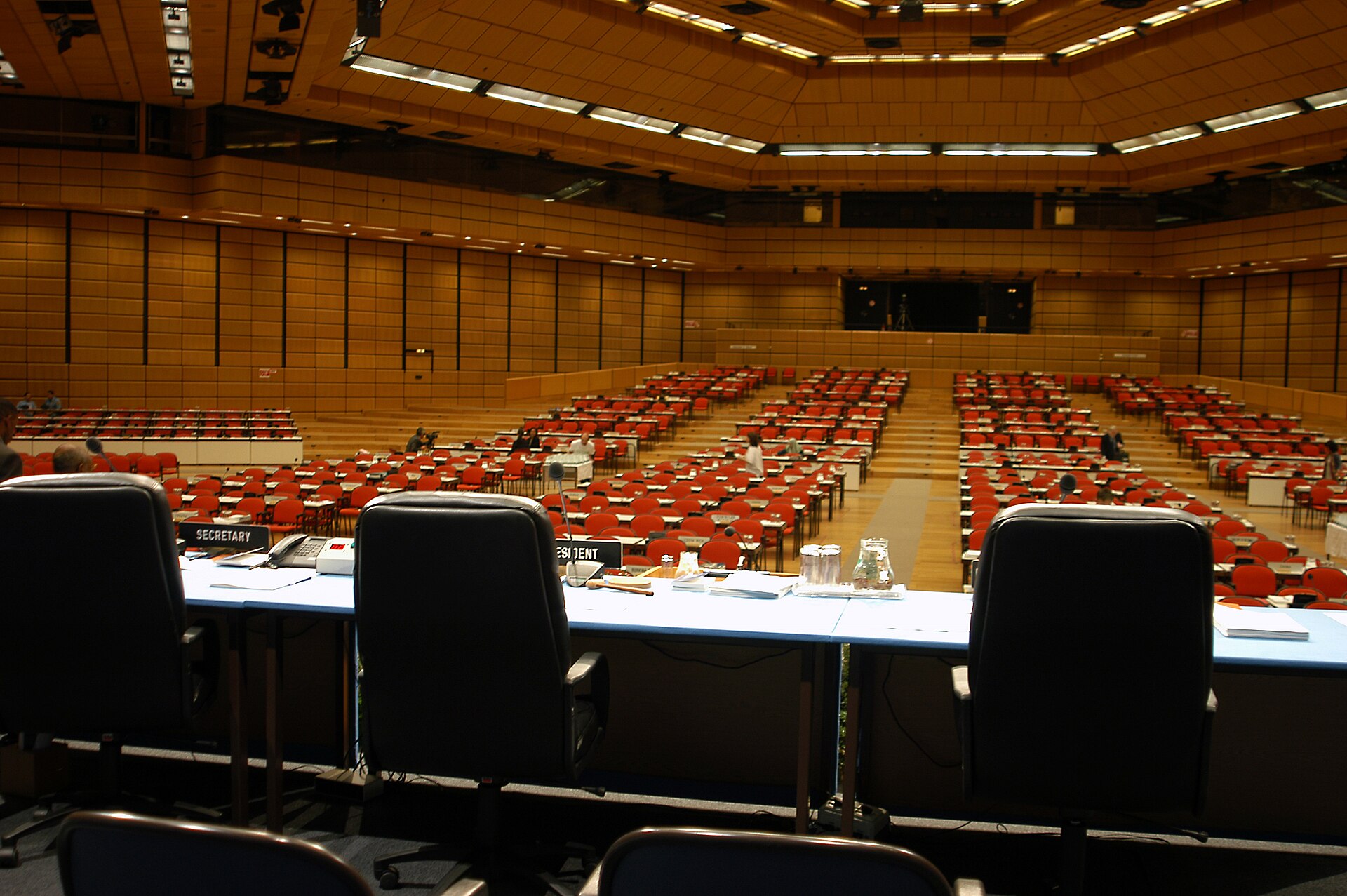
The Board of Governors vote broke down 19 in favor, 3 against, with 12 abstentions — a sharper margin than the November 20, 2025 censure, which passed 30-2. Saudi Arabia occupied one of the 19 affirmative seats. Russia, China, and Burkina Faso voted against. The resolution cited Iran’s failure to account for 440.9 kilograms of uranium enriched to 60% and 8,599.6 kilograms of lower-enriched material, both unverified since the IAEA halted verification activities on February 28.
Araghchi’s response tracked the November 2025 template precisely. He declared the Cairo inspection accord “terminated” and sent letters to all Board member foreign ministers warning them against allowing the IAEA to become “a US political instrument, basically an extension of US politics, not an independent body.” He called the censure “politically motivated” and drafted “in bad faith.”
The Middle East briefing 3,000+ readers start their day with.
One email. Every weekday morning. Free.
The Cairo accord, originally negotiated to restore a degree of inspector access after the November 2025 censure, had been voided once before — seven months earlier, using the identical mechanism. Its second termination removes the last bilateral inspection arrangement between Iran and the IAEA. As of the June 4 report (GOV/2026/8), the agency had been unable to conduct verification activities in Iran for 97 days.
The verification gap is not abstract. The 440.9 kg of 60%-enriched HEU is sufficient, if further enriched to weapons-grade (90%+), for roughly eight to ten nuclear devices — an estimate based on the standard IAEA formula of approximately 25 kg of weapons-grade material per device. The IAEA has no means of confirming whether any portion has been diverted, relocated, or further processed since February 27.
What Iran’s Parliament Is Saying — and Who Is Saying It
The parliamentary push to exit the NPT did not begin on June 10. It began after the November 2025 censure and accelerated through early 2026, driven by named officials operating across three distinct tracks: withdrawal legislation, external acquisition rhetoric, and institutional counter-planning.
Kamran Ghazanfari, a member of Iran’s Parliament Internal Affairs and Councils Commission, stated in November 2025 that “Putin’s deputy has indirectly announced that Russia is willing to provide nuclear weapons to Iran.” Ghazanfari said leaving the NPT would “legally empower the regime to bolster its military and nuclear capabilities,” and claimed Moscow and Pyongyang were prepared to support Iran’s nuclear escalation. The statement was reported by Iran International on November 24, 2025, and corroborated by K24 English.
Ebrahim Rezaei, spokesman for the Parliament’s National Security and Foreign Policy Commission, described the IAEA censure as “political and illegal” and announced his commission was reviewing a “six-point counter-action plan” to create deterrence against the Snapback mechanism. He was more direct on the treaty itself: the NPT “has had no benefit for us,” he told Iranian media.
“Putin’s deputy has indirectly announced that Russia is willing to provide nuclear weapons to Iran.”
— Kamran Ghazanfari, member, Iran Parliament Internal Affairs and Councils Commission, November 2025
On March 28, 2026, Tehran MP Malek Shariati introduced legislation titled “Support for the Nuclear Rights of the Iranian Nation” — a triple-urgency bill with three pillars: withdrawal from the NPT, repeal of the JCPOA implementation law, and pursuit of new nuclear cooperation agreements with SCO- and BRICS-aligned states. Shariati told Iran International the bill had been “uploaded in an online parliamentary portal and will be reviewed soon.” The Arms Control Association covered the bill’s substance in a May 2026 analysis.
Fada Hossein Maleki, a member of the parliament’s national security commission, framed the environment differently. The ongoing US-Israeli strikes, he told Al Jazeera on March 28, provided “an opportune moment” for Iran to reconsider its international commitments. Mohammad Mohkber, senior adviser to the Supreme Leader and former first vice president under Raisi, called IAEA Director General Rafael Grossi “a partner in crime in the blood spilled” during the current war.
These positions do not constitute a unified government stance. Ghazanfari speaks of Russian weapons transfers; Rezaei drafts counter-plans within existing committee structures; Shariati introduces withdrawal legislation; Maleki frames the decision in terms of wartime opportunity. All four tracks run simultaneously, none coordinated into a single executive position.
Iran’s parliament has not held formal sessions since February 28, when full hostilities began, creating legal ambiguity about when Shariati’s bill can be debated or voted on.
Araghchi’s Institutional Defense
Araghchi has not made a public statement specifically about NPT withdrawal in connection with the June 10 censure. His most recent on-record NPT commitment dates to July 2025, when he told reporters: “Iran remains committed to the NPT and its Safeguards Agreement.” He called reports of full suspension “fake news.” IAEA Director General Grossi responded at the time that it was “encouraging to see Iran’s declared willingness not to leave the NPT and to continue working inside the international non-proliferation regime.”
The gap between that statement and the current environment is eleven months and a war. Araghchi’s June 10 actions — voiding the Cairo accord, attacking the IAEA’s institutional independence — fit within a pattern of escalating non-cooperation while preserving treaty membership. He has consistently framed Iran’s responses as reactions to the Board’s political capture by Washington, not as steps toward exit.
“The US and the E3 attacked diplomacy just as they attacked our nuclear facilities,” Araghchi said after the November 2025 censure — language that treats the IAEA as compromised while leaving the NPT framework intact. His June 10 letters to Board member foreign ministers used the same register: institutional critique, not treaty repudiation.
Whether this line holds depends on factors Araghchi does not control. The parliamentary hardliners operate outside his ministry. The Supreme Leader’s office — now under Mojtaba Khamenei — has its own channels. And the collapse of the nuclear talks track, which Washington itself undermined by drafting the censure while claiming negotiations were “close,” has removed the diplomatic rationale Araghchi used to justify staying inside the treaty.
What “Imported Warheads” Means Under the NPT
Ghazanfari’s claim — that Russia has signaled readiness to supply nuclear weapons to Iran — describes a specific strategic pathway: acquisition of completed nuclear devices from an existing nuclear-weapon state, bypassing the enrichment route entirely. This is not a euphemism for technical assistance or fuel supply. It is a claim about finished weapons.
NPT Article II prohibits non-nuclear-weapon states from “receiving the transfer of nuclear weapons or other nuclear explosive devices… directly, or indirectly.” That prohibition applies while a state remains party to the treaty. Article I simultaneously prohibits nuclear-weapon states from transferring weapons. Any Russian or North Korean transfer would violate Article I (transferor) and Article II (recipient) concurrently.
The legal sequence matters. NPT Article X requires three months’ advance notice to the UN Security Council before withdrawal takes effect. During that 90-day window, all treaty obligations remain in force — including the prohibition on receiving nuclear weapons. An Iranian government that acquired external devices before withdrawal was complete would be in violation of the treaty it was in the process of leaving.
No Russian official has confirmed Ghazanfari’s characterization. Moscow’s nuclear doctrine does not include provisions for warhead transfers to non-nuclear states, and Russia’s own NPT obligations under Article I would prohibit the transfer. The claim’s strategic value may lie less in its accuracy than in its function: normalizing the concept of externally sourced nuclear weapons in Iranian political discourse at a moment when the enrichment pathway — 440.9 kg of 60% HEU, further enrichment technically feasible — is already available domestically.
Has Any State Actually Left the NPT?
One state has completed NPT withdrawal: North Korea. The process took a decade, included a suspension, and produced the only operational precedent for Article X.
Pyongyang first invoked Article X on March 12, 1993, citing US-South Korean Team Spirit military exercises and IAEA demands for special inspections. The UN Security Council responded with Resolution 825 in May 1993. North Korea suspended its withdrawal in June 1993, entering bilateral negotiations with Washington that produced the 1994 Agreed Framework.
That framework collapsed in late 2002. On January 10, 2003, North Korea re-activated its withdrawal notice. Ninety days later — April 10, 2003 — withdrawal was effective. Pyongyang conducted its first nuclear test on October 9, 2006.
| Date | Event |
|---|---|
| March 12, 1993 | DPRK invokes NPT Article X (first notice) |
| May 1993 | UNSC Resolution 825 |
| June 1993 | DPRK suspends withdrawal |
| January 10, 2003 | DPRK re-activates withdrawal |
| April 10, 2003 | Withdrawal effective (90 days) |
| October 9, 2006 | First nuclear test |
The precedent is imperfect but instructive. North Korea’s withdrawal occurred in a radically different geopolitical context — no active war, no Strait of Hormuz closure, no contested frozen asset pool as a simultaneous negotiating variable. But the mechanism is identical: Article X notice, 90-day clock, Security Council response.
Iran’s hardliners have studied it. Rezaei’s “six-point counter-action plan” explicitly references creating deterrence against the Snapback mechanism — the UN Security Council instrument that would be triggered by withdrawal.
The 2026 NPT Review Conference, held in New York through May 22, collapsed without consensus — the second consecutive Review Conference failure, according to the Arms Control Association. Iran objected to language faulting its program; the United States insisted it remain. The collapse weakens the institutional credibility of the treaty regime at the exact moment Iran’s parliament is debating whether to leave it.
The Saudi 123 Agreement’s NPT Dependency
Saudi Arabia’s vote on June 10 was cast from a Board seat it has held since September 2025. It voted alongside the United States, the E3 (France, Germany, United Kingdom), and 14 other members. The censure it supported triggered the response it now faces: an accelerated push inside Tehran toward NPT exit.
The US-Saudi 123 Agreement, signed under the Trump administration, omits all three Gold Standard nonproliferation requirements: no ban on domestic enrichment, no ban on reprocessing, and no requirement for the Additional Protocol. The Arms Control Association assessed in February 2026 that the Trump administration was “jeopardizing nonproliferation efforts” with the deal’s terms; its June 12 feature by Sharon Squassoni — titled “gilded sweetheart deal” — provides the full technical breakdown of why the first-ever Section 1264 waiver converted a policy choice into treaty text the same day the Board declared Iran non-compliant.
The 123 framework assumes both parties operate within the NPT regime. Section 123 of the US Atomic Energy Act governs civil nuclear cooperation agreements; its legal foundation is the nonproliferation architecture built around the NPT. If Iran — the state whose nuclear program Saudi Arabia’s deal was partly designed to balance — exits that architecture, the rationale for granting Saudi Arabia enrichment and reprocessing latitude without Gold Standard constraints becomes harder to sustain in Washington.
Legal experts cited by the Arms Control Association in July 2025 noted that Iran may remain bound by nonproliferation obligations under customary international law even after NPT exit. That analysis also applies to the broader 123 framework: if the treaty regime fractures, customary-law arguments become the fallback — a weaker foundation than treaty obligations for both Iran’s constraints and Saudi Arabia’s permissions.
The Tasnim News Agency, affiliated with the IRGC, published an article in March 2026 calling for Iran to withdraw from the NPT “as soon as possible” while maintaining a civilian nuclear program. If that position becomes policy, Saudi Arabia would be pursuing a civil nuclear program under a 123 Agreement designed for a treaty regime that no longer includes its primary regional competitor.
Mojtaba Khamenei’s Absence and the Decision Vacuum
NPT withdrawal is not a parliamentary decision. Under Iran’s constitutional structure, the Supreme Leader holds authority over matters of national security and foreign policy. Shariati’s triple-urgency bill, even if debated and passed, would require Supreme Leader ratification to take effect.
Mojtaba Khamenei has not been seen publicly since February 28, when US-Israeli strikes hit Iranian nuclear and military sites. Washington assesses he was seriously wounded and remains in hiding. He has issued written statements attributed to him — including an April 30 declaration that Iran’s population would safeguard nuclear and missile technologies as “national assets” — but no live appearances.
“The new leadership under Mojtaba might be willing to take more risks.”
— Israeli security expert, quoted in Newsweek, May 2026
His father, Ali Khamenei, maintained a fatwa against nuclear weapons — a religious ruling that, regardless of its sincerity as policy, functioned as a political constraint on the weapons option. Mojtaba Khamenei has issued no equivalent ruling. An Israeli security expert quoted by Newsweek in May 2026 assessed that “the new leadership under Mojtaba might be willing to take more risks.”
The practical effect is a decision vacuum. Parliament introduces legislation. Araghchi maintains the diplomatic line. The IRGC-affiliated press advocates withdrawal, while the Supreme Leader’s office issues written statements about “national assets” without specifying policy.
No single authority has consolidated the competing positions into a directive. The June 10 censure adds pressure to every faction’s argument without resolving the question of who decides.
Background
The NPT, which entered into force in 1970, divides signatories into nuclear-weapon states (the United States, Russia, the United Kingdom, France, and China) and non-nuclear-weapon states. Article IV guarantees the “inalienable right” of all parties to develop nuclear energy for peaceful purposes. Article X permits withdrawal under extraordinary circumstances with three months’ notice to the Security Council.
Iran ratified the NPT in 1970. Its nuclear program came under sustained IAEA scrutiny after the MEK revealed the existence of undeclared enrichment facilities at Natanz and a heavy-water reactor at Arak in August 2002. The JCPOA, signed in July 2015, imposed limits on enrichment in exchange for sanctions relief.
The Trump administration withdrew from the JCPOA in May 2018. Iran began exceeding enrichment limits in 2019 and suspended Additional Protocol access in February 2021.
The current verification gap dates to February 27, 2026, when the IAEA’s last inspectors departed Iran. The agency has been unable to confirm the status of Iran’s declared nuclear material since that date. The collapse of the MOU negotiation track through Oman in early June removed the last diplomatic channel that might have restored inspector access.
FAQ
Would Iran’s withdrawal from the NPT automatically trigger new sanctions?
Withdrawal itself does not trigger automatic sanctions under existing frameworks. The Snapback mechanism under UN Security Council Resolution 2231 has already been invoked, restoring pre-JCPOA sanctions. A fresh sanctions package tied specifically to NPT withdrawal would require new Security Council action, where Russia and China hold vetoes, or executive action by individual states. The United States has already imposed maximum-pressure sanctions; the marginal impact of adding NPT withdrawal as a trigger would be limited compared to the existing sanctions architecture.
Could Iran acquire nuclear weapons from Russia or North Korea while still in the NPT?
No. NPT Article II explicitly prohibits non-nuclear-weapon states from “receiving the transfer of nuclear weapons or other nuclear explosive devices… directly, or indirectly.” Article I simultaneously bars nuclear-weapon states from transferring them. Any such transfer while Iran remains party — including during the 90-day withdrawal window — would violate the treaty for both the transferor and recipient. The prohibition is not ambiguous; it covers direct and indirect channels.
How does the 2026 NPT Review Conference failure affect this situation?
The Review Conference, held in New York through May 22, 2026, was the second consecutive RevCon to collapse without a consensus outcome document. The 2015 RevCon also failed. Consecutive failures erode the treaty’s institutional legitimacy and weaken the diplomatic argument that staying inside the NPT protects a state’s interests — the exact argument Araghchi has made and that parliamentary hardliners are now publicly rejecting.
What happens to US-Saudi nuclear cooperation if Iran leaves the NPT?
The US-Saudi 123 Agreement does not contain an explicit clause conditioning cooperation on Iran’s NPT membership. But Section 123 agreements are embedded in the broader nonproliferation architecture built around the NPT. If Iran exits, congressional critics — who already objected to the agreement’s omission of Gold Standard requirements — gain a new argument: that granting Saudi Arabia enrichment and reprocessing latitude without standard safeguards is untenable when the regional threat state operates outside the treaty entirely. The agreement’s legal validity would not change automatically, but its political sustainability in Washington would face renewed scrutiny.
Has Iran ever used the threat of NPT withdrawal as a negotiating tactic before?
Yes. In November 2019, following US reimposition of sanctions, Iranian officials including Supreme National Security Council Secretary Ali Shamkhani publicly raised the possibility of withdrawal as leverage in negotiations. That threat was not followed through; Iran instead accelerated enrichment while staying in the treaty. The pattern suggests that withdrawal rhetoric has historically served as a pressure instrument rather than a genuine policy trajectory — though the combination of active war, collapsed inspection access, and a new Supreme Leader without his father’s fatwa constraint makes the current environment different from 2019.