
CENTCOM Strikes Iran Twice in One Day for Second Time
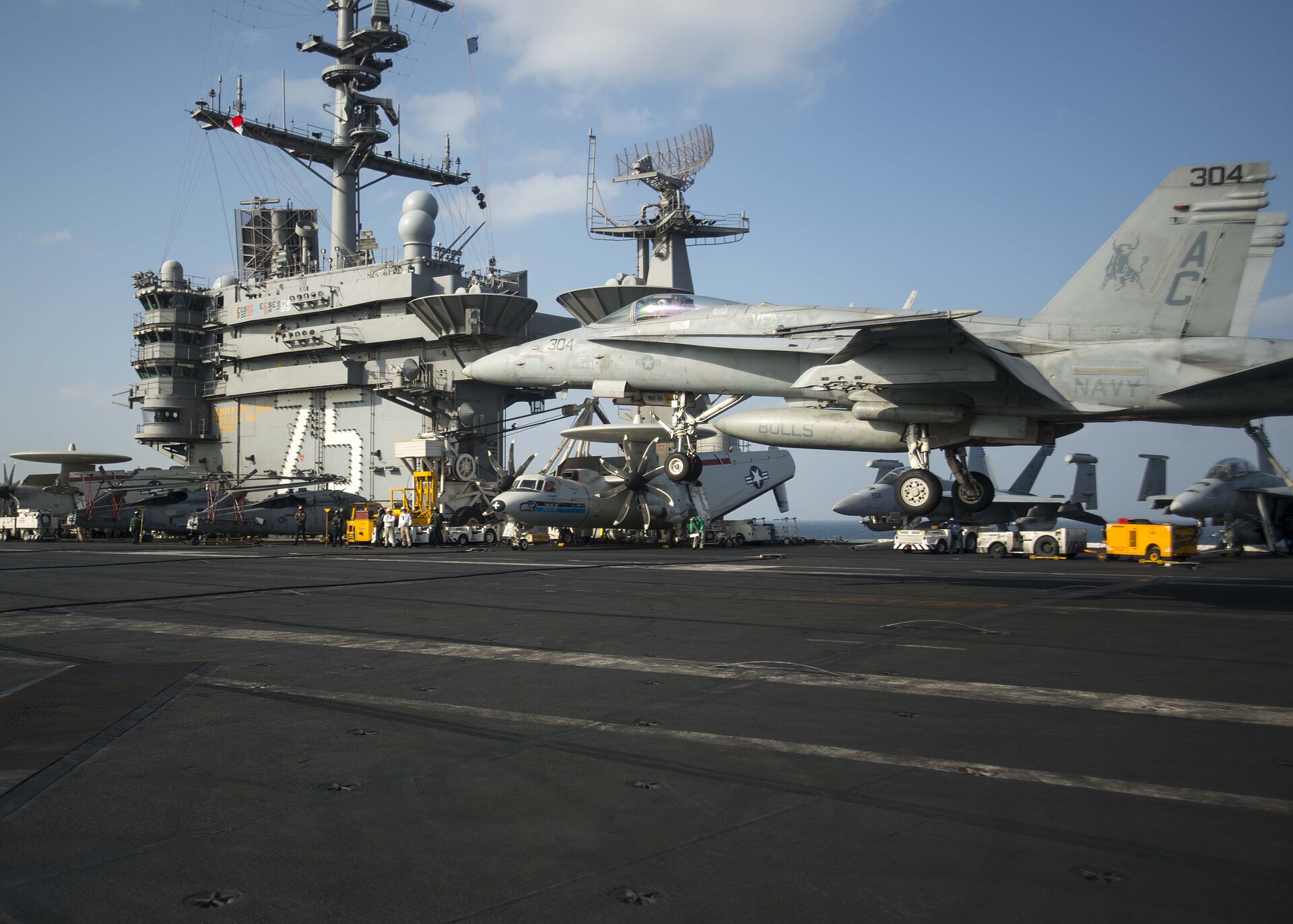
F/A-18C Hornet on the flight deck of USS Harry S. Truman CVN-75 in the Persian Gulf, January 2014

CENTCOM Strikes Iran Twice in One Day for the Second Time in Five Days

CENTCOM launched a second wave of strikes on July 20 at 3 p.m. ET — the second two-wave day in five. IRGC ran three counter-waves, pushing Nasr-2 to wave 23.

WASHINGTON — CENTCOM launched a second wave of strikes against Iran on July 20, announcing the operation at 3 p.m. ET — the same afternoon time slot used for the wave that first broke the nightly cadence on July 15, according to a CENTCOM post on X. It is the second confirmed day in five that US forces have hit Iran twice within a single calendar day, a shift that replaces the ten-night sequential pattern with what is functionally a continuous-pressure campaign.

Conflict Pulse IRAN–US WAR
Live conflict timeline
Day
144
since Feb 28
Casualties
13,260+
5 nations
Brent Crude ● LIVE
$113
▲ 57% from $72
Hormuz Strait
RESTRICTED
94% traffic drop
Ships Hit
16
since Day 1

The acceleration compresses the IRGC’s decision window for counter-strikes against Gulf targets, and on July 20 the IRGC ran three waves of its own — pushing Operation Nasr-2 to wave 23 by evening, according to PressTV and WANA. Iran has rejected a Qatar-brokered ceasefire, according to Reuters and Al-Monitor, closing the diplomatic track as both sides increase the operational tempo. Seventeen US military personnel have been killed in the conflict to date, CENTCOM confirmed.

The Second Wave

CENTCOM posted on X at 3 p.m. ET on July 20: “U.S. forces launched operations for a second wave of strikes today against Iran. The strikes are targeting Iranian military capabilities used to threaten vessels freely transiting through the Strait of Hormuz, an international waterway vital to global commerce.” The command framed the broader campaign as designed to “further degrade Iran’s ability to threaten commercial shipping in the Strait of Hormuz and swiftly punish Islamic Revolutionary Guard Corps forces who launched attacks against American service members in Jordan,” according to NPR.

The second wave reportedly lasted approximately six hours, according to the Gateway Pundit, though CENTCOM has not confirmed the duration — making it roughly twice the length of Night Nine’s documented three-hour window. The specific target set was not enumerated in the July 20 announcement, a departure from Night Nine’s detailed city-by-city accounting that may reflect operational security tightening as the strike tempo accelerates.

President Trump, arriving in Maryland from the World Cup final, addressed the campaign after Night Nine. “We hit them very hard again tonight,” he said, adding that the operations were “in honour” of dead service members, according to NPR. “Iran has been very, very badly damaged,” Trump said. “They’ve lost everything almost militarily.”

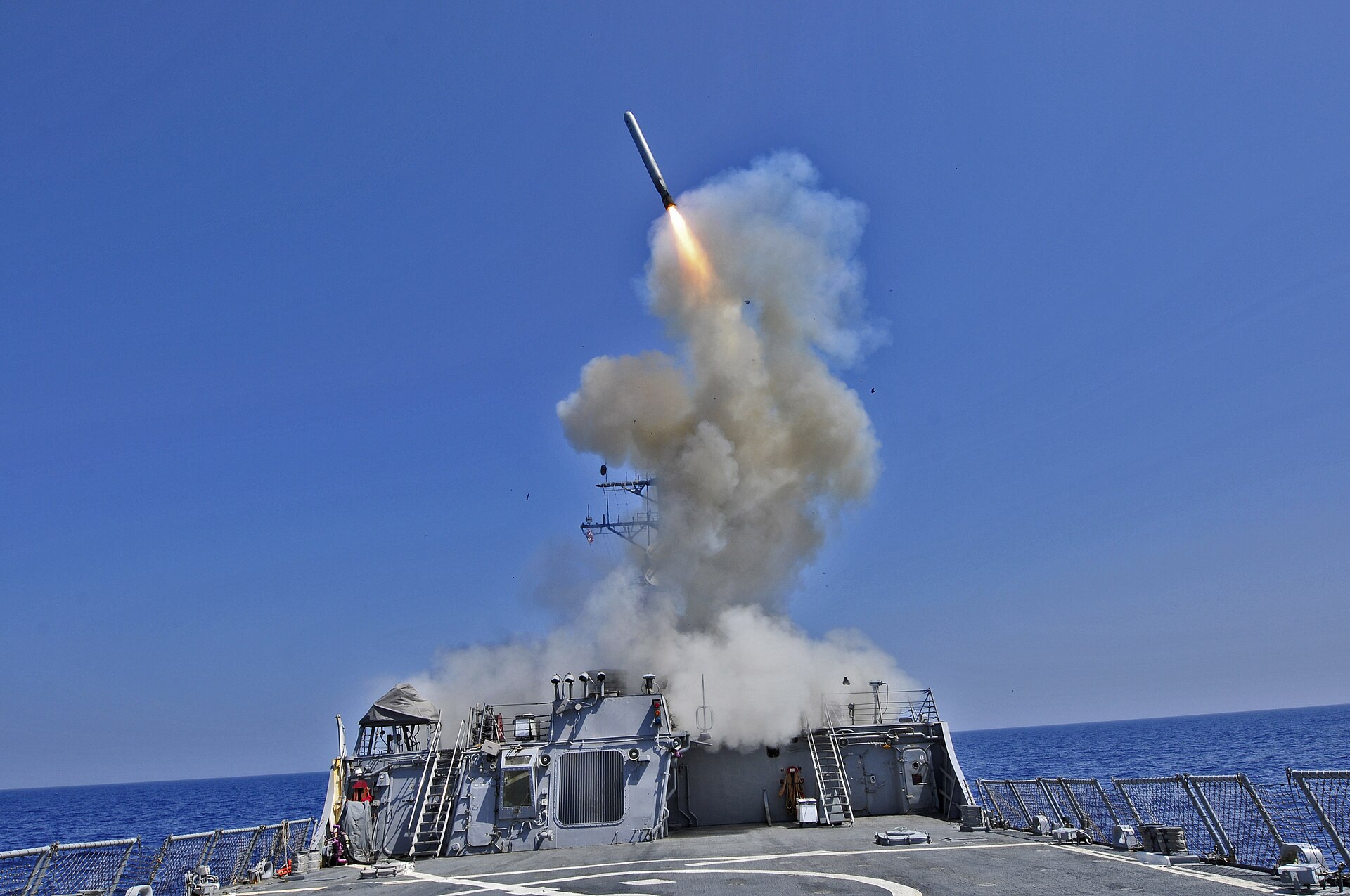
USS Barry DDG-52 launches Tomahawk cruise missile in support of Operation Odyssey Dawn, March 2011
USS Barry (DDG-52) launches a Tomahawk cruise missile in March 2011. CENTCOM has expended more than 1,000 Tomahawks in the Iran campaign — roughly one-third of the prewar stockpile of approximately 3,000 — with the two-wave-per-day tempo accelerating consumption faster than any nightly cadence. Photo: US Navy / Public Domain

How Does July 15 Prove This Is a Pattern?

July 15 was the first confirmed same-day two-wave operation in the renewed campaign, and July 20 replicated its structure with striking precision. On July 15, the first wave launched at 6:00 a.m. ET — a 90-minute daylight strike on Greater Tunb Island, eight hours after the conclusion of the previous night’s operations, according to OANN and Iran International. The second wave followed at 3:00 p.m. ET that same afternoon.

The HOS Daily Brief

The Middle East briefing 3,000+ readers start their day with.

One email. Every weekday morning. Free.

On July 20, Night Nine concluded at approximately 10 p.m. ET on July 19, and the second wave launched at 3 p.m. ET the following afternoon — the identical time slot used five days earlier. The consistency of the 3 p.m. window suggests deliberate operational cadence rather than an improvised add-on, and two data points within five days constitute a pattern rather than an anomaly.

For the first nine nights of the renewed campaign — from July 11 through July 19 — US forces struck once per day, beginning each operation in the evening. That nightly cadence gave Iranian commanders a predictable window to plan around, to cycle air defences, to move mobile launchers, to repair communications nodes damaged in the previous strike. A second daily wave eliminates that recovery period, which erodes planning margins for counter-operations already running on degraded infrastructure after nine consecutive nights of strikes against command centres and radar sites.

Night Nine: Eight Cities in Three Hours

The ninth consecutive night of strikes launched at 7 p.m. ET on July 19 and concluded at 10 p.m. ET — a roughly three-hour operation that CENTCOM described as the “ninth consecutive evening of strikes against Iran.” Targets included military command centres, air defence and coastal surveillance sites, maritime capabilities, missile and drone launch sites, and communications networks across eight cities: Tabriz, Chabahar, Konarak, Bandar Mahshahr, Bandar Imam Khomeini, Jask, Sirik, and Bushehr, according to CENTCOM via multiple outlets.

The geographic spread — from Tabriz in Iran’s northwest to Chabahar on the Gulf of Oman and Bushehr on the Persian Gulf coast — indicates CENTCOM is maintaining simultaneous pressure across Iran’s entire southern and western military infrastructure rather than concentrating on a single theatre. The eight-city target set was the broadest single-evening scope of the campaign to date.

Iran’s Bonji desalination plant was destroyed in the strikes, cutting water to approximately 10,000 people across 20 villages, IRNA reported. A second desalination plant on Qeshm Island was also damaged. Separately, Kuwait’s desalination infrastructure was struck for the second consecutive day, according to Just Security and Al Jazeera — though that damage came from IRGC operations, not US strikes.

Iran also claimed that the under-construction Darkhovin Nuclear Power Plant was hit by US forces, calling it a “terrorist and criminal act,” according to nation.com.pk. The IAEA confirmed no nuclear material was present at the facility. Two of the 17 US service members killed in the conflict died in an Iranian strike on Jordan on July 18, with a third killed in Iraq on July 19 during a controlled detonation of an Iranian drone, CENTCOM and NPR confirmed.

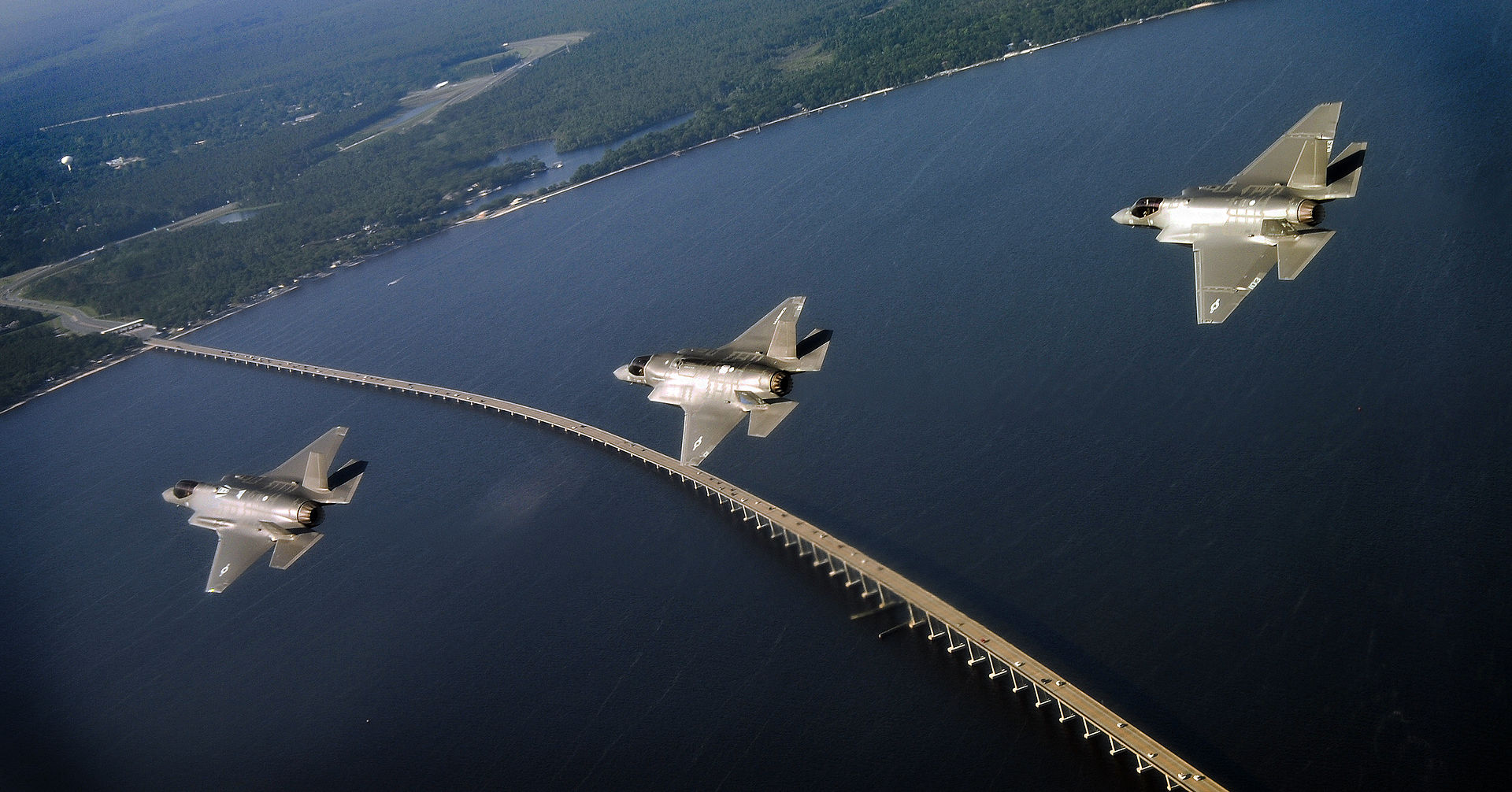
Three F-35 Lightning II variants — F-35A, F-35B, and F-35C — in formation flight near Eglin Air Force Base, May 2014
F-35A, F-35B, and F-35C Lightning II variants in formation near Eglin Air Force Base, May 2014. Night Nine’s eight-city target set — from Tabriz in Iran’s northwest to Chabahar on the Gulf of Oman — required simultaneous platform coordination across a strike package operating from carriers, land bases, and long-range bombers. The US has added F-35 jets from Britain to the theatre as part of a broader force buildup. Photo: USAF / Public Domain

How Many Waves Is the IRGC Running?

The IRGC conducted three separate waves of Operation Nasr-2 on July 20, pushing the total count to 23 by evening, according to PressTV and WANA. Wave 21 targeted the al-Azraq air base area in Jordan, with the IRGC claiming destruction of “20 hangars used to station troops of the child-killing US military,” per PressTV. The IRGC also claimed Jordanian public and armed forces personnel had provided intelligence for the strikes — a claim unverified by US or Jordanian sources.

Wave 22 hit Ali al-Salem Air Base in Kuwait, with the IRGC claiming an early warning radar was “completely destroyed” alongside aviation equipment, a spare-parts hangar, and an MQ-9 drone shelter, according to PressTV. Wave 23 struck Al Sakhir Air Base and Salman Port in Bahrain — targeting TF-59 unmanned surface vessels — as well as Arifjan Base in Kuwait, according to WANA. Major General Ali Abdullahi of the IRGC warned that “any further American aggression would receive a decisive and devastating response,” according to nation.com.pk.

Both sides are now running simultaneous multi-wave operation sequences — CENTCOM with its confirmed two-wave days and the IRGC with designated operations across at least four countries hosting US bases. As of July 19, Operation Nasr-2 had reached its 20th wave and the parallel Operation Saeqeh had entered its 14th and 15th phases, according to PressTV — meaning the IRGC added three Nasr-2 waves in a single day on July 20, a pace consistent with the targeting pattern visible since Wave Nineteen. IRNA also reported Iranian missile launches from Lorestan province toward “enemy targets” following Night Nine.

But the IRGC’s operational volume masks a sharp decline in capacity. Ballistic missile launch rates have fallen approximately 92 per cent from the first day of the war — from 480 launches to roughly 40 — and drone launch rates have dropped by a similar margin, from 720 to approximately 60, according to analysis by AJ Jaff at PoliticsToday.org. The numbered, designated wave structure suggests pre-planned phase sequencing rather than the immediate reactive salvos of the campaign’s opening, a shift from overwhelming force to distributed harassment. The IRGC also claimed two oil tankers “exploded and were forced to cease movement” while attempting to transit Hormuz via an Iran-prohibited route, according to Just Security and Al Jazeera.

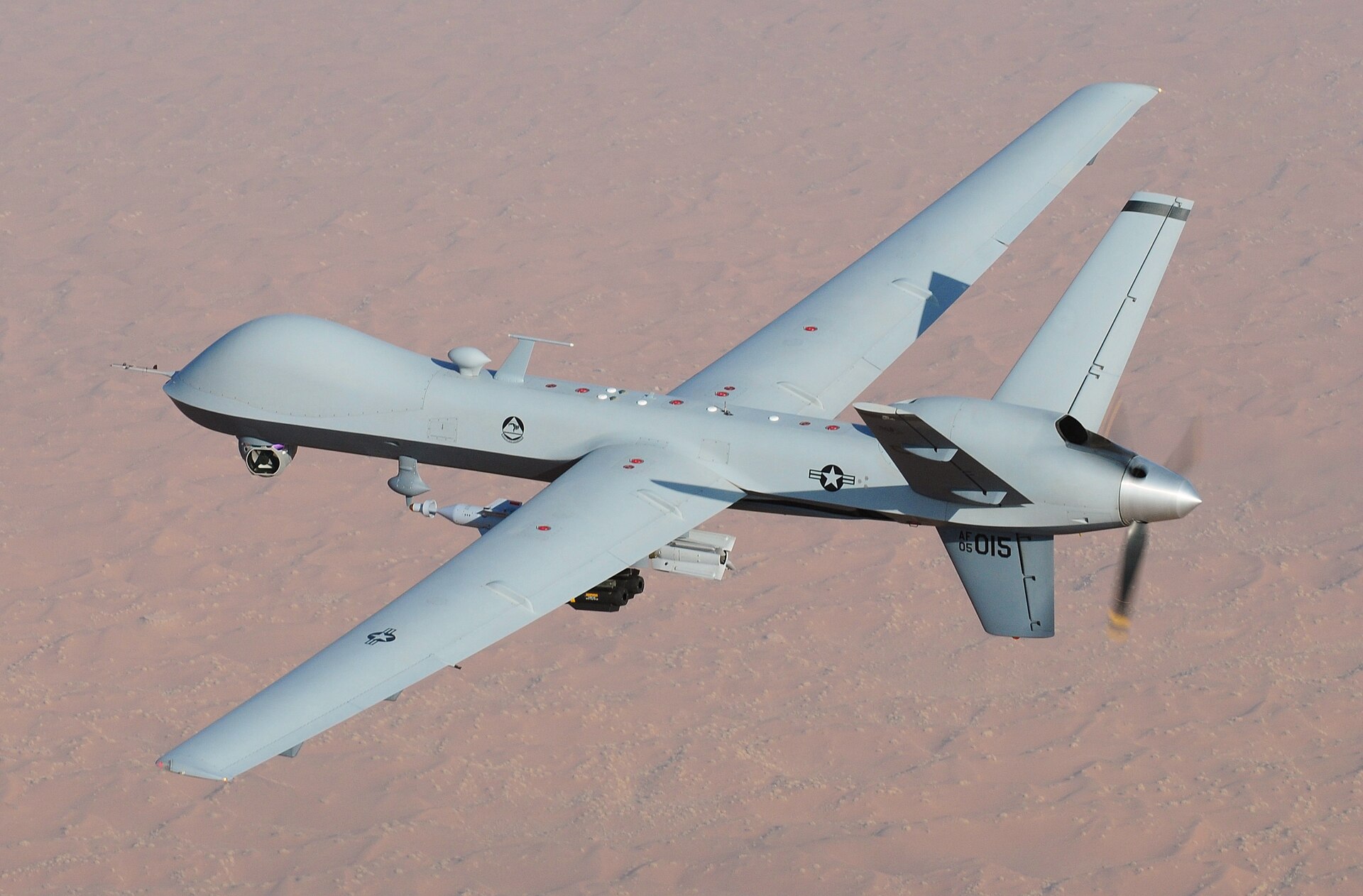
US Air Force MQ-9 Reaper unmanned aerial vehicle in flight over desert terrain
A US Air Force MQ-9 Reaper in flight. The IRGC’s Wave 22 on July 20 specifically claimed destruction of an MQ-9 drone shelter at Ali al-Salem Air Base in Kuwait — one of the named target types in CENTCOM’s own public framing of why US forces are striking Iran. Drone launch rates from the IRGC side have fallen approximately 92 per cent since the campaign’s opening day. Photo: USAF / Public Domain

What Does Continuous Pressure Cost in Missiles?

The accelerated tempo raises a sustainability question that both an unnamed US official and a former State Department adviser flagged independently. The unnamed official warned that “the U.S. is planning for a wider war” but cautioned that “dwindling stockpiles” of munitions constrain sustainability, according to Just Security. The numbers support the concern: more than 1,000 Tomahawk cruise missiles have been expended from a prewar stockpile of approximately 3,000, around 1,100 Joint Air-to-Surface Standoff Missiles from roughly 4,000, and between 130 and 250 SM-3 interceptors from 410, according to CSIS estimates reported by Al Jazeera.

The Patriot interceptor situation is the most consequential for the Gulf. Between 1,060 and 1,430 have been consumed from a prewar stock of 2,330 — between 45 and 61 per cent — and the same system that Saudi Arabia depends on to defend its own cities draws from this production line. The US has added F-16 jets from Germany and F-35 jets from Britain to the theatre as part of a broader force buildup, according to Just Security, but airframes without munitions are a diminishing asset in a campaign that now runs twice a day.

“These are weapons that might be needed for any military contingency with China. Depleting the global stock of Patriot interceptors in the Iran War leaves fewer such interceptors for Ukraine.”

— Brian Finucane, International Crisis Group and former State Department adviser, speaking to Al Jazeera on July 15

CSIS estimates that rebuilding to prewar stockpile levels will take eight months to five years depending on the system, according to Al Jazeera. A continuous-pressure campaign burns through munitions faster than a nightly cadence by definition, and the question of what defends the Gulf when interceptor stocks run low is not one the rebuild timeline can answer within this conflict’s operational horizon.

Iran Rejects Ceasefire as Both Sides Accelerate

Iran’s Mohammad Marandi rejected a Qatar-brokered 10-day ceasefire in terms that left no diplomatic ambiguity: “don’t even think about it,” he said, according to Reuters and Al-Monitor. Deputy Foreign Minister Gharibabadi reinforced the position, stating that Iran “will never start negotiations under any circumstances,” per the same outlets. Iranian state media framed the conflict as an “existential war,” according to the Jerusalem Post — language that rules out the conditional off-ramp language that ordinarily precedes exploratory talks. Qatar’s mediation effort has run into a position that is structural, not tactical.

Hormuz traffic has fallen to approximately 10 ships per day from a baseline of 88, an 89 per cent reduction, according to prior House of Saud reporting, with Brent crude around $87-88 per barrel on July 20. The IRGC formally declared Hormuz closed on July 11, and the Houthis have since declared a maritime blockade of Bab al-Mandeb, closing both of Saudi Arabia’s maritime corridors simultaneously. The tempo acceleration on both sides is occurring against a backdrop where one party has explicitly stated it will not negotiate, and the waterway that carries the region’s commerce is running at a fraction of capacity with no timeline for reopening. The target set expanded further on the same night: Night Ten severed Bandar Abbas by road, rail, and sea, striking the submarine facility that coordinates IRGC naval enforcement of Hormuz and destroying at least six highway bridges across Hormozgan province.

The Houthi blockade declaration was itself triggered by a Saudi strike on Sanaa International Airport on July 13 that grounded a Mahan Air flight carrying a Houthi delegation — a strike Saudi Arabia made without issuing any public acknowledgment of either the offensive action or the six-missile Abha retaliation that followed hours later.

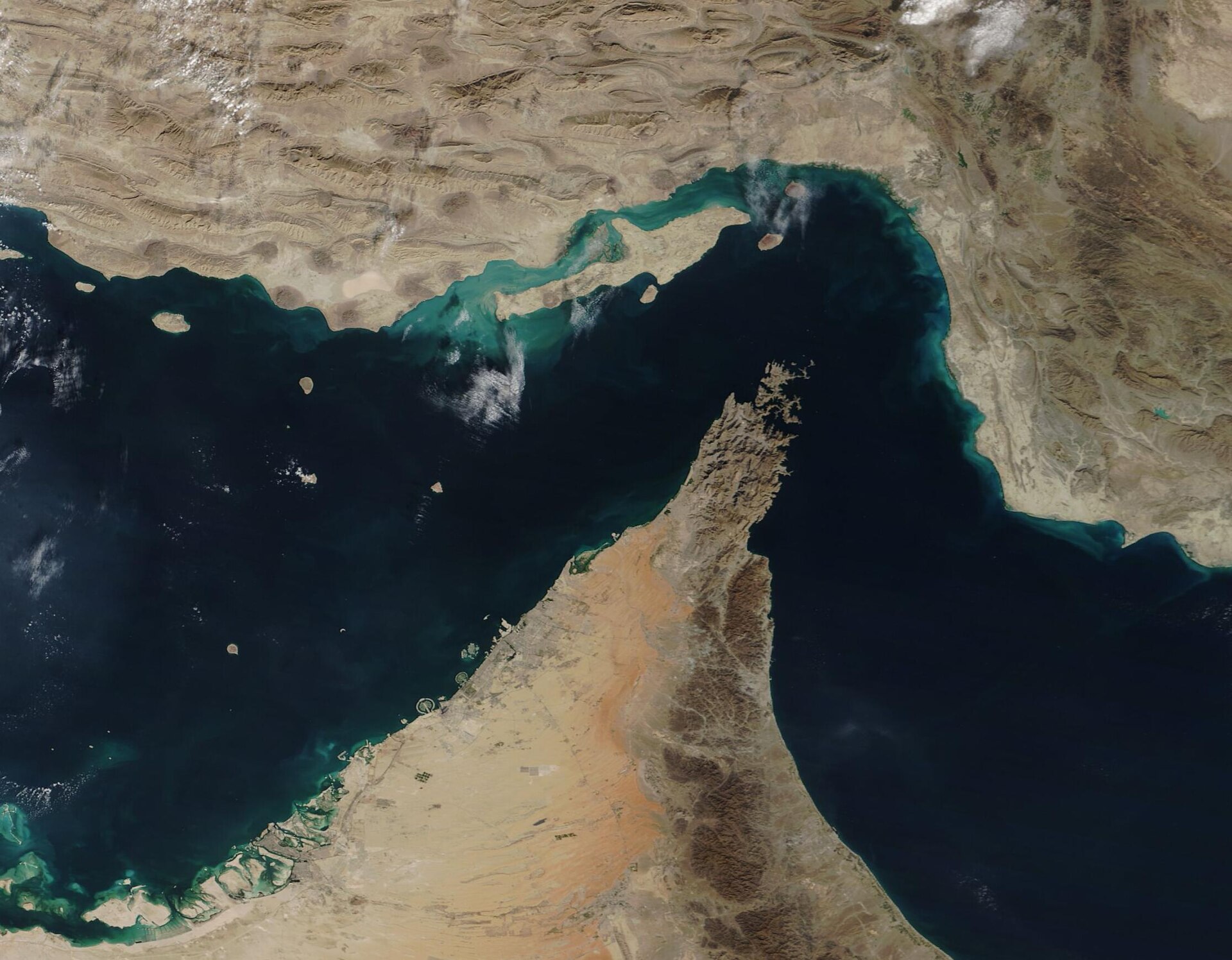
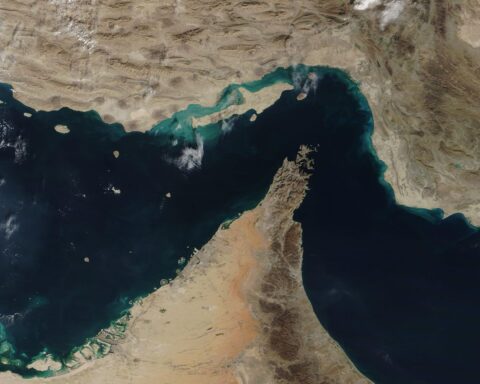
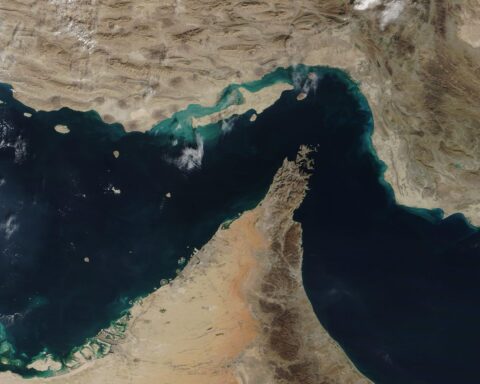
MODIS satellite image of the Strait of Hormuz and Persian Gulf, December 2020, showing the narrow chokepoint between Iran and Oman
The Strait of Hormuz as seen by NASA’s MODIS sensor, December 2020. The strait’s navigable width narrows to approximately 33 kilometres at its tightest point. Traffic has fallen to roughly 10 ships per day from a baseline of 88 — an 89 per cent reduction — since the IRGC formally declared it closed on July 11. Iran has now rejected a Qatar-brokered ceasefire, and both corridors Saudi Arabia depends on for maritime trade remain interdicted. Photo: NASA GSFC MODIS Land Rapid Response Team / Public Domain

Background and Context

The renewed US air campaign against Iran began on July 11, 2026, after Iran struck three commercial vessels that bypassed Iran’s preapproved Hormuz transit route. CENTCOM initially operated on a nightly cadence — one strike wave per evening — for the campaign’s first four nights before July 15 broke the pattern with two waves in a single day. Night Eight was described by CENTCOM as part of a “weekend surge,” and Night Nine’s eight-city scope represented the broadest single-evening target set of the campaign to date.

The IRGC has struck Prince Sultan Air Base three times since the conflict began, and PAC-3 interceptor stocks at PSAB stand at 400 of an original 2,800 — 86 per cent depleted, according to prior House of Saud reporting. The Fattah-2 missile, with a range of approximately 800-850 kilometres, covers PSAB from Iranian launch positions. Both the interceptor depletion rate and the double-wave tempo now run in the same direction.

Frequently Asked Questions

Has CENTCOM officially described its tempo as “continuous pressure”?

No. CENTCOM has not used the phrase “continuous pressure” or formally announced a departure from the nightly cadence. The shift is observable from the operational record — two confirmed same-day two-wave days on July 15 and July 20 within a ten-day campaign — but the command has characterised individual operations without defining an overarching tempo doctrine. The closest official framing was Night Eight’s “weekend surge” language, which implied acceleration without establishing a new permanent baseline.

What is the difference between IRGC Operation Nasr-2 and Operation Saeqeh?

Nasr-2 and Saeqeh are two parallel IRGC operation designations running simultaneously. Nasr-2, which reached wave 23 by July 20, has primarily targeted US military bases across Jordan, Kuwait, Bahrain, and Qatar with ballistic missiles and drones. Saeqeh, which entered its 14th and 15th phases by July 19 according to PressTV, appears to target different objective sets, though the IRGC has not publicly detailed the distinction between the two operations’ target categories. The numbered wave structure in both suggests pre-planned phase lines rather than reactive salvos.

How does the two-wave tempo affect Saudi Arabia specifically?

The compressed US strike tempo forces the IRGC to distribute its retaliatory capacity across more response windows, but each counter-strike cycle draws down Saudi Arabia’s own defensive reserves — interceptors that cannot be replenished on any timeline shorter than months. Faster CENTCOM operations mean faster IRGC responses, and Prince Sultan Air Base, already struck three times, sits within Fattah-2 range with a shrinking defensive shield that gets thinner with every salvo.
What happened to the Darkhovin Nuclear Power Plant?

Iran claimed that US strikes hit the under-construction Darkhovin Nuclear Power Plant on the Karun River in Khuzestan Province, calling it a “terrorist and criminal act,” according to nation.com.pk. The IAEA confirmed no nuclear material was present at the facility, which remains in early construction phases. Darkhovin is distinct from Iran’s operational Bushehr Nuclear Power Plant — Bushehr was targeted in Night Nine strikes on its perimeter but its reactor sustained no damage, according to earlier reporting.

Can the US sustain a continuous-pressure campaign with current munitions?

The sustainability question is acute. Lockheed Martin produces approximately 650 PAC-3 MSE interceptors per year for global demand — split between US forces, NATO allies, and foreign military sales customers including Saudi Arabia, Japan, and South Korea — according to CSIS production capacity assessments reported by Al Jazeera. A continuous-pressure campaign consumes more per day than the nightly cadence by definition, and the unnamed US official’s warning about “dwindling stockpiles” was paired with an acknowledgement that Washington is simultaneously “planning for a wider war,” according to Just Security. The production bottleneck is not funding but manufacturing capacity, which cannot be meaningfully expanded in under two years.

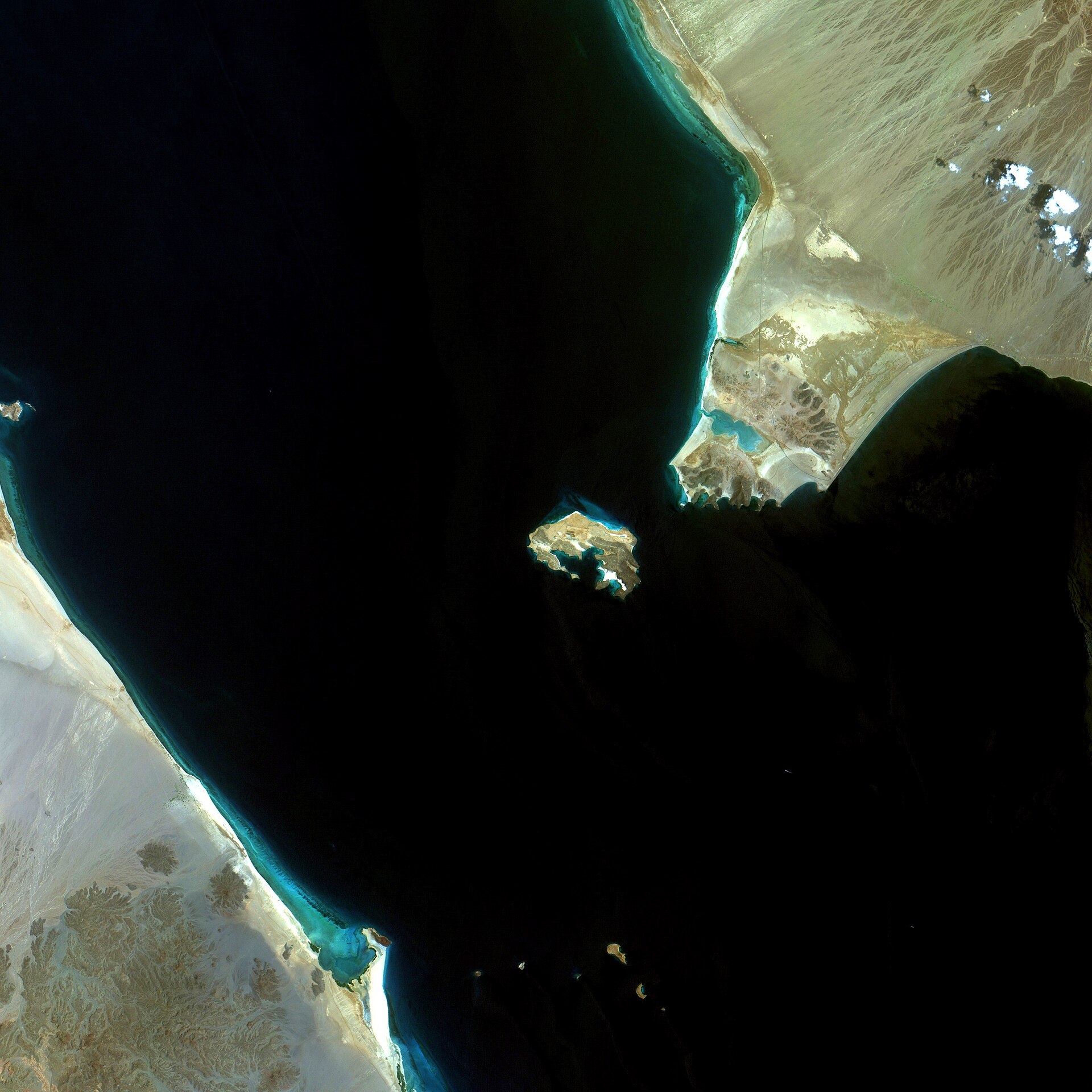
Satellite view of the Bab al-Mandeb strait between Yemen and Djibouti, showing the 32-kilometre choke point through which 12 percent of global trade transits
Previous Story

Houthis Declare Maritime Blockade of Saudi Arabia as Both Sea Lanes Close

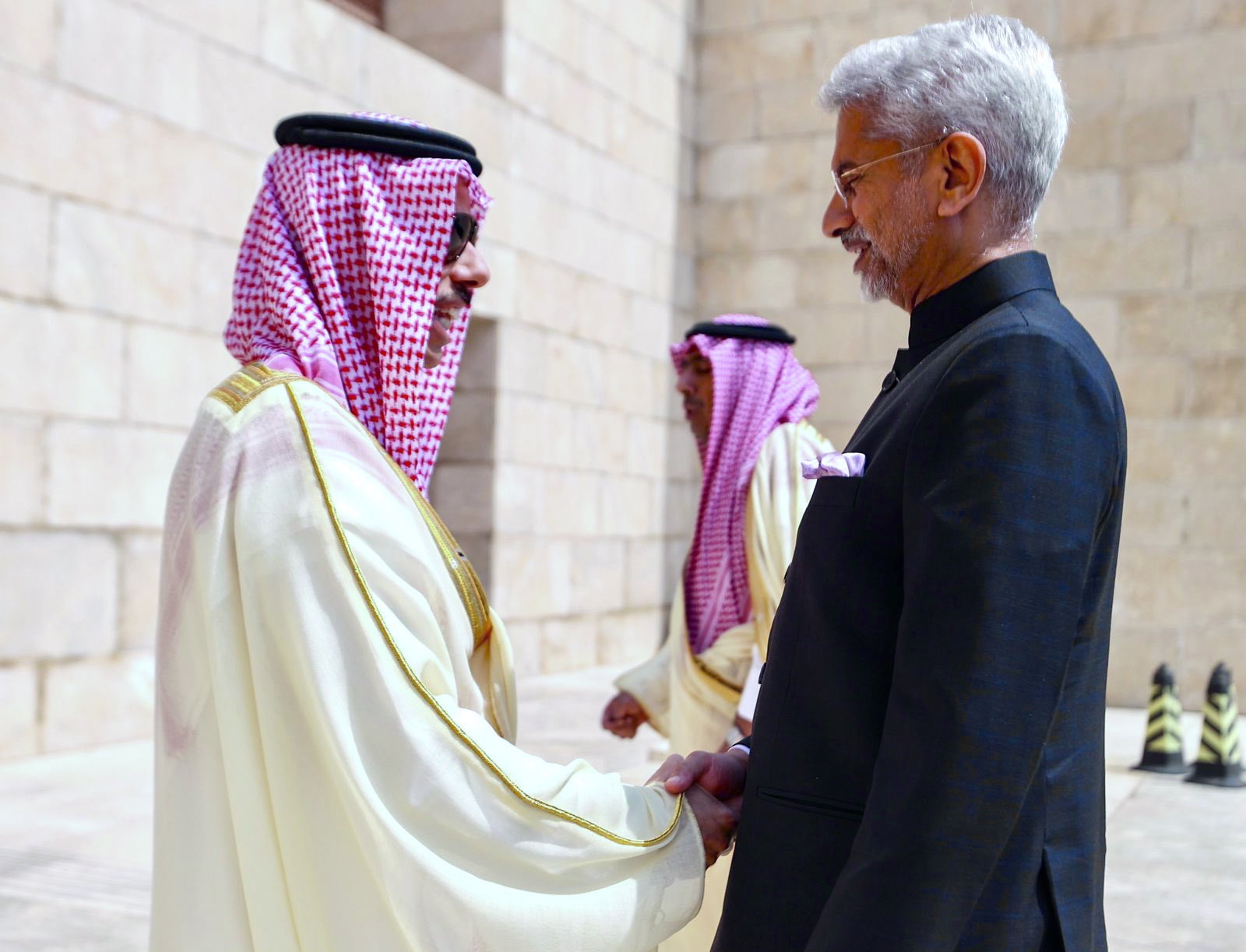
Indian External Affairs Minister S. Jaishankar shakes hands with Saudi Foreign Minister Prince Faisal bin Farhan in Riyadh, September 2022
Next Story

Doval Arrived in Riyadh the Day Both Corridors Closed

Latest from Iran War

The HOS Daily Brief

The Middle East briefing 3,000+ readers start their day with.

One email. Every weekday morning. Free.

Something went wrong. Please try again.