
REPLACEMENT MADE
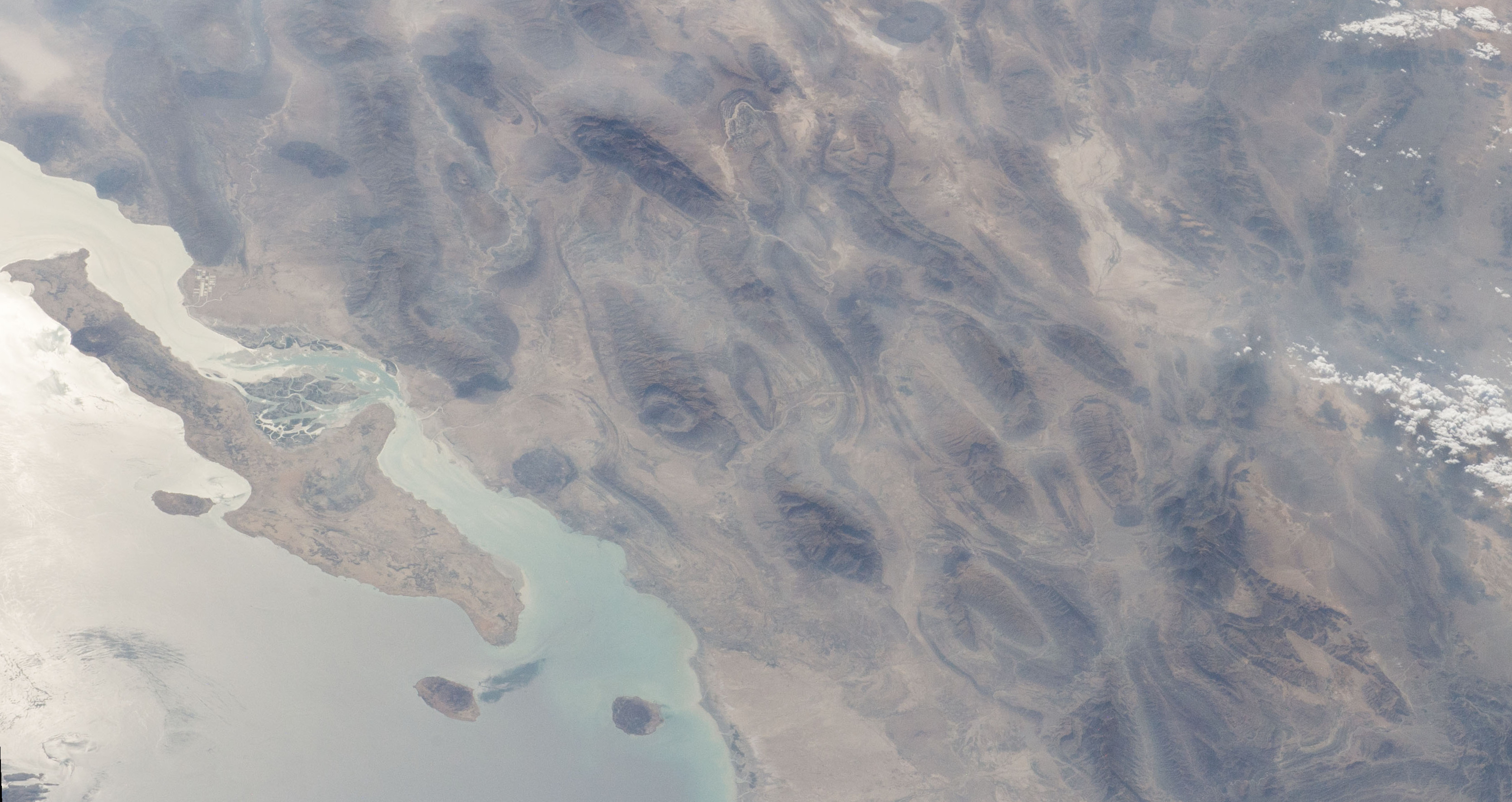
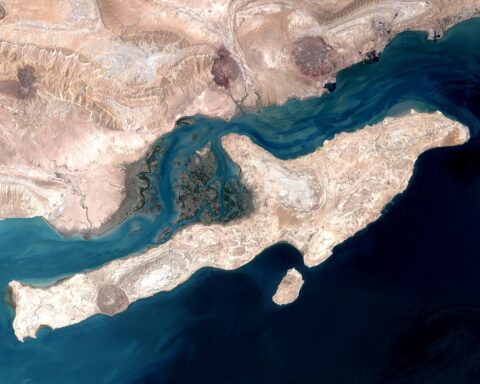
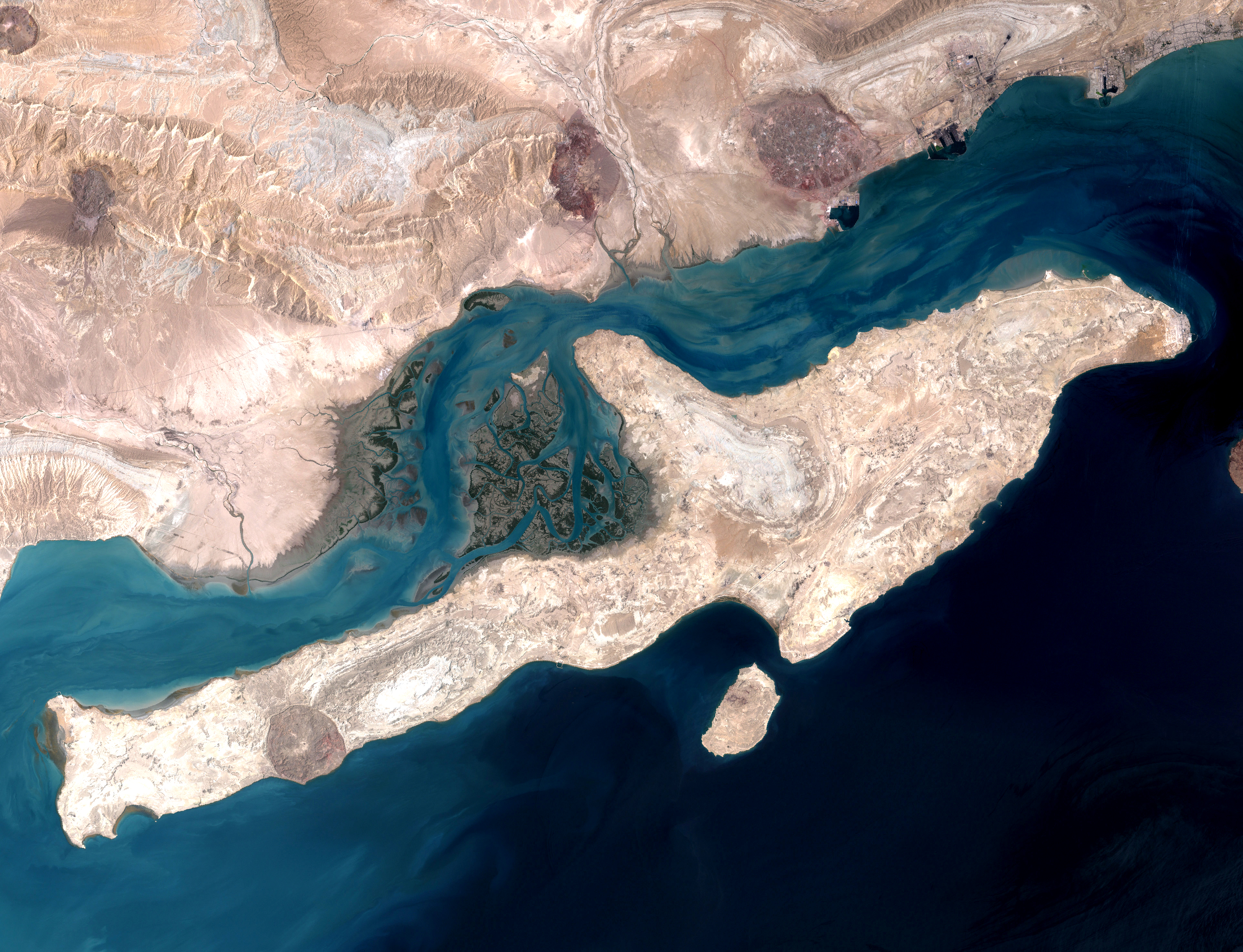
DHAHRAN — Iran has converted the Strait of Hormuz from a contested chokepoint into a revenue-generating toll corridor, and Saudi Arabia — the single largest crude exporter transiting the strait — has no role in the arrangement. The Persian Gulf Strait Authority (PGSA), formally constituted on May 5, 2026, collects approximately $1 per barrel from vessels moving through a five-nautical-mile corridor between Qeshm and Larak islands that lies entirely within Iranian territorial waters. At pre-war Saudi export volumes of 5.5 million barrels per day through Hormuz, the implied annual cost to Saudi crude alone is approximately $2 billion.
Iran’s parliament codified the legal framework on March 30-31, 2026 — before ceasefire talks began. The US Treasury sanctioned the PGSA on May 27, designating it an IRGC front. The MOU under negotiation between Washington and Tehran does not require the PGSA’s dissolution. Saudi Arabia’s Ministry of Foreign Affairs has made zero public statements on the toll mechanism throughout the war. The legal, financial, and structural dimensions of that fee regime extend well beyond the ceasefire window — and may outlast the conflict that produced it. On June 14, the day the signing was originally scheduled, Iran’s Foreign Minister Araghchi confirmed that the semantic gap between “tolls” and “service fees” in the draft text is not a drafting oversight — it is Iran’s explicit deal condition.
Table of Contents
- The Toll Before the Treaty
- How Did Iran Build a Customs Authority Over an International Strait?
- What Does the PGSA Fee Cost Saudi Arabia?
- The UNCLOS Exception Iran Is Exploiting
- Why Has Trump Called the Hormuz Toll a ‘Beautiful Thing’?
- The Bilateral Exemption Structure
- Can Saudi Arabia Bypass the Toll?
- The Ceasefire That Leaves the Meter Running
- FAQ: Iran’s Hormuz Toll and Saudi Arabia
The Toll Before the Treaty
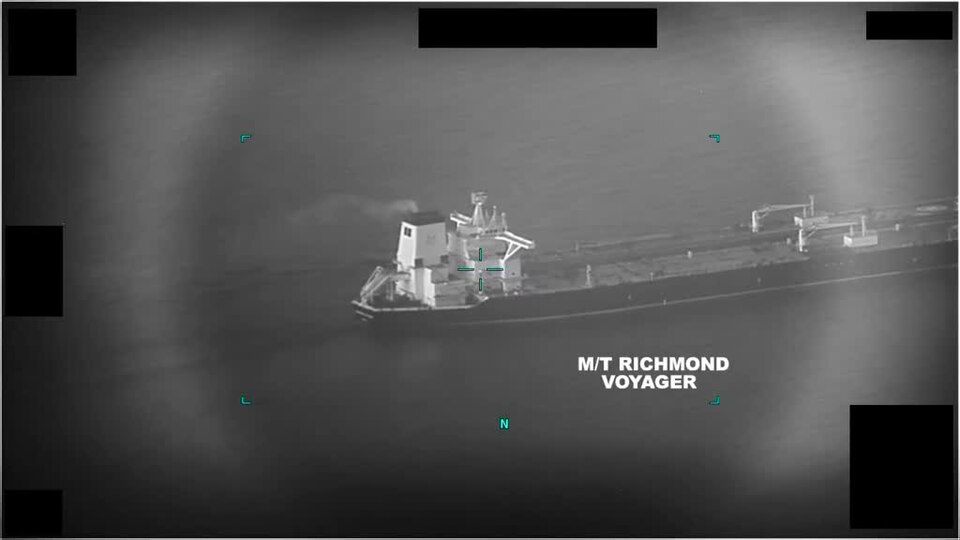
The IRGC began collecting ad hoc fees from commercial vessels transiting Hormuz in mid-March 2026, within days of the strait’s effective closure on March 4. The charges were irregular — amounts varied, collection was enforced by naval interdiction, and payments were routed through intermediaries with no formal invoicing structure. By late March, what had been extortion under threat of seizure began acquiring the surface features of administration.
Iran’s Majlis passed the “Strait of Hormuz Management Plan” on March 30-31, 2026, six days before formal ceasefire talks opened on April 7, according to GlobalSecurity.org and PressTV. The legislation described Tehran’s “sovereignty, dominance and supervision” over the waterway and authorized a permanent fee-collection mechanism. The PGSA was formally constituted on May 5, as reported by the Maritime Executive. It became operationally active on May 18. The first $2 million deposit — the maximum per-vessel fee for a single VLCC transit — landed in Iran’s Central Bank on April 23, three days after the initial ceasefire announcement, according to Fortune and Iran International.
The sequencing is worth reading carefully. The Majlis passed the law before ceasefire talks. The PGSA collected revenue before it was formally constituted. The institution was operationally active before the US sanctioned it. Each step preceded the diplomatic event that might have constrained it. By the time OFAC placed the PGSA on the SDN List on May 27, calling it an IRGC front that “illegally attempts to regulate transit and collect fees,” the toll had been running for over two months. Non-US shippers — Chinese, Indian, and Gulf Arab operators routing payments through third-country intermediaries — continued paying, according to a June 1 Mondaq sanctions update. Treasury Secretary Scott Bessent declared the US would “aggressively target any actors involved — directly or indirectly — in facilitating tolls.” The declaration has not stopped the payments.
The Middle East briefing 3,000+ readers start their day with.
One email. Every weekday morning. Free.
The distinction between the IRGC’s March extortion and the PGSA’s May fee collection is procedural, not functional. The revenue flows to the same state apparatus. The IRGC redirected vessel traffic into the five-nautical-mile corridor between Qeshm and Larak islands — entirely within Iranian territorial waters — to ensure that every transit constituted entry into Iranian jurisdiction, as documented by Windward.ai and Iran International. Vessels must submit a Vessel Information Declaration to info@PGSA.ir disclosing ownership, insurance, crew, cargo, and routing before a transit permit is issued. This is a customs declaration to an authority the US has formally designated as illegal.
How Did Iran Build a Customs Authority Over an International Strait?
Iran built the PGSA by layering domestic legislation over a pre-existing military chokepoint, then rebranding the result as regulatory governance. The process followed three steps: coercive control of the transit lane, parliamentary codification of that control, and diplomatic reframing of the fee as a service rather than a toll.
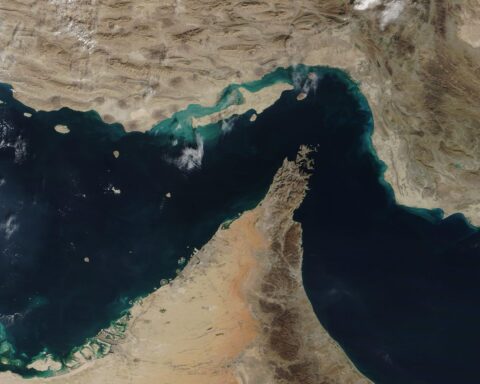
The coercive phase ran from early March through late April 2026. The IRGC’s closure of Hormuz on March 4 was a kinetic act. But the subsequent redirection of commercial traffic into the Qeshm-Larak corridor was an administrative one — it created a funnel that placed every transiting vessel inside Iranian territorial waters, regardless of the vessel’s intended routing. Under Iran’s interpretation of its own sovereignty (Iran has not ratified UNCLOS and submitted an interpretative declaration on straits), any vessel in that corridor is subject to Iranian domestic law. The IRGC collected fees on that basis before any parliamentary authorization existed.
The codification phase formalized what the IRGC was already doing. The Majlis bill created the statutory authority for fee collection, and the subsequent constitution of the PGSA gave it an institutional identity. The PGSA claims jurisdiction over a maritime corridor stretching from Kuh-e Mubarak (Iran) to Fujairah (UAE), and from Qeshm Island to Umm Al-Quwain, per Maritime Executive reporting. This claim encompasses the entirety of the navigable strait.
The rebranding phase is the most consequential for the MOU. On May 25, 2026, Iranian Foreign Ministry Spokesman Esmaeil Baghaei told Euronews that the fees cover “navigational services in addition to measures necessary to protect the environment of the Strait of Hormuz, the Persian Gulf and the Sea of Oman.” The word “toll” does not appear in Baghaei’s formulation. The word “services” does. This distinction is not semantic — it maps directly onto a specific provision of international maritime law that Iran is attempting to exploit.
The final layer involves Oman. In May 2026, Iran and Oman entered talks on a permanent joint Hormuz toll system. Iranian Ambassador to France Mohammad Amin-Nejad told Bloomberg on May 21: “Those who wish to benefit from this traffic must also pay their share. The system will be transparent.” If Oman co-signs a bilateral management arrangement, the toll acquires the structural form of an international agreement rather than a unilateral imposition. A bilateral framework is harder to dismiss than a decree. PressTV reported on May 22 that the talks were advancing toward a formal protocol. The full mechanics of how the MOU’s “toll” prohibition was written to exclude Iran’s “service fee” architecture — and how Oman’s co-management role gives that architecture bilateral legitimacy — are analyzed in The MOU Banned Tolls and Built the Fee Collector.
What Does the PGSA Fee Cost Saudi Arabia?
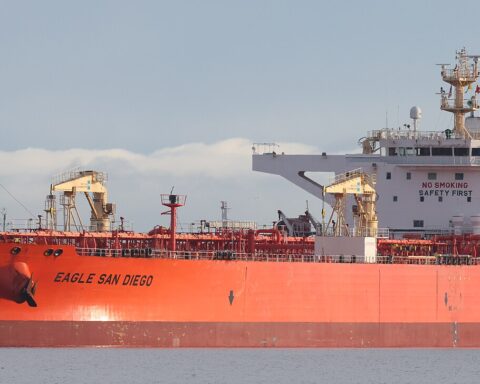
Saudi Arabia ships approximately 5.5 million barrels per day through the Strait of Hormuz in peacetime, representing roughly 38% of all crude oil transiting the strait, according to the US Energy Information Administration and the International Energy Agency. At the PGSA’s reported fee of approximately $1 per barrel, Saudi crude alone carries an implied toll liability of $5.5 million per day, or approximately $2 billion per year.
That figure assumes a return to full pre-war transit volumes. Current volumes are lower — the war, the IRGC corridor restriction, and the East-West Pipeline diversion have all reduced Saudi Hormuz throughput. But the toll’s design is volumetric: it scales with barrels moved, not with political conditions. Any normalization of Hormuz traffic under the PGSA fee structure reactivates the full cost.
Iran International’s April 14, 2026 analysis reality-checked inflated revenue projections (some outlets had quoted $40-100 billion annually) and concluded that realistic total annual toll revenue across all vessels clusters between $1-2 billion. Saudi Arabia’s share of that total is disproportionate. No other single state moves comparable volumes through Hormuz. The UAE ships roughly 2.5 million bpd; Iraq roughly 3.3 million bpd (though Iraqi crude has been granted an exemption). Kuwait’s volumes are smaller. Saudi Arabia’s exposure is structurally the largest of any exporter.
The cost compounds beyond the per-barrel fee. Vessels paying the PGSA must submit the Vessel Information Declaration, which discloses cargo composition, routing, ownership structures, and insurance details to Iranian authorities. For Saudi Aramco cargoes, this means Iranian state entities receive real-time commercial intelligence on Saudi export volumes, destination markets, and contractual arrangements. The information asymmetry may carry a higher long-term cost than the fee itself.
The toll also operates in a pricing environment already hostile to Saudi fiscal stability. Brent crude has traded between $84-89 per barrel in recent sessions — against a Saudi fiscal breakeven estimated at $108-111 per barrel by the IMF and Goldman Sachs. The Brent decline to $89 on deal speculation widened the deficit to $18-23 per barrel. A $1/bbl toll on Hormuz-transiting crude is not catastrophic in isolation, but it lands on an export margin already under severe compression. Aramco’s June 2026 Official Selling Price cut of $6 per barrel for Asian deliveries compounds the pressure.
The UNCLOS Exception Iran Is Exploiting
UNCLOS Part III, Articles 37-44, establishes the transit passage regime for international straits. Article 38 grants all ships the right of transit passage, which “shall not be impeded.” Article 44 provides that “there shall be no suspension of transit passage.” Article 26 prohibits coastal states from levying charges on foreign ships for “mere passage.” No provision of UNCLOS permits a coastal state to charge a per-barrel fee calibrated to cargo volume for transit through a natural international strait.
One exception exists. Article 42 permits coastal states bordering straits to adopt laws and regulations relating to “the safety of navigation and the regulation of maritime traffic” and “the prevention, reduction and control of pollution.” Iran’s rebranding of the toll as a “navigational services” fee is a deliberate attempt to position the PGSA’s revenue collection under Article 42’s regulatory exception — framing a volumetric cargo tax as an environmental and traffic management service.
Abbas Poorhashemi, a legal scholar who published a 2026 analysis on SSRN, examined the legality of imposing tariffs and fees in the Strait of Hormuz and concluded that Iran’s non-UNCLOS status creates a legal gray zone that no tribunal has formally adjudicated. Iran has not ratified UNCLOS. It submitted an interpretative declaration asserting its own territorial waters framework (a twelve-nautical-mile limit) governs Hormuz, and it claims no legal accounting under a treaty it never signed. Just Security’s 2026 legal analysis reached a similar conclusion: “No international tribunal has accepted the principle that a coastal state may charge for transit through a natural international strait on the basis of services rendered.”
The absence of adjudication works in Iran’s favor. No court has ruled against Iran’s fee because no court has jurisdiction Iran recognizes. The International Tribunal for the Law of the Sea (ITLOS), the International Court of Justice (ICJ), and the International Maritime Organization (IMO) have all been silent. The fee operates in formally contested, practically ungoverned legal territory. The MOU’s treatment of this question — whether it refers to “tolls” (which Iran denies exist) or “service fees” (which Iran frames as legitimate) — will determine whether the legal gray zone hardens into a permanent precedent.
The discriminatory application of the fee further complicates the UNCLOS argument. UNCLOS transit passage operates on a non-discrimination principle: all vessels have equal passage rights regardless of flag state, cargo, or destination. The PGSA fee is applied selectively — Iraq, Pakistan, and India have received exemptions, while other states have not. This converts the fee from a universal regulatory charge into a sovereignty instrument that rewards diplomatic compliance. Article 42 does not contemplate a service fee that varies by political relationship.
Why Has Trump Called the Hormuz Toll a ‘Beautiful Thing’?
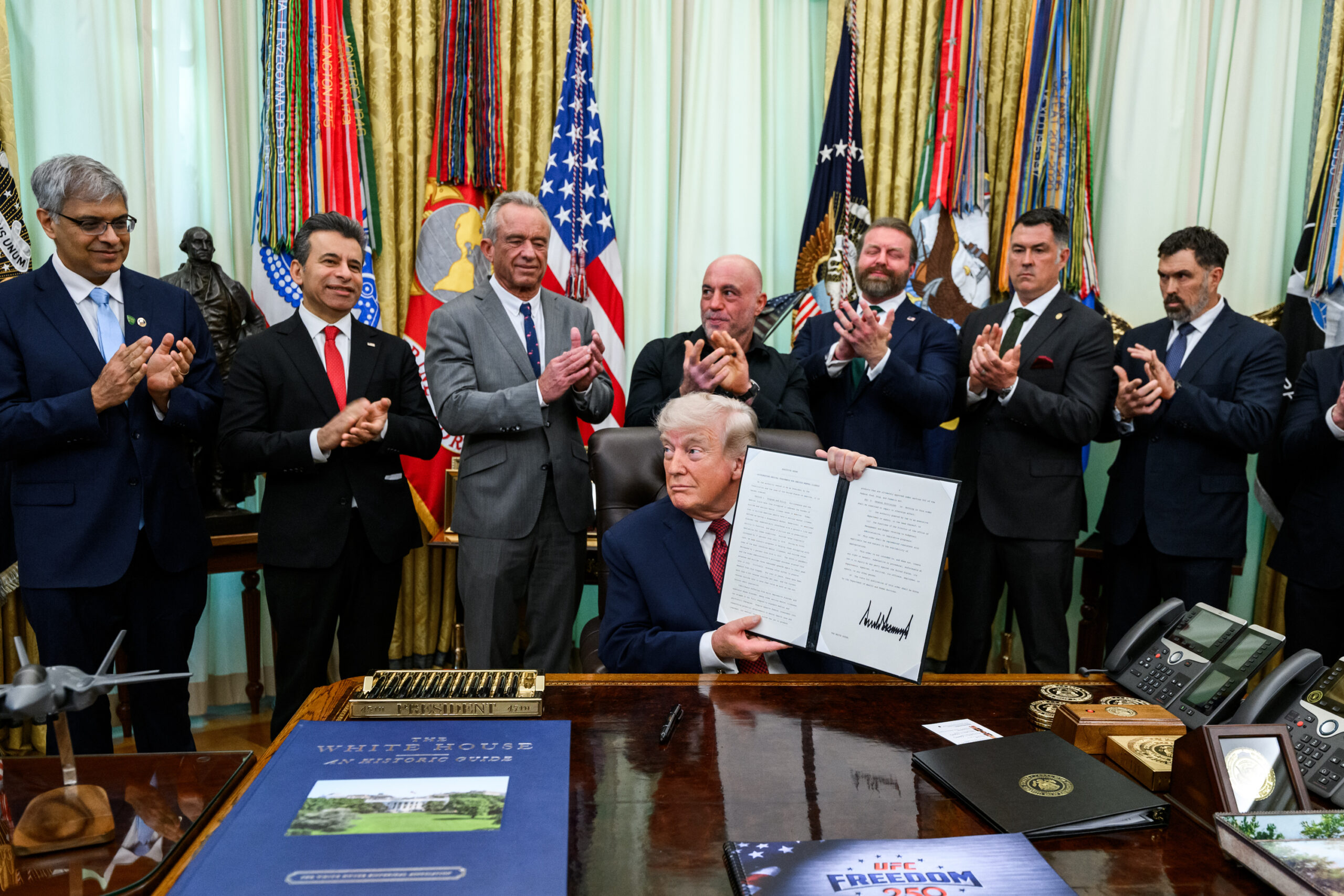
President Trump described the toll arrangement as a potential US-Iran joint venture in an April 8, 2026 interview with ABC News. His exact words: “We’re thinking of doing it as a joint venture. It’s a way of securing it — also securing it from lots of other people. It’s a beautiful thing.” The statement reframed the PGSA fee not as an illegal imposition to be dismantled but as a commercial opportunity to be shared.
Seven weeks later, on May 27, Treasury Secretary Scott Bessent placed the PGSA on the SDN List, calling it an IRGC front. The two positions are contradictory. A “beautiful thing” that is simultaneously an IRGC front subject to maximum sanctions pressure represents an unresolved internal US policy contradiction that the MOU’s current draft language has not addressed.
The MOU’s current draft language, as reported by Cryptobriefing and Korea’s Kyunghyang Shinmun on June 5, refers to Iran forgoing “tolls” during the ceasefire window. But Iran’s renamed “navigational service fees” are framed as legally distinct from tolls. If the MOU prohibits “tolls” while the PGSA continues collecting “service fees,” the semantic distinction launders Iran’s revenue mechanism into treaty-adjacent language. Trump’s “beautiful thing” comment — four words that functionally validate a sovereignty claim regardless of what OFAC designates — has not been publicly retracted or clarified.
Senator Tom Cotton’s formal letter to Bessent demanding sanctions on entities paying Iran for Hormuz transit explicitly named the PGSA toll as the central defect of the MOU framework. Cotton’s position — that the toll’s survival undermines the entire deal’s credibility — has not been answered by the administration. Saudi Arabia was named among the deal’s “approvers” by Trump on June 11 but has offered no public position on the toll or the MOU’s treatment of it.
The Bilateral Exemption Structure
Iran has negotiated toll exemptions with at least three states: Iraq, Pakistan, and India, according to DiscoveryAlert and Al Jazeera reporting. Saudi Arabia is not among them. The exemption structure converts the PGSA fee from a universal transit charge into a discriminatory instrument — states that maintain diplomatic alignment with Tehran receive preferential access to the world’s most critical oil chokepoint.
The exemptions follow a strategic logic. Iraq’s exemption preserves Tehran’s influence over Baghdad’s southern oil exports, which transit Hormuz from Basra terminals. Pakistan’s exemption reflects Islamabad’s role as a mediator in the US-Iran MOU talks — Pakistan’s dual-letter arrangement (PM Sharif’s civilian track and Army Chief Munir’s IRGC back-channel) gives it diplomatic utility that Iran has an interest in preserving. India’s exemption — reportedly a reduced or zero fee for India-flagged tankers — reflects the scale of Indian crude imports through Hormuz and Iran’s interest in maintaining India as a customer for Iranian crude and condensate.
Saudi crude to China has fallen more than 60% since February 2026, per Al Jazeera’s May 21 reporting. Part of that decline reflects the war’s disruption of Hormuz transit. But the exemption structure creates an additional structural disadvantage: Indian-flagged tankers carrying competing crude pass through Hormuz at reduced cost while Saudi cargoes face the full $1/bbl fee. The toll does not merely tax Saudi exports — it taxes them at a rate higher than competitors who have secured bilateral terms with Tehran.
The exemption system also inverts the traditional power dynamic of Hormuz. For decades, the strait’s strategic significance lay in Iran’s ability to close it — a threat that applied to all users equally. The PGSA replaces universal threat with selective taxation. Saudi Arabia has no seat in the negotiations that produced this arrangement, no bilateral channel to Tehran through which to negotiate an exemption, and no diplomatic instrument to contest the fee’s application to its cargoes. Economist Nader Habibi told Al Jazeera on May 21: “There is no doubt that paying Iran is cheaper than a continuous blockade because a sitting tanker bleeds money.” The calculation is correct — but it assumes the payer has a choice. Saudi Arabia has not been offered one.
Can Saudi Arabia Bypass the Toll?
Saudi Arabia’s primary alternative to Hormuz is the East-West Pipeline (Petroline), which runs from Abqaiq in the Eastern Province to the Red Sea port of Yanbu. The pipeline is operating at approximately 7 million barrels per day capacity, according to IEA data and Fortune’s March 2026 reporting. But Saudi total export capacity exceeds the pipeline’s throughput. Residual volumes of 1-3 million bpd still require either Hormuz transit or face stranding at Eastern Province terminals.
The Yanbu alternative carries its own transit risk. Approximately 70-75% of Yanbu-loaded cargoes destined for Asian markets must transit the Bab el-Mandeb strait, which remains under Houthi interdiction, according to the Observer Research Foundation. The bypass routes through a second blockade zone. Cargoes routed westward through the Suez Canal to European markets avoid Bab el-Mandeb but reach lower-margin destinations at a time when Aramco has already cut OSPs by $6-10 per barrel for European and Mediterranean deliveries.
A capacity expansion of the East-West Pipeline sufficient to eliminate Saudi Hormuz dependency would require years of construction and tens of billions in capital expenditure — resources constrained by the war’s fiscal impact. Saudi Arabia ran a Q1 2026 deficit equal to 76% of its full-year budget projection, per Goldman Sachs estimates. Sadara’s $3.7 billion debt grace period expires June 15, creating an immediate capital call on Aramco. PIF cash reserves have dropped to $15 billion, a six-year low. The infrastructure investment required to bypass Hormuz permanently is not available under current fiscal conditions.
A third option — diplomatic negotiation with Tehran for an exemption comparable to those granted to Iraq, Pakistan, and India — requires a bilateral channel that does not exist. Saudi Arabia maintains no direct diplomatic relationship with Iran sufficient to negotiate commercial transit terms. The Pakistan back-channel, the Oman mediation track, and the Qatar intermediary channel all exclude Saudi participation in their current configurations. Riyadh cannot negotiate an exemption to a fee imposed by a state it cannot contact through any formal diplomatic instrument.
The Ceasefire That Leaves the Meter Running
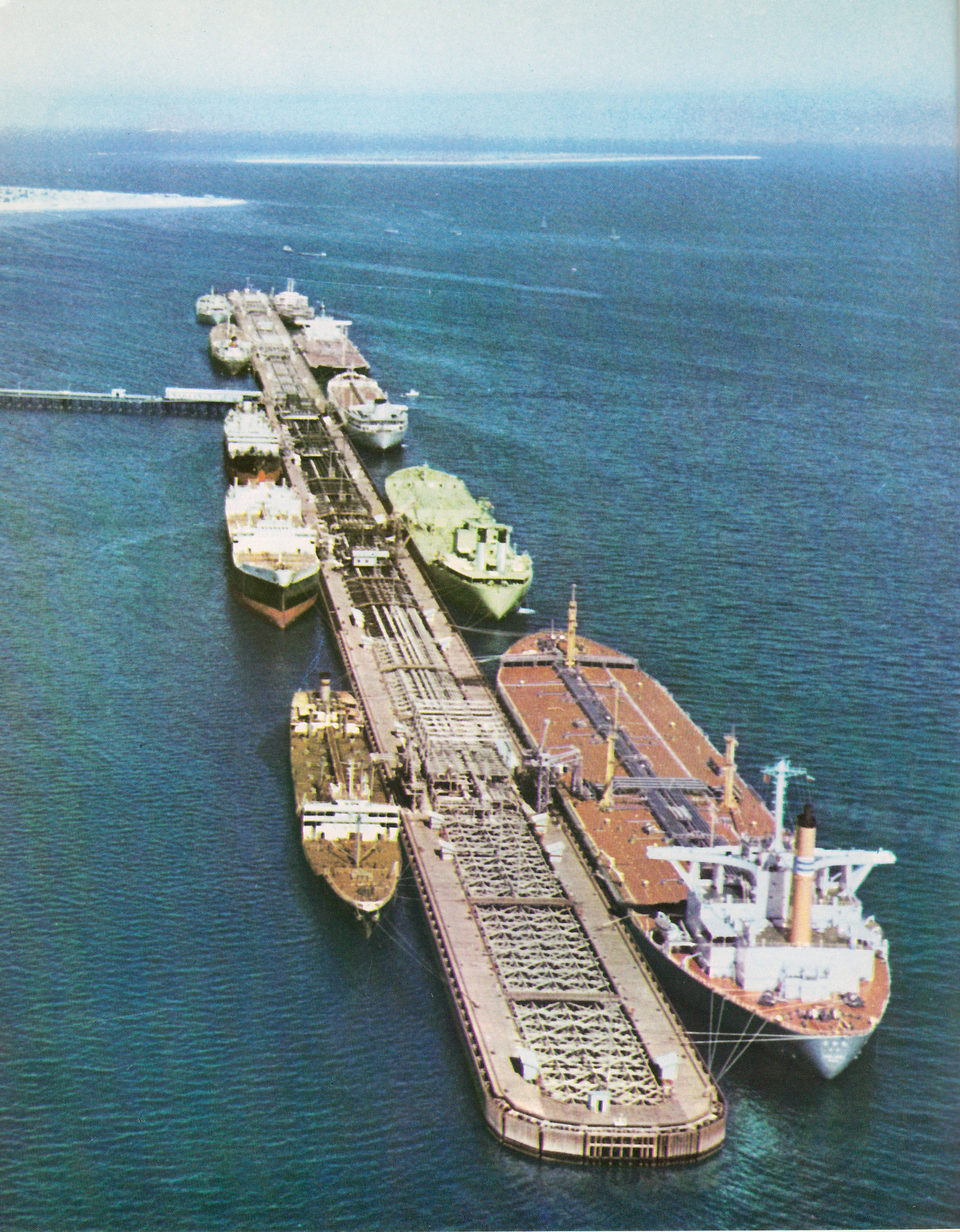
The permanence asymmetry between a ceasefire and a toll regime is the core structural problem the MOU creates for Saudi Arabia. A ceasefire stops kinetic action. A legitimized toll survives the ceasefire indefinitely. Saudi Arabia’s entire Hormuz export infrastructure — the Ras Tanura terminal complex, the Ju’aymah loading facilities, the Abqaiq processing center — was built under the legal assumption that the Strait of Hormuz is governed by UNCLOS Part III transit passage: no fees, no sovereign control, no permission required.
With Brent at $80.67 on June 15 — $27 below Saudi Arabia’s fiscal breakeven — the cost of that structural assumption is now measurable to the day: what Trump called a toll-free Hormuz still costs Saudi Arabia $2 billion a year in PGSA fee exposure.
If the MOU validates the PGSA “service fee” structure — even implicitly, by prohibiting “tolls” without addressing “navigational service fees” — it establishes a precedent with no expiration date. The ceasefire has a timeline. The sixty-day phase-two window for nuclear terms has a deadline. The toll has neither. Iran’s Majlis passed the Hormuz Management Plan as domestic legislation, not as a wartime emergency measure. The PGSA was constituted as a permanent administrative body. The Iran-Oman bilateral talks envision a standing joint management arrangement. Every element of the toll’s institutional framework is designed for permanence.
The MOU’s current draft language, per the Kyunghyang Shinmun’s June 5 reporting, refers to Iran forgoing “tolls” during a ceasefire window. The formulation contains two structural gaps. First, the commitment is time-limited to the ceasefire window — after which the toll’s suspension lapses. Second, Iran’s official position since May 25 is that the PGSA collects “service fees,” not “tolls.” The draft language prohibits something Iran says it is not doing. The divergence between how each side read that same prohibition is the subject of the toll-fee semantic gap the MOU never resolved.
The Chatham House analyses published in April 2026 — “How to Keep the Strait of Hormuz Open in the Long Term” and “The Strait of Hormuz, Shipping and Law” — both identified the institutional challenge the PGSA poses to the international maritime order. The PGSA is not a wartime expedient. It is a permanent regulatory body with a declared jurisdiction, a fee schedule, a submission protocol, a payment infrastructure (yuan via Kunlun Bank and CIPS, Bitcoin, or USDT through IRGC intermediaries, per Windward.ai), and an emerging bilateral partnership with Oman. Dismantling it would require either a military operation — which no party is proposing — or a treaty provision explicitly requiring dissolution, which the MOU does not contain.
For Saudi Arabia, the toll’s permanence creates a structural tax on the fiscal model underlying Vision 2030, Aramco’s dividend commitments, and the kingdom’s entire hydrocarbon export economy. Every barrel transiting Hormuz under the PGSA fee regime transfers approximately $1 from Saudi export revenue to Iranian state accounts. The transfer is small per barrel but volumetrically enormous at Saudi export scale. It operates continuously, automatically, and — absent a specific treaty provision requiring its termination — indefinitely.
Saudi MOFA’s silence on the toll mechanism is consistent with its silence on every other element of the US-Iran negotiations. But the toll is categorically different from the other issues on which Riyadh has been silent. The nuclear terms, the ceasefire conditions, the frozen asset releases — these affect Saudi Arabia indirectly, through regional security dynamics. The PGSA toll affects Saudi Arabia directly, per barrel, per day, in dollar terms calculable to the cent. It is a line item on Saudi Arabia’s export cost structure written by a state that did not consult Riyadh, endorsed by a deal Riyadh did not negotiate, and enforced by an institution the US designated as illegal and then continued negotiating around.
The CSIS “Strait of Hormuz in 8 Charts” analysis noted that commercial shipping has become increasingly subject to Iranian conditions, including designated intermediaries and mandatory voyage information sharing. The toll is the final step in that progression: from military threat, to administrative control, to permanent revenue extraction. Iran is not closing Hormuz. It is charging rent.
FAQ: Iran’s Hormuz Toll and Saudi Arabia
What currencies does the PGSA accept for toll payments?
The PGSA accepts Chinese yuan routed through Kunlun Bank and the CIPS cross-border payment system, Bitcoin, and USDT stablecoins routed through IRGC-affiliated intermediaries, according to Windward.ai and DiscoveryAlert. The absence of US dollar settlement is by design — dollar-denominated payments would expose payers to OFAC sanctions liability following the May 27, 2026 SDN designation. The multi-currency structure allows non-US-aligned shippers to pay without entering the US financial system, creating a sanctions-resistant revenue channel that the Treasury’s designation cannot fully interdict.
Has any international court ruled on whether Iran can legally charge for Hormuz transit?
No international tribunal — not the ICJ, ITLOS, or IMO — has adjudicated whether a coastal state may charge for transit through a natural international strait on the basis of services rendered, as Just Security documented in its 2026 legal analysis. The jurisdictional gap is structural: Iran has not ratified UNCLOS, meaning ITLOS has no compulsory jurisdiction. An ICJ advisory opinion would require a UN General Assembly referral. The IMO can issue guidelines but lacks enforcement authority. The Permanent Court of Arbitration heard the 2016 South China Sea case without China’s participation, but no comparable filing exists for Hormuz. The toll operates in a space where illegality is asserted by multiple parties but adjudicated by none.
How does the PGSA toll compare to other international strait fees?
The Suez Canal charges approximately $700,000-$1 million per VLCC transit — but the Suez Canal Authority operates under Egyptian domestic law over a man-made waterway, not a natural international strait. The Turkish Straits (Bosphorus and Dardanelles) are governed by the 1936 Montreux Convention, which guarantees free transit for merchant vessels with nominal lighthouse and health inspection fees amounting to a few thousand dollars per passage. The Panama Canal charges $300,000-$500,000 per large vessel transit. The PGSA’s $2 million maximum per VLCC transit would make Hormuz the most expensive natural strait passage in the world — for a waterway where international law has historically prohibited any transit charges.
Could Saudi Arabia challenge the toll at the UN Security Council?
Saudi Arabia holds no permanent UNSC seat and would require support from at least nine of fifteen members with no permanent-member veto. Russia and China have historically blocked Iran-related UNSC resolutions and would likely do so again — China’s shippers are among the primary PGSA payers, and Beijing benefits from the yuan-denominated payment channel. A UNGA resolution would carry moral weight but no enforcement mechanism. Saudi Arabia’s most direct institutional route would be an IMO complaint under the Convention on the International Maritime Organization, but IMO resolutions are non-binding and Iran could simply decline to participate, as it has declined to participate in UNCLOS dispute resolution.
What happens to the toll if the MOU collapses?
If the MOU fails, the PGSA’s domestic legal foundation — the March 30-31 Majlis legislation — remains intact regardless of the diplomatic outcome. The toll would revert from a quasi-legitimized “navigational service fee” to an unrecognized IRGC revenue operation, but the institutional infrastructure (the PGSA, the Vessel Information Declaration system, the Qeshm-Larak corridor, the Oman bilateral talks) would persist. The IRGC collected fees before the PGSA existed and would continue after any MOU collapse. The MOU’s failure would remove the prospect of US validation but would not dismantle the collection mechanism, which operates through coercive naval control of the physical transit lane rather than through any international legal authority.
The question of whether the MOU itself would hold entered a new phase on June 13, when Trump claimed Khamenei had personally approved the agreement — a claim Iran’s foreign ministry did not confirm. Trump Says Khamenei Approved a Deal Tehran Has Not Confirmed tracks the simultaneous and contradictory assertions from Washington and Tehran. On June 14 — the day the MOU was scheduled to be signed — the IRGC’s June 14 radio broadcast declared the strait completely closed to all vessels, ordering crews to “absolutely refrain from any movement” via maritime radio while diplomatic channels remained silent.