RIYADH — The US-Iran MOU did not resolve whether Iran can charge ships transiting the Strait of Hormuz; it codified the mechanism by which Tehran intends to collect. In the final moments of negotiations, according to Fars News Agency and Iran International, the agreement text was amended to name Iran and Oman as joint managers of “maritime navigation services” at the strait, transforming what had been an Iranian unilateral collection claim under the Persian Gulf Strait Authority into a bilateral sovereign framework endorsed, indirectly, by the very kingdom it is designed to charge.
Saudi Arabia praised the deal’s “final stage” through Foreign Minister Faisal bin Farhan’s June 13 call to Pakistani FM Ishaq Dar, but the Saudi MOFA has issued no direct statement on Hormuz fees, the Iran-Oman management framework, or the PGSA’s liability structure. The MOU prohibits the word “toll” but does not prohibit the collection of service fees, a distinction Iran’s parliament codified into law six weeks before any draft existed and which Oman’s ambassador privately assured Washington would never materialize. Both assurances now sit inside the same document.
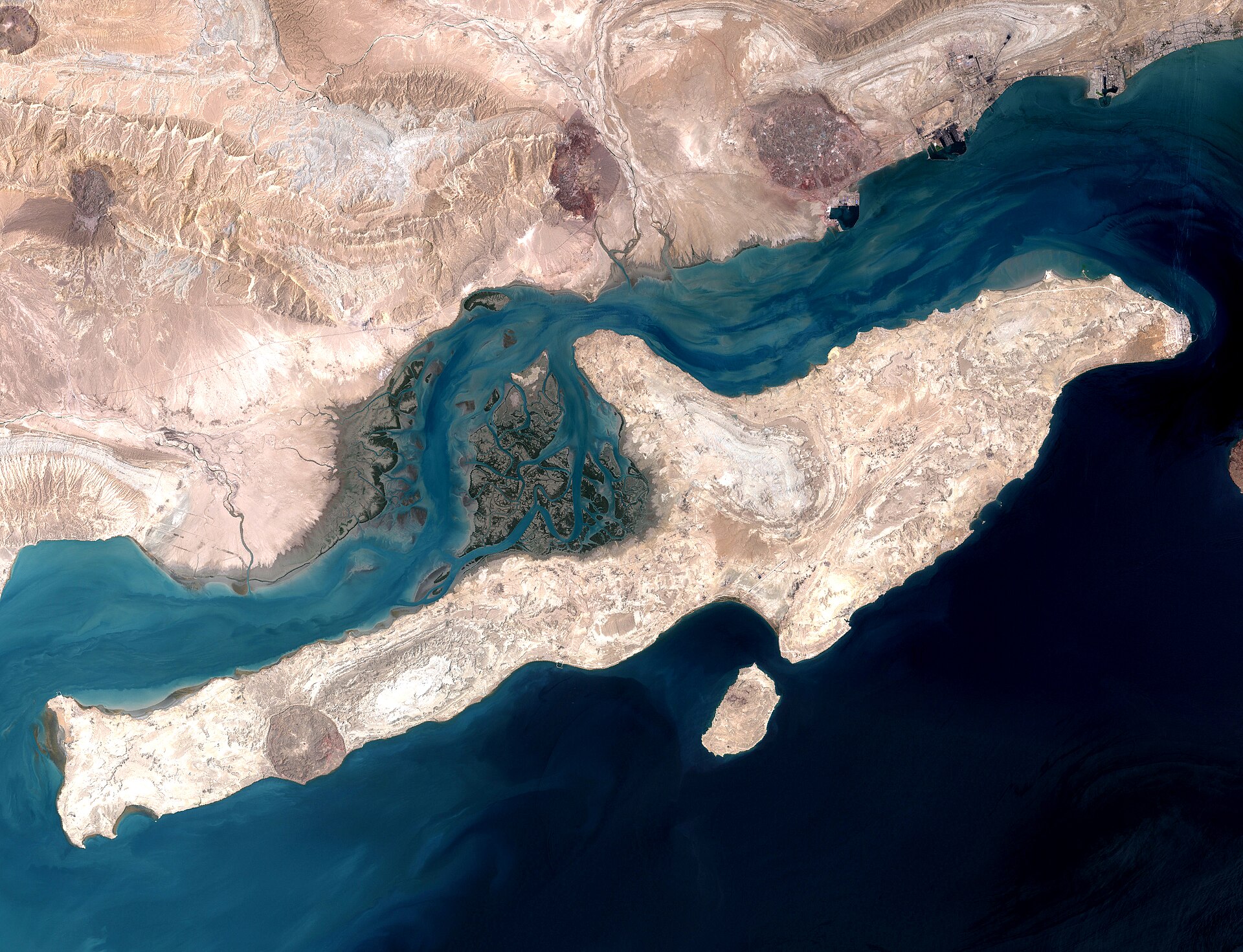
Table of Contents
- What Did the MOU Actually Do to the Toll-Fee Dispute?
- How Did Iran-Oman Bilateral Language Enter the Final Text?
- Oman’s Impossible Position
- Can OFAC Sanction a Fee Regime Co-Managed by a US Military Partner?
- The UNCLOS Gap Iran Already Exploited
- When Did Saudi Arabia Endorse the Text It Has Not Read?
- The $2 Billion Annual Exposure
- What Happens After the 60-Day Toll-Free Window?
- Frequently Asked Questions
What Did the MOU Actually Do to the Toll-Fee Dispute?
The MOU resolved the toll-fee dispute by prohibiting the word while enabling the practice. It explicitly bans “tolls” on Strait of Hormuz transit but uses the phrase “maritime navigation services” to describe what Iran and Oman will jointly manage after a 60-day toll-free window — language Tehran immediately cited as American acceptance of fee collection.
The practical result is a semantic prohibition paired with a structural enablement, a formulation that gives Washington a talking point and Tehran a revenue stream. Fars News Agency, often aligned with Iran’s security establishment, published its interpretation within hours of the text becoming available: “The use of the term ‘maritime services’ means that the United States has accepted that fees will be paid to Iran.” That reading has not been formally contested by the State Department. What Washington has done is distinguish between tolls, charges imposed purely for transit, and service fees, which UNCLOS Article 26(2) permits when tied to “specific services rendered to the ship.” The distinction matters because it determines whether Iran’s charges are a violation of international law or a sovereign exercise of coastal-state rights, and the MOU’s language was crafted to sustain both interpretations simultaneously.
“Under international law, it is not possible to levy a toll on passage through the Strait of Hormuz, but charges for services provided will be collected.” — Abbas Araghchi, Iranian Foreign Minister, June 14, 2026
Iranian FM spokesman Esmaeil Baghaei had telegraphed the framing weeks earlier, telling Euronews on May 25 that fees would cover “navigational services in addition to measures necessary to protect the environment of the Strait of Hormuz, the Persian Gulf and the Sea of Oman.” The language is almost verbatim from UNCLOS Article 26, which is notable given that Iran has never ratified the convention, a legal asymmetry examined below. Iran constructed its fee justification to mirror the one international legal standard it has not formally accepted, giving its charges the appearance of compliance without the obligations of adherence.
The Middle East briefing 3,000+ readers start their day with.
One email. Every weekday morning. Free.
The dispute, as previously analyzed, has always been terminological rather than structural. By embedding the phrase “maritime navigation services” in a US-endorsed framework, the agreement did not settle the question of legality; it gave the fee collector a document to cite and a co-signatory to share the podium.
How Did Iran-Oman Bilateral Language Enter the Final Text?
The Iran-Oman sovereignty language entered the MOU as a last-minute amendment that restructured the agreement’s commercial implications before any party outside the room could review it. Fars News, via Türkiye Today, reported that the text was changed “in the final moments of negotiations” to “clearly and explicitly emphasize the issue of Iranian-Omani sovereignty over the Strait of Hormuz.”
The amended final version states that “the future management of maritime navigation services in the Strait of Hormuz” will be determined by Iran and Oman, a formulation absent from earlier drafts circulated by Al Arabiya and other outlets in late May. The amendment was not improvised. Bloomberg reported on May 21 that formal Iran-Oman bilateral negotiations on Hormuz management had already begun, predating the MOU framework and establishing a diplomatic architecture that could be incorporated into the agreement at the appropriate moment. Iranian Ambassador to Moscow Kazem Jalali confirmed on June 8 that the strait would reopen under conditions “jointly established by Iran and Oman, including, for the first time, transit fees,” a public statement previewing the bilateral language more than a week before it appeared in the MOU text. The groundwork for Oman’s named role was laid across three separate diplomatic channels before the final draft was produced.
For Tehran, the Oman precedent carries historical weight. Eight rounds of secret US-Iran negotiations in Muscat between 2012 and 2013 laid the groundwork for the JCPOA, and President Obama publicly credited Sultan Qaboos for enabling the channel. Iran therefore treats Oman co-party status not as a novel assertion but as a diplomatic format with demonstrated American acceptance, a framework Washington itself helped construct when it needed Muscat’s geography and discretion for the nuclear talks a decade ago. Tasnim, the IRGC-affiliated news agency, framed the amendment as a strategic victory, reporting that Oman’s named role transforms the PGSA from an IRGC administrative body into a legitimate intergovernmental mechanism.
The timing of the amendment carries a consequence that no reporting outlet has examined. Saudi FM Faisal bin Farhan called Pakistani FM Ishaq Dar on June 13 to praise the deal’s “final stage,” but the Iran-Oman sovereignty language was inserted “in the final moments of negotiations” — a timeline that makes it genuinely unclear whether Saudi Arabia endorsed a pre-amendment or post-amendment version of the text. If the amendment postdated the endorsement, then the kingdom ratified a document subsequently altered to include a fee management framework it had no opportunity to review, a gap between what Riyadh approved and what it is now bound to that no Saudi official has publicly acknowledged.
Oman’s Impossible Position
Oman’s ambassador to Washington performed two contradictory diplomatic acts within the span of days. According to Gulf News, the Omani ambassador separately informed both the Treasury Department and the State Department that Muscat “opposes any fee system and reiterates its commitment to freedom of navigation.” US Treasury Secretary Scott Bessent publicly confirmed this interaction, telling CNBC on May 29 that Washington would “not tolerate” any attempt to impose fees and that the ambassador’s assurance was taken as definitive. Bessent characterized tolling as “a non-starter” and warned Oman directly of sanctions consequences.
Those assurances appear to have satisfied Washington’s concerns for precisely long enough to see the MOU text finalized. On June 14, Iran International and Fars News reported that the agreement names Oman as co-manager of “maritime navigation services” at Hormuz, the same services Iran’s FM Araghchi had publicly stated “will be collected.” Araghchi separately told Outlook India that a joint Iran-Oman statement on fees “would be released soon,” a declaration that directly contradicts the ambassador’s private assurance to Treasury issued barely two weeks earlier. The Omani position is now formally irreconcilable: the ambassador promised Washington no fees while the MOU text commits Muscat to co-managing the framework through which fees are levied.
The irreconcilability is compounded by the military dimension. Oman hosts US forces under a 1981 access agreement covering RAFO Thumrait, RAFO Masirah, and Muscat International Airport, a basing arrangement that the American Security Project has described as making Oman “perhaps the strongest supporter of US presence in the Gulf.” TRT World enumerated six ways Muscat has quietly protected American strategic interests, arguing that any sanctions against Oman would constitute an act of strategic self-harm for Washington. The result is that Oman occupies two roles simultaneously — US military partner and Iranian fee co-manager — and Washington cannot discipline one role without jeopardizing the other.
OFAC’s own recent enforcement actions illustrate the tension. On June 5, the Treasury Department sanctioned a network for shipping Iranian-origin LPG “intentionally disguised as Omani LPG,” per Steptoe’s weekly sanctions update, establishing that Iran-Oman commercial entanglement is already triggering US sanctions activity. Maintaining Oman as a legitimate MOU co-party while simultaneously pursuing enforcement against Iran-Oman commercial networks creates a regulatory posture that treats the same sovereign as trustworthy in one corridor and suspect in another, within the same enforcement cycle.
Can OFAC Sanction a Fee Regime Co-Managed by a US Military Partner?
No existing OFAC authority can cleanly reach the Hormuz fee mechanism without sanctioning an activity that a US military basing partner co-manages, a structural contradiction the Treasury Department has not resolved and that renders the designation framework functionally incomplete.
The Treasury Department designated the Persian Gulf Strait Authority as a Specially Designated National on May 27 under counterterrorism authorities linked to IRGC support, a designation framework distinct from the Iran Sanctions Act and carrying different secondary sanctions implications. The PGSA had already processed more than 300 transit requests before the designation took effect, establishing operational precedent and a payment infrastructure — accepting bitcoin and Chinese yuan — that functions entirely outside the US dollar system.
The more consequential regulatory action came two days later, on May 29, when OFAC updated FAQ 1249 to extend prohibited conduct beyond monetary payments to cover the receipt of any services from the Government of Iran, including free-of-charge safe-passage guarantees. Baker McKenzie’s global sanctions blog characterized the expansion as capturing “even benign-seeming interactions with Iranian maritime authorities.” The implication for Saudi-flagged vessels is a compliance paradox with no clean exit: paying the PGSA fee constitutes a transaction with a designated entity, but accepting a free transit waiver constitutes receiving a service from the Government of Iran. OFAC’s framework has sanctioned both paying and not paying.
“The use of the term ‘maritime services’ means that the United States has accepted that fees will be paid to Iran.” — Fars News Agency, June 14, 2026
The Oman variable renders this framework functionally unenforceable at the institutional level. If the fee mechanism is jointly managed by Iran and Oman, sanctioning the mechanism means sanctioning an activity in which a US basing partner is a named co-manager, a partner whose 1981 access agreement contains no economic sanctions carve-outs and whose strategic geography — controlling the southern approach to the strait — has historically insulated it from precisely this kind of coercive pressure. OFAC’s June 5 LPG enforcement action suggests Treasury’s workaround is to pursue Iran-Oman entanglement at the network level, targeting individual transactions and intermediaries rather than the institutional structure, a selective approach that leaves the fee collection architecture intact while punishing its individual users.
The UNCLOS Gap Iran Already Exploited
Iran’s legal position on Hormuz fees rests on an asymmetry that most coverage has acknowledged without fully examining its structural implications. Iran has never ratified UNCLOS, which means the transit passage rights that the convention guarantees through international straits — including the prohibition on charges “levied upon foreign ships by reason of passage alone” — do not formally bind Tehran. Alexander Lott, writing in the European Journal of International Law’s blog EJIL:Talk! in March 2026, identified a “fundamental ambiguity” about whether UNCLOS transit passage provisions have “fully crystallised as customary international law binding on non-parties,” arguing that the question remains legally unsettled despite decades of state practice.
Araghchi drove the argument further on June 14 when he declared that “the Strait of Hormuz is under the sovereignty of Iran and Oman, there are no international waters there.” The claim is factually grounded in the geography of the strait — at its narrowest point, the shipping lane passes through waters within 12 nautical miles of both Iranian and Omani coasts, meaning the entire transit corridor falls within territorial sea claims by one or both coastal states. If Araghchi’s characterization holds as a matter of law, UNCLOS transit passage provisions become irrelevant regardless of customary international law arguments, because the ships are transiting sovereign territorial waters where the coastal state has regulatory jurisdiction. The Oman co-party framework strengthens this position by providing a second sovereign attesting that the corridor is bilateral territorial sea, not international waters subject to the passage rights UNCLOS guarantees.
Just Security, in a June 2026 analysis by multiple legal scholars, argued that Iran’s $2 million per-VLCC transit fee “violates the prohibition on charges levied upon foreign ships by reason of passage alone” and described the conversion of Hormuz into “a managed, tolled, IRGC-controlled corridor” as “a frontal assault on the legal order that has governed global commerce for decades.” Security analyst Roger Macmillan told the Jerusalem Post that Iran’s repackaging of charges as “fees rather than tolls” remains in violation of international law “regardless of the terminology used.” Both analyses assume that UNCLOS binds Iran either directly or through customary international law, precisely the assumption Lott’s scholarship places in doubt.
UNCLOS Article 26(2) contains the specific exception Iran has shaped its fee language around: charges are permitted for “specific services rendered to the ship.” Iran’s stated fee justification — navigation services, environmental protection, ship insurance, and other services — mirrors this provision almost verbatim, as if Tehran’s lawyers drafted the language toward the exception even while Iran’s diplomats reject the convention it belongs to. With Oman as co-manager, two coastal states can jointly attest that tangible services are being provided, making it substantially harder for a third-party challenge to prove the charges are passage fees disguised as service fees, even if the substance of those services remains undefined and the actual infrastructure for delivering them remains invisible. The legal mechanism behind the insurance fee — including how Iran structured the post-waiver charge under UNCLOS Art.26 — is examined in detail separately.
When Did Saudi Arabia Endorse the Text It Has Not Read?
Saudi FM Faisal bin Farhan endorsed the MOU on June 13 through a call to Pakistani FM Ishaq Dar — but the Iran-Oman sovereignty language was inserted “in the final moments of negotiations,” making it unclear whether Riyadh approved a pre-amendment or post-amendment text. No Saudi official has acknowledged the gap between what was endorsed and what the agreement now contains.
No direct SPA or MOFA statement was issued; the endorsement was relayed exclusively through the Pakistan channel and reported by Arab News. The Saudi government has not made a single public statement on the Hormuz fee framework, the Iran-Oman co-management structure, or the PGSA’s financial implications for Saudi crude exports at any point during the negotiations.
The sequence creates a gap between approval and awareness that carries legal weight. If the Iran-Oman amendment occurred after Faisal’s June 13 call, then Saudi Arabia ratified a document that was subsequently altered to include a bilateral fee management framework the kingdom had no opportunity to review or contest — a framework that imposes approximately $5.5 million per day in charges on Saudi exports while exempting five of Saudi Arabia’s competitors. Even if the amendment preceded the call, the absence of any Saudi public comment on the specific fee provisions suggests that Riyadh’s endorsement was political rather than textual, a signal of process support rather than substantive approval of the agreement’s commercial terms.
This pattern is consistent with Saudi Arabia’s posture throughout the negotiations. The kingdom was named among twelve “approvers” of the deal framework but was party to none of the three active mediation tracks. The Saudi MOFA maintained silence for more than 25 consecutive days during the most consequential period of negotiations, and when endorsement finally came, it was delivered through Islamabad, not Riyadh. Saudi Arabia approved a deal it had no seat in drafting, no role in amending, and — based on the available public record — no opportunity to review in its final form before the fee provisions were embedded in the text that will govern its primary export corridor.
The $2 Billion Annual Exposure
The financial exposure created by the MOU’s fee framework falls disproportionately on Saudi Arabia, which transits approximately 5.5 million barrels per day through the Strait of Hormuz and is conspicuously absent from the list of PGSA-exempt nations. At the current fee rate of approximately $1 per barrel — roughly $2 million per VLCC transit — the kingdom faces an estimated annual liability of approximately $2 billion, or $5.5 million per day, payable in bitcoin or Chinese yuan. This liability would compound a fiscal position already under severe pressure: Saudi Arabia recorded its largest-ever quarterly deficit of SAR 125.7 billion ($33.5 billion) in Q1 2026, while Brent crude trades at $83–86 against a fiscal breakeven estimated at $108–111 per barrel.
| Metric | Detail |
|---|---|
| PGSA fee rate | ~$1/barrel (~$2M per VLCC transit) |
| Payment currencies accepted | Bitcoin, Chinese yuan |
| Saudi daily Hormuz volume | ~5.5 million bpd |
| Saudi estimated daily liability | ~$5.5 million |
| Saudi estimated annual liability | ~$2.0 billion |
| Exempt nations | Russia, China, India, Iraq, Pakistan |
| Saudi exemption status | Not exempt |
| PGSA established | May 5, 2026 |
| OFAC SDN designation | May 27, 2026 |
| Transit requests processed pre-designation | 300+ |
| MOU toll-free window | 60 days from signing |
The exemption architecture is itself a strategic instrument. Russia, China, India, Iraq, and Pakistan — collectively accounting for a substantial share of Hormuz traffic — pay nothing, turning the fee regime into a selective charge that primarily extracts revenue from Gulf Arab producers and their customers. The fee collection channels, which operate in bitcoin and Chinese yuan entirely outside the dollar system, were stress-tested and normalized across the 22 days between the PGSA’s establishment on May 5 and its OFAC designation on May 27.
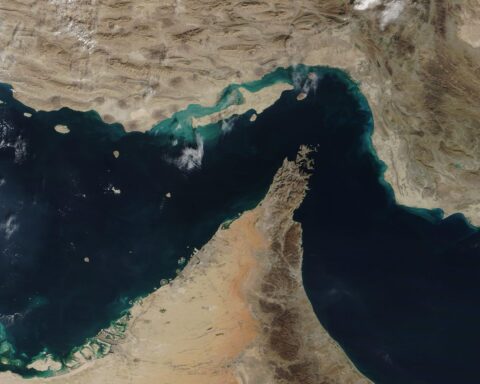
For Saudi Arabia specifically, the fee falls on its crude at the point of maximum vulnerability, the narrow Qeshm-Larak corridor where PGSA operations are concentrated, and the kingdom has no alternative export route capable of absorbing the volume currently transiting Hormuz. The approximately 600 vessels already avoiding the strait underscore that the fee regime is not theoretical; the commercial response to Iran’s corridor control is reshaping tanker routing in real time, and every diverted cargo adds cost to Saudi crude that its competitors — shielded by exemptions — do not bear.
What Happens After the 60-Day Toll-Free Window?
After the MOU’s 60-day toll-free window expires, Iran and Oman will jointly determine the management of maritime navigation services at Hormuz under a formulation that contains no mechanism for external input, no dispute resolution process, and no cap on fee levels. Iran has stated fees will activate “for economic development” — language positioning the charges as a permanent revenue structure, not a temporary security measure.
The toll-free window itself is complicated by OFAC FAQ 1249’s expanded definition of prohibited conduct. During the 60-day period, ships transiting Hormuz without paying a fee are nevertheless receiving a safe-passage service administered by the Government of Iran — the same authority whose forces broadcast “refrain from any movement” to commercial vessels on the scheduled signing day. Under FAQ 1249, even receiving free-of-charge safe-passage guarantees constitutes a prohibited transaction with the Government of Iran. The compliance paradox extends into the supposedly cost-free period: when Iran charges nothing, the act of transiting under Iranian-managed navigation services may still trigger sanctions exposure for US-nexus entities, leaving shipowners in a regulatory void where neither paying nor transiting for free provides legal cover.
Saudi Arabia has no formal role in determining what happens on day 61. The MOU assigns management authority exclusively to Iran and Oman, and no Saudi official has publicly acknowledged this exclusion or addressed the post-window fee framework in any forum. The kingdom endorsed a deal whose most consequential commercial provision — the activation of a permanent fee regime on Saudi Arabia’s primary export corridor — will be determined by two states that have already publicly stated their intent to collect, and whose joint authority was embedded in the text during final negotiations that Saudi Arabia neither witnessed nor reviewed.
The G7 endorsed the same text at Évian on June 16 without filling any of those gaps. Five nations issued a joint statement on an MOU whose full text had not been released, with no mention of the PGSA fee mechanism, the post-60-day management framework, or the arbitration process that would govern disputes over the charges Iran has already codified into domestic law.
Frequently Asked Questions
Can Saudi Arabia challenge the Hormuz fee at the International Court of Justice?
An ICJ challenge faces substantial jurisdictional barriers that make formal adjudication unlikely in the near term. Iran withdrew from the ICJ’s compulsory jurisdiction in 1951 following the Anglo-Iranian Oil Company case and has not resubmitted to compulsory dispute resolution in the seven decades since. Saudi Arabia could theoretically invoke UNCLOS Part XV dispute settlement, but Iran is not a UNCLOS party, which means the convention’s arbitration mechanisms do not apply to Tehran. The International Tribunal for the Law of the Sea requires state consent that Iran has shown no indication of providing, and the practical barrier may be even more fundamental: Saudi Arabia would need to publicly acknowledge the PGSA’s fee liability as a legal injury before filing any challenge, a step that would contradict its current posture of complete silence on the fee framework.
Does Oman’s co-management role legally shield Iran from OFAC enforcement?
Oman’s role does not provide legal immunity, but it introduces enforcement friction that may prove functionally equivalent. Under the International Emergency Economic Powers Act (IEEPA), OFAC retains authority to designate any entity facilitating transactions with sanctioned parties regardless of sovereign co-sponsorship, and the PGSA designation was made under counterterrorism authorities — not the Iran Sanctions Act — which carry broader enforcement reach. However, designating the co-management mechanism itself would effectively sanction an activity co-administered by a US military basing partner whose 1981 access agreement predates every modern sanctions statute. The Treasury Department’s workaround, visible in the June 5 LPG enforcement action, is to pursue Iran-Oman entanglement at the network level — sanctioning individual intermediaries and transactions rather than the institutional framework — an approach that leaves the fee collection architecture standing while penalizing discrete uses of it.
What currencies does the Hormuz transit fee accept, and why does that matter?
The PGSA accepts payment exclusively in bitcoin and Chinese yuan, deliberately excluding the US dollar from the fee mechanism’s settlement architecture. This currency structure means that even comprehensive OFAC sanctions enforcement cannot reach fee payments processed through non-US correspondent banking channels, since the transactions never touch dollar-denominated systems subject to Treasury jurisdiction. The yuan denomination specifically benefits Chinese refiners importing Saudi crude through Hormuz, who can pay Iran’s fee in their own currency at no exchange cost, while Saudi Arabia — whose own oil is the primary commodity being charged — would need to acquire yuan or bitcoin to pay a fee on Saudi exports. The payment infrastructure was operational before OFAC designated the PGSA on May 27, giving the mechanism a 22-day head start during which collection channels were stress-tested and normalized.
Has any other strait or waterway attempted a similar fee structure?
The closest historical parallel is Denmark’s Sound Dues on the Øresund, levied on all ships transiting between the North Sea and Baltic Sea from 1429 until 1857, when the United States refused to pay and other maritime nations compensated Denmark under the Treaty of Copenhagen to abolish the charges permanently. Turkey collects pilotage, towage, and sanitary fees in the Bosphorus and Dardanelles under the 1936 Montreux Convention but is explicitly prohibited from levying transit tolls. Indonesia and Malaysia explored passage fees in the Strait of Malacca in the 1970s but abandoned the effort under international objection before implementation. None of these precedents involved a sanctioned state and a US military partner co-managing the fee, nor did any of them feature an exemption architecture that selectively charged some transiting nations while exempting others — characteristics that make the Iran-Oman Hormuz framework historically unprecedented in both structure and intent.
Could Saudi Arabia bypass Hormuz entirely by routing crude through alternative pipelines?
Saudi Arabia’s primary alternative is the East-West Pipeline (Petroline) connecting Abqaiq to the Red Sea port of Yanbu, which carries a nominal capacity of approximately 5 million bpd but currently operates at about 2.9 million bpd serving domestic refinery demand, leaving roughly 2 million bpd of theoretical spare capacity that industry analysts dispute due to maintenance and refinery commitment constraints. Even at maximum utilization, Yanbu cannot replace the 5.5 million bpd currently exported through Hormuz, creating a structural gap that no existing infrastructure can close. The IPSA pipeline through Iraq has been shut since 1990 and would require extensive rehabilitation and bilateral agreement with Baghdad that current relations do not support. No combination of existing alternatives can eliminate Saudi Hormuz dependency within the MOU’s 60-day toll-free window, which means the fee regime will activate before any infrastructure mitigation is physically possible. The five-nation GCC-IMO letter rejecting the PGSA — signed by Saudi Arabia on May 21 — does nothing to change the transit arithmetic: the fee applies regardless of whether Riyadh recognises the collecting authority.
Iran published the full operational rulebook for the PGSA on June 19, including mandatory forty-eight-hour pre-filing requirements, a Larak corridor that routes vessels through territorial waters, and a five-day permit validity window that ensures continuous data collection. The complete framework is examined in Iran’s PGSA vessel declaration and Hormuz transit rules.