REPLACEMENT MADE
DHAHRAN — Sadara Chemical Company’s $3.7 billion in guaranteed senior debt exits its five-year grace period tomorrow morning, and neither of the two guarantors — Saudi Aramco, which owes $2.405 billion, and Dow Inc., which owes $1.295 billion — has filed a material event disclosure with its regulator. Dow has not submitted an SEC Form 8-K under Item 2.04, the provision requiring public companies to disclose within four business days when a direct financial obligation is triggered or accelerated. Aramco has not issued a standalone announcement on the Saudi Exchange.
The silence is not an oversight, and it is probably not a violation. The legal architecture of the Sadara guarantee was constructed in the March 2021 restructuring — the same restructuring that created this cliff — so that June 15 could arrive without triggering a mandatory filing on either side of the Atlantic. What that architecture reveals, as the final hours of grace run out over a facility that has generated zero revenue for eleven consecutive weeks, is that Vision 2030’s flagship petrochemical complex is governed not by the disclosure norms Saudi Arabia advertises to foreign investors but by the ones it actually enforces.
Table of Contents
- What Does SEC Form 8-K Item 2.04 Actually Require?
- The Contingent Guarantee Architecture
- Why Has Aramco Not Filed With the CMA?
- SABIC Filed and the Guarantors Did Not
- Twenty-Eight Banks and the Logic of Collective Silence
- How Large Is the US Government’s Exposure to Sadara?
- The Credibility Cost of Compliant Silence
- What Happens After June 15?
- Frequently Asked Questions
What Does SEC Form 8-K Item 2.04 Actually Require?
Item 2.04 requires a US-listed company to file within four business days of learning that a direct financial obligation has materially increased or that an off-balance-sheet arrangement has become a direct obligation. The provision was adopted by the SEC in March 2004 as part of a broader overhaul of real-time disclosure, and its language is specific: if a company discovers that a contingent guarantee has been called, or that a debt it has guaranteed has defaulted and the guarantee is now a direct liability, the clock starts running toward a mandatory public filing.
But the provision contains a carve-out that the Sadara guarantee was built to fit inside. If counterparty declaration or notice is “necessary prior to the increase or acceleration” — meaning the guarantee does not automatically convert into a direct obligation upon the borrower’s default, but instead requires the lender group to formally demand payment from the guarantor — then Item 2.04 is not triggered until that demand is made. The SEC addressed this explicitly in the Federal Register release accompanying the final rule: the four-business-day window runs from the date of the triggering event itself, and if no formal notice has been delivered by the counterparty, no triggering event has occurred.
The practical effect for Dow is total. The $1.295 billion guarantee does not become a direct obligation when Sadara fails to resume principal payments after June 15; it becomes direct only when the 28-bank syndicate — or some contractually sufficient subset of it — issues a formal demand for payment under the guarantee agreement. No demand means no triggering event, no triggering event means no 8-K, and no 8-K means Dow’s shareholders receive no standalone, real-time notice that a $1.295 billion contingent liability at the company’s largest international joint venture has moved from theoretical to operative.
The Middle East briefing 3,000+ readers start their day with.
One email. Every weekday morning. Free.
As of June 14, Dow’s last material SEC filing referencing Sadara is its Q1 2026 Form 10-Q, filed in late April, which disclosed a $292 million guarantee liability adjustment and noted that the fair value of the guarantee had risen from $212 million at year-end 2025 to $510 million at March 31, 2026 — a 140 percent increase in a single quarter. The 10-Q is a periodic filing with a different disclosure rhythm from an 8-K; it describes conditions that existed eight weeks before the grace period expires, and it carries none of the current-event urgency that Item 2.04 was designed to impose.
Three days after the June 15 deadline, the result of that Q1 pre-disclosure is now legible: the Dow-Aramco disclosure gap has widened, with Dow’s $292 million fair-value charge on record and Aramco’s $2.405 billion guarantee unmarked in any public filing.
The Contingent Guarantee Architecture
The distinction between a contingent guarantee and a direct obligation is not academic — it is the load-bearing mechanism of the entire Sadara disclosure framework, and it was installed during the March 2021 restructuring with what appears to be full awareness of its regulatory consequences. When Sadara’s original $12.5 billion financing was signed in 2013, the debt was a project finance structure in which the sponsors — Aramco and Dow, then equal 50-50 partners before Aramco’s stake rose to 65 percent — provided limited completion guarantees but not full pro-rata recourse. The 2021 restructuring changed the economics: it extended the debt maturity from 2029 to 2038, inserted a five-year principal grace period running through June 15, 2026, and introduced a new $3.7 billion sponsor guarantee that did not exist in the original deal.
The guarantee was split pro-rata — Aramco at $2.405 billion and Dow at $1.295 billion, matching their 65-35 equity stakes exactly. But the operative feature is the conditionality: under the guarantee terms, the sponsors’ payment obligations are triggered not by Sadara’s failure to pay, which has been ongoing since the facility shut down in late March and will become formally overdue after June 15, but by a demand from the syndicate lenders. The guarantee is a promise to pay upon demand, not upon default, and the legal distance between those two formulations is the distance between a mandatory SEC filing and the silence that currently surrounds $3.7 billion in expiring debt at a Vision 2030 showcase.
This was not an accident of drafting. Project finance restructurings at this scale — $3.7 billion, with a 28-bank syndicate, two sovereign-adjacent sponsors, and nearly $5 billion in US Export-Import Bank exposure — are negotiated clause by clause over months, with external counsel on all sides. Milbank represented the lender group in the original 2013 financing; the restructuring involved comparable legal firepower. Every party at the table understood, when the guarantee was structured as demand-contingent rather than default-triggered, that the sponsors’ disclosure obligations would depend on whether the banks chose to issue a call — which, for reasons the syndicate’s own incentives make clear, they have powerful motivation not to do.
The Company suspended Sadara equity loss recognition in the first quarter of 2026 in accordance with GAAP, as the carrying value of all liabilities on the balance sheet reached a total of Dow’s existing relevant obligations and commitments.
Dow Inc. Q1 2026 earnings call, April 23, 2026
Dow’s own financial statements confirm the gap between the guarantee’s legal status and its economic reality. On the April 2026 earnings call, management disclosed that cumulative equity losses at Sadara had reached the total of Dow’s obligations and commitments, prompting the company to suspend further equity loss recognition under GAAP — a technical way of saying that Dow’s balance sheet already treats its Sadara equity investment as worthless. Annual cash obligations of approximately $100 million through 2038 remain, but the equity line is zero. The guarantee, by contrast, still carries a contingent classification, even as the borrower it backstops has posted zero revenue for nearly three months and told the Tadawul it cannot estimate when production will resume.
Why Has Aramco Not Filed With the CMA?
Aramco’s $2.405 billion Sadara guarantee almost certainly falls below the Capital Market Authority’s 10 percent net-asset materiality threshold for mandatory Tadawul disclosure. At Aramco’s scale — the company’s net assets are measured in hundreds of billions — a contingent liability of $2.405 billion, while enormous in absolute terms, represents a fraction of consolidated net assets so small that a standalone announcement is legally optional under the CMA’s listing rules. Saudi Exchange regulations require immediate disclosure of “any material developments” at least two hours before the trading period, but the materiality definition contains a bright line calibrated for companies of ordinary size, and Aramco is not a company of ordinary size.
Aramco’s legal team would present the argument straightforwardly: the 10 percent threshold exists to prevent immaterial disclosures from cluttering the market, and Sadara itself — which is listed on the Tadawul as an operating company — filed its own regulatory announcement in April 2026. That filing stated, in language that manages to be both transparent and opaque, that Sadara “cannot provide, at the present time, an estimate for the return to production” and warned of an impact to 2026 financial results without attaching a dollar figure or a timeline. If the operating company has disclosed, Aramco’s position would be that the guarantor has no standalone obligation to repeat the disclosure in its own name.
But the argument rests on a category error that the CMA has never been forced to adjudicate in public. Sadara’s April filing was an operating disclosure — a listed company telling the market that its plants are shut and revenues have stopped. It was not a guarantee disclosure, and it said nothing about the $3.7 billion in sponsor guarantees, the June 15 cliff, or the approaching date on which Aramco’s $2.405 billion contingent liability could become callable. An investor reading Sadara’s Tadawul filing would learn that the company had shut down; she would not learn that the shutdown was weeks from activating a multi-billion-dollar demand right held by 28 international banks against the kingdom’s most valuable listed entity.
Aramco’s Q1 2026 interim results, published in May, addressed Sadara as a line item within a 72-page earnings document — without standalone discussion of the guarantee cliff, the $2.405 billion exposure, or the June 15 date. The disclosure was absorbed into the mass of a quarterly report rather than surfaced as a current event, which satisfies the letter of CMA rules while denying investors the kind of real-time, standalone notice that the rules were written to produce.
SABIC Filed and the Guarantors Did Not
On April 8, 2026, SABIC — the Saudi petrochemical company that is 70 percent owned by Aramco and listed on the Tadawul — filed a standalone regulatory announcement warning of a “material impact to 2026 financial results” from the Hormuz disruption. SABIC was not required to specify a dollar figure, and did not, but it filed visibly and on the record because the CMA’s continuous disclosure rules demanded it: the Hormuz closure had shuttered SABIC’s Jubail operations, the company’s counsel concluded the materiality threshold had been crossed, and the filing was made. The filing set a benchmark, and the benchmark is damaging for Aramco.
The two situations are not merely comparable — they are structurally entangled. Aramco owns 70 percent of SABIC and 65 percent of Sadara, and both companies operate manufacturing facilities in the same Jubail industrial complex. Both shut down because of the same maritime disruption. SABIC filed a standalone Tadawul disclosure acknowledging the impact on its financial results; Aramco, as guarantor of $2.405 billion in Sadara debt approaching a grace-period cliff, filed nothing equivalent. The distinction Aramco appears to be drawing is that SABIC is an operating company whose shutdown crosses the materiality threshold for SABIC’s own balance sheet, while Aramco’s Sadara guarantee exposure falls below the 10 percent line when measured against Aramco’s vastly larger net assets.
| Entity | Regulator | Filed? | Basis for Position |
|---|---|---|---|
| Sadara Chemical Company | CMA / Tadawul | Yes (April 2026) | Operating impact disclosure; no dollar figure or restart timeline |
| SABIC (70% Aramco) | CMA / Tadawul | Yes (April 8, 2026) | “Material impact to 2026 financial results” |
| Dow Inc. | SEC | No standalone 8-K | Item 2.04 not triggered; no lender demand issued |
| Saudi Aramco | CMA / Tadawul | No standalone filing | $2.405B below 10% net-asset materiality threshold |
The distinction is technically defensible and substantively hollow. The CMA’s listing rules exist to give investors — particularly the international institutional investors whom Aramco and the Saudi Exchange have spent years courting since the 2019 MSCI inclusion — timely access to information that could affect their assessment of the company’s financial position. A $2.405 billion guarantee becoming callable at a joint venture generating zero revenue, with no stated restart timeline and 28 banks holding the demand trigger, is precisely the kind of development those rules were designed to surface. The fact that Aramco’s balance sheet is large enough to absorb it without crossing the 10 percent line does not make the information immaterial to investors deciding whether to hold or sell the stock — it merely makes the disclosure legally optional, which is a different thing entirely.
Twenty-Eight Banks and the Logic of Collective Silence
The 28-bank syndicate that holds Sadara’s restructured debt — a group that includes, from the original 2013 financing, institutions of the stature of HSBC and JPMorgan — faces a collective action problem that is structurally identical to a prisoner’s dilemma, except that every participant has a rational reason to cooperate and almost none to defect. A formal default declaration by any lender, or by a sufficient voting bloc under the intercreditor agreement, would trigger the demand right under the sponsor guarantees, which would force Dow to file an 8-K, require Aramco to reassess its CMA obligations, and compel both sponsors to recognize the guarantee as a direct liability. But a formal default declaration would also trigger cross-default provisions across the rest of Sadara’s debt stack, potentially accelerating the entire $3.7 billion and activating recourse to the Export-Import Bank’s $4.975 billion exposure — an outcome that would draw the US federal government into the workout as a creditor with its own institutional interests and political constraints.
No individual lender wants that cascade, because acceleration in a distressed project finance context does not produce repayment — it produces litigation, fire-sale recovery, and a multi-year workout that would likely return less than a consensual restructuring negotiated through coordinated forbearance. The syndicate’s optimal strategy is the one it appears to be executing: allow June 15 to pass without formal declaration, extend tacit forbearance while restructuring negotiations proceed in private, and avoid the regulatory, legal, and financial consequences that a formal default would set in motion. This is the standard workout playbook for distressed project finance with sovereign-adjacent sponsors and political risk exposure — not a conspiracy but a feature of the legal architecture, anticipated and accommodated by every party when the 2021 guarantee terms were drafted.
The forbearance is rational for the banks and arguably rational for the sponsors, but it is not a neutral outcome for the capital markets that the CMA and the SEC are supposed to protect. Coordinated forbearance without public declaration means the market — Dow’s shareholders, Aramco’s shareholders, the global index funds that hold both — is pricing securities on the assumption that the $3.7 billion guarantee remains contingent, when the economic reality is that Sadara’s 26 Jubail units have been idle since late March and the company has told the Tadawul it cannot say when production will restart. The gap between the legal status of the guarantee (contingent, awaiting demand) and its economic status (backed by a borrower with zero income, shuttered operations, and no feedstock access for the foreseeable future) is the gap that disclosure rules exist to close.
The Public Investment Fund’s position adds a layer of complexity that no party has publicly addressed. PIF holds a $1.3 billion direct creditor position in the original Sadara financing stack — making it simultaneously an indirect equity holder through Aramco’s 65 percent ownership and a direct creditor with its own recovery interest. In a restructuring or default scenario, PIF’s interests as a lender (maximise recovery) and as Aramco’s controlling shareholder (minimise the cost of a guarantee call) are not aligned, and the CMA has not publicly addressed whether Aramco’s related-party disclosure rules require separate treatment of the PIF’s dual exposure.
How Large Is the US Government’s Exposure to Sadara?
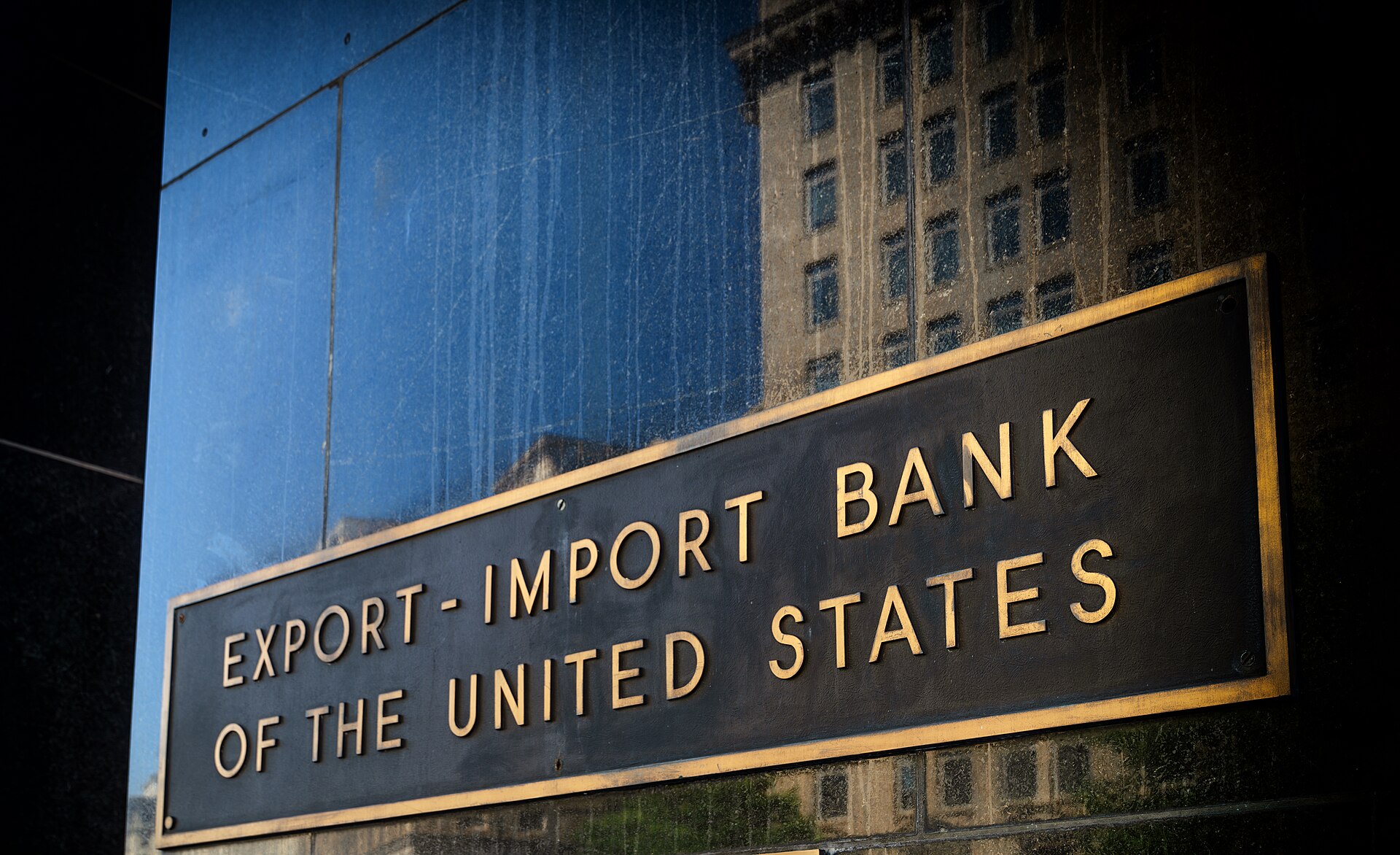
The US Export-Import Bank holds a $4.975 billion direct loan in Sadara’s financing stack — at the time of approval in September 2012, the largest single transaction in the agency’s 78-year history. The loan was part of a $7 billion tranche of export credit agency contributions within Sadara’s original $12.5 billion financing, and Ex-Im structured it as a direct loan rather than a guarantee, meaning the US government is not a backstop to private lending but a primary creditor in its own right, with a recovery position that sits alongside the commercial syndicate in the capital structure. When Ex-Im announced the deal, the agency described it as supporting “more than 18,000 American jobs” through US equipment and services exports to the Jubail complex.
| Financing Component | Amount | Source |
|---|---|---|
| US Ex-Im Bank direct loan | $4.975B | US Export-Import Bank |
| Other ECA contributions | $2.025B | KEXIM, other agencies |
| Uncovered commercial bank debt | $2.2B | 28-bank syndicate (incl. HSBC, JPMorgan) |
| Islamic sukuk | $2.0B | Capital markets |
| PIF direct loan | $1.3B | Public Investment Fund |
| Total original financing (2013) | $12.5B | |
| 2021 restructured sponsor guarantee | $3.7B | Aramco $2.405B (65%) / Dow $1.295B (35%) |
A formal default on Sadara’s debt would create a category of problem that extends well beyond the commercial interests of the 28-bank syndicate. Ex-Im is a US government agency whose exposures sit on the federal balance sheet, and a nearly $5 billion impairment at a joint venture co-owned by Dow — a Fortune 500 company headquartered in Midland, Michigan — would generate the kind of multi-agency attention that no party to the Sadara restructuring wants to invite.
Treasury would face direct fiscal exposure through Ex-Im’s balance sheet, while Commerce would confront questions about the export-support rationale that justified the original $4.975 billion loan. State would have to reconcile a default at a US-backed petrochemical complex with the broader framework of US-Saudi relations — including the May 2025 123 Agreement and the Iran MOU negotiations whose collapse has now been confirmed — while the National Security Council would inherit the diplomatic fallout of a US government agency pursuing recovery claims against the national oil company of a treaty ally.
This constellation of political exposure is one of the reasons the syndicate will not issue a formal demand, and one of the reasons the legal architecture was designed to make a formal demand unnecessary for the grace period to lapse quietly. The $4.975 billion Ex-Im position functions less as a source of lending discipline — the original purpose of export credit agency participation in project finance — and more as a political insurance policy for Sadara’s continued forbearance: nobody in Washington wants to declare a default that would force Ex-Im to mark a $5 billion loss, and nobody in the syndicate wants to be the bank whose demand triggers that conversation.
The Credibility Cost of Compliant Silence
Saudi Arabia has spent the better part of a decade building the institutional infrastructure of a capital market capable of attracting and retaining international investment at the scale that a post-oil economic transition requires. The Tadawul joined the MSCI Emerging Markets Index in 2019, a milestone that the CMA and the Saudi Exchange promoted as validation of the kingdom’s regulatory standards. Aramco’s secondary offering in June 2024 raised $11.2 billion from global institutional investors on the explicit promise of transparent governance, rigorous disclosure, and regulatory credibility comparable to any major exchange. The pitch has been consistent: Saudi capital markets are professionalising, the rules are real, and international investors can trust the information environment.
The Sadara guarantee cliff tests that pitch in real time, and the results are not encouraging for the institutional investors who accepted it. Here is a $3.7 billion contingent liability at a joint venture between the kingdom’s national oil company and a US-listed Fortune 500 company, backed by the largest direct loan in Ex-Im Bank history, at a Jubail facility that contributes 11.5 percent of Saudi GDP and 85 percent of Saudi non-oil exports — and neither guarantor has filed a standalone material event disclosure as the grace period enters its final hours. The CMA’s rules permit the silence because a 10 percent net-asset threshold calibrated for companies of ordinary size produces an absurd result when the guarantor is the largest company on earth by market capitalisation, and the CMA has never acted to close that gap.
For the index funds and sovereign wealth funds that hold Aramco in their emerging-market allocations, the Sadara silence is a data point about how Saudi disclosure rules operate when the information is politically inconvenient. The CMA’s stated rule is “immediate disclosure of material developments,” and SABIC’s April 8 filing demonstrates that the rule can produce timely, standalone disclosure from Saudi-listed companies when the company and its counsel conclude the threshold has been crossed. But Aramco’s treatment of Sadara demonstrates something the MSCI inclusion and the secondary offering were supposed to have resolved: that the rules are structured to exempt the one company whose disclosures matter most, and that this exemption operates automatically through a materiality threshold that was never recalibrated for a $1.8 trillion market-cap issuer.
The credibility cost is not hypothetical. Aramco’s Q1 2026 free cash flow of $18.6 billion fell below its $21.89 billion quarterly dividend for the first time since the pandemic — a coverage ratio of 0.85x that already has analysts questioning the sustainability of the payout. Saudi Arabia’s Q1 2026 fiscal deficit reached SAR 125.7 billion ($33.5 billion), the largest on record, with subsidies up 170 percent and military spending up 26 percent year-on-year. In that fiscal environment, the market’s ability to assess Aramco’s contingent liabilities — including $2.405 billion in Sadara guarantees — depends entirely on the quality of disclosure the CMA enforces. When the enforcement mechanism is a materiality threshold that a $2.4 billion guarantee cannot breach, the market is flying on instruments that were calibrated for a different aircraft.
The oil price dimension of that fiscal environment — with Brent at $80.67 on June 15, $27 below breakeven, and Saudi Hormuz exports carrying a hidden $2 billion annual PGSA fee liability — is analyzed in the fiscal cost of a Hormuz deal Saudi Arabia cannot enforce.
What Happens After June 15?
The most probable outcome is a second restructuring negotiated under duress — the 28-bank syndicate extending forbearance and renegotiating guarantee terms without issuing a formal default declaration, pushing the cliff date further into the future while Sadara’s 26 Jubail units remain offline with no stated restart timeline. When the grace period expires on Sunday morning, the contractual ground shifts even if the regulatory posture does not: Sadara’s obligation to resume principal payments on its restructured debt becomes current, and its failure to make those payments — which is a certainty given eleven weeks of zero revenue and no maritime access to feedstock — transforms from a deferred condition into an ongoing event of non-payment under the credit agreement.
The sponsors’ guarantees, while still contingent on lender demand, are now backed by a borrower in active non-payment rather than one sheltered by a grace period that technically permits non-payment. The distinction matters for the accounting treatment, for the syndicate’s internal credit risk classifications, and for the regulatory posture of both guarantors — even if it does not, in the immediate term, change the public filing record. One regional energy analyst, cited by MEES, put the probable sequence plainly.
No serious analyst projects this sequence completing by mid-June. The more likely scenario is a second restructuring negotiated under duress, with 25-plus bank creditors asked to absorb an extension on a debt that was already restructured once, against a borrower now posting zero revenue and an uncertain restart date.
Regional energy analyst cited by MEES
That restructuring, if it follows the 2021 pattern, would extend the grace period, renegotiate the guarantee terms, and push the cliff further out — buying time without resolving the underlying problem, which is that Sadara cannot operate until Hormuz maritime access is restored and no party to the collapsed MOU process has offered a timeline for that restoration. The June 14 Geneva ceremony — the signing day that never happened, broken in part by Israel’s strike on Beirut’s Dahiyeh that morning — leaves the Hormuz corridor under Iranian management with no confirmed date for its removal. The Hormuz corridor is being monetised, not reopened, with Iran’s PGSA charging approximately $1 per barrel in a five-nautical-mile zone that Saudi Arabia’s 5.5 million barrels per day of crude exports must transit. A second restructuring of Sadara’s debt would be negotiated against that backdrop — a borrower whose restart depends on a geopolitical resolution that no party is currently offering and a maritime access regime that has been redesigned to extract revenue from the traffic it once merely disrupted. On the morning of June 14, as the signing ceremony failed to materialise, Iran’s maritime radio warning to ships on the day the MOU was supposed to be signed ordered all vessels to “absolutely refrain from any movement” in the strait — a transmission directed at tanker crews, not at diplomats.
For Dow, the period after June 15 carries a secondary clock: quarterly reporting. Dow’s Q2 2026 10-Q, due in late July or early August, will be the first periodic filing after the grace period expires, and the company’s auditors and SEC counsel will have to assess whether the expiration — even without a formal lender demand — changes the accounting treatment of the $1.295 billion guarantee from contingent to probable under ASC 450. If it does, the balance-sheet impact would arrive not through an 8-K but through the slower mechanism of quarterly reporting, converting what should have been a real-time disclosure event into a periodic-filing adjustment, giving the company and the syndicate weeks to manage the narrative rather than the four days that Item 2.04 was designed to impose. When the Tadawul opens for trading on Sunday morning, the $3.7 billion will have transitioned from deferred to overdue inside the same regulatory silence in which the 2021 restructuring was designed to let it arrive.
Frequently Asked Questions
Has Dow ever filed an Item 2.04 disclosure for a guarantee call at a joint venture?
Dow has filed Item 2.04 disclosures in the past for triggering events at other ventures, though the company’s post-2019 corporate structure — following the DowDuPont separation into three independent companies — makes direct comparisons difficult. The closest precedent in Dow’s recent SEC filing history involves performance materials joint ventures in Asia-Pacific where lender acceleration was automatic upon borrower default, bypassing the demand-contingent structure that Sadara’s 2021 guarantee uses. Dow’s Sadara guarantee was structured differently from those arrangements, and the demand-contingent design means the precedent of automatic-trigger filings does not apply to the current situation.
Could an individual syndicate bank break ranks and issue a demand?
Under standard syndicate credit agreements of this type, a formal demand or acceleration requires a vote by a “Required Lenders” bloc — typically defined as holders of two-thirds or more of outstanding commitments. A single dissenting bank cannot unilaterally trigger a guarantee call, and the intercreditor agreement almost certainly includes standstill provisions that prevent individual creditors from pursuing separate enforcement actions during a forbearance period. The mechanism is designed for collective decision-making, which in practice means collective inaction when inaction is the individually rational strategy for every participant simultaneously, and no single institution bears the reputational cost of having triggered a multi-billion-dollar cascade.
What happens to the Ex-Im loan if Sadara formally defaults?
Ex-Im’s $4.975 billion direct loan carries its own event-of-default provisions, which are legally separate from the commercial syndicate’s intercreditor agreement and subject to different administrative processes. A formal default on the commercial debt could trigger cross-default under the Ex-Im facility, but Ex-Im — as a US government agency with a dual mandate of export support and portfolio credit management — has exercised forbearance discretion in past instances of sovereign-adjacent project finance distress. In past instances of distressed sovereign-adjacent project finance, Ex-Im has elected to participate in coordinated standstill and restructuring processes rather than accelerate, and the Sadara situation, with its additional geopolitical overlay of active US-Saudi alliance management, would face even stronger institutional pressure toward forbearance.
Does Sadara’s zero-revenue status affect the accounting treatment of Dow’s guarantee?
Under ASC 450 (formerly FAS 5), a contingent liability must be reclassified from “reasonably possible” to “probable” when the available evidence indicates that the triggering event is likely to occur. Dow’s Q1 2026 10-Q already showed the guarantee’s fair value more than doubling in a single quarter, and the trend line suggested the company’s own probability assessment of a guarantee call was rising sharply well before the grace period expired. The post-June 15 question for Dow’s auditors is whether eleven weeks of zero revenue, no production restart timeline, and the formal expiration of the grace period together constitute sufficient evidence to reclassify the full $1.295 billion as a probable liability rather than a contingent one — a reclassification that would require immediate balance-sheet recognition and a corresponding charge to earnings in the quarter it is made, rather than the gradual fair-value adjustments the company has been reporting so far.
With the grace period now elapsed and no announcement made, the aftermath is analyzed in The Deadline Arrived — the Lenders Did Not.