DHAHRAN — Sadara Chemical Company’s $3.7 billion guaranteed senior debt grace period expired on Monday morning, and not one of the three parties liable for it said a word. Aramco filed nothing with the Saudi Exchange. Dow filed nothing with the Securities and Exchange Commission. The twenty-eight-bank lending syndicate that arranged what was, at closing in 2013, the largest multi-sourced petrochemical project financing ever assembled issued no statement and no demand for accelerated repayment — while all twenty-six of Sadara’s Jubail manufacturing units sat idle for an eleventh consecutive week with zero revenue.
The silence was not an oversight. It was the coordinated outcome this site has tracked across four previous articles — assembled through quarterly filings, earnings-call disclosures, and the strategic absence of press statements. On the day the grace period died, Donald Trump stood at the G7 summit in Evian-les-Bains and declared “the deal’s all signed” on Iran, sending Brent crude down nearly five percent to $80.73 per barrel — twenty-eight dollars below the price Saudi Arabia needs to balance its budget. Saudi Arabia’s largest petrochemical complex has now entered a legal limbo that every guarantor, every lender, and every regulator has independent, reinforcing reasons to leave unnamed.
Table of Contents
What Expired on June 15?
The five-year grace period on $3.7 billion in guaranteed senior debt — established in the March 2021 restructuring that replaced Sadara’s original $10 billion project-completion guarantee — expired without any announcement of cure, restructuring, or lender demand from Aramco ($2.405 billion guarantee at sixty-five percent ownership), Dow ($1.295 billion at thirty-five percent), or the twenty-eight-bank syndicate. All twenty-six Jubail manufacturing units have been offline since March 31, generating zero revenue for eleven consecutive weeks.
The 2021 restructuring was itself an act of financial engineering. It swapped the $10 billion completion guarantee — which would have required Aramco and Dow to fund the project to operational status — with a leaner $3.7 billion pro rata principal guarantee, suspended all debt-service payments until June 15, 2026, and pushed final maturity from 2029 to 2038. The deal was disclosed in a Dow 8-K filed March 25, 2021, and reported at the time by Zawya and Argaam. It was designed to give Sadara a five-year runway to generate the cash flow needed to resume servicing what had been, at its 2013 closing, the largest project finance deal in petrochemical history — $12.5 billion assembled from twenty-eight commercial banks, multiple export credit agencies, a $2 billion sukuk, and a $1.3 billion PIF loan, according to Global Trade Review.
The runway did not produce a turnaround. Sadara posted net losses in four of the five years since the restructuring — every year from 2022 through 2025. Its 2025 net loss alone reached SAR 5.793 billion, pushing accumulated losses past one hundred percent of share capital and triggering a mandatory extraordinary general assembly under Article 150 of the Saudi Companies Law. Aramco and Dow, as the only shareholders, voted to continue operations without disclosing a restructuring plan, a recapitalization timeline, or a production restart date.
Then the operations themselves collapsed. On March 31, 2026, all twenty-six of Sadara’s manufacturing units went offline. The company informed the Saudi Exchange in April that it “cannot provide, at the present time, an estimate for the return to production.” As this site documented on the eve of the deadline, the complex entered June 15 generating exactly zero revenue, with no announced plan to generate any. The $3.7 billion guarantee — designed five years ago as a bridge to solvency — has now expired over a facility that is, for all operational purposes, a very large collection of dormant steel in the Eastern Province heat.
The Middle East briefing 3,000+ readers start their day with.
One email. Every weekday morning. Free.
The Architecture of Coordinated Silence
The most useful fact about the silence is that it was legal. Under SEC Item 2.04, a company must file an 8-K within four business days when an event triggers the acceleration of a material financial obligation — but only when “all conditions necessary to trigger acceleration have occurred” and the counterparty has declared or provided formal notice of default. A grace period expiry is not itself an accelerating event under this standard. It is a contractual milestone, previously disclosed in the 2021 restructuring filings, that removes a protection. Until a lender affirmatively demands payment, the four-business-day filing clock does not begin.
This creates a circular structure that rewards inaction at every node. No lender demands payment, so no acceleration event occurs; no acceleration event occurs, so no 8-K or Tadawul filing is required; no filing is required, so no public record of distress is created; no public record exists, so no market pressure builds to compel a demand. Each participant is technically correct in doing nothing. Together, they form a designed opacity — not a gap in disclosure but a structural feature of how project-finance debt interacts with securities regulation when the borrower, both sponsors, and every lender share an interest in delay.
The Saudi Capital Market Authority’s framework follows the same logic. A grace period expiry under a previously disclosed guarantee is a known contractual term, not a development requiring a new material-event filing. The development that would require disclosure would be a formal lender demand. The demand, as the syndicate confirmed through its collective inaction on Monday, is not coming — and the regulatory architecture has been deliberately structured to ensure that the absence of a demand produces the absence of a filing, which produces the absence of a public record, which sustains the absence of a demand.
This is not the first time the architecture has served its designers. When Sadara’s accumulated losses crossed the Article 150 threshold, the mandatory assembly convened and voted to continue without explanation — the minimum required by statute, and nothing more. When Dow recorded a $292 million Sadara charge in Q1 2026, it embedded it as a non-operating line item within its quarterly 10-Q, not as a standalone material-event filing. The pattern is consistent: acknowledge the minimum that regulation demands, disclose the minimum that securities law requires, and let every intermediate deadline pass in the structural space where one party’s inaction gives every other party permission to do the same.
How Did Dow Neutralize a $1.3 Billion Guarantee?
Through three accounting decisions disclosed in its Q1 2026 SEC filing, Dow built a firewall between its income statement and Sadara’s ongoing collapse. First, the company booked a $292 million “Sadara guarantee liability adjustment” as a non-operating charge — a line item that analysts note and price in on earnings calls but that generates no standalone 8-K and no front-page coverage. Second, the guarantee liability on Dow’s balance sheet jumped from $212 million at year-end 2025 to $510 million at March 31, 2026, measured at fair value using Level 3 inputs — the least observable and most discretion-dependent tier of GAAP’s fair-value hierarchy. Third, and most consequentially, Dow suspended Sadara equity loss recognition entirely.
The suspension is the firewall that matters. Under GAAP, equity loss recognition from an investee stops when cumulative losses exceed the carrying value of the investment plus the investor’s additional financial commitments. By triggering this provision in Q1 2026, Dow ensured that no further deterioration at Sadara — whether continued shutdown, the grace period expiry, or an eventual formal default — will flow through to its income statement. The worst that Sadara can do to Dow’s quarterly earnings is already on the books. Any future restructuring, write-down, or liquidation produces zero additional income-statement impact for Dow’s shareholders.
The Q1 numbers already reflected the accumulated damage. Dow reported a net loss of $445 million on net sales of $9.79 billion, down from $10.43 billion the prior year, with the Sadara charge contributing $0.60 per share to the earnings drag. But the charge also functioned as a reset: analysts covering Dow now model the Sadara exposure as a sunk cost rather than a recurring liability, which gives the company no financial incentive to push for a resolution at Jubail and every reason to let the silence run.
Whether Sadara restarts in six months or is eventually dissolved, Dow’s income statement has absorbed the hit it is going to absorb. The company’s silence on June 15 is not a disclosure lapse — it is the rational output of an accounting position that was constructed, quarter by quarter, to make that silence costless.
Three days after the deadline, Dow’s $292 million fair-value charge on Sadara stands as the only public accounting mark on the $3.7 billion guarantee — Aramco’s $2.405 billion share carries no equivalent disclosure in any public document.
| Aramco | Dow Inc. | |
|---|---|---|
| Sadara ownership | 65% | 35% |
| Guarantee share | $2.405 billion | $1.295 billion |
| Q1 2026 net income / (loss) | $33.59 billion | ($445 million) |
| Q1 2026 free cash flow | $18.6 billion | N/A |
| Guarantee as share of Q1 FCF | ~13% | N/A |
| Guarantee liability (March 31, 2026) | Not separately disclosed | $510 million |
| Sadara equity loss recognition | Ongoing | Suspended (Q1 2026) |
| SEC or Tadawul filing on June 15 | None | None |
Aramco’s Dividend Exceeds Its Cash Flow
Aramco’s first-quarter 2026 headline — $33.59 billion in net income, up twenty-six percent year on year — makes a $2.405 billion guarantee look manageable at first glance. Beneath the headline, the cash position tells a more strained story. Free cash flow came in at $18.6 billion while total dividend obligations — base plus performance distributions — reached $21.89 billion. That is a coverage ratio of 0.85 times, the first quarter since the pandemic in which Aramco’s cash generation has failed to cover its own payout. The $2.405 billion Sadara guarantee is not a rounding error at roughly thirteen percent of quarterly free cash flow — it is the equivalent of approximately three weeks of Aramco’s entire cash generation capacity.
The Saudi state, which holds 98.5 percent of Aramco directly and through PIF, cannot afford to let that dividend slip. The kingdom’s Q1 2026 fiscal deficit reached SAR 125.7 billion — approximately $33.5 billion — consuming seventy-six percent of the full-year deficit target in a single quarter. Subsidies surged one hundred and seventy percent year on year; military expenditure climbed twenty-six percent. The Public Investment Fund’s cash reserves stood at $15 billion, a six-year low, against an estimated $16 billion in outstanding NEOM exit liabilities alone. When the sovereign wealth fund holds less cash than the wind-down cost of a single megaproject, the margin for absorbing new contingent liabilities is functionally zero.
Brent crude at $80.73 — driven down on Monday by the G7 Evian deal announcement — sits twenty-eight to thirty dollars below the $108-to-$111 breakeven that Saudi Arabia needs to balance its budget. Analysts surveyed by Business Standard warned on June 12 that if the Iran deal holds, Brent could fall further toward $70 per barrel. Each dollar off Brent costs the Saudi treasury approximately $3 billion per year. OPEC+ had already approved a fourth consecutive 188,000-barrel-per-day production increase on June 7, adding supply into a market now pricing in the return of Iranian barrels. In this fiscal environment, formally acknowledging a $2.4 billion contingent liability at Jubail — let alone funding it — would force a public conversation about spending priorities that the government has spent the entire quarter avoiding.
Who in Twenty-Eight Banks Would File First?
No member of the syndicate has an independent incentive to act first. The twenty-eight-bank structure assembled in 2013 — spanning nine Saudi state-linked lenders, five Gulf sovereign institutions, a dozen Western commercial and investment banks, and export credit agencies from four countries — creates a collective-action architecture in which the cost of demanding acceleration exceeds the cost of silence for every single participant. The syndicate was designed to finance a project. It was also, inadvertently, designed to prevent any one institution from acknowledging that the project has failed.
The Saudi banks — now consolidated under Saudi National Bank, alongside Alinma, Arab National Bank, Bank Al-Jazira, Bank Albilad, Banque Saudi Fransi, Saudi Investment Bank, and Riyad Bank — hold Sadara syndicate seats alongside the sovereign and quasi-sovereign mandates that constitute their core franchise. For any of them, demanding acceleration on Sadara debt would antagonize the state as a client across every other line of business, potentially trigger cross-default clauses on other Saudi-linked credit exposures, and destabilize their own capital ratios in the process. Gulf sovereign-linked institutions — Abu Dhabi Commercial Bank, APICORP, Gulf International Bank, National Bank of Kuwait, and Qatar National Bank — face parallel constraints from their own governments, several of which have active diplomatic equities in the region. QNB in particular holds a Sadara syndicate seat while Qatar simultaneously serves as one of three mediators in the Iran nuclear process.
The Western banks — JP Morgan, Goldman Sachs, Barclays, Citi, BNP Paribas, Crédit Agricole, Deutsche Bank, HSBC, Standard Chartered, SMBC, Mizuho, and BTMU — built their Gulf advisory and lending franchises on the back of deals like Sadara. The $12.5 billion original financing was cited in league-table credentials for over a decade, according to IJGlobal and Global Trade Review. No institution in that group wants to enter the record as the bank that forced a formal default on the largest petrochemical project financing in history — certainly not in the same quarter that Saudi Arabia, the UAE, and Qatar are all issuing new sovereign and quasi-sovereign debt that these same banks are competing to underwrite.
Then there are the export credit agencies. The US Export-Import Bank committed $4.975 billion in direct loans — one of Ex-Im’s largest single-project exposures, per the agency’s own published records. KfW-IPEX, Coface, Euler Hermes, KEXIM, and K-Sure hold additional ECA tranches. For these agencies, demanding acceleration would crystallize taxpayer losses and embarrass the diplomatic architecture that, as of Monday morning, is celebrating a G7 deal on Iran. Ex-Im initiating a formal demand on a Saudi project in the same week that the White House announced “the deal’s all signed” would be an act of bureaucratic self-destruction that no career official would authorize.
There is precedent for the silent outcome. In 2009, Aluminium Bahrain faced acute liquidity stress on project-finance debt backed by a comparably mixed ECA-and-commercial-bank syndicate during the global financial crisis. No lender accelerated; the debt was quietly extended, no default was ever formally declared, and the Bahraini sovereign backstop was assumed implicit without being tested. ALBA’s debt was smaller and its sovereign backer more creditworthy relative to the project, but the structural logic was identical: when every party in a syndicate bears a larger cost from acting first than from staying silent together, silence is the Nash equilibrium. The twenty-eight banks did not fail to act on June 15 — they acted exactly as the structure was designed to make them act, by doing nothing at all.
The Evian Cover
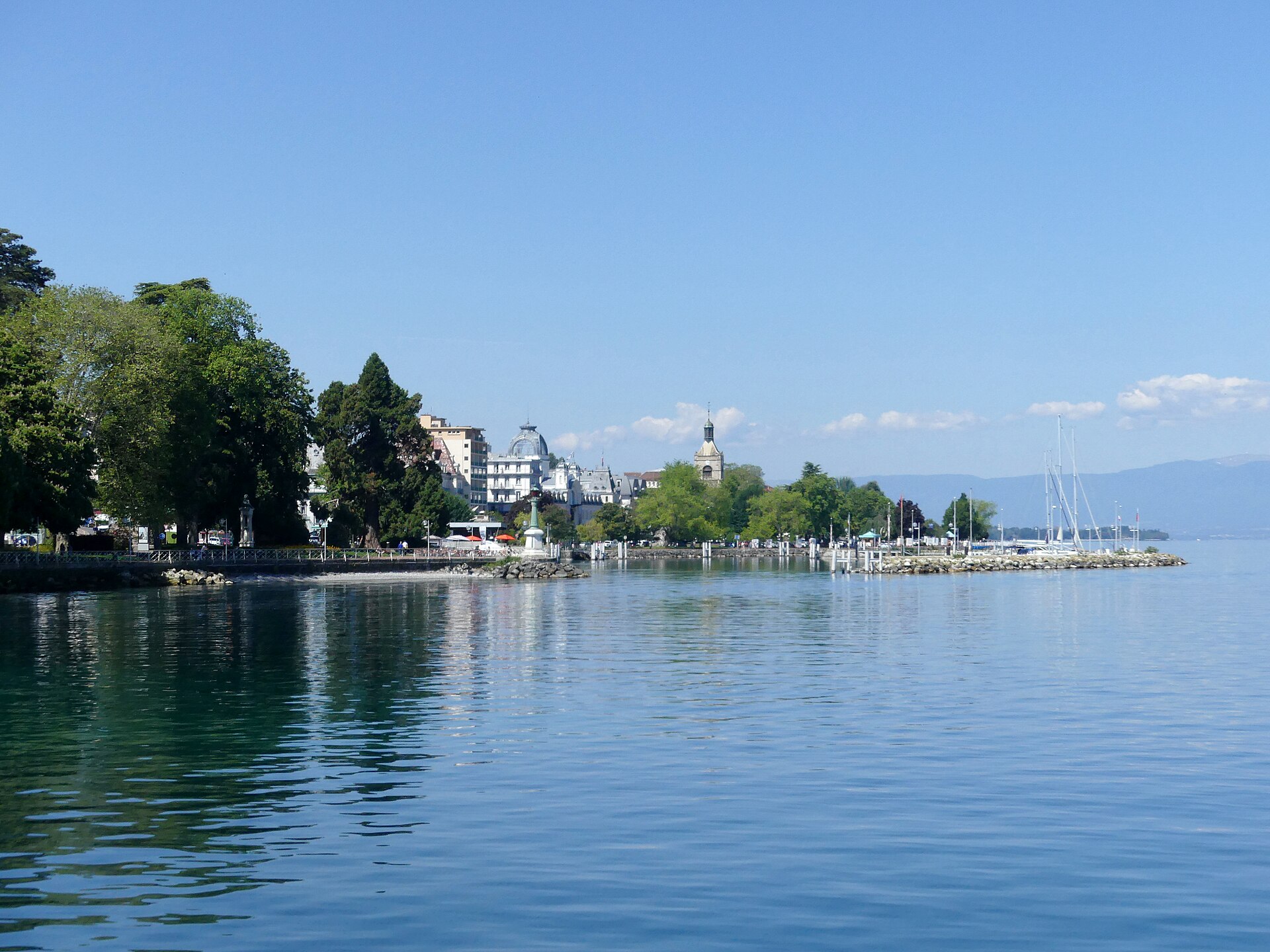
The timing could not have served the silence more effectively. On the same Monday morning that Sadara’s grace period expired at Jubail, Donald Trump took to the G7 summit stage at Evian-les-Bains and announced that the Iran nuclear deal was “all signed.” Emmanuel Macron called it “a very important step for peace” and announced that France would deploy mine-clearing vessels to the Strait of Hormuz “within days.” The S&P 500 rose 1.9 percent. Brent crude fell 4.89 percent to $80.73 per barrel. Every major newsroom in the world pivoted to Iran.
That mine-clearing mission is not a short operation. Western maritime security sources estimate Hormuz mine clearance will take 40 to 50 days at minimum — and up to six months by the Pentagon’s private projection — compounding each day of fiscal shortfall the Sadara deadline has already opened.
The Sadara grace period expiry appeared in no Reuters dispatch, no Bloomberg terminal alert, no Financial Times article, and no Wall Street Journal story on June 15. No analyst note flagged it. No rating agency issued a comment. The story of Saudi Arabia’s largest petrochemical joint venture passing a $3.7 billion debt cliff — with zero revenue, zero production, and zero disclosure — was entirely absent from the global financial news cycle, subsumed by the geopolitical spectacle happening simultaneously across the Mediterranean. This site’s coverage, beginning with the June 13 structural analysis, remains the only sustained reporting on the deadline in any English-language outlet.
Saudi Arabia’s posture at Evian mirrored its posture at Jubail: present in name, absent in substance. Crown Prince Mohammed bin Salman declined his third consecutive G7 invitation, sending Foreign Minister Prince Faisal bin Farhan in his place, while at Jubail the kingdom’s sixty-five-percent-owned subsidiary let the deadline pass without a word. The Evian deal, by sending Brent below $81, widened the fiscal gap that makes the Sadara guarantee harder to fund; the silence at Jubail, by avoiding a formal credit event, prevents a disclosure that would complicate the diplomatic narrative of a stable, deal-making Gulf. Neither silence required coordination with the other — they simply inhabited the same incentive structure, and the twenty-eight-dollar gap between Brent’s price and Saudi Arabia’s fiscal breakeven is the number that connects them.
What Comes After a Default Nobody Declared?
The most probable near-term outcome is a second quiet restructuring that preserves the silence — extending the grace period, converting guaranteed debt to subordinated equity, or injecting fresh capital under amended terms, all without triggering the material-event filing obligations that would create a public record. The 2021 restructuring proved that Aramco and Dow can renegotiate with the syndicate inside the disclosure gap. The obstacle is that the fiscal environment supporting a quiet recapitalization no longer exists.
The grace period is gone. No cure was announced, no new restructuring has been disclosed, and no lender has demanded payment. In the taxonomy of corporate distress, Sadara now occupies a category that exists in practice but not in regulation: a borrower whose guaranteed obligations have matured beyond their grace, whose operations have ceased, whose accumulated losses exceed its capital, and whose sponsors have taken every available accounting and legal step to avoid calling any of this by its name.
If ALBA in 2009 is the template, the path forward is the one that produces the fewest filings and the least public scrutiny — a negotiated extension announced as a routine corporate action, not a restructuring born of distress. But the economic backdrop is materially worse than any prior restructuring window.
Brent at $80.73 is twenty-eight dollars below Saudi breakeven, and the trajectory points lower still: analysts surveyed by Business Standard on June 12 put $70 per barrel in scope if the Iran deal holds. The kingdom’s first-quarter deficit already consumed three-quarters of the annual target, Aramco is distributing more in dividends than it generates in free cash, and PIF’s reserves sit at a six-year trough. Jubail Industrial City, which contributes approximately seven percent of Saudi GDP according to Farmonaut industrial analysis, has been partially offline for nearly three months with no restart date set. The fiscal buffer that made a quiet 2021 recapitalization painless does not exist in 2026.
What Sadara was designed to represent makes the silence heavier than the debt itself. This was the proof of concept — the deal that was supposed to demonstrate that Saudi Arabia could build world-scale downstream capacity with a Western technology partner, diversify revenue beyond crude, and generate the kind of industrial employment that Vision 2030 needed as its economic foundation. The $12.5 billion financing was engineered to make the project unkillable: sovereign-linked banks from across the Gulf, ECA guarantees from four continents, two of the world’s largest industrial companies as co-sponsors. It was not engineered to produce a venture that loses money four years out of five, shuts down entirely in the fifth year of a grace period, and lets a $3.7 billion deadline evaporate in silence while its host government avoids attending the summit where its most important ally is announcing the region is open for business. The parallel at NEOM — where PIF has reclassified the project as an “independent ecosystem” and earmarked $16 billion for contractor exits — traces the same failure pattern at a larger scale, as detailed in NEOM’s fiscal anatomy.
Twenty-six manufacturing units at Jubail Industrial City sit empty in the June heat, their feedstock lines drained and their export terminals idle for an eleventh week. The grace period that was supposed to buy them time is over. The next filing that mentions this date — when it arrives, buried in the fine print of a quarterly supplement or a restructuring addendum — will not report what happened on June 15. It will report what was decided, in the silence, long before anyone stopped pretending that the deadline still mattered. Aramco’s pattern of disclosure is consistent: on the same week that Sadara’s grace period expired without acknowledgement, the company was quietly marketing $7 billion in sulfur terminal infrastructure under Project Yellowstone — assets whose value it chose to surface, in contrast to liabilities it chose to bury.
Frequently Asked Questions
Has Sadara ever been profitable?
In only one of the past five years. Sadara recorded a net profit in 2021, the restructuring year, when accounting adjustments tied to the renegotiation of the $10 billion completion guarantee produced a one-time gain that masked underlying operational weakness. Every subsequent year — 2022 through 2025 — has been a net loss, with 2025’s SAR 5.793 billion the largest to date. Since first production in 2016, Sadara has not sustained consecutive profitable quarters in any fiscal year. The cumulative loss trajectory is what pushed accumulated deficits past one hundred percent of share capital, triggering the Article 150 extraordinary general assembly that convened in early 2026 — and voted to continue without a stated plan of cure.
What is the US taxpayer’s exposure to Sadara?
The US Export-Import Bank committed $4.975 billion in direct loans to the original 2013 financing — one of the largest single-project commitments in Ex-Im’s history and a central exhibit in the agency’s congressional reauthorization testimony, per Ex-Im’s own published records. South Korea’s KEXIM provided an additional $320 million in direct loans and $80 million in guarantee cover. If Sadara is ultimately restructured in a way that impairs ECA-tranche recovery, US and South Korean taxpayers bear the losses on their respective sovereign-agency exposures. Neither Ex-Im nor the State Department has commented on the June 15 deadline, and the intersection with US Iran policy is direct: a formal Sadara default declaration during the same week as a US-Iran signing ceremony would have forced Ex-Im to reassess a marquee Gulf exposure at the worst possible diplomatic moment.
Could a single lender force a default declaration?
Under the restructured credit agreements, any syndicate member holding a sufficient share of outstanding principal could demand acceleration, triggering cross-default clauses across Sadara’s other debt instruments and potentially cascading into broader Saudi-linked credit facilities. In practice, the cost structure is prohibitive from every direction: Saudi-domiciled banks would destabilize their own balance sheets while antagonizing their largest sovereign client, Western banks would effectively close their Saudi advisory franchise, and ECAs would embarrass the diplomatic relationships that justify their mandates to legislators. For all lenders simultaneously, acceleration would convert a performing-on-paper loan into an impaired asset during a quarter in which banking regulators across three continents are already scrutinizing Gulf sovereign and quasi-sovereign credit quality.
What happened at the mandatory shareholders’ assembly?
When accumulated losses exceeded one hundred percent of share capital at end-2025, Saudi Companies Law Article 150 required an extraordinary general assembly within thirty days to vote on whether to continue operations or dissolve the company. The EGA was held in early 2026, and shareholders — Aramco at sixty-five percent and Dow at thirty-five percent — voted to continue. No restructuring plan, capital injection, or production restart target was announced following the vote. No public minutes were released, and no Tadawul filing explained the basis on which continuity was justified given the balance-sheet condition. The decision to continue without a disclosed path to cure became the first expression of the institutional silence strategy that held intact through June 15 — a template in which the minimum legally required action functioned as a substitute for the substantive action the situation demanded. Four days after the deadline, markets reinterpreted the Sadara debt silence as “tail risk removed” — an accounting read of a $3.7 billion guarantee that has not been contained, only rendered invisible.