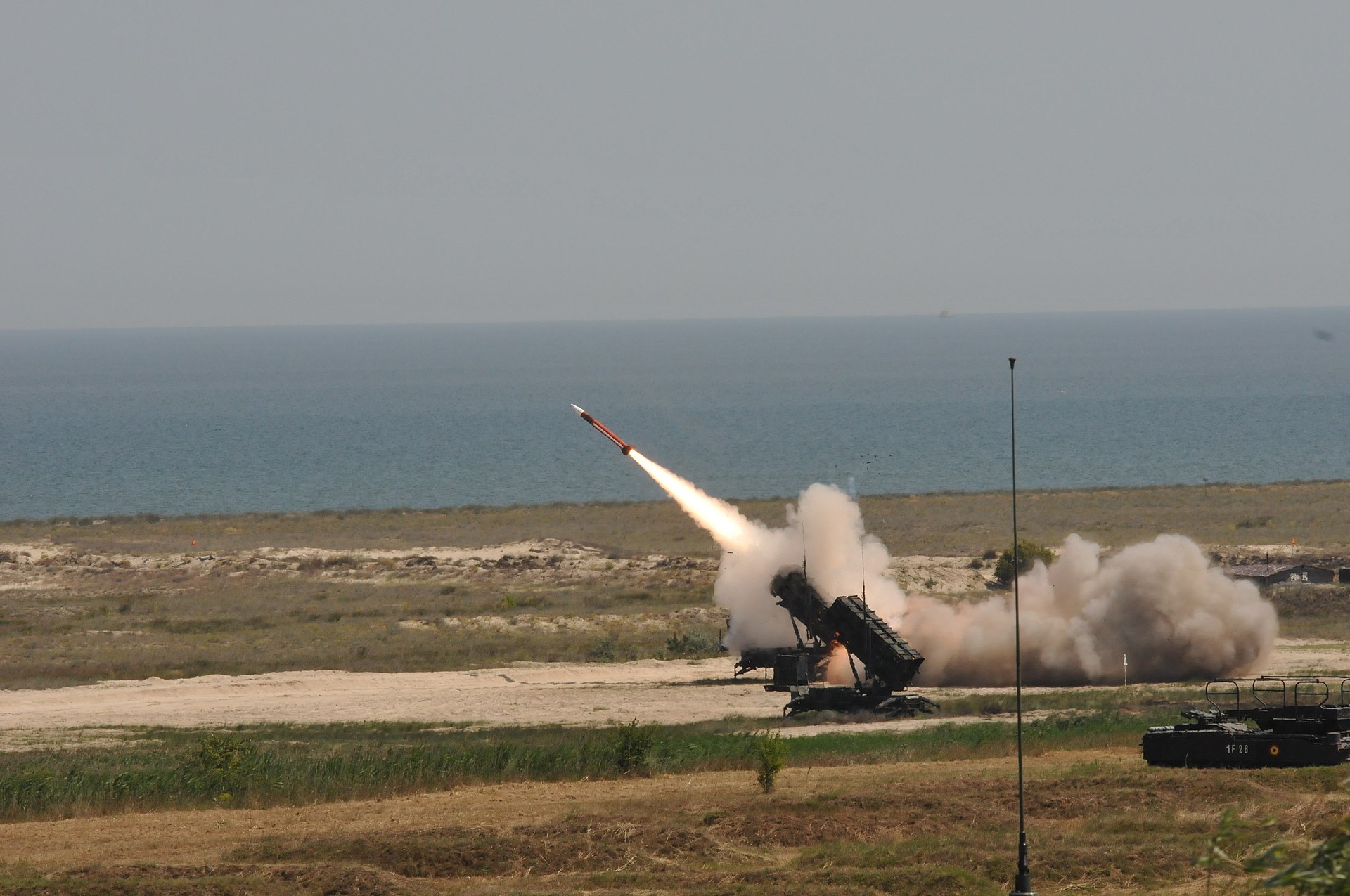

RIYADH — Saudi Arabia’s integrated air and missile defense — Patriot PAC-3 batteries, THAAD fire units, and the data-link architecture that binds them into a functioning system — was designed from inception as a jointly operated US-Saudi capability. If the United States draws down troops from Prince Sultan Air Base, as Washington is now actively considering, what departs is not a symbolic garrison. It is the operational core of every air defense battery the kingdom fields.
The drawdown under consideration, first reported on July 1 by Times of Israel and Just Security, would reposition US forces toward “more supportive countries like Israel and Jordan.” That framing treats the question as diplomatic — which ally merits the forward presence. But the question is also mechanical. The approximately 2,300 US personnel at PSAB include the maintenance contractors who keep PAC-3 launchers functional, the data-link operators who feed them targeting tracks, and the battle management teams that coordinate engagements across the kill chain. Those batteries are already at 86% ammunition depletion. On Day 15 of the MOU’s 60-day window, the kingdom’s most expensive military investment is converging with its most fragile dependency. Reports of a punitive drawdown — framed not as repositioning but as punishment for Saudi obstruction of Operation Project Freedom — have since given this dependency a concrete trigger.
Table of Contents
- What Does Saudi Arabia’s Air Defense Depend On?
- Four Hundred Rounds from Twenty-Eight Hundred
- The Only Factory on Earth
- What Leaves When the Troops Leave?
- The Eye Iran Already Destroyed
- Can Saudi Arabia Diversify in Time?
- Why Did Washington Turn the Shield Into a Weapon?
- Day 15 of 60
- Frequently Asked Questions
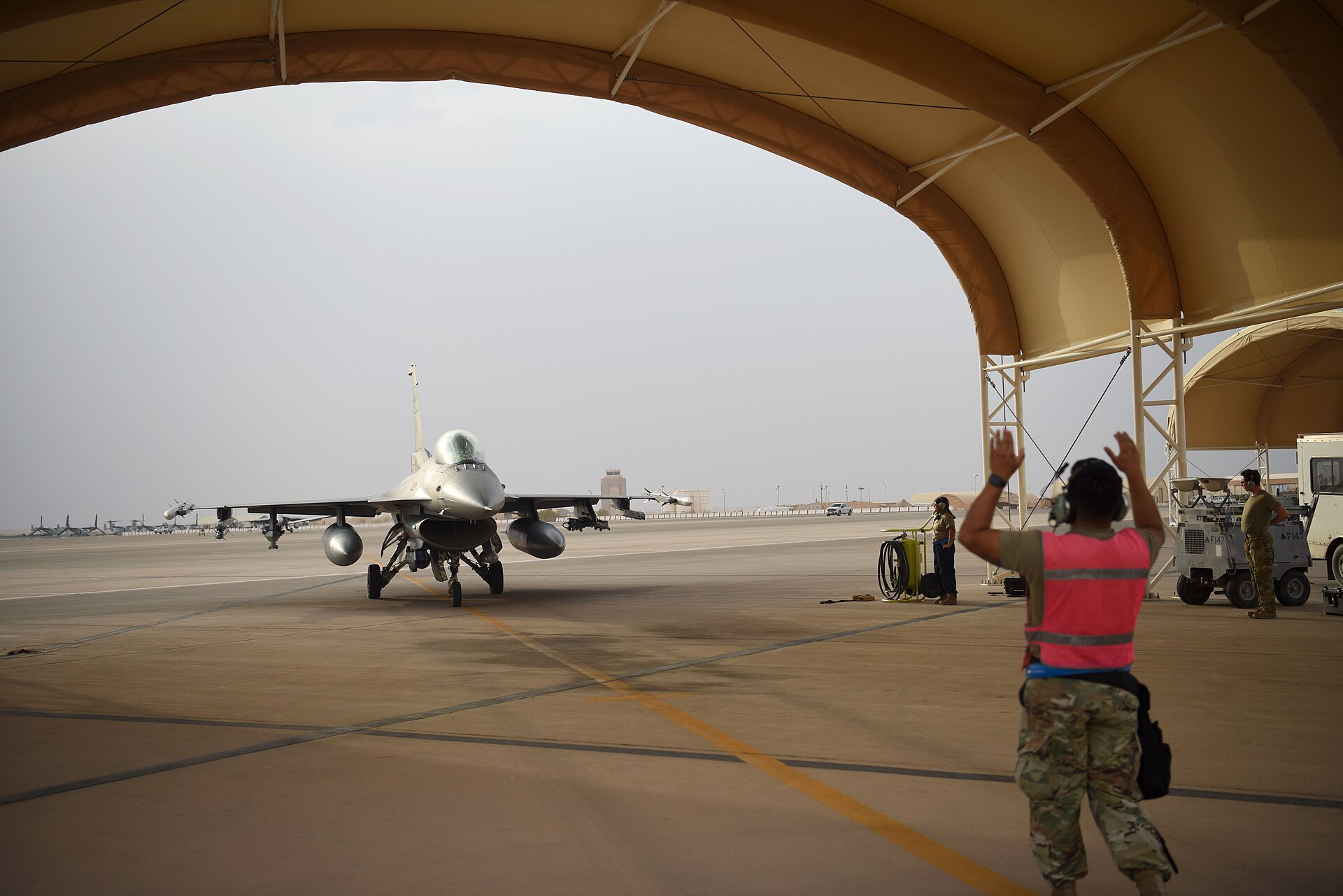
What Does Saudi Arabia’s Air Defense Depend On?
Saudi Arabia’s air and missile defense depends on US-supplied hardware, US contractor maintenance under the International Engineering Services Program, US-generated targeting data via Link-16 and AWACS platforms, and US-staffed battle management coordination. The United States accounts for 77% of Saudi arms imports over the 2021-25 period — a figure the IISS described in its March 2026 assessment, “Defending the Skies of the Arab Gulf States,” as reflecting “a dense web of interoperability requirements, training pipelines, maintenance dependencies, and command-and-control integration.”
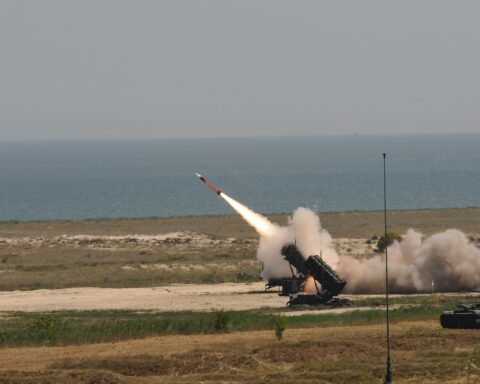
The integration is engineered, not administrative. A Patriot battalion operates through an Information Coordination Central that uplinks to the Joint Tactical Information Distribution System. Track data feeding targeting decisions arrives via AWACS aircraft broadcasting on JTIDS Information Interchange Messaging Standard. Saudi Arabia holds MIDS Low Volume Terminal equipment ordered between 2008 and 2013. The terminals are in Saudi hands. The data that flows through them originates in American-operated sensors and American-maintained networks.
“Gulf states’ forces are largely independent national entities, and most are heavily dependent on the United States for military support, broader exercise planning, and battle management in any serious conflict with Iran.”
CSIS, “The Gulf and the Challenge of Missile Defense”
The HOS Daily BriefThe Middle East briefing 3,000+ readers start their day with.
One email. Every weekday morning. Free.
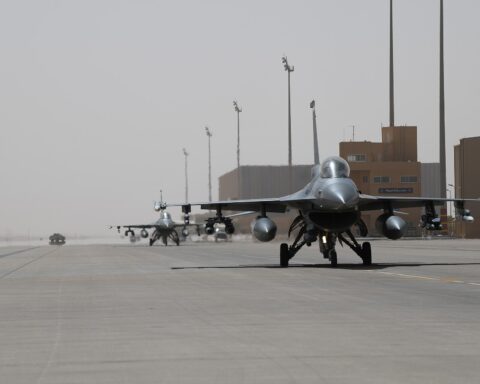
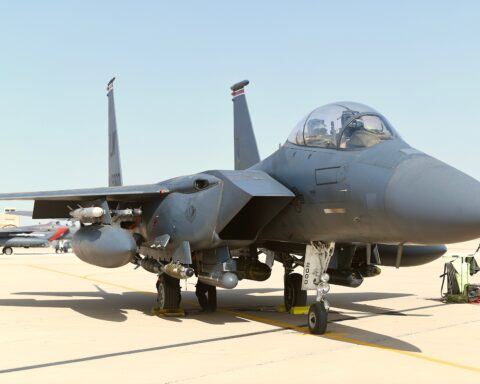
When the US military returned to PSAB in June 2019 after a fifteen-year absence following the 2003 Operation Iraqi Freedom withdrawal, the deployment explicitly bundled Patriot long-range missile defense with fighter aircraft. NBC News reported the return as a paired capability — the two were never separable. The CAOC had shifted from PSAB to Al Udeid on April 28, 2003. For the next sixteen years, Saudi Arabia possessed American air defense equipment it could not independently sustain at designed readiness levels.
Saudi Arabia’s Patriot operations today are sustained under the International Engineering Services Program, a US defense contractor framework staffed primarily by Americans holding US security clearances and working under US legal authorities. IESP is not a Saudi-operated capacity. It is an American logistics chain with a Saudi address. The contracts, clearances, and supply lines are administratively attached to the US military footprint at PSAB. The 2003 withdrawal demonstrated what happens when that footprint contracts: the hardware remains, but operational readiness degrades.
Four Hundred Rounds from Twenty-Eight Hundred
Approximately 400 PAC-3 MSE rounds remain from a pre-war Saudi inventory of roughly 2,800 — an 86% depletion rate. Each interceptor costs approximately $3.9 million. The rounds already expended represented some $9.4 billion in assets consumed in four months of conflict.
The expenditure was forced by the threat environment. Saudi Arabia intercepted three Iranian cruise missiles and a drone on March 4, 2026, and ten drones on March 29. The IRGC has fired more than 1,300 missiles across this conflict. The IISS noted in its May 2026 rearming assessment, “Challenge for the Gulf States,” that “high-end interceptors, such as Patriot PAC-2 and PAC-3 missiles, each costing millions of dollars, have repeatedly been used against far cheaper threats, creating a strategic vulnerability and forcing Gulf defenders into an unfavorable cost exchange.”
The pre-war stockpile — roughly $11 billion in interceptors — took years to accumulate through foreign military sales deliveries. At the rate the IRGC demonstrated in March 2026, 400 remaining rounds would not survive a second campaign of equivalent intensity. Each round expended against a $30,000 Shahed-136 represents a cost exchange ratio of roughly 130 to 1 in Iran’s favor. US forces fighting the same conflict have consumed their own Patriot stocks at rates that will take years to replace — meaning American and Saudi depletion now compete in a single production queue.
| Metric | PAC-3 MSE | THAAD |
|---|---|---|
| Pre-war inventory | ~2,800 rounds | 2 of 7 fire units operational |
| Remaining | ~400 rounds | ~319 of 534 global stock (215 consumed) |
| Depletion | 86% | ~40% (global) |
| On order (Saudi) | 730 rounds ($9B, DSCA Jan 30, 2026) | Framework agreement only |
| Global annual production | 620/year (Camden, AR) | 96/year |
| Planned production target | 2,000/year by 2030 | 400/year (timeline TBD) |
| Estimated FMS delivery wait | 7+ years (standard queue) | Multi-year ramp |
Sources: IISS (March/May 2026); DSCA; Lockheed Martin (Jan 29, Apr 10, 2026); USSC
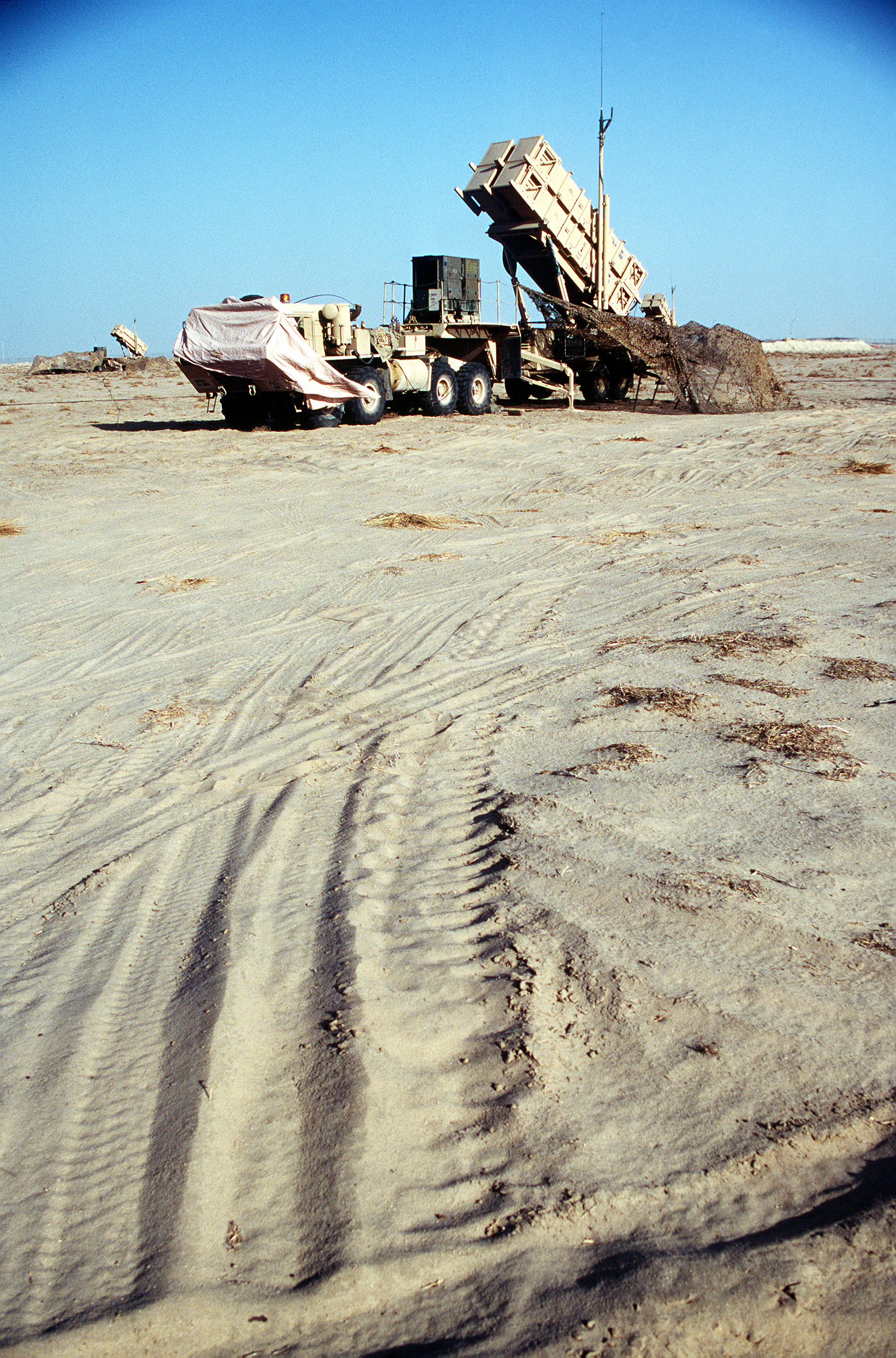
The Only Factory on Earth
Camden, Arkansas is the sole PAC-3 MSE final assembly facility on the planet. In 2025 it produced 620 interceptors for all customers combined — the US Army, Gulf states, European allies, and Pacific partners. That output represented a 20% year-on-year increase and the facility’s practical maximum under existing production cell configuration.
Saudi Arabia’s January 30, 2026 DSCA notification requested 730 PAC-3 MSE rounds at $9 billion. That single order exceeds one full year of Camden’s total global output. Outstanding PAC-3 MSE orders from the US Army and Gulf states exceeded 3,000 rounds as of early 2026, according to the IISS’s May assessment. The backlog, at current production rates, stretches to approximately 2030-2031 — and US Army replenishment will take queue priority over foreign military sales.
Lockheed Martin signed a $4.76 billion contract on April 10, 2026 targeting 2,000 rounds per year. The contract completion date is June 30, 2030. The new production cells and Munitions Acceleration Center will not be operational before that date. Boeing’s sole Huntsville, Alabama seeker facility — the only source for the PAC-3 MSE’s Ka-band active radar seeker — is undergoing a $200 million expansion on the same timeline.
The CSIS assessed that current production rates “are not enough to feed both US and global demand, stoked by active wars and simmering tensions around the world, from Ukraine to Taiwan.” The US Support Services Council estimates a standard foreign military sales client purchasing Patriots today faces an approximately seven-year delivery window. Saudi Arabia’s $9 billion order does not buy delivery. It buys a position in line.
What Leaves When the Troops Leave?
A US drawdown from Prince Sultan Air Base would remove the International Engineering Services Program contractors who maintain Patriot and THAAD batteries, the Link-16 data-link operators, the software update teams responsible for fire control system patches, and the battle management cells that coordinate multi-battery engagements. The approximately 2,300 US personnel at PSAB are not an abstract garrison. They are the human layer of a weapons system.
IESP is the specific mechanism. The clearances, the export licenses, and the logistics chains that keep contractor personnel in-country are administratively attached to the US military presence. When the footprint contracts, the legal scaffolding contracts with it. A drawdown is not a decision to remove troops and leave the contractors. The contractors exist within the footprint.
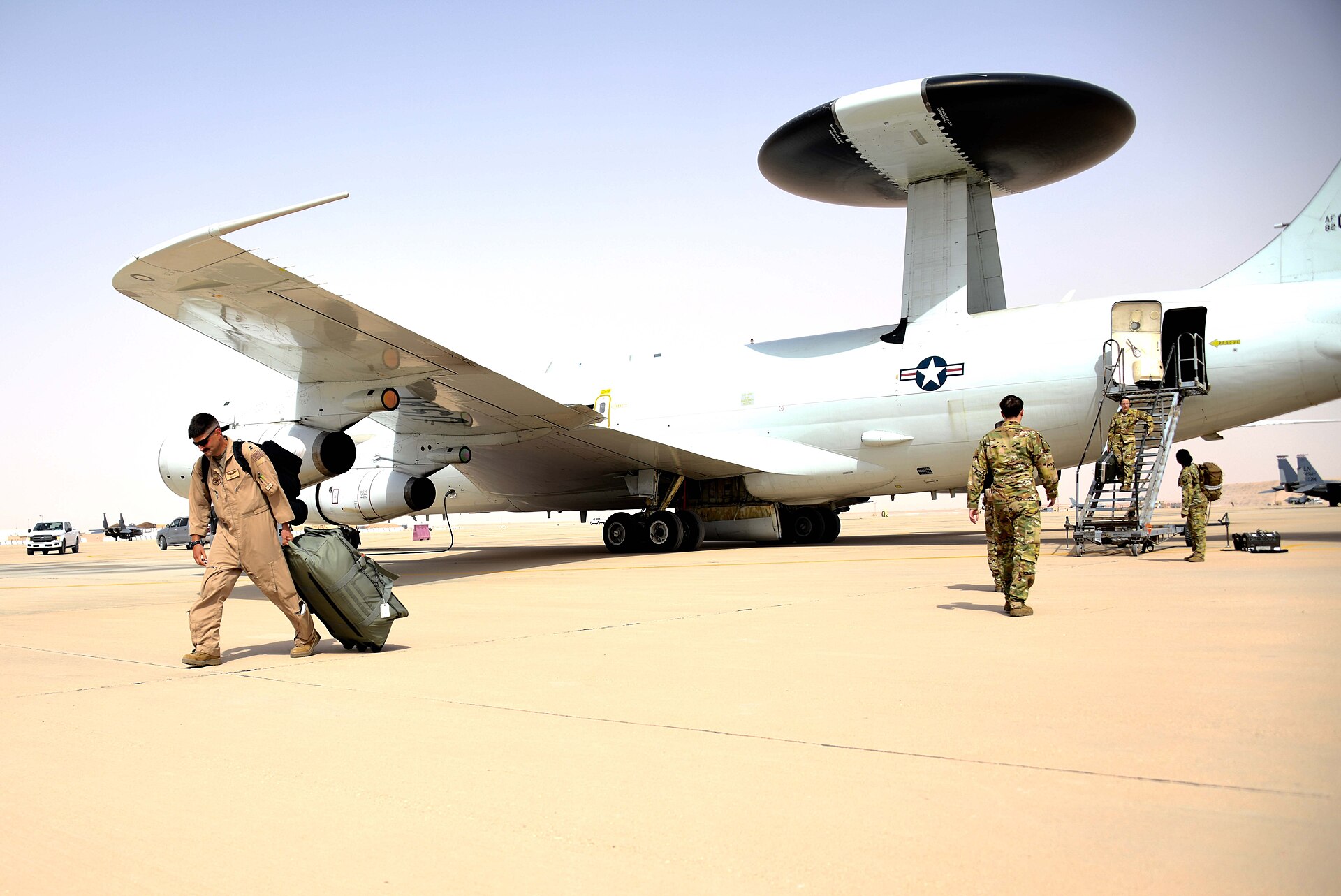
The data architecture compounds the dependency. Patriot’s Information Coordination Central uplinks to Link-16 via JTIDS/MIDS terminals. Against maneuvering ballistic and cruise missile threats, the system requires AWACS-generated tracks to achieve engagement-quality targeting. Saudi Arabia’s own E-3G Sentry at PSAB — the American-operated platform feeding those tracks — was effectively destroyed in the IRGC’s March 27 strike. Without a replacement and without the US operators who ran the data chain, remaining PAC-3 batteries fire with a degraded sensor picture, reduced engagement envelopes, and longer reaction times against the exact threat profile Iran has demonstrated.
A Saudi officer can press the launch button on a Patriot console. Whether the missile receives an engagement-quality track to pursue — and whether the fire control software is current enough to prosecute it — depends on the American layer. The distinction between possessing a weapon and operating a weapon system is the gap a drawdown opens.
THAAD faces identical constraints. Saudi Arabia operates two of seven procured THAAD fire units. Global THAAD interceptor stocks stood at approximately 534 rounds before the war; roughly 215 were consumed in the first four weeks of conflict alone. Lockheed Martin’s January 29, 2026 framework agreement to quadruple production from 96 to 400 per year is on a multi-year ramp that does not address the current deficit. THAAD requires the same US contractor maintenance, software updates, and targeting integration that Patriot does. A drawdown degrades both systems simultaneously.
The Eye Iran Already Destroyed
The IRGC’s March 27, 2026 strike on Prince Sultan Air Base injured 12 to 15 US troops, damaged multiple KC-135 tanker aircraft, and effectively destroyed the E-3G Sentry — the airborne early warning platform that feeds targeting tracks into Patriot’s targeting chain. The broader pattern of strikes on Saudi infrastructure extended beyond PSAB, but the E-3G loss carried disproportionate operational weight.
The E-3G is not replaceable from current US inventory. The Air Force has been retiring its E-3 Sentry fleet — the last airframe dates to the 1970s — in favor of the E-7A Wedgetail, which is not yet operational in the CENTCOM theater and faces its own production delays. Saudi Arabia operates five E-3A AWACS aircraft under the Peace Shield program — a different variant acquired in the 1980s — but their integration with US-standard Link-16 Patriot data feeds requires IESP contractor support to maintain. Without those contractors, even Saudi-owned AWACS may not produce tracks the Patriot ICC can use.
Small Wars Journal’s May 2026 analysis, “Mosaic Defense and Dispersed Command: Iran Strikes Back,” documented Iran’s targeting as “deliberately aimed at the US data and ISR layer” rather than at kinetic destruction alone. The pattern extended across the conflict: strikes on AWACS, ISR platforms, and tanker aircraft that sustain combat air patrols — the connective tissue of the air defense architecture, not its kinetic endpoints.
The March 27 strike was a proof of concept against the data layer. Iran has since established the treaty-text framework for resumption — and a US drawdown would complete what the missiles started, removing the sensor-to-shooter chain not through kinetic attack but through policy. The Houthi axis has already recognised the same gap: Saree issued a direct threat against Saudi airports and Aramco facilities on July 3, timed to the moment Saudi warplanes demonstrated they could not enforce Saudi airspace against even a civilian aircraft.
Can Saudi Arabia Diversify in Time?
Not within the current MOU window. South Korea’s Cheongung II medium-range surface-to-air missile and various Ukrainian air defense systems represent potential lower-tier additions, and the Arab Gulf States Institute has documented Gulf interest in building “a more layered and diversified architecture.” But no alternative supplier produces a PAC-3 or THAAD equivalent, and integrating any new system into Saudi command-and-control architecture would require years of testing and fielding that have not begun. A detailed examination of the capability gap the M-SAM-II cannot fill shows that Riyadh’s $867 million Hanwha Cheongung-II contract covers the mid-course intercept band — leaving the terminal-phase gap Iran’s Zolfaghar exploits entirely unaddressed.
“Gulf states are confronting not a political crisis of alliance with Washington but a material crisis of availability. Some US supplies may take years to arrive, at a time when global demand for air-defense interceptors has already been stretched by the war in Ukraine and rising demand across Europe, East Asia, and the Middle East.”
AGSI, “Beyond the U.S. Umbrella: Gulf States and the Diversification of Air Defense After Iran”
The AGSI was explicit that the shift toward diversified architecture remains aspirational, not operational. Korean and Ukrainian systems address the lower tiers — short-range air defense, counter-UAS — where the cost-exchange problem is most acute. They do not fill the gap left by depleted PAC-3 and THAAD interceptors against Iranian medium-range ballistic missiles. The Shahed-136 is a $30,000 problem. A Fateh-110 variant at Mach 3 is a different category of threat, and nothing outside the American production ecosystem addresses it at scale.
The political architecture being assembled to fill the vacuum — Turkey, Pakistan, Egypt, and Qatar — tracks separately from the hardware procurement. Saudi Arabia’s new security axis with Ankara, Islamabad, and Cairo can generate diplomatic signal and nuclear ambiguity, but none of its four members manufactures the interceptors Riyadh actually needs.
The $142 billion US-Saudi defense agreement announced in May 2025 — part of a broader $600 billion commercial package — was designed to deepen the institutional relationship. None of its provisions accelerate PAC-3 MSE delivery timelines, replace IESP contractor functions, or provide an alternative to the Link-16 data architecture that a drawdown removes. The IISS assessed the MOU as “almost certainly” failing on GCC security concerns. If it fails, the timeline for meaningful diversification — years, by any realistic assessment — does not align with the timeline for resumed Iranian strikes. The financial gap between pledge and delivery extends beyond defense hardware: Saudi Arabia’s $1 billion Board of Peace contribution — announced alongside the May 2025 package — has not been transferred, a pattern of withholding financial commitments that mirrors the structural leverage Riyadh applies when Washington controls the military relationship.
The GCC’s collective defense mechanism offers no substitute either. The 167th Ministerial’s “attack on one is attack on all” declaration produced zero coordinated military response through 91 days and 1,372 Iranian missiles. Peninsula Shield Force was not deployed. No GCC member operates PAC-3 MSE outside the same US-dependent framework Saudi Arabia does — the dependency is regional, not national.
Why Did Washington Turn the Shield Into a Weapon?
In May 2026, the White House threatened to withhold PAC-3 resupply after Saudi Arabia refused US access for Project Freedom, the Hormuz escort mission. The Jerusalem Post reported that Riyadh reversed its position and Project Freedom resumed covertly — the full sequence of the four-day grounding at Prince Sultan and Washington’s PAC-3 threat in response is documented here. The air defense dependency, always a structural feature of the relationship, became an explicit coercive instrument in a single exchange.
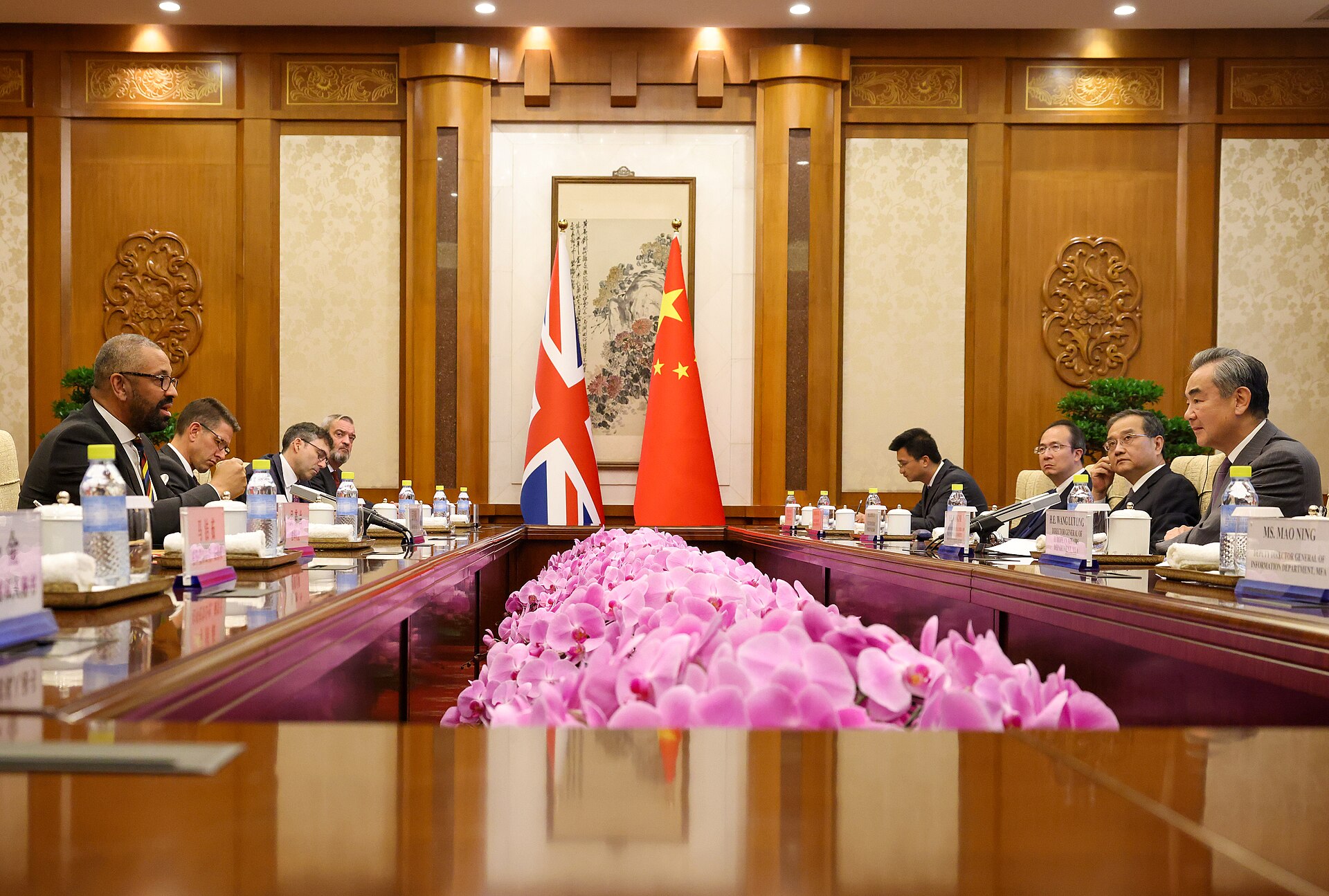
Secretary of State Marco Rubio’s Gulf tour the last week of June reinforced the dynamic through omission. He stopped in the UAE, Kuwait, and Bahrain. He skipped Riyadh. Al-Monitor reported on July 1 that “Riyadh viewed the skip as a snub.” Saudi Foreign Minister Prince Faisal bin Farhan traveled to Beijing shortly afterward — the same week the drawdown reporting surfaced. Beijing, however, does not manufacture PAC-3 MSE interceptors. Neither does any country outside the United States.
The broader pattern of friction between Washington and Riyadh has been building since the conflict’s early weeks. Saudi Arabia refused US airspace access for strike operations, declined to activate GCC collective defense, and maintained a posture of public neutrality that the economic data increasingly contradicts. Washington’s response has been to tighten the dependencies Saudi Arabia cannot escape — and the PAC-3 supply chain is the tightest of all.
A drawdown completes the conversion. The United States does not need to formally withhold interceptors if it removes the personnel who maintain, operate, and data-link the launchers those interceptors feed. The coercive effect is the same. The mechanism is different — administrative rather than commercial — and harder for Riyadh to counter, because no diplomatic outreach to Beijing or Moscow replaces a Link-16 terminal operator with a US security clearance.
Day 15 of 60
The MOU between the United States and Iran is on Day 15 of its 60-day Phase 2 window. The PGSA fee waiver expires August 16. Forty-five days remain. Saudi Arabia — excluded from Doha, Geneva, the Lake Lucerne monitoring group, and the IRGC-CENTCOM deconfliction cell — has paid an estimated $319 million in cumulative PGSA costs since May 5 while holding zero seats in any forum deciding its security architecture’s future.
If the MOU holds and hostilities stay suspended, Washington faces reduced justification for maintaining a forward-deployed garrison at PSAB. The drawdown becomes more politically viable — and the IESP contractors, the data-link operators, and the battle management teams are the first functions to be repositioned to Israel or Jordan, because those are the personnel categories a “more supportive” ally framework would redeploy.
If the MOU collapses and hostilities resume, Saudi Arabia faces an IRGC that has already struck PSAB, already destroyed the E-3G Sentry, and already demonstrated a targeting doctrine aimed at the American data layer. The approximately 400 remaining PAC-3 MSE rounds — without full AWACS support, without guaranteed IESP maintenance, and with no realistic resupply before 2028 at the earliest — would face an adversary whose demonstrated capability exceeds 1,300 missiles in a single campaign.
The IRGC cited MOU Articles 1 and 5 to justify its June 28 strikes. When the 60-day clock expires, those citations become operational precedent for resumption. The March 27 strike on PSAB was rehearsal against the architecture the drawdown would dismantle — the US data and sensor layer that makes Saudi-owned launchers into a functioning air defense. Iran does not need to destroy every PAC-3 battery. It needs to wait for the crews to leave.
None of the contracts signed over the past fifteen months — the $9 billion DSCA notification, the $142 billion defense framework, the $4.76 billion Lockheed production expansion — delivers a single additional interceptor before the MOU window closes on August 16. The kingdom’s air defense, measured in dollars, is among the most expensive on earth. Measured in operational capability — rounds, data links, contractor hours, AWACS tracks — it is 400 missiles, a destroyed sensor platform, and a maintenance contract tethered to a garrison Washington is considering abandoning. The convergence of that dependency with Trump’s private decision to abandon the August 18 MOU deadline means the diplomatic backstop and the military backstop are being withdrawn simultaneously, compounding rather than offsetting Riyadh’s exposure.
Frequently Asked Questions
How many Patriot interceptors has the United States itself expended in this conflict?
US forces reportedly fired between 1,060 and 1,430 Patriot interceptors in the Iran conflict, according to CSIS and Euromaidan Press March 2026 reporting. At the 2025 Camden production rate of 620 rounds per year, replacing US-consumed interceptors alone would require more than two full years of output — before a single Saudi, allied European, or Pacific partner order is filled. American depletion and Saudi depletion compete directly in a queue with a single production source, and the US Army’s replenishment will take contractual and political priority.
Can any country produce PAC-3 MSE outside the United States?
No. Camden, Arkansas holds a global monopoly on PAC-3 MSE final assembly. Ukraine has formally requested US authorization to produce PAC-3 MSE domestically under license, and the request has not been granted. The Kyiv Independent reported that allies pledging 35 Patriot missiles to Ukraine described it as “a lot” — a measure of how constrained the global supply is. The production monopoly at Camden is itself a strategic instrument: it gives the United States unilateral control over every PAC-3 customer’s ability to reload. Saudi Arabia cannot exercise the domestic-production option Ukraine has been denied, because the underlying technology transfer has never been authorized for any foreign partner.
What happened the last time the United States left Prince Sultan Air Base?
The US withdrew from PSAB on April 28, 2003, shifting the Combined Air Operations Center to Al Udeid, Qatar. During the fifteen-year absence, US GAO and Congressional Research Service reviews documented Saudi Arabia’s repeated difficulty sustaining PAC-2 Patriot batteries at designed readiness without resident IESP contractor support — fire control software currency degraded, and several launcher units cycled in and out of operational status. The Saudis held the hardware. They could not hold the software currency or the supply chain. When the US military returned in June 2019 with a deployment package that explicitly re-bundled Patriot missile defense with fighter aircraft, the Pentagon was effectively acknowledging that those fifteen years had confirmed the dependency rather than reduced it. The 2003-2019 gap is the closest historical precedent for the operational consequences of the drawdown now under consideration — and the 2019 return happened before an adversary had catalogued and struck the data layer.
Does the $142 billion US-Saudi defense agreement protect against a drawdown?
No. The May 2025 agreement established an institutional framework for defense cooperation across multiple domains, but it is a memorandum of intent across several program areas, not a treaty with force provisions. Its air defense component covers joint training, interoperability exercises, and technology transfer discussions — none of which accelerate PAC-3 MSE delivery timelines, replace IESP contractor functions, or prevent the executive branch from repositioning US forces. US troops are stationed abroad under Status of Forces Agreements and Memoranda of Understanding, not under commercial frameworks — the $600 billion commercial package changes economic incentives but not legal authorities over troop movements. The January 2026 DSCA notification for 730 PAC-3 MSE rounds was filed separately through standard foreign military sales channels and remains subject to the same production queue as all other customers. A president deciding to draw down PSAB would not need Saudi consent, congressional approval, or any modification to the $142 billion agreement to do so.
Has Iran specifically targeted the US air defense support layer?
Yes. Small Wars Journal’s May 2026 analysis documented Iran’s targeting as deliberately aimed at the data and ISR infrastructure rather than at individual weapons platforms. The March 27 strike on PSAB destroyed the E-3G Sentry — the airborne early warning platform feeding tracks into Patriot’s targeting chain — alongside KC-135 tankers that sustain combat air patrols. The IRGC also struck Al Udeid in Qatar, which hosts the CAOC coordinating air operations across the theater. The pattern is consistent across multiple strike packages: Iran targeted the command, control, and sensor architecture that connects American-built weapons into a functioning system, rather than attempting to destroy every launcher individually. The same IADS vulnerability forms the backdrop for Saudi Arabia’s July 4 Hodeidah strike warning — a coalition targeting declaration that uses Yemen as a pressure point precisely because the MOU makes direct pressure on Iran impossible. See: Saudi Arabia Threatened Hodeidah Because It Cannot Threaten Iran. The withdrawal’s concrete consequence for coalition capacity on the ground was demonstrated the following day: Houthi forces killed 15 government troops in Jabal Dabbas, Hodeidah — one day after the coalition threat, with no punitive airstrike following.