
JEDDAH — Saudi coalition spokesperson Turki al-Maliki threatened “unprecedented determination and force” against Hodeidah, Ras Isa, As-Salif, and Sanaa Airport on July 4, 2026. Forty-eight hours later, the Houthis sank a bulk carrier 51 nautical miles southwest of Hodeidah — in open ocean, beyond every target Al-Maliki named. The M/V Magic Seas, a 63,301-DWT Liberian-flagged vessel, went down on July 6 after a four-hour assault combining eight armed skiffs, four unmanned surface vehicles, missiles, and drones. Three days later, the MV Eternity C — carrying World Food Programme humanitarian cargo from Somalia — sank with four crew dead and eleven captured.
The coalition’s threat architecture names land targets. The Houthis demonstrated maritime escalation capability at sea. This is a domain mismatch: Al-Maliki’s coercion instrument cannot reach the operational space where vessels are sinking. The total number of ships sunk by Houthi forces since November 2023 doubled in four days — from two to four.
The coalition’s port-focused threat failed to deter maritime operations. The Khamenei funeral pause provided a recalibration window rather than an operational freeze. And the collapse of commercial shipping confidence now threatens Hodeidah’s function as the entry point for 70% of Yemen’s commercial imports and 80% of its humanitarian deliveries, according to UNMHA documentation.
Contents
- What Happened to M/V Magic Seas?
- The Eternity C — Humanitarian Aid on the Seabed
- Why Has Al-Maliki’s ‘Unprecedented Force’ Not Materialized?
- Where Is the Domain Mismatch?
- Did the Funeral Pause Freeze Houthi Operations?
- The Self-Interdiction Spiral
- What Happens South of Bab el-Mandeb?
- Frequently Asked Questions
What Happened to M/V Magic Seas?
The attack on July 6 lasted approximately four hours. Eight skiffs armed with rocket-propelled grenades and small arms surrounded the Magic Seas in open water southwest of Hodeidah, according to the UK Maritime Trade Operations advisory relayed by Ambrey. Four unmanned surface vehicles followed — two impacted the port side of the hull, two were destroyed by the vessel’s Armed Security Team before reaching the ship.
Houthi military spokesman Yahya Saree claimed five missiles and three drones were also deployed. The multi-layered assault — skiffs for close engagement, USVs for hull penetration, missiles and drones for standoff pressure — represented a more complex attack profile than the single-vector operations that characterised the early months of the Red Sea campaign in late 2023.
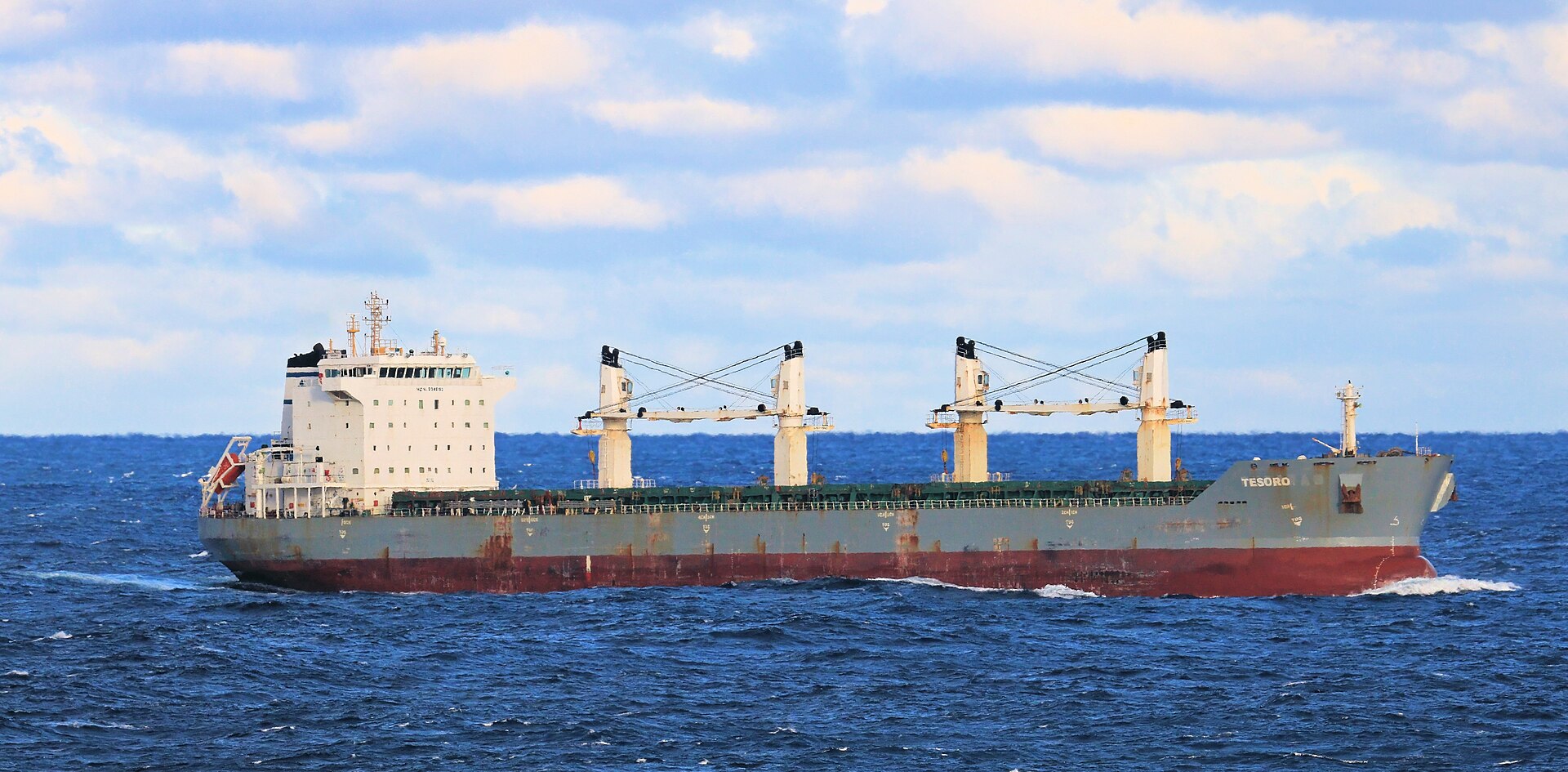
The Magic Seas was a 200-metre bulk carrier, 63,301 deadweight tonnes, owned by Optimal International Shipping and managed by Stem Shipping Co SA. She was carrying fertiliser and steel billets from China to Turkey. Michael Bodouroglou of Stem Shipping acknowledged the company’s previous Israeli port calls but stated this voyage “had nothing to do with Israel,” according to gCaptain.
The Middle East briefing 3,000+ readers start their day with.
One email. Every weekday morning. Free.
Saree’s justification was categorical: the vessel had violated a Houthi “ban on entering occupied Palestinian ports.” He stated that “several warnings sent to the ship … were ignored.” The operational distinction — this cargo, this route, this charterer — mattered less than the political classification. Stem Shipping’s fleet history determined the targeting decision, not the fertiliser in the hold.
After the 22 crew abandoned ship, the Houthis boarded via VHF radio hail, planted hull explosives, and detonated them. The vessel sank below the waterline. All crew survived. They were rescued by a passing merchant vessel and delivered to Djibouti via EUNAVFOR ATALANTA, according to the UAE Foreign Ministry. Saree stated that “our forces allowed the crew to safely evacuate.”
The Magic Seas was the third vessel sunk by Houthi forces since the Red Sea campaign began in November 2023, following the Rubymar on March 2, 2024, and the Tutor in June 2024, in which one Filipino crew member was killed. The last Houthi attack on a commercial vessel before the resumption had occurred on December 26, 2024, according to gCaptain’s maritime incident record — an operational pause of eighteen months. The July 6 attack ended that pause.
The Eternity C — Humanitarian Aid on the Seabed
Three days after the Magic Seas, a second vessel went down. The MV Eternity C, a Liberian-flagged cargo ship managed by Cosmo Ship Management of Athens, was attacked between July 7 and 8 and sank on July 9. Four crew members died. Eleven were captured by Houthi forces — nine Filipino, one Indian, one Russian.
The Eternity C was carrying World Food Programme humanitarian aid from Somalia to Saudi Arabia. The Houthi justification followed the same logic applied to the Magic Seas: the “vessel’s operator continues to make port visits to Israel.” The cargo was irrelevant to the targeting calculus. Niku Jafarnia, a researcher at Human Rights Watch, stated that “the Houthis have sought to justify unlawful attacks by pointing to Israeli violations against Palestinians.”
The sinking of a WFP-cargo vessel inverts the Houthi narrative on Hodeidah. The port’s significance — the sole entry point for the majority of Yemen’s food and medical supplies — has been cited by the Houthis themselves as a reason external forces should not strike the city. Sinking a vessel carrying UN humanitarian goods bound for a Saudi port undermines that framing.
The cargo was aid. The destination was the Kingdom. The justification was an Israeli port history belonging to the ship’s operator, not the charterer or the consignment.
The eleven captive crew members add a hostage dimension the Magic Seas attack did not produce. The Houthis have held commercial sailors before: the Galaxy Leader’s 25-member crew was detained for months after the November 2023 hijacking. Captive crew members create diplomatic pressure on flag states and manning agencies while generating no military cost for the captor. The four dead are the highest single-incident fatality count in the Houthi Red Sea campaign. The full detention record — 430 days for the Galaxy Leader crew, five months for the Eternity C survivors — establishes crew seizure as a structured coercion system that operates independently of any weapon al-Maliki can threaten to fire.
With the Eternity C, the total number of vessels sunk since November 2023 reached four. Noam Raydan and Farzin Nadimi of the Washington Institute observed that “the total absence of international military assets in the southern Red Sea signals to the Houthis that they are free to attack and sink commercial vessels at will.”
Why Has Al-Maliki’s ‘Unprecedented Force’ Not Materialized?
On July 4, coalition spokesperson Turki al-Maliki named four targets by location: Hodeidah, Ras Isa, As-Salif, and Sanaa Airport. He promised “unprecedented determination and force to any and all attempts to target the Kingdom, its citizens and residents and national assets, or any attempt to violate the sovereignty of the brotherly Republic of Yemen,” according to Al Jazeera. As of July 9, no coalition strike on any of these targets has been confirmed.
The gap between the threat and its execution is now measurable in days, not hours. During those days, two ships sank and four crew members died. The structural problem identified before the sinkings — that Saudi Arabia threatened Hodeidah because it cannot threaten Iran — has compounded. The threat was offence-only, directed at land infrastructure the coalition can reach. The Houthis responded in a domain the coalition cannot.
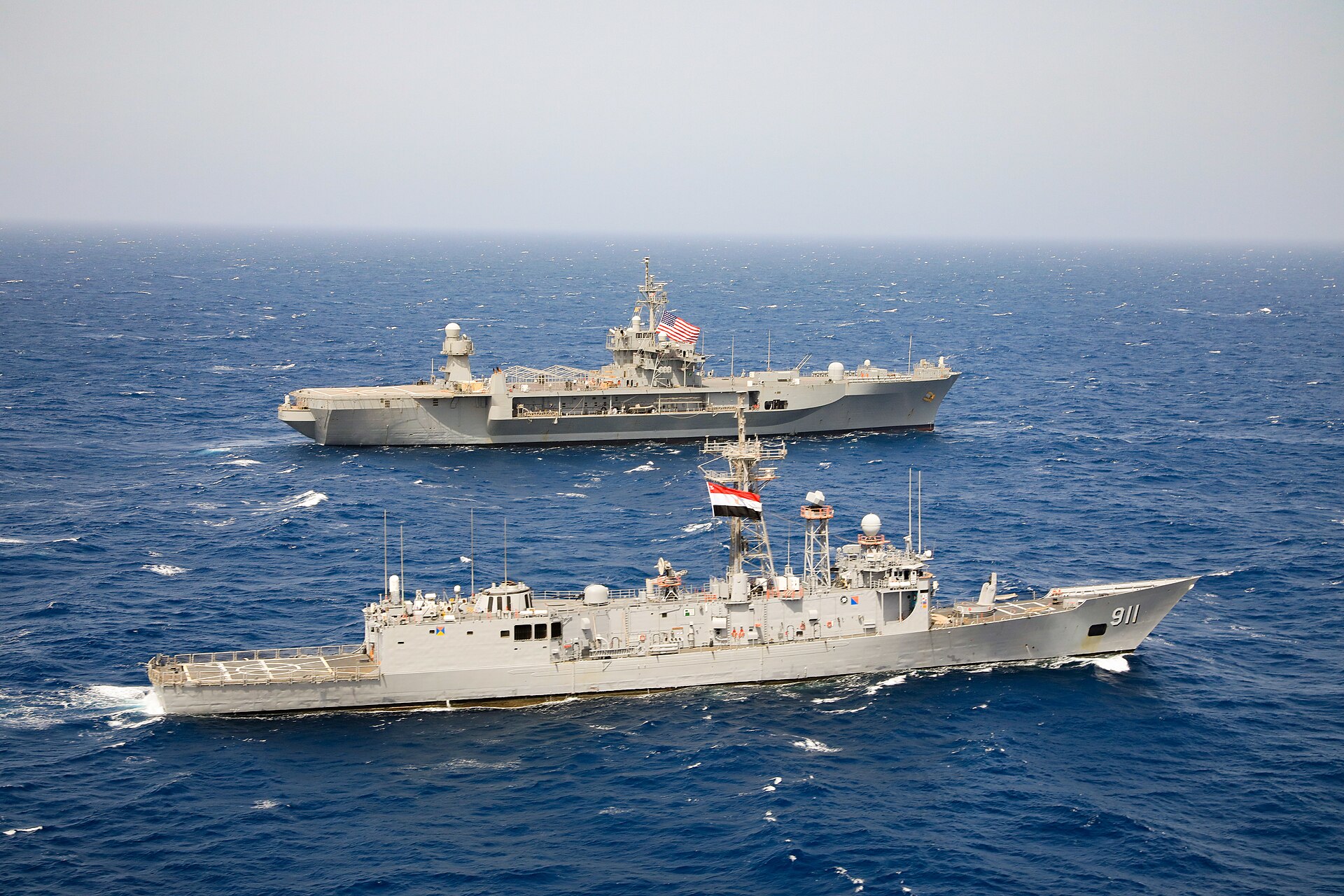
The Khamenei funeral pause (July 4–9) partially explains the inaction. The coalition would face diplomatic costs for striking during a funeral observance involving 30-plus national delegations in Tehran. But the pause constrained only the party that issued the threat. The party that received it continued maritime operations on Day 2.
A deeper constraint is temporal. The Saudi-led coalition has not conducted airstrikes in Yemen for approximately four years. Houthi ground forces killed 15 government troops at Jabal Dabbas in Hodeidah’s Hays district on July 5 — one day after Al-Maliki’s statement — without drawing a coalition air response. The four-year air pause is not a formal ceasefire. It is a pattern of non-use that makes resumption a political decision of a different order than the spokesperson’s rhetoric implies.
The UNMHA mandate expiration on March 31, 2026 — following UNSC Resolution 2813, passed 13–2 — removed the institutional verification layer at Hodeidah. UN monitors no longer distinguish between civilian port operations and military staging at the docks. Israel struck the same ports Al-Maliki named during Operation Black Flag, but Israel operates under a different targeting doctrine and without the coalition’s diplomatic constraints in the funeral window.
A coercion instrument that cannot be executed within 48 hours of issuance degrades with each passing day. The Magic Seas sank on Day 2 after the threat. The Eternity C sank on Day 5. By the time the funeral pause closed on July 9, the threat was five days old and two ships heavier.
Where Is the Domain Mismatch?
Al-Maliki’s threat names ports and airports — fixed land infrastructure with known coordinates. The Houthis sank a ship in open ocean. The coalition possesses the air assets to strike Hodeidah port, Ras Isa terminal, As-Salif harbour, and Sanaa Airport. It does not possess a confirmed capability to interdict Houthi unmanned surface vehicles and armed skiffs operating in open water south of the city.
The Houthi arsenal deployed against the Magic Seas was multi-layered. Farzin Nadimi of the Washington Institute has catalogued the weapons systems: Asef electro-optically guided anti-ship missiles, Qasim anti-ship missiles, Mandab-2 radar-guided cruise missiles, explosive USVs, and long-range unmanned aerial vehicles. Against the Magic Seas, eight skiffs provided close-in engagement, four USVs delivered hull-penetrating impacts, and the missile and drone volleys forced defensive responses that divided the Armed Security Team’s attention. This is a distributed maritime attack capability. It cannot be neutralised by cratering a runway or destroying a crane at Ras Isa.
Saudi Arabia’s Combined Task Force 153 operates in the Bab el-Mandeb corridor, but its record of real-time interdiction against Houthi asymmetric attacks is limited. The coalition’s air-defence deficiencies — PAC-3 interceptors 86% depleted, the M-SAM-II procurement mismatched to incoming threat profiles — address a different problem. The defence architecture was built for inbound missiles. It was not built for outbound skiffs hunting commercial vessels at sea.
The domain mismatch produces a specific failure mode. The coalition can threaten to destroy the port the Houthis control. It cannot protect the sea lanes the Houthis are attacking with USVs, armed skiffs, and anti-ship missiles. The threat punishes Houthi territory. It does not safeguard the commercial traffic the Houthis are targeting. Every ship that sinks 51 miles offshore widens the gap between the named targets and the operational problem.
Striking Hodeidah port would damage infrastructure the Houthis use. It would also destroy the primary import channel for a civilian population of which an estimated 21.6 million Yemenis — two-thirds of the country — require humanitarian assistance, according to OCHA. The coalition’s threat sits in a double bind. Executing it creates a humanitarian catastrophe that damages Riyadh diplomatically. Not executing it drains the coercive credibility Al-Maliki attempted to build on July 4. The Houthis, operating at sea, face neither constraint.
Did the Funeral Pause Freeze Houthi Operations?
The Khamenei funeral pause ran July 4–9, coinciding with the Doha round 3 interregnum. The Magic Seas sank on July 6 — Day 3 of the pause. The Houthis are not signatories to the June 17 Islamabad MOU between the United States and Iran, which did not incorporate a Houthi operational freeze, according to CSIS and Al Jazeera analyses. No mechanism in the MOU or any disclosed side arrangement binds Houthi maritime operations to Iranian diplomatic commitments.
The operational independence is visible in the calendar. On July 4, senior Houthi official Dhaif Allah al-Shami attended the Khamenei funeral ceremony in Tehran, according to France 24. The funeral — at which an IRGC-controlled podium was used to call for President Trump’s assassination — drew delegations from more than 30 countries. While al-Shami stood in Imam Khomeini Grand Mosalla, Houthi naval units in the Red Sea were 48 hours from sinking the Magic Seas.
Saree stated on July 6 that “our operations continue in targeting the depths of the Israeli entity in occupied Palestine, as well as preventing Israeli maritime navigation in the Red and Arabian Seas … until the aggression on Gaza stops and the siege on it is lifted,” according to NBC News. The stated operational mandate is tied to Gaza, not to the MOU, not to the funeral, and not to the Doha round timetable.
Saoud El Mawla, Visiting Senior Fellow at the Middle East Council on Global Affairs, wrote in April 2026 that “the Houthis exhibit behavior similar to that of states” and that their Red Sea operations represent “strategic leverage” preserved as a “deterrent of last resort.” He assessed that the Houthis retain a “margin of manoeuvrability governed by local calculations” and do not automatically mirror Iranian diplomatic positions.
The eighteen-month gap between the last commercial vessel attack and the July 6 resumption suggests deliberate recalibration, not spontaneous escalation. The resumption came during a period of maximum diplomatic sensitivity — a funeral, a MOU pause, a Doha negotiation gap — when international attention was directed at Tehran. Whether that timing was coordinated with Iranian interests or driven by independent Houthi calculations, it produced the same operational result: two ships sank while the diplomatic apparatus looked elsewhere.
The Self-Interdiction Spiral
The sinkings may matter less for what they destroyed than for what they deterred. Zero commercial vessel arrivals are expected at Hodeidah in the next 30 days, according to vessel tracking data. Shippers are self-interdicting — withdrawing from the approach lanes before any coalition strike lands.
Al-Maliki’s threat targeted port infrastructure. The commercial deterrence mechanism is collapsing from below, through insurance pricing and routing decisions, not from above through military action.
War risk premiums for Red Sea transits reached $150,000 to $300,000 per voyage in 2026 insurance industry assessments. Red Sea transit traffic was already 50% below the 2023 baseline before the July 2026 resumption, according to the Washington Institute. The Magic Seas and Eternity C sinkings will push the residual traffic in the Hodeidah approaches toward zero. Vessels rerouting via the Cape of Good Hope add 3,500 nautical miles and 10 to 14 days per voyage.
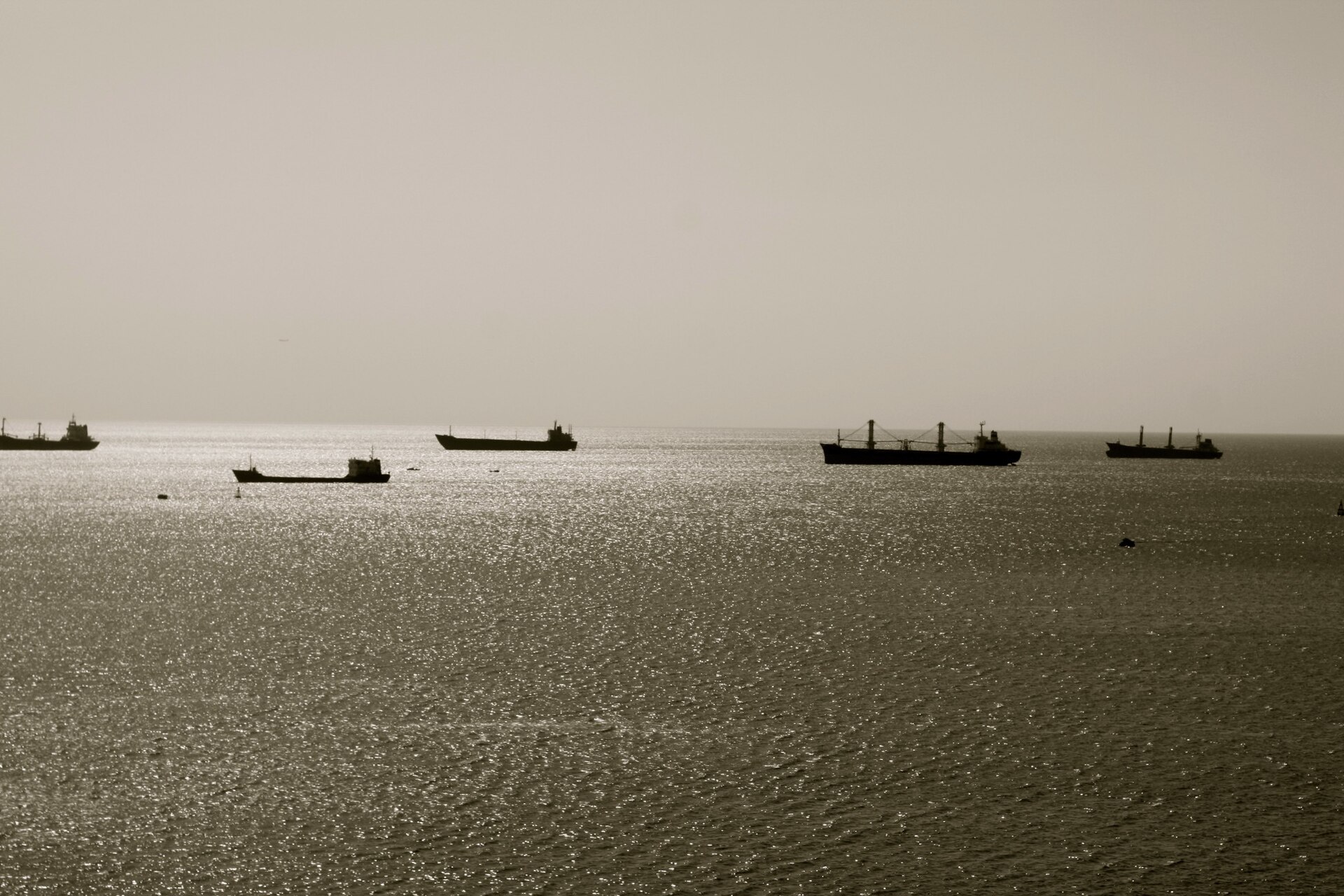
The self-interdiction spiral creates a humanitarian problem that exists independently of any military strike. Hodeidah’s share of Yemen’s imports and aid deliveries, as noted above, makes the port irreplaceable. If commercial shipping withdraws from the port’s approaches, throughput drops regardless of whether the cranes still stand or the berths remain intact. The coalition’s broader force-projection constraints — including the Saudi grounding of 43 US warplanes at Prince Sultan Air Base in May 2026 — suggest that replacing maritime commercial access with military logistics convoys is not a viable alternative.
IMO Secretary-General Arsenio Dominguez stated that “the resumption of deplorable attacks in the Red Sea constitutes a renewed violation of international law and freedom of navigation,” according to Anadolu Agency. Operation Prosperity Guardian, the US-led naval coalition, achieved “only limited deterrent effect” against Houthi asymmetric tactics, according to a January 2026 Eurasiareview assessment. The statement identifies the violation. Neither the statement nor the naval operation identifies a credible enforcer.
The commercial logic is binary. A shipper calculating whether to transit the southern Red Sea does not weigh Al-Maliki’s threat against the Houthi arsenal. The shipper weighs the war risk premium, the probability of becoming the fifth vessel sunk, and the 10–14-day delay of the Cape route against the savings of a direct transit. The coalition’s land-domain threat enters none of those variables.
The humanitarian corollary is direct. If shippers will not approach Hodeidah, the port’s 14 berths and grain silos serve no function regardless of whether they survive a coalition strike. The WFP, which was already operating under constrained access after the UNMHA expiry, faces a compounding problem: the cargo vessel carrying its aid was itself sunk by the force that controls the port. Replacement routing through Aden or Mokha adds overland transit through active conflict zones in Taiz and Lahij governorates — distances and security conditions that multiply delivery costs and timelines.
What Happens South of Bab el-Mandeb?
EUNAVFOR ASPIDES, the EU naval operation mandated for Red Sea and Bab el-Mandeb protection, operates with two to three naval units across the entire corridor. The mission escorted 476 merchant ships as of early June 2026, according to EU Council and EEAS figures. Its mandate was extended to February 2027. The Magic Seas sank in waters ASPIDES notionally covers but beyond the physical reach of two or three warships stretched across hundreds of miles of sea lane.
Raydan of the Washington Institute stated that “the latest attacks make clear that the international community must guarantee the freedom and safety of all ships transiting the Red Sea, combining a permanent military mission with assistance from regional countries and private security firms.” The recommendation presupposes capabilities that do not currently exist in the operational area. Before the resumption, approximately 40 to 50 commercial vessels per day transited the Bab el-Mandeb corridor, according to maritime industry traffic monitoring. Two to three ASPIDES warships cannot escort that volume. The escort ratio — warships to transiting merchantmen — has remained a fraction of what saturation coverage would require since the mission’s inception.
The Armed Security Team aboard the Magic Seas destroyed two of the four USVs that attacked the ship. The other two struck the hull. Private security proved partially effective at the tactical level and wholly insufficient at the strategic level — the ship still sank.
The Houthi campaign since November 2023 has involved over 100 attacks on vessels from more than 60 nations, according to Washington Institute tracking. Four ships have now sunk. Five crew members have died. Eleven remain captive. The Galaxy Leader, hijacked in November 2023 and held at Ras Isa, was struck by Israeli forces on July 7, 2026, according to the Times of Israel.
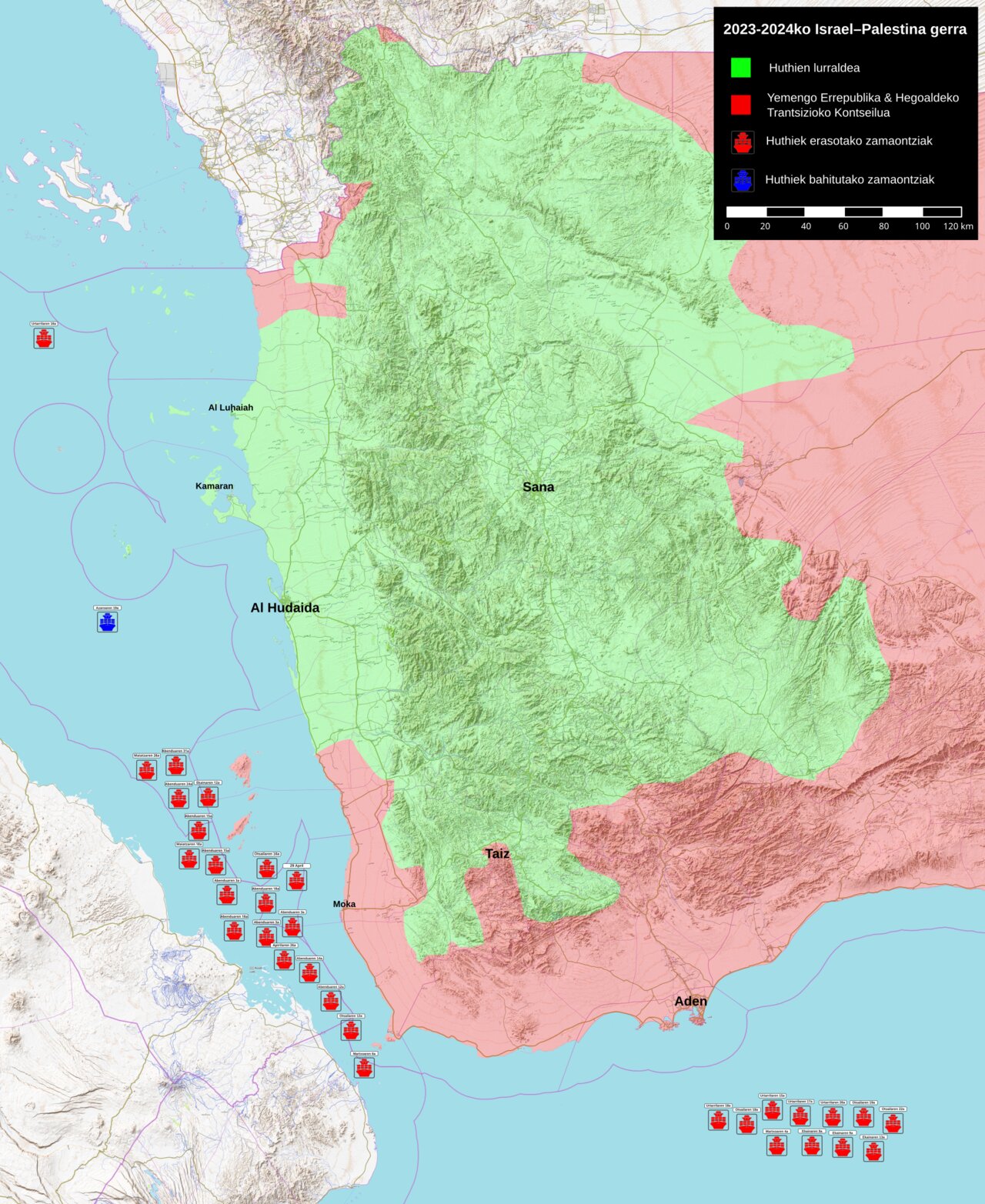
South of Bab el-Mandeb, the question is not whether the coalition can strike Hodeidah. It is whether anyone can protect the ships that transit the water between the port and the open ocean. The answer, measured in sinkings per week in July 2026, is that no force currently deployed in the corridor has demonstrated that capability.
Frequently Asked Questions
How many ships have the Houthis sunk since November 2023?
Four: the Rubymar (March 2, 2024), the Tutor (June 2024), M/V Magic Seas (July 6, 2026), and MV Eternity C (July 9, 2026). Five crew members have died across all four sinkings — one Filipino engineer on the Tutor and four on the Eternity C. The first two sinkings occurred over a four-month span in 2024. The second pair occurred within a four-day window in July 2026, after an eighteen-month operational pause that had held since December 2024, marking a compressed escalation cycle without precedent in the campaign.
Are the Houthis bound by the US-Iran MOU signed in Islamabad?
No. The June 17, 2026, Islamabad MOU was signed by the United States and Iran. The Houthis are not signatories, co-signatories, or referenced parties. No side letter, annex, or verbal commitment incorporates a Houthi operational freeze. Iran’s ability to constrain Houthi maritime operations is structurally contested: El Mawla of the Middle East Council on Global Affairs assessed in April 2026 that the Houthis maintain autonomous decision-making driven by local strategic calculations rather than Tehran’s diplomatic calendar. Pakistan, the MOU host, has no enforcement mechanism over Houthi Red Sea operations.
What is the current war risk premium for Red Sea shipping?
The per-voyage surcharge sits on top of standard hull and cargo insurance and is triggered automatically by the Lloyd’s of London Joint War Committee listing, which classifies the Red Sea and Gulf of Aden as areas of perceived enhanced risk. For context, the Cape of Good Hope rerouting alternative adds an estimated $800,000–$1,200,000 in additional fuel and charter costs per voyage for large container vessels. The total cost calculus depends on vessel size, cargo value, and individual insurer terms. Before the July 2026 resumption, some underwriters had begun offering modest rate reductions during the extended operational pause; those reductions are now expected to reverse.
What happened to the Galaxy Leader?
The Galaxy Leader, a car carrier hijacked by Houthi forces on November 19, 2023, was held at Ras Isa anchorage for over 31 months and used as a propaganda site open to public tours. Israel struck the vessel on July 7, 2026, according to the Times of Israel — the same week the Magic Seas and Eternity C were sunk. The ship’s 25-member crew had been released in stages through 2024 and early 2025. The Ras Isa anchorage where the Galaxy Leader was held is one of the port facilities Al-Maliki named in his July 4 threat.
What international law applies to the Houthi attacks on commercial shipping?
UNCLOS Articles 87 (freedom of navigation) and 100–107 (piracy suppression) form the primary framework. The Houthis’ status complicates enforcement: most states classify them as a non-state armed group, not a sovereign navy, which makes traditional law-of-the-sea responses — blockade declarations, prize law, flag-state enforcement — legally ambiguous. UNSC Resolution 2722 (January 2024) condemned the attacks and called for their cessation but did not authorise Chapter VII enforcement action. Individual states participating in Operation Prosperity Guardian and EUNAVFOR ASPIDES claim authority under Article 51 self-defence provisions of the UN Charter, not under a Security Council mandate.
By July 10, the pattern had extended to a confirmed six-day non-response: al-Maliki’s July 4 declaration named four installations, two ships were sunk, four crew were killed, and eleven mariners remained in Houthi custody with all four named targets unstruck.