
DHAHRAN — Saudi Aramco on Sunday set its November official selling price for Arab Light crude to Asian buyers at minus five dollars per barrel against the Dubai/Oman average — roughly ten dollars below what traders surveyed by Reuters had expected, and the deepest Asia discount since June 2020. In the same announcement, Aramco raised its November price for European buyers by three dollars per barrel, producing the widest Asia-Europe spread in the company’s available pricing record.
The two moves arrived less than forty-eight hours after Saudi-backed Yemeni forces launched a ground offensive to retake the Bab el-Mandeb strait, the chokepoint through which roughly seventy-five per cent of crude loaded at the Red Sea port of Yanbu must transit en route to Asian markets. The pricing and the offensive address the same structural problem. Aramco’s price sheet has become a routing map for the war: the Europe premium reflects the safer northward corridor through Suez, and the Asia discount absorbs the cost of the chokepoint Saudi Arabia has sent a hundred thousand troops to reopen.
Table of Contents
- The Swing No Trader Expected
- Why Did Aramco Cut Asia and Raise Europe in the Same Announcement?
- The Buyers Riyadh Is Losing
- What Does a Three-Million-Dollar Insurance Bill Do to a Barrel?
- The Pipeline That Failed Its Only Test
- Where Does the Yemen Offensive Fit in Aramco’s Pricing?
- The Fiscal Cost of Discounting the Barrel
- What Separates November 2026 From June 2020?
- Frequently Asked Questions
The Swing No Trader Expected
Market consensus ahead of the announcement pointed toward a price increase. A Reuters survey of traders and refiners, published on October 3, projected a five-dollar raise in the November Arab Light Asia differential. Brent had recovered above $105 per barrel, OPEC+ had begun scheduled production increases, and the summer’s Hormuz-driven price dislocation appeared to be stabilising. Bloomberg’s own pre-announcement survey described the prevailing expectation as a raise.
Aramco moved in the opposite direction. The resulting differential of minus five dollars per barrel against the Dubai/Oman average produced what Reuters and Business Standard described as a ten-dollar swing against consensus — the largest surprise deviation in available OSP survey history.
The November reductions “appeared intended partly to compensate buyers for the higher freight costs.”
— Three Asian refining sources, via Reuters, October 5, 2026
QC Intel had anticipated further cuts, noting in an October report that Aramco OSPs were “set for third sharp monthly reduction,” though the scale exceeded that guidance. Aramco left the US OSP unchanged, confirming the divergence as corridor-specific rather than a general repricing of Arab Light.
The Middle East briefing 3,000+ readers start their day with.
One email. Every weekday morning. Free.
Cumulatively, Arab Light’s Asia OSP has fallen fourteen dollars per barrel in four months. The August cut — eleven dollars, the steepest single-month reduction in Aramco pricing data going back to 2003 — reflected post-Hormuz price normalisation as the war premium unwound. November’s additional three-dollar reduction operates in different conditions. Brent is above $105. The benchmark has not collapsed. What has changed is the cost of delivering a Saudi barrel to the buyer, and the availability of alternatives that carry no war-risk surcharge.
The minus-five-dollar differential matches territory Aramco last entered in June 2020, during the final month of the volume war with Russia. In that episode, the record discount was deployed against Russian Urals and ESPO crude to force Moscow back to the OPEC+ table. ESPO loads at Kozmino on Russia’s Pacific coast and reaches Chinese and Korean refineries with no chokepoint transit, no insurance uplift, and a sailing time measured in days rather than weeks.
Why Did Aramco Cut Asia and Raise Europe in the Same Announcement?
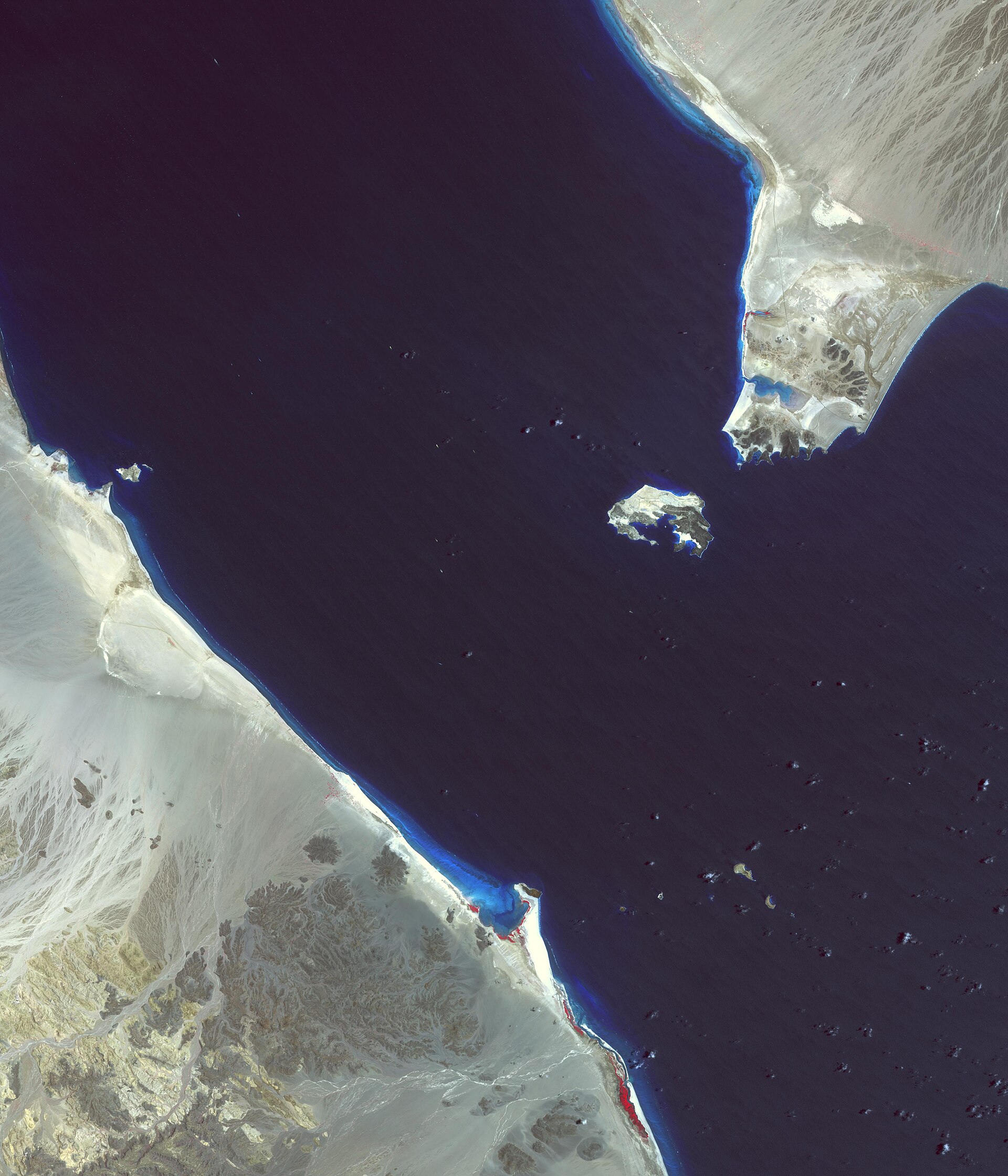
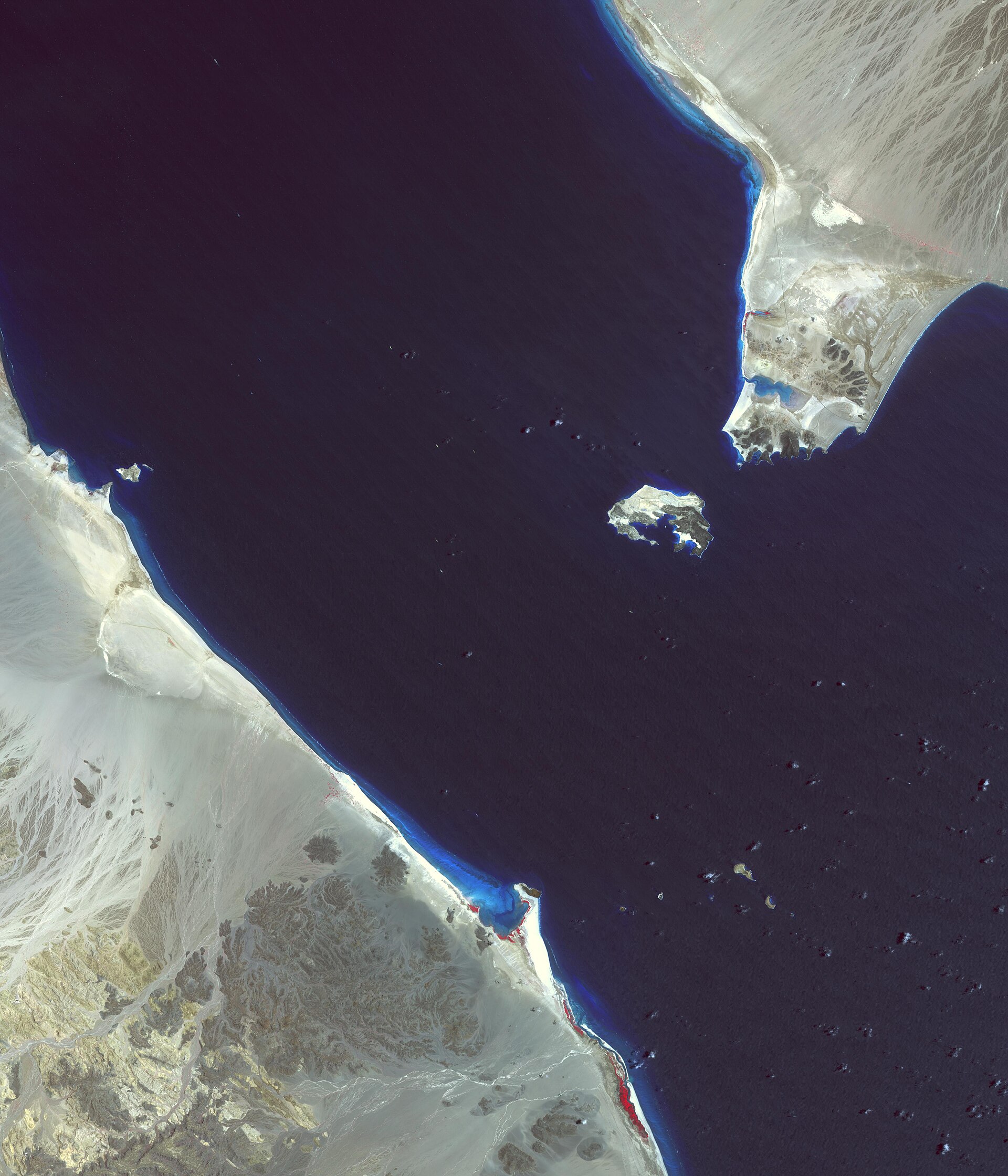
The split reflects routing geography. Crude loaded at Yanbu on Saudi Arabia’s Red Sea coast can reach European refineries via a northward transit through the Suez Canal — a route that does not pass the Bab el-Mandeb strait. The same barrel destined for South Korea, China, or India must exit the Red Sea southward through Bab el-Mandeb, past the coastal zone that Houthi forces consolidated in late September, before crossing the Gulf of Aden and the Indian Ocean.
The three-dollar Europe raise and the five-dollar Asia cut price the same barrel for two different corridors. European buyers pay more because their routing avoids the chokepoint that is now the site of a ground offensive. Asian buyers receive a deeper discount because their routing cannot avoid it. The resulting Asia-Europe spread — an eight-dollar divergence in a single month’s OSP movements — has no precedent in Aramco’s available pricing records.
The divergence also reflects a physical constraint on Aramco’s export system. With the East-West Petroline running at less than half capacity following September’s drone strikes on three pumping stations, the volume of crude available for Red Sea loading has shrunk. Fewer Yanbu barrels facing higher freight and insurance costs produce a buyer’s market that the discount acknowledges. European demand for the same barrels faces less risk at the loading port and no chokepoint on the downstream voyage — conditions that support the premium.
War-risk insurance premiums quantify the corridor divergence. A tanker calling at Yanbu now pays roughly three per cent of vessel value in war-risk coverage — a thirty-fold increase from pre-conflict rates. The same tanker transiting northward through Suez to a European port faces a fraction of that rate. Aramco’s regional OSP split tracks the underwriters’ assessment of the two corridors.
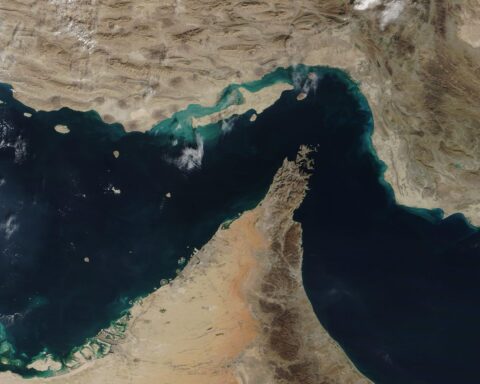
Crude loaded at Ras Tanura or Ju’aymah on the Gulf coast exits through Hormuz, where war-risk premiums run well above the Yanbu rate. But the OSP is set per grade and region, not per loading port. A buyer nominating November Arab Light receives the same minus-five-dollar differential whether the cargo loads at Yanbu or Ras Tanura — a structure that does not adjust for the corridor risk difference between the two routes.
The Buyers Riyadh Is Losing
Saudi crude’s share of South Korean imports fell below thirty per cent in September, down from 34.1 per cent in July — a four-percentage-point decline in two months that tracks the escalation of Red Sea shipping costs. South Korea is Aramco’s second-largest Asian contract market after China. Korean refiners have been among the first to shift nominations toward alternatives that avoid war-zone routing.
The primary alternative is already operating at scale. China’s seaborne Russian crude imports reached 1.68 million barrels per day in August, up from 1.4 million in July, according to the Centre for Research on Energy and Clean Air. ESPO accounted for seventy-four per cent of Russian crude unloaded in Chinese ports. The grade requires no chokepoint transit and arrives at a delivered cost that has widened its advantage over Arab Light by roughly the insurance differential the war created.
| Market | Saudi Import Share | Trend (Jul–Sep 2026) | Primary Alternative |
|---|---|---|---|
| South Korea | Below 30% | Down from 34.1% | ESPO (Russia), Murban (UAE) |
| China | 14.9% | Declining | ESPO (1.68M bpd, Aug 2026) |
| India | 10.2% | Declining | Urals (Russia), Basrah Medium (Iraq) |
Sources: Korea JoongAng Daily; CNBC; Centre for Research on Energy and Clean Air (CREA), August 2026
India adds a structural dimension. Indian refiners — led by Reliance Industries and Indian Oil Corporation — have expanded purchases of discounted Russian Urals crude since the post-2022 sanctions architecture created a persistent discount for Russian grades relative to Gulf benchmarks. Saudi crude’s 10.2 per cent share of Indian imports in September was the lowest in available data. The November OSP cut must close a delivered-cost gap that includes not only the insurance and freight uplift but also the sanctions-era pricing advantage that Russian sellers continue to extend to Indian buyers.
At minus five dollars per barrel, Arab Light is aggressively priced against ESPO on a benchmark basis. Whether the discount holds on a delivered basis depends on the route — and the route is the problem the offensive was launched to solve.
What Does a Three-Million-Dollar Insurance Bill Do to a Barrel?
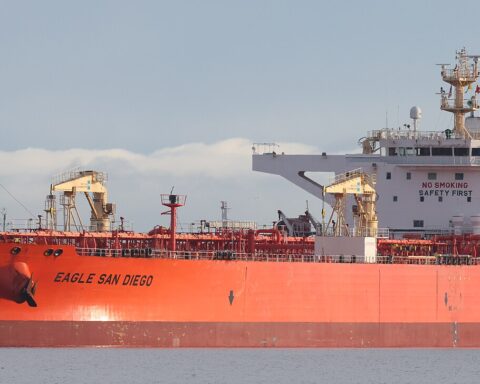
A standard Suezmax tanker carries approximately one million barrels. At three per cent of vessel value in war-risk premiums — the current rate for Yanbu, per insurance industry data compiled by Insurance Journal and The New Arab — a tanker valued at one hundred million dollars incurs roughly three million dollars in war-risk insurance per voyage. Before the conflict, the same coverage cost around one hundred thousand dollars. The per-barrel insurance cost has risen from approximately ten cents to approximately three dollars.
Aramco’s five-dollar Asia discount exceeds the per-barrel insurance uplift in isolation. But insurance is one component. Freight rates from Red Sea loading ports have risen in tandem. Breakwave Advisors’ September 30 Arabian Gulf tanker outlook projected sustained elevated rates through the fourth quarter. Demurrage from convoy-style transits and the re-routing premiums that underwriters now apply to any vessel with a recent Red Sea port call add cost the OSP discount does not cover in full.
For ports south of Yanbu, the economics deteriorate steeply. Jizan, Saudi Arabia’s southernmost Red Sea export terminal, sits within range of Houthi anti-ship missile systems. War-risk premiums there have reached seven per cent of vessel value — seven million dollars per voyage on a standard Suezmax — comparable to the six-to-nine per cent range now applied to Hormuz transits, where the war’s first day stranded millions of barrels at sea. At those rates, few international underwriters are actively quoting voyage cover for Jizan.
The spread between the Yanbu and Jizan rates defines a threshold that moves with each Houthi strike and each underwriter’s reassessment. At Yanbu’s current three per cent, the five-dollar OSP discount more than covers the per-barrel insurance cost. At Jizan’s seven per cent, no realistic discount can. A successful anti-ship attack in the northern Red Sea — closer to Yanbu than to Jizan — could push Yanbu premiums toward five per cent, at which point the November discount would no longer close the delivered-cost gap against ESPO from Kozmino.
The Pipeline That Failed Its Only Test
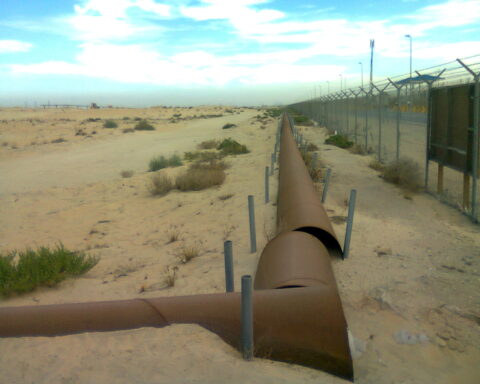
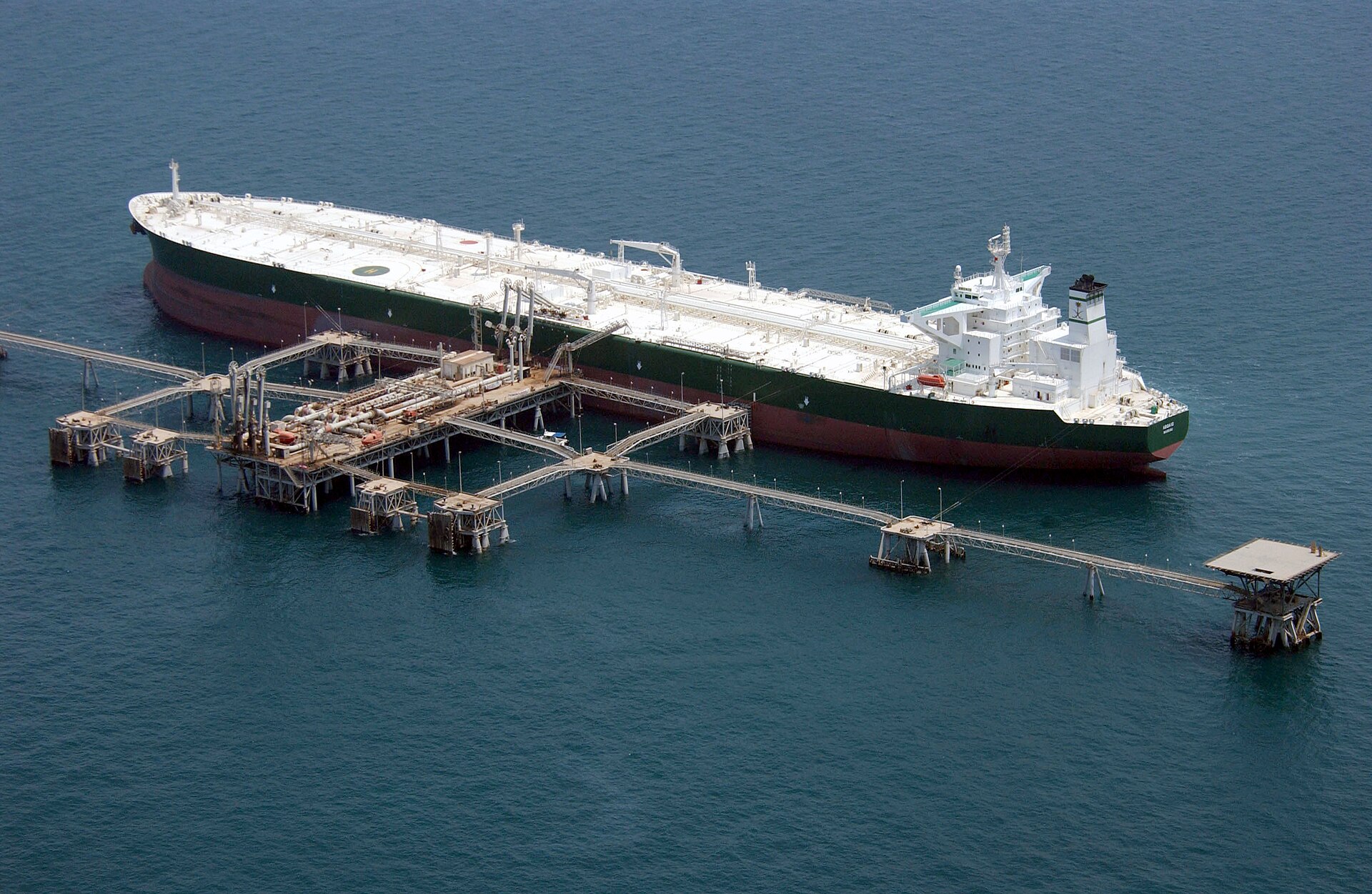
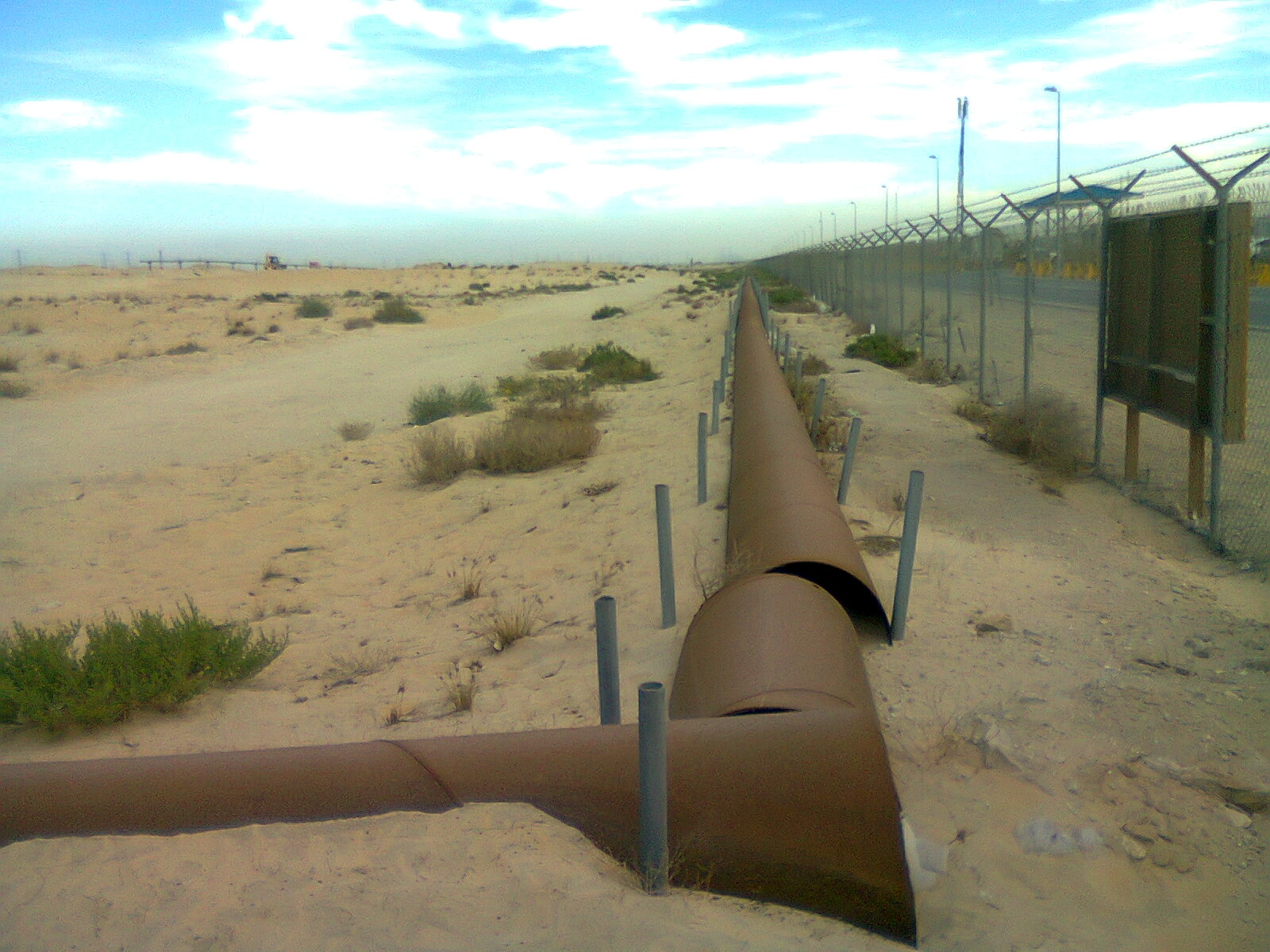
Saudi Arabia’s East-West Petroline was built in 1981 to bypass the Strait of Hormuz. The 1,200-kilometre pipeline connects the Abqaiq processing complex in the Eastern Province to Yanbu on the Red Sea, with a design capacity of seven million barrels per day. For forty-five years, the Petroline was the structural guarantee that Saudi crude could reach global markets even if the Gulf route closed.
On September 11, 2026, drone strikes originating from Iraqi territory hit three pumping stations along the pipeline’s northern corridor. The Petroline shut down entirely. It remained offline for seventeen days before restarting on September 28 at reduced throughput — approximately 2.65 million barrels per day according to Kpler tracking data, against a pre-attack operational rate of roughly 5.5 million barrels per day. Full restoration is estimated at six to eight weeks, placing the earliest return to normal capacity in mid-November.
At 5.5 million barrels per day, the Petroline gave Aramco meaningful flexibility between Gulf and Red Sea loading. At 2.65 million, that flexibility has narrowed by more than half.
The timing is arithmetically specific. November is the delivery month the new OSP covers. Aramco priced its November crude knowing that the pipeline feeding Yanbu would operate at less than half capacity through most of the contract period. The discount compensates not only for freight and insurance but for the possibility that a buyer’s cargo cannot be loaded on schedule because the crude has not arrived from the Eastern Province.
The pipeline attack removed the one infrastructure argument Saudi Arabia had been making to Asian contract buyers since the Hormuz disruption: that even with the Gulf route impaired, crude would flow west and load at Yanbu without interruption. With the Petroline at half capacity and Yanbu inside a war-risk zone, neither the eastern corridor through Hormuz nor the western corridor through the Red Sea offers the routing reliability that long-term contracts are priced to assume.
Where Does the Yemen Offensive Fit in Aramco’s Pricing?
On approximately October 4, Yemeni government forces backed by Saudi military support launched what Yemeni Presidential Council head Rashad al-Alimi described as “military operations to retake remaining territory and extend state authority across the entire national territory.” The offensive, reported by Axios and CNN, involves approximately one hundred thousand troops and targets the Red Sea coastal zone — including territory controlling the western approach to Bab el-Mandeb.
The strait carried an estimated 6.2 million barrels per day of oil traffic before Houthi forces completed their consolidation of the Yemeni Red Sea coastline. For Aramco, the dependency is direct: the only alternative for Asian-bound Yanbu cargoes — northward through Suez — reaches Europe but cannot competitively serve the Asian markets that constitute the majority of Saudi contract volume.
The OSP cut and the offensive address the same constraint in sequence. The discount holds Asian refiners on the Yanbu route while insurance costs persist. The offensive targets the source of those costs. If the ground operation reopens the strait, insurance premiums fall, the freight differential narrows, and Aramco can tighten the Asia discount — potentially as soon as the January 2027 pricing cycle. If it stalls, the discount must widen, and the migration to Russian and Iraqi alternatives that the pricing is designed to arrest will accelerate on the timeline visible in the August CREA data and September Korean import figures.
The ground operation is the largest Saudi-directed military deployment in Yemen since the initial intervention in 2015. The closest precedent is 2018, when Houthi attacks on two tankers near Bab el-Mandeb prompted a brief Saudi suspension of Red Sea crude shipments. That suspension lasted days and the strait reopened without a ground campaign. The current situation is structurally different — Houthi forces hold the coastal zone rather than launching raids from it — and the military response is correspondingly larger.
Houthi military spokesman Yahya Saree responded to the offensive by claiming missile and drone strikes on “an oil facility in Riyadh” — linking ground escalation directly to threats against Saudi export infrastructure. Iran’s Foreign Ministry condemned the offensive as an illegitimate blockade.
“Yemen’s sovereignty must be respected and its problems cannot be resolved through a blockade or military alliances.”
— Iran’s Foreign Ministry, October 2026
Iranian state media did not address the November OSP cut itself. Xinhua’s coverage framed the broader oil-supply disruption in terms of Chinese domestic energy costs rather than Saudi competitive positioning. The market data required no editorial commentary from either capital: every dollar of Asia discount is a dollar of foregone Saudi revenue, and the insurance spread between Yanbu and Kozmino widened to roughly three dollars per barrel in September.
The Fiscal Cost of Discounting the Barrel
Saudi Arabia’s fiscal breakeven oil price sits at $80 to $85 per barrel on IMF and Oxford Economics methodology. Bloomberg Economics places it at $96. The estimate that includes Public Investment Fund spending commitments reaches approximately $113 per barrel. Brent traded below $105 in early October. At the low-end breakeven, Aramco’s pricing leaves a margin. At the PIF-inclusive figure, Saudi Arabia is operating in deficit at current spot — before the November OSP discount reduces per-barrel revenue.
A five-dollar-per-barrel discount applied to roughly four million barrels per day of Asian-bound exports costs approximately twenty million dollars per day in foregone revenue — six hundred million dollars over the November contract month. If the discount persists through a full quarter, the cumulative cost approaches two billion dollars.
That figure compounds an already strained position. The 2026 budget deficit is projected at approximately $44 billion on official estimates, or 3.3 per cent of GDP; independent analysts place the underlying deficit closer to six per cent. PIF cash reserves have fallen to approximately $15 billion — a six-year low — with a 1.6 per cent cash-to-asset ratio. In May, PIF issued a $7 billion bond, its largest single issuance, and announced a twenty per cent cut to portfolio spending across the sectors the war hit first.
| Fiscal Metric | Figure | Source |
|---|---|---|
| Breakeven (IMF / Oxford Economics) | $80–85/bbl | IMF, Oxford Economics |
| Breakeven (Bloomberg Economics) | $96/bbl | Bloomberg Economics |
| Breakeven incl. PIF spending | ~$113/bbl | Middle East Briefing |
| 2026 budget deficit (official) | $44B (3.3% GDP) | Saudi MoF |
| PIF cash reserves | ~$15B (six-year low) | Middle East Briefing |
| PIF bond issuance (May 2026) | $7B (largest single issue) | Middle East Briefing |
| Nov OSP cost (estimated) | ~$600M/month | ~4M bpd × $5/bbl |
Five consecutive OPEC+ output increases in 2026 add production volume but at a per-barrel price the OSP discount has compressed. Aramco is simultaneously defending market share through pricing, funding a ground offensive, repairing a bombed pipeline, and managing elevated insurance costs — alongside a $24.3 billion arms acquisition programme — from a sovereign fund that has already cut portfolio spending by a fifth.
What Separates November 2026 From June 2020?
The June 2020 discount was a weapon deliberately deployed against Russia from a position of fiscal resilience and infrastructure strength: full pipeline capacity, secure export corridors, and PIF cash reserves above $40 billion. The November 2026 discount is a concession forced by costs Aramco cannot unilaterally remove — a half-capacity pipeline, a contested Red Sea chokepoint, and war-risk premiums that have added three dollars per barrel to the delivered cost of every Asian-bound cargo.
In March 2020, Aramco initiated the volume war by cutting Asia OSPs four to six dollars per barrel and boosting output to 12.3 million barrels per day. The strategy aimed to make Russian crude uncompetitive on a delivered basis and force Moscow back to the OPEC+ table. Within two months, Russia agreed to production cuts. The record discount was temporary, voluntary, and achieved its stated objective.
The competitive environment has shifted. In 2020, ESPO was a mid-tier alternative for Chinese refiners, not a structural replacement. By August 2026, Russian seaborne crude — led by ESPO — had become the default Pacific import for Chinese refiners, with loading that bypasses every disrupted waterway in the Saudi export chain. The structural alternative that did not exist at scale in 2020 now absorbs the volume the November discount is trying to retain.
In 2020, Saudi Arabia could sustain the discount because the infrastructure was intact and the fiscal position permitted it. Both Hormuz and the Petroline operated without impediment. PIF had not yet cut portfolio spending, and the kingdom was not simultaneously funding a ground war in Yemen and repairing a bombed pipeline. In 2026, PIF cash reserves stand at approximately $15 billion — roughly forty per cent of the $40 billion they held when the 2020 discount began.
Frequently Asked Questions
What is an official selling price and how does it work?
An OSP is a monthly differential that Aramco sets against a regional benchmark — Dubai/Oman for Asia, ICE Brent for Europe, ASCI for the US. It applies to term-contract volumes: crude that refiners have committed to purchase under multi-year supply agreements, typically spanning three to five years. Unlike spot prices, which fluctuate with each trade, the OSP locks the premium or discount for all contract barrels loaded during the calendar month. Asian refiners cannot switch suppliers within a single month but can reduce their “nomination” — the volume they request — toward the minimum contractual obligation, usually sixty to seventy per cent of the agreed annual quantity divided by twelve. Under most Gulf supply contracts, refiners who consistently nominate below that threshold risk losing the contract entirely — giving Aramco a structural floor on contracted volume but not on the price per barrel.
Has Aramco split Asia and Europe OSP movements in opposite directions before?
Aramco has historically adjusted regional OSPs by different magnitudes — a larger cut for Asia than Europe, or a smaller raise for one region than another. Smaller-scale directional divergences occurred in 2022, when post-Ukraine sanctions reshuffled European and Asian crude flows, but those moves reflected shifting demand patterns rather than routing risk. The November 2026 divergence — a five-dollar cut for Asia and a three-dollar raise for Europe in the same announcement — is unprecedented in scale and is the first driven primarily by the physical security of the delivery corridor rather than relative refinery economics or seasonal demand.
How quickly could the Asia discount narrow if the Bab el-Mandeb offensive succeeds?
Insurance repricing lags military events. War-risk underwriters typically require thirty to sixty days of sustained reduced threat before revising premium schedules for a given zone. If the offensive reopens Bab el-Mandeb and Houthi anti-ship capability is demonstrably degraded, Yanbu war-risk premiums could decline from three per cent to below one per cent of vessel value — removing roughly two to three dollars per barrel of delivered cost. Aramco could narrow the Asia discount by a corresponding amount as early as the January or February 2027 OSP cycle. The Europe premium, however, would likely persist longer, as European buyers would continue to benefit from the Suez corridor’s structural immunity to Bab el-Mandeb risk regardless of the military outcome in Yemen.
Why does Aramco use formula pricing rather than letting the market set the price?
Gulf producers adopted monthly formula pricing in the 1980s after the collapse of the administered-price system OPEC had used since 1973. The mechanism provides budget certainty for refiners — whose single largest input cost is locked monthly — while giving Aramco a pricing instrument that spot-market sales do not offer. The OSP also functions as a deliberate signal: a large cut communicates willingness to defend market share at a cost, while a raise signals confidence in the barrel’s competitive position. That signaling function is part of the November cut’s content — the ten-dollar swing against expectations communicates urgency that a gradual drift downward would not have conveyed to the same trading desks.