
PARIS — France will deploy soldiers, radar, and air-defence systems to Saudi Arabia’s Yanbu oil terminal, President Emmanuel Macron announced on September 24 — making France the first NATO-member state to commit ground forces to Saudi soil since the US-Iran conflict began seven months ago. The deployment comes as the Mecca Joint Defence Agreement, signed by Saudi Arabia, Turkey, and Pakistan on August 7 and modelled on NATO’s Article 5, has produced no formal military response to repeated Houthi strikes on the kingdom’s most valuable remaining export infrastructure.
What he gave was a political commitment from a permanent UN Security Council member with a regional military base — a commitment none of the Mecca pact’s three signatories have matched through the pact’s own mechanism. Six ballistic missiles were intercepted over Yanbu and Taif on the same day Macron spoke. No crude has loaded from Yanbu since September 11, when the pipeline that feeds it shut down following the previous day’s attack.
Table of Contents
- What Did Macron Announce?
- The Pipeline That Made Yanbu the Kingdom’s Last Export Route
- Why Has the Mecca Pact Not Moved?
- Pakistan Deployed Eight Thousand Troops Under a Different Flag
- What Did Paris Extract from Riyadh?
- One Voyager Tanker and a Kingdom Under Missile Fire
- How Does Iran Read the French Deployment?
- The Defensive Label and the Strategic Function
- Frequently Asked Questions
What Did Macron Announce?
Macron told viewers of TF1 and France 2 on September 24 that France would send “soldiers, radar systems, and defense systems” to protect the Yanbu site. He offered no operational detail — no troop numbers, no system types, no deployment timeline. The commitment was political; the military specifics were withheld entirely.
He framed the move domestically as part of France’s effort to “ensure energy security and fight for lower gas prices at home” — a winter-facing message to French voters as the Iran war pushes European energy costs sharply higher. French forces, he said, were heading to the kingdom “not to get us involved in any conflicts” but strictly to guard the facility.
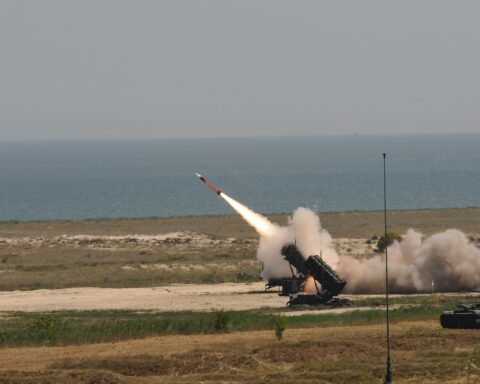
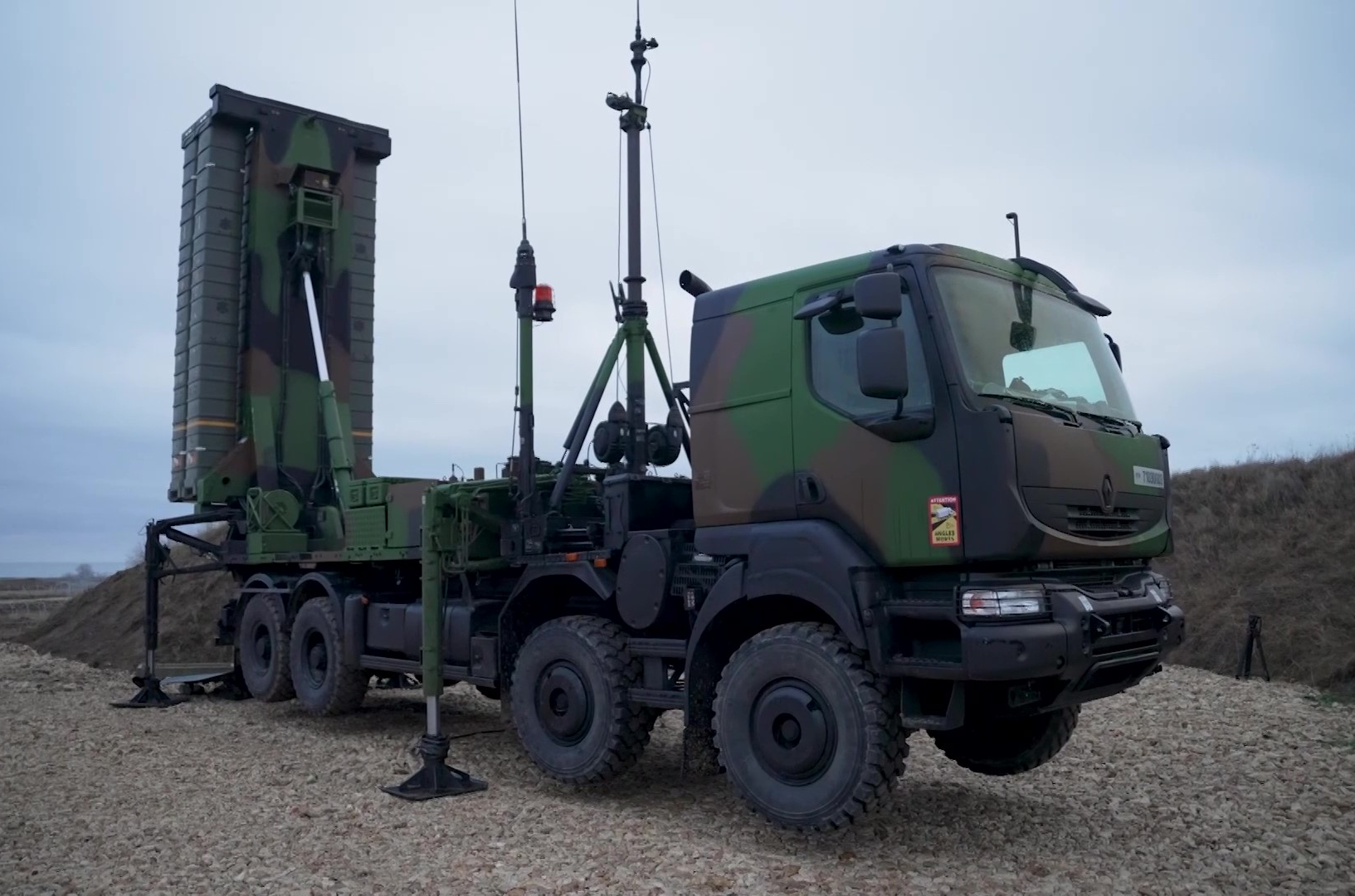
The most probable air-defence system is the SAMP/T — designated MAMBA by the French army — which fires Aster 30 missiles capable of intercepting aircraft, cruise missiles, and short-range ballistic targets. France deployed the same system to Romania under NATO’s eastern flank reinforcement. Macron has not confirmed the type.
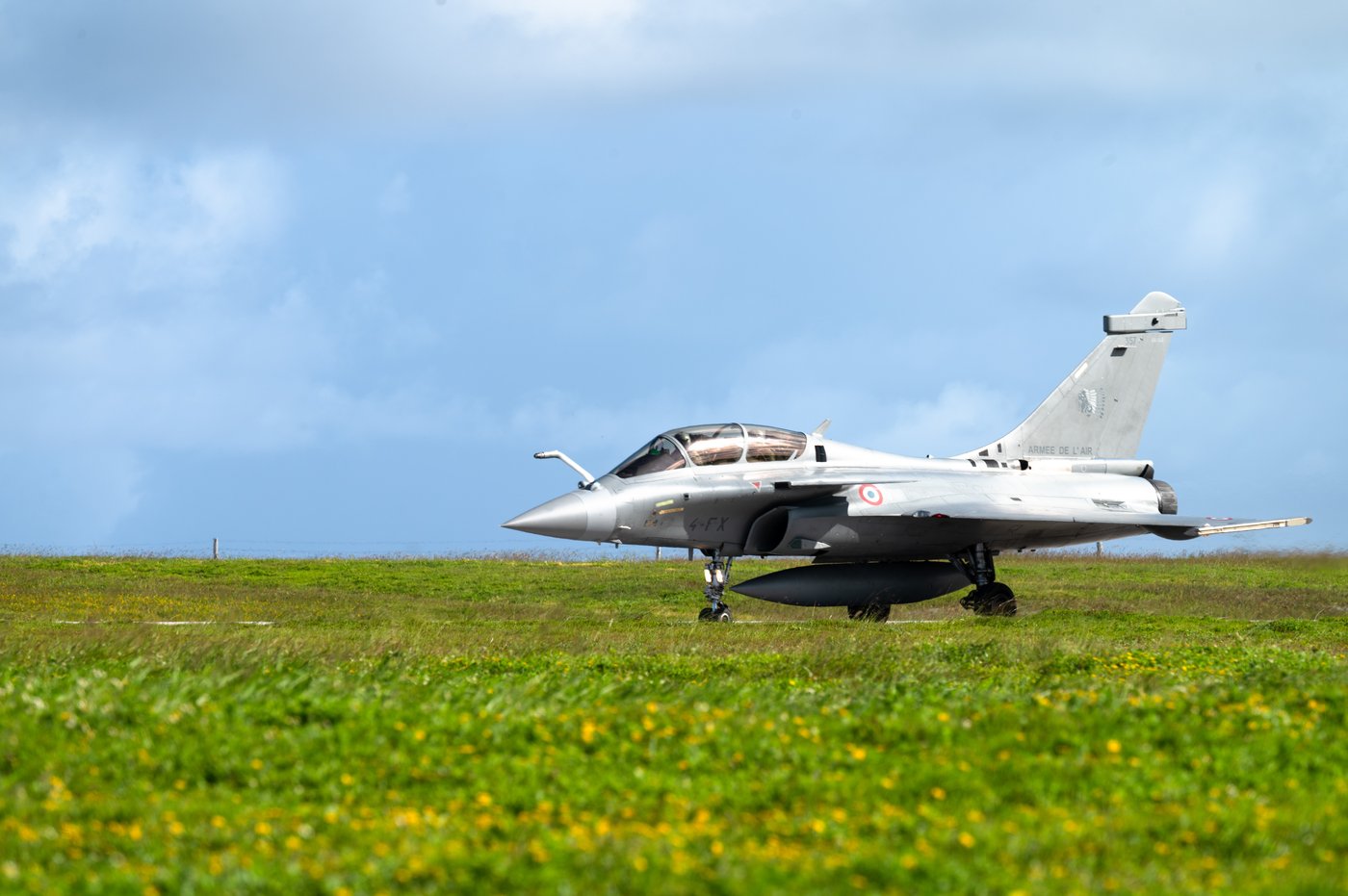
When asked at the August Paris summit whether Rafale fighter jets already stationed in the region would participate in any Yanbu mission, Macron said “we will decide as needs evolve” — declining to rule it out or confirm it.
The Middle East briefing 3,000+ readers start their day with.
One email. Every weekday morning. Free.
The Pipeline That Made Yanbu the Kingdom’s Last Export Route
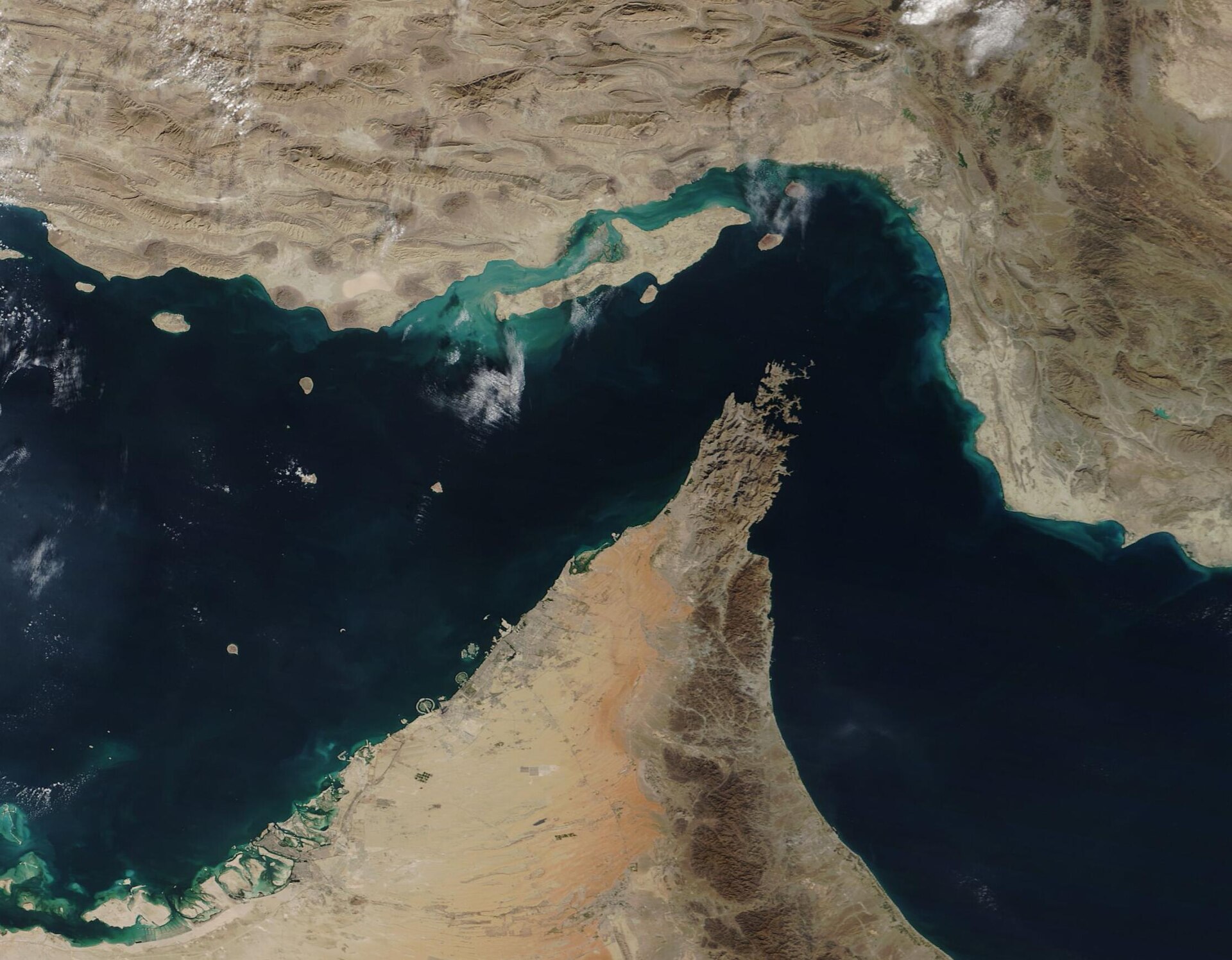
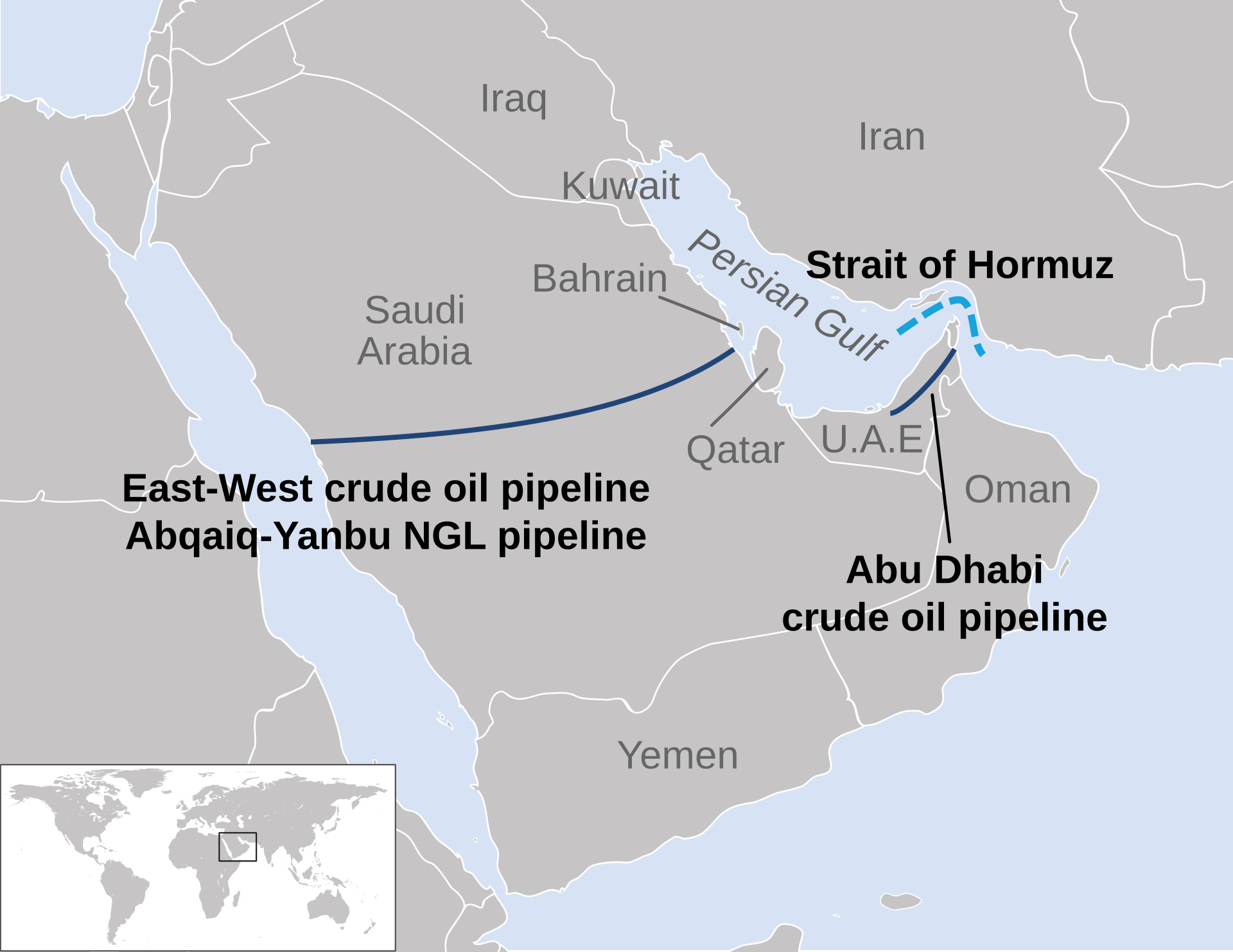
The East-West Crude Oil Pipeline — the Petroline — runs 1,200 kilometres from Abqaiq in Saudi Arabia’s Eastern Province to Yanbu on the Red Sea coast. Built decades ago as a Strait of Hormuz bypass, it became the kingdom’s primary crude export pathway after the strait was largely closed by the Iran war beginning February 28.
Pre-attack throughput ran at approximately 5.5 million barrels per day, with 4.5 million of that loaded as crude at Yanbu — much of it destined for Mediterranean and northwest European refiners. Yanbu also hosts the kingdom’s largest petrochemical complex and a liquefied natural gas export facility, making it a multi-product strategic hub whose disruption affects European energy markets as directly as Asian ones.
The pipeline’s importance is a function of subtraction. Before the war, Hormuz carried roughly 20 million barrels per day of Gulf crude. As the strait’s traffic collapsed — first through Iranian naval interdiction, then through prohibitive war-risk insurance premiums that reached 2 percent of hull value — Yanbu absorbed an increasing share of the kingdom’s exports. By September, the terminal was handling volumes it was never designed to sustain indefinitely, and every barrel that loaded there was a barrel that could no longer transit Hormuz. When Macron told French voters he was defending their gas prices, he was describing this pipeline.
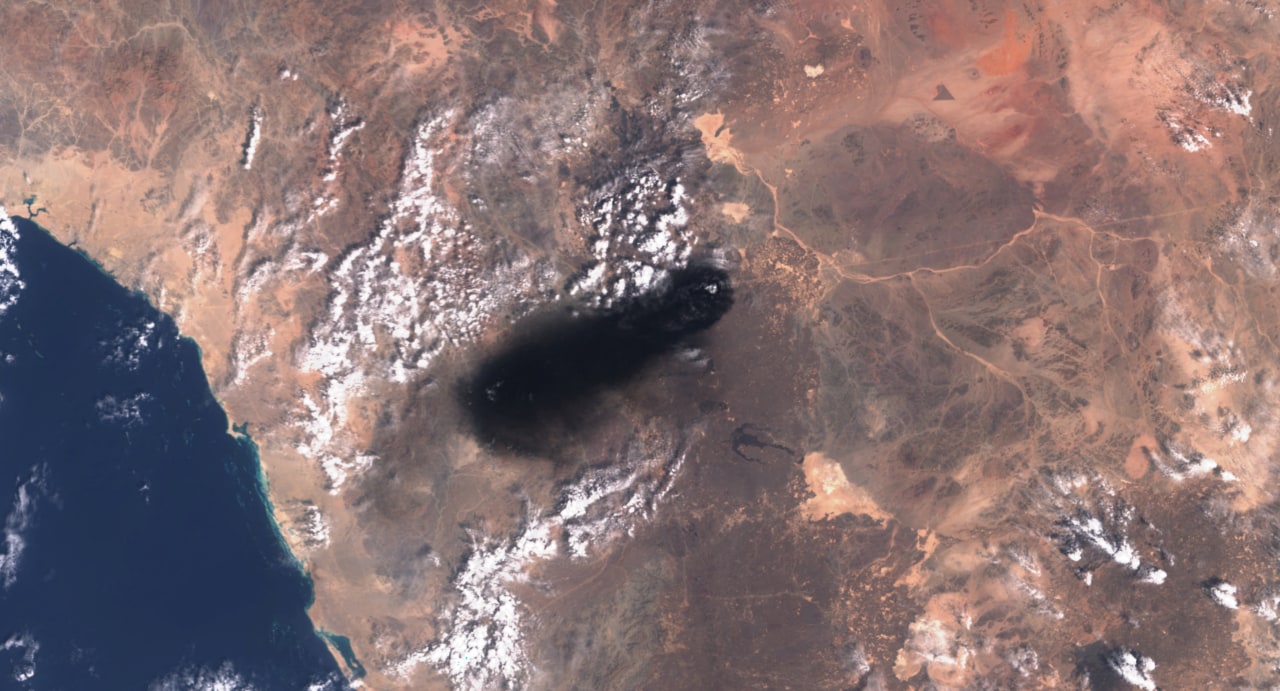
On September 10, Houthi forces struck pumping stations across two Saudi regions simultaneously. Satellite imagery confirmed fires along the pipeline route. The damage was materially worse than an April incident that hit a single pumping station and was repaired in three days. The September attack targeted multiple stations at once, and zero crude cargoes have loaded from the terminal since.
| Metric | Pre-Attack | Post-Attack (Sep 11–24) | Projected Recovery (1 month) |
|---|---|---|---|
| Pipeline throughput | ~5.5M bpd | 0 | 2.0–2.5M bpd |
| Crude loaded at Yanbu | ~4.5M bpd | 0 | ~2.0M bpd (est.) |
| Crude cargoes loaded | Multiple daily | 0 | Partial resumption |
Saudi Arabia’s partial bypass plan projects 2 to 2.5 million barrels per day restored within one month — roughly half of pre-attack throughput. Even under Aramco’s own timeline, the kingdom’s export capacity will run at half for weeks.
Why Has the Mecca Pact Not Moved?
The Mecca Joint Defence Agreement was signed on August 7, 2026. It was modelled on NATO’s Article 5 — an attack on one is an attack on all. Seven weeks later, Houthi missiles have repeatedly struck Saudi territory, and the agreement has produced a foreign ministers’ meeting to schedule a meeting of military chiefs of staff.
On September 25, the foreign ministers of Saudi Arabia, Pakistan, and Turkey met and agreed to arrange what they called an “urgent meeting” of military chiefs. No military response had been formally triggered under the pact as of that date.
The structural diagnosis is not speculative. Liam Young, an analyst at the International Institute for Strategic Studies, assessed in August that the agreement “does not establish a joint command, standing forces, or any specified trigger mechanism” and “does not establish clear obligations in terms of defense spending and procurement.” Foreign Policy described it as “a pact without impact,” rooted in divergent national interests and an absent enforcement mechanism.
The comparison to NATO’s Article 5 — which the pact’s designers invited — illuminates what is missing. Article 5 operates atop a unified command structure at SHAPE in Belgium, integrated military planning through the Allied Command Operations, decades of joint exercises, standardised ammunition and communications, and parliamentary ratification by every member state. The Mecca agreement has none of these. It has no headquarters, no commander, no interoperability standards, no agreed rules of engagement, and no standing force. What it has is a signed communiqué and a provision for meetings.
Neither Turkey’s nor Pakistan’s parliament has ratified the agreement, giving both governments legal and political cover for inaction. Pakistan’s defence minister said a spillover from Yemen would mean “the Mecca agreement will become operational.” The foreign ministry said two days later that no military response was under discussion.
The Arab Center in Washington characterised the arrangement as “diversification without substitution” — new partners that do not replace the American defence guarantee that has underwritten Saudi security since 1945. King Salman’s address at the UN General Assembly on behalf of fifty-seven Muslim-majority capitals used generic language about navigation freedom without naming Iran or Hormuz — a measure of how carefully Riyadh managed the pact’s political framing even as its military substance remained undelivered.
Pakistan Deployed Eight Thousand Troops Under a Different Flag
Pakistan’s military presence in Saudi Arabia is real and predates the Mecca pact by months. In early April 2026, Islamabad deployed approximately 8,000 troops, fighter jets, and air-defence systems to the kingdom — a bilateral arrangement negotiated separately, five months before the Mecca agreement was signed.
The deployment was a direct response to the early escalation of the Iran war and was domestically contentious in a country that has historically resisted committing forces to Gulf conflicts. The 1990 deployment of Pakistani troops to Saudi Arabia during the Gulf crisis remains a source of political debate in Islamabad three decades later. The April 2026 commitment represented one of Pakistan’s largest foreign military deployments since that precedent.
What the Pakistani deployment has not done is defend Yanbu. The troops are positioned around eastern and central Saudi infrastructure — areas closer to Iran’s missile threat axis from across the Gulf. The September 10 pipeline attack and subsequent Houthi missile volleys at Yanbu came from the south, from Yemen, along a vector the Pakistani forces were not configured to cover.
France’s announcement fills a specific gap: Red Sea-facing air defence at a terminal Pakistan’s deployment does not protect. A pipeline running east to west requires different defensive positions at each end.
The gap is not Pakistan’s failure. Islamabad deployed under a bilateral agreement calibrated to the threat Islamabad assessed at the time — Iranian missiles from the east, not Houthi attacks from the south. The September 10 strike demonstrated that the pipeline’s vulnerability runs its entire 1,200-kilometre length, and that a bilateral deployment sized for one threat axis leaves the other exposed. The Mecca pact, had it been operational, was supposed to produce the kind of integrated coverage that addressed the full threat picture. It has not.
What Did Paris Extract from Riyadh?
Military deployments to war-adjacent theatres where domestic public opinion is hostile are not charitable acts. Macron absorbed political risk by committing French troops to Saudi Arabia. The question is what Riyadh offered in return.
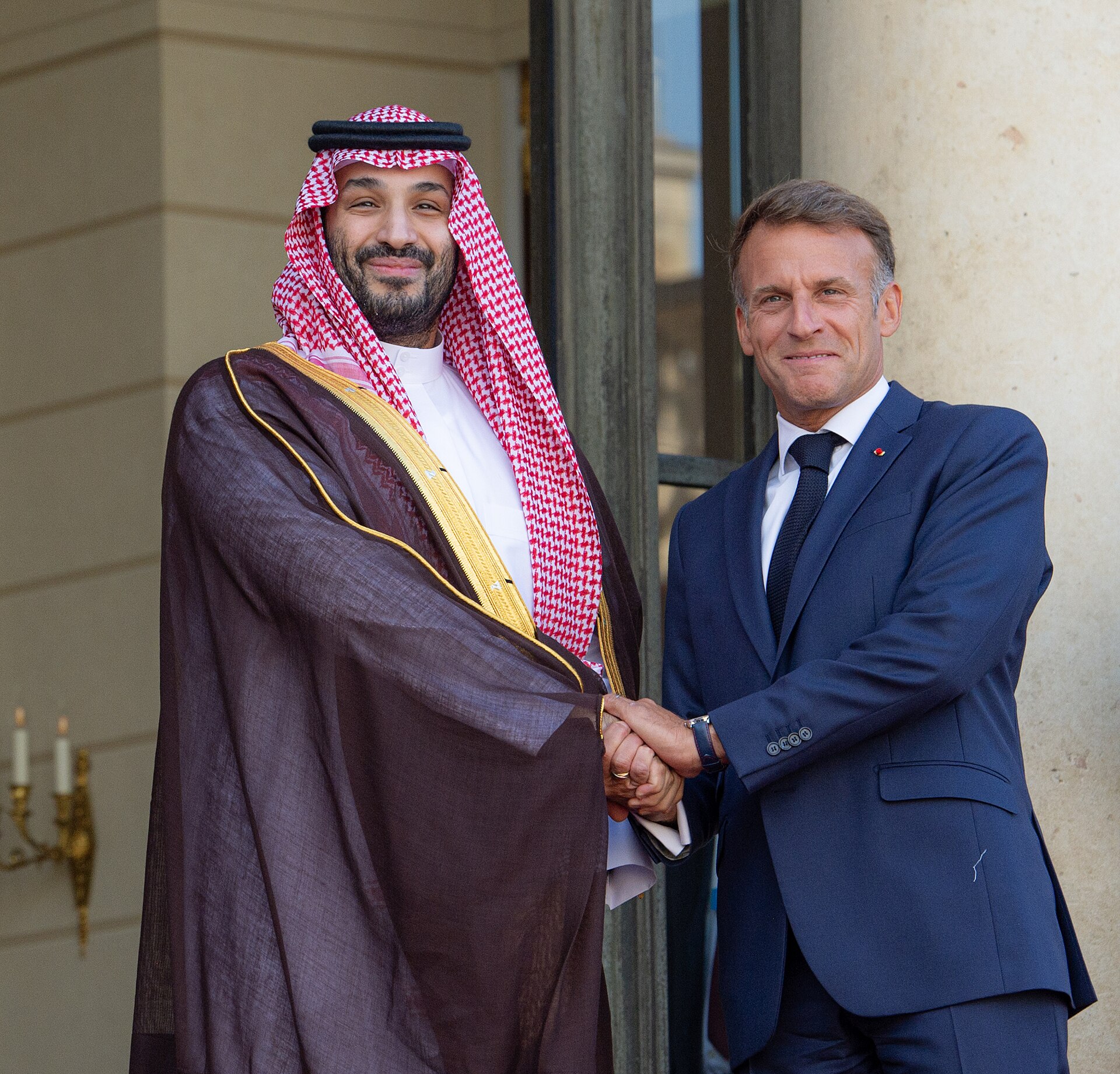
The sequencing provides structure. In December 2024, Macron visited Riyadh and established the Franco-Saudi Strategic Partnership Council. On August 24–25, 2026 — thirty days before the Yanbu announcement — the council held its first formal meeting during MBS’s visit to Paris. Agreements signed at that meeting covered investment, defence, AI, tourism, infrastructure, and cultural cooperation. A sale of French military equipment to the kingdom was among them, though the Elysée communiqué did not specify which equipment.
A separate negotiation running since at least 2023 involves 54 Rafale fighter jets — a contract valued at several billion euros that would rank among France’s largest-ever arms exports. That deal remained unsigned as of the August council meeting.
Council framework December 2024; defence agreements signed August 2026; troop deployment announced September 2026. The timeline does not prove a quid pro quo, but it indicates the Yanbu commitment was in preparation before the September 10 attack made it operationally urgent.
Al-Monitor reported that France is pushing for “more strategic defense relations with the Kingdom” and wants to demonstrate it is “a reliable partner that Gulf countries can count on.” Deploying troops to a facility under active missile fire is a more persuasive demonstration of reliability than a signed memorandum of understanding.
France maintains Camp de la Paix, a permanent military base in Abu Dhabi operational since 2009 — its only Gulf installation, with approximately 700 personnel, Rafale jets, and naval facilities. That base gives France a regional logistics chain no other European country can replicate. The Yanbu deployment would create a second French military presence in the Gulf, extending the footprint from the lower Gulf to the Red Sea coast — a geographic expansion that mirrors the shift in Saudi Arabia’s own threat perception from east-facing to multi-directional.
One Voyager Tanker and a Kingdom Under Missile Fire
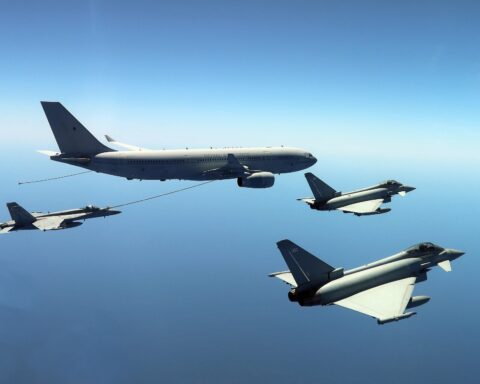
Two days before Macron spoke, the UK Ministry of Defence announced it would deploy a single Voyager air-to-air refuelling aircraft from RAF Akrotiri in Cyprus. Its mission: extending the range and station time of Royal Saudi Air Force Typhoons over western Saudi Arabia. A supporting role, non-combat, from a base in the eastern Mediterranean — not from Saudi soil.
Britain sold Saudi Arabia the Typhoons and maintains the training and maintenance contracts that keep them flying. The Voyager deployment sustains that existing relationship without expanding it.
France is offering something structurally different: ground troops, radar, and air-defence batteries positioned at the facility under active missile attack. London contributed one tanker aircraft that does not leave Cyprus. Paris is sending personnel to the terminal itself.
The divergence reflects different domestic constraints. UK arms sales to Saudi Arabia have been litigated in British courts since the earlier phase of the Yemen war, and judicial review has repeatedly constrained the government’s room for manoeuvre. France faces no equivalent legal obstacle and has been more willing to make physical defence commitments in the Gulf — Abu Dhabi being the standing example.
Turkey offered Riyadh defence equipment to fill gaps left by American restrictions, but neither Ankara nor London has committed ground forces to Saudi territory. The distinction matters operationally: equipment sales transfer risk to the buyer; troop deployments keep it with the seller. France chose the version that costs more politically and signals more strategically. A Voyager tanker in Cyprus tells Riyadh that London values the maintenance contract. A SAMP/T battery at Yanbu tells Riyadh that Paris is willing to absorb casualties.
How Does Iran Read the French Deployment?
Iran’s official response to Macron’s announcement has been muted — or at least selectively muted. No specific condemnation of the Yanbu deployment appeared in Iranian state media in the days immediately following. The silence may reflect a calculation: condemning a French defensive deployment risks pushing Paris further toward Washington’s position, while ignoring it avoids elevating France’s regional profile.
The nearest applicable statement came from Foreign Minister Araghchi: “any act of aggression by the United States, the Israeli regime, or regional partners will meet a firm and proportionate response.” The phrase “regional partners” is broad enough to encompass France but deliberately avoids naming it.
PressTV, the English-language Iranian state outlet, handled the story differently. It ran the French deployment alongside the Saudi Grand Mufti’s call for troops to attack Yemen — framing France’s arrival as part of Saudi escalation rather than Saudi self-defence. PressTV characterised Houthi strikes on Saudi infrastructure as “retaliatory operations,” positioning any new defensive capability at Yanbu as enabling further aggression against Yemen.
The legal distinction Macron drew — “strictly defensive” — meets its operational limit at this boundary. If French air-defence systems intercept Houthi missiles that would otherwise keep Yanbu offline, that defence directly enables crude exports funding Saudi military operations. Iran’s information apparatus has treated defence and enablement as equivalent since the early weeks of the conflict. Whether Tehran treats the deployment as a threshold for military escalation is a question with no public answer as of September 27.
The Defensive Label and the Strategic Function
“Strictly defensive” is Macron’s formulation. It is legally precise. It is also incomplete.
The precedent for the label’s limitations is recent. When the United States deployed Patriot batteries to Saudi Arabia after the September 2019 Abqaiq attack, the framing was also defensive — protect Saudi oil infrastructure from drone and missile threats. The deployment did not prevent the US from later using the same regional force posture to conduct offensive operations against Iran in 2026. “Defensive” describes the stated mission. It does not describe the ceiling of what the deployed force can do once it is in place.
Defending Yanbu is not a neutral act in the context of a war where crude exports fund Riyadh’s fiscal position. The terminal operates as a strategic asset because the Strait of Hormuz is closed. French air defence enables the resumption of exports that sustain the kingdom’s war expenditures. The formulation separates the shield from the treasury it protects — a separation useful for Paris, which avoids the parliamentary debate an offensive commitment would require, and for Riyadh, which avoids framing the acceptance as a confession that the Mecca pact has not delivered.
On September 24, Washington rejected Iran’s seven-day Hormuz proposal and six ballistic missiles were intercepted over Yanbu and Taif. Iran had tabled a peace framework that Saudi Arabia deferred. The diplomatic alternatives that might have made the French deployment unnecessary remained closed. The Pentagon had confirmed a pause in Iran strikes, but Houthi operations from Yemen continued on a separate track, independent of any US-Iran ceasefire calculus.
Prince Sultan Air Base had already demonstrated what conditional American commitment looks like — forty-three Saudi warplanes grounded under Operation Project Freedom since May 3, roughly 2,300 US troops present but operating under restrictions that left the kingdom’s most expensive air base functionally inert. Riyadh’s effort to purchase a nuclear cooperation ceiling reflected the same underlying problem: indigenous and allied defence capacity insufficient to cover the kingdom’s infrastructure across multiple threat vectors simultaneously.
The Mecca pact was supposed to address this gap. It was conceived after the Abqaiq precedent demonstrated that American security guarantees could not be assumed automatic, and after the early months of the 2026 war showed that Saudi Arabia’s own air-defence inventory was being consumed faster than it could be replaced. The pact’s signatories — Turkey with its defence industry and Pakistan with its conventional military mass — were chosen to provide exactly the kind of redundancy that a single-patron model could not. Seven weeks after signing, the redundancy exists on paper. The air-defence battery heading to Yanbu flies a French flag.
| Country | Commitment Type | Assets Deployed or Pledged | Under Mecca Pact? |
|---|---|---|---|
| Pakistan | Bilateral (April 2026) | ~8,000 troops, fighter jets, air defence | No (pre-pact bilateral) |
| Turkey | Mecca signatory (Aug 7) | None deployed | Not ratified by parliament |
| France | Bilateral (September 2026) | Troops, radar, air defence (numbers withheld) | Not a signatory |
| United Kingdom | Bilateral (September 2026) | 1 Voyager tanker (based in Cyprus) | Not a signatory |
| United States | Legacy bilateral | ~2,300 troops (PSAB, restricted operations) | Not a signatory |
The table clarifies what the diplomacy has tried to arrange differently. The Mecca pact’s only signatory with troops in the kingdom — Pakistan — deployed them before the pact existed, under a bilateral agreement Islamabad controls. Turkey, the pact’s second external signatory, has deployed nothing and has not ratified the agreement. The first dedicated air-defence commitment to the specific facility under active Houthi attack comes from a secular European republic that signed no collective defence pledge, holds a pending multibillion-euro Rafale contract, and maintains its nearest Gulf military base in Abu Dhabi.
Frequently Asked Questions
What air-defence system is France most likely to deploy to Yanbu?
The leading candidate is the SAMP/T (MAMBA), which uses Aster 30 missiles with an engagement range of approximately 120 kilometres against aircraft, cruise missiles, and short-range ballistic targets. The French army operates three SAMP/T batteries; one is currently deployed to Romania. Each battery requires roughly 100 personnel to operate and can be transported by A400M strategic airlift. The system’s principal limitation is against medium-range ballistic missiles with terminal velocities exceeding Mach 5 — a category that includes some Iranian-supplied Houthi munitions. Macron has not confirmed the system type publicly.
Does France have a mutual defence treaty with Saudi Arabia?
No. France’s Yanbu deployment is a bilateral political commitment, not a treaty obligation. The Franco-Saudi Strategic Partnership Council, established during Macron’s December 2024 visit to Riyadh and operationalised in August 2026, provides an institutional framework for defence cooperation but contains no mutual defence clause. France’s only formal defence commitment in the Gulf is a bilateral agreement with the UAE governing Camp de la Paix in Abu Dhabi, where approximately 700 French personnel are permanently stationed. The Yanbu deployment would create a second, separate French military presence in the Gulf — the first on Saudi soil.
Can the French deployment alone protect Yanbu from the kind of missiles fired on September 24?
Probably not on its own. The Aster 30 Block 1 can engage short-range ballistic missiles but faces limitations against medium-range ballistic missiles in their terminal phase. The six missiles intercepted over Yanbu and Taif on September 24 were engaged by Saudi forces, likely using Patriot PAC-3 systems. Saudi Arabia’s PAC-3 inventory has been depleted to approximately 400 of an original 2,800 interceptors — roughly 14 percent — with no US resupply expected before 2028. A French SAMP/T battery would add a complementary layer, particularly against cruise missiles and drone threats, rather than a replacement for the depleting Patriot stocks.
Has France deployed military forces to Saudi Arabia before?
France contributed combat aircraft to the US-led coalition during the 1991 Gulf War, operating from Saudi bases during Operation Desert Storm. It has not maintained a military presence in the kingdom since. The Yanbu deployment, if it proceeds as announced, would be France’s first ground-based deployment to Saudi Arabia in thirty-five years and its first ever focused specifically on defending Saudi energy infrastructure rather than conducting offensive operations against a third country. The 1991 precedent involved a broader international coalition with UN authorisation; the 2026 deployment is a bilateral initiative without comparable multilateral cover.
What is the status of the 54-aircraft Rafale deal between France and Saudi Arabia?
Negotiations for a reported 54-aircraft Rafale sale to Saudi Arabia have been under way since at least 2023, according to Defence Security Asia and other industry sources. The deal remained unsigned as of the Franco-Saudi Strategic Partnership Council meeting on August 24–25, 2026, though a broader French military equipment sale was among the agreements signed at that summit. If concluded, the Rafale contract would represent one of France’s largest-ever arms exports and would position Dassault Aviation as a direct competitor to the US F-35, which Saudi Arabia has sought but not received. The Yanbu deployment gives France a physical military stake in Saudi security that strengthens its negotiating position on the Rafale deal and other defence contracts.