
RIYADH — Saudi Arabia is preparing a ground offensive of more than 100,000 troops to retake the Bab el-Mandeb strait from Houthi forces — the first major unilateral Saudi military operation since the Yemen war began in 2015 — after Washington refused, for a second time in recent weeks, to provide the airstrikes that Defence Minister Prince Khalid bin Salman personally requested from Defence Secretary Pete Hegseth. The refusal removes the three operational enablers — sensor-to-shooter targeting at close-air-support speed, suppression of enemy air defences, and persistent intelligence surveillance — on which every Saudi-led combat operation in Yemen has depended for nearly a decade.
More than 100 American military advisers remain in-country, and the Pentagon has shared more than 200 Houthi targets with Saudi forces over the past two weeks — but target lists compiled at a headquarters are not targeting data pushed to a cockpit in real time, and the distinction between the two is the distinction between an air force that shapes a battlefield and one that merely bombs it. Two operational plans sit on Prince Khalid’s desk: a narrow coastal push toward the strait, and a broader five-front offensive spanning Al-Bayda, Marib, Taiz, Al-Jawf, and the Red Sea littoral. Both assume a force composed predominantly of Yemeni fighters under Saudi oversight, a launch window between this week and early November 2026, and an air campaign that has already delivered more than a thousand strikes — and neither plan has a precedent in the Saudi military’s operational history.
Table of Contents
- What Has Riyadh Put on the Table?
- Why Does Saudi Arabia Need Bab el-Mandeb by November?
- What Does ‘Without American Air Support’ Actually Mean?
- The Architecture That Was Never Saudi Arabia’s to Keep
- Who Fights the Ground War the Emirates Abandoned?
- The Kill Box the Houthis Built While Riyadh Bombed
- What Did the Safer Base Tochka Teach Saudi Ground Planners?
- Thirteen Hundred Strikes and No Decision
- Frequently Asked Questions
What Has Riyadh Put on the Table?
Axios reported on October 2 that Saudi Arabia’s military leadership has prepared two distinct operational concepts for the Bab el-Mandeb offensive, with a launch window that stretches from this week to early November 2026 and a total force size exceeding 100,000. The first option is a narrowly focused coastal push — a single-axis advance from loyalist-held territory south along Yemen’s Red Sea littoral toward the strait, with the limited objective of reopening the waterway to commercial and energy shipping. The second is considerably more ambitious: a multi-front offensive combining the coastal advance with simultaneous assaults on Houthi positions in Al-Bayda, Marib, Taiz, and Al-Jawf, aimed not merely at the strait but at degrading Houthi military capacity across the country’s western half.
The troops are predominantly Yemeni — fighters drawn from the various anti-Houthi factions that have operated under Saudi sponsorship since 2015, overseen by Saudi officers but not primarily composed of Saudi regular army units. Riyadh has employed this proxy model since the early years of the war, when it became clear that deploying Saudi forces in large numbers inside Yemen carried casualty risks the kingdom’s leadership would not absorb. Prince Khalid’s phone call to Hegseth asked specifically for American airstrikes against Houthi targets — the second such request in recent weeks, according to US officials — and Washington rejected it with a formulation that left the door ajar only for failure: the US “is not going to take kinetic action for now,” one official told Axios, but “could change if the operation runs into problems.”
US Central Command’s reservations ran deeper than politics: CENTCOM viewed strikes in Yemen as a distraction from its primary focus on Iran, a framing that tells Riyadh its existential crisis ranks as a secondary theatre in the American order of battle. Washington is not offering to help Saudi Arabia succeed; it is reserving the option to intervene after Saudi Arabia has already begun failing, a posture that provides no operational input during the phase of an offensive — the opening suppression of coastal defences, the establishment of forward positions, the first contact with an entrenched enemy — when close air support decides whether an advance continues or stalls.
Why Does Saudi Arabia Need Bab el-Mandeb by November?
The urgency driving the offensive timeline is not ideological; it is hydraulic. When the Strait of Hormuz effectively closed to Saudi crude during the US-Iran war in July, Riyadh pivoted its entire export operation to the Red Sea, routing oil through the East-West pipeline to the port of Yanbu on the kingdom’s western coast. That pivot worked for exactly as long as Bab el-Mandeb remained open — which was not long at all — because the Houthis declared a maritime blockade on Saudi shipping, and Saudi Arabia has loaded zero crude for export via the strait from Yanbu since the blockade took effect, according to The National News.
The Middle East briefing 3,000+ readers start their day with.
One email. Every weekday morning. Free.
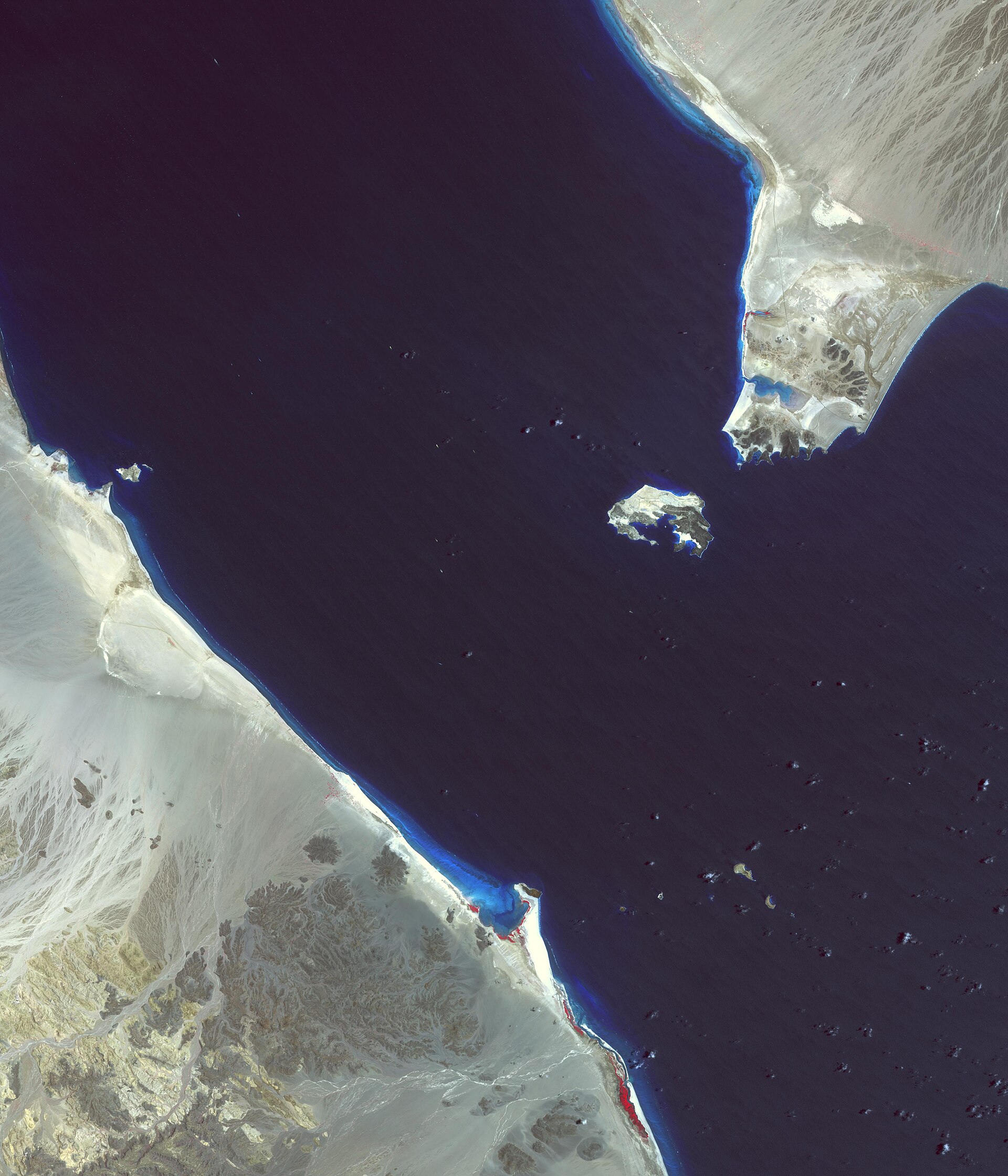
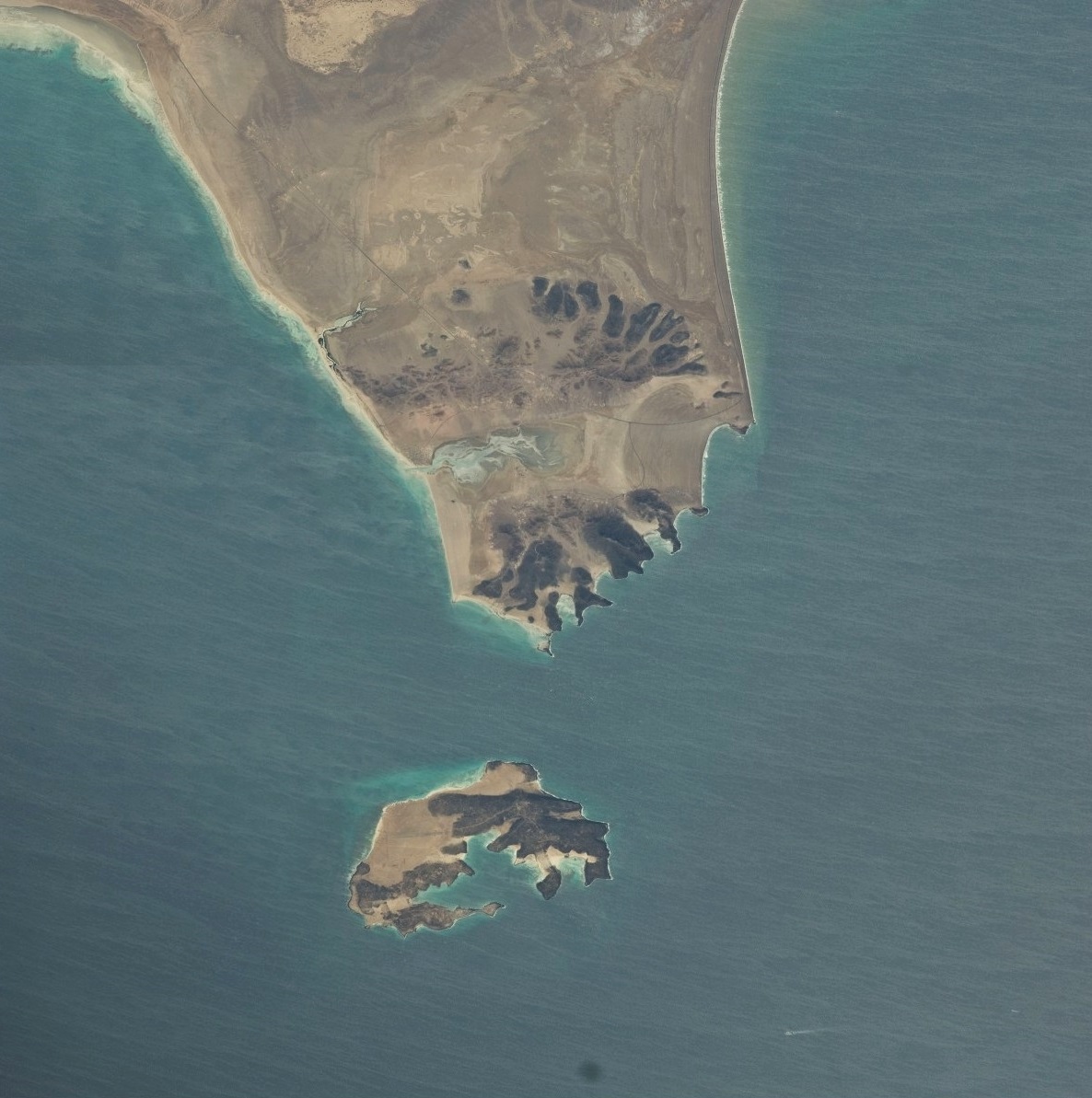
The Houthis completed their territorial takeover of Yemen’s Red Sea coast by September 11, capturing Perim Island — a barren volcanic outcrop sitting at the narrowest point of the strait, approximately 3.5 kilometres from the Djibouti coast — along with the al-Omari military camp that had served as the last loyalist outpost in the region. The offensive that delivered these gains began on September 3, with 129 reported deaths on the first day alone, and the Houthis executed it precisely because they understood, as clearly as Riyadh did, that whoever holds Perim holds the chokepoint through which some 4.2 million barrels per day of crude and petroleum liquids transited in 2025, according to IEA estimates. The closure has compressed Saudi export options to a single viable route — through the Suez Canal, which adds approximately 30 days of transit time for Asian buyers, the customers who purchase the overwhelming majority of Saudi crude.
The fiscal consequences are already visible and accelerating. Saudi Arabia’s economy has contracted by 3.6 per cent after expanding by 4.6 per cent the previous year — an 8.2-percentage-point swing — with the deficit reaching $65.3 billion and non-oil GDP growth falling to 0.9 per cent in the second quarter. Every day that Bab el-Mandeb remains closed extends a fiscal crisis that threatens not merely the treasury but the capital expenditure pipeline — construction awards, PIF commitments, Vision 2030 megaprojects — that underpins Mohammed bin Salman‘s entire domestic political contract with a population that traded political participation for material prosperity.
What Does ‘Without American Air Support’ Actually Mean?
The phrase “without American air support” has been reported as a political fact — Washington said no — but its operational meaning is considerably more specific, and more damaging, than the political framing suggests. Saudi Arabia’s air campaign in Yemen has relied, since its inception in March 2015, on three American-provided enablers that the Royal Saudi Air Force does not possess independently and has never been required to replicate.
The first is targeting intelligence delivered at sensor-to-shooter speed — the real-time integration of signals intelligence, drone surveillance, and satellite imagery into the cockpit of a strike aircraft so that pilots can engage moving targets, including enemy forces in contact with friendly ground troops, within the minutes-long window that close air support demands. The second is SEAD/DEAD capability — suppression or destruction of enemy air defences — which in the Yemeni context means degrading the Houthi radar, missile systems, and drone launch infrastructure covering the coastal approach corridor before Saudi ground forces begin their advance. The third is persistent ISR: continuous surveillance of Houthi force movements, logistics, and command nodes through a network of drones, signals intercepts, and reconnaissance aircraft that Saudi Arabia has never operated at scale without American backend architecture feeding it.
| US-Provided Enabler | Operational Function | Saudi Independent Capability |
|---|---|---|
| Sensor-to-shooter targeting | Real-time strike coordination for CAS | Degraded — no independent integration at required speed |
| SEAD/DEAD | Suppression of enemy defences along axis of advance | Limited — no dedicated SEAD doctrine or aircraft |
| Persistent ISR | Continuous surveillance of enemy force movements | Partial — E-3 AWACS fleet designed for US interoperability |
The Biden administration ended refuelling and targeting support for Saudi offensive operations in Yemen in February 2021, a decision that degraded Saudi air effectiveness but did not produce an operational crisis because Riyadh was not, at that point, attempting a major ground offensive requiring close air support. The Trump administration’s refusal is different in character — it comes from a president who has otherwise restored the Saudi relationship and approved arms packages that dwarfed anything Biden offered — but it has the same operational effect: the air force flies without the architecture that made it lethal, at precisely the moment when the tempo of a contested coastal advance demands the fastest possible sensor-to-strike loop.
Riyadh did not stop at Washington. In September, Saudi Arabia asked Britain to conduct airstrikes against Houthi targets — a request London also declined, approving only defensive aerial refuelling for Saudi aircraft, a measure limited to helping the RSAF intercept incoming Houthi drones and missiles rather than supporting offensive ground operations. Three requests for offensive air support to two allies in two months, and zero granted: the kingdom will launch this offensive with its own degraded kill chain or it will not launch it at all.
The Architecture That Was Never Saudi Arabia’s to Keep
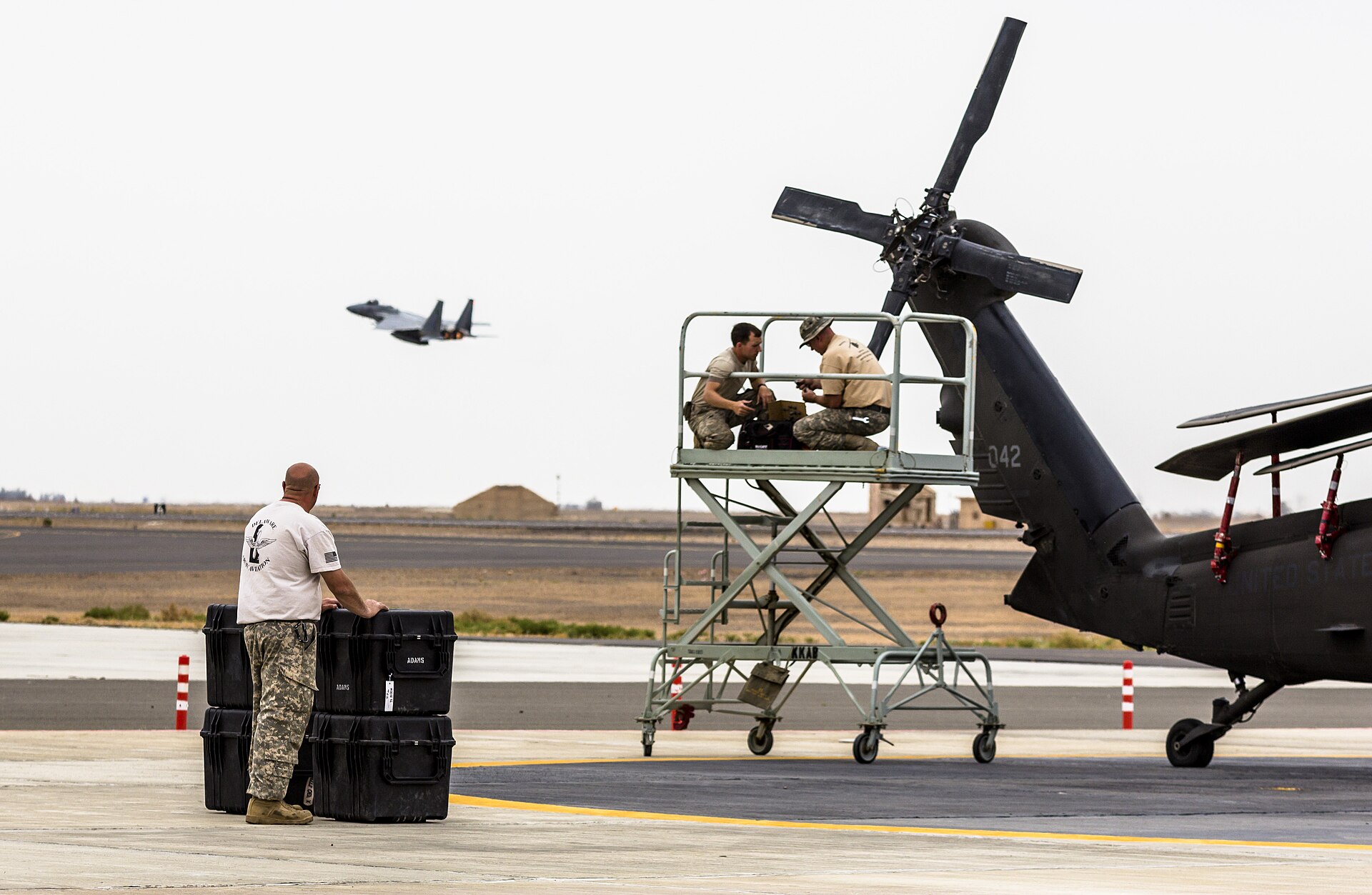
The Royal Saudi Air Force’s E-3 AWACS fleet — the airborne early warning platform that provides the command-and-control backbone for complex air operations — was explicitly designed for interoperability with the US Air Force. The upgrade programme’s stated purpose, as documented by Aviation Week, is “to keep the RSAF E-3 AWACS fleet interoperable with the US Air Force,” a formulation that reveals the underlying design philosophy: Saudi airborne early warning and control architecture was never built to function as a standalone system but as a node in an American network, and when the American side of that network goes silent, the node does not simply lose connectivity — it loses the data feeds, the fusion architecture, and the targeting coordination that justified its existence.
The dependency extends well beyond the E-3. The Washington Institute for Near East Policy has documented that US military contractors provide direct support for approximately two-thirds of Royal Saudi Air Force aircraft, and that without this contractor maintenance, logistics, and technical support, “these aircraft would quickly become inoperational.” The RSAF has accumulated what the same institute described as “extensive combat experience in precision strike, close air support and counter-drone operations” over the course of the Yemen campaign — genuine institutional knowledge, built by Saudi pilots flying real combat missions — but that experience base was constructed with American enabling architecture in place, and the skills were developed in tandem with American systems rather than as a replacement for them.
If Saudi Arabia launches a ground offensive toward Bab el-Mandeb, the advancing column will need close air support within minutes of contact with Houthi forces — not the hours-long cycle of a degraded intelligence pipeline, not the approximation of targeting data delivered from a briefing room rather than a sensor pod. The RSAF can put aircraft in the sky, and it can drop ordnance on fixed coordinates provided days earlier; what it cannot independently replicate is the integrated system that identifies a target, confirms it is hostile rather than friendly, and delivers a weapon on it before the tactical moment passes.
Who Fights the Ground War the Emirates Abandoned?
The 100,000-troop figure carries an implicit assumption about coalition composition that the reporting has not interrogated closely enough. For the first seven years of the Yemen war, the ground combat that mattered — the operations that took and held territory, that produced tactical results and altered the front lines — was conducted primarily by Emirati forces and Sudanese contractors, not by Saudi regular army units. The kingdom’s contribution was overwhelmingly air-delivered: RSAF airstrikes with US targeting assistance, in-flight refuelling from American tanker aircraft, and a joint planning cell that integrated Saudi and American intelligence into the strike cycle.
The UAE is no longer available to fill that role, and the fracture is structural rather than diplomatic. In December 2025, Saudi forces struck UAE-backed Southern Transitional Council secessionist forces in Hadhramaut province — a direct military confrontation between the coalition’s two principals that made the break explicit and, in the assessment of analysts who track the relationship, “clear and likely permanent.” The STC dissolved itself on January 9, 2026, Emirati troops withdrew from Yemen entirely, and the only partner that had demonstrated both the willingness and the capability to conduct offensive ground operations in Yemeni terrain removed itself from the order of battle.
Pakistan has deployed between 30,000 and 40,000 troops to defend Saudi Arabia’s own borders — a substantial commitment driven by the broader regional crisis — but Islamabad has explicitly declined to send combat forces into Yemen, a position consistent with Pakistan’s longstanding refusal to be drawn into the Saudi-Houthi war despite considerable Saudi financial and diplomatic pressure. The 100,000 troops, then, are predominantly Yemeni: fighters drawn from the various anti-Houthi factions whose combat record is uneven, whose chain of command runs through multiple intermediaries, and whose capacity to sustain cohesion under the pressure of an opposed coastal advance against a fortified enemy remains untested by anything resembling the operation Prince Khalid has designed.
The Kill Box the Houthis Built While Riyadh Bombed
The Soufan Center, in a September analysis, offered a framing of the Houthi coastal advance that should have functioned as both intelligence assessment and operational warning: the Houthis, by moving from their protected mountain positions to the exposed Red Sea coast, had created what the military calls a “kill box” — open terrain where massed forces can be identified and destroyed from the air with devastating efficiency. “The Houthis have left their protected positions in the mountains further inland for exposed positions on the coast,” the Soufan Center wrote, “making Houthi fighters an easy target for air strikes, or what is militarily known as a ‘kill box.'”
The logic is sound, but the premise demands capabilities that Saudi Arabia no longer possesses in integrated form — the aircraft, the targeting data, and the ordnance must arrive at the speed the kill box demands, because exposed forces on flat terrain are vulnerable only to an air force that can find, fix, and finish targets in the time it takes an enemy battalion to disperse or dig in. Without US close air support providing the sensor-to-shooter loop, Saudi Arabia possesses the aircraft and the ordnance but not the real-time targeting integration, which means the kill box exists as a theoretical opportunity while the capability to exploit it exists only in a degraded form that may be too slow to matter.

The Houthis, meanwhile, have not merely occupied the coast; they have fortified it with a layered anti-ship and anti-armour arsenal purpose-built for the terrain. The inventory pre-positioned near the strait includes the Tankil — a variant of the Raad-500 ballistic missile with a range of 500 kilometres, sufficient to strike Saudi staging areas well behind any front line — along with the Noor and Ghadir cruise missile families, C-802 derivatives with engagement ranges between 120 and 200 kilometres that can target both ships in the strait and armoured vehicles on the coastal road, and the Al Mandab 2 anti-ship missile, named for the chokepoint it was designed to close.
| System | Type | Range | Primary Target Set |
|---|---|---|---|
| Tankil (Raad-500 variant) | Ballistic missile | 500 km | Staging areas, logistics hubs, fixed installations |
| Noor / Ghadir (C-802 family) | Cruise missile | 120–200 km | Ships in strait, coastal armour, command posts |
| Al Mandab 2 | Anti-ship missile | Not publicly confirmed | Naval vessels transiting Bab el-Mandeb |
Any Saudi ground column advancing along the Red Sea littoral toward the strait will move through terrain that is flat, largely unsheltered, and within range of these systems from the moment it departs its assembly area. Houthi military spokesman Yahya Sarie claimed on October 2 that Saudi Arabia had conducted 94 airstrikes in a single 24-hour period, bringing the total since the current escalation to 1,350 — a rate of bombardment that has not prevented the Houthis from taking and holding every kilometre of the coast, and that has not degraded the pre-positioned missile infrastructure any advancing force would face from its opening movement. Retaking Perim Island — the volcanic outcrop commanding the narrowest point of the strait — requires an amphibious or air-assault operation against a defended island objective, a category of military action that the Saudi armed forces have never attempted in combat and for which no training exercise or doctrinal publication provides a template.
What Did the Safer Base Tochka Teach Saudi Ground Planners?
On September 4, 2015 — thirteen months into the coalition’s intervention — a single OTR-21 Tochka ballistic missile struck the Safer military base in Marib province during a coalition assembly, killing 52 Emirati soldiers, 10 Saudis, 5 Bahrainis, and 36 pro-Hadi Yemeni fighters in what remains the deadliest single coalition casualty event of the entire war. One hundred and three people died because a single ballistic missile landed among concentrated troops at a known assembly point, and the attack did not merely kill them — it recalibrated the Saudi approach to ground operations for the next decade, conditioning a level of institutional caution that prioritised air-delivered firepower and proxy forces over the direct exposure of Saudi military personnel to the kind of massed fire that Yemen’s terrain and the Houthis’ missile inventory could deliver.
The Tochka that struck Safer was a Soviet-era system with a range of approximately 120 kilometres and a warhead of 480 kilograms — crude by contemporary standards, unmodified by the Houthis, and fired without the benefit of real-time target acquisition. The systems pre-positioned near Bab el-Mandeb today represent a generational improvement: the Tankil reaches 500 kilometres, the Noor family carries precision guidance that the Tochka lacked, and the Houthis have had weeks to range, register, and programme Saudi assembly areas into targeting systems that will be waiting for the force concentration that any 100,000-troop offensive necessarily creates.
Despite years of building multiple, overlapping security alliances, Saudi Arabia’s leaders have been left alone to face a security crisis brought on by Houthi territorial gains along Yemen’s Red Sea coast and a resumption of their missile and drone attacks on Saudi infrastructure.
— The Soufan Center, IntelBrief, September 21, 2026
The defence agreements were signed and the joint security frameworks were announced — and when the crisis arrived, Saudi Arabia’s leaders found themselves planning a ground offensive with Yemeni proxy forces, degraded air cover, no coalition partner willing to commit ground troops, and an American ally that had declined to participate but helpfully offered to reconsider if things went badly enough. The suppression-of-enemy-air-defences capability that would ordinarily be tasked with degrading Houthi missile systems before the ground force steps off is the one capability that every defence agreement Saudi Arabia has signed presumes will be available, and the one capability that no signatory has offered to provide.
Thirteen Hundred Strikes and No Decision
The air campaign’s intensity is not in question, and neither is the RSAF’s willingness to sustain a tempo that would strain most regional air forces. At the daily strike rates Houthi spokesmen have been reporting, the bombardment approaches the pace of the early months of Operation Decisive Storm in 2015, and the kingdom is expending precision-guided munitions at a rate that demonstrates both fleet endurance and political commitment to the operation — all while managing a threat environment in which Houthi strikes reach deep inside Saudi territory even as the coastal positions absorb daily punishment.
But air campaigns do not take territory, a lesson the United States spent two decades relearning in Afghanistan and Iraq and that Saudi Arabia is confronting in compressed form along Yemen’s Red Sea coast. The bombardment has not prevented the Houthis from capturing Perim Island, has not degraded the anti-ship missile infrastructure pre-positioned along the strait, and has not produced the conditions — suppressed enemy defences, disrupted command and control, isolated forward positions from supply lines — that would allow a ground force to advance through contested coastal terrain with manageable risk. The Washington Institute, in its assessment of the RSAF’s combat record, noted the “difficulty of a protracted asymmetric conflict” even when the full American enabling architecture was operational; without that architecture, the difficulty is not protracted but immediate, and it begins on the first day of the advance.
Modern Diplomacy’s assessment — “the Red Sea, not Hormuz, now decides Saudi Arabia’s foreign policy” — captures the structural shift that makes this offensive not merely a military operation but an existential priority for a kingdom whose revenue, whose reform programme, and whose crown prince’s domestic legitimacy all depend on the ability to move crude oil to market. Prince Khalid did not call Pete Hegseth because Saudi Arabia wanted American air support; he called because Saudi Arabia cannot execute the operation it has designed without it, and because the kingdom’s leadership appears to have concluded that launching the offensive without the kill chain that made it viable is preferable to not launching it at all — a calculation that Riyadh’s diplomatic efforts in Washington have failed to alter.
The Houthis appear to have read the situation with the clarity that comes from holding terrain your adversary needs: they struck an Aramco facility near Riyadh on October 4 while Saudi and Presidential Leadership Council forces hit Sanaa and Saada, a simultaneity that was doctrinal rather than coincidental. The force Saudi Arabia intends to dislodge from the coast can reach the capital while defending the strait, and the question that Prince Khalid put to Pete Hegseth — answered with a hundred advisers and two hundred target coordinates — is the same question that every forward air controller and every pilot overhead will confront on the first morning of the advance: who closes the kill chain when the Americans are not on the frequency?
Frequently Asked Questions
How many Saudi regular troops will deploy to Yemen for the offensive?
The 100,000 figure reported by Axios and Ynet News refers to the total force size, but the composition is predominantly Yemeni — anti-Houthi fighters from various factions who have operated under Saudi sponsorship since 2015, supplemented by Saudi regular forces in command, logistics, artillery, and air liaison roles rather than front-line infantry. The Saudi military has historically avoided committing large numbers of its own troops to direct ground combat in Yemen, relying instead on Emirati, Sudanese, and Yemeni proxy forces for territorial operations — a pattern that the UAE’s withdrawal and Sudan’s departure have not altered so much as laid bare.
Could Egypt join the Saudi-led coalition for this offensive?
Cairo has not publicly committed forces to Yemen, and President Sisi has consistently avoided entanglement in the conflict despite Saudi Arabia’s status as Egypt’s largest Gulf financial backer. Egypt’s military is stretched across its own border security commitments in Sinai and along the Libyan frontier, and the domestic political cost of deploying Egyptian conscripts to a Yemeni ground war remains shaped by the memory of the 1962–1970 North Yemen civil war, which cost Egypt an estimated 26,000 troops and contributed to the military weakness that produced the 1967 defeat by Israel. Any substantial Egyptian ground contribution is unlikely absent a direct, proximate threat to Egyptian interests in the Suez Canal or Red Sea shipping lanes — a threshold the current crisis has approached but not crossed.
What is Perim Island and why does it control Bab el-Mandeb?
Perim Island — also known as Mayyun — is a 13-square-kilometre volcanic island situated at the narrowest point of the Bab el-Mandeb strait, approximately 3.5 kilometres from the Djibouti coast and 16 kilometres from the Yemeni mainland. The Houthis captured it on September 11, 2026, along with the al-Omari military camp, as the culminating objective of their eight-day Red Sea coast offensive that began September 3. Control of Perim allows deployment of radar, missile systems, and observation posts that can monitor and engage every vessel transiting the strait’s 29-kilometre width, converting an international waterway into a defended chokepoint that cannot be reopened without retaking the island — an operation requiring amphibious or helicopter-borne assault capability that Saudi Arabia has never employed in combat conditions.
Has the United States left open the possibility of joining the offensive later?
Washington has conditioned any future participation on Saudi operational distress rather than Saudi operational planning — a posture with a specific historical precedent. The US used a comparable formulation during the early months of the 1990 Gulf crisis, declining to pre-commit air assets until coalition ground forces demonstrated forward readiness. In that case, the conditions were met. The difference in Yemen is structural: the “problems” that would trigger American re-engagement — an advance that stalls in Houthi kill zones, high Saudi-proxy casualty rates, or a Houthi missile strike that hits a visible Saudi target — are precisely the conditions that early-phase SEAD and close air support are designed to prevent, not respond to. By the time those conditions materialise, the operation’s opening momentum, and any chance of surprise, will already have been spent.