Faisal Came to Washington and Left Without an Answer
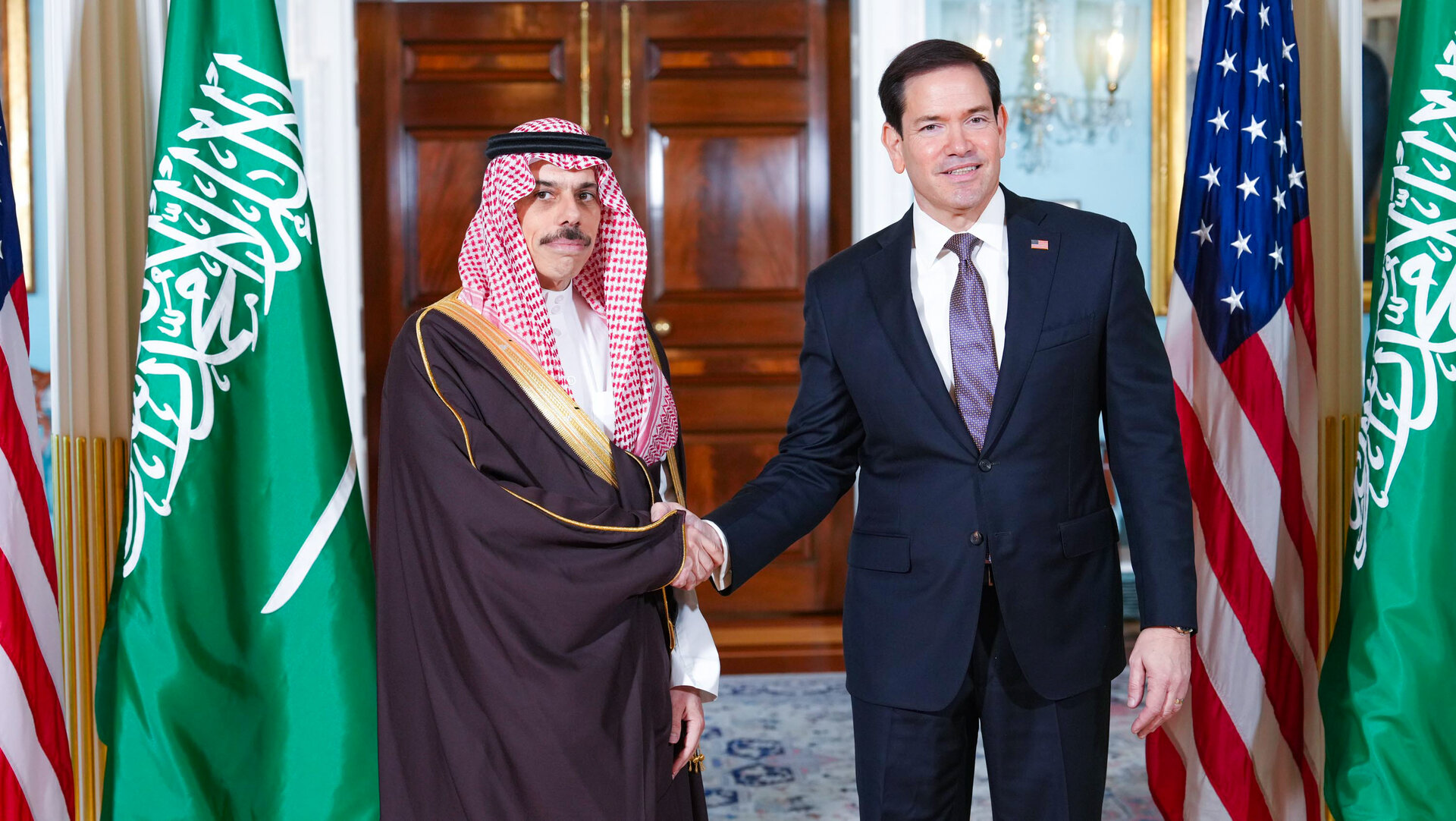
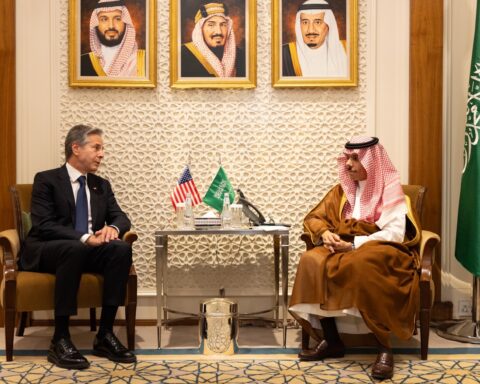
Saudi Foreign Minister Prince Faisal bin Farhan shakes hands with US Secretary of State Marco Rubio at the State Department, Washington DC, September 28, 2026

Faisal Came to Washington and Left Without an Answer

Saudi FM Faisal bin Farhan met Rubio and three Senate committees. No joint statement, no deliverables, no timeline for PAC-3 resupply or the $24.3B F-35 sale.

WASHINGTON — Prince Faisal bin Farhan spent Monday and Tuesday in the American capital meeting Secretary of State Marco Rubio, members of three Senate committees, and anyone who would hear Riyadh’s case for PAC-3 interceptors, coalition strikes against the Houthis, and a $24.3 billion fighter-jet sale — and departed without a joint statement, a communiqué, or a single publicly announced deliverable. The visit was not evidence of Saudi diplomatic influence in Washington; it was the clearest signal yet of how little remains.

Conflict Pulse IRAN–US WAR
Live conflict timeline →
Day
217
since Feb 28
Casualties
13,260+
5 nations
Brent Crude ● LIVE
$113
▲ 57% from $72
Hormuz Strait
RESTRICTED
94% traffic drop
Ships Hit
16
since Day 1

The State Department described the talks as “a continuation of discussions from the UN General Assembly,” language that in diplomatic protocol means no new ground was broken. Rubio posted a summary on X confirming they discussed “bilateral cooperation in regional security and stability, including Iran, Gaza, Sudan, and Yemen” — a list of everything and a commitment to nothing. Fox News, which rarely frames Saudi visits with scepticism, was more direct: “Saudi foreign minister warns Houthi threat goes global as Trump holds fire.”

The Visit That Announced Nothing

The September 28-29 meetings followed the standard template for bilateral talks between security partners: closed-door sessions at the State Department, a social-media summary from the American side, and a Saudi readout through Saudi Gazette that described the two foreign ministers as having “reaffirmed Saudi-US strategic ties” and discussed “navigation security.” In the middle of an active Houthi air campaign against Saudi airports and refineries, a PAC-3 inventory at 86 percent depletion, and a $24.3 billion arms deal sitting untouched on Capitol Hill, the Saudi Gazette described the outcome with no verb stronger than “reaffirm.”

No new defence agreements were announced, no timeline for interceptor resupply was made public, and no joint position on Houthi strikes emerged. The Saudi Press Agency’s own account described the visit as a “continuation” of conversations begun at the United Nations General Assembly in New York, where Faisal had spent the previous week making the same case to the same people.

What makes the visit notable is not what happened inside the State Department but the contrast with what was happening outside it. On September 30 — one day after Faisal left Washington — Trump told CBS News that Iran’s time was running out: “Maybe you blow them up… The time is coming. It’s going to end very soon, one way or the other.” On October 1, he told Time magazine that post-midterm strikes on Iran were “possible” and that the United States was “stocking up at levels we’ve never done before.” The carrier USS Theodore Roosevelt departed San Diego the same week for a seven-to-eight-month Middle East deployment, carrying 9,000 to 10,000 additional troops.

Saudi Foreign Minister Prince Faisal bin Farhan shakes hands with US Secretary of State Marco Rubio at the State Department, Washington DC, September 28, 2026
Saudi Foreign Minister Prince Faisal bin Farhan with Secretary of State Marco Rubio at the State Department, September 28, 2026. The meeting produced no joint statement, no new defence commitments, and no announced timeline for PAC-3 resupply or the $24.3 billion F-35 sale. Photo: US State Department / Public Domain

What Did Faisal Ask Washington to Deliver?

Prince Faisal brought three requests to Washington on September 28: PAC-3 interceptor resupply to address 86 percent depletion of Saudi Arabia’s Patriot stockpile, direct US airstrikes against Houthi launch positions in Yemen, and congressional clearance of the $24.3 billion F-35 sale notified to Congress on September 17. None of the three has a delivery timeline that matches Riyadh’s operational need.

The HOS Daily Brief

The Middle East briefing 3,000+ readers start their day with.

One email. Every weekday morning. Free.

The PAC-3 shortage is the most urgent. Saudi Arabia has consumed roughly 2,400 of its 2,800 Patriot interceptors since the Iran-US war and Houthi escalation began in July, leaving approximately 400 rounds to cover every city, military base, refinery, and desalination plant within Houthi and Iranian missile range. No resupply is expected before mid-2027, and Lockheed Martin’s production line for PAC-3 MSE interceptors cannot accelerate beyond current rates without a congressional supplemental appropriation that no member of Congress has introduced.

The request for Houthi strikes is the most politically charged. CNN reported on September 19 that MBS called Trump twice on September 10 asking for direct American airstrikes against Houthi launch sites in western Yemen, and that Trump declined both requests. The Soufan Center assessed on September 21 that “Saudi Arabia is left to face the Houthis alone” and that “the United States, its historic Gulf state allies, and more recent security partners Pakistan and Turkey have refused to provide direct military support to Riyadh, seeking to avoid expanding the Iran war.” By the time Faisal sat down with Rubio on September 28, the answer had been given at presidential level eighteen days earlier.

The F-35 sale is the most visible request but the least relevant to Saudi Arabia’s immediate crisis. The $24.3 billion package — 48 F-35A Lightning IIs and 49 Pratt & Whitney engines — was notified to Congress on September 17, beginning a 30-day review window that closes approximately October 17. As of September 29, Day 11 of that window, Congress had taken no public action — no hearing, no hold, no letter of support, and no letter of opposition. Even if the sale clears review without incident, the first F-35s would not reach Saudi Arabia until after 2028, two years after the war that created the demand for them.

Saudi Arabia’s three principal security requests and their delivery timelines as of October 1, 2026. Sources: Defense News, CNN, Pentagon, CSIS.
Request Current Status Earliest Delivery
PAC-3 MSE interceptors ~400 remaining (86% consumed) Mid-2027 (no supplemental funded)
US airstrikes on Houthi positions Refused at presidential level (Sep 10) No timeline; Trump declined twice
48 F-35A Lightning IIs ($24.3B) Day 11 of 30-day AECA review After 2028 (production lead time)

As recently as July 10, this level of conversation was handled by Ambassador Reema bint Bandar, who met Rubio at ambassador level — the normal channel for ongoing security consultations. Faisal’s personal appearance in Washington, arriving directly from the UN General Assembly rather than returning to Riyadh, marked the first time the Saudi foreign minister had conducted back-to-back bilateral talks at this intensity since the Houthi escalation began in September.

Three Committees and No Signal

Faisal did not limit himself to Rubio. On September 28 and 29, he met with members of three Senate committees whose jurisdiction covers every component of the $24.3 billion F-35 sale: the Senate Armed Services Committee, chaired by Roger Wicker with ranking member Jack Reed; the Senate Intelligence Committee, led by Tom Cotton; and the Senate Foreign Relations Committee, under Jim Risch with ranking member Jeanne Shaheen.

The choice of committees was precise. Armed Services oversees the military’s foreign military sales pipeline and would receive any supplemental appropriation request for accelerating PAC-3 production. Intelligence has jurisdiction over technology-transfer risk — the principal concern around the F-35 sale centres on whether Saudi Arabia’s existing defence relationship with Beijing creates an unacceptable data-security exposure for the F-35’s classified sensor suite. Foreign Relations holds formal authority over the AECA review process itself.

All three committees received Faisal’s briefing, and none issued a public statement afterward. None scheduled a hearing, placed a hold on the sale, or announced support for it. The two concerns that had kept Congress quiet before his arrival remained exactly as unresolved after he left: Israel’s qualitative military edge, which American law requires the administration to maintain in any regional arms transfer, and the Saudi-Chinese technology-transfer question flagged by the Eastern Herald and American Bazaar on the day the sale was notified.

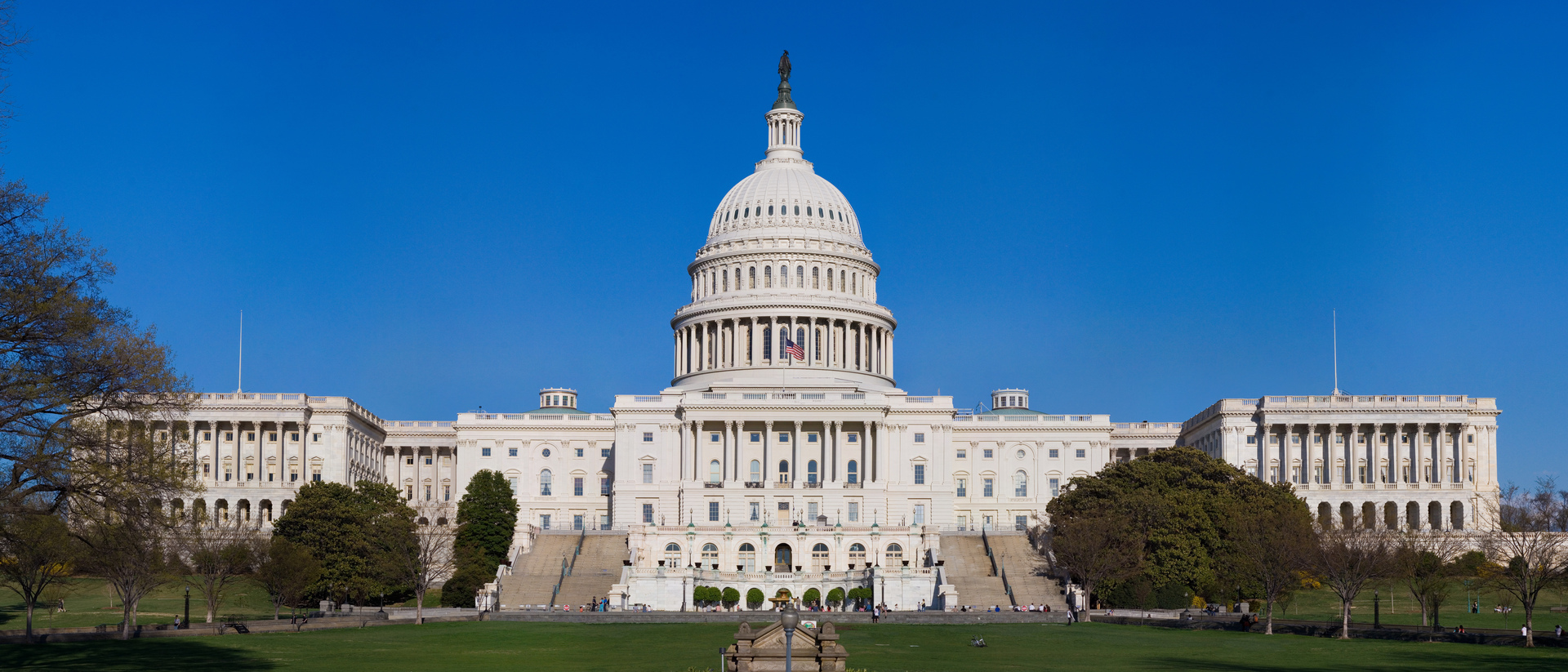
The United States Capitol Building exterior, home to the three Senate committees that received Prince Faisal bin Farhan's briefing on September 28-29, 2026
The United States Capitol, where Faisal briefed members of the Armed Services, Intelligence, and Foreign Relations committees on September 28-29, 2026. None of the three committees issued a public statement, scheduled a hearing, or signalled a position on the $24.3 billion F-35 sale. Photo: Architect of the Capitol / Public Domain

The AECA has not blocked a sale in its 50 years of existence, and no indication exists that this one will be different. But the 30-day clock has never run while the purchasing country was simultaneously requesting direct military intervention from the selling country against a shared adversary — and being refused.

Why Can Nothing Arrive Before November?

The timeline gap is structural, not political. Lockheed Martin produces PAC-3 MSE interceptors at a rate set by existing contracts with the US Army and approved foreign military sales customers. Saudi Arabia is on the customer list, but the production line cannot surge without a congressional supplemental appropriation, and no member of Congress has introduced one. Even if funding materialised tomorrow, manufacturing lead times would delay the first additional interceptors until mid-2027 — eight months from now and well past any November decision on Iran.

“Credible reports suggest that direct US military engagement is what Saudi Arabia really wants, and what President Trump has reportedly declined to provide.”

Michael Ratney, former US Ambassador, CSIS Middle East Program, September 23, 2026

On the same date, Ratney put Riyadh’s position more bluntly: “The tepid US response left Saudi Arabia with an enduring grievance, as its principal defence partner sat by while the kingdom was brazenly attacked by its principal adversary.” The Soufan Center went further, assessing that MBS “has decided to confront the Houthis militarily but, lacking the needed outside support, is likely to try to negotiate a settlement.” Five days after that assessment, Faisal walked into the State Department — and the readout confirmed no settlement offer was any closer.

November is the hinge. Trump’s CBS and Time statements from September 30 and October 1 — “end very soon, one way or the other,” post-midterm strikes “possible,” the US “stocking up at levels we’ve never done before” — mentioned none of the three things Faisal had spent two days in Washington discussing: Saudi Arabia’s depleted interceptors, the Houthi campaign, or the F-35 sale stalled on Capitol Hill.

That gap is why Iran’s seven-day ceasefire proposal, conveyed through Qatar and rejected by Trump on September 30, mattered to Riyadh as much as anything discussed in the State Department. A ceasefire, however temporary, would have bought the time that Washington’s production schedules and political calendars cannot.

The Carrier That Arrives After the Decision

The USS Theodore Roosevelt’s deployment is the clearest signal of what Washington is preparing and the clearest illustration of why Faisal’s visit could not have yielded deliverables. The carrier departed San Diego in late September and will reach the Persian Gulf by late November at the earliest, joining the USS George Washington already on station to create a two-carrier strike-group presence — the standard configuration for major combat operations and the same force posture used during the July strikes against Iran.

Iran International reported that Roosevelt crew members were told to plan for eight-month deployments, not the standard six. Real Clear Defense and Army Recognition confirmed the deployment would sustain a two-carrier presence through at least mid-2027. Bloomberg reported on October 1 that total US military presence in the Middle East already exceeds 50,000 personnel, before the Roosevelt group’s 9,000 to 10,000 additional troops arrive.

US military buildup and Saudi fiscal exposure as of October 1, 2026.
Metric Figure Source
USS Theodore Roosevelt Departed Sep 2026; arrives Gulf late Nov Iran International, Army Recognition
Additional troops deploying 9,000-10,000 Bloomberg, The National
Total US forces, Middle East 50,000+ (pre-Roosevelt) Bloomberg
PAC-3 interceptors remaining (Saudi) ~400 of 2,800 (86% consumed) Pentagon estimates
Saudi 2026 budget deficit (projected) 6-6.6% of GDP Goldman Sachs
Brent crude, October 1 $96.76/barrel Market data

The timing — arrival by late November, after midterm elections — aligns with the window Trump has identified for potential action against Iran. His statement that the US is “stocking up at levels we’ve never done before” pointed to a munitions surge beyond what current Gulf operations require, and the deployment configuration answers a question Faisal was not in a position to put directly to Rubio: whether Washington is preparing for a war that Saudi Arabia did not request and cannot control.

The practical problem is that the carrier arrives after the decision has already been shaped. If Trump orders strikes in November, Saudi Arabia’s PAC-3 inventory will face Iranian retaliation with approximately 400 interceptors and no resupply in sight. The Makkah Joint Defence Agreement signed with Turkey and Pakistan in August has produced no joint command, no standing forces, and no trigger mechanism — and France, with its Yanbu deployment of soldiers, radars, and defence systems, has done more in practice than either treaty partner has committed to in writing.

The aircraft carrier USS Theodore Roosevelt (CVN-71) underway in the Pacific Ocean, January 2020, during deployment to the Indo-Pacific
The USS Theodore Roosevelt (CVN-71) underway. Crew members were told to plan for eight-month deployments rather than the standard six months — an arrival window that would keep the carrier on station in the Persian Gulf through approximately May 2027, the earliest possible date for PAC-3 resupply to Saudi Arabia. Photo: US Navy / Public Domain

Can Saudi Arabia Influence a Strike It Cannot Join?

Saudi Arabia cannot influence the timing or scope of a potential US strike on Iran because it has no military role in the operation, no demonstrated influence over Trump’s decisions, and no alternative security partner that can substitute for American protection during Iranian retaliation. Faisal’s Washington visit was an attempt to ensure Riyadh would at least be consulted before a decision that could expose Saudi cities and energy infrastructure to Iranian missile and drone attacks with a depleted air-defence shield.

Ratney framed the dependency directly: “Saudi Arabia is unlikely to abandon its partnership with the US given the countries’ longstanding defence ties, including training, exercises, arms sales, and intelligence sharing. But it will likely continue to diversify strategic partnerships.” That diversification, however, is a multi-year project, and every current alternative has failed to deliver on its own terms. The Makkah pact has no joint command and no standing forces. Pakistan’s Defence Minister Asif stated on September 30 that Pakistan would defend Saudi Arabia “by whatever means available” — wording that deliberately excluded troops and offensive operations and left the 2015 parliamentary vote against Yemen intervention unreversed.

“Maybe you blow them up… The time is coming. It’s going to end very soon, one way or the other.”

President Donald Trump, CBS News, September 30, 2026

The question for Riyadh is not whether Trump will strike Iran but what happens in the hours after he does. Iran’s retaliatory playbook — tested during the July exchanges — includes ballistic-missile strikes on Gulf infrastructure, Houthi surges from Yemen, and Iraqi militia attacks from the north. Saudi Arabia faced what officials described over the summer as a “double chokehold”: Iran at Hormuz, Houthis at Bab al-Mandab, Iraqi-aligned militias to the north. A post-midterm American strike would tighten all three simultaneously, and the roughly 400 PAC-3 interceptors in Saudi inventory would need to cover targets from Aramco’s Abqaiq complex to the desalination plants that supply Riyadh’s drinking water.

Goldman Sachs projects a Saudi budget deficit of 6 to 6.6 percent of GDP for 2026 — nearly double the official fiscal plan — with Brent trading at $96.76 on October 1. A war that Riyadh did not start and cannot control would widen that deficit before a single additional barrel of Saudi crude went offline.

Why Did Iran Stay Silent About the Washington Visit?

Iran’s state media carried no criticism of the Faisal-Rubio meeting — a deliberate omission by Tehran, which gains more from projecting cooperative outreach toward Saudi Arabia than from attacking a Washington visit that produced no deliverables. Iran’s silence contrasted sharply with its usual pattern of condemning Saudi-US military coordination, and it followed a meeting between Iranian FM Abbas Araghchi and Faisal at the UN General Assembly on September 26 — two days before the Washington talks — in which Araghchi briefed the Saudi foreign minister on an Iran-Oman understanding regarding safe maritime routes through the Strait of Hormuz.

The chronology deserves attention. On September 26, Araghchi met Faisal in New York and conveyed Iran’s “commitment to strengthening trust and promoting regional security through cooperation among the countries of the region.” On September 28, Faisal sat down with Rubio and received a readout that mentioned Iran only as a discussion topic, not as the subject of any new American commitment. On September 30, Iranian President Masoud Pezeshkian told Tasnim that “regional cooperation” was “key to Persian Gulf security” — framing that positioned Tehran as the party offering a Gulf security structure while the State Department’s readout announced none.

Iran’s diplomatic calculation is straightforward. Every day that Washington declines to strike the Houthis on Saudi Arabia’s behalf, Iran’s argument that Gulf security should be managed by Gulf states without American military presence becomes marginally more attractive to a Riyadh running short on interceptors and patience. PressTV, Iran’s English-language state outlet, had framed US arms sales to Saudi Arabia as enabling aggression “against Iran” as recently as July 16 — the decision not to frame the Faisal-Rubio meeting the same way marked the first time since July that PressTV declined to attack a Saudi-American security discussion.

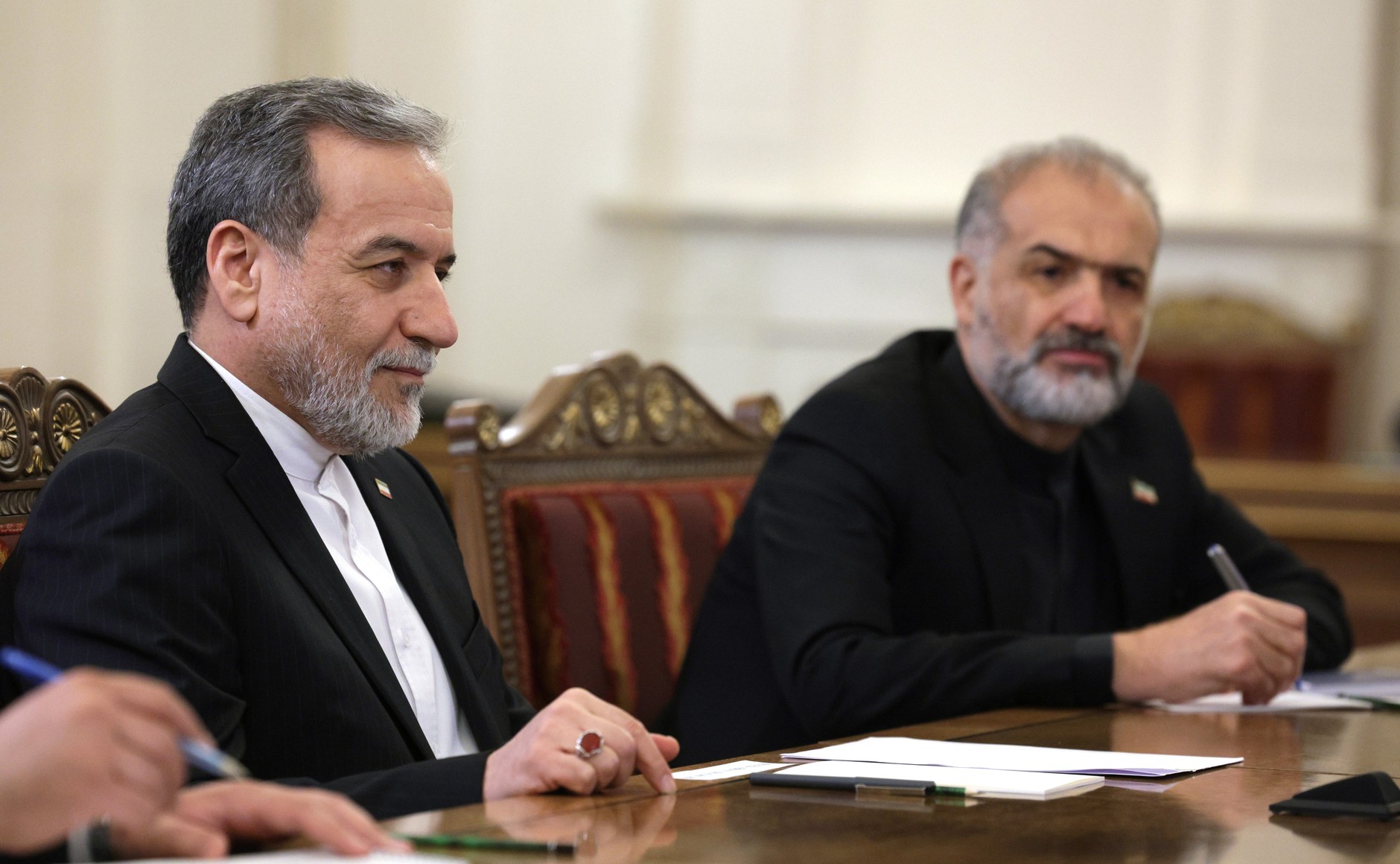
Iranian Foreign Minister Abbas Araghchi at a bilateral meeting, April 2026. Araghchi met Saudi FM Faisal bin Farhan at UNGA on September 26, two days before the Washington talks
Iranian Foreign Minister Abbas Araghchi at a bilateral meeting, April 2026. Two days before Faisal arrived at the State Department, Araghchi met him at UNGA and conveyed Iran’s “commitment to strengthening trust and promoting regional security” — framing Tehran as the party offering cooperation while Washington announced none. Photo: kremlin.ru / CC BY 4.0

The Purpose of Being in the Room

The simplest explanation for Faisal’s visit is also the most uncomfortable for Riyadh: the Saudi foreign minister went to Washington not to obtain things but to ensure that Saudi Arabia could not be excluded from whatever comes next. Everything in November — Trump’s post-midterm decision window, the Roosevelt’s arrival, the F-35 review’s close — was already in motion. Faisal could not accelerate any of it. He could only be present when it happened.

The Soufan Center’s September 21 reading — that MBS, “lacking the needed outside support, is likely to try to negotiate a settlement” — was the starting point of the visit, not its conclusion. Saudi Arabia faces a war it must either fight alone or end at the negotiating table, and Faisal’s meetings with all three committees — Armed Services, Intelligence, Foreign Relations — covered every lever available to Congress on both the F-35 sale and a potential PAC-3 supplemental appropriation.

The visit also served a narrower, defensive purpose: creating a paper trail. If Trump strikes Iran in November and Saudi infrastructure absorbs retaliatory damage, Riyadh needs to demonstrate that it briefed Washington, visited Washington’s committees, and was present when the decisions were being shaped — rather than absorbing the consequences of a war it neither started nor endorsed without having been consulted. The State Department’s readout listed five topics, announced zero decisions, and described the meeting as a continuation of prior discussions — language that confirmed Faisal had presented Riyadh’s case and that Washington had placed it on a list alongside Gaza, Sudan, Yemen, and the broader Iran question.

Tehran’s state media carried no criticism of the Washington visit. Iran’s silence meant Faisal returned to Riyadh having been recorded by Washington and ignored by Tehran — which, in the circumstances, was the one outcome neither side needed to manufacture.

Frequently Asked Questions

Has Congress ever blocked an arms sale under the AECA?

No. In its 50 years of existence, the Arms Export Control Act’s 30-day congressional review has never resulted in the rejection of a notified arms sale. Congress’s tool under the AECA is a joint resolution of disapproval, which requires passage by both chambers and is subject to presidential veto — a threshold no arms sale opposition has reached. The real power is delay: placing informal holds, requesting additional briefings, and extending review timelines that push deliveries further out. For the $24.3 billion F-35 sale, any delay beyond the October 17 window would push the deal into lame-duck or new-session politics, compounding a delivery timeline that already stretches past 2028.

Why did Faisal visit Washington in person rather than use the ambassador channel?

Ambassador Reema bint Bandar had handled the Rubio relationship as recently as July 10, 2026, when she met the Secretary of State at ambassador level for routine security consultations. Faisal’s personal appearance — arriving directly from UNGA in New York rather than returning to Riyadh — was an escalation from routine to crisis-level diplomacy. Faisal held no press conference and made no public remarks at the State Department, which is unusual for foreign-minister-level bilateral visits where both sides typically appear before cameras. The absence of public remarks suggested the visit was designed for private diplomatic record-building, not public messaging.

What is the USS Theodore Roosevelt’s specific operational mission?

The Roosevelt will relieve the USS George Washington currently on station, creating a two-carrier strike-group presence that CENTCOM has historically required for major combat operations — the same force posture maintained during the July 2026 strikes on Iran. Iran International reported crew members were told to plan for eight-month deployments rather than the standard six, which would keep the Roosevelt on station through approximately May 2027 — coinciding with the earliest possible PAC-3 resupply window for Saudi Arabia. The sustained two-carrier configuration signals preparation for operations that go beyond current force-protection and freedom-of-navigation missions.

Did Iran respond to Faisal’s Washington visit?

No Iranian state media outlet criticised the Faisal-Rubio meeting — the first time since the July war that PressTV and Tasnim declined to attack a Saudi-American security discussion. PressTV had continued framing Saudi-US security meetings as coordination against Iran through at least July 16 — the silence around Faisal’s September 28 visit was a departure from that pattern. Araghchi had met Faisal two days earlier at UNGA and publicly described their exchange as a discussion of “regional security cooperation” — framing that made it diplomatically awkward to then attack a Washington follow-on that produced no new commitments. Iran’s calculation is that a Saudi foreign minister who returns from Washington without deliverables validates Tehran’s argument that Gulf security cannot depend on American guarantees.

Saudi Crown Prince Mohammed bin Salman and President Donald Trump at King Khalid International Airport, Riyadh, May 13, 2025
Previous Story

'Indivisible Gulf Security' Has No Joint Command

Latest from Diplomacy & Geopolitics

The HOS Daily Brief

The Middle East briefing 3,000+ readers start their day with.

One email. Every weekday morning. Free.

Something went wrong. Please try again.