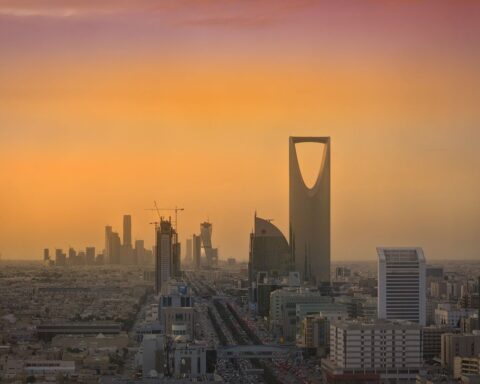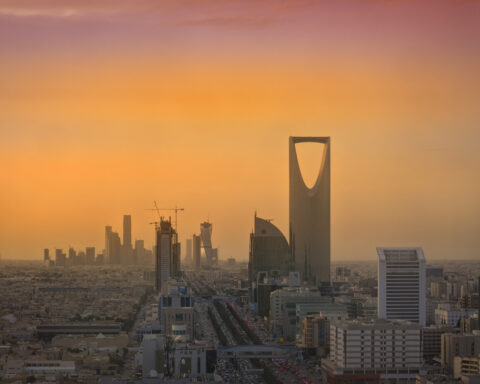

NEOM — Saudi Arabia’s Public Investment Fund is preparing to drop five of the fifteen stadiums it proposed for the 2034 FIFA World Cup, including the $2.5 billion NEOM venue that was designed to be cantilevered within The Line’s roof structure — the single most reproduced piece of architecture in the entire Vision 2030 programme, according to a Semafor exclusive published on 14 October 2026. The revised plan would leave ten stadiums: six newly built and four refurbished existing venues, a reduction from a bid that promised fifteen across five cities when Saudi Arabia was confirmed as sole host on 11 December 2024.
PIF and the Ministry of Sport did not respond to Semafor’s requests for comment, and the outlet noted that Saudi officials were still working on the updated proposals and that plans could change. But the trajectory is unmistakable: the NEOM stadium has had no funding allocated until after 2030, The Line has effectively ground to a halt, and the kingdom’s wartime deficit has ballooned well beyond what was budgeted. What sets this reduction apart from every previous World Cup host adjustment is the identity of the casualty — the NEOM stadium was not one venue among fifteen but the architectural thesis of the entire Saudi bid.
Table of Contents
- What Is PIF Dropping From the 2034 World Cup Bid?
- The NEOM Stadium Was Never Just a Venue
- How Did the War Reach the FIFA Bid?
- The Line Collapsed Before the Stadium Did
- What Does This Mean for the 2027 Asian Cup?
- Can Ten Stadiums Satisfy FIFA?
- Al-Rumayyan’s Reassessment Has a Pattern
- The Budget That Broke the Bid
- Frequently Asked Questions
What Is PIF Dropping From the 2034 World Cup Bid?
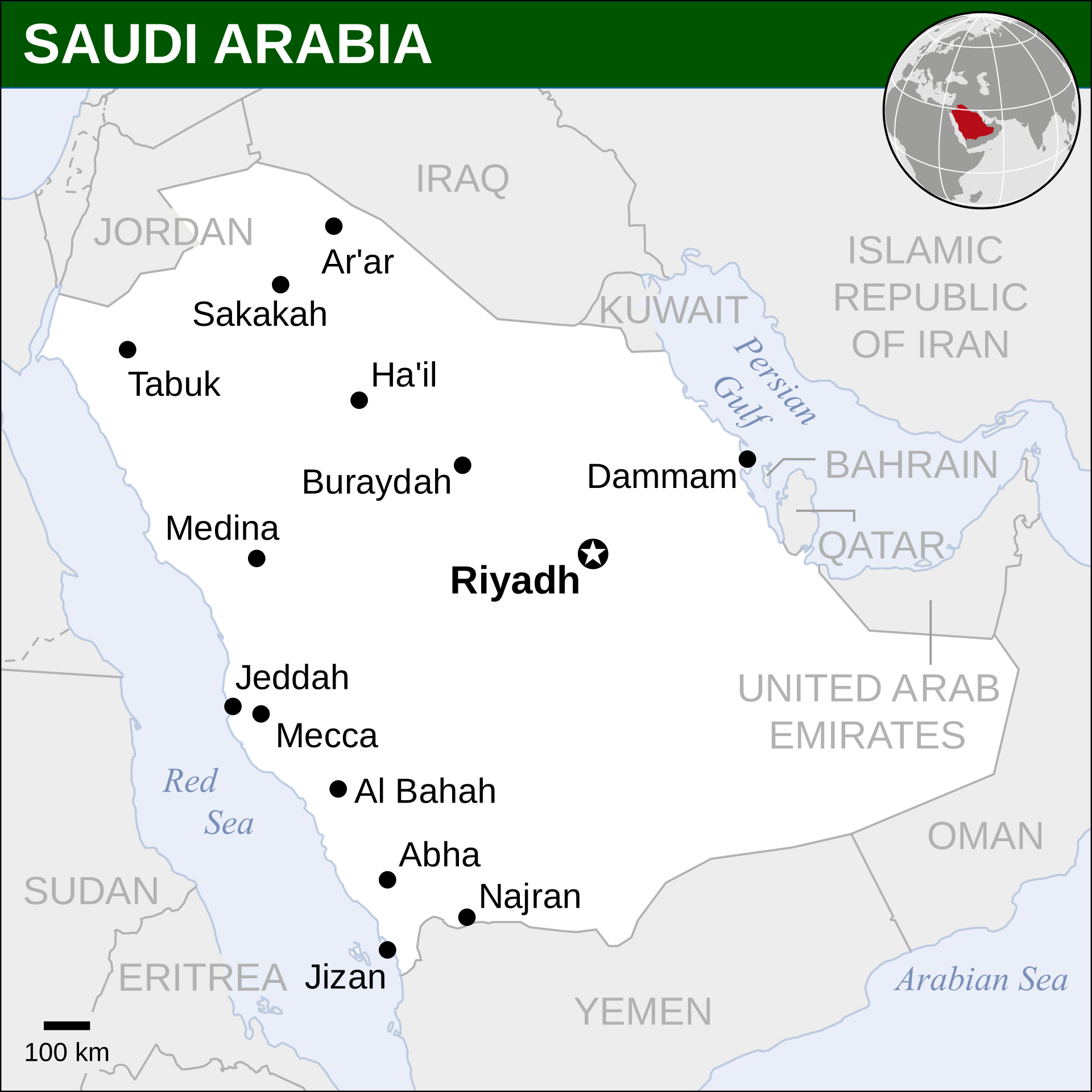
PIF is preparing to remove five stadiums from Saudi Arabia’s 2034 hosting plan: King Abdullah Economic City near Jeddah, Qiddiya Coast near Jeddah, Roshn in Riyadh, New Murabba in Riyadh, and the NEOM stadium in the kingdom’s northwest, according to Semafor. The ten remaining venues would still span multiple cities, but the revised list removes every venue tied to a PIF giga-project that has not broken ground or that depends on unbuilt megaproject infrastructure to function.
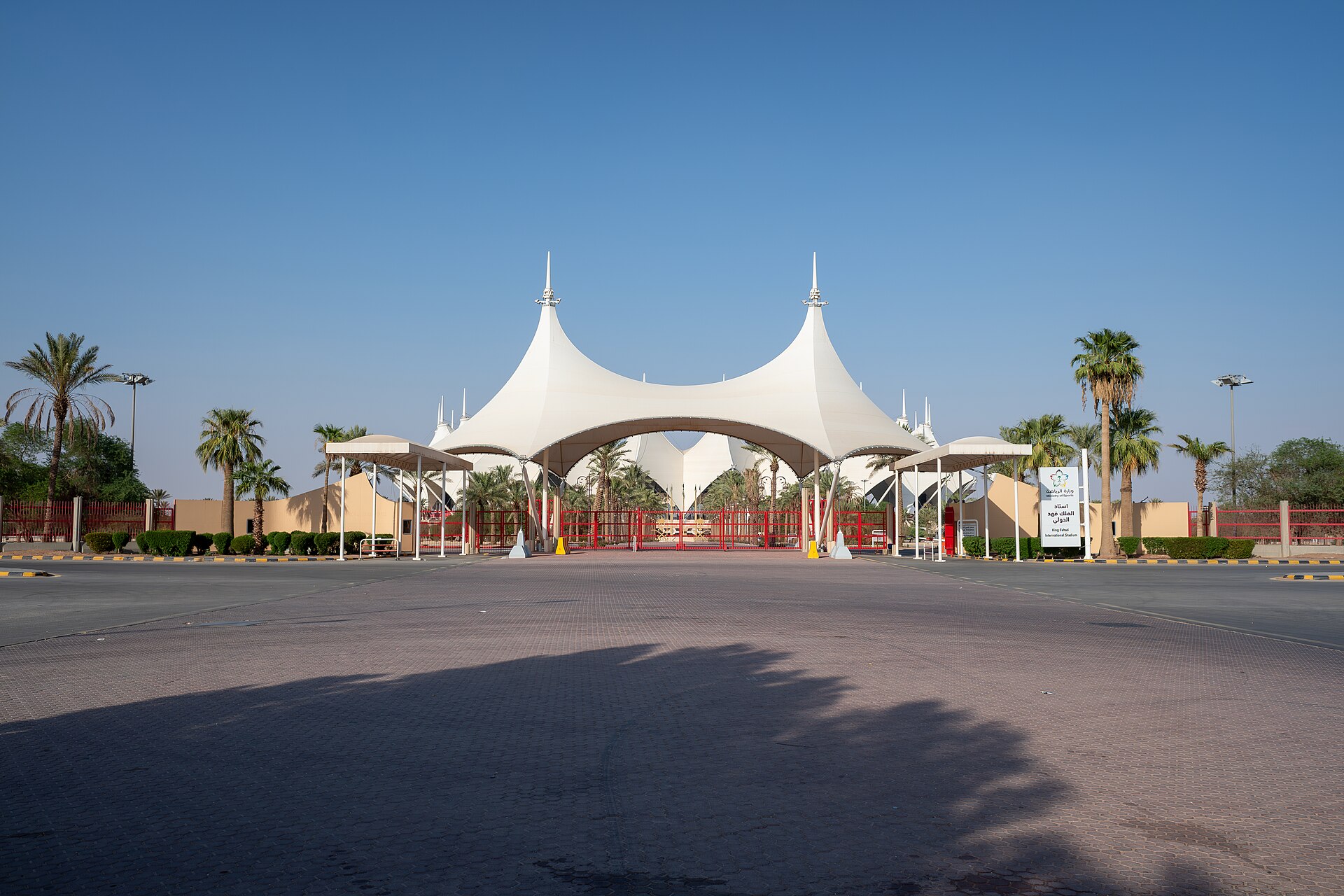
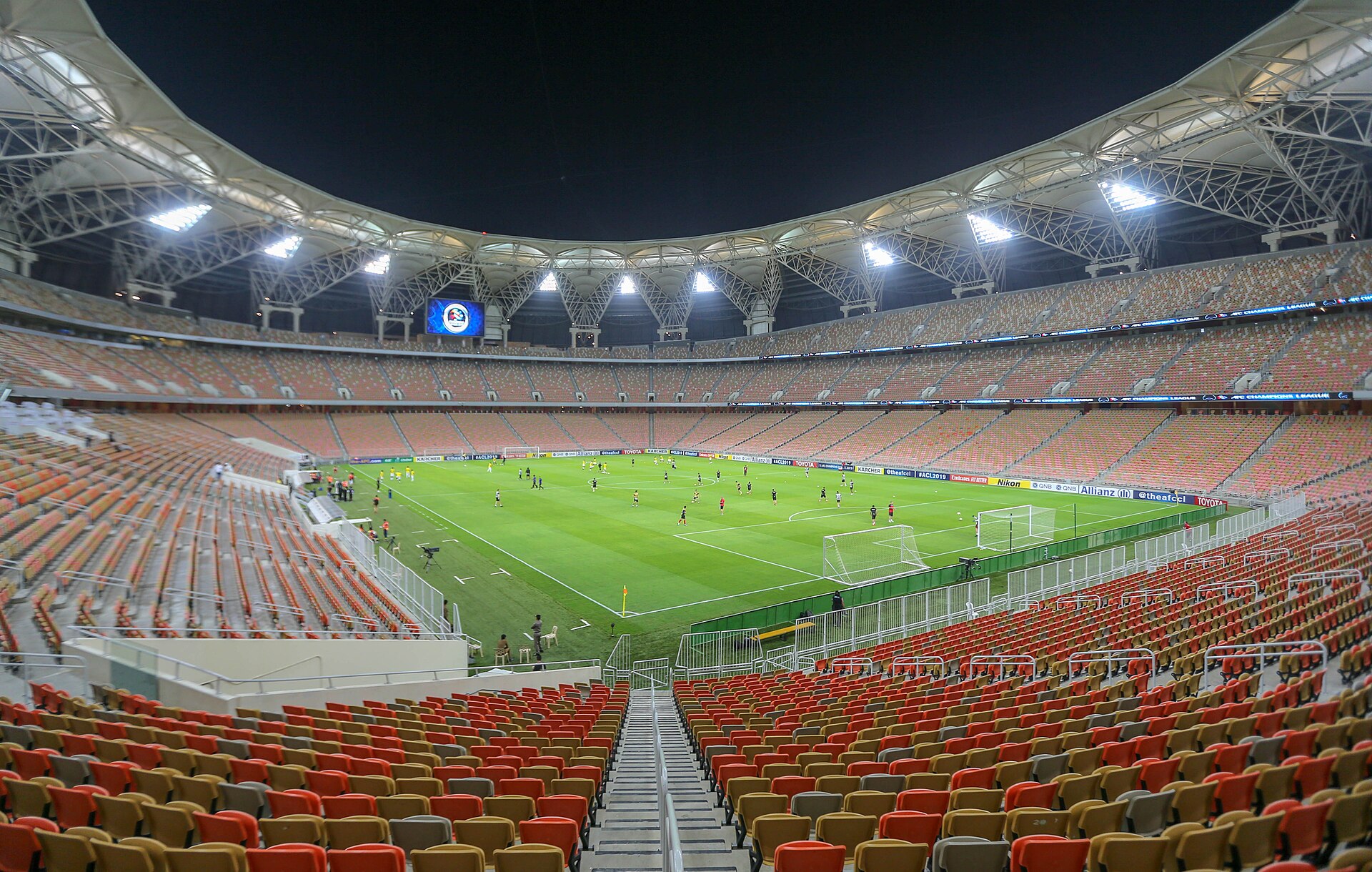
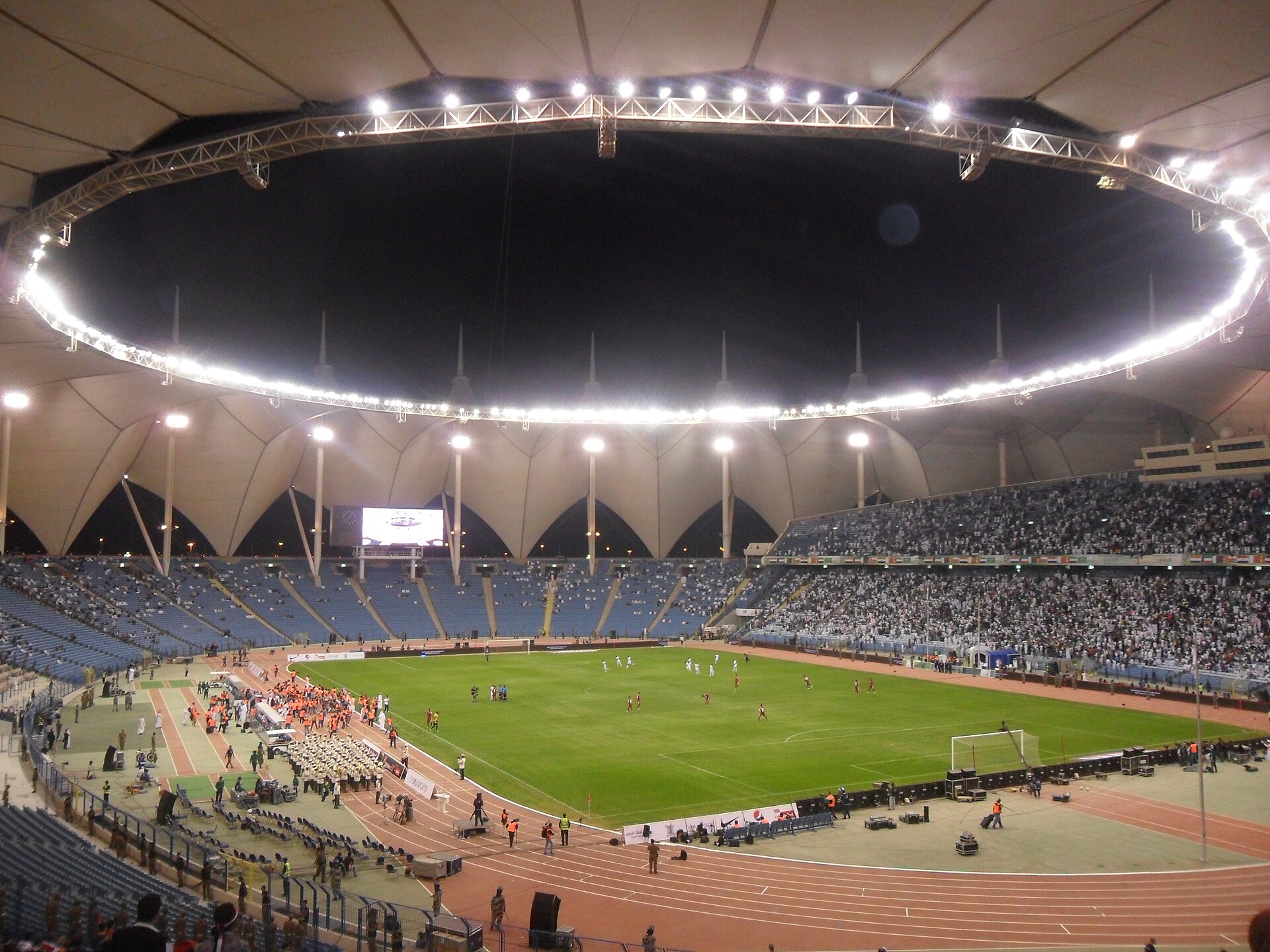
The original bid, confirmed on 11 December 2024 after Australia withdrew the previous October as the only other candidate, called for fifteen stadiums across five cities: Riyadh, Jeddah, Khobar, Abha and NEOM. FIFA had already lowered the minimum number of existing stadiums from seven to four to accommodate the Saudi proposal, a concession that reflected the unprecedented scale of new construction the kingdom was promising. The centrepiece of the surviving plan is the King Salman International Stadium, a venue with more than 92,000 seats that will host the opening match and the final.
The cuts include two venues in Riyadh and two near Jeddah, plus the NEOM stadium in the far northwest, which means the reduction is not primarily geographic: Saudi Arabia will still host matches across its main population centres. What the cuts remove are projects whose timelines, parent developments or infrastructure dependencies have been disrupted by war-driven fiscal pressure over the past year. Four of the surviving stadiums overlap with venues planned for the 2027 AFC Asian Cup, a tournament Saudi Arabia is also scheduled to host, which means PIF’s revised selection is partly dictated by what has to be built regardless of the 2034 deadline.
The distribution of the cuts reveals something about PIF’s current calculus. King Abdullah Economic City, located north of Jeddah, is a fifteen-year-old development that has struggled with occupancy and investment since its launch; dropping its stadium concedes a venue that was already built on uncertain commercial foundations. Qiddiya Coast, also near Jeddah, and Roshn and New Murabba in Riyadh are newer PIF master-planned communities whose construction timelines have been disrupted by the broader fiscal squeeze. The NEOM stadium sits in a category of its own — a venue whose removal signals not the delay of a city-planning project but the structural incapacity of the giga-project on which it was supposed to rest.
The Middle East briefing 3,000+ readers start their day with.
One email. Every weekday morning. Free.
The NEOM Stadium Was Never Just a Venue
Conceived by Bjarke Ingels Group and later developed by Populous, the NEOM stadium was designed as a 46,010-seat arena to be elevated 350 metres above the desert floor, embedded in the roof of The Line’s mirrored superstructure. No other World Cup venue in any previous or planned tournament has attempted anything comparable in terms of altitude, engineering complexity or cost, and the design functioned as the visual signature of Saudi Arabia’s entire hosting proposition — the image that appeared on magazine covers, in investor presentations and across international media as evidence that this would be a World Cup unlike any before it. Dezeen reported on 5 October 2026 that the stadium had been shelved indefinitely, nine days before Semafor revealed it was one of five venues being dropped from the bid.
The dependence on The Line was not decorative. The stadium required The Line’s mirrored cladding for its outer shell, the surrounding infrastructure corridor for road access, the utilities grid for water and power supply, and the elevation platform for the 350-metre perch that defined the architectural concept. Without a completed and functioning section of The Line around the stadium site, the venue could not be built, serviced or reached by the tens of thousands of spectators that a World Cup group-stage match would bring, which made the NEOM stadium uniquely vulnerable to the same forces that stalled The Line: a war economy that redirected capital to defence, a deficit that overran every revision, and a strategic pivot at PIF from spectacle toward function.
NEOM has allocated no funding for the stadium until after 2030, according to Semafor. The 2034 tournament is eight years away, but the stadium’s prerequisites — a completed section of Line infrastructure, a transport network connecting the site to airports and accommodation, a water and power grid capable of handling the surge of a matchday — would need construction to begin years before the opening whistle. With The Line halted, those prerequisites do not exist on any published timeline, and the gap between the stadium’s requirements and NEOM’s current state of development is the widest it has been since the bid was filed.
The NEOM stadium’s removal does not stay inside the construction programme. The venue appeared in the materials Saudi Arabia presented to FIFA, in the coverage that international media published about the bid, and in the imagery that investors, sponsors and broadcasting networks were shown as evidence of what a Saudi-hosted World Cup would deliver. Dropping it forces a recalibration across all those audiences: the 2034 tournament will still have ten stadiums, the King Salman flagship, and Riyadh’s existing urban infrastructure, but it will no longer have the single image that set the Saudi bid apart from every World Cup that preceded it.
How Did the War Reach the FIFA Bid?
The path from the Houthi missile strikes to the World Cup venue list runs through Saudi Arabia’s budget. The pre-budget statement released on 30 September 2026 revised the kingdom’s projected deficit for the year upward to 245 billion riyals — forty-eight per cent above the 165 billion riyals budgeted when the year began, according to Reuters via Zawya. The IMF’s October 2026 World Economic Outlook cut Saudi GDP to a contraction of 3.3 per cent, a swing of five percentage points from the positive 1.7 per cent the Fund had forecast as recently as July. Goldman Sachs estimated the war-adjusted deficit at approximately 6.6 per cent of GDP, a figure that captures both the revenue loss from disrupted oil exports and the surge in military outlays that the budgeted number does not.
Military spending has consumed an expanding share of the fiscal space that was once earmarked for transformation projects. Saudi defence expenditure reached $83.2 billion in 2025, and first-quarter 2026 spending rose twenty-six per cent year-on-year, according to AGSI and AGBI. Those resources — air-defence interceptor procurement, coalition air sorties over Yemen, deployment support for Pakistani and Turkish forces under the Makkah pact, reconstruction of damaged airport infrastructure — are not discretionary in the same way a stadium build is, and when the defence ministry competes with the sports ministry for the same capital budget, the outcome in wartime is a hierarchy rather than a negotiation. Saudi Arabia absorbed the 2020 pandemic and the 2023 oil price correction without touching its FIFA commitment, and the fact that it is touching it now registers the relative depth of the current crisis in a language that GDP figures alone do not convey.
The budget arithmetic has forced a triage. Building fifteen stadiums across five cities, several in locations without existing infrastructure, requires capital that competes with air-defence procurement, coalition military operations and the running costs of a multi-front conflict. When Dhahran took the missile Aramco was never supposed to take, and Riyadh’s King Khalid International Airport absorbed repeated strikes that killed twenty people between 6 and 11 October, the spending priority shifted in a direction stadium construction cannot survive. As an earlier analysis on this site argued, Vision 2030 was built for low oil, not for war — and the five stadiums PIF plans to drop are the fiscal debris of that mismatch.
The Line Collapsed Before the Stadium Did
The NEOM stadium’s physical dependency on The Line means its timeline was broken well before PIF moved to pull it from the World Cup bid. Bloomberg and the Wall Street Journal reported in April 2024 that The Line’s first phase had been scaled to 2.4 kilometres — approximately 1.4 per cent of the originally planned 170 kilometres. By May 2026, Semafor reported that NEOM had halted further work on The Line until at least after 2030 and reduced the project’s 2030 population target to up to 100,000, a small fraction of the 1.5 million residents the original design was meant to house.
The contract terminations document the retreat in accounting terms. In March 2026 alone, NEOM cancelled contracts worth billions of dollars, including Webuild’s Trojena dams contract — valued at approximately $5 billion and roughly thirty per cent complete at the time of cancellation — and Eversendai’s structural steel contract for the Trojena Ski Village, with NEOM citing “geopolitical developments in the Middle East” as the reason. AGBI reported in June 2026 that NEOM estimates $16 billion in total contract termination costs through 2030 — money spent on work that will produce no corresponding asset, a financial overhang that compounds the budget pressure driving the stadium cuts.
The 2029 Asian Winter Games, which were to have been held at Trojena, were indefinitely postponed in January 2026 by agreement between the Olympic Council of Asia and the Saudi Olympic and Paralympic Committee. The pattern across every branch of the project is consistent: NEOM is contracting, not expanding, and every initiative that depended on The Line’s surrounding infrastructure — the ski village, the winter games, the World Cup stadium — has been shelved, terminated or defunded.
What Does This Mean for the 2027 Asian Cup?
The 2027 AFC Asian Cup is scheduled for 7 January to 5 February 2027 in Saudi Arabia, and four of the surviving World Cup stadiums overlap with venues planned for that tournament, according to Semafor. The Asian Cup is less than three months away, and its status remains unresolved. An unnamed AFC official told reporters that “the situation should be clear by the second week of November,” a timeline that would leave barely eight weeks for participating national federations to finalise logistics, security protocols, travel bookings and broadcast arrangements for a continent-wide football tournament.
Hosting that tournament requires operational airports, functioning air-defence coverage and an insurance framework that reflects the kingdom’s current threat environment — none of which has been publicly confirmed for January. King Khalid International Airport has been struck repeatedly since early October, with airlines cancelling Saudi Arabia flights and the European Union Aviation Safety Agency widening its airspace advisory over the kingdom. National Day fireworks and drone shows were postponed indefinitely in September, according to Khaleej Times, and the New York Times reported on 10 October that the airport strikes threaten Riyadh’s events calendar, which includes Riyadh Season from 21 October, the EU-GCC summit on 24 October and the Future Investment Initiative from 26 to 29 October.
The uncertainty extends beyond football. The World Petroleum Congress was underway in Riyadh, having opened on 11 October, and the Future Investment Initiative — the crown prince’s flagship investor forum — is scheduled before the AFC’s November decision window closes. Each postponement or scaling-back feeds a pattern that international event organisers, sports federations and broadcast partners will weigh when Saudi Arabia asks them to commit schedules, sponsors and crew to a kingdom whose airspace status is changing by the week.
The overlap between Asian Cup venues and the surviving World Cup stadiums suggests PIF’s revised plan is partly shaped by infrastructure that must be built regardless of the 2034 timeline. If the Asian Cup proceeds, the four refurbished stadiums will already be operational and tested under matchday conditions. If it does not — and no official has confirmed it will — the refurbishment schedule for those venues loses its near-term deadline, and the surviving ten-stadium World Cup plan could face further revision. Karen Young, a senior research scholar at Columbia University’s Center on Global Energy Policy, noted in March 2026 that “forays into tourism, financial services, logistics and technology in Saudi Arabia and the wider Gulf may take a hit from the conflict,” a forecast that both the stadium reduction and the Asian Cup uncertainty are bearing out.
Can Ten Stadiums Satisfy FIFA?
FIFA set the hosting requirements for 2034 before Saudi Arabia became the only candidate, then adjusted them after Australia withdrew in October 2023 and left no rival bid. The federation reduced the minimum number of existing stadiums from seven to four to accommodate the Saudi proposal, according to Goal.com and The Stadium Business — a modification designed to enable an ambitious build programme, not to anticipate its partial reversal. Whether ten total venues, split between six new constructions and four refurbishments, meets FIFA’s current minimum threshold for a World Cup has not been publicly clarified, and FIFA has issued no statement on the reported reduction.
The total infrastructure budget for the 2034 World Cup was reported at approximately $22.7 billion by Reuters, a figure that encompasses stadiums, transport links, accommodation, training sites and broadcast infrastructure. Removing five stadiums reduces the direct construction bill but does not eliminate the surrounding requirements for cities that remain in the plan. Riyadh and Jeddah, which each lose two proposed venues, will still host multiple matches over a tournament that spans roughly a month and requires transport capacity, accommodation, security infrastructure and broadcast connectivity at a scale the kingdom has not previously delivered for a single sporting event.
The question of sufficiency is not only about stadium count but about capacity, redundancy and logistics. A World Cup requires backup venues in case of construction delays or security developments, warm-up facilities for each squad, fan zones, broadcast compounds and transport links that can move hundreds of thousands of spectators between match sites on a single day. Fifteen stadiums provided margin for the unexpected; ten provides a plan that assumes everything will be delivered on schedule and that no additional venue will be lost to further budget cuts, security complications or political decisions between now and 2034.
Semafor noted that Saudi officials are still finalising the updated proposals and that the plans could change — a caveat that cuts both ways, since the number could settle at ten or shift again before a formal submission reaches FIFA. What PIF has signalled with these five deletions is a direction of travel that aligns with its broader strategy over the past year: scale down, consolidate around what can be delivered, and retain venues that serve more than one purpose. The stadiums that survive are the ones that also serve the Asian Cup, sit within existing urban footprints, and do not require giga-project infrastructure that has been halted.
Al-Rumayyan’s Reassessment Has a Pattern
PIF governor Yasir Al-Rumayyan told The National in April 2026 that “the reassessment of our investments is continuous and natural” — a sentence that read as diplomatic boilerplate at the time but functions as a programmatic statement when set beside the stadium decision six months later. In the same interview, published on 15 April, Al-Rumayyan was more specific about what the reassessment had concluded.
“Is having The Line by 2030 important? I don’t think so… What we must have is Oxagon.”
Yasir Al-Rumayyan, PIF Governor, The National, April 2026
That was the first time a senior Saudi official publicly conceded that The Line — the project that generated more international media coverage than any other element of Vision 2030 — was not essential to the programme’s 2030 timeline. It also named the replacement priority: Oxagon, the industrial and logistics port that serves manufacturing, shipping and supply-chain functions rather than architectural spectacle. Semafor reported in May 2026 that NEOM was directing approximately $3 billion in additional funding toward Oxagon, even as it froze investment in Trojena and halted Line construction.
The PIF board, chaired by Crown Prince Mohammed bin Salman, approved a 2026–2030 strategy with a total portfolio valued at $925 billion, according to The National. The strategy described a move “from rapid expansion to consolidating efficiency” and reorganised PIF’s holdings into six ecosystems. PIF had separately announced in April 2026 that it would fund LIV Golf only through the 2026 season, saying a longer commitment was “no longer consistent with the current phase of PIF’s investment strategy.” That decision accompanied a period in which Fitch affirmed Saudi Arabia’s A+ credit rating but cut its growth forecast, a pattern of institutional reassurance paired with visible retreat.
The Line deferral, the Trojena terminations, the LIV Golf exit and now the World Cup stadium reduction follow a coherent logic that the individual announcements obscured. PIF is not abandoning Vision 2030 — it is repricing it, and the repricing follows the contours of the war budget. Saudi Arabia diversified into the sectors the war hit first, and the World Cup bid was the most globally visible product of that diversification. The five stadiums PIF plans to drop mark the distance between the programme’s 2024 price tag and its 2026 one.
The Budget That Broke the Bid
Saudi Arabia’s fiscal position in October 2026 bears little resemblance to the one that underpinned the original World Cup commitment twenty-two months earlier. The IMF’s successive growth forecasts trace the deterioration in a single sequence: 3.1 per cent in April, 2 per cent in June, 1.7 per cent in July, and a contraction of 3.3 per cent in October. No other major economy has experienced a comparable downward revision arc in a single fiscal year, and the trajectory has moved in only one direction since the Houthi escalation expanded beyond southern border cities into Riyadh and the kingdom’s oil infrastructure.
| Indicator | Figure | Source |
|---|---|---|
| 2026 budgeted deficit | 165 billion riyals | Argaam, Dec 2025 |
| 2026 revised deficit estimate | 245 billion riyals | Reuters / Zawya, Sep 2026 |
| H1 2026 actual deficit | 160 billion riyals | Asharq Al-Awsat, Jul 2026 |
| Saudi real GDP forecast (pre-budget, Sep 2026) | −3.6% | Reuters / Zawya, Sep 2026 |
| IMF GDP forecast (Oct 2026) | −3.3% | IMF WEO / Saudi Gazette, Oct 2026 |
| War-adjusted deficit (Goldman Sachs) | ~6.6% of GDP | Goldman Sachs / AGBI, May 2026 |
| Military expenditure, 2025 | $83.2 billion | AGSI / AGBI, 2026 |
| Q1 2026 military spending change | +26% y-o-y | AGSI / AGBI, 2026 |
| NEOM contract termination costs (through 2030) | $16 billion | AGBI, Jun 2026 |
The first-half deficit alone reached 160 billion riyals, according to Asharq Al-Awsat — which means the kingdom had already exceeded its full-year budgeted target before the third quarter had begun and before the costliest phase of the conflict added its weight to the defence ledger. Public debt stood at approximately 1.685 trillion riyals at mid-year, and the pre-budget statement projected 2027 spending of 1.39 trillion riyals against revenue of 1.20 trillion, implying a further deficit of 191 billion riyals next year. The kingdom is borrowing to cover operating costs, not investing surplus revenue into transformation — a structural inversion of the fiscal model that Vision 2030 was designed to rest on.
Aramco’s pricing tells the same story from the revenue side. The company cut its November Arab Light official selling price to Asia by three dollars, widening the discount to five dollars below the Oman/Dubai benchmark — the widest since June 2020, according to Reuters. That discount arrived at a time when Saudi output had already fallen and the East-West pipeline had been suspended as a precaution in September before restarting on 22 September, with full capacity potentially weeks away. The IEA reported Saudi crude shipments at 6 million barrels per day in August, well below the kingdom’s production capacity. The revenue base on which Vision 2030 depends has contracted from both ends — lower volumes through disrupted export routes, and lower realised prices in the kingdom’s largest customer market — and the five stadiums PIF plans to drop are the first public acknowledgement that the arithmetic behind the original fifteen no longer adds up.
Frequently Asked Questions
Has Saudi Arabia formally notified FIFA of the stadium reduction?
Not yet. Semafor reported on 14 October 2026 that PIF is preparing to inform FIFA organisers, but noted that Saudi officials are still working on the updated proposals and that plans could change. FIFA has issued no public statement on the matter, and the formal bid submitted in 2024 listed fifteen venues. Any revision would require acceptance under the hosting agreement’s infrastructure provisions, the specific penalty and modification clauses of which have not been made public, which means the current ten-stadium figure remains subject to further adjustment in either direction before a formal notification is filed.
Could PIF reinstate the NEOM stadium before 2034?
Eight years is theoretically enough time to build a stadium, but the NEOM venue cannot be constructed in isolation: it requires a functioning section of The Line for its shell, elevation platform, access roads and utilities. With Line construction halted until at least after 2030, according to Semafor, the earliest the surrounding infrastructure could resume would leave an exceptionally compressed window for what would be one of the most complex stadium builds ever attempted at that altitude. PIF governor Al-Rumayyan’s stated priority is Oxagon, not The Line, and PIF’s strategy document describes a shift toward efficiency rather than expansion — neither of which points toward reinstating a $2.5 billion venue whose viability depends on reviving a project PIF has publicly deprioritised.
Is the Saudi stadium reduction unprecedented for a World Cup host?
No prior World Cup host has removed the venue that served as the architectural centrepiece of its entire bid. Previous hosts have adjusted individual stadium designs, modified seat counts or swapped one host city for another during the build phase, but those changes involved interchangeable components rather than the single image that anchored the international perception of the hosting offer. FIFA had already reduced its own minimum existing-stadium requirement from seven to four specifically to enable the Saudi bid, and whether it will need to adjust those standards again to accommodate a ten-stadium plan has not been publicly addressed. The modification of FIFA’s own rules to facilitate the bid, followed by the partial reversal of the plan those rules were modified to support, is without close precedent in the tournament’s history.
What is the current status of the other NEOM giga-projects?
Oxagon, the industrial port and logistics hub, is PIF’s declared priority within NEOM and has continued to receive investment, with Semafor reporting approximately $3 billion in additional funding in 2026. The Line is halted until after 2030 with a reduced population target of up to 100,000 residents. Trojena’s construction pipeline has been largely dismantled, with the Webuild dam and Eversendai steel contracts among the terminations in March 2026, and the 2029 Asian Winter Games that were to anchor its events calendar indefinitely postponed in January. Sindalah, a luxury island resort on the Gulf of Aqaba, is the one NEOM sub-project that has continued development largely uninterrupted, in part because it does not depend on Line infrastructure. PIF’s 2025 annual report recorded total fund revenue of $120 billion and net profit of $17 billion, with assets under management exceeding $900 billion — figures that suggest the parent entity’s financial capacity is not the binding constraint, but rather the allocation decisions being made under wartime fiscal pressure.