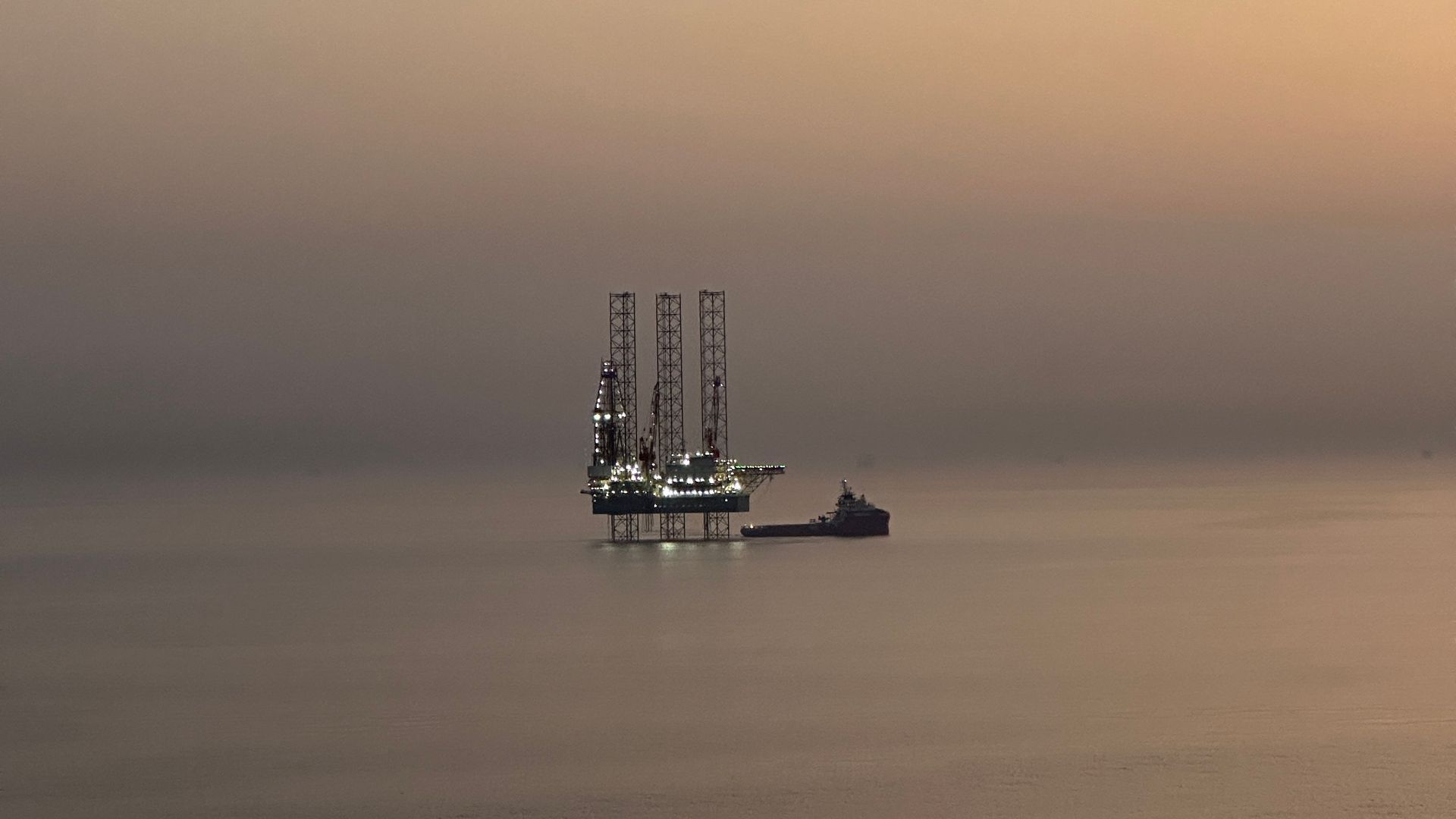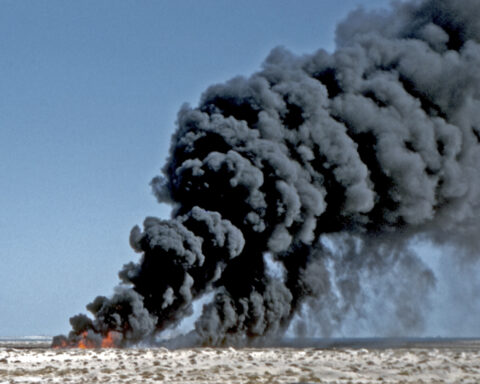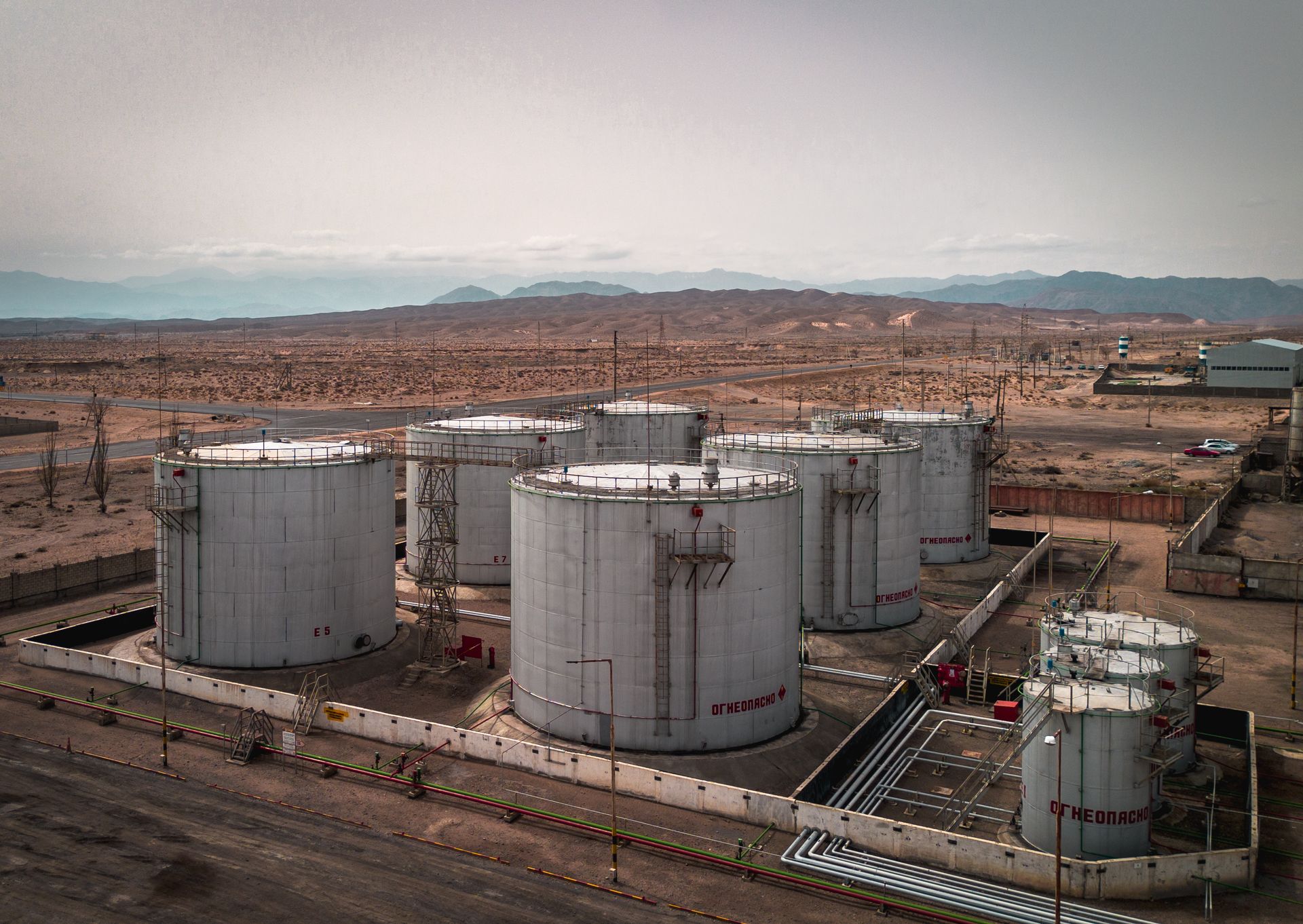

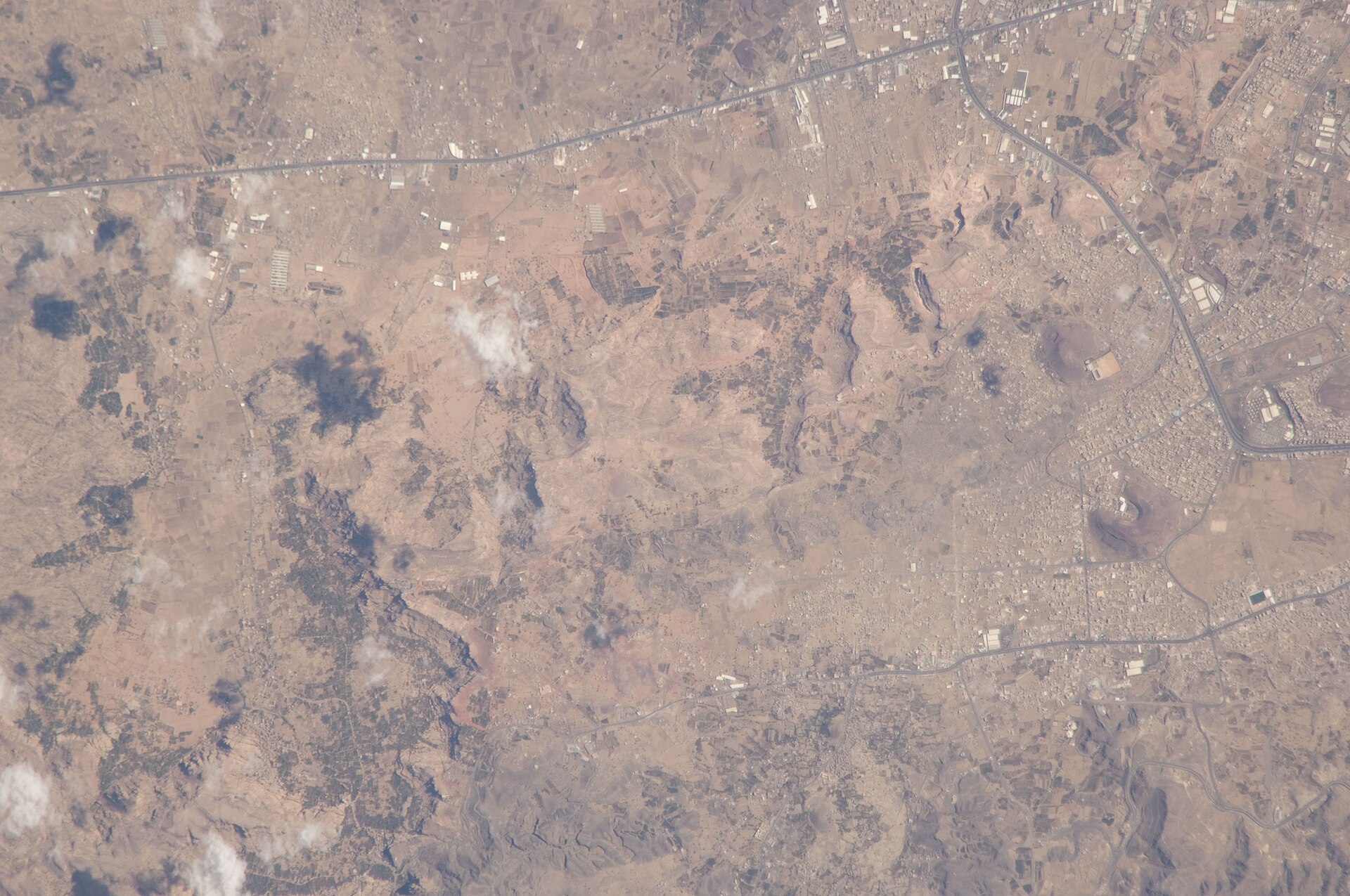
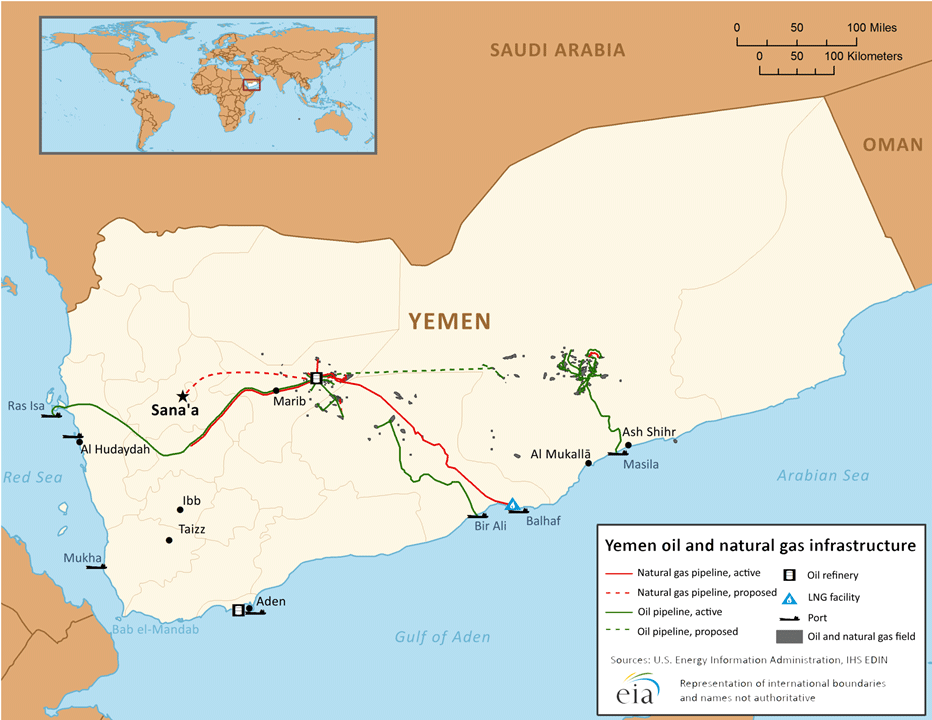
RIYADH — The Saudi-led coalition struck the Yemen Petroleum Company’s Al-Sabaha Central Station on the western outskirts of Sanaa on October 13, after issuing an advance evacuation warning — the first such order for a Sanaa facility since the war resumed in July, AFP reported via France 24 and the Dhaka Tribune.
The operation extended across multiple provinces. The coalition announced strikes on underground fuel reserves, energy terminals in Hodeidah, Sanaa and Dhamar, and fuel-loading piers at the port of Hodeidah, according to Yemen Monitor and the Saudi Gazette. Coalition spokesman Maj. Gen. Turki al-Maliki accused the Houthis of “using the facility and its underground fuel depots for their arsenal of missiles and drones,” AP reported. Arab News described Al-Sabaha as a major fuel distribution hub in northern Yemen.
The strikes followed weeks of escalating exchanges between both sides and injected oil infrastructure into a conflict that had centred on airports, military sites and civilian areas. Houthi military spokesman Brig. Gen. Yahya Saree had warned before the coalition operation that any attacks on Sanaa would be met with “a harsh and painful response in the capital of the Saudi enemy, Riyadh,” according to Al Jazeera. Later on October 13, a Houthi ballistic missile struck Aramco’s administrative complex in Dhahran, causing a fire with no reported casualties.
Table of Contents
What Did the Coalition Strike?
The coalition targeted fuel storage and distribution infrastructure across three Yemeni provinces in a single coordinated operation. The primary target was the Al-Sabaha Central Station in Sanaa, which al-Maliki described as a facility the Houthis used “to support their military operations and supply their arsenals,” The National News reported on October 13.
Beyond the capital, the coalition struck underground fuel storage, tanks, and piers designated for fuel transport and offloading at energy terminals in Hodeidah and Dhamar, al-Maliki said, according to Yemen Monitor and the Saudi Gazette.
An AFP correspondent in Sanaa reported hearing explosions. Houthi-affiliated Al-Masirah TV confirmed the strikes with the alert: “Saudi aggression targets the oil company in Al-Sabaha, west of Sanaa,” AFP reported via France 24.
The Middle East briefing 3,000+ readers start their day with.
One email. Every weekday morning. Free.
The coalition stated its operations aimed at “vital assets used by the Houthis to wage war in Yemen” and at neutralising their ability to “threaten Saudi Arabia, Yemen, the southern Red Sea and international shipping lanes,” according to The National News. The coalition said it “took possible precautions to avoid causing harm to civilians” and committed to “strict compliance with international humanitarian law,” Yemen Monitor and the Saudi Gazette reported.
The evacuation warning — issued ahead of what the coalition called a “special operation” — set a deliberate contrast with the most recent comparable precedent. In March 2022, after Houthi attacks on the Aramco fuel depot in Jeddah, the coalition struck a fuel supply station in Sanaa and other targets without any advance notice. At least seven people were killed by Houthi accounts, Al Jazeera reported on March 26, 2022. No casualties were reported at the Al-Sabaha site on October 13, according to RTE and France 24.
How Did the Houthis Respond?
The Houthis issued a sequence of warnings and then acted on them. Before the coalition struck Sanaa, Brig. Gen. Saree named three specific Saudi sites from which he said civilians should evacuate: Aramco headquarters in Dhahran, King Khalid International Airport, and an Aramco-affiliated refinery in Riyadh, according to Al Jazeera and CBS News.
After the coalition hit the Sanaa facility, Saree broadened the scope. He stated that Aramco facilities are “a legitimate target for our forces” and warned “all employees and citizens present near any facility belonging to Aramco to evacuate it and move away,” AP reported. The shift — from naming three specific installations to designating an entire company’s infrastructure as targetable — marked an expansion of the Houthis’ declared targeting doctrine.
The Houthis followed through on the pre-strike warning. A ballistic missile struck Aramco’s administrative building in Dhahran later on October 13, causing a limited fire with no injuries, according to Reuters and Aramco company sources. That strike is covered separately in a detailed report.
Other Houthi operations continued across October 13. Coalition air defences intercepted Houthi ballistic missiles, with debris from interceptions injuring four people and damaging 15 homes in Riyadh, AP reported via News4Jax. In Taiz, Houthi strikes killed six people and wounded 18, AP reported.
Al-Masirah TV, the Houthis’ main broadcast outlet, framed the coalition’s oil operation as unprovoked aggression. The channel’s on-screen alert — “Saudi aggression targets the oil company” — carried no reference to the military use al-Maliki alleged, AFP reported via France 24.
What Did the Yemen Petroleum Company Say?
The Yemen Petroleum Company, which operates under Houthi authority in Sanaa, issued a statement disputing the strike’s operational significance and denying that the facility held fuel at the time of the attack.
“Al-Sabaha facilities currently do not contain any stock of petroleum products, and therefore, targeting them will not affect fuel stock or supply chains,” the company said, according to AP. The company added that fuel stocks were available “in safe facilities in sufficient quantities.”
The coalition offered a contradictory account. Al-Maliki accused the Houthis of using the facility’s “underground fuel depots for their arsenal of missiles and drones,” AP reported — a characterisation that implied the site was operationally active regardless of whether it held commercial petroleum stocks. The Yemen Petroleum Company’s statement did not address the allegation of military use.
Whether the facility was genuinely empty — or whether stocks had been moved in response to the escalating rhetoric of the preceding days — cannot be independently verified. The Houthis had warned Saudi civilians to evacuate oil sites as early as October 8, AP reported via NY1. The coalition’s evacuation warning for Al-Sabaha came five days later.
The civilian response in Sanaa was immediate. Residents rushed to fuel stations and formed long queues, fearing shortages after the evacuation warning was broadcast, AP reported via US News and Dawn. The Yemen Petroleum Company’s assurance that stocks were “sufficient” did not prevent the panic buying.
Casualties and Humanitarian Impact
The advance warning at Al-Sabaha appeared to achieve its stated objective. No casualties were reported at the Sanaa facility, according to RTE and France 24.
The Hodeidah strikes produced a different result. The Houthi-run health ministry reported two people killed and two injured in the strike on an oil facility at Ras Issa, near Hodeidah, according to Middle East Eye. Health ministry spokesperson Dr. Anees Alasbahi described those killed as “civilians,” Middle East Eye and RTE reported. No coalition evacuation warning for the Hodeidah sites was mentioned in the available reporting.
The humanitarian implications extend beyond immediate casualties. Hodeidah port handles roughly 70 per cent of Yemen’s commercial and humanitarian imports, according to Al Jazeera — a figure that has made the port a persistent concern in every phase of the conflict. Strikes on fuel-loading piers at the port risk disrupting the supply chain for a country where the UN has repeatedly warned of famine conditions.
Egyptian Foreign Minister Badr Abdelatty called Iranian Foreign Minister Abbas Araghchi on October 13 and “pushed for an immediate halt to all attacks on Saudi Arabia,” saying there could be “no justification” for them, CBS News reported. The call’s framing — focused on attacks against Saudi Arabia rather than the coalition’s strikes on Yemen — illustrated the diplomatic asymmetry surrounding the day’s events.
UN Special Envoy Hans Grundberg had warned the Security Council four days earlier that Yemen had “slid back into full-scale war.” He stated: “Unless war is to become Yemen’s permanent reality, the time to consider political strategies is now,” Al Jazeera reported from the October 9 session. Grundberg also said: “Ultimately, gains on the battlefield cannot substitute for the negotiations that will be required to settle the conflict.”
From Airport Strikes to Oil Infrastructure
The coalition’s oil infrastructure strikes emerged from a month of escalating operations that moved progressively up the target hierarchy on both sides.
On October 5, Prince Khalid bin Salman announced that the Mecca pact committee had agreed to “activate collective deterrence measures… in response to the attacks and all those responsible for them,” according to Al Jazeera. Two days later, the coalition said it had targeted “more than 80 Houthi military sites” and warned that attacks on Saudi Arabia “will not go unpunished,” the BBC reported on October 8.
The Houthis matched the escalatory pace. By October 8, they had warned Saudi civilians to stay away from oil sites, AP reported via NY1 — a warning that implied fuel infrastructure was entering the target set. On October 10, a Houthi missile strike on King Khalid International Airport killed 13 people and wounded between 308 and 309, according to the BBC and Al Jazeera. The BBC reported on October 11 that the death of an Indian victim raised the toll from 12 to 13. Between October 6 and 11, airport strikes killed 20 people across multiple Saudi cities, according to BBC tallies.
The Saudi cabinet responded on October 13: “The Kingdom will not allow any threat to its security or to freedom of maritime navigation,” AP reported via News4Jax.
Ahmed Nagi, a senior Yemen analyst at the International Crisis Group, assessed the dynamic two days before the oil infrastructure strikes: “Rather than pushing Riyadh to step back, attacks on critical Saudi infrastructure could make the Saudis more determined to continue the campaign,” Nagi told the Christian Science Monitor on October 11.
The coalition’s move to strike fuel infrastructure — a category the Houthis had attacked on the Saudi side since at least July 2025, when they claimed strikes on Aramco facilities at Yanbu and Jazan — now made the targeting reciprocal. Both sides have struck oil-related infrastructure. Both have issued evacuation warnings directed at the other’s energy sites. The structure is symmetrical in form, if not in scale: Saudi Arabia’s oil sector generates revenue that funds the war effort; Yemen’s fuel infrastructure supports both the Houthi military apparatus and civilian life in the north.
Background
The current Saudi-Houthi war resumed in July 2026 after the collapse of a ceasefire that had held since 2022, according to the BBC. The Houthis expanded their targeting from southern Saudi cities to Riyadh’s main airport by September 19, Reuters reported via Kathmandu Post. Airport strikes then killed 20 people between October 6 and 11, as detailed above.
Saudi Arabia assembled an expanding coalition of security partners. Pakistan, Turkey, France and the United Kingdom all committed military support. The United States declined direct strikes on the Houthis — Trump said on October 10 “We may. We’re going to look at it” but made no commitment, CNN reported — and instead offered intelligence support, with more than 100 military advisers sent under a new joint command, according to CNN. Washington also approved a potential $24.3 billion sale of 48 F-35A fighter jets, The Aviationist reported.
The economic toll has mounted. Saudi Arabia’s projected 2026 deficit rose to 245 billion riyals, up from a budgeted 165 billion, with real GDP forecast to fall 3.6 per cent, according to Reuters via Zawya. Aramco cut its November Arab Light price to Asia by $3 to $5 below Oman/Dubai — the widest discount since June 2020 — as export volumes fell, Reuters reported via bdnews24. The IEA estimated Saudi crude supply at 5.97 million barrels per day in August, down from pre-war production above 10 million, according to IEA data published September 11.
Iran’s role has run parallel to the conflict without formal acknowledgment. Araghchi offered on October 11 to “facilitate dialogue between Saudi Arabia and Yemen” — meaning the Houthi administration — according to the BBC. Tehran’s Supreme National Security Council secretary Mohsen Rezaei had said in September that Iran wanted the Saudi-Houthi war to end, Reuters reported via Kathmandu Post. Egypt’s Abdelatty directed a different message at Araghchi on October 13, telling him there could be “no justification” for attacks on Saudi Arabia, CBS News reported.
Frequently Asked Questions
Has any Western government responded to the coalition’s strikes on the Sanaa oil facility?
As of October 14, no named Western government had issued a public statement specifically addressing the coalition’s October 13 strikes on Yemen Petroleum Company facilities or the Hodeidah fuel terminals. The United States, which declined to join Saudi strikes on the Houthis, has offered intelligence support — CNN reported that more than 100 US military advisers were sent under a new joint command — but Washington has not commented publicly on the coalition’s targeting of Houthi fuel infrastructure. The European Aviation Safety Agency had widened its Saudi airspace guidance after the October 10 airport strike, according to Fortune, but that decision predated the Sanaa operation.
Does the 2018 Stockholm Agreement apply to the Hodeidah strikes?
The Stockholm Agreement, brokered by the UN in December 2018, established a ceasefire around Hodeidah and a mutual redeployment of forces from the port and city. Its provisions were designed for a different phase of the conflict and have been overtaken by the resumption of full-scale hostilities in July 2026. Whether the agreement’s terms technically apply to strikes on Hodeidah fuel terminals and piers is legally contested. No UN body had issued a formal ruling on the question as of October 14, and the UN Special Envoy’s October 9 briefing to the Security Council did not reference Stockholm.
What major events remain on Saudi Arabia’s October calendar?
Riyadh’s events calendar faces pressure from the security environment. The World Petroleum Congress opened as scheduled on October 11, the Saudi energy ministry confirmed, according to CNN. Riyadh Season is set to open October 21, Gulf News reported. The EU-GCC summit is scheduled for October 24 in Riyadh, with European Council President Antonio Costa’s invitation letter setting the date, The National reported. The Future Investment Initiative runs October 26–29, Kuwait Times reported via KUNA. The New York Times reported on October 10 that airport strikes threatened Riyadh’s events schedule, but no formal cancellations had been announced as of October 14.
What is the current status of Saudi oil exports?
Saudi oil output has been disrupted by the broader conflict, though the October 13 Sanaa strikes did not directly affect Saudi crude shipments. The IEA estimated Saudi crude supply fell to 5.97 million barrels per day in August, from pre-war production above 10 million. The East-West pipeline — with a design capacity of 7 million barrels per day, according to the Saudi Gazette via Zawya — was restarted on September 22 after a precautionary suspension, but Aramco CEO Amin Nasser said disruptions typically last “days, not weeks or months,” the Saudi Gazette reported via Zawya. OPEC+ held Saudi Arabia’s November production target at 10.5 million barrels per day, Enerdata reported on October 4.