DHAHRAN — On October 11, Yemen’s Houthi forces claimed their missiles and drones struck Saudi Aramco facilities at Shedgum and Tanajib — the gas processing plant that feeds the world’s largest conventional oilfield and the offshore oil facility that Aramco opened fewer than ten months ago. Saudi Aramco has not confirmed or denied damage to either site. The claims alone, however, represent a threshold Riyadh spent seven years and billions of dollars erecting after the 2019 Abqaiq attack: the barrier between civilian targets and the hydrocarbon infrastructure that funds the Saudi state.
The timing is punishing. Saudi Arabia’s 2026 fiscal deficit has widened to SAR 245 billion — 48 percent above the original budget, according to the Arab Gulf States Institute. Real GDP contracted 3.6 percent in 2026, driven by a 21.8 percent decline in oil activities, according to Reuters. Brent crude closed at $105.48 on October 12, above Riyadh’s narrow fiscal breakeven of $80–85 per barrel but below the $108–113 threshold that includes off-budget Vision 2030 spending, according to Discovery Alert.
Table of Contents
- What Did the Houthis Claim to Strike on October 11?
- Why Do Shedgum and Tanajib Matter More Than an Airport?
- The Abqaiq Precedent and the Deterrence That Followed
- How Did Saudi Arabia’s Defences Fail to Stop the Attack?
- What Does a Sustained Aramco Disruption Cost in a Deficit Year?
- Washington’s Pre-Midterm Paralysis
- Does Riyadh Have an Escalation Option Left?
- The Calendar That Cannot Wait for a Ceasefire
What Did the Houthis Claim to Strike on October 11?
Houthi military spokesman Yahya Saree claimed four operations on October 11: strikes on King Khalid International Airport in Riyadh, King Fahd International Airport in Dammam, Aramco’s Shedgum gas plant in the Eastern Province, and the Tanajib oil facility on the Persian Gulf coast, approximately 200 kilometres north of Dammam. Saree stated the strikes “sparked fires at the two Aramco sites,” according to TASS and Shafaq News.
The weapons described — ballistic and cruise missiles combined with drones — replicate the multi-axis approach that overwhelmed Saudi air defences at Abqaiq in September 2019. The airport component was not new; a projectile hit Terminal 4 of KKIA on the same day, killing a Pakistani resident and injuring eleven, according to CNN. What was new was the pairing of airport strikes with explicit targeting of oil infrastructure, a combination the Houthis had not previously executed in the current conflict.
Saudi Arabia’s official response addressed the airports but not the Aramco facilities. The coalition confirmed the fire at KKIA Terminal 4, and the General Authority of Civil Aviation confirmed safety inspections at airport sites, according to Enterpriseam and Shafaq News. On Shedgum and Tanajib, neither Aramco nor the coalition issued any statement — neither confirming nor denying the claims. Reports described Shedgum and nearby Hawiyah gas plants as “still smoking” on October 12, though this remains unverified by independent satellite analysis, according to No1’s Daily Digest.
The October 11 claims were not without precedent: the Houthis claimed an attack on an Aramco site in Riyadh on October 4, which the coalition dismissed as “misleading,” according to Al Jazeera. The difference is specificity — on October 11, Saree named Shedgum and Tanajib by location, described the weapons used, and stated that fires had been observed. He warned that “every Saudi airport except those in Mecca and Medina is a potential target” and described the Aramco targets as Saudi Arabia’s “most precious assets,” framing the strikes as retaliation for “124 airstrikes by the Saudi-led coalition against Yemen over the past day,” according to TASS.
The Middle East briefing 3,000+ readers start their day with.
One email. Every weekday morning. Free.
Escalation Timeline: October 6–11
| Date | Target | Confirmed Result | Source |
|---|---|---|---|
| Oct 6–7 | KKIA, Abha airport | 3 killed, 36 wounded | BBC, 2026-10-08 |
| Oct 8 | KKIA; 2 BMs at Riyadh | 3 killed (incl. Saudia captain); 2 missiles intercepted | GDN, 2026-10-09; AP, 2026-10-08 |
| Oct 10 | KKIA | 12–13 killed, 308–309 wounded | Al Jazeera / BBC, 2026-10-10/11 |
| Oct 11 | KKIA Terminal 4; Dammam airport | 1 killed, 11 injured; fire confirmed at T4 | CNN, 2026-10-11; TASS, 2026-10-11 |
| Oct 11 | Shedgum gas plant (Aramco) | Houthi claim; unconfirmed | TASS / Shafaq News, 2026-10-11 |
| Oct 11 | Tanajib oil facility (Aramco) | Houthi claim; unconfirmed | TASS / Shafaq News, 2026-10-11 |
Why Do Shedgum and Tanajib Matter More Than an Airport?
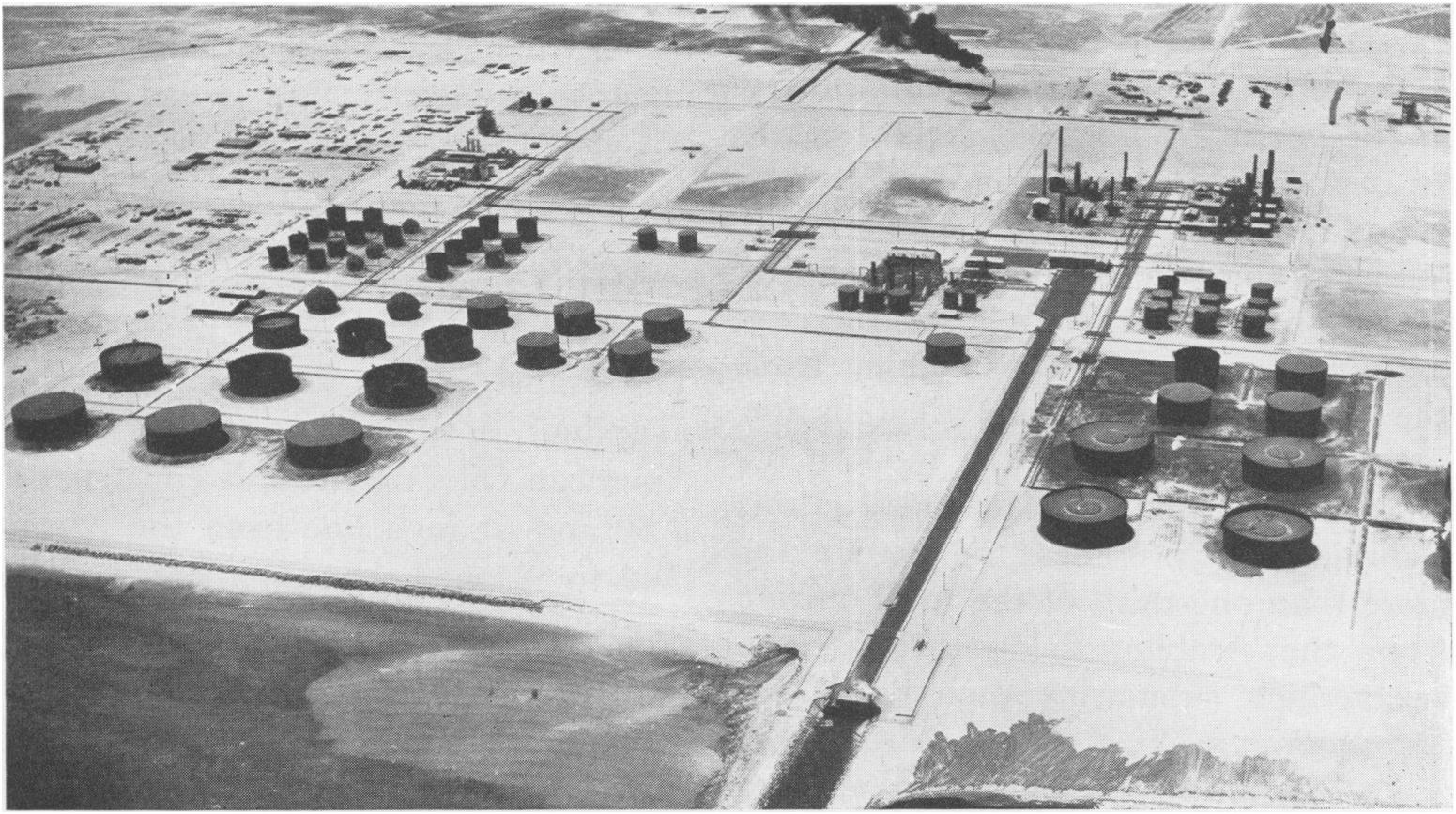
Shedgum processes associated gas from Ghawar, the world’s largest conventional oilfield, feeding petrochemical production at Yanbu and Al-Jubail. Tanajib, which began operations in December 2025, is Aramco’s flagship gas expansion — tied to the Marjan and Zuluf offshore oilfields, with 2.6 billion standard cubic feet per day of raw gas capacity, according to Offshore Technology. Together they represent the infrastructure that converts Saudi Arabia’s underground reserves into government revenue and downstream industrial output.
Shedgum is a 121-hectare facility with approximately 1.4 billion standard cubic feet per day of gas processing capacity and about 450,000 barrels per day of natural gas liquids output, according to Saudipedia. It sits in the Ghawar corridor, feeding ethane and NGL to petrochemical plants that form a substantial portion of the kingdom’s non-oil industrial base. A sustained disruption at Shedgum would ripple through petrochemical supply chains that extend from the Gulf coast to global plastics and fertiliser markets.
Tanajib carries a different weight because it is new — central to the kingdom’s strategy of replacing domestic oil-burn with gas for power generation and desalination, freeing crude barrels for export revenue. If either facility sustained production damage — still unconfirmed as of October 12 — the effects would cascade through the petrochemical supply chain and the domestic power grid simultaneously, a combination no previous Houthi attack has threatened. The targeting of gas infrastructure, in particular, threatens a resource that Saudi Arabia cannot import quickly or at scale.
The distinction between airport and oil infrastructure targeting is fiscal, not merely symbolic. Airport closures disrupt airlines and deter foreign visitors, but the kingdom’s revenue depends on Aramco’s production, not Riyadh’s passenger throughput. Aramco CEO Amin Nasser, speaking at the Energy Intelligence Forum in London on October 5, warned that “the supply resilience cushion is scarily thin,” according to World Oil. Global oil stocks had fallen from approximately ten billion barrels at the start of the US-Iran conflict to under six billion, with less than ten percent “practically available,” and the East-West Pipeline was operating at approximately 80 percent capacity, Nasser said.
The Abqaiq Precedent and the Deterrence That Followed
The 2019 Abqaiq-Khurais attack remains the reference event for every assessment of Saudi oil vulnerability. On September 14, 2019, eighteen drones and seven cruise missiles — twenty-five weapons in total — struck Abqaiq and the Khurais oilfield from the north, bypassing Saudi defences oriented east and south, according to NBC News. Saudi output fell from 9.8 million barrels per day to approximately 4.1 million — a loss of 5.7 million barrels per day, roughly five percent of global supply, the largest single-event supply disruption on record. Full production recovery took until November 2019.
The failure at Abqaiq was systemic. PAC-2 systems deployed at the time were optimised for high-altitude ballistic missile intercepts, not low-flying cruise missiles or drones, and could not detect threats at low altitude or from unexpected compass bearings, according to NBC News. Saudi Arabia responded with a generational upgrade: PAC-3 interceptors to replace the failed batteries, expanded radar coverage, deeper integration with US Central Command, and a larger American military footprint. The implicit premise of the rebuild was that technology and partnership would make Aramco infrastructure untouchable.
The Houthis tested that premise incrementally. In March 2021, fourteen drones and eight ballistic missiles targeted the Ras Tanura petroleum terminal, which holds 33 million barrels of crude storage and serves as Saudi Arabia’s primary export facility, according to S&P Global Platts. One drone reached the tank farm; Saudi Arabia said the facility was undamaged, but Brent surged above $70 on the market fear premium alone — demonstrating that even a partially intercepted strike on oil infrastructure carries a financial cost through pricing, regardless of physical damage.
The October 11 claims fit a clear escalation ladder that mirrors the 2021 probing pattern: Red Sea shipping, then southern Saudi cities, then Riyadh’s airport, and now Aramco’s oil and gas infrastructure. Twenty people died in Saudi airport attacks between October 6 and October 11, according to the BBC, and the Houthis responded to each round of coalition retaliation not by pausing but by raising the category of target. The deterrence architecture built after 2019 was designed to prevent exactly this progression — and on October 11, the Houthis claimed to have completed it.
How Did Saudi Arabia’s Defences Fail to Stop the Attack?
The failure is structural rather than incidental — a systemic gap between detection, tracking, discrimination, and engagement that the Houthis exploit by combining ballistic missiles, cruise missiles, and drones in simultaneous salvos. Saudi Arabia’s PAC-3 systems represent a generational improvement over the PAC-2 batteries that failed at Abqaiq, but the structural disconnect between sensors and shooters has persisted through the upgrade cycle, leaving gaps the Houthis have learned to locate and widen.
Depletion compounds the structural problem. The Wall Street Journal has estimated that Saudi Arabia has fewer than 1,000 Patriot interceptors remaining — a stockpile that forces triage decisions about which assets to protect and which to leave exposed. Each engagement consumes interceptors costing millions of dollars, according to Defence Security Asia, while the attacking munitions cost a fraction of that sum. The cost asymmetry means the Houthis can launch ten weapons knowing most will be intercepted, because the ones that reach their targets produce headlines, insurance repricing, and political pressure that no successful intercept can erase.
The October 11 multi-target approach — two airports and two Aramco facilities targeted simultaneously, according to the Houthi claims — multiplies the problem. Defending four geographically dispersed sites against concurrent salvos requires interceptor allocation and coordination capacity that a depleted stockpile may not sustain through repeated attacks. The coalition intercepted two ballistic missiles aimed at Riyadh on October 8, according to the Associated Press, but the confirmed KKIA Terminal 4 fire three days later indicates that not every incoming weapon was stopped.
The deterrence failure is strategic, not merely mechanical. The post-2019 architecture assumed that the cost of targeting Aramco would exceed the Houthis’ willingness to escalate, anchored by the implicit threat of US retaliation and overwhelming Saudi air power. The Houthis have now escalated past airports to oil infrastructure, and the US response amounted to “we’ll look at it” and “the Saudis are good fighters” — language that delegates responsibility without providing capability, and that functions as a green light for the next escalation.
What Does a Sustained Aramco Disruption Cost in a Deficit Year?
A production disruption at Shedgum or Tanajib — still unconfirmed — would compound a fiscal position already deep in deficit, cutting into the Aramco dividend stream that funds both the government’s operating budget and Vision 2030’s off-budget spending. Brent crude sits between Riyadh’s narrow fiscal breakeven and the higher threshold that covers transformation spending, leaving no margin for a supply shock in either direction.
The fiscal arithmetic is unforgiving. Saudi Arabia’s 2026 budget deficit widened to SAR 245 billion — approximately $65 billion, or 4.9 percent of GDP — from an original projection of SAR 165 billion, according to Tim Callen at the Arab Gulf States Institute on September 30. The 48 percent overshoot occurred before any production disruption from the October 11 claims could be factored in, driven by a 21.8 percent contraction in oil activities that pulled real GDP down 3.6 percent, according to Reuters.
The fiscal breakeven oil price exposes the vulnerability in two tiers. At the central government level, Saudi Arabia needs $80–85 per barrel to balance its books, according to Discovery Alert. When off-budget domestic spending by the Public Investment Fund is included — the giga-projects, the entertainment sector, the sports acquisitions — that breakeven rises to $108–113 per barrel. Goldman Sachs estimated approximately $20 of risk premium in the October 12 Brent price, according to the Nation Thailand, meaning the underlying commodity price stripped of conflict anxiety would sit well below Saudi Arabia’s narrow breakeven.
Aramco’s financial contribution to the state is direct and measurable. The company’s Q2 2026 base dividend was SAR 82.06 billion — approximately $21.88 billion — with the Saudi government owning 82.19 percent of Aramco, according to Argaam. Any sustained production disruption reduces the dividend pool that flows to the treasury. Aramco had already cut its November Arab Light pricing to Asia by $3, to $5 below the Oman-Dubai benchmark — the widest discount since June 2020, according to Reuters — a signal that the company is incentivising offtake by accepting lower revenue per barrel.
The supply picture was deteriorating before October 11. The International Energy Agency reported that Saudi crude output fell 2.6 million barrels per day in August, with crude shipments at six million barrels per day, according to Trend. The East-West Pipeline — the kingdom’s alternative to Hormuz-dependent exports — was suspended on September 12 and restarted on September 22, a ten-day interruption that demonstrated how thin operational margins have become, according to Saudi Gazette. OPEC+ kept November production targets unchanged, with Saudi Arabia’s target at 10.5 million barrels per day, according to Enerdata — a figure disconnected from the kingdom’s current capacity to produce and deliver.
The conflict premium in oil prices creates a budgetary paradox for Riyadh. The insecurity that threatens Saudi infrastructure also inflates the barrel price that funds the treasury, meaning a ceasefire that removes the risk to Aramco would simultaneously remove the revenue cushion that makes the current deficit survivable. Saudi Arabia’s fiscal planners depend on the market’s fear of exactly the disruption they are trying to prevent.
Washington’s Pre-Midterm Paralysis
The United States has confirmed that no military action against Iran will occur before the November 3 midterm elections, according to The National on October 8. President Trump’s public response to the airport attacks combined vague willingness with practical delegation: “We may. We’re going to look at it,” he told reporters, adding “they’re able to defend. The Saudis are good fighters,” according to CNN on October 10. The gap between those statements — between notional action and explicit deferral — defines American policy as the Houthis cross the line from passengers to petroleum.
On the ground, the US presence is advisory, not defensive. CNN reported on October 11 that more than 100 US military advisers operate under a new joint command structure designed for intelligence sharing and targeting coordination, not direct engagement. The advisers do not operate Saudi air defence batteries and do not intercept incoming missiles. France has deployed troops, radars, and air defences to the Yanbu export terminal, according to Al Jazeera on September 25, providing point defence at a single facility rather than the area coverage the kingdom requires.
Prince Khalid bin Salman, the defence minister, announced on October 6 that the Mecca pact committee had agreed to “activate collective deterrence measures… in response to the attacks and all those responsible for them,” according to Al Jazeera. Saudi Arabia, Egypt, Pakistan, and Turkey issued a joint condemnation on October 11, according to CBS News. Neither the pact activation nor the condemnation has produced a military capability the kingdom did not already possess, and the phrase “all those responsible” — a formulation pointing at Iran without naming it — commits nobody to acting against Tehran.
Does Riyadh Have an Escalation Option Left?
Saudi Arabia launched Operation Dawn of Yemen on October 4–5 with 100 jets and coalition air strikes on 324 Houthi targets, according to the Long War Journal, backed by approximately 8,000 Pakistani troops deployed to the kingdom, according to Reuters. The offensive has not prevented escalation — the first airport attack came the following day, and the Aramco claims arrived seven days later. The kingdom’s military options have expanded without producing deterrence.
Seven days into the offensive, the results are lopsided. The coalition air campaign has struck targets across Yemen, but the Houthis have continued to strike targets inside Saudi Arabia at an accelerating pace and ascending scale. Yasmeen al-Eryani, Director General of the Sanaa Center for Strategic Studies, told Al Jazeera on October 11 that “we could see further mobilisation; they have very high momentum.” The Houthis operate from dispersed positions that regenerate faster than airstrikes can suppress them — a pattern established across more than a decade of coalition operations in Yemen.
Iran’s posture compounds the dilemma. Foreign Minister Abbas Araghchi offered on October 11 to “provide any assistance to help start dialogue between Saudi Arabia and Yemen,” according to Mehr News Agency, positioning Tehran as a mediator on the same day the Houthis claimed strikes on Aramco facilities. The offer carried no indication that Iran would restrain its proxies. Dania Thafer, Executive Director of the Gulf International Forum, told Al Jazeera that “this battle is much bigger than just a tit-for-tat” — a framing that locates the Houthi escalation inside the wider US-Iran confrontation, not a standalone bilateral conflict Riyadh can resolve through air power alone.
CENTCOM reported that 135 ships had turned around since the Hormuz blockade began on July 14, according to CBS News on October 10, a parallel front that stretches Saudi defensive resources across sea and land simultaneously. Riyadh can intensify its air campaign, deepen the ground offensive, or press Pakistan and Egypt for additional military contributions — but six days of airport attacks followed by Aramco claims suggest that the Houthis’ capacity to absorb punishment exceeds Saudi Arabia’s capacity to deliver consequences that change the trajectory of the war.
The Calendar That Cannot Wait for a Ceasefire
King Khalid International Airport closed after the October 11 Terminal 4 strike with no confirmed reopening date, according to Enterpriseam. Qatar Airways, EgyptAir, Singapore Airlines, Etihad Airways, and flydubai have all suspended service to Riyadh — some through October 14, others without specifying an end date, according to the same report. The New York Times reported on October 10 that the airport strikes threaten Riyadh’s carefully curated events calendar, a warning that became materially worse when the Houthis added Aramco facilities to their target list the following day.
Three events define the next eighteen days. Riyadh Season, the kingdom’s flagship entertainment festival, is scheduled to open on October 21. The EU-GCC summit is set for October 24, with European heads of state expected in a capital whose airport has been attacked five times in six days. The Future Investment Initiative runs October 26–29 — the annual conference that Saudi Arabia uses to project financial gravity and attract foreign capital at scale.
None can proceed as planned if KKIA remains closed, and none can project the stability that Vision 2030 requires if Aramco facilities sit on the Houthi target list. The kingdom built its events calendar for a Riyadh that could guarantee the safety of its airport and the uninterrupted flow of its oil, and on October 12 — with airlines grounded and Aramco silent on the state of Shedgum and Tanajib — it can guarantee neither.
Frequently Asked Questions
Has Saudi Aramco confirmed any production disruption from the October 11 strikes?
Saudi Aramco has made no statement about Shedgum or Tanajib as of October 12, neither confirming nor denying the Houthi claims. Aramco CEO Amin Nasser has previously said that production disruptions typically last “days, not weeks or months,” according to Saudi Gazette — though that assessment preceded the current escalation to direct infrastructure targeting. The company’s recovery after the 2019 Abqaiq attack, when full production took approximately two months to restore, demonstrated resilience under single-event damage, but the current threat involves repeated multi-target attacks across geographically dispersed sites.
Can the Strait of Hormuz reopen even if a ceasefire is reached?
The structural damage to Hormuz trade flows may outlast the fighting itself. Kate Dourian, a non-resident fellow at the Arab Gulf States Institute, told Gulf Nashra that “the closure of the Strait of Hormuz has set a precedent and it’s difficult to see how flows through the chokepoint can return to pre-conflict status without a comprehensive solution.” Pre-war Hormuz transit volumes averaged 130–140 ships per day, according to Reuters. The precedent of sustained closure has already begun reshaping tanker routing, marine insurance pricing, and long-term supply contracts in ways that may prove irreversible regardless of when physical access resumes.
What role does Iran play in the Houthi attacks on Saudi Arabia?
Iran publicly positions itself as a mediator rather than a party to the Saudi-Houthi fighting. On October 11 — the same day the Houthis claimed Aramco strikes — Iranian Revolutionary Guard Commander Mohsen Rezaei called the latest US response to the wider conflict “insufficient,” according to CBS News via IRNA. The juxtaposition suggests Tehran views continued Houthi pressure on Saudi infrastructure as a useful pressure tool in its broader confrontation with Washington, regardless of whether Iranian personnel are directly involved in target selection or launch execution.
How has Aramco adapted its export operations since the Hormuz closure?
Kate Dourian told Gulf Nashra that Aramco “showed itself to be an efficient operator and reliable supplier, having switched exports to Yanbu at the start of the Iran war and quickly ramp up flows through the East-West pipeline.” The pipeline has a capacity of approximately seven million barrels per day, with about five million barrels per day exportable, according to Aramco. The switch to Red Sea exports via Yanbu has allowed continued crude shipments, but the October 11 Houthi claims on Gulf coast infrastructure raise the question of whether facilities feeding the pipeline’s eastern intake are themselves at risk — a vulnerability that export rerouting cannot address.