RIYADH — The IMF’s October 2026 World Economic Outlook, released at the Fund’s annual meetings in Bangkok on 13 October, projects Saudi Arabia’s real GDP will contract 3.3 percent this year. In July, the Fund forecast 1.7 percent growth — a five-percentage-point reversal in a single quarterly update, according to RTÉ. Saudi Arabia grew 4.6 percent in 2025, according to The National.
The contraction arrives alongside oil prices that would have been considered a windfall in any recent decade. Brent crude stood at $102.94 on 9 October, according to CNBC. But the IEA put Saudi crude output at 5.97 million barrels per day in August, down from 8.24 million in July, and the Strait of Hormuz was running at approximately 11.9 million barrels per day — about thirty percent below its pre-war baseline, according to The National. Aramco cut its November Arab Light official selling price to Asia to five dollars below the Oman-Dubai benchmark, according to Reuters.
The gap between price and volume shapes every ledger in the kingdom. Aramco’s second-quarter free cash flow was $12.3 billion against a declared base dividend of $21.9 billion, according to its half-year results. The government revised its 2026 deficit forecast to 245 billion riyals, up from 165.4 billion budgeted, according to Zawya. And the megaproject portfolio that was supposed to diversify Saudi Arabia away from oil dependence is being systematically scaled back.
Table of Contents
- How Did the IMF Forecast Swing Five Points in One Quarter?
- Why High Oil Prices Are Not Saving Saudi Arabia
- Can Aramco Cover Its Own Dividend?
- The Deficit That Rewrote the Budget
- What Happened to the Non-Oil Economy?
- Does the 7.9 Percent Rebound Hold?
- The War Premium’s Asymmetric Logic
- Frequently Asked Questions
How Did the IMF Forecast Swing Five Points in One Quarter?
The October figure did not arrive without warning. The Fund downgraded Saudi Arabia four times in six months, each revision deeper than the last.
| Date | Source | 2026 GDP Forecast |
|---|---|---|
| April 2026 | IMF World Economic Outlook | +3.1% |
| June 2026 | IMF Article IV | +2.0% |
| July 2026 | IMF WEO Update | +1.7% |
| October 2026 | IMF World Economic Outlook | -3.3% |
The April forecast, the last before Hormuz disruption became a sustained condition, still assumed Saudi production would recover quickly. The June Article IV mission, led by Azim Sadikov, identified the war as the “main risk” and trimmed growth to two percent, according to Enterprise. By July, with Saudi output falling and the Houthis declaring a Red Sea blockade, the Fund moved to 1.7 percent, according to News24.
Then came the third quarter. GASTAT’s flash estimate put second-quarter GDP at minus 4.8 percent year on year, with oil activity down 24.7 percent, according to TradeArabia. Non-oil activity rose 0.6 percent. Government activity rose 0.9 percent. The oil sector was dragging the rest of the economy into contraction.
The Middle East briefing 3,000+ readers start their day with.
One email. Every weekday morning. Free.
The October revision brought a companion judgment from Jihad Azour, the IMF’s director for the Middle East and Central Asia, who told Dawn that the shock would have “a scarring impact on various sectors” and that the region would not return to its pre-war trajectory in the medium term. The Fund’s managing director, Kristalina Georgieva, said ongoing attacks targeting Saudi Arabia could affect people “everywhere,” characterizing the economic risk as globally systemic, according to Dawn.
“The economy has been resilient, but that resilience is reaching its limits. The task ahead is to move from coping to rebuilding, restoring fiscal space and rebuilding supply-side resilience.”
Silvana Tenreyro, IMF Chief Economist, via The National
Saudi Arabia’s own pre-budget statement, released on 30 September, had already forecast a 3.6 percent contraction for 2026, with oil activities down 21.8 percent, according to Zawya. The IMF’s minus 3.3 percent was slightly more optimistic than Riyadh’s internal estimate. Across the region, the Middle East and North Africa was projected to contract 0.3 percent — the only IMF region with negative growth in 2026, according to The National.
| Country | 2026 GDP Forecast |
|---|---|
| Oman | +4.1% |
| Saudi Arabia | -3.3% |
| UAE | -3.9% |
| Bahrain | -11.3% |
| Qatar | -15.6% |
| Kuwait | -16.7% |
The GCC table reveals the geography of the shock. Oman, positioned on the Red Sea’s approaches rather than inside the Hormuz bottleneck, is the only Gulf state projecting growth. Kuwait and Qatar — almost entirely dependent on Hormuz for hydrocarbon exports — face the deepest contractions, according to The National. Saudi Arabia’s relative position, the shallowest contraction among Hormuz-dependent states, reflects the partial buffer provided by the East-West pipeline and its Yanbu export capacity.
Why High Oil Prices Are Not Saving Saudi Arabia
Vision 2030 was conceived in the rubble of the 2014–16 oil price collapse, when Brent dropped below fifty dollars and Saudi reserves fell. Mohammed bin Salman announced the plan on 25 April 2016, in a fiscal environment where cheap oil threatened the kingdom’s spending model. The distinction between that crisis and this one is categorical. In 2015, the problem was price: oil was cheap, but Saudi Arabia could produce and export at will. In 2026, the problem is volume.
Brent peaked at $126.41 on 30 April, according to Aletihad and Reuters, and still traded above a hundred dollars in October. But output has cratered. The IEA put Saudi crude supply at 8.24 million barrels per day in July and 5.97 million in August, according to its September report. The kingdom’s OPEC+ target for November is 10.5 million barrels per day, according to Enerdata.
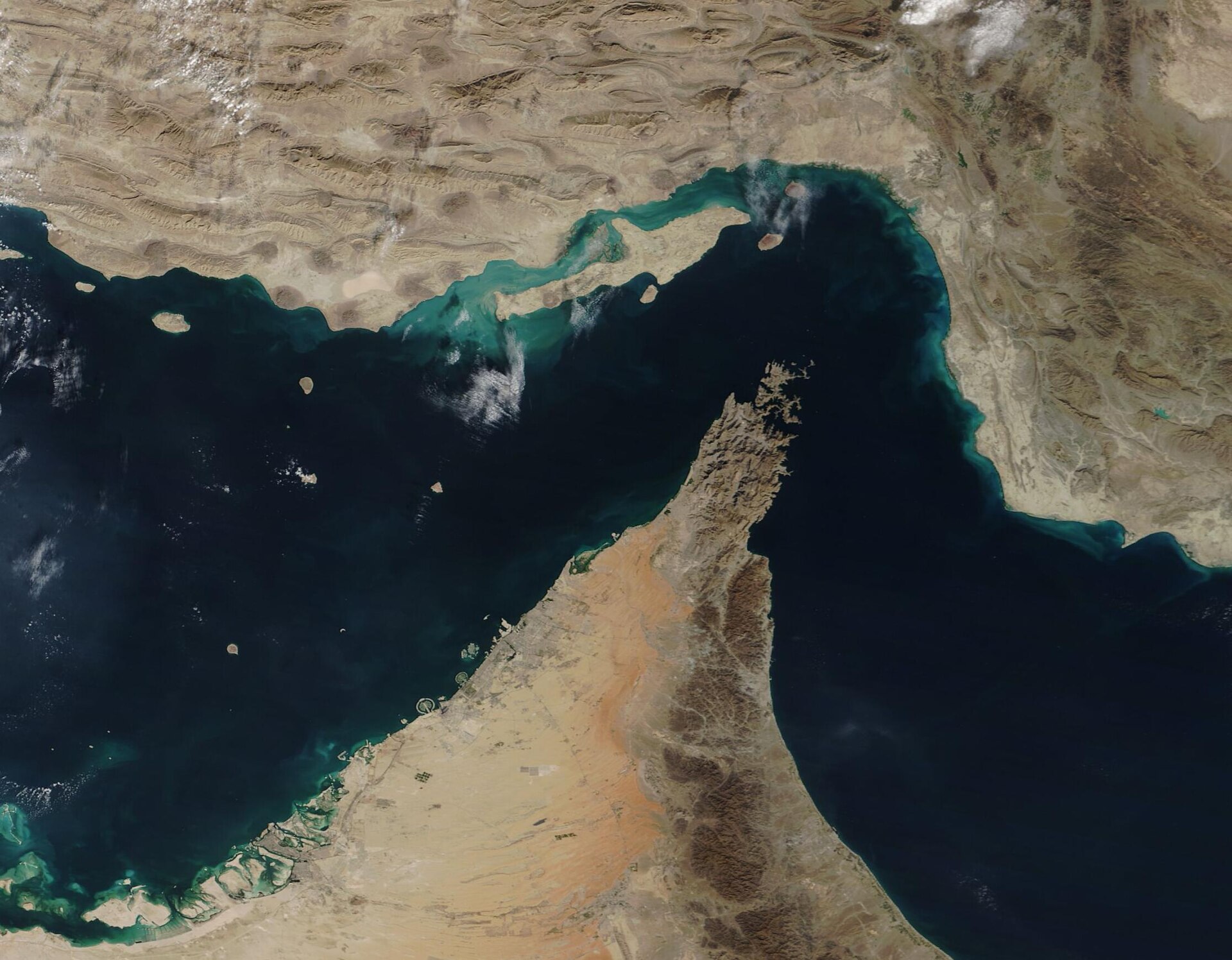
The Strait of Hormuz, which carried roughly twenty million barrels per day before the war, was running at approximately 11.9 million, according to The National. The East-West pipeline, Saudi Arabia’s main alternative, has a design capacity of seven million barrels per day, about five million exportable, according to Aramco. The pipeline was suspended as a precaution on 12 September after attacks near Riyadh and Medina, according to the Saudi Gazette, and restarted on 22 September, though Reuters reported that full capacity could take six weeks or more. The 400,000-barrel-per-day Jazan refinery was shut after a Houthi strike on 27 July, according to IIR; a restart originally planned for 30 August has not been publicly confirmed.
The two-chokepoint problem compounds the loss. Hormuz disruption pushed exports onto the Red Sea route through Yanbu. Then the Houthis declared a maritime blockade of Saudi Arabia on 20 July, according to Al Jazeera, threatening the alternative. Saudi output had already been falling since March, when OPEC data put production at 6,967 thousand barrels per day, down from 10,882 thousand in February, according to Hellenic Shipping News. The war has not shut one route. It has degraded both.
Shipping costs reflect the risk. Gulf-to-China VLCC rates reached $1.2 million per day in October, against roughly $80,000 a year earlier, according to LSEG data reported by Reuters. The premium does not accrue to Saudi Arabia — it is a cost absorbed by buyers and intermediaries, widening the spread between what Aramco receives and what the end consumer pays.
The pricing data confirms the bind. Aramco set the November Arab Light OSP to Asia at five dollars below the Oman-Dubai benchmark — the widest discount since June 2020, according to Reuters. It raised northwest European prices by three dollars, according to the same filing. Saudi Arabia is discounting crude for Asian buyers it can still reach through Yanbu while the European premium reflects tighter global supply. The kingdom’s average realized crude price in the second quarter was $108.10 per barrel, according to Zawya.
Can Aramco Cover Its Own Dividend?
Aramco declared a base dividend of $21.9 billion for the second quarter of 2026. Its free cash flow for the same period was $12.3 billion, according to its half-year results released on 4 August. The shortfall was not confined to one quarter: first-half free cash flow totaled $30.9 billion against $43.8 billion in declared base dividends.
| Metric | Q2 2026 |
|---|---|
| Adjusted net income | $33.4 billion |
| Average realized crude price | $108.10/barrel |
| Free cash flow | $12.3 billion |
| Declared base dividend | $21.9 billion |
| Gearing (net debt to equity) | 6.2% |
Gearing rose to 6.2 percent from 4.8 percent at end-Q1, according to the same results. The company is borrowing to fund a dividend that its operations no longer fully cover. No performance dividend — the variable component paid on top of the base — has been declared in 2026. CEO Amin H. Nasser described Aramco as committed to “sustainable and progressive base dividend distributions.” The word “base” distinguishes it from the performance component that once supplemented shareholder returns.
A $13.6 billion working-capital build consumed much of what should have been a comfortable quarter at $108 per barrel. Disrupted supply chains, the physical difficulty of routing crude from eastern terminals, and higher inventory costs all contributed. Aramco reported 2025 adjusted net income of $104.7 billion, according to its annual results released in March. Second-quarter 2026 adjusted net income was $33.4 billion, according to QNA.
Third-quarter results are due on 3 November. They will cover the period in which Saudi crude supply fell by more than two million barrels per day and the East-West pipeline was shut for ten days.
The Deficit That Rewrote the Budget
When the cabinet approved the 2026 budget on 2 December 2025, it projected revenues of 1,147.4 billion riyals, spending of 1,312.8 billion, and a deficit of 165.4 billion riyals, according to Argaam. The spending figure embedded an assumption: that the kingdom would be growing fast enough — and exporting enough oil — to sustain a twenty-percent increase in outlays over 2025 levels. The first quarter produced a deficit of 125.71 billion riyals — spending up twenty percent to 387 billion riyals, oil revenue down three percent — according to Argaam. The finance ministry said the shortfall was fully financed by borrowing, according to Gulf News.
The second quarter was narrower. The finance ministry reported a deficit of 34.3 billion riyals, bringing the first-half total to 160 billion, according to Asharq Al-Awsat. Revenue was 338.8 billion riyals, up twelve percent. Spending was 373.1 billion riyals, up eleven percent. But by then the budget’s revenue assumptions had detached from reality.
On 30 September, the pre-budget statement raised the 2026 deficit estimate to 245 billion riyals and forecast oil activities contracting 21.8 percent, according to Zawya. The December budget had projected debt reaching 1.62 trillion riyals at 32.7 percent of GDP, according to Argaam. By mid-2026, actual debt stood at approximately 1.685 trillion riyals, according to Asharq Al-Awsat — already above the full-year projection, and accumulating against a contracting denominator.
The 2027 outlook, embedded in the same pre-budget statement, anticipated spending of 1.39 trillion riyals against revenue of 1.20 trillion, for a deficit of 191 billion riyals at 3.6 percent of GDP, according to Zawya. Annual inflation stood at 1.8 percent in July, according to Argaam — too low to erode the real burden of newly issued debt. Fitch affirmed Saudi Arabia’s A-plus rating earlier in the year, but with growth projections that have since been overtaken.
What Happened to the Non-Oil Economy?
The decade-long project to reduce Saudi Arabia’s dependence on oil had, by its own metrics, made progress. Non-oil GDP rose from approximately forty-seven percent of total GDP in 2016 to about fifty-six percent by 2025, according to CSIS analysts Scott Ratney and Saud al-Hamaizia. PIF’s assets under management exceeded $900 billion by end-2025 — above 3.4 trillion riyals at the start of its 2026–2030 strategy, according to TradeArabia. The fund reported 2025 revenue of $120 billion and net profit of $17 billion, more than double the prior year, and accounted for eleven percent of non-oil GDP, according to Asharq Al-Awsat. The diversification was measurable. The war tested what it had actually built.
The sectors Saudi Arabia diversified into — tourism, events, hospitality, international sport — are among the most sensitive to instability. “The vision is very much based on attracting foreign direct investment, so getting foreign companies to come and to commit to the country long-term,” said Neil Quilliam, an associate fellow at Chatham House, in an interview with ABC News Australia in April. “If there’s instability in the region, then that’s a great deterrence for international investors.”
The megaproject portfolio has contracted sharply. The Olympic Council of Asia and Saudi Arabia’s Olympic and Paralympic Committee agreed in January to indefinitely postpone the 2029 Asian Winter Games at Trojena, according to MEED. NEOM terminated Eversendai’s structural steel contract for the Trojena Ski Village and Webuild’s twenty-billion-riyal dams contract — about thirty percent complete — in March, citing “geopolitical developments in the Middle East,” according to MEED and ME Construction News. In May, Semafor reported that NEOM had halted further work on The Line until at least after 2030 and cut the zone’s 2030 population target to up to 100,000 — from the nine million announced in 2021, according to New Atlas. PIF announced in April that it would fund LIV Golf only through the 2026 season, saying a longer commitment “is no longer consistent with the current phase of PIF’s investment strategy,” according to Al Jazeera.
PIF Governor Yasir Al-Rymayyan, speaking to ABC News Australia in April, insisted that “no project in NEOM has been cancelled.” He acknowledged delays: “Has anything been postponed? Certainly, yes. Why? Some projects have been delayed because they are not on the critical path.” The fund’s 2026–2030 strategy, published in April, described a shift “from rapid expansion to consolidating efficiency,” according to its website.
The tenth edition of the Future Investment Initiative, the kingdom’s flagship investor conference scheduled for 26–29 October in Riyadh, shifted to a hybrid format after the 10 October airport strike that killed thirteen and wounded over three hundred, according to Reuters. The World Petroleum Congress opened on 11 October, though it remained unclear how many delegates attended in person, according to CNN. “Given that the country, number one, wants to attract and develop its tourist space, and number two, wants to be the host of international and regional events, instability is a drag on that,” Quilliam told ABC News Australia.
Q1 2026 unemployment stood at 6.4 percent, as cited in an August GASTAT report, according to TradeArabia. The figure precedes the worst months of the contraction — the period in which the sectors built to absorb new entrants into the labor market are the same ones absorbing Houthi attacks and investor withdrawals.
Does the 7.9 Percent Rebound Hold?
The IMF’s October outlook projects Saudi GDP growth of 7.9 percent in 2027, up from the 5.5 percent it estimated in July, according to The National. The upgrade is predicated on a gradual reopening of the Strait of Hormuz beginning in March 2027 and full normalization by October 2027, according to Saudi Gazette. Saudi Arabia’s own pre-budget statement projected 12.8 percent growth in 2027, according to Zawya — a figure that would make it one of the fastest-growing major economies in the world, if conditions permit.
Both forecasts assume the war ends on a schedule that no combatant has agreed to. The United States ruled out strikes on Iran before the 3 November midterm elections, according to The National. CENTCOM said 135 ships had been turned around since the Hormuz blockade began on 14 July, according to CBS News. The Houthis have declared their operations against Saudi airports and oil facilities will “continue in the coming days,” according to France 24. Iran’s Rezaei called the latest US diplomatic response “insufficient,” according to IRNA as reported by CBS News, and the seven-day ceasefire roadmap that Iran’s Araghchi presented through Qatar — Hormuz reopening in exchange for sanctions waivers and roughly twelve billion dollars in frozen assets, according to Al Jazeera — was rejected by Trump, according to the Wall Street Journal as reported by Hurriyet.
“We will not go back to the pre-war trajectory in the medium term because this shock will have a scarring impact on various sectors and also will disrupt a certain number of infrastructure, and will require additional spending in order to increase resilience.”
Jihad Azour, IMF Director for the Middle East and Central Asia, via Dawn
Dr. Yoel Guzansky, a senior researcher at the Institute for National Security Studies in Tel Aviv, was more direct. “This is one of the most serious crises Saudi Arabia has ever experienced,” he told Ynetnews. “Saudi Arabia needs capital, investment and expertise. In that respect, the current war is doing it no favors whatsoever.” The gap between the IMF’s 7.9 percent and the kingdom’s 12.8 percent reveals something about each institution’s assumptions: the Fund expects a slow Hormuz reopening; Riyadh expects a fast one. Neither has explained what ensures either outcome by March 2027.
The War Premium’s Asymmetric Logic
Twenty-three Houthi attacks against Saudi targets were recorded between 1 and 14 October, according to energynews.pro — roughly double the prior monthly average. Military spokesman Yahya Saree described the 14 October strike on the Aramco headquarters complex in Dhahran as “a high-quality military operation,” and told France 24 that operations “will continue in the coming days, targeting Saudi enemy airports and oil facilities.”
The targeting list is an economic declaration. Saree’s explicit naming of “airports and oil facilities” identifies the infrastructure that generates Saudi revenue and attracts foreign investment. Mohammed Al Bukhaiti, a member of the Houthi political bureau, stated that the campaign aims to convey to the crown prince “that he can no longer wage aggression against Yemen from a safe position,” according to RTÉ.
“Saudi Arabia has something to lose. They do not,” said Farea Al-Muslimi, a researcher at Chatham House, in comments to Ynetnews. A missile that costs the Houthis a fraction of its target’s value can shut an airport for days, close airspace to commercial carriers, and force the kingdom’s flagship investor conference into a hybrid format.
Iran’s state media has amplified the economic dimension. Press TV published a piece in May headlined “Saudi Vision 2030 in freefall as fiscal woes from US-Israeli war on Iran deepens,” framing Saudi Arabia’s budget difficulties as a consequence of its alignment with Washington. No named Iranian official was quoted, but the framing positioned Saudi economic vulnerability as a warning to other Gulf states considering alignment with the US-led campaign. The Houthis have issued evacuation warnings for Aramco oil facilities, calling them “legitimate targets,” according to Newsquawk.
The IMF data, placed alongside the GCC table, illuminates the asymmetry from a different angle. Saudi Arabia’s 3.3 percent contraction is the shallowest among Hormuz-dependent Gulf states — Bahrain faces 11.3 percent, Kuwait 16.7 percent, Qatar 15.6 percent, according to The National. The kingdom’s partial infrastructure diversification, including the East-West pipeline and Yanbu port capacity, has provided a buffer that smaller states lack. But the Houthis are testing precisely that buffer, and the buffer is what the non-oil economy was built on top of.
Prince Abdulaziz bin Salman, the Saudi energy minister, told Ynetnews: “The word fear does not exist in the Saudi lexicon. We Saudis are fearless. We will prove to the world that we can overcome any challenge.”
Frequently Asked Questions
Will OPEC+ adjust Saudi Arabia’s production target at its November 1 meeting?
Saudi Arabia’s OPEC+ target for November is 10.5 million barrels per day, according to Enerdata, while the IEA estimated actual output at 5.97 million in August. The November 1 meeting, according to Nation Thailand, is the first since the Aramco headquarters strike and the IMF’s contraction forecast. If the group adjusts targets downward, it formally acknowledges a war-driven supply shortfall that could push benchmark prices higher. If it leaves the target unchanged, the kingdom’s compliance rate will exceed one hundred percent involuntarily — an unusual position for OPEC+’s most influential producer.
When are Aramco’s Q3 2026 results due and what will they show?
Aramco is scheduled to report third-quarter results on 3 November. The quarter covers the August output collapse and the September pipeline suspension. Analysts will watch gearing, which rose from 4.8 to 6.2 percent between Q1 and Q2. A continued rise would indicate that Aramco is financing dividend commitments through balance-sheet leverage rather than cash flow. No new guidance on the 2027 base dividend has been issued.
Has the EU-GCC summit been confirmed despite the airport attacks?
European Council President Antonio Costa’s invitation letter, dated 6 October, set the summit for Riyadh on 24 October, co-chaired by Crown Prince Mohammed bin Salman, according to The National. No government has publicly withdrawn or confirmed changed plans following the 10 October attack. The European Aviation Safety Agency widened its Saudi airspace advisory, according to Fortune. The summit’s agenda includes energy cooperation — fuel accounts for more than seventy-five percent of EU imports from the GCC, according to European Commission data cited by The National.
Is Riyadh Season opening on 21 October as scheduled?
Gulf News reported in September that Riyadh Season was due to open on 21 October. No source available by 15 October has confirmed whether the entertainment festival will proceed, be delayed, or shift format. National Day fireworks and drone shows were postponed indefinitely on 23 September, according to Khaleej Times. The New York Times reported on 10 October that the airport strikes threaten Riyadh’s broader events calendar.