DUBAI — Iran’s Revolutionary Guard has struck Gulf energy infrastructure at least 135 times since 28 February, hitting refineries, gas fields, ports and a nuclear power plant across Saudi Arabia, Qatar, the UAE and Kuwait, a Reuters investigation published on 15 October found. Gulf governments have responded to seven months of direct Iranian attacks by issuing at least 34 official statements attributing the damage to “falling debris from intercepted munitions” — an explanation that fourteen independent experts told Reuters was “highly improbable.”
The investigation, based on thirty-six interviews, satellite imagery and video analysis, documented strikes on at least 84 separate energy sites that have knocked Saudi oil output below seven million barrels per day from more than ten million before the war began, cost the kingdom more than $50 billion in lost revenue, and left Kuwait unable to export a single barrel of crude in April 2026 — the first month without oil exports since the Gulf War in 1991. The ABC News report bringing the investigation to wider attention on 17 October landed alongside an escalating confrontation in the Strait of Hormuz, where nine tankers have been attacked since approximately 11 October and Brent crude was trading above $103 per barrel as of mid-October, according to CNBC.
What began as Iranian retaliation for Israel’s 18 March strike on the South Pars gas field has become, by the Reuters account, a sustained and systematic campaign against the energy infrastructure that underwrites every Gulf economy — conducted openly by the IRGC, claimed through named military operations, and denied officially by every government on the receiving end. The gap between what Iran says it did and what the Gulf admits happened is no longer a matter of diplomatic nuance; it is the central, defining absurdity of the war’s economic dimension.
Table of Contents
What Did the Reuters Investigation Find?
The Reuters investigation, published on 15 October, identified 135 separate drone and missile attacks on at least 84 infrastructure sites across Gulf states since the US-Israeli military campaign against Iran began on 28 February. The investigative team drew on thirty-six interviews with engineers, military personnel and energy analysts, alongside satellite imagery comparison and open-source video analysis from the sites themselves — a picture of a campaign that was neither sporadic nor opportunistic but targeted, sequential and designed to inflict maximum economic damage with minimum risk of mass casualties.
Ryan Stevens, a former US Marine Corps airstrike coordinator who reviewed the evidence for Reuters, said the strikes demonstrated “precision, targeting expertise, and patience” — a description that sits uncomfortably alongside the official Gulf explanation that refineries and gas plants suffered damage because interceptor debris happened to land on them. Matthew Reed of Foreign Reports told Reuters that Gulf states now treat damage assessments as “state secrets,” which helps explain why the full scope of the destruction has taken seven months and a dedicated investigative effort to establish.
The investigation documented five of Saudi Arabia’s nine largest refineries damaged, both matrix manifolds at Fujairah port in the UAE destroyed, cold boxes at Qatar’s Ras Laffan Industrial City wrecked beyond near-term repair, and at least four of Kuwait’s eight dual power-and-desalination plants struck. The pattern was not one of indiscriminate bombardment but of an adversary selecting the components whose loss would take longest to replace and whose absence would be felt most immediately in global energy markets.
The Middle East briefing 3,000+ readers start their day with.
One email. Every weekday morning. Free.
The ‘Falling Debris’ Fiction
Fourteen independent experts — military analysts, missile specialists and energy infrastructure engineers — told Reuters the “falling debris” explanation was “highly improbable.” The polite formulation covered a blunter reality: when a military force announces it will strike a gas facility, strikes the gas facility, releases operational footage and then names the operation, the explanation that the resulting damage came from friendly interceptor debris is less a credible alternative theory than a diplomatic agreement not to acknowledge what happened.
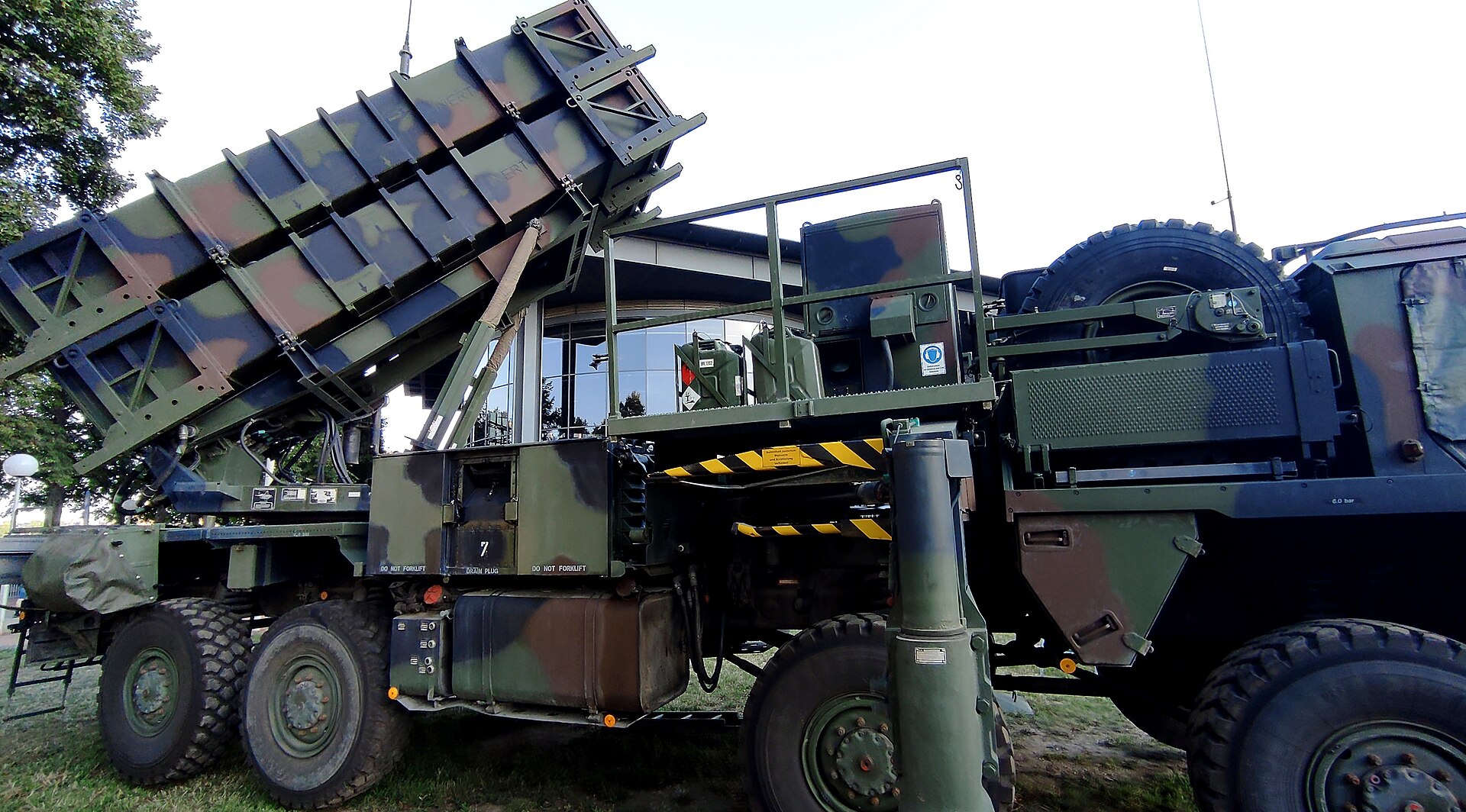
There are strategic reasons for the pretence, and they are not difficult to understand. Admitting that Iranian missiles are penetrating Gulf air defences at scale would raise questions about the billions spent on Patriot and THAAD systems, about the reliability of the American security umbrella, and about the capacity of any Gulf military to defend its own critical infrastructure against a determined state adversary. It would also create domestic political pressure for a military response that no Gulf state appears willing or able to mount without direct American support — support that President Trump publicly ruled out before the 3 November midterms, according to The National.
But the cost of maintaining the fiction is compounding faster than the fiction can contain it. Saudi Arabia’s 2026 budget deficit has ballooned to 245 billion riyals, up from a budgeted 165 billion, according to Reuters and Zawya — numbers that are difficult to reconcile with the official position that Iranian strikes are merely leaving small craters where interceptor fragments happened to fall. The kingdom’s pre-budget statement projects real GDP falling 3.6 per cent in 2026, driven by a 21.8 per cent contraction in oil activities, and the structural consequences for Vision 2030 are becoming impossible to separate from the damage the governments will not name.
How Did Iran Justify Direct Strikes on Gulf Energy?
The IRGC has made no effort to disguise what it has done, which makes the Gulf governments’ insistence on the debris explanation all the more difficult to sustain. Iran’s “naval and aerospace forces” conducted the strikes directly — not through the Houthis, not through Iraqi militias, not through any proxy that might have provided a layer of deniability — and labelled Gulf energy facilities “direct and legitimate targets” in official statements, identifying them as “Zionist and American economic interests” on Gulf soil.
On 5 April, the IRGC announced Operation Sadeq 4, its 96th operational wave, and explicitly named the UAE’s Habshan gas facilities, Bahrain’s Sitrah petrochemical complex and Kuwait’s Shuaiba petrochemical facility as targets, according to Iranian state media IRIB as reported by the Times of Oman. The statement included a warning of a “second phase more devastating and widespread” than what had already been carried out — a threat that, measured against the seven months and 135 strikes that followed, was not empty rhetoric but an operational forecast that has been largely fulfilled.
Mohammad-Bagher Ghalibaf, speaker of Iran’s parliament, posted on X on 7 September that Gulf energy infrastructure was “sprawling, accessible, and exposed,” adding that American firms shared that exposure — a statement that Reuters described as the clearest public admission of ongoing intent by a senior Iranian official. The framing matters because it reveals what the debris fiction is working to conceal: this is not ambiguous, not deniable, not a grey-zone campaign that leaves room for diplomatic interpretation, but a declared military operation by the Islamic Revolutionary Guard Corps against the economic infrastructure of its neighbours, announced in advance, claimed in real time, and accompanied by public promises that it would continue.
From Ras Laffan to Barakah
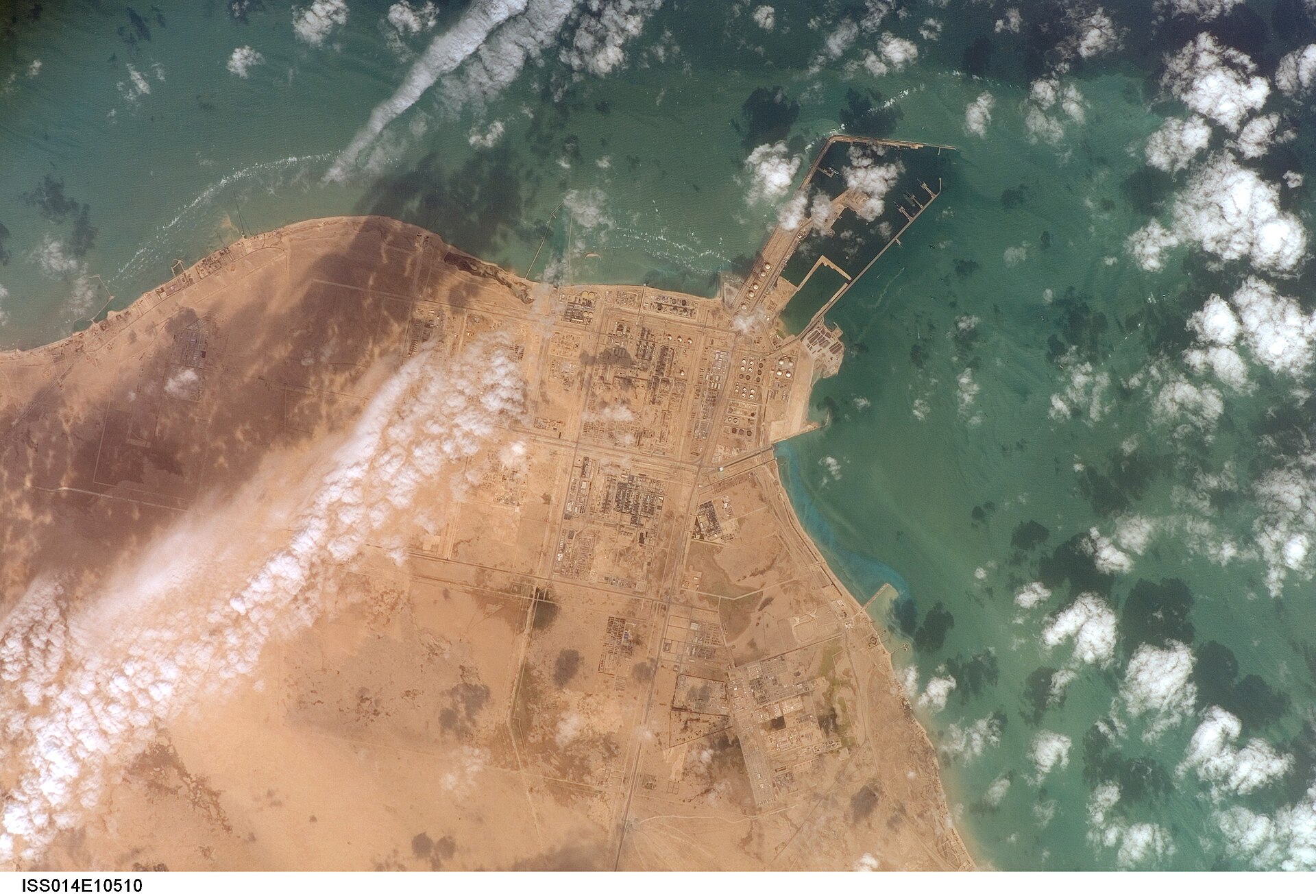
Qatar’s Ras Laffan Industrial City was hit on 18–19 March, within twenty-four hours of Israel’s South Pars attack. QatarEnergy reported “extensive damage,” and the destruction of two cold boxes — the specialised equipment that liquefies natural gas for export — prompted the QatarEnergy chief to estimate a three-to-five-year repair timeline, according to the Reuters investigation. The strike eliminated seventeen per cent of Qatar’s share of global LNG export capacity, NBC News reported, and Qatar expelled Iran’s military and security attachés and their staff within twenty-four hours, the most direct diplomatic response any Gulf state has made, according to ABC News.
Saudi Arabia has absorbed the heaviest sustained damage across the widest range of facilities. Four ballistic missiles were intercepted over Riyadh and six over the Eastern Province in the initial exchanges, with falling shrapnel causing four confirmed injuries. The SAMREF refinery at Yanbu was subsequently hit by drone, and the Reuters investigation found that five of the kingdom’s nine biggest refineries have been damaged since 28 February, pushing output below seven million barrels per day. In September, the IEA reported Saudi crude shipments had fallen further still, to six million barrels per day, down from Aramco’s pre-war production levels above ten million.
The UAE absorbed thirteen ballistic missiles and twenty-seven drones aimed at its Habshan gas facilities and the Bab gas field, according to UPI reporting on 19 March, and Abu Dhabi suspended gas operations in the immediate aftermath. Fujairah port — the UAE’s primary outlet for refined petroleum exports that bypasses the Strait of Hormuz — was struck at least nineteen times and both of its matrix manifolds were destroyed, halting refined petroleum exports from May through September, the Reuters investigation documented. On 17 May, a drone hit the Barakah nuclear power plant’s substation, forcing one of its four reactors onto emergency diesel generators. The IAEA confirmed no radioactive release, but IAEA Director-General Rafael Grossi said whoever conducted the strike “knew exactly what they were doing.”
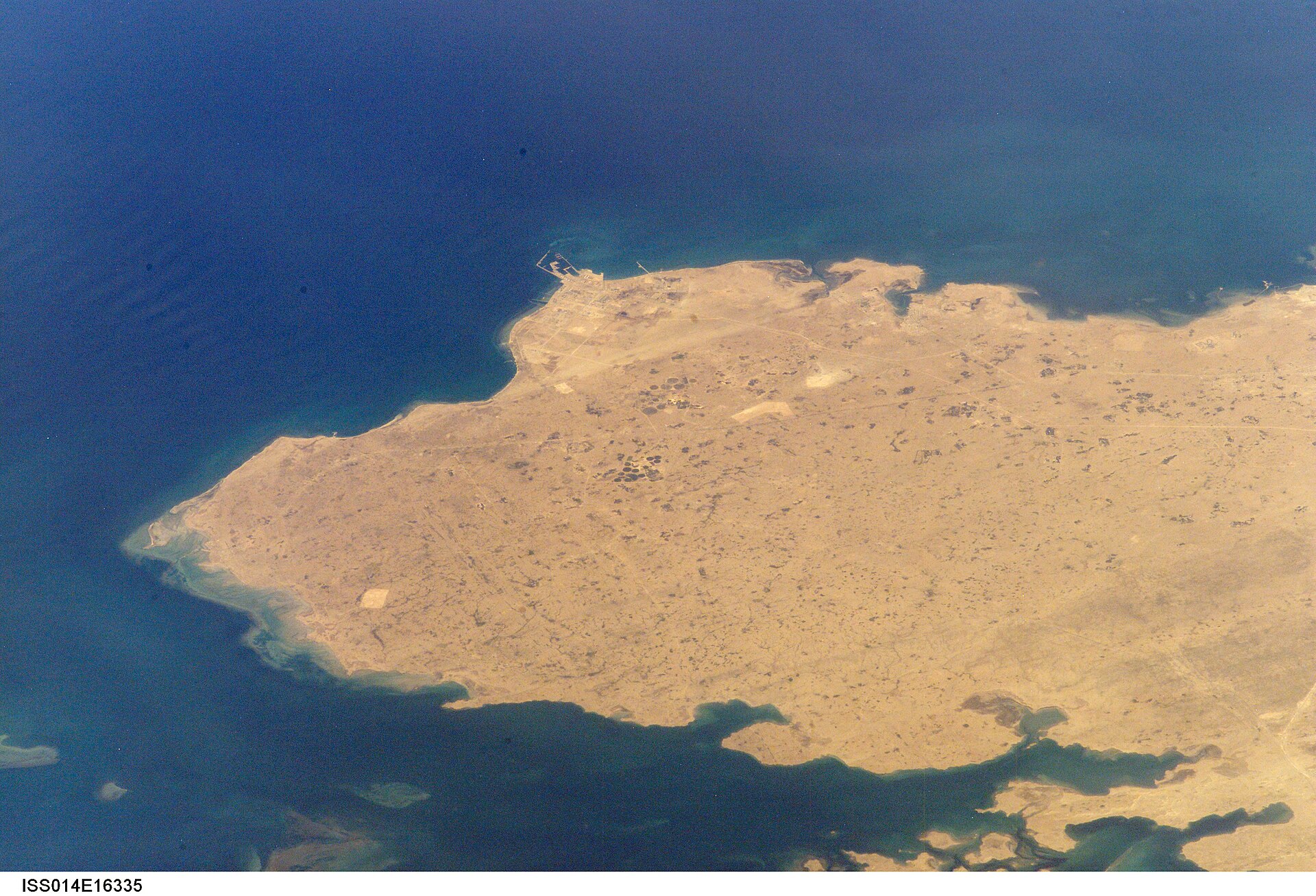
Kuwait’s losses went beyond oil into something more immediately existential. At least four of the country’s eight dual power-and-desalination plants were hit between 2 March and 20 July, according to the Reuters investigation, and Michael Christopher Low of the University of Utah told Reuters that Kuwait could “run out of water within days or weeks” if enough desalination capacity were lost — a threat that transforms an energy war into a humanitarian one. Kuwait exported no crude in April 2026, the first month without oil exports since 1991, and its Mina al-Ahmadi and Mina Abdulla refineries were struck within the first three weeks of the campaign.
What Has Seven Months of Destruction Cost?
The economic damage extends well beyond the individual facilities, reaching into national budgets, global energy prices and the shipping routes that connect Gulf oil to its customers. It is the scale of that aggregate damage, more than any single strike, that makes the “falling debris” explanation untenable as an ongoing diplomatic position.
The $50 billion in Saudi output losses documented above represents only part of the damage. The widened budget deficit sits alongside an OPEC+ November target of 10.5 million barrels per day, per Enerdata, that now functions as an aspiration rather than a production plan. The East-West pipeline — Riyadh’s alternative to the increasingly dangerous Hormuz route — was suspended on 12 September as a precaution and only partially restarted ten days later, with full capacity expected to take six weeks or more, according to Baird Maritime and Reuters.
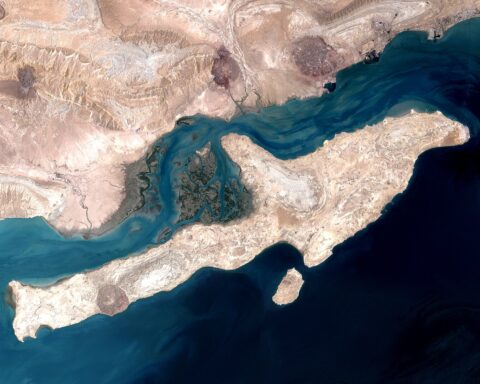
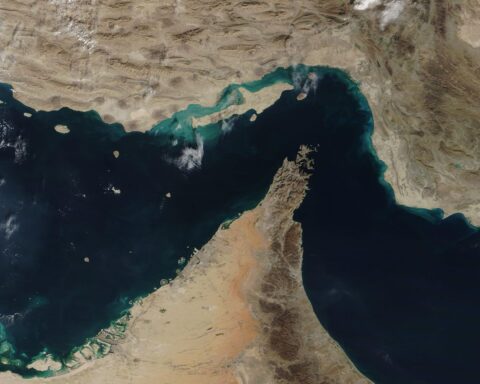
Brent crude has reflected the destruction with a clarity the official statements have carefully avoided: from approximately $71 per barrel before the war to an intraday peak above $126 in late April 2026, per Reuters — a level not seen in four years — trading above $103 per barrel as of mid-October, per CNBC. Andy Lipow, an energy analyst, told NBC News that oil prices “would not return to pre-conflict levels of $67 per barrel” even if the conflict ended, because global markets now permanently factor in the possibility of a Hormuz closure — a scenario that has since moved from theoretical to actual, with Iran’s blockade beginning on 14 July and CENTCOM reporting 135 ships turned around by 10 October, according to CBS News.
The cost of moving Gulf oil tells its own story. Gulf-to-China VLCC rates reached $1.2 million per day in early October, compared with approximately $80,000 a year earlier, according to LSEG data reported by bdnews24. Sultan Al Jaber, the ADNOC chief executive, told Reuters that Iran’s attacks target “our way of life” — a phrase that, coming from the head of Abu Dhabi’s national oil company, acknowledged in five words what 34 official statements have spent seven months denying.
The Strike That Started It
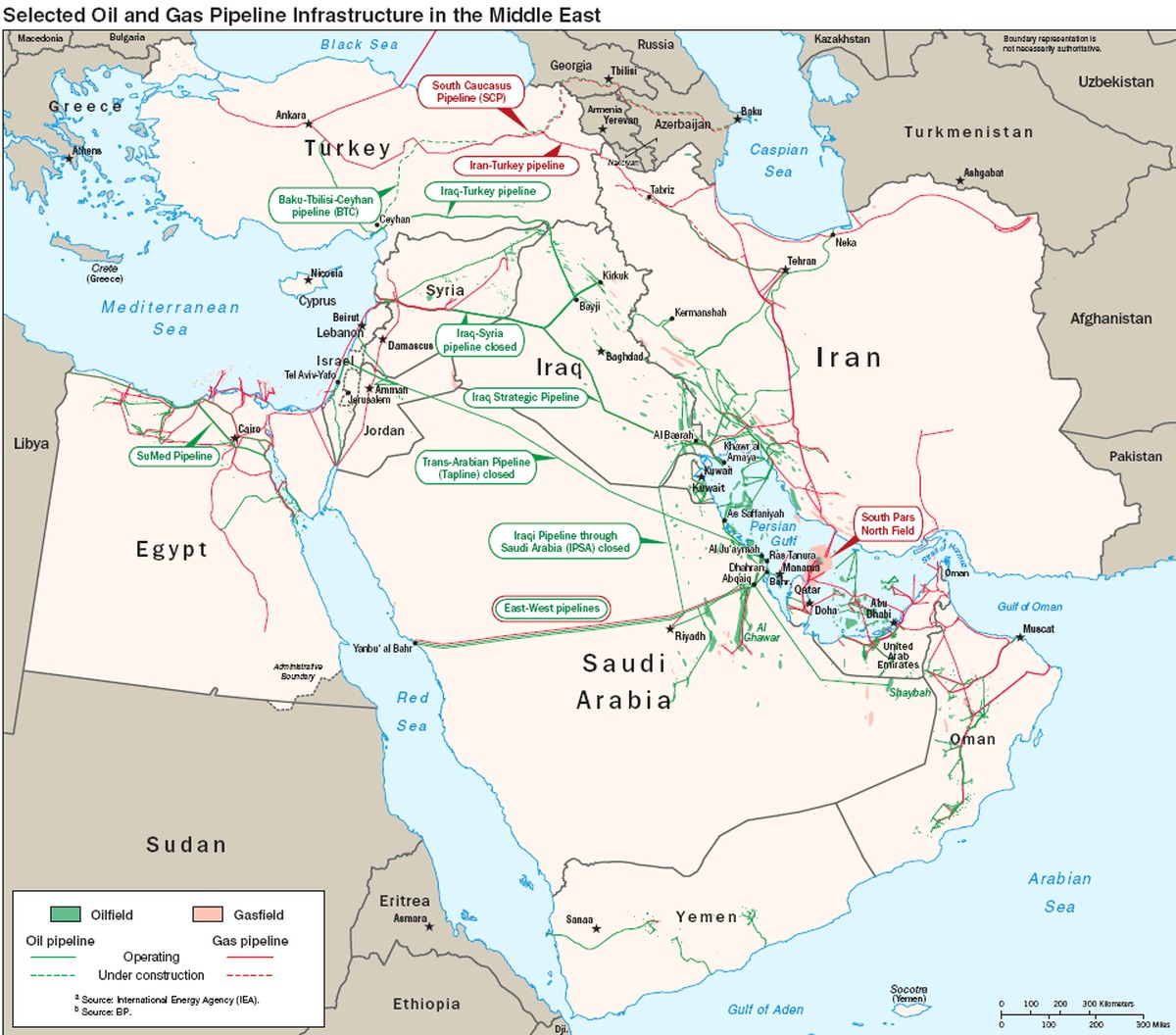
The Iranian campaign traces directly to 18 March, when Israel struck the South Pars gas field — the world’s largest natural gas field, shared with Qatar’s North Field — on the eighteenth day of a coordinated US-Israeli military campaign against Iran that began on 28 February. The strike halted two refineries with a combined capacity of 100 million cubic metres per day, with Refinery No. 4 almost completely destroyed and No. 7 heavily damaged, affecting approximately twelve per cent of Iran’s total gas production, according to open-source reporting compiled on the attack.
Axios confirmed that the United States “coordinated and approved” the Israeli strike, while President Trump publicly claimed the US “knew nothing,” according to Times of Israel and ABC News reporting from 18–19 March. Israeli officials told Channel 12 and Ynet that the stated rationale was twofold: to pressure Tehran over the Hormuz blockade and to increase domestic pressure on the Iranian regime. Qatar’s Foreign Ministry spokesman Majed al-Ansari called the strike “a dangerous and irresponsible step” that threatened global energy security, per ABC News — a judgement that the subsequent seven months of Iranian retaliation against Gulf energy infrastructure has confirmed in exhaustive, documented detail.
Iran’s retaliation was immediate, direct and openly declared. President Masoud Pezeshkian warned of “consequences beyond control, the scope of which would engulf the entire world.” Danny Citrinowicz, a senior researcher at Israel’s Institute for National Security Studies, told NBC News that “Iran emerged with the upper hand” — a verdict delivered in March that the Reuters investigation, seven months later, has given precise evidentiary footing. The American president who responded to the initial Ras Laffan attack by saying the US would “massively blow up” South Pars if Iran struck Qatar’s LNG facilities again has not followed through — and that threat’s failure to deter has defined the seven months of IRGC operations that followed.
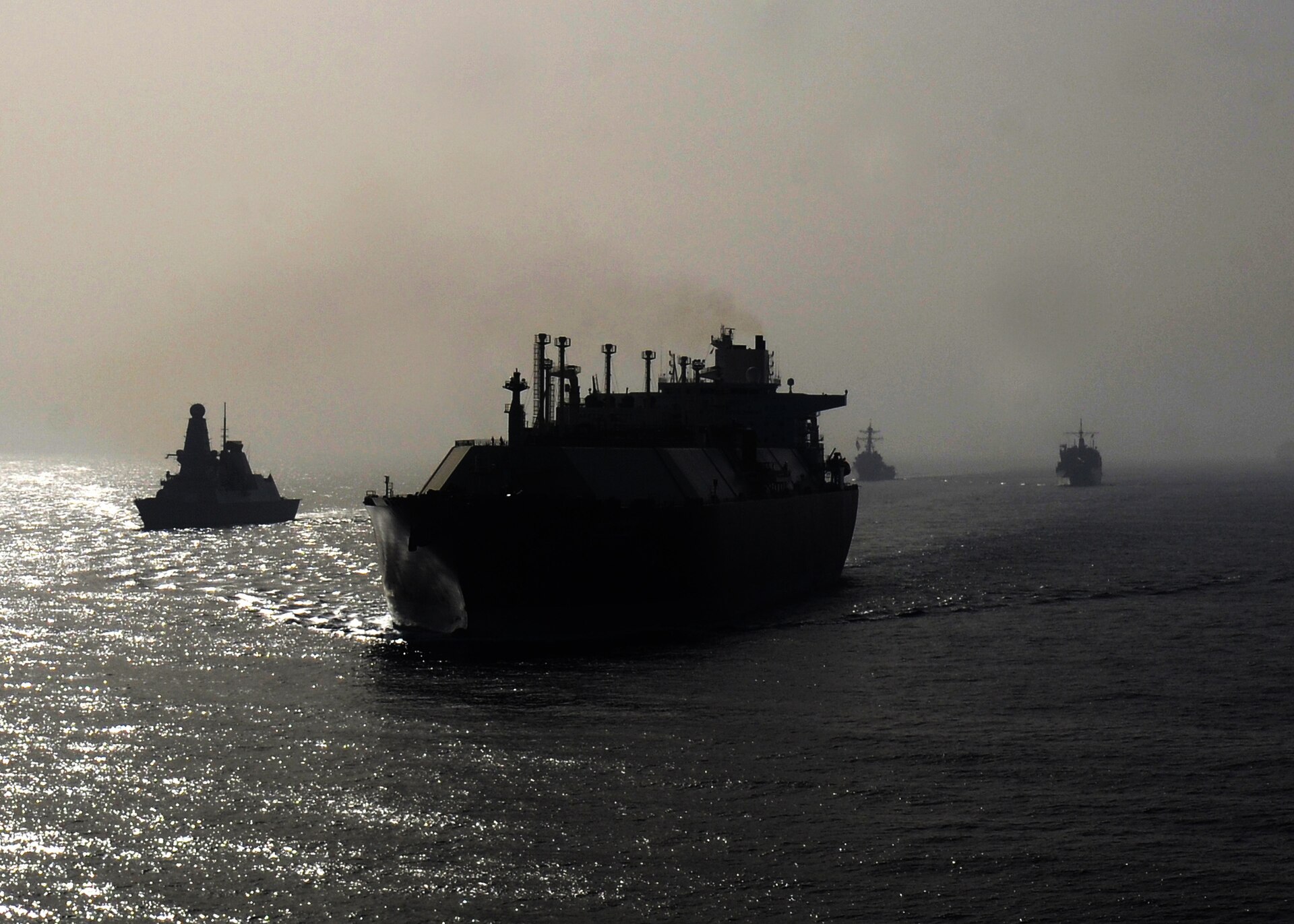
Trump’s 8 October statement that the US “will not be attacking Iran at any time prior to the midterm elections” on 3 November, reported by The National, and the Makkah Defence Agreement’s focus on the Houthi airport campaign rather than the IRGC’s energy campaign, together leave a gap that the Reuters investigation has now made visible to any audience willing to read it. Iran has been methodically dismantling Gulf energy infrastructure for seven months, and the official response from every government on the receiving end has been to pretend the missiles missed.
Frequently Asked Questions
What is the Makkah Defence Agreement and does it cover all Gulf states hit by IRGC strikes?
The Makkah Defence Agreement is a mutual defence pact between Saudi Arabia, Pakistan and Turkey — it does not include Kuwait, Qatar or the UAE, all of which have sustained documented IRGC strikes on energy infrastructure. Turkey’s parliament had not ratified the agreement as of 6 October, according to Al Jazeera. The pact committee agreed on 5 October to “activate collective deterrence measures,” but the activation language focused on the Houthi campaign against Saudi cities and airports rather than on the separate and concurrent IRGC campaign against energy facilities, and no public statement has addressed the pact’s applicability to non-member Gulf states.
Has any Gulf state militarily responded to the IRGC energy strikes?
None. Beyond the diplomatic impossibility of retaliating against strikes officially attributed to interceptor debris, Gulf states face a structural problem: direct military action against Iran would require US backing, and the US has explicitly ruled out offensive operations until after the November midterms. The Makkah Defence Agreement’s activation language covers the Houthi airport campaign, not the IRGC energy campaign — and Kuwait, Qatar and the UAE are not party to the agreement at all. Qatar’s expulsion of Iranian military attachés remains the firmest state-level action taken against the energy strikes specifically.
How have global energy markets responded to the IRGC campaign?
Beyond the oil price, Gulf export logistics have been reshaped. Gulf-to-China VLCC charter rates reached $1.2 million per day in early October — roughly fifteen times the pre-war rate of $80,000 — according to LSEG data. Aramco cut its November Arab Light pricing to Asia by $3 to $5 below the Oman/Dubai benchmark, the widest discount since June 2020, per Reuters, in an apparent effort to retain customers despite delivery uncertainty. Iran’s Hormuz blockade, in force since 14 July, has forced energy buyers to reroute supply through longer, costlier shipping lanes.
What is the current status of Qatar’s Ras Laffan LNG production?
No source has confirmed even partial restoration of LNG export capacity at Ras Laffan. Cold-box components are fabricated by a small number of specialist manufacturers with backlogs measured in years — meaning Qatar cannot accelerate the repair timeline regardless of budget. The prolonged outage has accelerated buyer diversification away from Qatari LNG toward US, Australian and East African supply, a structural shift in long-term contract portfolios that analysts expect to persist even after Ras Laffan eventually restarts.