
DHAHRAN — A Houthi missile attack on the night of 13 October targeted the Saudi Aramco headquarters complex in Dhahran. It left the executive tower’s upper floors burned and broken, and it cost Crown Prince Mohammed bin Salman something no strike on an airport or refinery has cost him: the assumption that the company’s command centre sits beyond the war’s reach.
Saudi Arabia’s energy ministry described a “limited fire” in an administrative building, with no injuries or deaths. Three people with direct knowledge told Reuters a different story about the scale: fire across several floors of the south wing, the executive suite among the most severely damaged areas, parts of the ceiling caved in, and windows and doors blown out.
Within six days, the GCC had postponed the EU-GCC summit due in Riyadh on 24 October. The Future Investment Initiative, the conference built to sell Vision 2030 to global capital, was pushed back to 2027. Aramco itself had said nothing on the record.
The account below sets the Dhahran strike against the Houthi campaign that came before it. It covers what the building controls and what it does not, what shareholders and the IMF have priced, and why a headquarters fire carries a different bill from the airport strikes that killed 20 people between 6 and 11 October, according to GACA figures reported by the BBC.
Table of Contents
- What Happened at Aramco’s Dhahran Headquarters?
- Why Is Dhahran Different From an Airport or a Refinery?
- A Building That Does Not Pump Oil
- What Did the Strike Cost Aramco’s Shareholders?
- Six Days of Postponements
- What Does the Houthi Campaign Want From Riyadh?
- How Does the IMF Read the Damage to Saudi Arabia?
- The Bill That Lands in Riyadh
- Frequently Asked Questions
What Happened at Aramco’s Dhahran Headquarters?
On 13 October, a Houthi missile attack set fire to an office tower inside Saudi Aramco’s Dhahran headquarters complex. Saudi officials called it a limited fire with no casualties. Reuters sources described extensive damage across several floors, including the executive suite. Whether a missile struck the tower directly or debris from an interception fell on it remains disputed.
The Saudi energy ministry’s statement was brief. An administrative building belonging to the state oil company had been attacked, causing a “limited fire,” with no injuries or deaths. The statement did not say which weapon was involved.
The Middle East briefing 3,000+ readers start their day with.
One email. Every weekday morning. Free.
The detail came from elsewhere. Reuters reported that the fire started on the ninth floor of the south wing and, according to its sources, spread between the sixth and tenth floors. A fourth source said it was still burning in the early hours of Wednesday. A company source told Reuters that a ballistic missile hit the complex.
The Associated Press, citing two regional officials who spoke anonymously, reported that the top three floors of the executive building were damaged. One official said the chief executive’s office was among them. Neither news agency reported casualties.
The intercept question
The Saudi-led coalition’s account differs. It said it intercepted a ballistic missile aimed at Dhahran that night. In the same barrage it said it stopped two drones, four cruise missiles and one ballistic missile aimed at Riyadh, and a cruise missile aimed at Al-Kharj, according to AP. The coalition added that fragments of the missile it destroyed over Dhahran fell on a residential area, without saying where.
One source with direct knowledge told Reuters early on that it was unclear whether the building had been hit directly or by falling debris. That question has not been settled publicly. No source disputes that a fire burned in the tower that houses the company’s leadership.
| Account | Source | What it says |
|---|---|---|
| Saudi energy ministry | Statement, 13 October | “Limited fire” in an administrative building; no injuries or deaths |
| Saudi-led coalition | Via AP and Reuters | Ballistic missile aimed at Dhahran intercepted; fragments fell on a residential area |
| Three people with direct knowledge | Reuters, 14 October | Fire across floors six to ten of the south wing; top three floors severely damaged |
| Two regional officials | AP, 14 October | Top three floors of the executive building damaged, including the CEO’s office |
| Aramco | — | No reply to Reuters or AP requests for comment |
Operations at the complex “have continued normally,” two sources told Reuters. Some employees were asked to work from home. A fourth source said some functions were moved to Aramco’s offices abroad.
Why Is Dhahran Different From an Airport or a Refinery?
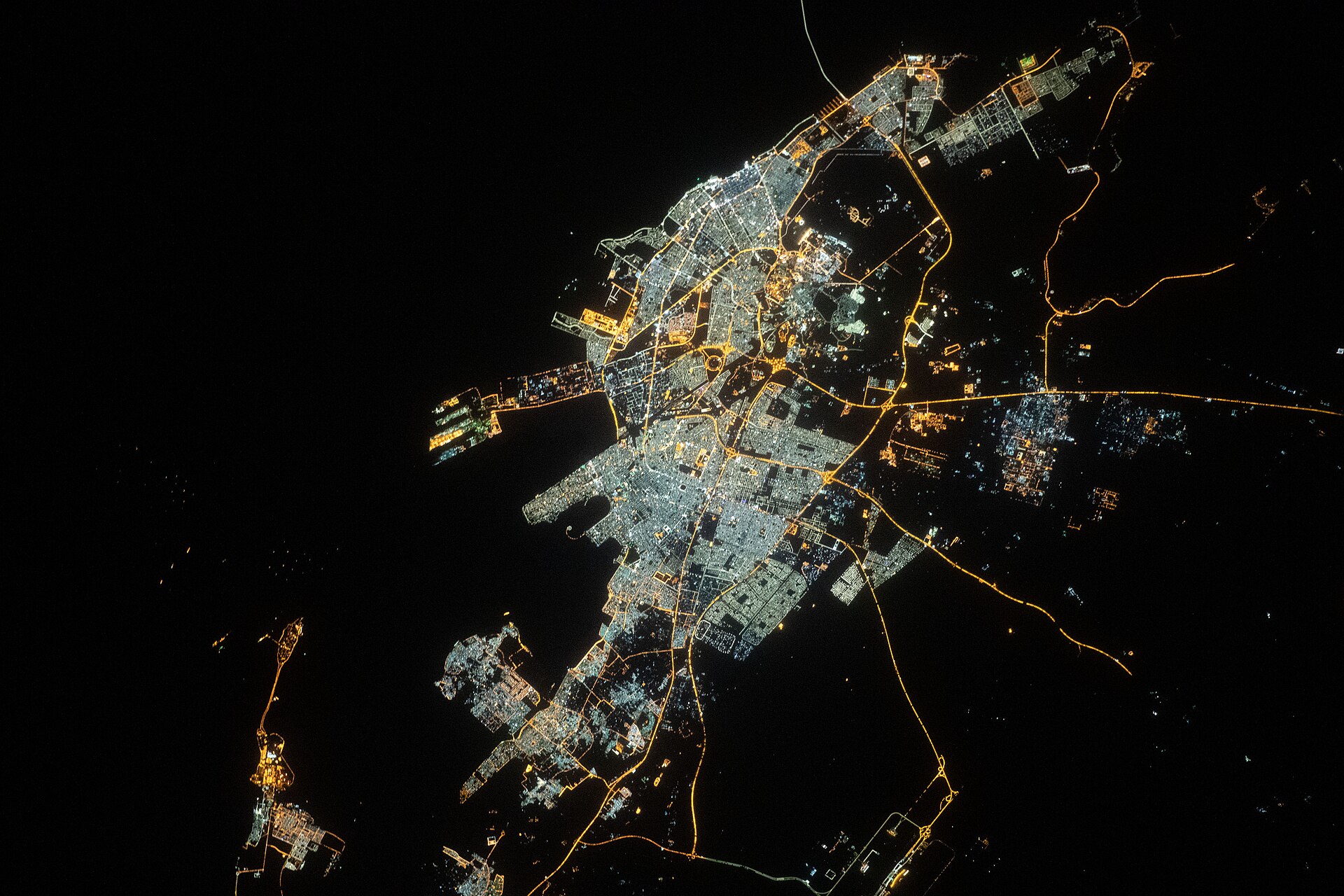
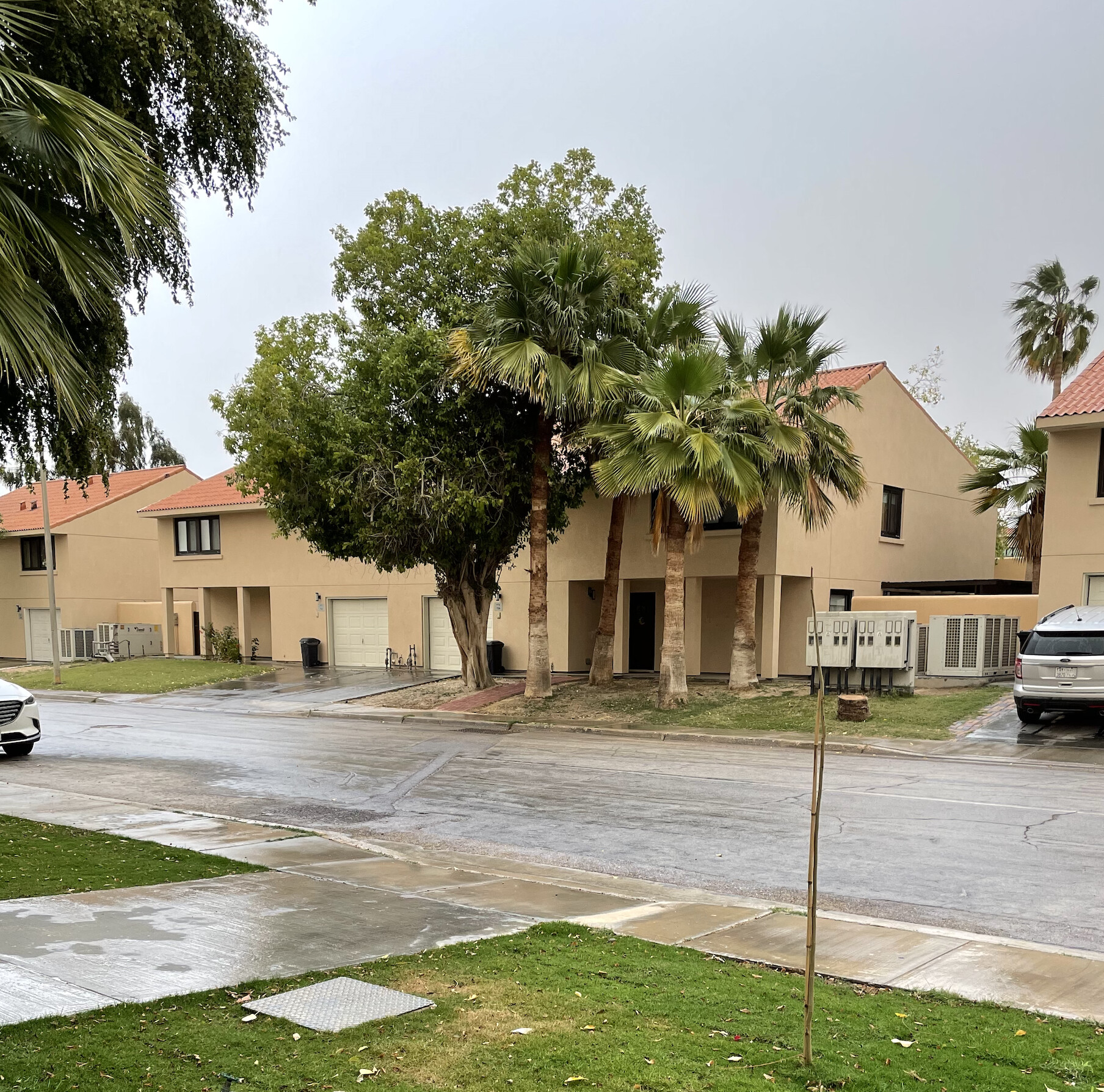
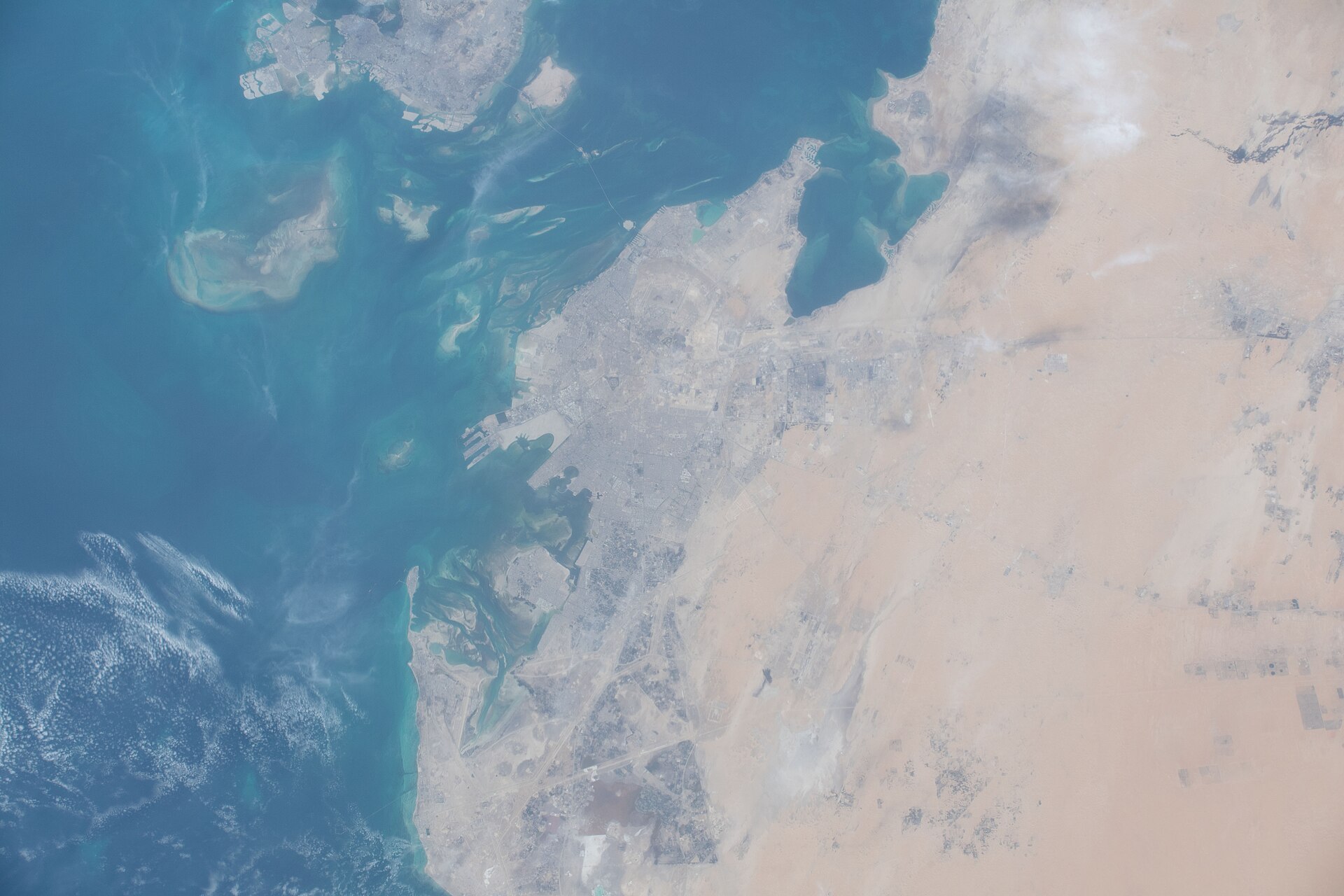
Dhahran is where Saudi oil began and where Aramco is run. Commercial oil was first found there in 1938, and the company moved its headquarters from New York to Dhahran in 1952. The complex houses the operations centre that oversees the kingdom’s rigs, pipelines, refineries and export terminals. A strike there hits the company’s identity, not one asset.
The kingdom’s first commercial oil came from Dammam No. 7, the “Prosperity Well,” in 1938, according to The National. The company was still the Arabian American Oil Company when it moved its head office from New York City to Dhahran in 1952. The Saudi government completed its buyout in 1980, and the company was renamed in 1988.
The complex covers 58 square kilometres and has a reported 11,000 residents, employees and their families, according to The National. Reuters described its operations centre as overseeing oil rigs, refineries, export terminals and “thousands of kilometres” of pipeline.
Earlier Aramco targets in this war, from Ras Tanura to Jazan, were production assets. Refineries were shut, then restarted. Airports were closed, then partly reopened. A headquarters is a different category. It does not produce barrels, but it is where the company that produces them is managed, where foreign partners are received and where the brand on the share certificate is photographed.
Aramco targets compared
| Date | Site | Type | Reported effect | Source |
|---|---|---|---|---|
| 14 September 2019 | Abqaiq and Khurais | Processing and production | 18 drones and three missiles in 17 minutes; about half of Saudi crude output knocked out; restored in roughly two weeks | The National, 2026-10-14 |
| Early March 2026 | Ras Tanura refinery (550,000 bpd) | Refining | Fire after drone attacks; operations halted for 16 days | The National, 2026-10-14 |
| 27 July 2026 | Jazan refinery (400,000 bpd) | Refining | Shut after strike; second attack on 9 August pushed restart to 30 August | Hydrocarbon Processing, 2026-08-11 |
| 13 October 2026 | Dhahran headquarters | Corporate command | Fire across upper floors of executive tower; no production loss reported | Reuters / AP, 2026-10-14 |
The table shows why Dhahran is an outlier. Each of the other sites can be measured in barrels lost and days to restart. The headquarters strike produced no barrel figure at all.
For a fuller account of how markets priced the strike in its first 24 hours, see the analysis of the oil market’s muted reaction to the Dhahran fire.
A Building That Does Not Pump Oil
On operations alone, the strike was the least damaging of the Houthi campaign’s Aramco attacks. At the Energy Intelligence Forum in London — in remarks made before the attack and reported by The National on 14 October — Nasser said “Our system is intact” and that Aramco could make its maximum sustainable capacity of 12 million barrels per day available within days.
That line fits his earlier one. On 25 September, after the East-West pipeline had been shut and restarted, he said disruptions “typically last days, not weeks or months” (Saudi Gazette via Zawya, 2026-09-25).
The problem is the distance between capacity and output. The International Energy Agency put Saudi crude supply at 5.97 million bpd in August (IEA, 2026-09-11). OPEC+ had set the kingdom’s November target at 10.5 million bpd (Enerdata, 2026-10-04). A company that can make 12 million bpd available supplied about half that in August, for reasons a headquarters fire does not change: a contested Strait of Hormuz and a single westward pipeline.
The constraint on Saudi barrels is geography, not management. The kingdom’s dependence on a narrow set of export routes was set before 13 October and was not altered by it.
The case that Dhahran changed little
There is a fair reading in which the strike was mostly symbolic. No casualties were reported. Operations continued. Some staff went home and some functions moved abroad, which is how a large company with offices worldwide is meant to behave when one building is out of use.
Nasser’s capacity claim, the ministry’s “limited fire” and the silence from Aramco’s press office all point the same way. Riyadh wants the strike understood as an inconvenience.
That reading holds for the oil. It does not hold for the institutions around the oil, which react to a different signal. A refinery fire tells a trader about supply. A fire in the chief executive’s office tells a conference organiser, a summit planner and a fund manager in New York that nowhere in the kingdom is assumed safe. Those people answered within a week.
What Did the Strike Cost Aramco’s Shareholders?
The immediate market cost was modest. Aramco shares fell 1.6% on 14 October and the Saudi benchmark index closed 1.7% lower, according to Reuters market reports carried by Zawya. Brent crude traded above $106 that day. The larger exposure is to the dividend that funds the Saudi state.
The selling built through the session. In early trade, the benchmark was down 0.7%, dragged by a 1.3% fall in Saudi National Bank, with Aramco off 0.5%, according to a Zawya/Reuters report. By the close, Saudi shares led Gulf losses.
Brent rose from $102.94 on 9 October (CNBC, 2026-10-09) to above $106 on 14 October, according to Euronews. That move also covers the 10 October airport strike and the Hormuz attacks of the same week, so the share attributable to Dhahran alone cannot be separated out.
A Houthi message to shareholders
The Houthis addressed the market directly. On 14 October, a Houthi military source speaking to the group’s al-Masirah TV urged Aramco shareholders to sell their holdings to avoid losses expected “in the coming days,” according to Xinhua, carried by the Ghana News Agency. The same report noted the state owns more than 94% of Aramco’s shares.
That ownership structure is the point. Small foreign investors are not the main audience for a warning to Aramco shareholders. The main audience is the Saudi state and its sovereign fund, which depend on the payout.
Aramco declared a $21.9 billion base dividend for the second quarter of 2026 on adjusted net income of $33.4 billion (QNA, 2026-08-04). Its average realised crude price in that quarter was $108.1 a barrel (Zawya/Aramco, 2026-08-04).
| Indicator | Figure | Source |
|---|---|---|
| Aramco share move, 14 October close | −1.6% | Zawya/Reuters |
| Saudi benchmark index, 14 October close | −1.7% | Zawya/Reuters |
| Saudi National Bank, early trade 14 October | −1.3% | Zawya/Reuters |
| Brent, 9 October | $102.94 | CNBC, 2026-10-09 |
| Brent, 14 October | Above $106 | Euronews, 2026-10-15 |
| Q2 2026 base dividend | $21.9 billion | QNA, 2026-08-04 |
A headquarters fire does not cut that dividend. A campaign that forces Aramco to keep discounting crude to Asia, as it did when it set November Arab Light at $5 below Oman/Dubai, the widest discount since June 2020 (bdnews24/Reuters, 2026-10-05), eats into it a little more each month.
Six Days of Postponements
The political cost of Dhahran showed up in the calendar. Two days after the strike, the GCC postponed the EU-GCC summit. Six days after it, the FII Institute moved its tenth-anniversary conference to 2027. Neither statement named Aramco. Both followed a week in which the Houthis had added the kingdom’s corporate centre to their list of targets.
On 15 October, GCC Secretary-General Jasem Albudaiwi announced the rescheduling of the summit planned for Riyadh on 24 October, according to QNA. He cited “the Houthi group’s continued attempts to target the Kingdom of Saudi Arabia and its civilian objects,” the “extended suspension of flight operations at King Khalid International Airport,” and the safety of participating delegations. The European Council said only that a new date “will be announced in due course.”
The summit had been framed as a diplomatic set piece. European Council President Antonio Costa’s invitation set it for Riyadh, co-chaired with the crown prince (The National, 2026-10-08). The circumstances of that loss are covered in the account of how Riyadh lost the EU-GCC summit.
FII moves to 2027
On 19 October, the FII Institute said the tenth edition, scheduled for 26 to 29 October in Riyadh, would take place in 2027. Its chief executive, Princess Dr Maha bint Mishari Al Saud, did not mention security. “A decade of partnership and shared vision deserves nothing less than our absolute best,” she said, according to The National.
The National reported that BlackRock’s Larry Fink and JPMorgan Chase’s Jamie Dimon had been expected. It also tied the decision to the surge in Houthi missile and drone attacks, including the strikes on King Khalid International Airport. Two other events slipped the same week. Intersec Saudi Arabia, due 16 to 18 November, moved to October 2027, and the Saudi Retail Forum moved from 19 November to March 2027.
FII was launched in 2017 as a platform for Vision 2030, The National noted. Its postponement came one week before it was due to open. The pressure on Riyadh’s events programme has been building for weeks, as set out in the analysis of whether Riyadh can host the world while its airport stays shut.
The travel problem
More than 3,000 flights scheduled to depart Saudi airports were cancelled or listed as not operating in the week before 14 October, according to aviation analytics firm Cirium, cited by AP. Lufthansa had suspended Riyadh flights through 18 November, Euronews reported.
The airport strikes made the kingdom hard to reach. The Dhahran strike made it harder to argue that executives who did arrive would be safe at the places they had come to see.
What Does the Houthi Campaign Want From Riyadh?
The Houthis say they want a comprehensive end to the war and the blockade, not a temporary ceasefire. They framed the Dhahran strike as retaliation for Saudi-led attacks on fuel facilities in Sanaa. Analysts read the campaign as an effort to raise the cost of Saudi intervention in Yemen until Riyadh negotiates.
The sequence on 13 October was tight. The Saudi-led coalition ordered the evacuation of the area around the Yemen Petroleum Company’s central al-Sabahah station in Sanaa ahead of strikes, according to Bernama. That evening, Houthi military spokesman Yahya Saree declared that the group considers any Aramco oil facility a “legitimate target.” He told employees and civilians near Aramco sites to leave.
Saree later extended the warning to experts, engineers and workers at all Saudi oil facilities, Bernama reported. The Houthis described the attacks that night as retaliation for “treacherous Saudi aggression” against Sanaa and other areas, according to AP.
The Houthi-run health ministry said a coalition strike on an oil facility near Ras Isa port in Hodeida province killed two people on 13 October, AP reported. That figure has not been independently verified.
From airports to the oil company
The targeting moved in steps. On 19 September, smoke rose near King Khalid International Airport in what appeared to be the group’s first strike on Riyadh in the current escalation (Kathmandu Post/Reuters, 2026-09-20). On 4 October the Houthis claimed an attack on an Aramco site in Riyadh, a claim the coalition called “misleading” (Al Jazeera, 2026-10-04).
By 8 October the group was warning people away from oil sites (AP via NY1, 2026-10-08). The airport strikes of 6 to 11 October followed, and the 10 October attack on King Khalid International killed 12 and wounded 309, according to Al Jazeera (Al Jazeera, 2026-10-10). The BBC put the injured at 308, and an Indian victim’s later death raised the toll to 13 (BBC, 2026-10-11).
Dhahran came two days after the last of those strikes, on the night the coalition hit fuel facilities in Sanaa. Each step widened the category of target. Airports brought civilian deaths. Dhahran brought the national oil company’s management into range, in the Eastern Province, on the far side of the kingdom from Yemen.
The political demand
Mohamed al-Bukhaiti of the Houthi political bureau set out the group’s terms to AP. “We’re welcoming any mediation that leads to an end of the war and the blockade between Sanaa and Riyadh,” he said. “We’re ready for a comprehensive end of the war and the blockade from both sides, not just a temporary ceasefire.”
Ahmed Nagi, senior Yemen analyst at the International Crisis Group, described the logic to AP. “The Houthis are trying to strike critical infrastructure in Saudi Arabia to raise the cost of continued military intervention,” he said. He also noted that in a war of attrition the group risks losing much of its military capacity.
“The Houthis are betting on pressure, while the Saudis are betting on time.” — Ahmed Nagi, International Crisis Group, to AP
Dhahran is the clearest test of that bet. Time works for Riyadh only if each strike can be absorbed without lasting cost. A headquarters fire that preceded a summit postponement and an investment conference delay is the kind of cost that accumulates.
The group’s escalation pattern after Dhahran, including its renewed threats against airports and oil sites, is tracked in the report on Houthi vows to keep striking Saudi oil facilities.
How Does the IMF Read the Damage to Saudi Arabia?
The IMF expects the Saudi economy to shrink 3.3% in 2026 and grow 7.9% in 2027. That forecast was prepared before the 10 October airport strike and assumes Hormuz reopens gradually from March 2027. A day after Dhahran, IMF Managing Director Kristalina Georgieva warned the attacks carried global spillovers.
Speaking at the IMF and World Bank annual meetings in Bangkok on 14 October, Georgieva was direct. “In that sense, these developments have potentially negative spillovers for everybody, everywhere,” she said, according to Euronews.
She also credited the buffers Gulf governments had built. “This has put buffers that are now paying great dividends to the authorities and the people in the Gulf,” she said, according to a Zawya/AFP report. In the same remarks she pointed to the “near closure of Hormuz and now disruptions in the Red Sea.”
What the forecast does not include
The IMF’s October outlook cut its 2026 Saudi forecast from growth of 1.7% to a contraction of 3.3%. It raised 2027 growth to 7.9% from 5.5%, according to Zawya. Euronews reported that the projections were published on 13 October and prepared before the Riyadh airport attack.
That means neither the airport strike nor the Dhahran strike is in the numbers. Both the recovery and the 2027 rebound depend on Hormuz reopening from March 2027 and on shipping returning to pre-war conditions by October 2027.
Riyadh’s own figures are already stretched. The 2026 deficit estimate was raised to 245 billion riyals from a budgeted 165 billion (Reuters via Zawya, 2026-09-30). The government’s pre-budget statement forecast a 3.6% fall in real GDP in 2026 on a 21.8% drop in oil activities.
The question of whether Vision 2030 has made the kingdom a source of risk for others, and not only for itself, is examined in the analysis of Saudi Arabia as a global systemic risk.
The Bill That Lands in Riyadh
Set the airport strikes and the Dhahran strike side by side and the difference is plain. The airport strikes were far deadlier, with 20 deaths between 6 and 11 October. The Dhahran fire killed no one.
Yet the airport dead were cited as the reason for postponements that the Dhahran fire made harder to reverse. Albudaiwi’s statement on 15 October named the Houthi attempts on the kingdom and the airport closure. It did not name Aramco. The FII statement on 19 October named neither.
What a headquarters strike costs that an airport strike does not
- It removes the distinction between the war’s front and the kingdom’s showroom. The executive floor of the national oil company is where foreign partners are received.
- It gives the Houthis a message for capital markets. A group that tells Aramco shareholders to sell is speaking to the state that owns more than 94% of the company.
- It puts the brand in the frame. Images of smoke over a refinery read as an energy story. Smoke over the chief executive’s floor reads as a story about whether the company is secure.
- It cannot be answered with a reopening date. An airport reopens and a refinery restarts on a published timeline. A headquarters that is not commenting has no timeline to publish.
The airport war has its own account, set out in the record of attacks on King Khalid International Airport. Dhahran sits in a separate ledger, and it was empty of casualties.
Saudi Arabia has asked the UN Security Council to act (Al Jazeera, 2026-10-09). The crown prince made two appeals to Washington for US strikes on the Houthis in September, and both were declined (CNN, 2026-10-10). After the Dhahran attack, President Donald Trump said the Houthis were behaving “very badly,” AGBI reported on 14 October.
Riyadh’s diplomatic calendar for October is now empty of its two largest fixtures. The FII Institute said new dates for 2027 would be announced “very soon.”
Frequently Asked Questions
Has Dhahran been hit by a missile before?
Yes. On 25 February 1991, during the Gulf War, an Iraqi Scud missile struck a US Army barracks in Dhahran, killing 28 American soldiers and wounding 110, according to The National. That strike hit a military target. The 2026 attack hit the civilian corporate complex.
What else is inside the Dhahran compound besides offices?
The complex includes the Expec Advanced Research Centre, inaugurated in 2008 and later expanded with a building for upstream research. It also has a district cooling plant run by Saudi Tabreed with 32,000 refrigeration tonnes of capacity and a 16-kilometre chilled-water network, according to The National.
Was the Ithra cultural centre affected?
No source has reported damage to Ithra, the King Abdulaziz Centre for World Culture, which Aramco built in Dhahran. The centre has drawn more than four million visitors since opening in 2018, according to The National.
When will Aramco next report its finances?
Aramco is scheduled to release third-quarter results on 3 November, according to The National. The release will be the first formal company disclosure since the Dhahran attack and may show whether the strike, the discounts to Asian buyers and lower output have changed the dividend outlook.