
RIYADH — Saudi Arabia has maintained direct diplomatic channels with Iran throughout the Gulf war, a line its own deputy minister for public diplomacy confirmed on 15 October — four days after a Houthi strike on King Khalid International Airport killed thirteen people. Rayed Krimly, speaking in Cairo, used the same briefing to accuse Iran of arming and encouraging the Houthis. That Riyadh sustains a channel to the state it publicly holds responsible for the bombs hitting its airports is not contradiction. It is the arithmetic of a government whose principal ally will not strike before 3 November and whose fiscal deficit has reached 245 billion riyals.
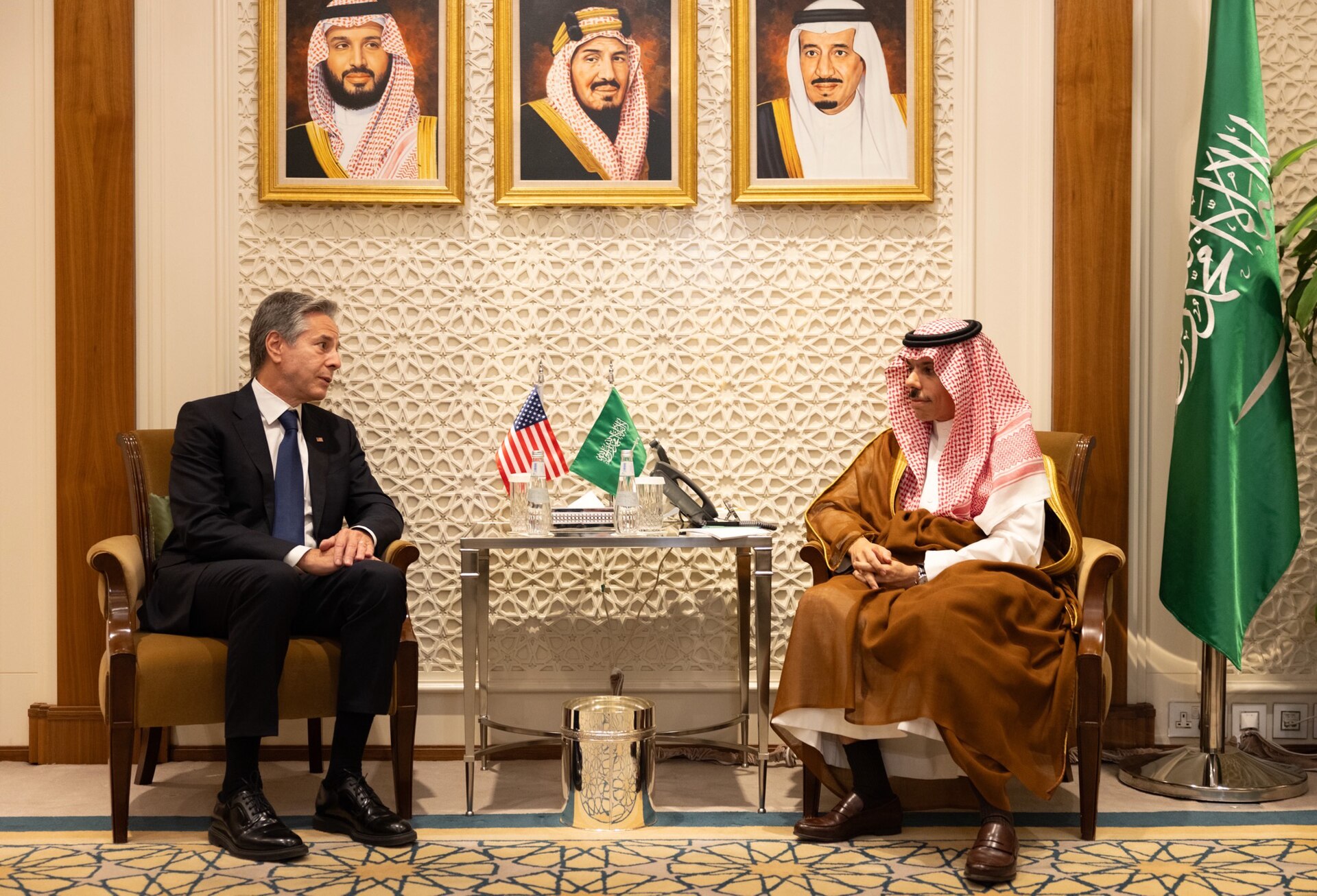
On 11 October, Iran’s foreign minister Abbas Araghchi called Saudi foreign minister Prince Faisal bin Farhan — confirmed by both state agencies (Al Jazeera, 2026-10-12; Reuters via USNews, 2026-10-11). The previous day, a Houthi projectile had hit KKIA, killing twelve and wounding at least 308 (Al Jazeera, 2026-10-10; BBC, 2026-10-11). An Indian victim’s death raised the toll to thirteen on 11 October itself (BBC, 2026-10-11). Iran offered to “facilitate dialogue between Saudi Arabia and Yemen.” Saudi Arabia’s readout mentioned only “the recent escalation.” The space between those two accounts — one proposing mediation, one acknowledging a phone call — frames the predicament: Riyadh is talking to a government whose proxies are bombing its airport, about terms that only Washington can deliver.
Table of Contents
- What Did Araghchi Offer — and What Did Riyadh Hear?
- The Krimly Doctrine: Accuse and Engage
- Why Does Riyadh Negotiate With the State Funding the Bombs?
- What Can Saudi Arabia Offer Iran That Washington Has Not?
- The Oman Track and the Meeting the Houthis Refused
- From Baghdad to Beijing to Bombs
- Who in Tehran Decides — and Do They Agree?
- The Calendar as Coercion
- Frequently Asked Questions
What Did Araghchi Offer — and What Did Riyadh Hear?
Araghchi’s 11 October call carried a specific proposal: Iran would “facilitate dialogue between Saudi Arabia and Yemen” and was “ready to give any possible assistance” toward a political settlement (Al Jazeera, 2026-10-12). “Insisting on a military approach and disregarding a political solution would only further complicate the situation,” he said (Al Jazeera, 2026-10-12). His framing — “between Saudi Arabia and Yemen” — treated the Houthis as Yemen’s representative government, a formulation Saudi officials have rejected (Amwaj Media, 2026-10-14). On his Telegram channel the same day, Araghchi wrote: “The region’s crises have no military solutions” (Al Jazeera, 2026-10-12).
Saudi Arabia’s state news agency offered a different account of the same conversation. Its readout described a discussion of “the recent escalation” — two words that acknowledged neither Iran’s role in the war nor its proposal to end one (Al Jazeera, 2026-10-12). There was no mention of mediation, no reference to Yemen, no indication that an offer had been received. Iran’s foreign ministry spokesman Esmaeil Baghaei supplemented the call with a public statement: “We do not want hostilities to continue between two Muslim countries” (Al Jazeera, 2026-10-12).
The framing as a conflict “between two Muslim countries” served a specific purpose. It excluded the United States and Israel from the table, reduced the Gulf war to a Saudi-Houthi bilateral that happened to involve Iranian goodwill, and presented Tehran as a concerned regional power rather than a co-belligerent. Saudi Arabia’s readout rejected the framing by omission — refusing to acknowledge an offer that presumed the Houthis’ standing as Yemen’s government and Iran’s standing as a neutral party.
The asymmetry between the two readouts follows a pattern. When Prince Faisal and Araghchi spoke by phone on 3 August, the Saudi foreign ministry reported a discussion about “reducing Gulf tensions” and nothing else (Trend, 2026-08-03). Two months later, the October call repeated the formula: Iran publicised an offer, Saudi Arabia confirmed only the fact of contact. The technique keeps the channel functional without conceding that Riyadh is engaged in anything resembling negotiation.
The Middle East briefing 3,000+ readers start their day with.
One email. Every weekday morning. Free.
The Krimly Doctrine: Accuse and Engage
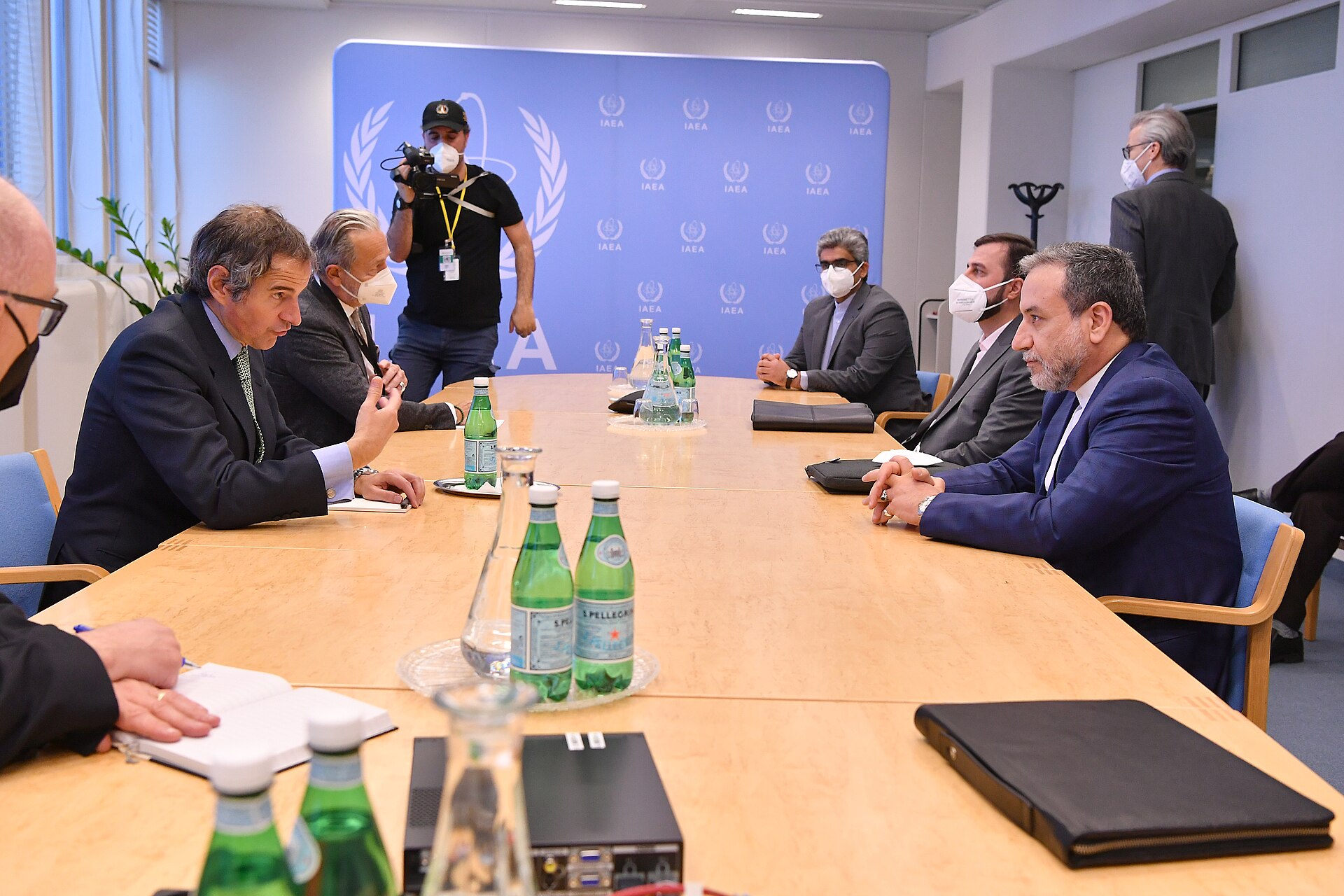
Krimly’s Cairo briefing on 15 October was the most detailed Saudi public statement on the Iran channel since the current phase of the war began. The deputy minister for public diplomacy confirmed that Riyadh “maintain[s] direct channels of communication” with Tehran (PBS NewsHour, 2026-10-15). In the same appearance, he said Iran “continues to arm, train and support the Houthi militia in violation of relevant U.N. Security Council resolutions” and that the Houthi escalation “is encouraged by Iran” (PBS NewsHour, 2026-10-15; Al Arabiya, 2026-10-16).
The two statements were not a contradiction but a description of dual realities Riyadh holds to be simultaneously true: that Iran is materially responsible for the strikes that have killed at least twenty people at Saudi airports since 6 October, and that talking to Tehran remains preferable to silence. Krimly did not say Saudi Arabia had requested or accepted Iranian mediation. “We maintain direct channels of communication” is a statement of infrastructure, not intent — a diplomat’s way of confirming the phone line exists without revealing who dials it or what passes through.
The construction served a second purpose. By accusing Iran publicly while confirming the channel, Krimly placed the burden of the next move on Tehran. Iran could not claim Riyadh was refusing to talk; Riyadh could not be accused of capitulation. The position occupied a narrow space between confrontation and negotiation — the same space Saudi diplomacy has tried to hold since March, when Riyadh expelled Iranian military staff but kept its ambassador in place.
Why Does Riyadh Negotiate With the State Funding the Bombs?
The channel exists because the alternative — waiting for Washington — has a published expiration date. On 8 October, Trump said the United States “will not be attacking Iran at any time prior to the midterm elections” on 3 November (The National, 2026-10-08). Crown Prince Mohammed bin Salman had made two separate calls to Trump in September asking for US strikes on the Houthis; both were declined (CNN, 2026-10-10). After the 10 October airport strike, Trump said “We may. We’re going to look at it,” but stopped short of commitment (CNN, 2026-10-10). Washington’s midterm pause left Riyadh without external military intervention before November.
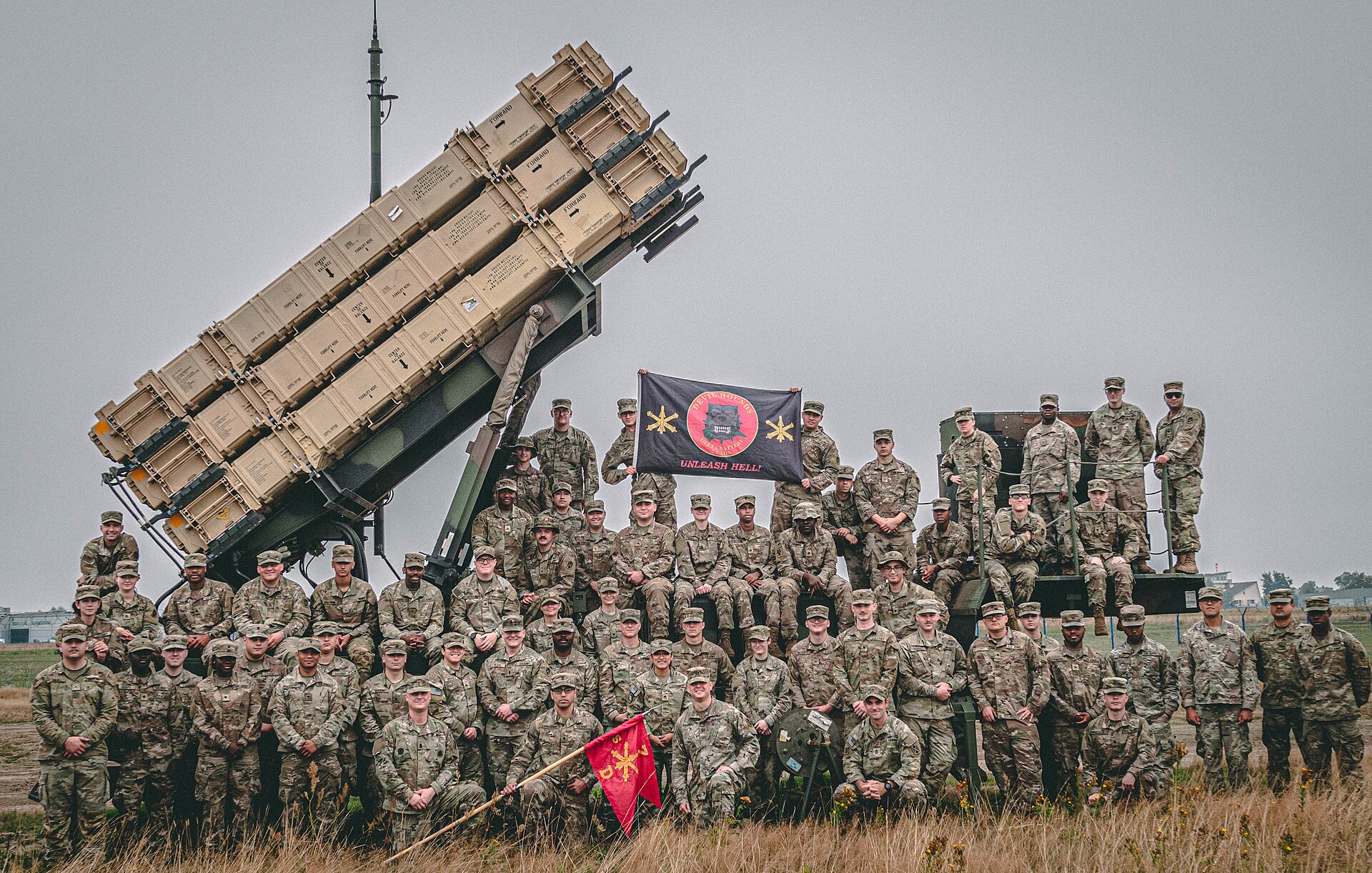
The military alternatives assembling closer to home were incomplete. The Makkah Defence Agreement was activated on 5 October, with Pakistan and Turkey committing forces (Al Jazeera, 2026-10-06). But Turkey’s parliament had not ratified the pact (Al Jazeera, 2026-10-06), and CNN reported that Saudi Arabia had ended its partnership with the UAE “late last year” over Abu Dhabi’s backing of a rival Yemeni force (CNN, 2026-10-10). Rubio said the US “intend[s] to live by” its defence agreement with Saudi Arabia, though he did not specify what that meant in operational terms (The National, 2026-10-05). The coalition framework was assembling while the airport strikes continued through every stage of its construction. Abu Dhabi chose its own war against Iran, leaving the Saudi-led front without its nearest Gulf neighbour.
The fiscal arithmetic reinforced the diplomatic case. Saudi Arabia’s pre-budget statement in September raised the 2026 deficit estimate to 245 billion riyals from a budgeted 165 billion, projected real GDP to fall 3.6 per cent on a 21.8 per cent drop in oil activities, and forecast a 2027 deficit of 191 billion riyals (Reuters via Zawya, 2026-09-30). Aramco had cut its November Arab Light price to Asia to five dollars below the Oman-Dubai benchmark — the widest discount since June 2020 (bdnews24/Reuters, 2026-10-05). The numbers described an economy that could not afford a long war of attrition without a diplomatic track, even one directed at the country its own officials were publicly blaming.
The third driver was the calendar. Riyadh Season was due to open 21 October (Gulf News, 2026-09-27). The EU-GCC summit was set for 24 October, co-chaired with the crown prince (The National, 2026-10-08). The tenth Future Investment Initiative was scheduled for 26–29 October (Kuwait Times/KUNA, 2026-08-04). The New York Times had noted that the airport strikes threatened Riyadh’s events programme (New York Times, 2026-10-10). Each of these events carries the commercial premise of Vision 2030 — that Riyadh is open, connected, and safe. Each day the Houthis can threaten the airport, that premise costs more to defend.
What Can Saudi Arabia Offer Iran That Washington Has Not?
Krimly, the Saudi deputy minister for public diplomacy, answered this question — perhaps inadvertently — in his Cairo briefing. He identified the two issues mediators were working on: “safe passage through the Strait of Hormuz in exchange for ending the U.S. blockade of Iranian ports” and a “clearer commitment” on how nuclear negotiations would proceed (PBS NewsHour, 2026-10-15). Both are US-Iran disputes. Neither is something Saudi Arabia can deliver. The terms Krimly described place Riyadh in the position of a party that needs a deal but cannot write one — dependent on Washington for the Hormuz track and on Tehran for the nuclear one, while both are focused on each other.
Iran’s seven-day Hormuz reopening roadmap, presented by Araghchi via Qatar in late September, called for the US to lift its naval blockade, grant sanctions waivers, and release approximately twelve billion dollars in frozen Iranian assets (Al Jazeera, 2026-09-25). Trump rejected the plan (Hurriyet/WSJ, 2026-09-26). CENTCOM had turned around 135 ships since the blockade began on 14 July (CBS News, 2026-10-10). Iran declared the strait closed and imposed what it called a permit regime for passage. The blockade that Riyadh’s budget needs ended is a US-Iran confrontation in which Saudi Arabia is a casualty, not a negotiating party.
What Riyadh might offer on its own account is less visible. It could lobby Washington for softer blockade terms — a role it has played before, when Saudi Arabia, Qatar, and Oman “led a long, frantic, diplomatic last-minute effort” to talk Trump out of striking Iran in January (AFP via eNCA, 2026-01-16). It could offer economic concessions, investment corridors, or energy cooperation of the kind that underpinned the Beijing deal. But Krimly’s own description of the stalemate pointed away from a bilateral fix. “In both fronts, the Iranians take a long, long time to come back to the mediators with any new proposal,” he said. “They don’t seem to be able to reach consensus on the needed solutions” (PBS NewsHour, 2026-10-15).
The Oman Track and the Meeting the Houthis Refused
Krimly’s Cairo briefing disclosed a parallel channel. Saudi Arabia had called for a meeting with the Houthis in Oman in July, he said, and the Houthis refused to attend (PBS NewsHour, 2026-10-15). He specified that Oman “serves as a facilitator of these talks and not as a mediator” — a distinction that placed Muscat’s role below the threshold of formal mediation and preserved Riyadh’s position that it does not recognise the Houthis as a legitimate negotiating partner (PBS NewsHour, 2026-10-15).
The Omani track has operated alongside the direct Saudi-Iran line for months. In late September, the Jerusalem Post, citing Lebanon’s Al Akhbar, reported that Saudi Arabia had sent the Houthis a two-week ceasefire proposal through Oman; Riyadh did not confirm (Jerusalem Post, 2026-09-18). Qatar’s prime minister, Mohammed bin Abdulrahman Al Thani, separately called both Araghchi and Prince Faisal on 8 June to coordinate positions on US-Iran mediation (Jordan News, 2026-06-08). The US approved a potential $4.5 billion arms sale to Qatar on 20 August, a transaction that followed Doha’s role as a mediator (Al-Monitor/AFP, 2026-08-20). Iraq has served as a go-between on a separate track. The architecture is layered: Oman facilitates Saudi-Houthi contacts, Qatar coordinates broader US-Iran positioning, and the direct Saudi-Iran channel carries Tehran’s own offers.
The result is multiple tracks producing phone calls, proposals, and readouts — but no ceasefire, no prisoner exchange, and no date for direct negotiations. The Houthis’ refusal of the Oman meeting in July suggests they are not taking direction from Tehran on diplomatic timing — or that Tehran did not press them to attend. Either reading complicates the assumption that a Saudi-Iran deal would translate into a Saudi-Houthi ceasefire.
From Baghdad to Beijing to Bombs
Saudi Arabia and Iran held five rounds of direct talks in Baghdad from April 2021, mediated by Iraqi prime minister Mustafa al-Kadhimi. Saudi intelligence chief Khalid al-Humaidan led the Saudi delegation; Iran’s Saeed Iravani led the Iranian side (Reuters/AP, 2021-04-20; Al Jazeera, 2022-06-27). The agenda covered Yemen, Hajj logistics, and Lebanon. No political agreement on Yemen emerged from any of the five rounds.
What did emerge was the Beijing-brokered normalisation deal of March 2023, which restored diplomatic relations severed in 2016, reopened embassies, and reactivated a 2001 security pact. The deal did not address the Houthi question. In 2023, when no missiles were falling on Saudi soil, the omission was tolerable. By October 2026, with at least twenty dead in airport strikes across five days (BBC, 2026-10-08/11), it looked structural.
The comparison with the Baghdad era is instructive beyond the security environment. In 2021–2022, the Saudi delegation was led by an intelligence chief — a signal that the talks were operational, not symbolic. The current channel, running through foreign ministers and a deputy minister for public diplomacy, is pitched at a different register. The interlocutors have changed because the purpose has changed: the Baghdad talks sought to formalise a peace that already existed on the ground; the October 2026 channel is trying to produce a pause in active combat, a proposition that gives the party inflicting the damage a structural advantage at the table.
When the US-Israel strikes on Iran began on 28 February 2026, Saudi Arabia’s response was calibrated to preserve the channel while signalling displeasure. On 19 March, Prince Faisal said the kingdom “reserved the right to take military actions if deemed necessary” (Korea Herald/Reuters, 2026-05-13). Two days later, Riyadh declared Iran’s military attaché, his deputy, and three other embassy staff persona non grata with twenty-four hours to leave (Qatar Tribune, 2026-03-23). The ambassadors stayed. The diplomatic line stayed. The military relationship was downgraded; the political one was not.
Bloomberg reported in early March that Saudi officials had used their backchannel to Iran “with increased urgency” to ease tensions (Bloomberg via Times of Israel, ~2026-03-07). Seven months later, the urgency persists but the tensions have not eased. The Houthis are striking Riyadh’s airport with increasing frequency. Iran is offering to mediate the war its proxies are fighting. And a deputy minister is confirming the channel exists in the same sentence as the accusation that makes it necessary.
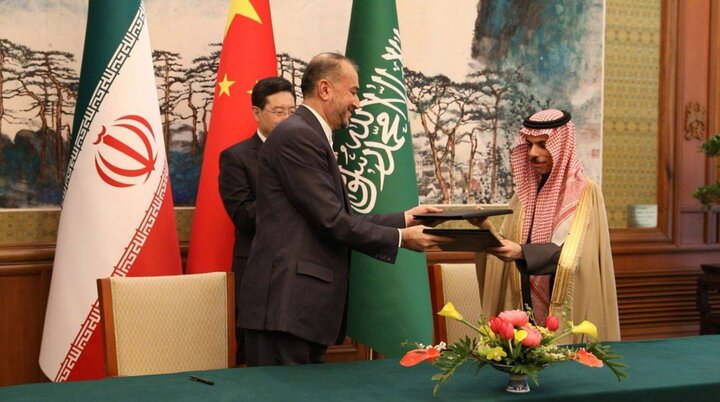
| Date | Event | Source |
|---|---|---|
| March 2023 | Beijing-brokered normalisation; embassies reopened | Multiple outlets |
| ~7 March 2026 | Saudi backchannel to Iran used “with increased urgency” | Bloomberg via Times of Israel |
| 21 March 2026 | Military attaché, deputy, and three staff expelled; ambassadors remain | The National, 2026-03-22 |
| 8 June 2026 | Qatar’s PM calls both Araghchi and Prince Faisal separately | Jordan News, 2026-06-08 |
| 3 August 2026 | Prince Faisal–Araghchi phone call on “reducing Gulf tensions” | Trend, 2026-08-03 |
| Late September 2026 | Araghchi presents seven-day Hormuz roadmap via Qatar | Al Jazeera, 2026-09-25 |
| 11 October 2026 | Araghchi calls Prince Faisal; offers to “facilitate dialogue” | Al Jazeera, 2026-10-12 |
| 15 October 2026 | Krimly confirms “direct channels of communication” in Cairo | PBS NewsHour, 2026-10-15 |
Who in Tehran Decides — and Do They Agree?
Iran’s diplomatic posture and its military positioning have been running in opposite directions. While Araghchi was calling Prince Faisal and posting that “the region’s crises have no military solutions,” other parts of the Iranian state were describing the Houthi campaign as an asset worth preserving. Mahdi Mohammadi, adviser to Iran’s parliament speaker Mohammad Bagher Qalibaf, said Iran could use Hormuz and Bab al-Mandab to keep oil prices from falling — a statement that framed the disruption of Saudi exports as a tool of Iranian economic policy (Amwaj Media, 2026-10-14).
The threat from Iran’s Supreme National Security Council was more direct. Secretary Mohsen Rezaei had warned in September that neighbours cooperating with the US aerial blockade would have “no flights” at airports (Amwaj Media, 2026-10-14). The airport strikes that followed aligned with that warning. Rezaei’s posture hardened further in October, when he described the latest US response to Iran’s proposals as “insufficient” (IRNA via CBS News, 2026-10-11). Andreas Krieg, of King’s College London, offered one framework for reading the split: “I think Iran is trying to turn Yemen from a military liability into a diplomatic asset” (Al Jazeera, 2026-10-12).
Krimly himself gestured at the incoherence on the Iranian side. “They don’t seem to be able to reach consensus on the needed solutions,” he told reporters (PBS NewsHour, 2026-10-15). The observation pointed to a problem Riyadh cannot resolve through diplomacy alone: if Tehran’s foreign ministry and its security establishment pursue different objectives — one seeking a settlement, the other extracting value from the war — then the channel to Araghchi may not reach the people who decide whether the strikes continue. And the Houthis’ refusal of the July meeting in Oman suggests that even when the diplomatic apparatus engages, Iran’s ability to direct outcomes at the table has limits.
Negar Mortazavi, of the Center for International Policy, described Iran’s ultimate aim as an informal non-aggression arrangement covering Iran, its allies, the United States and its regional partners, with Yemen and Lebanon included (Al Jazeera, 2026-10-12). Such an arrangement would require Washington’s participation — returning the problem, once again, to the party that has said it will do nothing before 3 November.
The Calendar as Coercion
Riyadh’s October events calendar functions as both a diplomatic priority and a vulnerability. The World Petroleum Congress opened on 11 October — the same day as the Araghchi call, and the same day a projectile hit Terminal 4, killing a Pakistani resident and wounding eleven (CNN, 2026-10-11). Riyadh Season is due to open 21 October. The EU-GCC summit follows on 24 October. The Future Investment Initiative runs from 26 to 29 October.
Each event represents a commitment Riyadh made when it believed the Houthi threat could be managed. National Day fireworks and drone shows had already been postponed indefinitely in September (Khaleej Times, 2026-09-23). The European Aviation Safety Agency widened its Saudi airspace guidance, and Lufthansa Group suspended Riyadh flights through at least 16 October (Fortune, 2026-10-09). Kuwait said Saudi security was “an inseparable part of the security” of Kuwait and the GCC (Fortune/AP, 2026-10-09), and Qatar called the 10 October strike “a direct threat to the security of the region” (Al Jazeera, 2026-10-10). Saudi Arabia, Egypt, Pakistan and Turkey issued a joint statement calling the attacks “a blatant violation of international law” (CBS News, 2026-10-11). The solidarity was wide but the pattern was the same — condemnations accumulating while international institutions pulled back and the Houthis’ operational tempo shaped Saudi Arabia’s diplomatic and commercial credibility.
Iran understands the calendar. Araghchi’s call came on the eve of the petroleum congress, not at random. Any diplomat tracking the schedule would recognise that October is the month Saudi Arabia can least afford escalation and most needs quiet — even a temporary ceasefire, even an informal one. The Makkah Defence Agreement’s activation on 5 October was designed to provide the security environment these events required (Al Jazeera, 2026-10-06). The airport strikes continued through 11 October, and the channel to Tehran remained the only track on which a pause was even theoretically available.
Frequently Asked Questions
What military support has the US provided Saudi Arabia during the war?
The US approved a potential $24.3 billion sale of 48 F-35A fighter jets in September 2026, though the deal still faces congressional review (The Aviationist, 2026-09-17). CNN reported that more than 100 US military advisers had been sent under a new joint command for intelligence support (CNN, 2026-10-11). Secretary of State Rubio said the US “intend[s] to live by” its defence agreement (The National, 2026-10-05), but the practical ceiling on that commitment remains undefined — Trump ruled out strikes on Iran before 3 November and declined both of the crown prince’s September requests to hit the Houthis directly (CNN, 2026-10-10; The National, 2026-10-08).
What is the Islamabad Memorandum?
A US-Iran memorandum of understanding brokered by Pakistan and signed electronically by the US and Iranian presidents. It entered into force on 18 June 2026 (Anadolu, 2026-06-18). Pakistan’s prime minister Shehbaz Sharif credited Saudi Arabia, Qatar, Turkey, and Egypt with helping reach the agreement. The memorandum was intended as a de-escalation framework, but by October its terms appeared to have frayed — SNSC Secretary Rezaei described the latest US response as “insufficient” (IRNA via CBS News, 2026-10-11), and the US naval blockade the memorandum was meant to address remained in force with 135 ships turned around since 14 July (CBS News, 2026-10-10).
Does Iran acknowledge its role in Houthi operations?
No. Spokesman Esmaeil Baghaei said “The Islamic Republic of Iran rejects any claim of Iran’s role in the operations of the Yemenis” (GV Wire/AP, 2026-10-12). The denial sits uneasily with Iran’s mediation offer: if Tehran insists it has no operational connection to the Houthis, it cannot credibly promise to deliver a ceasefire — yet that is precisely what Araghchi proposed on 11 October. Krimly directly contradicted the denial in Cairo, saying Iran “continues to arm, train and support the Houthi militia” (PBS NewsHour, 2026-10-15). The Houthis’ refusal to attend the July meeting in Oman (PBS NewsHour, 2026-10-15) suggests the question of Iranian command over Houthi decision-making is more complex than either side’s public framing acknowledges.
What happens after the 3 November US midterms?
Trump said the US would not attack Iran before the midterm elections (The National, 2026-10-08). The Wall Street Journal reported he expected “renewed bombing after the midterms” (Hurriyet/WSJ, 2026-09-26). If US military action resumes against Iran, the diplomatic space for a Saudi-Iran accommodation narrows — Riyadh’s channel would carry less value for Tehran with American ordnance already in flight. If Trump again declines to act post-election, Riyadh faces a longer war with fewer partners and a channel to Tehran that has produced conversation but no concessions. Either scenario changes the conditions that make Krimly’s dual posture — accuse and engage — tenable.