LONDON — Saudi Arabia is a belligerent in a war whose maritime consequences have trapped approximately 6,000 seafarers in and around the Strait of Hormuz. IMO Secretary-General Arsenio Dominguez confirmed the figure on October 18, calling the situation “severe and critical.” Riyadh has issued one public statement on the trapped crews — a multilateral call at the UN Human Rights Council in Geneva on September 23, delivered on behalf of a cross-regional group of states, not as a unilateral Saudi position.
That disparity — between a coalition war that contributed to Iran’s closure of the strait and a single diplomatic sentence about the sailors caught inside it — frames a question Riyadh has not answered since hostilities began on February 28. Twenty-four seafarers have died. The IMO’s evacuation corridor collapsed on June 25 when the container ship Ever Lovely was struck during the operation. Brent crude settled at $109.86 per barrel on October 19, and the IRGC claimed a second supertanker struck a mine on October 17 — a claim that US Central Command and UKMTO had not confirmed.
Table of Contents
- What Did the IMO Confirm About the Trapped Seafarers?
- Why Did the June Evacuation Collapse?
- What Has Saudi Arabia Said About the Trapped Crews?
- The Legal Obligations Riyadh Cannot Disown
- Who Bears Responsibility for Six Thousand Stranded Crew?
- Iran’s Double Track: Mediation and Mines
- Does the COVID Seafarer Crisis Offer a Precedent?
- What Would a Saudi-Led Humanitarian Corridor Require?
- The Sailors Riyadh Has Not Claimed
What Did the IMO Confirm About the Trapped Seafarers?
IMO Secretary-General Arsenio Dominguez confirmed on October 18 that “around 6,000 seafarers remain trapped since the beginning of the conflict,” describing their situation as “severe and critical.” Twenty-four seafarers have been killed since hostilities began on February 28, and the number of confirmed maritime incidents has risen from 100 as of October 9 to at least 113 by October 14, according to IMO data carried by Fox News.
The pace of attacks has accelerated. Between October 5 and 11, twelve ships were attacked — the highest weekly total since the war began, according to data compiled by BBC Verify from UK Maritime Trade Operations records. The IRGC Navy has maintained no direct communication with the IMO throughout the crisis. Dominguez cited fraudulent vessel registries as one driver of the escalation: “That’s one of the reasons that we’re seeing an escalation.”
At least nine ships carrying ninety-three crew have been effectively abandoned by their owners, the UN human rights office reported in July 2026. These crews have no employer, no relief rotation, and in some cases no guaranteed provisions. The figure predates the October escalation and has not been updated.
The trapped seafarers are not combatants. They are third-party nationals whose vessels entered the strait under commercial contract and cannot leave because a war they have no part in has sealed the waterway. Their situation has persisted since Iran declared the strait closed in a formal notification to the IMO in July, and nothing in the current trajectory suggests early relief.
The Middle East briefing 3,000+ readers start their day with.
One email. Every weekday morning. Free.
Why Did the June Evacuation Collapse?
The IMO’s evacuation operation ran for three days, from June 23 to June 25, before it was suspended. In that window, 2,900 seafarers were evacuated aboard 136 vessels, according to the IMO. The operation had targeted approximately 6,000 seafarers on roughly 400 vessels. It reached fewer than half before it stopped.
Two corridors were established. A northern route was coordinated with Iran. A southern corridor was facilitated by Oman and the United States along the Omani coastline, according to UN News. The dual-corridor design reflected the reality that no single party controlled enough of the waterway to guarantee safe passage on its own.
The operation collapsed on June 25 when the container ship Ever Lovely was struck while transiting the evacuation corridor. Dominguez stated the reasoning at the UN General Assembly in September: “We are not going to put the lives of innocent seafarers any more at risk. We have already lost too many.”
No replacement operation has been announced. The two corridors that briefly opened in June have not been reconstituted. The Ever Lovely strike demonstrated that neither Iran’s coordination of the northern route nor the US-Omani partnership on the southern corridor could guarantee the safety of vessels operating under an IMO humanitarian mandate. As of October 18, the number of trapped seafarers stands at approximately 6,000 — a figure that reflects both those the June operation could not reach and those who became stranded in the months since.
What Has Saudi Arabia Said About the Trapped Crews?
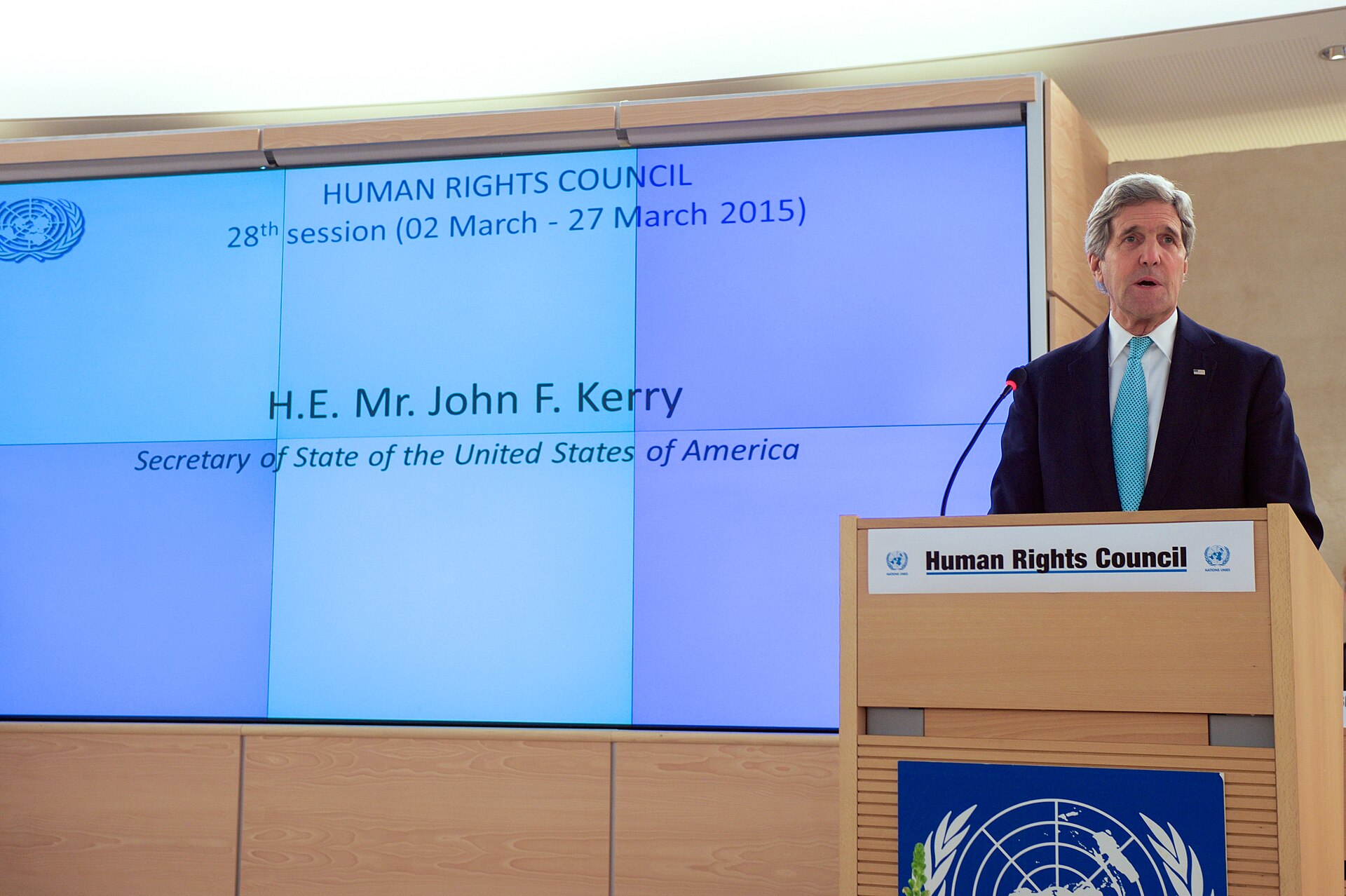
Saudi Arabia has made one documented public statement on the Hormuz seafarer crisis. Ambassador Abdulmohsen bin Khothaila, the kingdom’s permanent representative in Geneva, spoke at the 63rd session of the UN Human Rights Council on September 23. He called on states to protect seafarers facing “severe humanitarian conditions and risks to their fundamental rights,” according to Asharq Al-Awsat.
The statement was multilateral in design. Khothaila delivered it on behalf of a cross-regional group of states, not as a unilateral Saudi position. It named no party responsible for the conditions it described. It proposed no mechanism — no corridor, no fund, no naval escort — for relieving the stranded crews. It was, in diplomatic terms, a general call to principles addressed to the international community at large.
No subsequent Saudi statement has addressed the seafarer crisis directly. The Foreign Ministry under Prince Faisal bin Farhan has issued no public comment on the trapped crews. The Defence Ministry has published no operational guidance on humanitarian passage. The Saudi Press Agency has carried no announcement. State-controlled Saudi media, which covers routine diplomatic engagements and trade summits in granular detail, has published no feature and no editorial on the seafarers trapped by the kingdom’s war. Six weeks separate the Khothaila statement from the IMO’s October 18 confirmation that the crisis remains “severe and critical” — six weeks in which the IRGC claimed a second mine strike and the weekly attack rate reached a record.
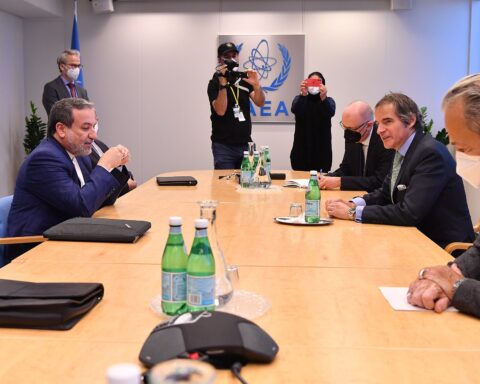
Compare this to Oman. Foreign Minister Badr Albusaidi, in talks with Iran’s Araghchi, pressed publicly for the “urgent humanitarian need to free seafarers,” according to The Tribune India. Oman is not a belligerent. It shares jurisdiction over the Strait of Hormuz with Iran and facilitated the southern evacuation corridor in June. Riyadh, whose coalition operations contributed to the conditions under which Iran laid the mines that shut the strait, has said less about the trapped crews than a neutral neighbour.
The Legal Obligations Riyadh Cannot Disown
Saudi Arabia is a party to the United Nations Convention on the Law of the Sea, the International Convention on Maritime Search and Rescue of 1979, and the Maritime Labour Convention of 2006. It sits on the IMO Council — the Organisation’s executive body, responsible for maritime safety and seafarer welfare. These are not abstract memberships. Each carries duties that apply during armed conflict, and a Council member whose coalition’s operations contributed to a crisis trapping 6,000 non-combatant crew has an institutional obligation that extends beyond one multilateral statement delivered in Geneva.
UNCLOS Article 98 requires states to ensure that masters of vessels flying their flag render assistance to any person found in distress at sea. The SAR Convention obliges parties to coordinate search and rescue operations regardless of the nationality or circumstances of those in distress. Both duties persist in wartime. Saudi Arabia’s obligations under these instruments are not suspended by its status as a belligerent in the conflict that produced the crisis.
The question is not whether Riyadh planted the mines. It did not. Iran did. The question is whether a belligerent whose military operations contributed to the escalation that triggered Iran’s closure bears a proportionality obligation toward the non-combatant mariners trapped by that closure. International humanitarian law imposes proportionality requirements on all parties to an armed conflict. Six thousand trapped seafarers and twenty-four dead represent civilian harm on a scale that demands, at minimum, a public accounting from every belligerent — not only the one laying mines.
The Maritime Labour Convention, as amended in 2014, places further obligations on flag states and shipowners for abandoned crew. But as the abandonment cases documented by the UN human rights office show, when the owner disappears, the flag state becomes the last line of defence. When that flag state is a registry of convenience — the kind Dominguez has cited as an escalation factor — there may be no enforceable defence at all.
Who Bears Responsibility for Six Thousand Stranded Crew?
Responsibility for the trapped seafarers is distributed across at least four categories of actors, and Saudi Arabia’s position in that distribution is more exposed than the kingdom’s public posture suggests. The common framing — that Iran alone bears responsibility because Iran laid the mines — obscures the chain of causation. Mines do not enter the water without a war, and the war that produced this crisis has multiple authors.
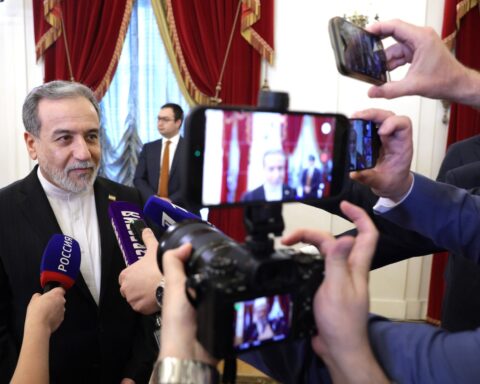
Iran bears the most direct operational responsibility. The IRGC laid the naval mines, imposed a permit regime on the strait, and warned that any crossing without its authorisation is “unacceptable and extremely dangerous,” according to Al Jazeera. Iran has offered no humanitarian commitment to the trapped third-party crews. Araghchi’s diplomatic track — a seven-day Hormuz reopening proposal conveyed through Qatar, as reported by Al Jazeera on September 25 — frames the seafarer crisis as entirely consequential to the American blockade and US-Israeli military action.
The coalition in which Saudi Arabia is a principal partner triggered the military escalation that prompted Iran’s closure. The strained coordination between Riyadh and Washington has further complicated the maritime picture. US Central Command confirmed that 135 ships had been turned around since the blockade took effect on July 14, according to CBS News on October 10. President Trump described the Hormuz blockade as “in full force” on October 8, as reported by The National.
Shipowners who abandoned their vessels created the immediate humanitarian exposure. Flag states that registered vessels under flags of convenience compounded it. The ITF and the UN human rights office have called for accountability, but enforcement mechanisms are weak and the crisis is moving faster than any institutional response.
Saudi Arabia sits at the intersection of these failures. It is a coalition belligerent, an OPEC producer benefiting from elevated crude prices, a member of the IMO Council, and a state that has not proposed any mechanism for relieving the stranded crews. The Khothaila statement exists, but it is calibrated to avoid ownership of a crisis the kingdom’s war helped produce.
Iran’s Double Track: Mediation and Mines
Iran has pursued two strategies simultaneously. Araghchi’s diplomatic circuit — mediation offers through Qatar, engagement with Oman — runs alongside IRGC naval operations that have made the strait progressively more dangerous for the very seafarers Iran claims to be willing to release.
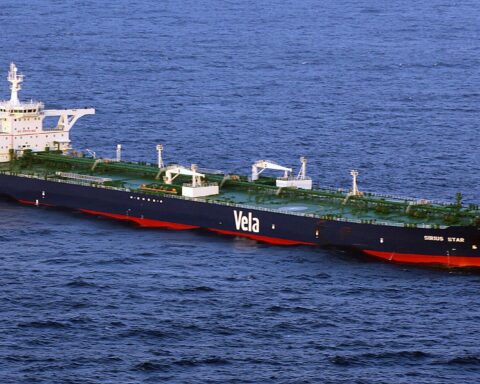
On October 17, the IRGC Navy claimed that a second supertanker struck a naval mine in the Strait of Hormuz. The vessel was not named. It reportedly carried more than two million barrels of crude and had been transiting what the IRGC called an “illegal” route with its transponders off, according to Iran International. As of October 17, neither US Central Command nor UKMTO had confirmed the claim. It followed the first confirmed mine strike on a supertanker earlier in October, which the IRGC said resulted in a fire.
The escalation is documented. Iran struck Greek and Chinese tankers it designated non-compliant, according to TradeWinds on October 13. Iran lodged a VHF Channel 16 complaint with the IMO the same day, per Lloyd’s List. The attacks between October 5 and 11 reached record weekly levels, per NBC News on October 17. The pattern is consistent with what this publication has described as Iran arming the war it says it wants to mediate.
The economic consequences have been severe. VLCC rates on the Gulf-to-China route reached $1.2 million per day, against approximately $80,000 per day a year earlier, according to LSEG data reported on October 5. Brent crude’s December 2026 contract settled at $109.86 per barrel on October 19, a 3.59 percent gain, as reported by commodity-board.com. The insurance market has reinforced the physical blockade: the Joint War Committee listed Hormuz as a high-risk area, and underwriters have priced passage at levels that amount to a de facto commercial closure. Reported Hormuz oil flows have fallen to approximately 12 million barrels per day in mid-October from a pre-war baseline of 15 to 17 million barrels per day, according to Kpler data cited by Reuters.
Araghchi’s seven-day Hormuz reopening offer — a US sanctions waiver, the lifting of the blockade, and the release of approximately $12 billion in frozen assets — was reported by Al Jazeera on September 25. The conditions exceed what Washington can accept. For the 6,000 trapped crews, the diplomatic channel they depend on for release is controlled by the same state whose navy is making their waters more lethal.
Does the COVID Seafarer Crisis Offer a Precedent?
The closest precedent is the COVID-19 crew-change crisis. At its peak in October 2020, approximately 400,000 seafarers were stranded aboard ships past their contract expiry. A joint statement by seven UN agencies on September 11, 2020 urged states to avert a humanitarian catastrophe. The mechanism that broke the deadlock was political: governments classified seafarers as essential workers, enabling crew changes even as border restrictions persisted.
The parallel is instructive but limited. In 2020, no party was actively attacking vessels. The obstacle was bureaucratic — closed borders, quarantine protocols, cancelled flights. Governments solved it by changing rules. In 2026, the obstacle is kinetic. Mines are in the water. The Ever Lovely was struck during a UN-coordinated humanitarian operation. Changing the rules is insufficient when the passage itself is a combat zone.
The COVID experience does, however, reveal the political precondition for any multilateral rescue: mutual interest. In 2020, every state wanted the supply chain moving — port states, flag states, labour-supply states, and importers all shared an incentive to act. In 2026, Iran has a strategic interest in keeping vessels trapped. The blockade is a leverage instrument. Araghchi’s seven-day reopening offer made that explicit. Any rescue mechanism for the Hormuz seafarers must contend not just with logistical danger but with an adversary for whom the crisis itself is a bargaining asset. The conditions attached to the reopening offer — sanctions relief, asset release, blockade withdrawal — make the seafarers functionally hostage to a negotiation in which they have no representation and no voice.
The economic pressure that eventually forced action in 2020 — supply chain disruptions, port congestion, fatigue-related incidents — has a Hormuz equivalent in the shipping rate explosion and constrained export corridors documented by the market data. The economic argument for intervention exists. What does not exist is a belligerent willing to lead it.
What Would a Saudi-Led Humanitarian Corridor Require?
A Saudi-led or Saudi-backed humanitarian corridor would require Riyadh to do three things it has so far avoided: acknowledge its contributory role in the crisis, engage directly with Iran on a maritime framework the kingdom currently treats as illegitimate, and commit resources to a corridor that the June experience proved cannot be assumed safe.
The June evacuation’s architecture offers a template. Two corridors moved 2,900 seafarers in three days before the operation was suspended. A renewed effort would need to reach the approximately 6,000 remaining crew across several hundred vessels. It would need guarantees from the IRGC that evacuation-flagged vessels would not be struck — guarantees the June operation briefly obtained and then lost when the Ever Lovely was hit.
Saudi Arabia’s leverage is not negligible. Riyadh has maintained a direct diplomatic channel with Tehran throughout the crisis. It sits on the IMO Council. Its OPEC leadership gives it weight in any negotiation touching oil flows. And its war budget — funded by crude revenues that have risen with every barrel priced into the Hormuz premium — ties the kingdom’s finances to the very blockade that traps the crews. As this publication has noted, Riyadh is absorbing the cost of Washington’s midterm pause on Iran, but it has not absorbed the cost of the sailors trapped by the same conflict.
The EU-GCC summit originally scheduled for October 24 in Riyadh has been postponed, the EU Council announced on October 15. No new date has been set. That forum would have placed European leaders across the table from Gulf counterparts in the Saudi capital — the nearest multilateral setting in which the seafarer crisis could have been raised at the highest level. Its postponement narrows the diplomatic window further.
Without a Saudi initiative or an equivalent push by another coalition partner, the default outcome is continued inaction: the crews remain at sea, the IMO’s authority erodes, and the kingdom that helped trigger the war accepts no visible obligation to the civilians its conflict has trapped.
The Sailors Riyadh Has Not Claimed
The Hormuz seafarer crisis is not a peripheral consequence of the Saudi-Iranian conflict. It is a direct product of it. Coalition military operations contributed to the escalation that prompted Iran to close the strait. Iranian mines, permit regimes, and IRGC enforcement sealed it. The 6,000 crew caught between those positions are victims of a war between states, not between the shipping companies that employed them.
Saudi Arabia’s record is one multilateral statement in seven months, delivered by an ambassador in Geneva on behalf of a group of states, in a register that named no party and proposed no action. It is the minimum a state can say without saying nothing. The contrast with Oman — a non-belligerent that facilitated the June corridor and whose foreign minister pressed publicly for the humanitarian release of crews — is not flattering to a kingdom that claims regional leadership.
The IMO’s authority has been tested and found wanting. Dominguez can quantify the dead, confirm the crisis, and suspend the corridor. He cannot compel a belligerent to act. That compulsion, if it comes, will arrive from political pressure by states with enough at stake to force the issue. Saudi Arabia is such a state. The Dominguez confirmation on October 18 was not news to Riyadh. The kingdom’s IMO delegation and its mission in Geneva have tracked the crisis from its origin. It has the legal obligations, the institutional standing, the diplomatic channels, and the economic leverage. What it has not produced, in seven months of war, is a single proposal to bring the sailors home.
Frequently Asked Questions
What have seafarers themselves reported about conditions in the strait?
Stephen Cotton, secretary-general of the International Transport Workers’ Federation, described “an enhanced state of fear” among crews and said that “military forces boarding ships like it’s the 17th century, and that’s terrifying,” in remarks reported by Al Jazeera on May 8, 2026. An unnamed senior officer told the same outlet: “I told my crew how to run, where to jump from, and what to carry if something happens.” An Indian seafarer identified only as “Anish,” stranded at an Iranian port, said: “Our minds are terribly distracted.” The ITF has called for seafarers’ right to refuse transits of zones the Joint War Committee has listed as high-risk.
What protections does the Maritime Labour Convention provide for abandoned crews?
The Maritime Labour Convention of 2006, as amended in 2014, requires shipowners to guarantee up to four months’ outstanding wages, repatriation at the owner’s expense, and ongoing provision of food, water, and medical care for any crew member abandoned aboard a vessel. When the owner defaults, the obligation passes to the flag state. In practice, vessels registered under flags of convenience often have no flag state willing or able to enforce these provisions, leaving abandoned crew dependent on port-state intervention or humanitarian organisations.
Has any state formally proposed a new evacuation corridor?
No state has formally proposed a replacement for the June operation. Oman’s Foreign Minister Badr Albusaidi has pressed for the “urgent humanitarian need to free seafarers” in talks with Iran’s Araghchi, according to The Tribune India. Jorge Moreira da Silva, head of UNOPS, described a “double blockade on shipping” at the UN General Assembly in September, according to TRT World. The IMO has indicated that any future corridor would require guarantees that the June failure — the striking of the Ever Lovely during an active humanitarian transit — would not be repeated.
How did the international community resolve the COVID-19 seafarer crisis?
By May 2021, fifty-five IMO member states had classified seafarers as essential key workers, enabling crew changes even under pandemic border restrictions. The IMO also adopted Resolution MSC.519(106), originally in the Ukraine context, calling for special protection of search and rescue vessels during armed conflict. Neither instrument has been invoked for the Hormuz crisis. The critical structural difference is that in 2020, all parties wanted ships to move. In 2026, one party — Iran — treats the immobility of commercial vessels as a strategic asset, making any political solution contingent on concessions the coalition has not offered.