
CAIRO — Egypt’s parliament adjourned without voting on a military deployment to defend Saudi Arabia. The UAE reportedly agreed to resume funding anti-Houthi proxy forces after a nine-month rupture that came to a head when Saudi-led coalition aircraft bombed a weapons shipment that had arrived from the Emirates. Both are being presented as the reassembly of a coalition that, in its previous incarnation between 2015 and 2019, failed to defeat the Houthis. The question hanging over every diplomatic communiqué this week is whether two returning partners and a rebranded war add up to anything the first attempt did not.
The stakes are not abstract. Houthi strikes have killed at least 13 people at King Khalid International Airport in a single day and reached Aramco’s Dhahran headquarters. Egypt’s National Defence Council, chaired by President Abdel Fattah el-Sisi, has pledged “all necessary and possible forms of support” to Saudi Arabia — but the constitution requires a two-thirds parliamentary supermajority before a single soldier can be sent abroad, and the vote that was supposed to happen on 19 October has been pushed to 26 October. The UAE deal, sourced only to unnamed officials speaking to The Guardian, may amount to money for the Giants Brigades rather than anything resembling a military return. Riyadh is trying to rebuild a coalition on promises, proxies and a parliamentary schedule that has already slipped once.
Table of Contents
- The Rupture That Came Before the Reunion
- What Is Egypt’s Parliament Actually Being Asked to Do?
- Why Sisi Cannot Say Yes Without Conditions
- What Is the UAE Actually Committing To?
- Why Did the Original Coalition Fail?
- Are the Houthis Stronger Than in 2015?
- Egypt’s Own Red Sea Problem
- What Would Egyptian and Emirati Roles Actually Look Like?
- The Missing Piece: No US Combat Role
- Frequently Asked Questions
The Rupture That Came Before the Reunion
The Saudi-Emirati partnership in Yemen did not end in 2019 with a tidy strategic redeployment. It ended in late December 2025 with Saudi-led bombs falling on weapons shipped from the UAE. On 29 December, Presidential Leadership Council chief Rashad al-Alimi dissolved Yemen’s defence pact with the UAE, declared a state of emergency and imposed a blockade on ports and crossings. The next day, coalition aircraft struck weapons and vehicles unloaded at Mukalla from two ships that had sailed from Fujairah, and Saudi Arabia’s foreign ministry called the UAE’s steps “extremely dangerous” and a threat to national security — a “red line.” Abu Dhabi denied shipping weapons and said it would withdraw its remaining forces “of its own volition.”
By 9 January 2026 the Southern Transitional Council’s secretary-general had announced the group’s dissolution from Riyadh, and Saudi-backed forces had retaken Hadramout and the presidential palace in Aden. The STC’s leader, Aidarous al-Zubaidi, had fled to the UAE and been charged with treason. CNN later reported that Saudi Arabia had ended its partnership with the UAE “late last year” over Abu Dhabi’s backing of a rival Yemeni force. What followed was not a cooling of relations. It was a severance — compounded in April 2026 when the UAE announced it would leave OPEC and OPEC+, effective 1 May.
That is the relationship now being asked to bear the weight of a renewed military campaign, on the strength of a reported October deal that neither Abu Dhabi nor Riyadh has confirmed. Its only source is unnamed Yemeni officials speaking to The Guardian, carried by Yahoo and Newsmax on 18 October, and its terms are set out below. What is being called a reunion is, so far, a leak about money.
What Is Egypt’s Parliament Actually Being Asked to Do?
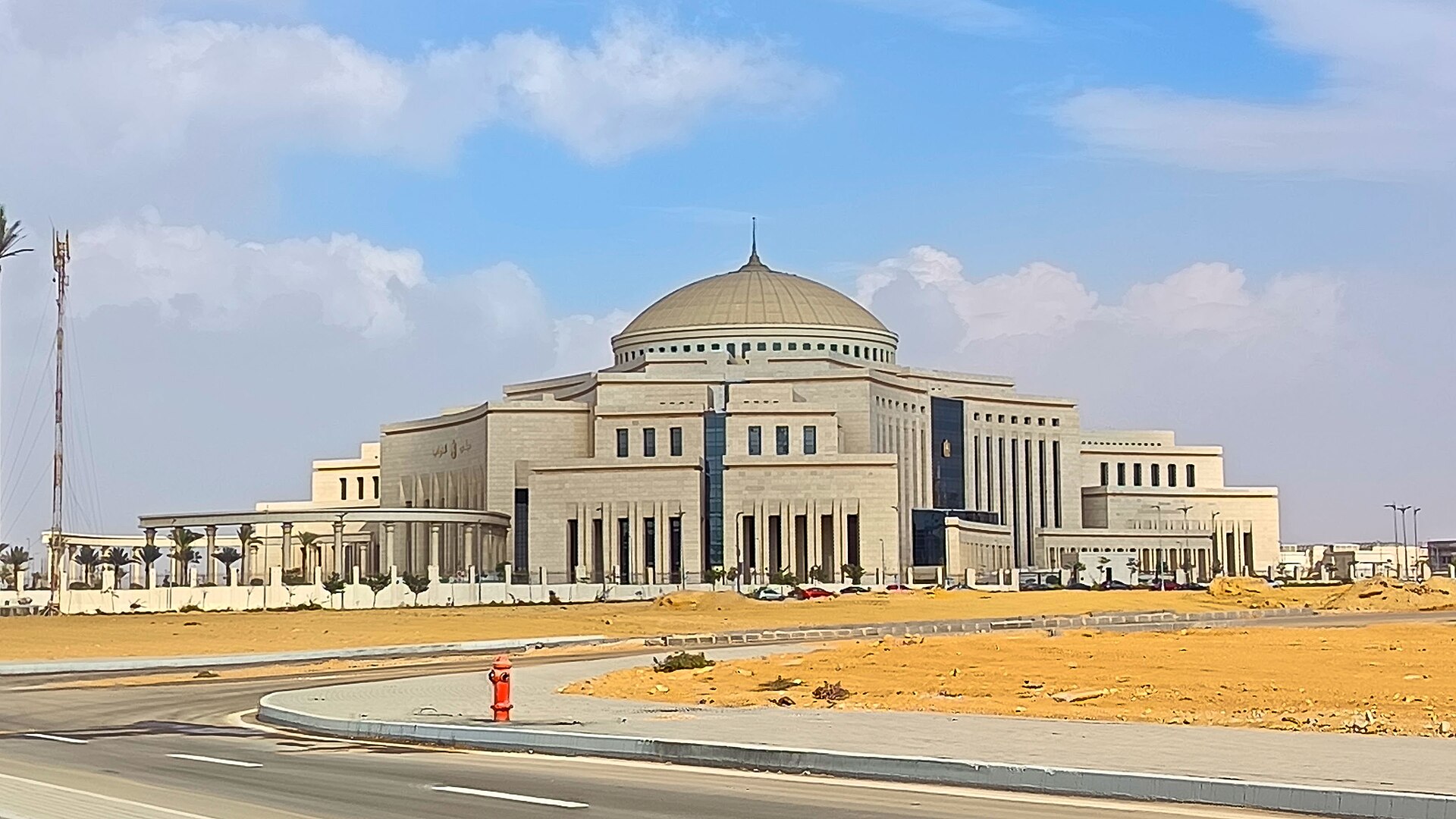
Under Article 152 of Egypt’s 2014 constitution, deploying troops abroad requires approval from the National Defence Council — which Sisi chairs — followed by a two-thirds majority in the 596-member House of Representatives. That means approximately 398 votes, and both steps must be completed before any Egyptian unit can deploy.
The Middle East briefing 3,000+ readers start their day with.
One email. Every weekday morning. Free.
On 18 October, the National Defence Council met and issued its pledge of support to Saudi Arabia, but the statement did not announce a troop deployment. The specific question of authorization was sent to parliament, which convened on 19 October and adjourned without a vote.
The adjournment was not procedural theatre. Egypt’s Social Democratic Party told its members to abstain, citing a lack of information about the mission’s objectives, duration, cost and troop risks. That dissent matters less for its vote count than for what it reveals about the state of information available to legislators. A two-thirds supermajority is a high constitutional bar, and the government has not publicly explained what “defend Saudi Arabia” would mean operationally, how long it would last or what it would cost.
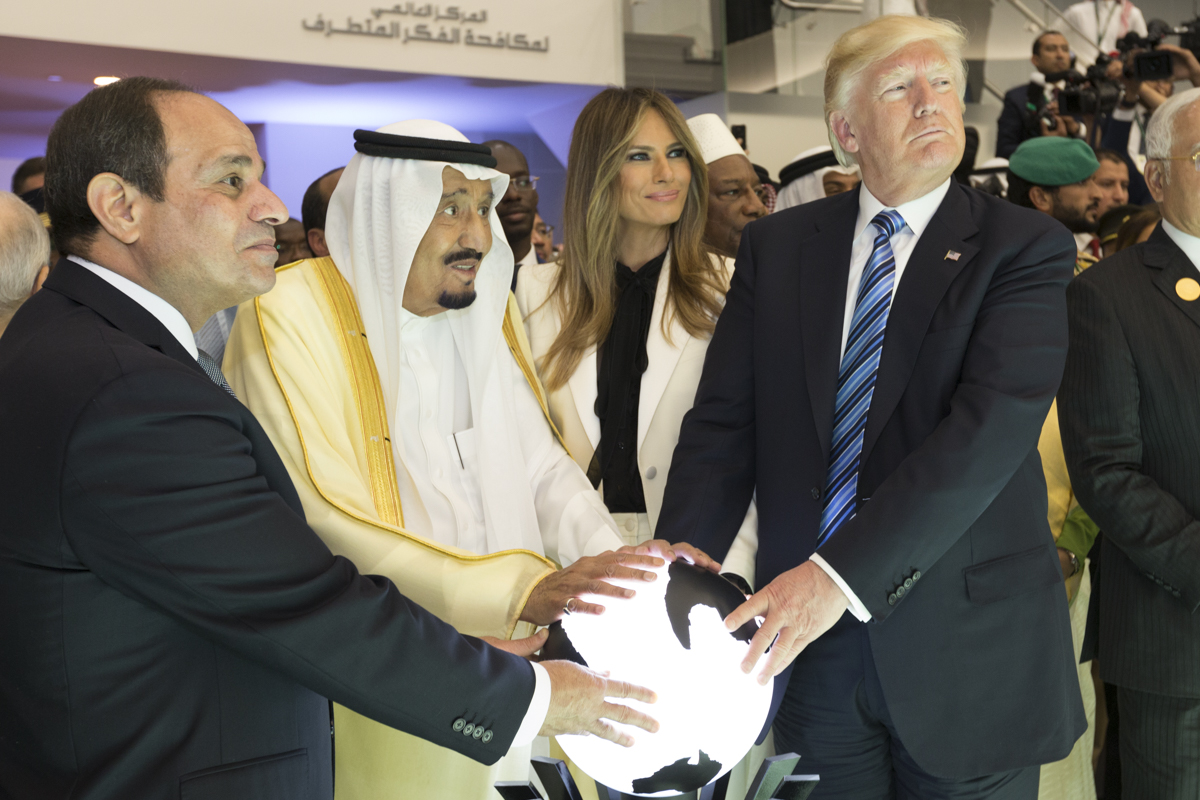
Sisi has been careful with language. He told reporters that it was “inconceivable” for Egypt to allow Saudi Arabia’s security to be harmed. He said Egypt would take “any measure” needed. But he also framed the mission explicitly as “defensive” — “only to defend Saudi Arabia,” “not to fight anyone or attack anyone” — and said Egypt would act only on a formal Saudi request, which has not been publicly issued. Egypt’s Foreign Minister Badr Abdelatty said joining the Makkah Joint Defence Agreement is “under serious consideration,” but Egypt is not a founding signatory and has not signed it. Every sentence from Cairo contains an escape clause.
Why Sisi Cannot Say Yes Without Conditions
Egypt’s caution has a name and a date: Yemen, the 1960s. Between 1962 and 1967, Gamal Abdel Nasser deployed tens of thousands of Egyptian troops into the North Yemen civil war. The intervention stretched for five years, inflicted heavy Egyptian casualties, strained Saudi-Egyptian relations and became Egypt’s Vietnam — a quagmire that bled Cairo while Nasser’s prestige rotted. Analyst Thomas Bonnie James, speaking to Al Jazeera, invoked the precedent directly: “Defend the kingdom, don’t take ownership of Yemen.”
Sisi has personal reasons to tread carefully. Egypt’s economy depends on Gulf money, particularly Saudi investment, and Riyadh’s financial hold on Cairo is substantial. When MBS visited Sisi in Cairo on 15 September 2026, Egypt’s presidency said Saudi and Gulf security is “inseparable from Egypt’s” — language that reads like a blank cheque until you realize it came a month before any parliamentary action. The MBS-Sisi relationship runs on mutual dependency: Saudi investment for Egyptian loyalty, Egyptian manpower for Saudi defence gaps. Neither side can afford to break the exchange, but Egypt cannot afford to write its own version of Nasser’s catastrophe either.
And the Houthis have noticed. Yahya Al Raei, the speaker of the Houthi-run parliament, wrote directly to Egypt’s parliament speaker — not to Sisi — warning that intervention “would pose a grave danger to its national security.” He accused Saudi Arabia of “aggression and siege against Yemen for over 12 years” and called for a “courageous stance.” The targeting was deliberate: a message to legislators, not to the executive, aimed at the democratic process Cairo is constitutionally required to follow.
What Is the UAE Actually Committing To?
The underlying report in The Guardian, via unnamed Yemeni sources, said the UAE agreed to resume financial support to the Giants Brigades — the southern Yemeni fighting force Abu Dhabi trained and funded before its 2019 drawdown — in exchange for Saudi Arabia providing air cover. That is a funding arrangement for a proxy force, not a return to coalition combat operations.
The distinction between what headlines say and what sources support is wider for the UAE than for any other party in this reassembly. Early headlines framed the story as a UAE return to the Yemen war, yet no official UAE government statement has confirmed the deal. The UAE declared “full solidarity” with Saudi Arabia after the 10 October KKIA strike, but solidarity statements are diplomatic boilerplate, not operational commitments. The 29 September visit by UAE Vice President Sheikh Mansour bin Zayed to Riyadh, with national security and crisis-management chiefs in tow, signalled something more than routine: Defence Minister Prince Khalid bin Salman was present.
Before 2019, the UAE had trained approximately 90,000 Yemeni tribesmen and militia fighters, according to NPR. The Giants Brigades recently delivered their first major territorial gain in years — cutting the main road linking Mocha with the Bab al-Mandeb strait by 12 October, according to Al Jazeera. The gain came a month after the Houthis seized the port of Mocha on 10 September, when a Houthi commander claimed Bab al-Mandeb “can be considered under the administration of our forces,” according to The National. That tactical success may explain why the UAE is prepared to resume funding. But funding a proxy and re-entering a war are not the same thing, and the gap between them is where Abu Dhabi’s actual commitment lives.
Why Did the Original Coalition Fail?
The Saudi-led coalition entered Yemen in March 2015 with air superiority, Gulf money, American logistical and intelligence support, and Egyptian naval and air units among its contributors. It never converted that advantage into control of the ground. By every operational measure, the first war ended without achieving its stated goal of restoring the internationally recognized Yemeni government to full sovereignty.
Seven years in, a truce signed in 2022 papered over the stalemate. That truce collapsed in July 2026, and the Houthis resumed strikes that now reach Riyadh’s airport, Aramco’s headquarters and Saudi cities from Najran to Dammam.
Why it failed is not a mystery. Philip Gordon, a former White House Middle East coordinator, said of the UAE’s 2019 withdrawal that behind the official explanation was “frankly, just a realization that their goals are not being achieved.” Houthi forces adapted to airstrikes, moved through urban terrain, and used Iranian-supplied weapons to turn the coalition’s technological advantage into an expensive stalemate. The air war produced a humanitarian catastrophe without a military victory.
The 2026 version of the coalition starts from a worse position. Pakistan’s defence minister said combat “is practically being conducted by Saudi Arabia’s own forces,” while CNN reported Riyadh had stopped “short of any major deployment of its own troops.” The Makkah Joint Defence Agreement, activated on 5 October with Pakistani and Turkish commitments, is designed to fill the gap — but Turkey’s parliament had not ratified the pact as of 6 October, and the size and role of the Pakistani and Turkish forces remain undefined. Egypt has not yet voted. The coalition is assembling on paper faster than it is assembling on the ground.
Are the Houthis Stronger Than in 2015?
By reach, the answer is yes. In October 2026 the Houthis struck King Khalid International Airport in Riyadh in a single attack on 10 October that killed 13 people — Al Jazeera put the injured at 309, the BBC at 308 — and targeted Dammam airport the next day.
On 14 October a missile attack caused what the Saudi energy ministry called a “limited fire” at Aramco’s Dhahran headquarters complex. Saudi Arabia said it intercepted a cruise missile over Medina, and the Houthis have declared Saudi airspace “unsafe” — exempting only Mecca and Medina. Their arsenal now spans cruise missiles, ballistic missiles and long-range drones.
The 4 October launch of Operation “Dawn of Yemen” saw the coalition announce 100 jets flying sorties. The Houthis responded not with retreat but with escalation: airport strikes on 6, 7, 8, 10 and 11 October killed 20 people across Riyadh and other Saudi airports, a total summed from Saudi civil aviation statements reported by the BBC. Saudi Arabia accused Tehran of “encouraging” the Houthi attacks, and Foreign Minister Abbas Araghchi simultaneously offered to “facilitate dialogue between Saudi Arabia and Yemen” — the two-track posture of arming one side while mediating for the other.
Thomas Bonnie James was blunt about the military problem: defeating the Houthis outright is “a tall order.” The group’s missiles and drones are now being fired at targets from Medina to the Gulf coast. A coalition that could not beat a less capable version of this enemy with more partners and American logistical support is now being asked to succeed with fewer assets, a constitutional standoff in Cairo and a funding arrangement in Abu Dhabi.
Egypt’s Own Red Sea Problem
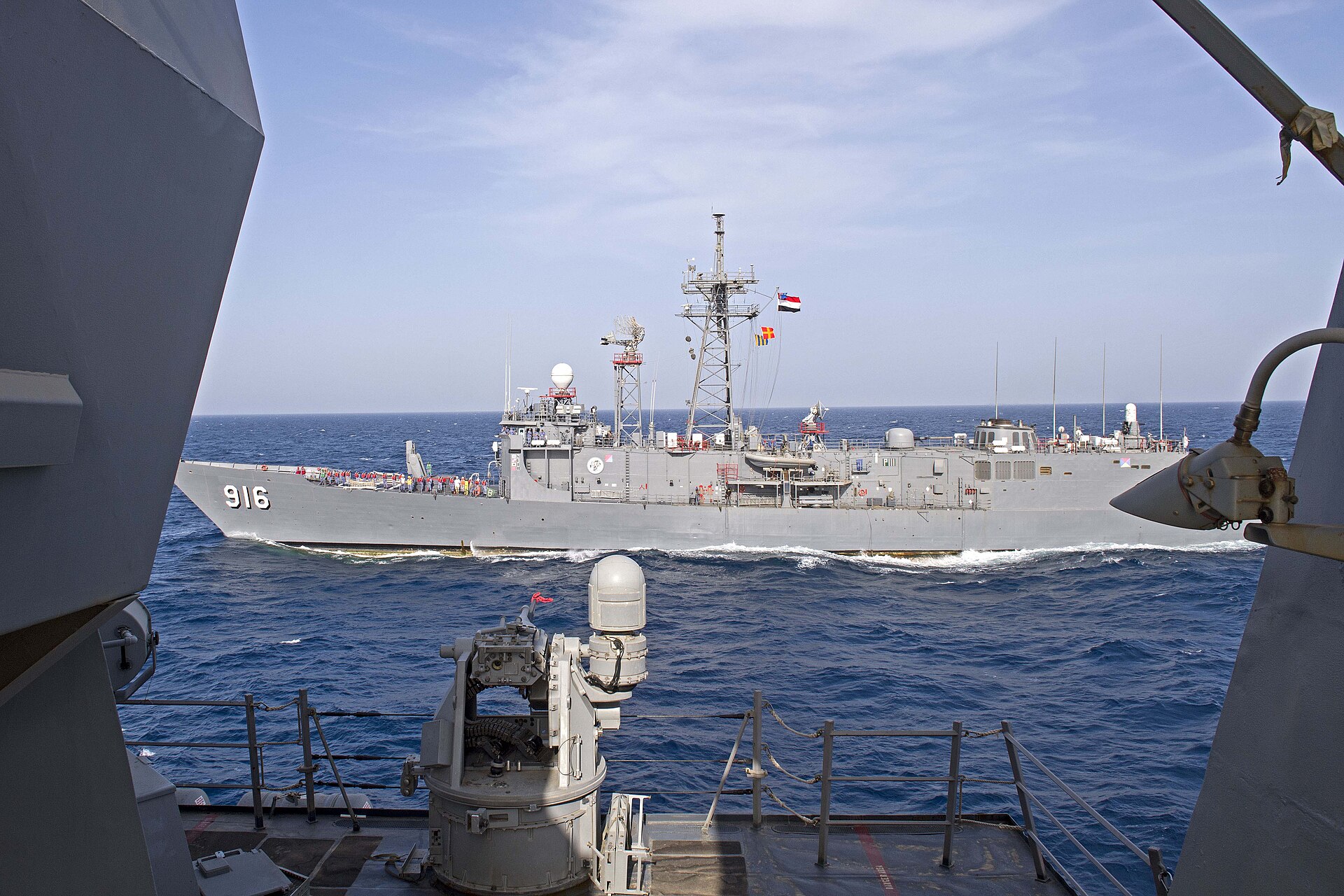
Egypt’s interest in Saudi security is not sentimental — it is economic and geographic. The Bab al-Mandeb strait sits at the southern entrance to the Red Sea, and the Suez Canal’s traffic depends on ships being willing to pass through it. The Houthis declared a maritime blockade of Saudi Arabia on 20 July, and the Saudi Press Agency confirmed days later that the tanker Encelia had been hit, with all crew safe, according to Al Jazeera. Those attacks, on top of the disruption to Gulf shipping corridors from Iran’s Hormuz campaign, threaten the route that carries a substantial share of Egypt’s canal revenue. Egypt joined Saudi Arabia’s multinational maritime defence coalition for the Red Sea, Bab al-Mandeb and Gulf of Aden, launched on 30 July 2026, placing it inside the naval framework even while staying outside the Makkah pact.
There is also the human equation. Saudi Arabia hosts a large Egyptian workforce, and its exposure became personal when an Egyptian flight attendant was among those killed in the 10 October KKIA strike. Saudi Arabia, Egypt, Pakistan and Turkey issued a joint condemnation of Houthi attacks on 11 October, calling them “a blatant violation of international law.” That statement carried Cairo’s name alongside Riyadh’s in a way that made the sideline posture harder to maintain.
But there is a difference between condemning attacks and sending troops, and the Grand Imam of al-Azhar — Cairo’s most prominent religious authority — urged Arab and Muslim leaders to mediate and avert further bloodshed rather than escalate. Egypt’s calculation is threefold: protect the Red Sea trade route, maintain the Saudi financial relationship, and avoid the quagmire that broke Nasser’s army. The question is whether all three objectives can survive contact with the same war.
What Would Egyptian and Emirati Roles Actually Look Like?
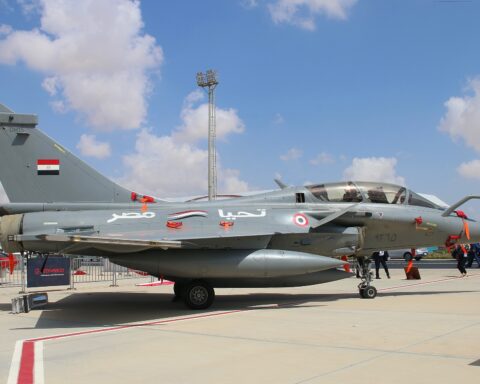
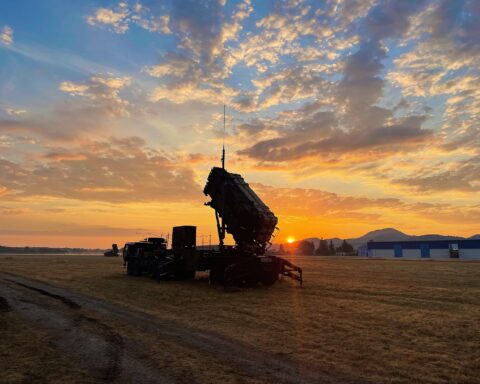
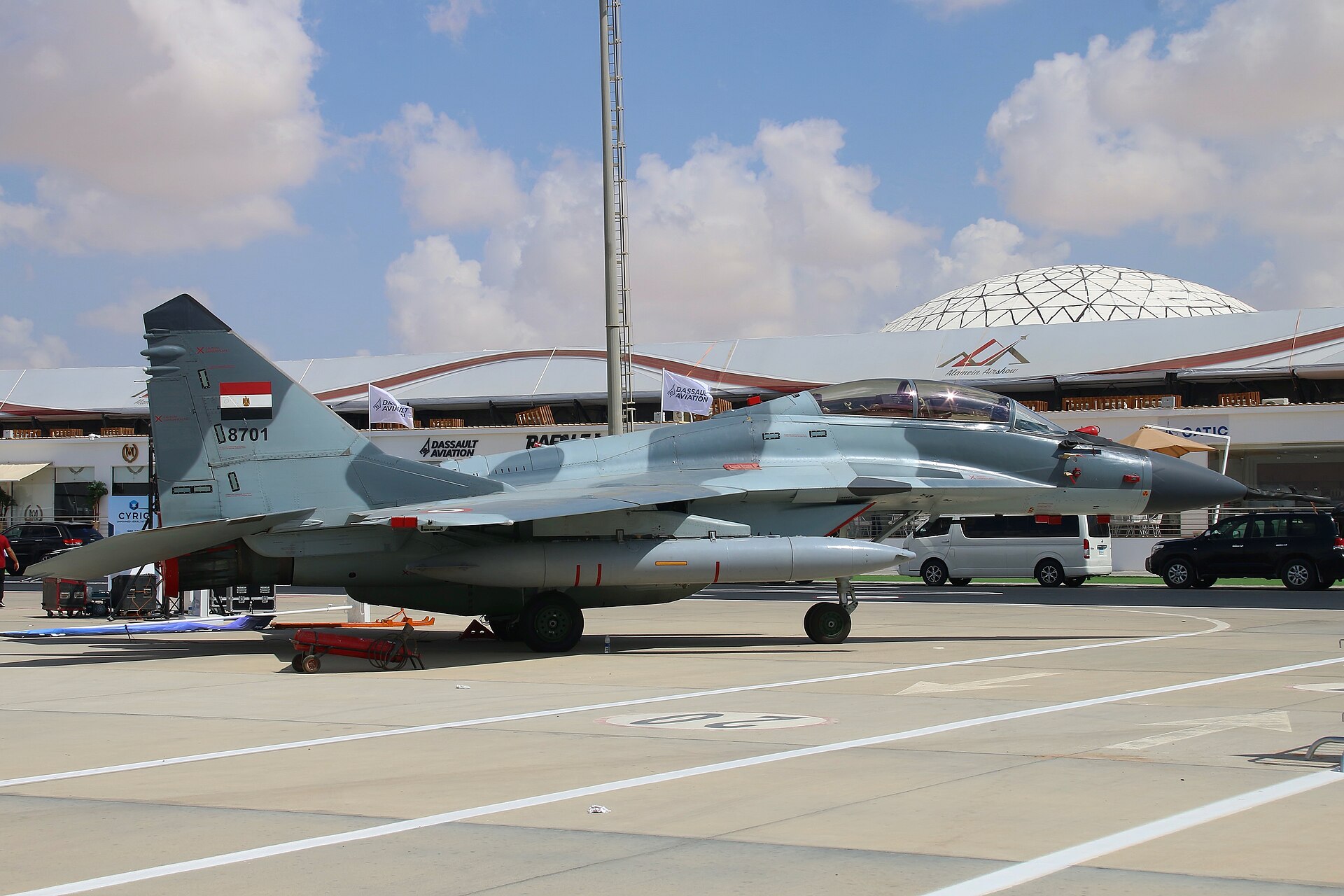
The analysts who have looked at this question are not expecting tank columns rolling south. Thomas Bonnie James told Al Jazeera that Egypt’s military role would most likely focus on “air and missile defence around critical infrastructure, intercepting drones, naval escort and intelligence sharing” — all conducted inside Saudi Arabia, not inside Yemen.
Defence analyst Alexandru Hudisteanu said counter-drone and anti-missile support was “highly probable” if Egypt’s parliament authorizes deployment. Both assessments describe a defensive perimeter, not an expeditionary campaign.
James also drew a structural distinction: authorization would shift Egypt “from a multilateral maritime framework to a bilateral military commitment.” That shift matters because it changes Cairo’s legal exposure, its political risk and its exit options. A naval escort in the Red Sea under a multilateral coalition can be scaled down or pulled quietly. A bilateral military commitment to Saudi Arabia, authorized by parliament under Article 152, creates obligations that are harder to walk away from — and the Houthis have already warned that those obligations carry consequences.
The UAE’s role is even more constrained. If the reported deal is accurate, Abu Dhabi is writing cheques to the Giants Brigades while Saudi Arabia provides air cover. That keeps Emirati boots off Yemeni soil — a lesson the UAE learned between 2015 and 2019, when its ground presence generated casualties, international criticism and a stalemate. The 2019 withdrawal was framed as a “strategic redeployment” from Hodeidah, a framing Gordon’s verdict quoted above punctures.
The UAE also has its own Iranian exposure to manage. On 18 August 2026, Abu Dhabi said two ballistic missiles were launched from Iran, one landing inside its territorial waters, and on 19 August it imposed an indefinite halt to all trade and financial transactions with Tehran, which called the claim “baseless.” A country managing its own missile threat from Iran has limited bandwidth to re-enter a second front in Yemen.
The Missing Piece: No US Combat Role
Every version of the Saudi-led coalition since 2015 has leaned on American support — intelligence, logistics and planning. What Riyadh wants now is American strikes, and so far it has not got them. Trump said on 8 October that the US “will not be attacking Iran at any time prior to the midterm elections” on 3 November — a pledge about Iran rather than Yemen, but the clearest signal yet of Washington’s pre-election caution. His responses to the KKIA strike amounted to “We may. We’re going to look at it” and “They’re able to defend. The Saudis are good fighters.”
MBS asked Trump twice in September for US strikes on the Houthis. Both requests were declined, according to CNN. The New York Times reported that Trump first ordered the Pentagon to prepare, then reversed the decision. Secretary of State Rubio said “we intend to live by” the US-Saudi defence agreement, and Washington has sent more than 100 military advisers under a new joint command for intelligence support. The US approved a possible $24.3 billion sale of 48 F-35As to Saudi Arabia in September. But advisers, arms sales and diplomatic reassurance are not the same as combat power, and no decision on US strikes has been announced.
This is the structural gap the coalition cannot close. Egypt can provide air defence. The UAE can fund proxies. Pakistan and Turkey have committed to Makkah pact deployment, which Trump himself called “good.” France has confirmed troops, radars and air defences for Yanbu. Britain sent an RAF Voyager tanker. None of them can replace what American strikes on Houthi launch sites would do, and none of them are being asked to try. The coalition is being built around the absence of the one partner whose firepower could change the military equation — and everyone at the table knows it.
Riyadh is assembling allies because it has to, not because the combination is sufficient. The Houthis are hitting Riyadh’s airport and Aramco’s headquarters, and the American president has ruled out striking Iran before the midterms without committing to strike the Houthis at all. The coalition is not a strategy — it is what remains after the strategy everyone wanted was taken off the table. If Trump eventually authorizes strikes on Houthi launch sites, the coalition becomes a supporting framework for American firepower. If he does not, Egypt, the UAE, Pakistan and Turkey will be left holding a patchwork of parliamentary pledges, proxy payments and a mutual defence pact Egypt has not signed, against an enemy that none of them, individually or collectively, have shown they can defeat.
Frequently Asked Questions
Did Egypt take part in the 2015 Saudi-led coalition in Yemen?
Yes. When Operation Decisive Storm began in March 2015, Egypt’s presidency said its navy and air force were taking part, and AFP reported Cairo sent four warships to secure the Bab al-Mandeb strait, according to Ahram Online. Egypt’s foreign minister said at the time that ground troops could follow “if needed.” That 2015 air-and-sea contribution is the closer precedent for the defensive roles analysts now expect, rather than Nasser’s ground war.
What is the Makkah Joint Defence Agreement, and how does it differ from the Red Sea coalition?
The Makkah pact was signed on 7 August 2026 and treats an attack on one member as an attack on all, according to AFP. The Red Sea maritime coalition is a separate, looser naval framework. When Saudi Arabia launched it on 30 July, 43 of 51 invited countries attended, according to Al Jazeera; by 13 August, 15 had signed its declaration and 13 had formally joined. The UAE and Oman did not sign.
Did the UAE formally rejoin the Saudi-led coalition in Yemen?
No official UAE statement has confirmed a return. The reported arrangement covers funding for the Giants Brigades, not Emirati forces. Abu Dhabi has also kept its distance from Riyadh’s other new frameworks: it did not sign the Red Sea maritime coalition launched on 30 July 2026, according to Al Jazeera, a fact that predates the reported Giants Brigades arrangement by more than two months. Any return would start from outside the naval framework Egypt has already joined.
What triggered the Saudi-UAE break in Yemen in late 2025?
The trigger was the UAE-backed Southern Transitional Council’s December 2025 advance across Hadramawt and Mahra. Al-Alimi’s emergency decree ran for 90 days, and the ports-and-crossings blockade he imposed was set at 72 hours, according to the Kuwait Times. Al-Zubaidi left Yemen on 8 January after declining to travel to Saudi Arabia for meetings, according to AP. A Riyadh conference on the future of southern Yemen was planned after the STC’s dissolution, but no date had been set as of January 2026, according to AP.
Why are analysts comparing this to Egypt’s 1960s intervention in Yemen?
Because of how it ended. Egypt’s force in North Yemen peaked at about 70,000 troops, and estimates of Egyptian dead run from roughly 15,000 to 26,000. The commitment is widely judged to have hurt Egypt’s performance in the June 1967 war with Israel, and under an August 1967 agreement with Saudi Arabia, Cairo withdrew completely by the end of that year. A defensive deployment inside Saudi borders is one thing; mission creep into Yemen would invoke that ghost directly.