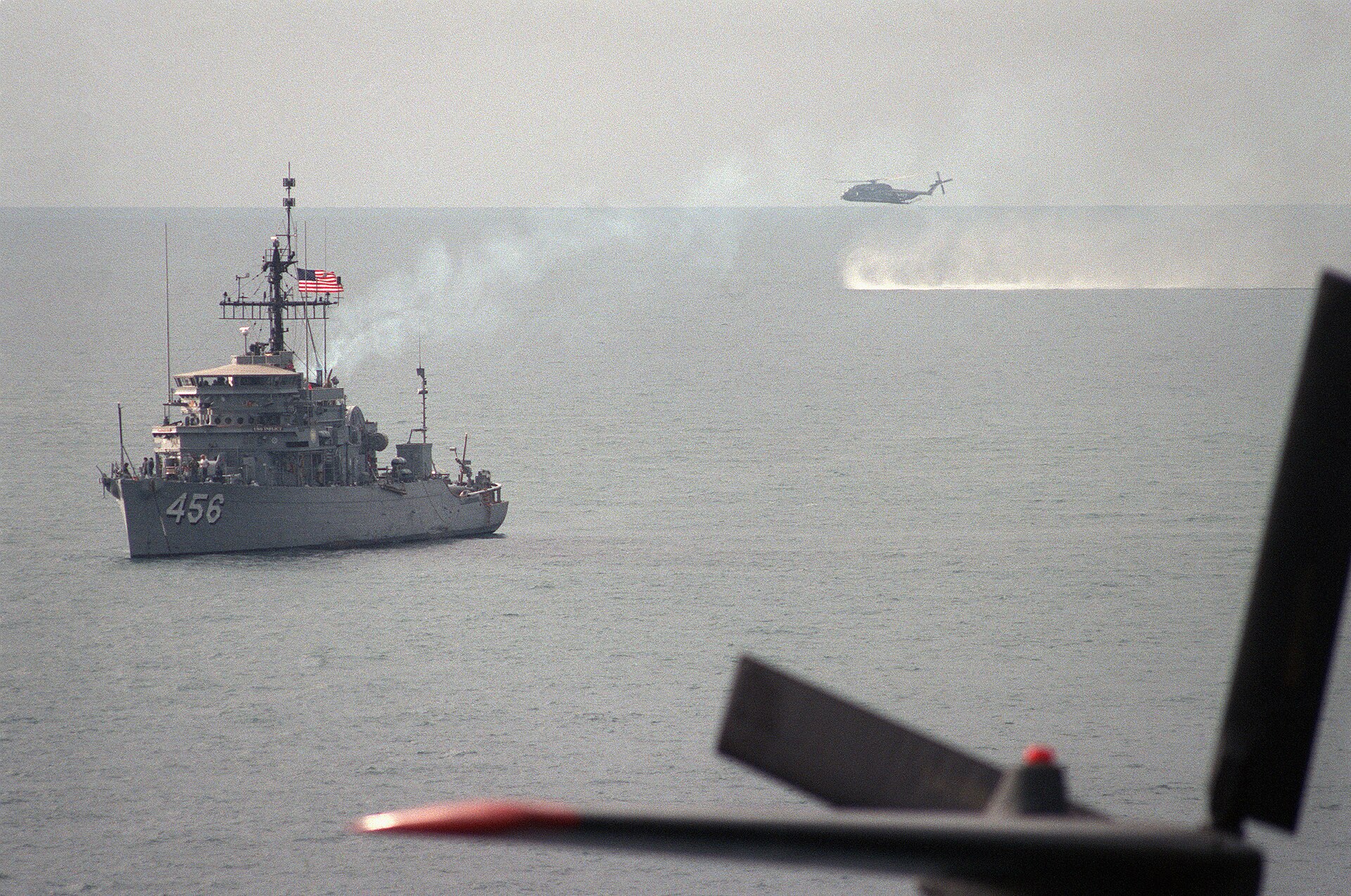

WASHINGTON — The US 5th Fleet headquarters sits in Bahrain, but its four Avenger-class minesweepers left in January 2026, weeks before American strikes on Iran began on 28 February, and they have not returned. CENTCOM commander Admiral Brad Cooper told Congress in May that the US had “eliminated more than 90 percent of Iran’s once-massive inventory of over 8,000 naval mines,” according to Stars and Stripes. Between 6 and 14 October, UKMTO recorded 15 attacks on shipping in or near the Strait of Hormuz, according to Al Jazeera.
President Trump declared on 8 October that the US “will not be attacking Iran at any time prior to the midterm elections” on 3 November, while keeping the naval blockade of Iranian ports “in full force and effect,” according to Al Jazeera and The National. The US chose to blockade Iran but not to protect the strait its blockade helped close. Oil flows through Hormuz fell to 2.9 million barrels per day on 11 October, according to Kpler data cited by Al Jazeera, against pre-war transits of 130 to 138 ships per day carrying roughly 20 percent of global crude, per the Atlantic Council.
The gap between CENTCOM’s mine-clearance confidence and October’s attack tally runs alongside the story of four minesweepers withdrawn before the war, an escort mission abandoned after a single day, and costs now falling on Japan, South Korea, Saudi Arabia, and maritime Europe — four parties paying for a policy choice they did not make.
Table of Contents
- What Did Operation Earnest Will Do in the Strait of Hormuz?
- The Minesweeper Withdrawal That Preceded the War
- Did CENTCOM Actually Clear 90 Percent of Iran’s Mines?
- Why Did Trump Pause Strikes on Iran Before the Midterms?
- Who Pays When the US Chooses Not to Escort?
- The Blockade Without the Convoy
- How Iran Reads the Midterm Calendar
- What Would an Earnest Will Look Like in 2026?
- Frequently Asked Questions
What Did Operation Earnest Will Do in the Strait of Hormuz?
Operation Earnest Will was the US naval response to Iran’s Tanker War campaign during the Iran-Iraq conflict. On 7 March 1987, the US offered to reflag 11 Kuwaiti tankers under the American flag and provide Navy escort convoys through the Persian Gulf. The operation ran from July 1987 to September 1988 and escorted approximately 70 convoys through the strait successfully, according to the Times of Israel’s account of the campaign.
The rationale was narrow and legally clean. Kuwait asked for protection. The US was not a party to the Iran-Iraq war. It agreed to shield neutral shipping from a belligerent Iran under a freedom-of-navigation mandate that dated back centuries. Tom Duffy, a former US diplomat and naval officer, told the Times of Israel that the mission reflected “centuries of US practice and statements about the need for freedom of the sea.”
The operation was not without cost, and its architects knew it would not be. On 24 July 1987, the reflagged supertanker Bridgeton struck an Iranian mine on the very first Earnest Will convoy — with the US minesweeping capability still in transit to the theater. The Reagan administration proceeded anyway. In September 1987, the Navy captured the Iranian minelayer Iran Ajr in the act of laying mines, producing physical evidence that Iran was mining international shipping lanes. On 14 April 1988, USS Samuel B. Roberts struck an Iranian mine, wounding 10 sailors. The US retaliated with Operation Praying Mantis, the largest American naval surface engagement since the Second World War.
The Middle East briefing 3,000+ readers start their day with.
One email. Every weekday morning. Free.
On 3 July 1988, USS Vincennes shot down Iran Air Flight 655, killing all 290 aboard. The operation’s darkest chapter did not end the escort mission. Convoys continued until the Iran-Iraq ceasefire in August 1988.
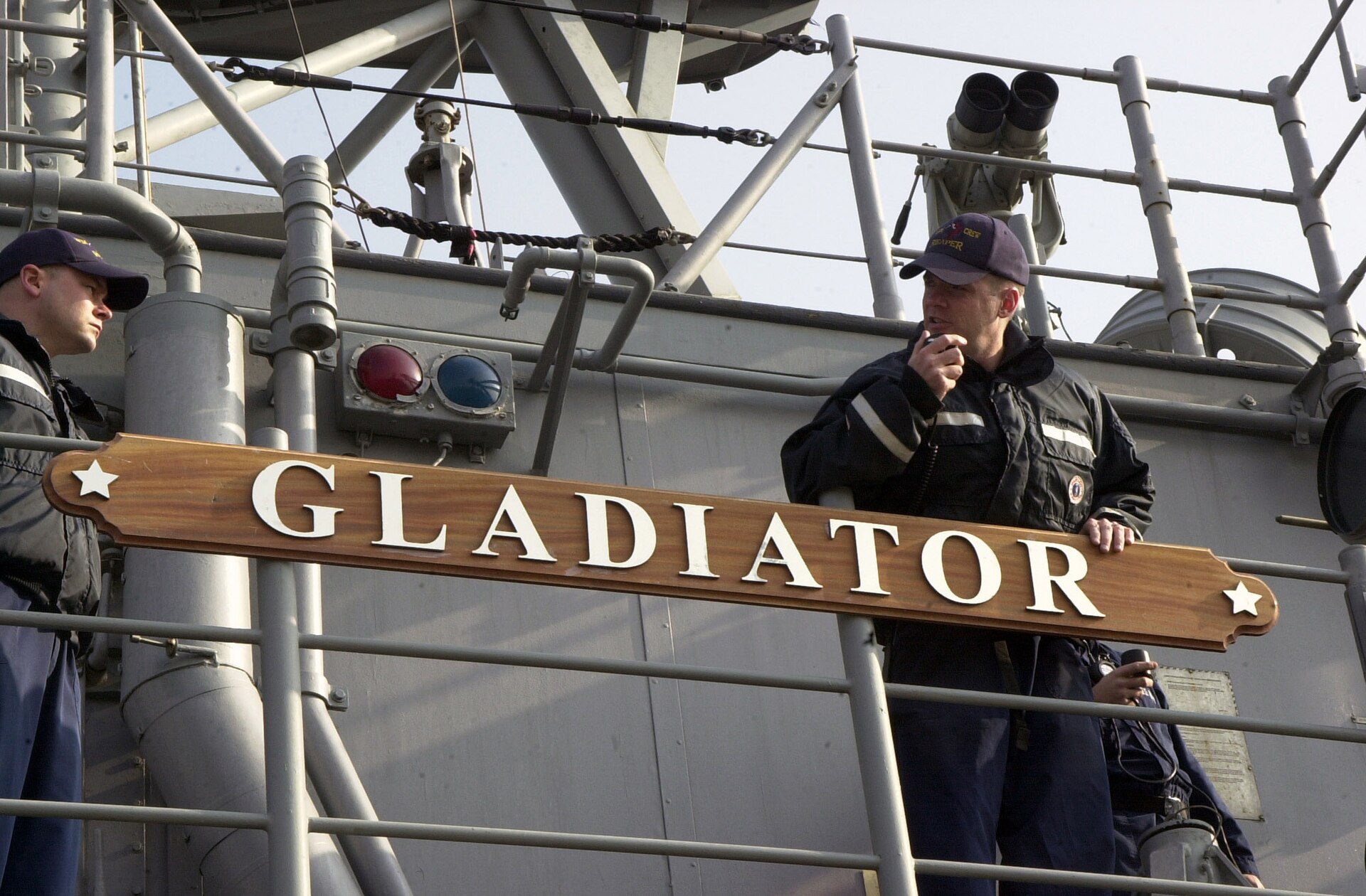
Earnest Will established a template: when a state threatens freedom of navigation through Hormuz, the US Navy deploys minesweepers forward, runs convoys, captures minelayers, and accepts tactical losses. Every element of that template was available to the current administration. None of it has been used.
The Minesweeper Withdrawal That Preceded the War
In January 2026, the US Navy pulled its four Avenger-class minesweepers from Naval Support Activity Bahrain. The War Zone reported the withdrawal in March, when two Independence-class Littoral Combat Ships carrying mine-countermeasure mission packages — USS Tulsa and USS Santa Barbara — were photographed at the Port of Penang, Malaysia, on 15 March. Satellite imagery showed no US warships in Manama port from 23 February onward.
The timing is difficult to reconcile with what followed. American strikes on Iran began on 28 February, weeks after the minesweepers left. The US was entering a war against the world’s most prolific naval mine-laying state — Iran’s inventory exceeded 8,000 mines by CENTCOM’s own count — without forward-deployed mine countermeasure vessels in the theater where those mines would be used.
Whether the four Avengers have been replaced is listed as unresolved in available reporting. No public statement from CENTCOM or the Pentagon has addressed the withdrawal, the rationale behind it, or the gap it created. The LCS mine-countermeasure packages photographed in Malaysia represent a different class of capability, designed for modular shallow-water operations rather than the deep-channel sweeping that sustained mining of the Hormuz traffic lanes demands.
Operation Project Freedom, launched on 4 May 2026, appeared to fill part of the escort gap. It was a US naval operation intended to protect commercial shipping through the strait. It was paused after one day, on 5 May. It has not been formally restarted, nor has it been formally ended. Its status remains an indefinite pause.
Duffy explained the structural problem to the Times of Israel. In 1987, the US was neutral. In 2026, the US is itself a combatant. “Shippers may not feel safe with a US escort, since the US is now a combatant,” he said. The distinction matters for international law, insurance underwriting, and the willingness of third-party flags to accept American protection. A tanker sailing under US escort in 1987 was shielded by neutrality. A tanker sailing under US escort in 2026 is riding with a belligerent, and Iran’s rules of engagement treat it accordingly.
Did CENTCOM Actually Clear 90 Percent of Iran’s Mines?
Admiral Brad Cooper told Congress in May 2026 that US forces had “eliminated more than 90 percent of Iran’s once-massive inventory of over 8,000 naval mines,” according to Stars and Stripes. In August, he announced that the Strait’s internationally recognized Traffic Separation Scheme lanes had been cleared using Navy divers, SEALs, and air power. He said US forces had provided “coordinated protection for nearly 1,500 commercial vessels carrying nearly 750 million barrels of crude oil.”
“The circumstances were challenging and dangerous to say the least, but we got the job done. Bottom line, today international shipping lanes are open and momentum is building.”Admiral Brad Cooper, CENTCOM commander, Stars and Stripes, 28 August 2026
By Cooper’s own metric, the US had assisted 37 ships through the strait in a single day — roughly 27 percent of the pre-war average of 130 to 138 daily transits, according to Atlantic Council data. Even at the point of maximum declared success, three-quarters of normal traffic was missing.
The October data contradicts the August confidence. Kpler recorded 10 tanker strikes between 28 September and 4 October; UKMTO logged 15 attacks between 6 and 14 October, according to Al Jazeera. The container ship GFS Pride was struck by an IRGC projectile on 13 October, caught fire, and sank; CENTCOM confirmed the weapon was a projectile, not a mine, according to Benzinga and gCaptain. On 20 October, the IRGC claimed three tankers hit mines crossing the strait, according to The Straits Times.
The Joint Maritime Information Centre rated the October threat level at “SEVERE” but said there was “no substantiation” to multiple individual IRGC mine-strike claims, according to gCaptain. JMIC did not rule out new mining. The gap between “eliminated more than 90 percent” and a “SEVERE” threat rating — separated by fewer than eight weeks — has not been publicly addressed.
CENTCOM’s own 14 October statement adopted a tone different from Cooper’s August briefing. “IRGC’s navy commander has no navy,” it read. “American forces and regional partners clearly control the Strait of Hormuz.” The statement was issued on the same day Al Jazeera published the 15-attack figure that showed the strait was anything but controlled.
Why Did Trump Pause Strikes on Iran Before the Midterms?
Trump’s 8 October declaration that “we will not be attacking Iran at any time prior to the midterm elections” on 3 November, per Al Jazeera and The National, established an explicit 26-day window during which the US would maintain economic pressure on Iran but would not use military force against it.
Saudi Arabia’s Crown Prince Mohammed bin Salman made two appeals in September 2026 for US strikes on the Houthis, according to CNN. Both were declined. Trump told reporters on 10 October, “We may. We’re going to look at it,” and added: “They’re able to defend. The Saudis are good fighters,” per CNN. The Wall Street Journal reported that Trump rejected Iran’s seven-day roadmap — Araghchi’s proposal via Qatar to lift the blockade, grant sanctions waivers, and release roughly $12 billion in frozen assets in exchange for reopening Hormuz — and expected renewed bombing after the midterms, according to Hurriyet.
An Iranian official told Reuters that one goal of the October attacks on Hormuz shipping was influencing the November US midterm elections, according to Al Jazeera. The symmetry is precise: Trump paused strikes to manage the domestic calendar, and Iran accelerated attacks to exploit the same calendar. Both governments have made the 3 November date a military planning variable.
The practical effect is a four-week corridor during which Iran faces reduced risk of American escalation while the naval blockade of Iranian ports continues. The blockade squeezes Iran. The mine campaign and shipping attacks squeeze everyone else.
Who Pays When the US Chooses Not to Escort?
The states absorbing the cost of the American withdrawal from the escort mission are the ones most dependent on Hormuz crude. Japan released approximately 90 million barrels from its strategic petroleum reserve in two rounds, in March and May 2026, according to the Korea JoongAng Daily. Japanese imports of Saudi crude fell 57.7 percent in April and 58 percent in May year-on-year, the same outlet reported.
South Korea earmarked KRW 1.4 billion (approximately $1.05 million) to subsidize war-risk insurance premiums for smaller shipping companies, covering nine vessels, and rerouted about 50 million barrels of crude through Yanbu on the Red Sea and Fujairah in the UAE, according to the Korea JoongAng Daily. Seoul’s government is reviewing whether to expand the Cheonghae anti-piracy unit before a 31 December deadline, though no decision has been announced.
| Actor | Response | Scale | Source |
|---|---|---|---|
| Japan | Strategic reserve releases (March, May) | ~90 million barrels | Korea JoongAng Daily, Oct 2026 |
| Japan | Saudi crude import decline (Apr–May) | 57.7%–58% year-on-year | Korea JoongAng Daily, Oct 2026 |
| South Korea | Crude rerouting via Yanbu, Fujairah | ~50 million barrels | Korea JoongAng Daily, Oct 2026 |
| South Korea | War-risk insurance subsidy | KRW 1.4bn (~$1.05M), 9 vessels | Korea JoongAng Daily, Oct 2026 |
| Global shipping | War-risk premium increase | 3–10% of hull value (pre-war: 0.15–0.25%) | Marsh / Insurance Business Magazine, 2026 |
| Global shipping | Gulf–China VLCC charter rate | $1.2M/day (pre-war: ~$80,000/day) | bdnews24/LSEG, 5 Oct 2026 |
Saudi Arabia faces a different order of constraint. It is simultaneously a blockade target’s neighbor, an active war zone, and the single largest crude exporter whose shipments transit the strait. Aramco cut its November Arab Light official selling price to Asia by $3, to $5 below the Oman/Dubai benchmark — the widest discount since June 2020, according to bdnews24 citing Reuters. That discount is the price of persuading buyers to accept Gulf crude when shipping risk alone has multiplied by a factor of 15 to 40.
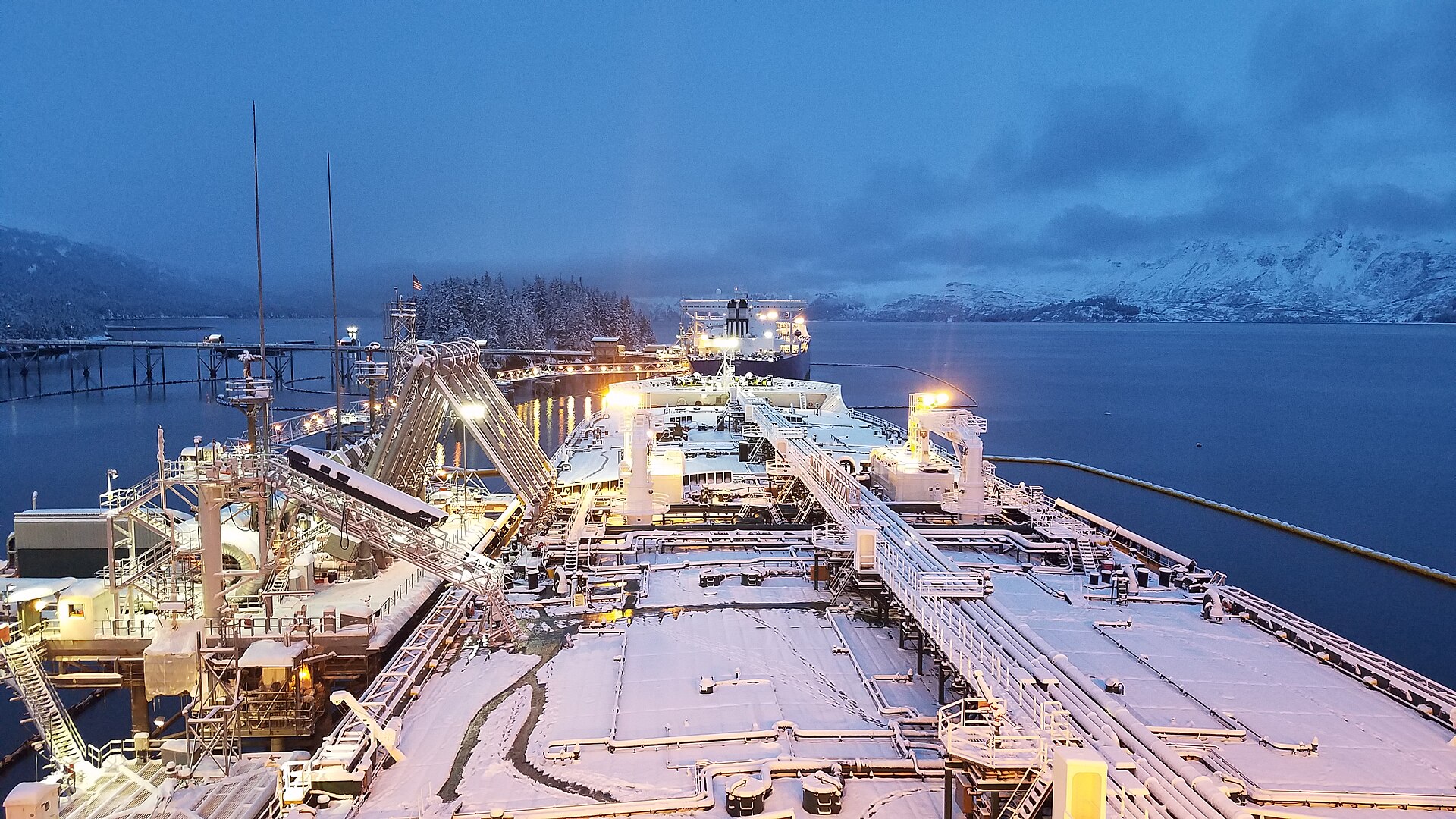
War-risk insurance premiums for Hormuz transits rose from 0.15 to 0.25 percent of hull value before the war to 3 to 10 percent, according to Marsh’s Marcus Baker, as reported by Insurance Business Magazine. Svein Ringbakken of DNK, the Norwegian war-risk insurer, told the Atlantic Council: “Hormuz really was closed.” He added: “The seas have become an arena for geopolitical conflict, and the maritime industry has become a clear target.”
Brent crude rose from $68 a barrel on 26 February — two days before American strikes began — to $118 on 29 April, before settling to $102.94 on 9 October, according to the Atlantic Council and CNBC. Eight months into the conflict, crude remains $35 above its pre-war level.
The Blockade Without the Convoy
The US naval posture in the Gulf in October 2026 is a blockade of Iranian ports without a corresponding escort of the commercial shipping disrupted by that blockade. CENTCOM reported 135 commercial ships turned around, 10 IRGC shadow-fleet tankers destroyed, and four commercial vessels disabled since the blockade began on 14 July, according to CBS News. Admiral Cooper said in August: “No ships have entered or left an Iranian port without our permission,” per Stars and Stripes.
The blockade is one of the most effective naval interdiction operations in recent American history. It is also, by design, one-directional. The US controls what enters and leaves Iranian ports. It does not control what Iran does to ships transiting the strait for other destinations. Trump acknowledged this asymmetry in March 2026, when he said “the US does not need to police” the strait and criticized NATO allies who declined to join escort missions.
In July, Trump proposed a 20 percent fee on all cargo transiting the strait. Elisabeth Braw of the Atlantic Council said the proposal “would violate UNCLOS” — the United Nations Convention on the Law of the Sea, which guarantees transit passage through international straits. John Norton Moore, a former US negotiator of UNCLOS, warned the Atlantic Council: “We will see backsliding in straits.”
“The US has lost some moral standing to enforce the maritime order, creating a dual peril of rising violations and a weakened enforcer.”Elisabeth Braw, Atlantic Council, July 2026
Britain sent an RAF Voyager tanker for Saudi air defense support, not maritime escort. France deployed forces to Yanbu, the Red Sea export terminal, rather than Hormuz. Neither country has offered convoy protection through the strait. The 100-plus US military advisers dispatched for intelligence support, reported by CNN, are focused on the Saudi air defense problem, not the maritime one.
How Iran Reads the Midterm Calendar
Iran has interpreted the midterm pause as an operational window. Chris Featherstone of the University of York told Al Jazeera: “For Iran, they may be seeing this as a point to increase pressure on the Trump administration.” The October surge in Hormuz attacks followed Trump’s 8 October declaration by days, not weeks.
Iran’s military response to the blockade has three components visible from open-source reporting. The first is mining, or claimed mining. The IRGC’s 20 October claim of three tanker mine strikes, discussed above, is one element; JMIC rated it unsubstantiated but did not rule it out. The second is direct fire. IRGC Naval Commander Admiral Ali Ozmaei warned that any vessel deactivating navigation or identification systems would be “dealt with severely and decisively,” according to Middle East Eye and Tasnim News Agency. The third is escalation threats. IRGC spokesman Hossein Mojabi threatened to target “undersea internet cables in the Gulf and the strait” and said “new weapons will be unveiled,” per Euronews. Mojabi stated the goal was “removing the US military presence from the region.”
Iran’s stated legal framework rests on two claims. The IRGC considers ships using the “unauthorized southern route” to be violating Iranian passage regulations, according to Tasnim News Agency. Iran also created the Persian Gulf Strait Authority in May 2026 to administer passage — an institution Braw characterized as a violation of UNCLOS transit passage provisions.
Mohsen Rezaei, an Iranian official, told Al Jazeera: “You are smuggling, but the strait is under Iran’s control, and we manage it.” Foreign Minister Araghchi has said Hormuz stays shut until the US accepts the seven-day roadmap, according to Gulf News. Rezaei said the latest US response was “insufficient,” per IRNA, as cited by CBS News.
Nitya Labh of Chatham House assessed the long-term picture: even if a deal holds, Iran retains the ability to close Hormuz again. “Hormuz is not open, nor close to opening,” Labh said. IMO Secretary-General Dominguez reported approximately 6,000 seafarers still stranded in the Gulf, according to Euronews. The IMO had confirmed 46 attacks as of 11 June, causing 14 seafarer deaths.
What Would an Earnest Will Look Like in 2026?
The comparison between 1987 and 2026 is not a simple argument for repeating Earnest Will. It is a measure of what has changed in the US naval posture toward Hormuz, and what each change costs the states that depend on the strait.
| Dimension | Earnest Will (1987–88) | US Hormuz Posture (2026) |
|---|---|---|
| US legal status | Neutral | Belligerent (strikes began 28 February) |
| Mission | Reflag and escort Kuwaiti tankers | Blockade of Iranian ports |
| Convoys escorted | ~70 | 0 (Project Freedom paused after 1 day) |
| Minesweepers in theater | Avenger-class forward-deployed | 4 Avengers withdrawn January 2026 |
| Assisted transits | N/A (convoy model) | ~1,500 through August (Cooper) |
| Mine clearance claimed | Iran Ajr captured; lanes swept | “>90% of 8,000+” (Cooper, May) |
| Civilian toll (naval operations) | Iran Air 655: 290 killed | 14 seafarer deaths through June (IMO) |
| Outcome | Iran-Iraq ceasefire (August 1988) | No ceasefire; midterm pause through 3 November |
Torbjorn Soltvedt of Verisk Maplecroft told the Times of Israel: “It’s much more difficult to secure a waterway now than it was then.” In 1987, Iran’s asymmetric tools were limited to mines and small boats. In 2026, the IRGC fields drones, ballistic and cruise missiles, and has threatened cyberattacks on subsea cable infrastructure. Duffy noted that US goals in the region have become “a kaleidoscope of regime change” rather than the clear freedom-of-navigation aim that drove Earnest Will. “That goes past centuries of US practice and statements about the need for freedom of the sea,” he said.
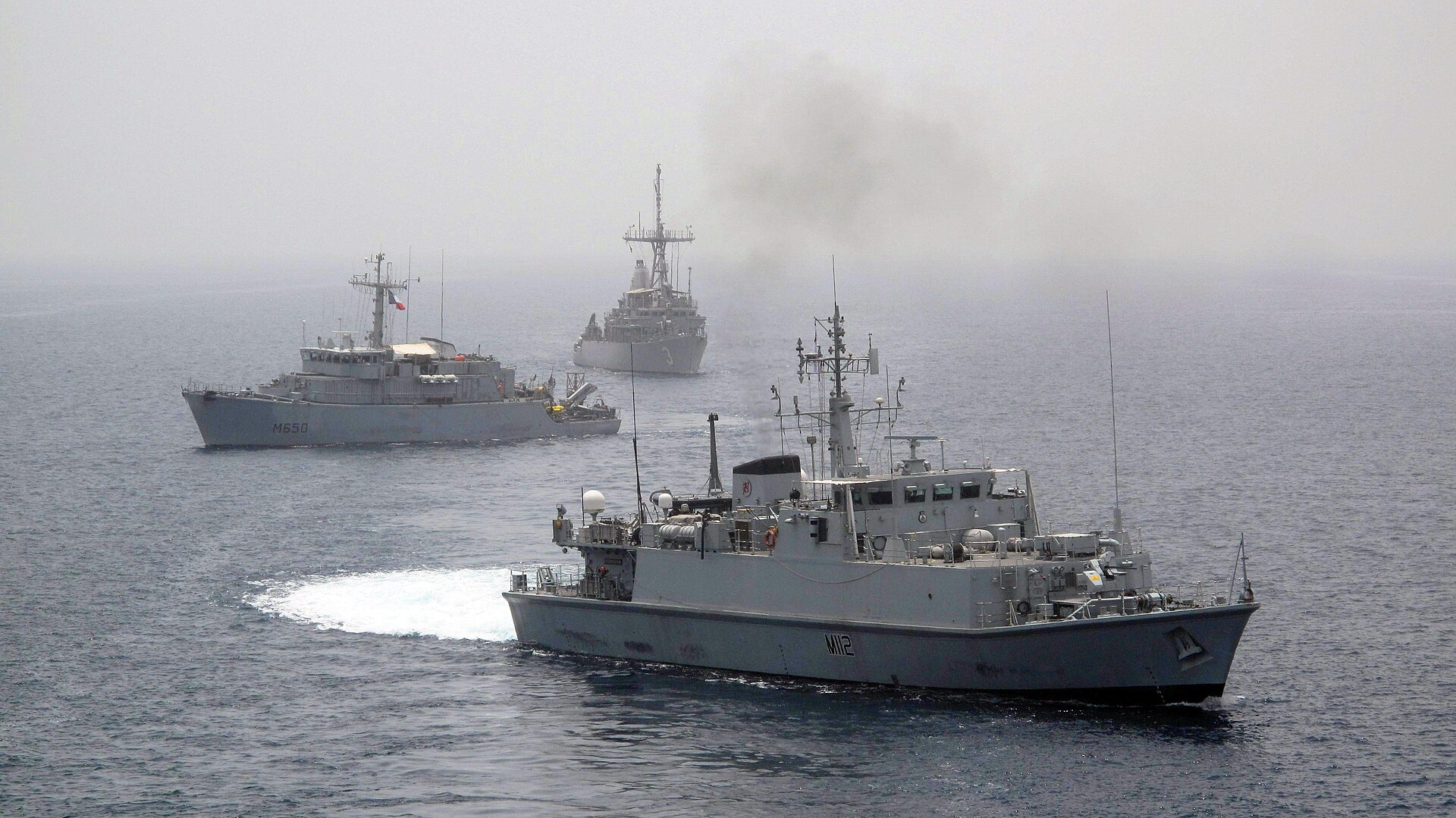
The question is not whether the US could protect Hormuz shipping. The 5th Fleet’s order of battle dwarfs Iran’s conventional navy, and CENTCOM itself declared in October that “American forces and regional partners clearly control the Strait of Hormuz.” The question is whether any administration will accept the cost. An Earnest Will in 2026 would mean running convoys while the US is simultaneously a belligerent — with escorted ships potentially flagged for retaliation rather than protection. It would mean forward-deploying the minesweepers that were quietly withdrawn in January. It would mean committing to a mission that lasts until a ceasefire neither the US nor Tehran appears to be pursuing before 3 November.
IRGC mine-strike claims, which JMIC rated as unsubstantiated but did not rule out, have now reached the supertankers. The four Avenger-class minesweepers withdrawn from Bahrain in January have not been replaced, and no public timeline for their return has been announced.
Frequently Asked Questions
What is the Persian Gulf Strait Authority and why does it violate international law?
Iran established the PGSA in early May 2026 to administer vessel passage through the Strait of Hormuz, imposing mandatory pilotage, registration, and transit fees on commercial shipping. UNCLOS Article 38 guarantees all vessels the right of “transit passage” through international straits, which cannot be suspended or made conditional on prior authorization from the coastal state. The Atlantic Council’s Elisabeth Braw characterized the PGSA as a unilateral violation of these provisions — an attempt to convert an international waterway into a toll road administered by one riparian state.
Could Japan or South Korea deploy mine countermeasure forces to Hormuz independently?
Japan’s Maritime Self-Defense Force operates one of the world’s largest mine countermeasure fleets and deployed minesweepers to the Persian Gulf after the 1991 Gulf War to clear Iraqi mines from Kuwaiti waters. South Korea is reviewing whether to expand the Cheonghae anti-piracy unit’s mandate before a 31 December 2026 deadline, though no decision has been announced. Neither country has publicly indicated willingness to operate mine clearance or escort operations in Hormuz independently of a US-led framework during the current conflict.
What share of Hormuz energy traffic is bound for Asian markets?
Approximately 80 percent of all crude oil and liquefied natural gas transiting the Strait of Hormuz is destined for Asian markets — primarily Japan, South Korea, China, and India — according to a UK Parliament briefing. The Gulf region as a whole supplies 38 percent of globally traded oil, 29 percent of liquefied petroleum gas, and 19 percent of liquefied natural gas, according to the Atlantic Council. The concentration means that disruption at Hormuz falls disproportionately on Asian economies, regardless of whether the disruption originates from Iranian mines, IRGC direct fire, or the secondary effects of the US blockade.
What is the current status of Operation Project Freedom?
Operation Project Freedom was a US naval escort operation launched on 4 May 2026 to protect commercial shipping transiting the Strait of Hormuz. It was paused after one day, on 5 May, and has not been formally restarted or formally terminated. The pause predated Trump’s 8 October declaration ruling out strikes before the midterms by five months, which suggests the decision to suspend convoy operations was made independently of the midterm calculation and reflects a longer-standing reluctance to commit US warships to the escort role in a conflict where the US is itself a belligerent.