DOHA — On October 19, Qatar’s Deputy Prime Minister Sheikh Saoud bin Abdulrahman Al Thani gave a wide-ranging address at the Global Security Forum in Doha. He called Al Udeid “the largest US base in the Middle East.” He pledged its continued development “according to regional needs.” He credited the American partnership with intercepting “more than 90 percent” of Iranian attacks through “shared expertise and military capabilities built over three to four decades.” He described mediation with Tehran as “a long-distance race that requires determination and resilience.” He did not say whether the Combined Air Operations Center — the facility that has directed US air operations across the theater for more than twenty years — is still functioning at the base it was built to serve.
The same day, Qatar’s energy minister met Iran’s acting oil minister in Doha to discuss energy cooperation. Two days later, on October 21, Iran’s foreign minister Araghchi confirmed to The National that indirect contacts with Washington continue through Qatar and Pakistan as intermediaries. Qatar’s silence on the CAOC’s status is not an accident of messaging. It is the structural requirement of a country that hosts the command center directing strikes against Iran while serving as the primary intermediary between Washington and Tehran — and whose ability to do both depends on never publicly clarifying the details of the first.
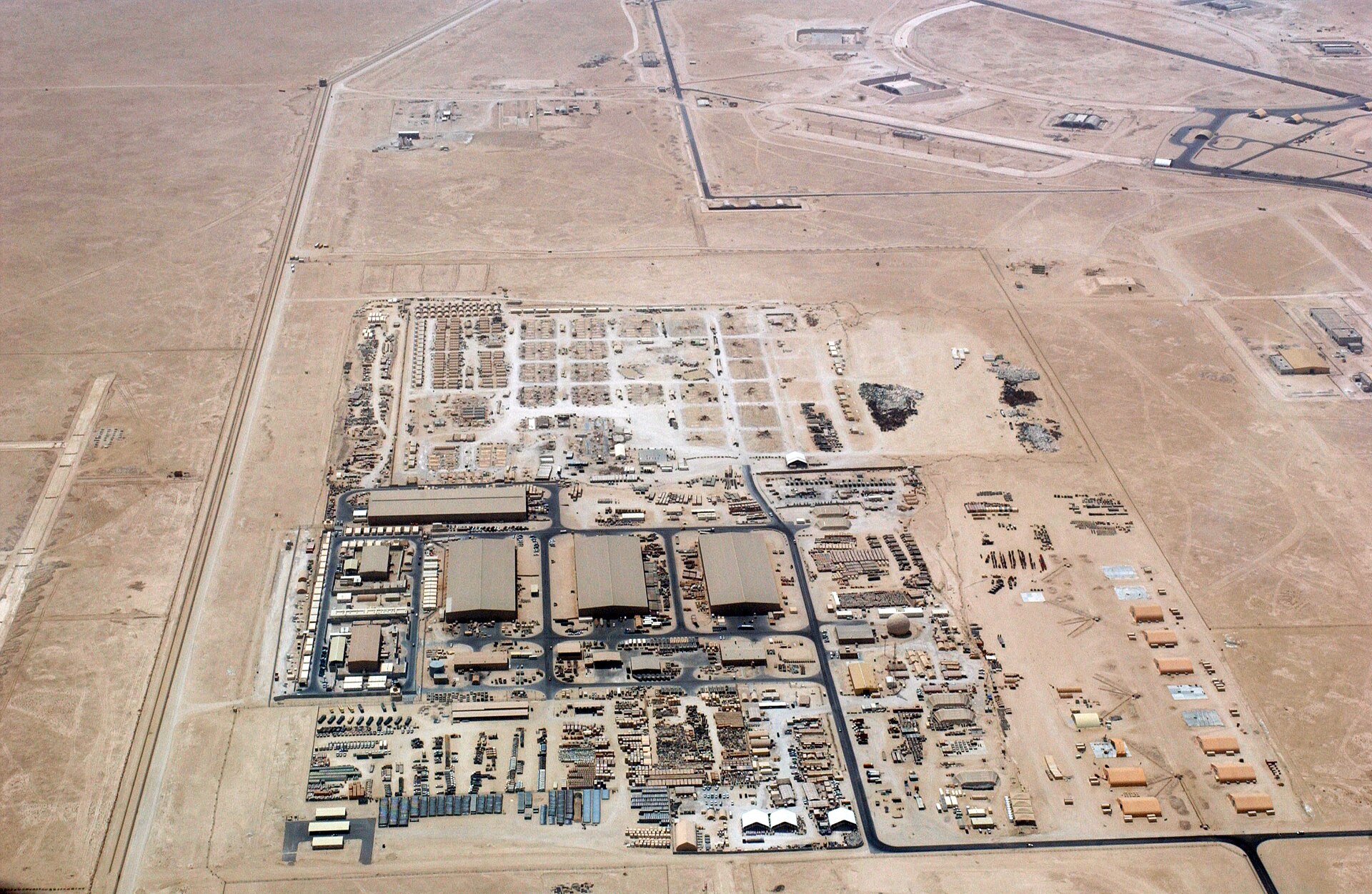
Table of Contents
- What Did Qatar’s Deputy Prime Minister Actually Say?
- The Base Iran Has Hit Twice
- Why Does Qatar Refuse to Confirm the CAOC’s Status?
- The Mediation Channel Running Through Missile Debris
- What Do Iran’s State Media Contradictions Reveal?
- The Gas Field Underneath the Diplomacy
- What Does the $4.5 Billion Refuelling Sale Signal?
- Can Qatar Sustain Two Functions on One Airfield?
- Frequently Asked Questions
What Did Qatar’s Deputy Prime Minister Actually Say?
Sheikh Saoud bin Abdulrahman Al Thani chose his words with care. Speaking seven months into a war that has put Iranian ballistic missiles into the base he is responsible for defending, Qatar’s Deputy Prime Minister and Minister of State for Defence Affairs offered a series of carefully bounded statements that, taken together, describe a position without ever quite defining it.
On Al Udeid, he confirmed continued development “according to regional needs” — a formulation that commits Qatar to nothing specific while signaling that the base remains active in some capacity. On the American partnership, he was more expansive: the intercept rate he claimed, more than 90 percent, was delivered alongside an attribution to decades of joint military development, framing the US presence as a long-term institutional relationship rather than a wartime arrangement. On Iran, he was measured: “Iran is our neighbour,” he said. “We never stop our communication.” On deterrence, he offered a line that left the rest of the picture deliberately unfilled: “Mediation doesn’t mean that we should not be ready for any defensive action from our side.”
What he did not say matters more than what he did. He did not say whether the CAOC — the Combined Air Operations Center from which US and coalition air operations across Central Command’s area of responsibility have been coordinated since the early 2000s — is operational. He did not give a current troop figure for Al Udeid, where approximately 10,000 US military personnel and coalition partners from 17 nations were based before the war. He did not describe the base’s role in the ongoing air campaign. He did not address a Defence Security Asia report, published in June and citing senior US officials, that the CAOC had been “severely damaged and disabled” in the war’s opening weeks and that air campaign coordination had shifted to Shaw Air Force Base in South Carolina. No Pentagon, CENTCOM, or Qatari defence statement has confirmed or denied that report.
On the same day, in a meeting that appeared in none of the forum’s coverage, Qatar’s energy minister sat down with Iran’s acting oil minister in Doha. The energy minister’s public remarks that day were confined to a warning — reported by Al Jazeera — that “global energy shockwaves from Iran war have yet to peak,” and an observation that Qatar had “not reached the peak with respect to energy.” The meeting with Iran’s oil representative was reported by a single outlet. No outcomes were announced.
The Middle East briefing 3,000+ readers start their day with.
One email. Every weekday morning. Free.
The Base Iran Has Hit Twice
Al Udeid was never supposed to absorb a direct hit. The base, which Qatar funded and built as the forward headquarters for US Air Forces Central Command, sits in open desert southwest of Doha with minimal hardened infrastructure. For two decades, its security rested on deterrence and geography: Iran’s ballistic missiles could reach it, but the assumption in every pre-war planning document was that Tehran would not risk the American response that a strike on the CAOC would trigger. That assumption expired on March 3, 2026, when an Iranian ballistic missile struck Al Udeid without causing casualties. Canada’s defence minister confirmed that Canadian military personnel had been inside the CAOC during the attack.
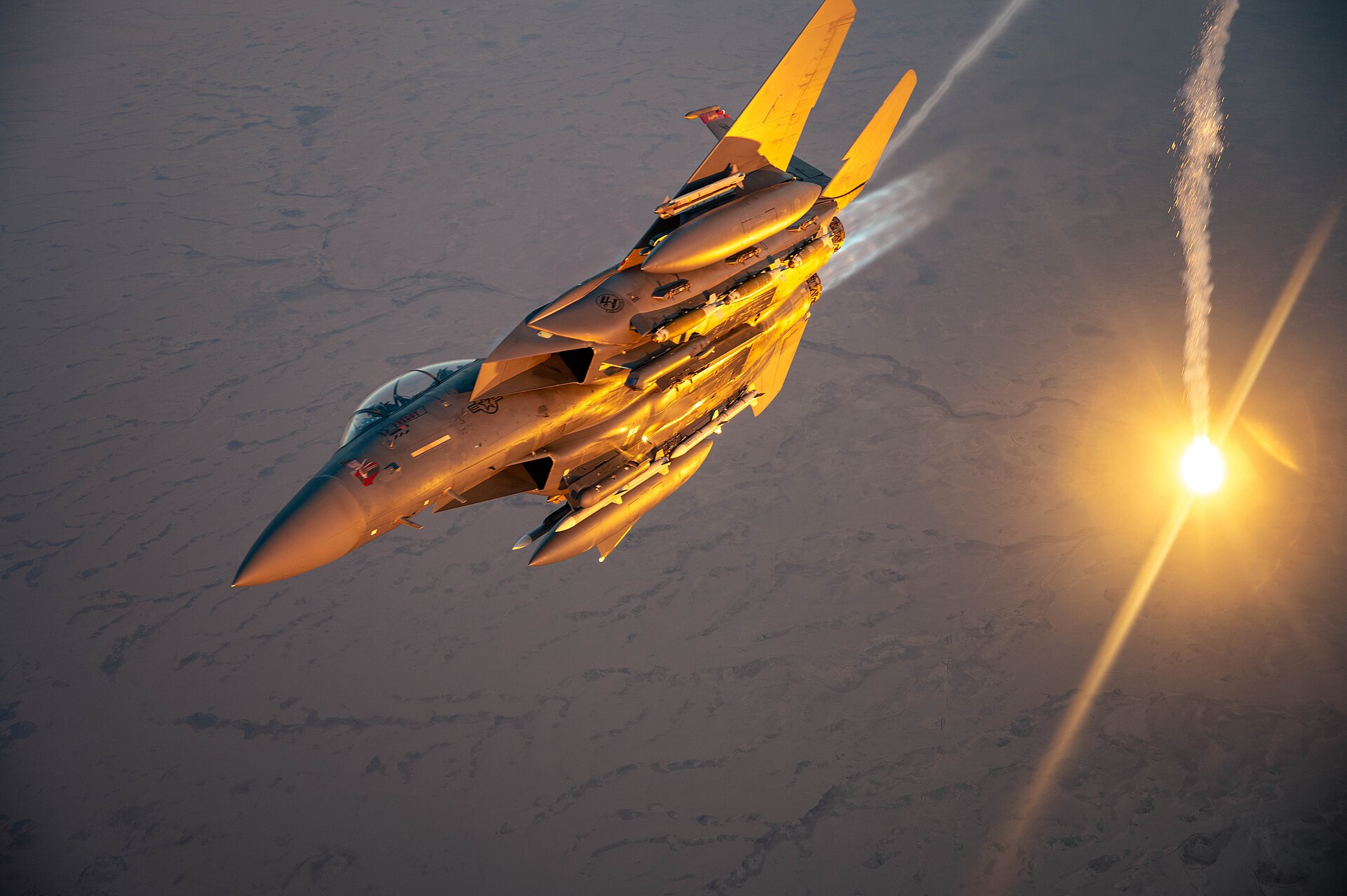
The strike had a precursor that nearly turned catastrophic. On March 2, Qatari F-15s intercepted and shot down two Iranian Su-24 bombers that had come within approximately two minutes of reaching Al Udeid — close enough that the engagement geometry placed those aircraft on a terminal approach. The shootdown was the first air-to-air combat kill by the Qatar Emiri Air Force. Two minutes, measured against two decades of deterrence assumptions, is the distance between a posture and a test of it.
Qatar’s public response to the March attacks followed a template that has since hardened into pattern. The Foreign Ministry called the strikes “reckless and irresponsible” — language that registers a sovereignty violation without escalating to a characterization of war. On March 4, Qatar arrested 10 individuals linked to what it described as IRGC sabotage cells. On March 19, it declared Iranian military and security attachés persona non grata and expelled them. At no point did Qatar call the strikes an act of war. At no point did it describe them as an attack on a US military facility. The framing was national — an assault on Qatari sovereignty — not coalitional.
The IRGC returned four months later. On July 17, 2026, Iran’s Islamic Revolutionary Guard Corps claimed a strike on Al Udeid as part of the “15th wave of Operation Nasr 2,” alleging destruction of radar systems and refuelling aircraft. Qatar said it intercepted the missile; one child was injured by shrapnel. In a separate incident on July 12, three people including a child were injured by shrapnel in an Iranian attack on Qatar. The IRGC’s July statement included language that had not appeared in its March communications: “Any nation or base that serves as a launchpad for strikes against Iran will be considered a legitimate target for Iranian missiles.” Iran had also struck deeper into the Gulf — the attack on Dammam’s King Fahd International Airport demonstrated that critical infrastructure across the Arabian Peninsula was within range and within the IRGC’s stated doctrine.
In June, Defence Security Asia reported — citing senior US officials and Air and Space Forces magazine — that the CAOC at Al Udeid had been “severely damaged and disabled” in the opening weeks of the war, forcing coordination of the air campaign to shift to Shaw Air Force Base in South Carolina. This remains a single-source claim, and it should be treated as such. Retired Lieutenant General David A. Deptula, who had served as the CAOC’s director during earlier operations, responded to the report by calling for future command facilities to be built underground and hardened — a statement that treated the premise of CAOC damage as plausible without confirming it directly.
Why Does Qatar Refuse to Confirm the CAOC’s Status?
The Combined Air Operations Center is not merely a building on an airfield. It is — or was — the facility through which the United States coordinates air power across an area of responsibility stretching from the Horn of Africa to Central Asia. Every sortie flown over Iran, every tanker routing, every intelligence-surveillance-reconnaissance mission tasked in the theater ran through the CAOC at Al Udeid before the war. Coalition partners from 17 nations fed into and operated through it. If that facility is operational, the air war against Iran is being directed from Qatari soil. If it has moved to Shaw Air Force Base, as Defence Security Asia reported, then the command function has left the country that was supposed to guarantee it.
Either answer creates problems that silence resolves. If Qatar confirms the CAOC is operational, it provides Iran with a public, official, Qatari-acknowledged justification for the IRGC’s declared targeting doctrine — that any base functioning as a “launchpad for strikes against Iran” is a legitimate target. It would also make Qatar’s mediation with Tehran structurally untenable. No country can credibly relay de-escalation proposals while publicly confirming it hosts the facility directing the strikes those proposals are meant to end. Iran knows the CAOC exists. The question is whether Qatar will say so on the record, and the answer — for now — is no.
If Qatar acknowledges that the CAOC has been disabled or relocated, the consequences run the other direction. Al Udeid’s value to Washington has always rested on its command function, not merely its ramp space or fuel storage. A base without the CAOC is still useful — refuelling, staging, logistics — but it is not the same asset. Admitting the command center has moved would invite questions about what the “continued development” that Sheikh Saoud promised is actually developing toward, and whether Qatar’s leverage in Washington — the leverage that comes from hosting not just a base, but the base, the one from which the air war is run — has been quietly downgraded.
Qatar has managed this kind of ambiguity before. During the 2017–2021 Gulf blockade, when Saudi Arabia, the UAE, Bahrain, and Egypt severed ties with Doha, Qatar simultaneously deepened its relationship with Turkey and Iran while maintaining the US military presence at Al Udeid — a dual alignment that required careful management of what was said publicly about each relationship. The pattern is not new. What is new is that the stakes of the silence now extend to operational security in an active war, and the parties Qatar is balancing are not feuding neighbours but belligerents exchanging missile fire over its territory.
The Mediation Channel Running Through Missile Debris
On August 27, Qatar’s Prime Minister Sheikh Mohammed bin Abdulrahman Al Thani traveled to Tehran — his first high-level visit since the war began nearly six months earlier. The stated agenda was a Hormuz de-escalation framework, including a temporary shipping corridor and joint mine-clearing operations. Iran’s foreign minister Araghchi had been pressing for a resolution that would keep the strait closed to all traffic until a broader agreement was reached, while the IRGC’s mine blockade had already reduced tanker transits from 85 per day to 4. Qatar was attempting to mediate between a country bombing it and a country blockading the waterway its entire economy depends on.
The channel has produced visible outputs. On September 25, Araghchi confirmed that Iran had submitted a seven-day Hormuz roadmap “via Qatar.” Four days later, on September 29, he met Qatari mediators in New York and confirmed that US responses to Iran’s proposals would be conveyed through Qatar and Pakistan. On October 21, Araghchi told The National that indirect contacts with Washington continue through both intermediaries, though he said Tehran sees “little prospect of a diplomatic breakthrough” before the US midterms.
“We never stop our communication… Iran is our neighbour. Mediation doesn’t mean that we should not be ready for any defensive action from our side.”
— Sheikh Saoud bin Abdulrahman Al Thani, Qatar Deputy Prime Minister, Global Security Forum, October 19, 2026
Qatar’s role as a back-channel venue for US-Iran communications is not new, but its current iteration carries a weight that previous rounds did not. In January 2026, before the war’s most destructive phase, Saudi Arabia, Qatar, and Oman “led a long, frantic, diplomatic last-minute effort” to persuade President Trump not to strike Iran over the protest crackdown, according to AFP. In May, Trump said on Truth Social that Qatar’s Emir had personally asked him to postpone the planned May 19 strike on Iran. The mediation function is not peripheral to Qatar’s wartime identity. It is the function that gives Doha standing in Washington that neither Saudi Arabia nor any other Gulf state can replicate — not because Qatar’s military is larger or its economy more resilient, but because it is the only state that can get both parties to return its calls.
The price of that function is the silence on Al Udeid. A country that publicly confirms it hosts the command center directing the air campaign cannot simultaneously present itself to Tehran as a venue for indirect talks about ending it. The channel requires that both parties agree not to discuss the obvious, and Qatar’s October 19 speech operated within that agreement precisely. CENTCOM’s own posture in the Hormuz corridor has raised questions about the coherence of the broader military strategy, but Qatar’s role as intermediary is not contingent on military outcomes. It is contingent on diplomatic discretion.
What Do Iran’s State Media Contradictions Reveal?
On September 29, two things happened simultaneously in Iran’s state media apparatus. IRNA, the Islamic Republic News Agency, reported that Araghchi had confirmed Qatar and Pakistan as the channels through which US responses to Iran’s proposals would be conveyed. PressTV, Iran’s English-language state broadcaster, dismissed published reports about Qatar’s mediation role as “baseless speculation.” The contradiction was not an error. Iran’s state media does not contradict itself accidentally; the system is centralized enough that divergent messaging across outlets represents a policy choice, not a coordination failure.
The function of the contradiction mirrors Qatar’s silence: deniability that preserves a channel. By allowing IRNA to confirm the mediation while PressTV denies it, Tehran maintains the ability to engage without admitting engagement — a structure that protects domestic audiences from the perception that Iran is negotiating under military pressure while preserving the diplomatic utility of the channel itself. Qatar’s refusal to clarify the CAOC’s status serves the same purpose from the opposite direction. It protects the American military relationship from the perception that Qatar is sheltering the facility from public scrutiny at Tehran’s implicit request.
Iran’s targeting behavior across the war reinforces this reading. In June 2025, during the Twelve-Day War, Iran reportedly gave Qatar advance notice before striking Al Udeid — a gesture, recorded in contemporaneous accounts of that conflict, that established a precedent. Qatar absorbed the strike, protested the sovereignty violation, and kept the channel open. That pattern set the terms for the current war: Iran can hit the base, Qatar can protest, and neither side acknowledges that the arrangement operates, at some level, within boundaries both parties understand. The March 2026 strikes did not come with confirmed advance notice — the Su-24 bombers shot down two minutes from Al Udeid suggest the aerial component, at minimum, was not pre-cleared — but the diplomatic aftermath followed the same sequence: condemnation, expulsion of attachés, continuation of communication.
Iran has also tested how far it can push without severing the channel. In July 2026, an Iranian attack damaged the Qatari LNG tanker Al Rekayyat near the Strait of Hormuz. Qatar’s Foreign Ministry spokesman Majed Al Ansari called it “an unacceptable attack on the security and safety of international maritime navigation” — language that addressed the incident as a maritime violation, not as an Iranian attack on a Qatari vessel. Even when the target was Qatari property and the attacker was Iranian, the framing avoided personalizing the confrontation between the two states. The IRGC, for its part, had already declared the boundary: any base or nation serving as a launchpad would be treated as a target. Qatar’s response to every subsequent escalation has been crafted to avoid triggering that doctrine’s public application against Doha specifically.
The Gas Field Underneath the Diplomacy
Qatar and Iran share the South Pars / North Dome gas field — the largest natural gas reservoir on earth. It sits beneath the Persian Gulf, straddling the maritime boundary between the two countries. Iran calls its portion South Pars; Qatar calls its portion the North Dome. South Pars accounts for approximately 70 to 75 percent of Iran’s total gas production. The North Dome is the foundation of Qatar’s entire LNG export industry, the economic engine that has made a peninsula of 300,000 citizens a per-capita wealth leader and a globally consequential energy supplier. The shared geology means that a war long enough and destructive enough to damage the field’s infrastructure on either side has consequences that neither country can externalize.
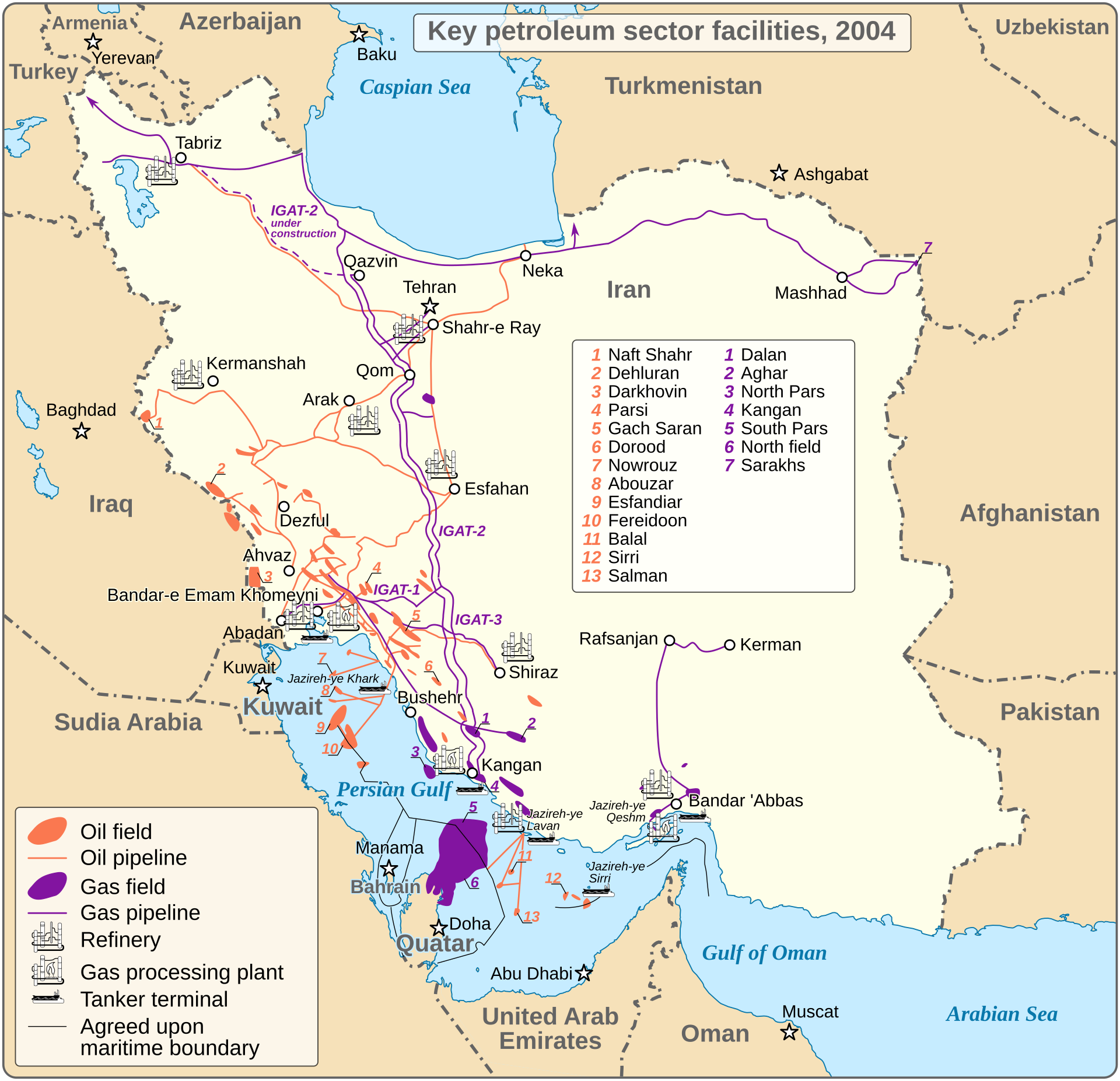
The damage has already begun on Qatar’s side. On March 18, 2026, Iranian strikes hit Qatar’s Ras Laffan industrial complex — the processing hub for North Dome gas and the largest LNG export facility in the world. QatarEnergy’s CEO said 17 percent of Qatar’s LNG export capacity had been disrupted. Wood Mackenzie estimated the repair cost at $5.8 billion and the affected processing capacity at 4.5 billion cubic feet per day. The repair timeline, per QatarEnergy, is three to five years. These are not abstract numbers. They represent a damage bill denominated in years and billions that will outlast any ceasefire by a wide margin.
The shared field creates an incentive structure that is distinct from the military dynamics of the wider war. Iran does not benefit from a protracted conflict that further degrades the infrastructure above a reservoir it also depends on for the majority of its gas output. Qatar does not benefit from a war that leaves 17 percent of its export capacity offline for half a decade while simultaneously damaging the political relationship with the neighbour that sits on the other side of the same geological formation. The energy minister’s meeting with Iran’s acting oil minister on October 19 — the same day as the Global Security Forum — was the economic parallel to the mediation channel: two countries that share a gas field finding reasons to keep talking while the infrastructure above it takes damage.
This is also why Qatar’s mediation carries a credibility with Tehran that other Gulf states cannot match. Saudi Arabia and the UAE have their own reasons to want the war ended, but their economic exposure to Iran is not structural in the way that a shared gas field is structural. Qatar’s interest in a negotiated resolution is not abstract geopolitics; it is concrete geology, measured in cubic feet per day. Tehran knows this. It is part of what makes the channel durable even as Iranian missiles continue to land on Qatari soil, and it is part of what makes Qatar’s silence on Al Udeid tolerable to both sides: the country that says nothing about the CAOC is the same country that shares your gas field and needs the war to end as badly as you do.
What Does the $4.5 Billion Refuelling Sale Signal?
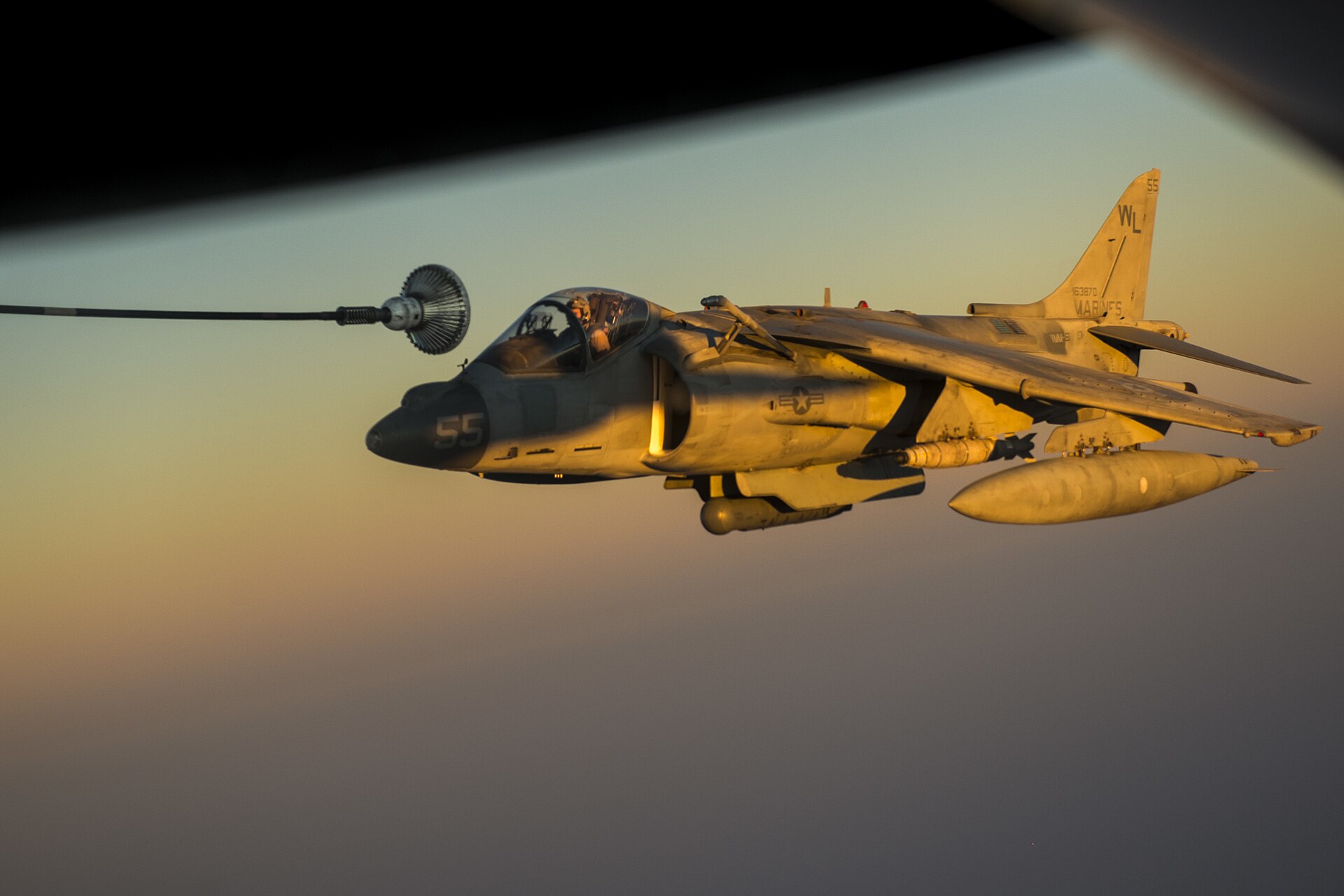
In August 2026, the United States approved a $4.5 billion sale of aerial refuelling aircraft to Qatar. The sale, reported by Al-Monitor and AFP, came five months into the war and less than three months after Defence Security Asia’s report that the CAOC at Al Udeid had been severely damaged. The timing raises a question that neither government has answered: is the sale a routine capability upgrade, or is it part of a reconfiguration forced by damage to the base’s command infrastructure?
Refuelling aircraft are force multipliers. They extend the range and loiter time of combat aircraft, allowing operations over greater distances and reducing dependence on any single forward operating location. If the CAOC has indeed moved to Shaw Air Force Base in South Carolina, the air campaign over Iran would require longer mission cycles, more complex tanker routing, and aerial refuelling capacity distributed across multiple locations rather than concentrated at one hub. The sale could be entirely unrelated to the CAOC’s status; refuelling capacity has been a known gap in Gulf air forces for years, and the procurement pipeline for a sale of this scale would predate the war. But the timing — after the reported damage, before any public clarification of the base’s operational configuration — places it within the range of unresolved questions that Qatar’s silence is managing.
Lieutenant General Deptula’s response to the June report — that future command facilities should be built underground and hardened — is revealing less for what it proposes than for what it concedes. The existing CAOC, the one that directed air operations for two decades, was not underground and was not hardened to withstand the kind of ballistic missile strikes Iran has now demonstrated it can deliver. Whether the $4.5 billion in refuelling aircraft is meant to compensate for that vulnerability, to enable a more dispersed operational model, or to fulfill a pre-war procurement pipeline, the sale joins a list of developments whose public explanation is thinner than the expenditure warrants. The coalition’s air posture across the Gulf — from the RAF Typhoons deployed to Saudi Arabia to the tanker and surveillance assets distributed across the theater — is being rebuilt while the country hosting its former command center declines to say what happened to it.
Can Qatar Sustain Two Functions on One Airfield?
Qatar’s dual role — military host and diplomatic intermediary — is not an improvisation born of the current war. It is a strategy with a track record. During the 2017–2021 Gulf blockade, when Saudi Arabia, the UAE, Bahrain, and Egypt cut ties with Doha, Qatar maintained back-channel access to Tehran, deepened its military relationship with Turkey, and kept the US presence at Al Udeid intact. The episode demonstrated that Qatar could sustain multiple, apparently contradictory, strategic relationships simultaneously. What has changed is that the contradictions are no longer apparent. They are kinetic. The country hosting the air campaign is mediating its end while absorbing strikes from the adversary it is mediating with.
A study by JPPI of Qatar-linked English-language media between January 28 and March 8, 2026, found that Al Jazeera English and AJ+ presented an “overwhelmingly negative narrative” on the US war while downplaying Qatar’s role as host of a major American air base. The study characterized this as Qatar’s “dual-track strategy” — a framing that, whatever one thinks of the methodology, identifies a real phenomenon visible across Doha’s entire public posture. Qatar’s state-linked media apparatus presents the war in terms that do not foreground Doha’s military role in it. The government’s official statements do the same. When Iran struck Riyadh’s King Khalid International Airport on October 10, Qatar called it “a direct threat to the security of the region” — language about regional security, not about the facility on Qatari soil from which the response to such threats was, until recently, coordinated.
The durability of Qatar’s position depends on variables that are not fully within its control. If the CAOC is operational, another Iranian strike could damage it further — or kill American and coalition personnel, at which point the political cost of Qatar’s silence changes in ways that Doha cannot pre-negotiate. If the CAOC has moved, Qatar’s long-term military utility to Washington shifts from command to logistics, a downgrade in strategic centrality that the “continued development” language may be designed to paper over. If the mediation produces results, Qatar’s gamble will be validated: the country that absorbed missiles from both directions and said nothing about its own base will have brokered the outcome that justified the silence. If mediation fails, Doha will have spent the war refusing to describe what is happening on its own territory in exchange for a channel that delivered no agreement.
Araghchi’s October 21 assessment — “little prospect of a diplomatic breakthrough” before the US midterms — indicates that the channel is open but the clock is political, not military. Sheikh Saoud’s “long-distance race” framing matches: Qatar is running a race whose finish line is set by an American electoral calendar, not a Gulf military one. The base develops “according to regional needs.” The communication with Tehran never stops. The CAOC’s operational status remains, in every public Qatari statement since March, entirely unmentioned.
Frequently Asked Questions
How many Iranian missiles has Qatar intercepted since the war began?
Qatar’s Deputy Prime Minister credited the US partnership with countering “more than 90 percent” of Iranian attacks, but the specific numbers behind that percentage have appeared only in fragments. The Anadolu Agency reported that Qatar intercepted 65 ballistic missiles and 12 drones in a single Iranian barrage — a scale that indicates the threat density Al Udeid and Qatari population centers have absorbed during the conflict. The aggregate interception figure across all waves since March 2026 has not been published by either Qatar’s defence ministry or CENTCOM. The Deputy PM’s 90 percent claim implies a denominator large enough to make the remaining 10 percent — the attacks that penetrated Qatar’s defences — a militarily meaningful number in itself.
Did Iran give Qatar advance notice before the March 2026 strikes?
In June 2025, during the Twelve-Day War, Iran reportedly gave Qatar advance notice before striking Al Udeid — a precedent, based on contemporaneous reporting on the 2025 strikes, that established what amounted to a negotiated framework for absorbing hits while preserving the diplomatic channel. The March 2026 strikes appear to have followed a different pattern. On March 2, Qatari F-15s shot down two Iranian Su-24 bombers approximately two minutes from reaching Al Udeid — an engagement distance that strongly suggests the aerial component of Iran’s March offensive was not pre-cleared with Doha. Whether the ballistic missile that struck the base on March 3 was preceded by any diplomatic warning remains unconfirmed in public reporting. The shift from the 2025 precedent — advance notice, minimized damage — to the 2026 reality — Su-24s on terminal approach, a missile inside the perimeter — marks an escalation in Iran’s willingness to test the channel’s limits.
Has Qatar formally severed diplomatic relations with Iran?
No. Qatar expelled Iranian military and security attachés on March 19, 2026, and arrested 10 individuals linked to alleged IRGC sabotage cells on March 4. The Foreign Ministry described the March strikes as “reckless and irresponsible.” But Qatar did not recall its ambassador from Tehran, did not downgrade diplomatic relations, and did not characterize any Iranian attack as an act of war. The Prime Minister’s August 27 visit to Tehran — the first high-level visit since the war began — confirmed that the diplomatic relationship remained intact at the executive level. Iran’s own posture is equally calibrated: its foreign ministry has, at various points, simultaneously confirmed and denied that Qatar serves as a US-Iran intermediary, a contradiction that itself confirms the channel’s continued operation.
Could the CAOC relocate permanently to Shaw Air Force Base?
Shaw Air Force Base in South Carolina has served as the home station of US Air Forces Central Command (AFCENT) and has the infrastructure to support command and control functions. Defence Security Asia’s June 2026 report — the only sourced claim on the CAOC’s relocation — stated that air campaign coordination had already shifted to Shaw after the March damage. If accurate, the question is whether that shift was an emergency measure or a permanent reconfiguration. Directing a Middle Eastern air campaign from a base 11,000 kilometres away introduces latency, communications complexity, and a dependence on satellite links that a forward-deployed CAOC was designed to avoid. Lieutenant General Deptula’s call for hardened, underground future facilities suggests that the US Air Force does not consider the pre-war CAOC model — above-ground, unhardened, in range of Iranian ballistic missiles — viable for future conflicts, regardless of whether Al Udeid is rebuilt or replaced.