ANKARA — Turkey submitted the Makkah Joint Defence Agreement to parliament on 20 October 2026 — seventy-four days after President Recep Tayyip Erdoğan signed it at Al-Safa Palace in Makkah on 7 August. Turkish military personnel are reportedly already on Saudi soil. Neither the treaty nor the deployment has received parliamentary approval under Article 90 or Article 92 of Turkey’s constitution.
Turkey’s constitution places two separate locks on this kind of commitment. Article 90 requires the Grand National Assembly to ratify international agreements before they carry the force of domestic law. Article 92 requires a separate vote to authorise sending armed forces to foreign territory. As of 20 October — the day the government forwarded the pact to parliament — neither requirement had been met (Scroll.in, 7 October 2026).
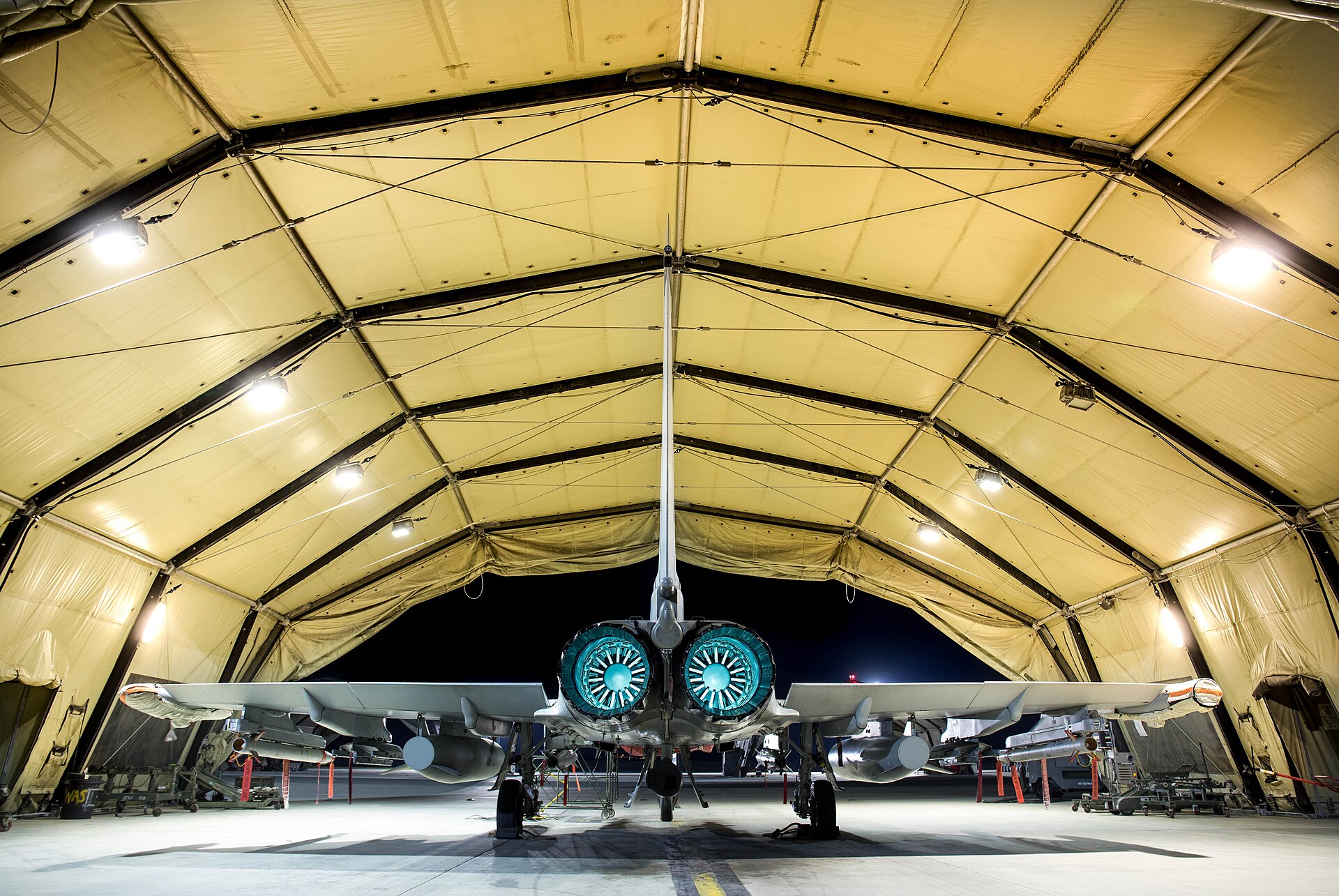
When Britain committed RAF Typhoons to Saudi Arabia’s air defence, the question of parliamentary oversight followed quickly. Ankara has faced no equivalent scrutiny — until today. The legal basis Turkey relies on, the constitutional provisions it has not satisfied, its deployment precedents, and Tehran’s calibrated silence all illuminate what the 74-day gap means for a coalition that has already begun to act without it.
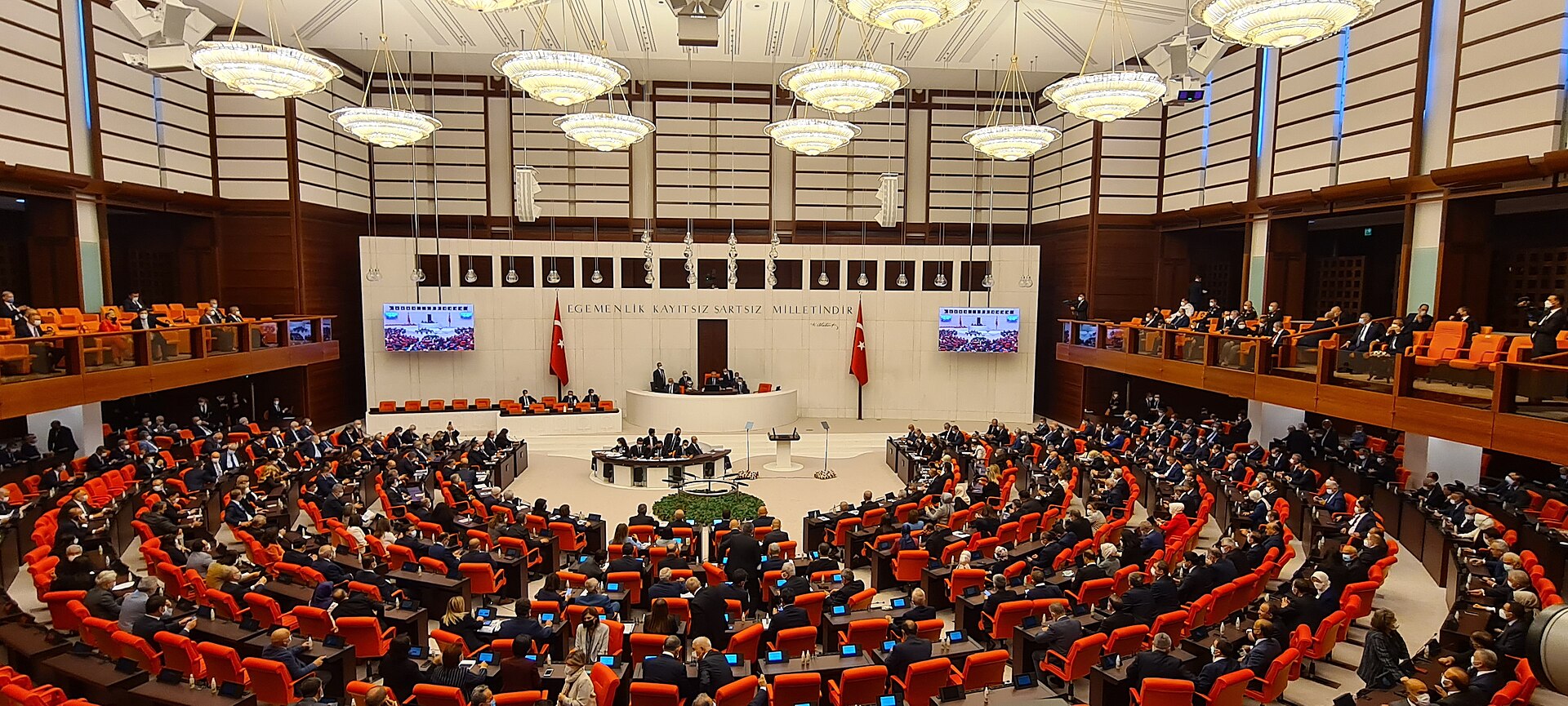
Table of Contents
- What Did Turkey Sign in Makkah on 7 August?
- The Constitutional Requirements Ankara Has Not Met
- What Legal Basis Covers Turkey’s Presence Right Now?
- How Did Turkey Handle Qatar and Libya — and Why Is Saudi Arabia Different?
- The Opposition Called It a Constitutional Crime
- What Would Turkish Forces Actually Do?
- Iran’s Calculated Silence
- The Asymmetry Between Ankara and London
- Frequently Asked Questions
What Did Turkey Sign in Makkah on 7 August?
The Makkah Joint Defence Agreement is a trilateral mutual defence pact signed on 7 August 2026 at Al-Safa Palace by Saudi Crown Prince Mohammed bin Salman, Turkish President Erdoğan, and Pakistani Prime Minister Shehbaz Sharif. Its core clause commits each signatory to treat “any armed attack against any one of the three States” as “an attack against them all,” according to Breaking Defense.
The pact contains 16 articles covering mutual defence, counterterrorism coordination, and military technology cooperation (Al Jazeera, 20 October 2026). A joint communiqué at the signing specified no individual country commitments, no operational plan, no timeline, and no breakdown of national contributions (Globalsecurity.org).
The agreement builds on a precursor: the Saudi-Pakistan Strategic Mutual Defence Agreement signed in Riyadh on 17 September 2025 (Globalsecurity.org). Turkey’s accession at the Makkah summit expanded a bilateral arrangement into a trilateral one. A permanent secretariat was established in Riyadh, with its first secretary-general drawn from Pakistan.
The Middle East briefing 3,000+ readers start their day with.
One email. Every weekday morning. Free.
On its own terms, the pact is explicit about when it becomes binding. It “enters into force once all three parties complete their domestic ratification procedures,” Al Jazeera reported on 20 October. Until all three legislatures act, the agreement is not legally operative under any signatory’s domestic law.
Allison Minor, director of the Project for Middle East Integration at the Atlantic Council, cautioned against reading the ceremony as a military alliance in the Western mould. The agreement is “not a NATO-like alliance,” she wrote, and does not signal “a discrete new regional bloc.” Saudi Arabia’s earlier defence pacts, she noted, have not produced “the kind of response associated with NATO’s Article 5” (Atlantic Council, August 2026).
Yet the pact’s activation outran its ratification. On 5 October, Saudi Deputy Defence Minister Prince Khalid bin Salman announced that the Makkah pact committee had agreed to “activate collective deterrence measures… in response to the attacks and all those responsible for them” (Al Jazeera, 6 October 2026). No troop numbers, roles, or national contributions were specified. The activation came after devastating Houthi strikes on Saudi airports between 6 and 11 October that killed 20 people and injured hundreds (BBC, 8 and 11 October 2026).
Deniz Karakullukcu, a foreign policy adviser in Turkey’s parliament, told The National the pact had moved “much faster than expected from a declaratory collective defence framework” to practical implementation (The National, 6 October 2026). For an assessment of whether the pact’s structure matches the war it was invoked for, the record is revealing: the activation decision preceded the legal architecture needed to support it in at least one signatory’s domestic law.
The Constitutional Requirements Ankara Has Not Met
Turkey’s constitution places two separate requirements on the kind of commitment the Makkah pact represents. Article 90 governs the ratification of international agreements: treaties affecting sovereignty, financial obligations, or citizens’ rights require parliamentary approval before they enter domestic law. Article 92 governs military deployments: sending Turkish armed forces to foreign soil requires a separate, explicit authorisation by the Grand National Assembly (Scroll.in, 7 October 2026; Al Jazeera, 6 October 2026).
Both articles apply to the Makkah pact. Both remain unsatisfied.
Gökhan Ereli, an international relations scholar at Ibn Haldun University in Istanbul, told Al Jazeera on 6 October: “There is no publicly acknowledged standing Turkish deployment in Saudi Arabia.” He added that under Article 92, “parliament holds the authority to send troops abroad, and it has not yet ratified the Mecca pact” (Al Jazeera, 6 October 2026).
The government’s position is that ratification is now under way. The pact was formally submitted to the Grand National Assembly on 20 October. It must first clear the parliamentary Foreign Affairs Committee before reaching the full chamber for a vote, according to the Cyprus Mail. No committee hearing or floor vote has been scheduled.
An unnamed senior Turkish official told Middle East Eye that the government is weighing a shortcut: “We have to ratify the Makkah treaty as well but we may prioritise the military deployment authorisation bill” (Middle East Eye, 7 October 2026). This suggests Ankara may seek a standalone Article 92 deployment vote before completing the slower treaty ratification — an attempt to regularise the legal situation by addressing the more operationally visible requirement first.
Neither path has advanced beyond submission. The 74-day gap between the signing on 7 August and the parliamentary submission on 20 October is not, by itself, unusual for Turkish treaty ratification. What is unusual is that a military activation was declared on 5 October — and forces reportedly began to move — before the first procedural step in parliament had been taken. This is a sequence Turkey has not followed in any other foreign deployment.
What Legal Basis Covers Turkey’s Presence Right Now?
If the Makkah pact is not ratified and no Article 92 authorisation exists, the only legal basis for Turkish military personnel in Saudi Arabia is a 2010 bilateral military training agreement between the two countries. That agreement permits limited forces for training and technical cooperation — not the mutual defence commitment the Makkah pact envisions.
Middle East Eye reported on 7 October, citing two unnamed Turkish officials, that Turkish technical teams, air defence systems, and electronic warfare equipment have been present in Saudi Arabia since 2025, operating under the 2010 agreement to protect Saudi infrastructure (Middle East Eye, 7 October 2026). This is a single-outlet report. No second outlet has independently verified the claim, and Ankara has not publicly confirmed any standing deployment on Saudi territory.
The absence of official confirmation has not stopped others from treating the deployment as established fact. Trump called the Turkish and Pakistani deployments “good” (Gulf News, 7 October 2026). The Makkah pact committee’s 5 October activation of “collective deterrence measures” presupposes forces available to deter. Pakistan’s defence minister has referred to Turkish forces as “present” in Saudi Arabia (Al Jazeera, 6 October 2026). None of these statements has prompted Ankara to confirm or deny.
The distinction between a training agreement and a mutual defence treaty is not merely technical. Under the 2010 arrangement, any Turkish personnel are advisers and technicians operating under a narrow bilateral mandate. Under the Makkah pact, they would be part of a collective security framework obliging Turkey to treat an attack on Saudi Arabia as an attack on itself. As Foreign Minister Hakan Fidan has acknowledged, the pact is not an “offensive agreement” and Turkey “will not send its troops to another country’s territory to launch an attack” (Al-Monitor, 20 October 2026). But even a purely defensive commitment under a mutual defence treaty requires a legal authority that a training agreement does not provide.
The result is a dual-track presence that Ankara neither confirms nor denies. Turkish personnel may be operating systems in Saudi Arabia under a training agreement while simultaneously participating in a mutual defence pact’s activation — one arrangement with parliamentary backing and one without. The ambiguity this creates is not a legal curiosity. It determines whether Turkish personnel are covered by a treaty framework with defined obligations and protections, or by a bilateral training arrangement that was never designed for the conditions now prevailing on the Arabian Peninsula.
How Did Turkey Handle Qatar and Libya — and Why Is Saudi Arabia Different?
Turkey has deployed military forces abroad repeatedly in the past decade — to Qatar, Libya, and northern Syria. In every case, parliament voted before forces moved. The Grand National Assembly authorised each deployment under the constitutionally prescribed procedure. The Saudi presence, whether characterised as training or deterrence, is the sole deployment that has bypassed this sequence.
In June 2017, when Saudi Arabia, the UAE, Bahrain, and Egypt imposed a blockade on Qatar, Turkey moved with extraordinary speed. The Grand National Assembly approved a troop deployment under expedited procedure within five days of the crisis beginning (Al Jazeera, 7 June 2017). Turkish forces arrived in Qatar within a week. The deployment was politically divisive but constitutionally clean.
In January 2020, Turkey deployed to Libya under a formal Article 92 mandate to support the Government of National Accord. That mandate has been renewed by parliament every two years — including an extension effective January 2026, according to Hurriyet Daily News. Turkey’s Libya presence has involved combat advisers, drone operations, and significant military hardware. It has never lacked a parliamentary foundation.
Rich Outzen, a nonresident senior fellow at the Atlantic Council’s Turkey Programme, placed the Saudi situation in this pattern. Turkey’s existing security umbrella already extends to Qatar, Syria, and Libya — “all with parliamentary mandates” (Atlantic Council, August 2026). Saudi Arabia is the exception in Turkey’s foreign deployment portfolio.
The Qatar and Libya precedents are the strongest evidence against any argument that the current gap is routine. If Turkey could secure parliamentary authorisation in five days during the 2017 Gulf crisis, the absence of a vote 74 days after signing the Makkah pact — and more than two weeks after the pact’s military activation — is a choice, not a scheduling constraint. Other coalition partners face their own parliamentary calendars, but none has operated for this long in the gap between executive commitment and legislative approval.
The Opposition Called It a Constitutional Crime
Turkey’s opposition has named the legal vacuum precisely. What it lacks is the parliamentary arithmetic to close it.
“Adventurism that would send Turkish soldiers into Yemen’s deserts after 100 years.”
— Özgür Özel, Turkey’s main opposition leader (Swarajya Mag, 10 October 2026)
Özel’s invocation of a century reaches back to the Ottoman Empire’s disastrous Arabian campaigns during the First World War — a politically charged comparison in a country that still memorialises the Gallipoli and Sinai dead. His argument is not about the wisdom of supporting Saudi Arabia. It is about committing troops without the constitutional process that distinguishes a democratic deployment from an executive adventure.
Namık Tan, a former Turkish ambassador to the United States and Israel who now serves as an opposition parliamentarian, raised a procedural objection with broader implications. He demanded clarification of the pact’s legal status — whether it is “a binding defence agreement, a memorandum, or a joint declaration” (Swarajya Mag, 10 October 2026). The question is not academic. If the Makkah document is a joint declaration rather than a treaty, it might not require Article 90 ratification. But it would then carry no mutual defence obligation — which would undermine the entire basis for the 5 October activation and the collective deterrence it purports to authorise.
The opposition has collectively described the pre-ratification deployment as a “constitutional crime” (Swarajya Mag, 10 October 2026). Erdoğan’s ruling Justice and Development Party and its Nationalist Movement Party allies hold a parliamentary majority, and ratification is expected to pass when brought to a vote (Scroll.in, 7 October 2026). Parliament Speaker Numan Kurtulmus told The National on 6 October he expected the pact to reach the assembly’s agenda “in the coming period.”
The political reality is clear. The opposition can name the constitutional gap but cannot block the eventual vote. The ruling majority will ratify. The question that lingers is what was authorised — and under whose authority — during the 74 days before parliament was asked.
What Would Turkish Forces Actually Do?
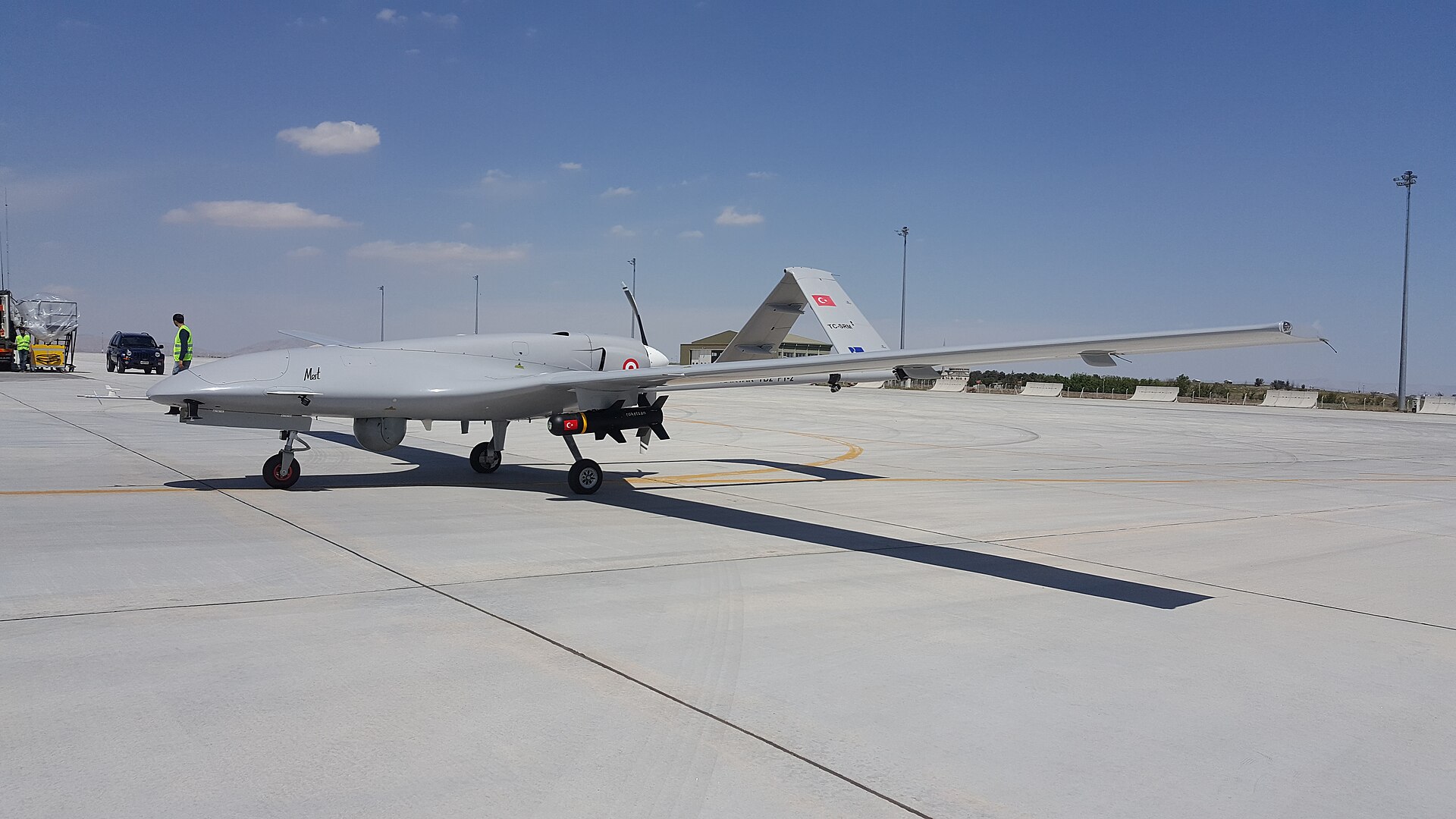
Turkish and international analysts who have spoken publicly converge on a narrow set of likely capabilities: air defence, electronic warfare, surveillance, and military advisory teams. No expert interviewed by any major outlet has described Turkey’s probable contribution as ground combat troops in Yemen or offensive operations against Houthi positions.
Murat Yesiltas, foreign policy director at the SETA think tank and a member of Turkey’s presidential foreign policy advisory board, told Middle East Eye and The National that Turkey’s initial contribution would more likely be “air defence, anti-drone systems, or ISR assets on Saudi soil than combat troops in Yemen.” He described Turkey’s position as “delicate” and recommended “measured solidarity” (Middle East Eye, 7 October 2026; The National, 6 October 2026).
Hasan Selim Ozertem, research director at Ussal Consultancy, told The National: “I say no” to Turkish troops in Yemen. He argued Turkey could deploy to Saudi territory for strictly defensive purposes and compared the likely contribution to Turkey’s existing role in Libya, Syria, and Azerbaijan: “drones, electronic warfare systems and military advisers” (The National, 6 October 2026).
An unnamed senior Turkish official reinforced the message: “We don’t plan to send a large group of soldiers and have no plans to directly intervene in Yemen” (Middle East Eye, 7 October 2026).
The technical consensus — air defence, electronic warfare, intelligence, surveillance, and reconnaissance — aligns with Turkey’s defence-industrial strengths. Ankara has exported Bayraktar TB2 drones to numerous countries and fielded the KORAL electronic warfare system across multiple theatres. Turkey has been positioning itself as a defence partner capable of meeting needs that Washington’s congressional conditions make harder to fill.
But even a defensive deployment of air defence systems and electronic warfare equipment constitutes a military presence on foreign soil. Whether the personnel operating those systems are “trainers” under a 2010 agreement or “deployed forces” under a 2026 mutual defence pact is precisely the question that Articles 90 and 92 exist to resolve — through parliamentary vote, not executive action.
Iran’s Calculated Silence
Tehran has not denounced Turkey’s involvement in Saudi defence. It has not endorsed it. The silence is economically rational and strategically deliberate.
Iran’s Foreign Ministry spokesperson Esmaeil Baghaei said Tehran “hoped reports of a Pakistani deployment for war in Yemen were untrue” and warned new intervention would “complicate the situation” (Al Jazeera, 6 October 2026). He mentioned Pakistan. He did not mention Turkey.
Two days after the Makkah pact was signed, Iran stated it had “no cause for concern” about the new alliance and did not consider it directed against Tehran (Al Jazeera, 9 August 2026). Foreign Minister Fidan reinforced the message on 9 August, saying the pact “does not identify Iran, or any other country, as a common threat” (Al Jazeera, 9 August 2026).
Iranian analyst Javad Heiran-Nia drew a precise red line for Al Jazeera. A purely defensive Turkish deployment protecting Saudi installations is tolerable. Joining offensive operations against the Houthis, Iran’s most effective regional proxy, “Iran regards it as a red line” (Al Jazeera, 6 October 2026). The line between defending a Saudi airport from incoming missiles and striking the launchers that fired them is operationally narrow but politically vast.
Economics explains Tehran’s restraint. Turkey-Iran bilateral trade exceeded $5.6 billion in 2025, according to Tehran Times (June 2026). Over 7,000 companies with Iranian investment operate in Turkey. Three million Iranians visited Turkey as tourists in 2025. Saudi Arabia’s search for defence partners beyond Washington brought Turkey to the table — but Turkey’s economic entanglement with Iran constrains how far it can go once seated.
Aydın Sezer, an international relations analyst, argued in Bianet that the Makkah pact positions Turkey “in opposition to Iran” in the Gulf, despite official denials from both sides (Bianet, October 2026). The economic interdependence, he suggested, is what keeps that opposition below the threshold of open confrontation.
For Tehran, the calculation is straightforward. Turkish air defence systems protecting Saudi airports do not threaten Iran’s strategic interests. Turkish combat aircraft striking Houthi positions would. Ankara’s insistence that its role is defensive — and Tehran’s willingness to accept that framing — is a negotiated ambiguity that serves both capitals. Whether it survives the next escalation is another matter. After a strike on King Khalid International Airport that killed 13 and wounded over 300 on 10 October alone (Al Jazeera, 10 October 2026; BBC, 11 October 2026), the pressure on every Makkah pact member to do more will only intensify.
The Asymmetry Between Ankara and London
When Britain deployed RAF assets to support Saudi air defence, the decision was made under royal prerogative — executive authority that does not require a Commons vote before forces are committed. The UK government faced post-hoc scrutiny rather than prior authorisation. But the commitment became public, parliament asked questions, and the government confronted the issue of democratic accountability in a conflict zone. The strikes that accelerated coalition commitments created the same political pressure in London and Ankara.
Turkey’s constitutional framework is stricter than Britain’s. The British system permits executive deployment followed by parliamentary questioning. Turkey’s does not. Articles 90 and 92 both demand prior authorisation — a design inherited from Turkey’s post-military-coup constitutions, written specifically to prevent the executive from committing the country to foreign conflicts without legislative consent.
Erdoğan has bypassed that framework. He signed a mutual defence pact on 7 August. The pact’s military activation was declared on 5 October. Forces reportedly moved to Saudi territory. Parliament received the paperwork on 20 October. Every other Turkish deployment abroad in the past decade — Qatar, Libya, northern Syria — followed the constitutionally prescribed sequence. The Saudi commitment is the first to arrive at parliament after the fact.
The opposition has named the gap. The ruling majority will close it through ratification. But seventy-four days of executive military commitment without legislative authority is not a procedural delay. It is a precedent. If the Grand National Assembly ratifies the Makkah pact next month, it will be endorsing a commitment Turkey has already begun to fulfil — not authorising one it might undertake.
The broader question is whether the sequence — sign, deploy, activate, then vote — is one Turkey’s democratic institutions can absorb without consequence. The threat to Saudi Arabia is real. The case for Turkish involvement is credible. Every expert who has spoken describes a limited, defensive contribution that aligns with Ankara’s defence-industrial strengths and avoids the Yemeni ground war the opposition fears.
But a deployment that rests on a 2010 training agreement while a 2026 mutual defence treaty awaits ratification is a legal structure held together by the assumption that parliament will eventually agree with what the president has already done. Every country in the new Saudi coalition faces its own version of this tension between executive speed and democratic process. Pakistan’s government addressed the deployment through ministerial statements; Ankara’s version is the most constitutionally exposed because Turkey’s charter is the most explicit about requiring prior parliamentary authorisation.
The mandate is coming. What Turkey has not answered — and what seventy-four days of silence on the question suggests it would prefer not to — is what authority covered the forces, the systems, and the commitments made during the time it was absent.
Frequently Asked Questions
What is the Makkah pact’s permanent secretariat and who leads it?
The agreement established a coordination secretariat in Riyadh with a Pakistani secretary-general (Globalsecurity.org). Whether the secretariat has convened since the 5 October activation has not been publicly reported.
Has any signatory completed ratification of the Makkah pact?
As of 20 October 2026, none of the three signatories has confirmed completing domestic ratification. Turkey is the first to formally submit the pact to its legislature. The agreement states it enters force only after all three parties ratify — meaning the mutual defence obligations invoked on 5 October rest on a treaty that does not yet legally exist in any signatory’s domestic law.
Could Turkey deploy under the Makkah pact without a separate Article 92 vote?
Likely not on its own. Article 90 treaty ratification and Article 92 deployment authorisation are constitutionally distinct requirements. The government’s own acknowledgment that it “may prioritise the military deployment authorisation bill” (Middle East Eye, 7 October 2026) is an implicit concession that the treaty vote alone would not cover the deployment — Ankara anticipates needing both.
Why has Erdoğan’s government not explained the 74-day delay?
No public statement has addressed the gap. Analyst Aydın Sezer argued in Bianet that Turkey needs Saudi capital to manage its economic difficulties ahead of elections — an incentive to commit quickly while deferring the domestic political friction of a parliamentary debate until the military presence was already a fact on the ground.