
CAIRO — President Abdel Fattah el-Sisi asked Egypt’s parliament on 17 October to authorize the deployment of armed forces to Saudi Arabia, the most direct offer of Arab ground troops since the Houthi crisis escalated into full-scale war in 2026. The vote, scheduled for 26 October, will almost certainly pass — but the real question is what Saudi Arabia’s $10.3 billion in deposits at Egypt’s central bank purchased before any MP cast a ballot.
No formal Saudi request has been made. Sisi’s language was conditional — “if it is requested of us” — yet the National Defence Council pre-approved the mission the following day, parliament opened two emergency sessions, and the pro-government bloc holds enough seats to clear the constitutional two-thirds threshold without a single opposition vote. Egypt is considering its first ground-force commitment to a foreign conflict since the Yemen campaign that killed up to 26,000 of its soldiers and helped lose the 1967 war against Israel. What has changed since then is not Egypt’s appetite for foreign wars but the depth of its financial dependence on Riyadh.
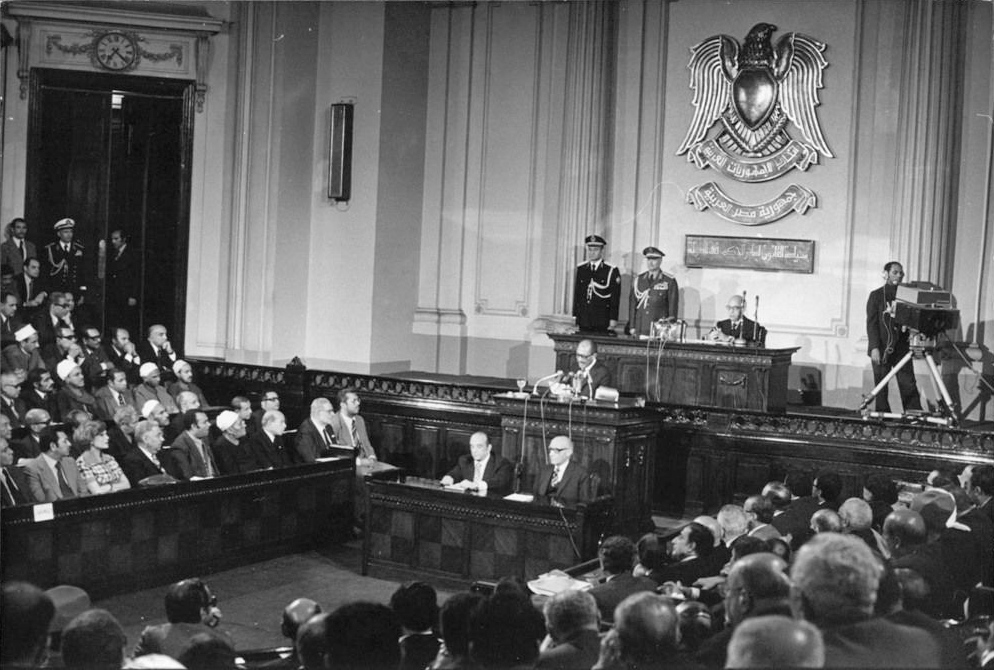
Table of Contents
- What Did Sisi Ask Parliament to Do?
- The Arithmetic of a Guaranteed Vote
- Why Would Egypt Send Troops to Saudi Arabia?
- The 1962 War That Egypt Cannot Forget
- What Would Egyptian Forces Do in Saudi Arabia?
- Can Egyptian Ground Forces Change the Military Equation?
- The Houthi Warning to Cairo
- The Makkah Pact and Egypt’s Next Step
- Frequently Asked Questions
What Did Sisi Ask Parliament to Do?
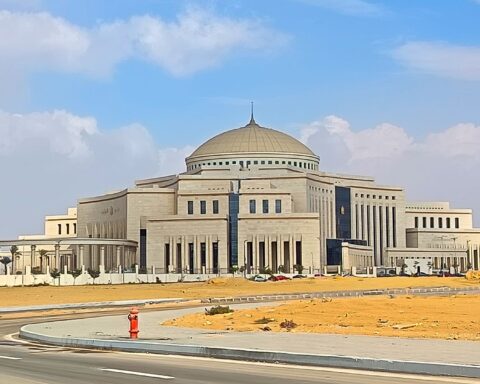
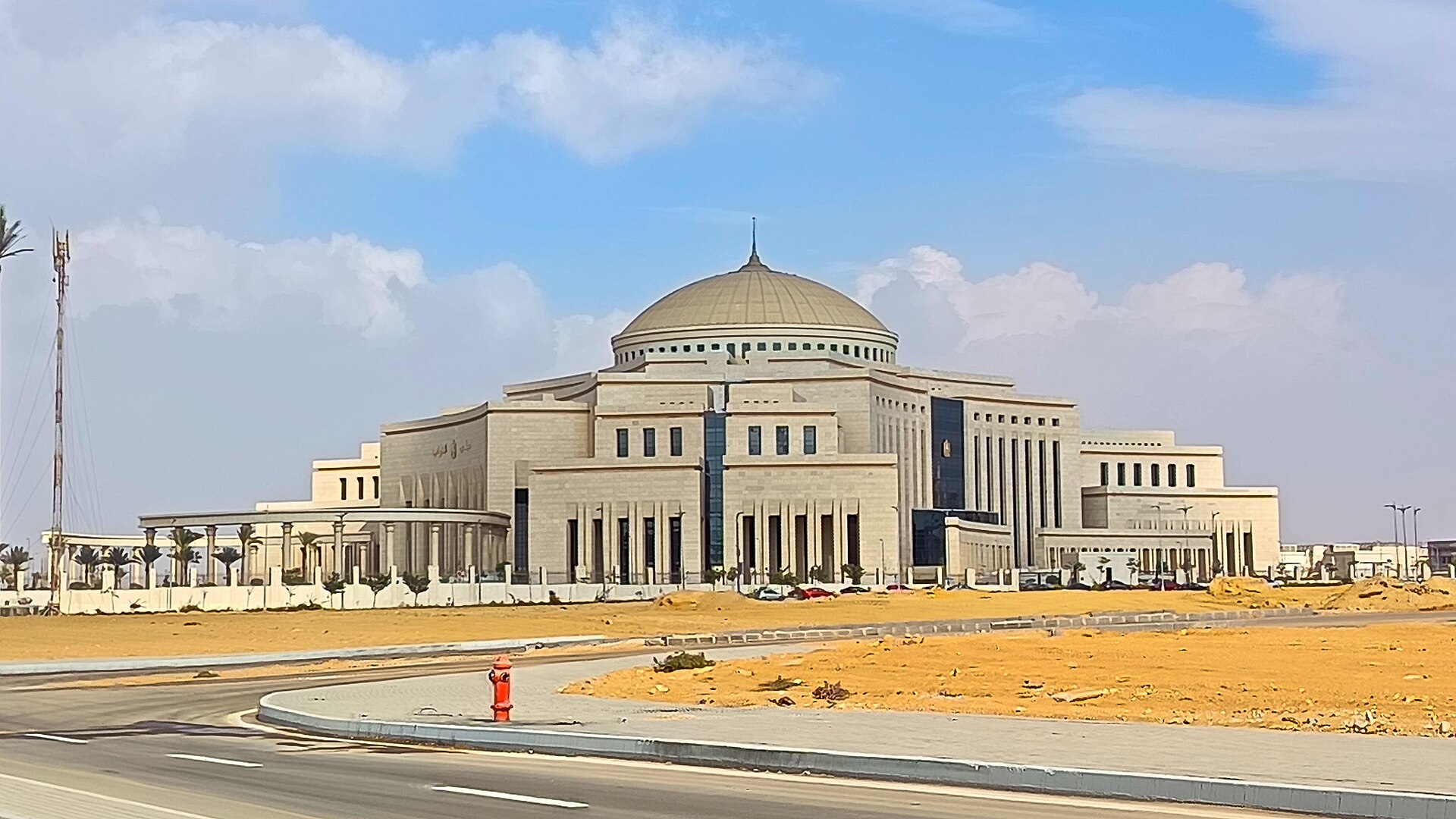
Sisi asked Egypt’s House of Representatives to authorize the deployment of armed forces to Saudi Arabia under Article 152 of the constitution, which requires a two-thirds majority — at least 398 of 596 members — after consulting the National Defence Council. The request, made at a graduation ceremony at the Egyptian Military Academy on 17 October, was explicitly conditional: “if it is requested of us,” Sisi said, adding that he was “speaking only for defence.”
The House of Saud Daily Briefing
Saudi Arabia's news in 3 minutes, every morning. Free. See today's issue
The conditional phrasing preserved the diplomatic fiction that Cairo was offering rather than committing. But the next day’s choreography told a different story. Sisi chaired the National Defence Council on 18 October, and the body approved “all necessary and possible forms of support” for Saudi Arabia. The NDC’s attendance list read like a war cabinet: the parliamentary speaker, the prime minister, the defence minister, the armed forces chief of staff, and the ministers of interior, finance, and foreign affairs. By the time parliament convened its first emergency session that same day, the executive branch had already signed off on everything the legislature was being asked to consider.
“I hope that parliament will convene in an emergency session to give us this authorisation, if it is requested of us.” He added: “I am speaking only for defence.”
— President Abdel Fattah el-Sisi, Egyptian Military Academy, 17 October 2026
Parliament adjourned its first session on 18 October, adjourned again on 19 October, and scheduled the vote for 26 October. The delays were not driven by hesitation. About 300 MPs registered to speak in closed sessions — a volume that suggests members want their support for the mission on the official record as much as they want to examine its scope. Sisi separately told the military academy gathering that “Egypt is ready to take any measure Saudi Arabia requests to defend its security and sovereignty,” language that left no ambiguity about the direction of travel even while the constitutional process ground through its procedural stages.
The Arithmetic of a Guaranteed Vote
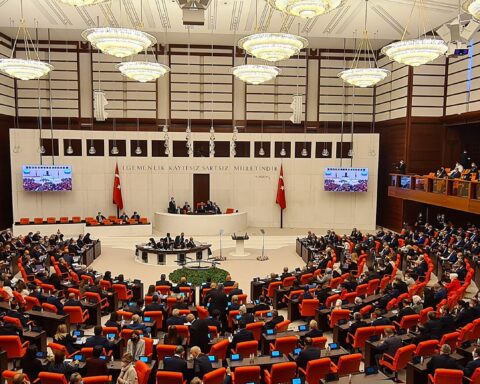
Egypt’s parliamentary mathematics leave little room for drama. Pro-Sisi parties hold 403 of 568 elected seats — five more than the 398 needed for a two-thirds supermajority. The remaining 28 seats in the 596-member House are presidential appointees. The opposition bloc, with 53 of 568 elected seats, cannot block the authorization even if every one of its members votes against it. The passage threshold is reachable within the ruling coalition alone, without a single crossover vote, without a single favour called in.
The dissent, such as it is, has been polite and marginal. Three MPs told reporters publicly that they would abstain. The Egyptian Social Democratic Party, which holds 11 seats, instructed its members to abstain as well, citing a lack of information on the mission’s objectives, duration, costs, and risks — what it called a need for “clarity of objectives” rather than “an open-ended commitment.” But abstention at this scale is protest messaging, not legislative arithmetic. Even if every Social Democrat and every announced abstainer sits out the vote, the pro-government bloc holds comfortably.
What the debate reveals is not division but coordinated messaging. Pro-government MP Mostafa Bakry declared Saudi security “an integral part of Egypt’s own national security,” a formulation that Wafd party leader El Sayed El Badawi echoed almost word for word, calling it “an inseparable part.” When the ruling party and one of the largest opposition parties in the chamber use interchangeable language, the debate is less about consent and more about establishing a national narrative in which the deployment arrives wrapped in cross-party legitimacy. Bakry told reporters that “an overwhelming majority” backed the authorization, with no MP having voiced outright rejection.
The most vocal sceptic was former presidential candidate Hamdeen Sabahi, who argued from outside parliament that Egypt should be “a sponsor of reconciliation” rather than take sides. Sabahi holds no seat and has no vote, but his position articulates what the Social Democrats’ abstention only implies: a strand of Egyptian opinion that reads the deployment as a Saudi dependency exercise, not a national security imperative. That strand is small enough to be overruled and just visible enough to be quoted when the debate’s record is written.
Why Would Egypt Send Troops to Saudi Arabia?
Saudi Arabia holds $10.3 billion in deposits at Egypt’s central bank, according to Bloomberg. Of that sum, $5.3 billion matures in October 2026 — the same month parliament is voting on whether to send soldiers to defend Saudi soil. Egypt has lost approximately $11 billion in Suez Canal revenue to Houthi Red Sea attacks since 2023, and roughly 11 percent of Saudi Arabia’s foreign population is Egyptian, making the kingdom Cairo’s largest single source of remittances.
Start with the deposits, because Cairo had to. The $5.3 billion maturing this month is under active negotiation for renewal. There is no public evidence that Saudi Arabia has linked the rollover to a military commitment, and no Egyptian official has drawn the connection on the record.
But the timing does not require a formal linkage to create pressure. Every senior official in Cairo can read a calendar, and the calendar says the deposits, the vote, and the end of the IMF’s Extended Fund Facility programme all converge in the same four-week window of October 2026.
| Financial exposure | Amount | Source |
|---|---|---|
| Saudi deposits at Egypt’s central bank | $10.3 billion | Bloomberg / The National News, Oct 2026 |
| Saudi deposits maturing October 2026 | $5.3 billion | Bloomberg / The National News, Oct 2026 |
| Gulf deposits at CBE (IMF commitment) | $18.3 billion | IMF report, July 2025 |
| Egypt’s IMF debt (June 2026) | $9.3 billion | IMF programme data / Bloomberg, 2026 |
| Suez Canal revenue lost since 2023 | ~$11 billion | Al Jazeera, Oct 2026 |
The deposits sit within a broader architecture of Gulf financial support that has kept Egypt solvent. Gulf states committed to keeping $18.3 billion in official deposits at the Central Bank of Egypt untouched until the end of the IMF programme, according to a July 2025 IMF report — a maturity date that now coincides precisely with the parliamentary debate. Egypt’s outstanding IMF debt stood at $9.3 billion as of June 2026. Sisi is not managing a single bilateral relationship; he is managing a stack of overlapping obligations in which Saudi goodwill is the load-bearing pillar.
The Suez Canal losses make the dependency circular. Egypt’s most reliable foreign-currency earner has been gutted by the same conflict it is now being asked to help resolve — Houthi attacks on Red Sea shipping that have driven carriers around the Cape of Good Hope and taken billions in transit fees with them. The irony is structural: the Houthis destroyed Egypt’s revenue stream, and Saudi Arabia, the Houthis’ primary target, is the country whose deposits keep the Central Bank of Egypt functional. Sisi is not volunteering out of generosity. He is managing a dependency that leaves him very little room to say no.
The human dimension is equally binding. An Egyptian flight attendant named Azza Ramzy, 28 years old and from Beheira province, was among those killed in the 10 October strike on King Fahd International Airport. Her death was widely reported in Egyptian media and featured in parliamentary arguments for authorization. When Egyptian lawmakers speak of defending “vital Saudi facilities,” they are talking about places where their constituents work, transit through, and now die. The deployment, if it comes, will be framed as protecting Egyptian nationals as much as Saudi infrastructure — an argument that transforms an uncomfortable financial obligation into something that looks like duty.
The 1962 War That Egypt Cannot Forget
The officer corps Sisi is preparing to deploy carries the institutional memory of Egypt’s last ground war in Yemen, and that memory is catastrophic. Between 1962 and 1967, Egypt sent up to approximately 70,000 troops to fight in the North Yemen civil war, backing republican forces against royalists who were, at the time, supported by Saudi Arabia. Casualty estimates range from 15,194 to 26,000 Egyptian dead over five years — losses so severe that the campaign became known inside Egypt’s military establishment as “Egypt’s Vietnam.”
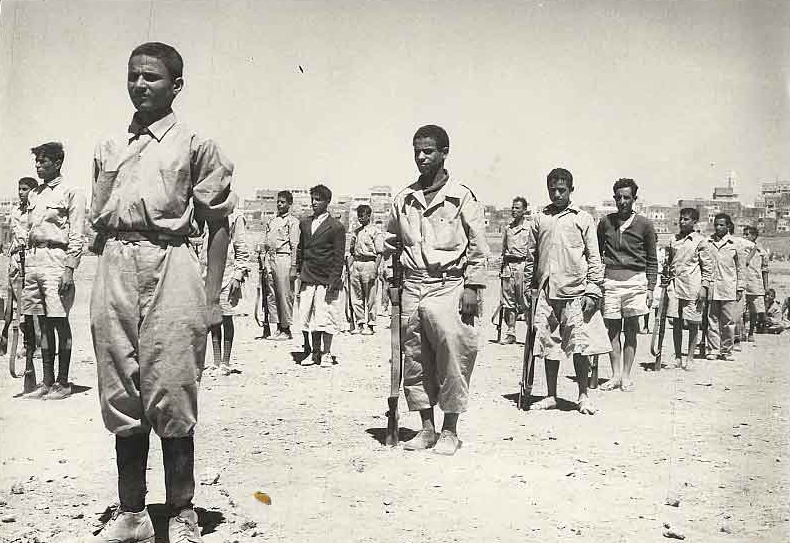
The damage extended far beyond Yemen itself. The commitment drained equipment, experienced officers, and command attention at precisely the moment Israel was preparing what became the Six-Day War. General Mohamed Fawzi, later Egypt’s chief of staff, wrote in his memoirs that political reliability had been prioritized over combat effectiveness during the Yemen deployment, that units were assigned based on loyalty to Nasser’s revolutionary project rather than tactical ability. The campaign did not merely cost lives; it cost readiness. When the Six-Day War began in June 1967, Egypt’s military was trained for the wrong war, positioned in the wrong country, and commanded by officers selected for the wrong qualities.
The ghosts of that campaign were invoked explicitly in the parliamentary debate. Ghad Party MP Ayman Nour called the proposed authorization necessary — defending Saudi Arabia is “an Arab duty,” he said — but added that it “is not a blank cheque.” Nour proposed 10 safeguards including a fixed duration, a defined geographic scope, regular reports back to parliament on the deployment’s status, and an explicit exclusion of operations inside Yemen. He cited the 1960s intervention by name, calling it “Egypt’s Vietnam” — reaching back six decades for a cautionary precedent that happens to be the worst military humiliation in modern Egyptian history.
“Authorisation is not a blank cheque.” Nour proposed 10 safeguards and invoked the 1960s Yemen campaign by name, calling it “Egypt’s Vietnam.”
— Ayman Nour, Ghad Party MP, on the proposed military authorization
The Houthis have noticed the institutional anxiety and chosen to exploit it. Mohammed al-Bukhaiti, a member of the Houthi political bureau, said publicly that the Egyptian military has “bitter memories” of its 1962-67 Yemen intervention and that he “could not imagine it repeating that experience.” The provocation was calibrated to land where it hurts: remind Cairo’s generals that the last time Egypt went to Yemen, Yemen won. Sisi’s insistence that he was “speaking only for defence” — defending Saudi facilities, not conducting operations inside Yemen — reads as an answer to both Nour’s constitutional safeguards and Bukhaiti’s historical taunt. Whether the distinction between defence and war survives contact with the conflict is the question that haunted the 1962 deployment and has not been answered since.
What Would Egyptian Forces Do in Saudi Arabia?
Egyptian forces would defend vital Saudi facilities — airports, water desalination plants, and power stations — and would not involve sending soldiers into Yemen, according to Egyptian lawmaker Reda Abdulsalam. The mission as described is a perimeter assignment, not an expeditionary one: Egyptian troops at fixed sites inside Saudi borders while coalition air power and local ground forces handle offensive operations elsewhere.
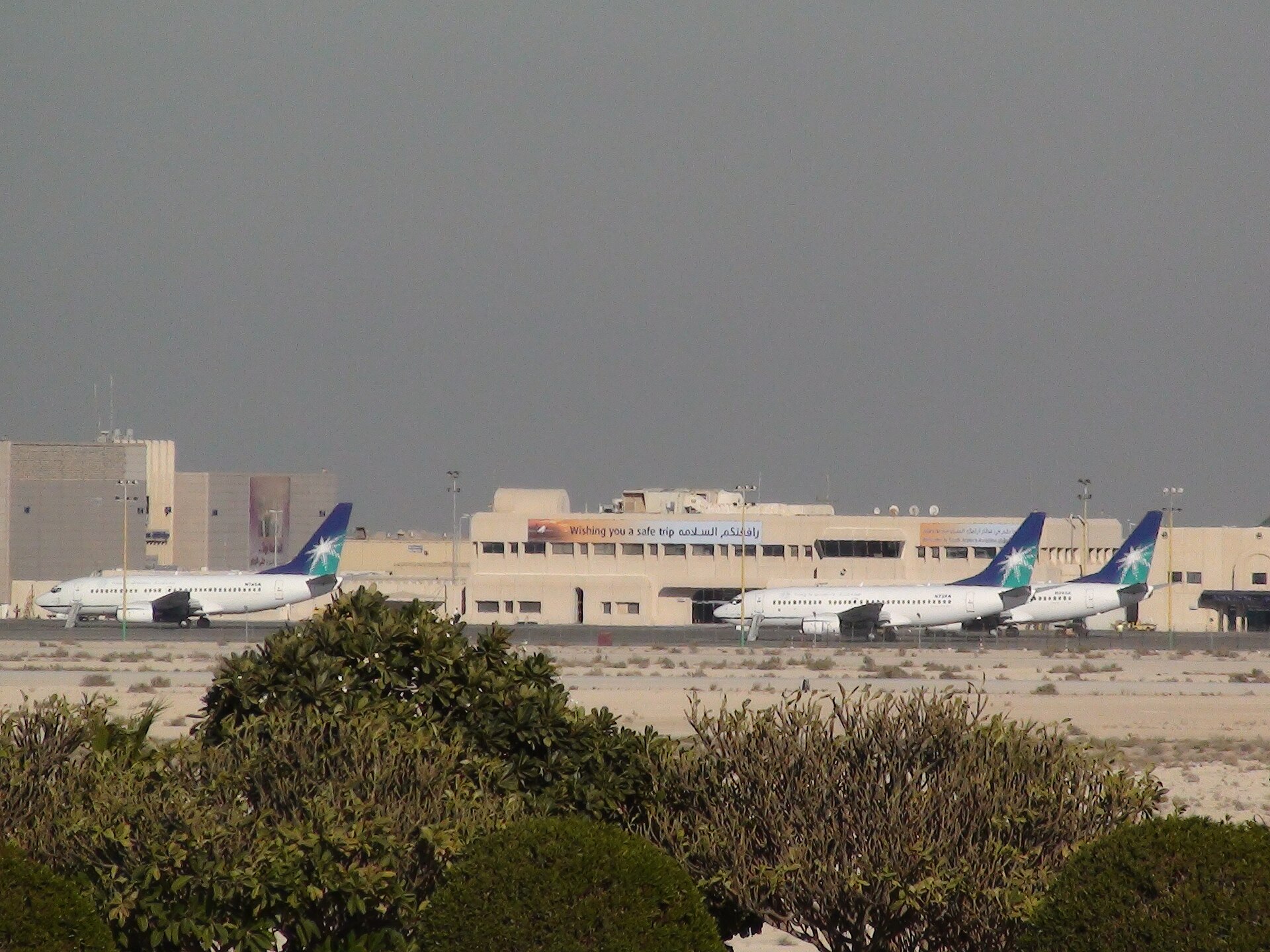
The facilities in question need defending badly. Coalition spokesman Major General Turki Al Malki said Houthis had launched 20 attacks on King Khalid International Airport alone since 1 October, killing 19 people and wounding 364. Strikes have hit King Fahd International Airport in Dammam, the Shaybah oil field deep in the Rub’ al-Khali, and airports serving Riyadh. The attack surface is vast: Saudi Arabia’s critical infrastructure stretches across a country the size of Western Europe, and the Houthi drone and missile arsenal has demonstrated the range and accuracy to reach nearly all of it.
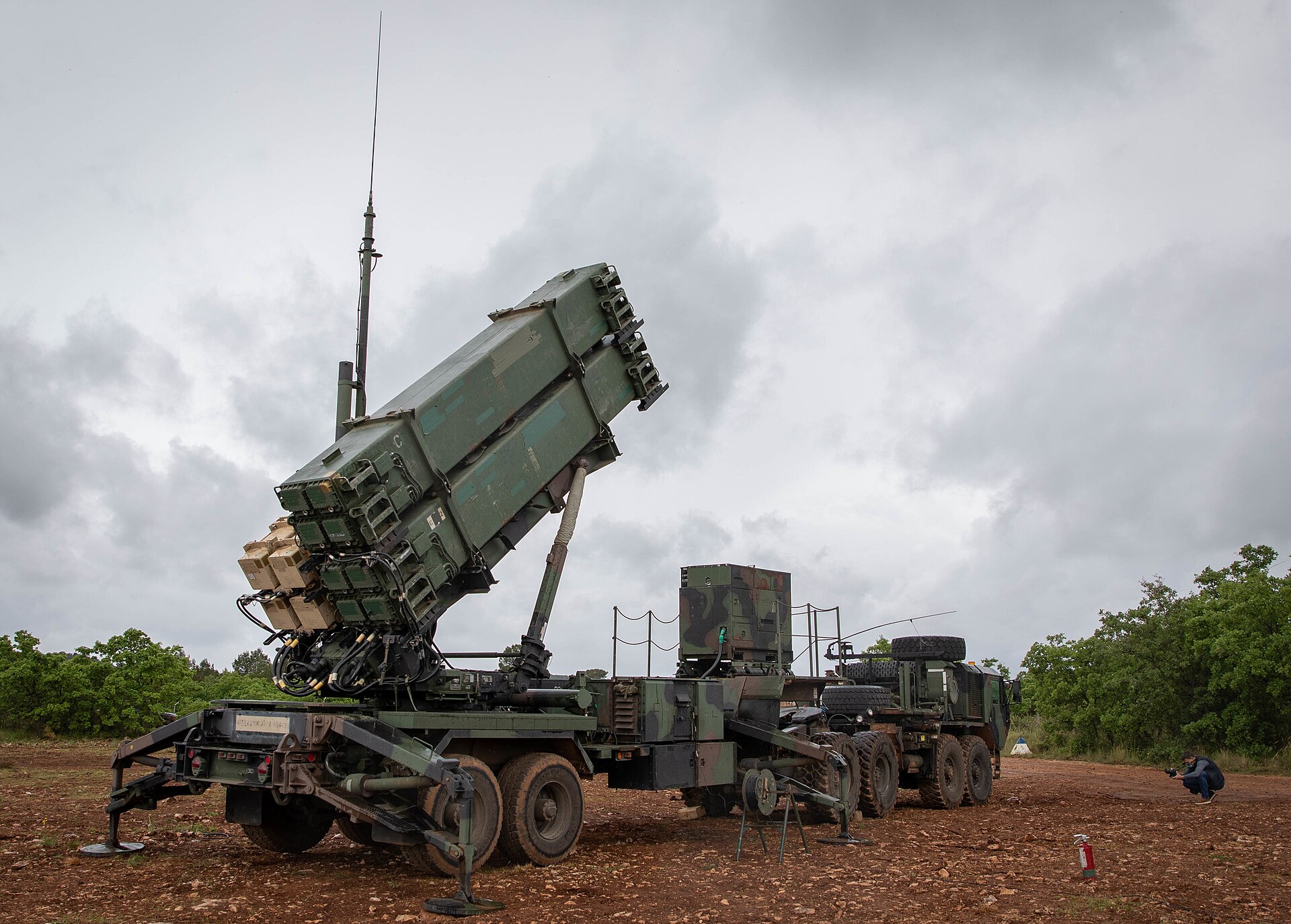
Analyst Alexandru Hudisteanu argued that counter-drone and anti-missile support is “the most urgent need at this point” and characterized the deployment request as a “deterrence signal” aimed at Iran as much as at the Houthis. Egypt’s military operates layered air-defence systems — Russian-origin S-300s for area coverage, Tor-M1 short-range systems for point defence, and Western early-warning radars — giving it capabilities that could supplement Saudi Patriot batteries at high-value sites. The open question is whether supplementing static defences at airports and desalination plants adds enough to change outcomes, or whether it distributes the risk across a second national army without reducing the threat.
Egypt’s 2015 contribution to the Saudi-led coalition provides a baseline comparison. That deployment was limited to four warships sailing through the Suez Canal to the Gulf of Aden, plus air force participation in coalition operations. Egyptian military spokesman Mohamed Samir explicitly denied any ground operations at the time, and Sisi extended the naval deployment for at least six months in August 2015. The 2015 commitment was real but deliberately bounded: ships and aircraft, not soldiers on foreign soil. What is being discussed now crosses a line that Cairo drew for itself a decade ago, and everyone in parliament knows it.
Can Egyptian Ground Forces Change the Military Equation?
Egyptian ground forces can defend fixed sites inside Saudi Arabia but cannot reach the Houthi launch positions embedded in Yemen’s mountain terrain. “Ground forces can retake the coast but missiles launched from mountains are harder to stop,” Gulf studies expert Thomas Bonnie James told Al Jazeera. The Houthi threat to Saudi Arabia is not a territorial invasion that infantry can repel at the border; it is a ballistic and drone campaign launched from deep inside highlands that have defeated every attempt at ground penetration.
James said Egypt’s authorization, if it leads to deployment, would shift Cairo’s commitment “from a multilateral maritime framework to a bilateral military commitment.” The distinction matters more than it sounds. A bilateral military commitment to Saudi Arabia, in the absence of any formal defence pact between the two countries, creates an obligation structure with no clear exit clause and no institutional mechanism for termination. Egypt and Saudi Arabia have no existing bilateral defence agreement — a fact that makes the parliamentary authorization both more politically consequential and more legally ambiguous than it would be under a standing mutual defence treaty.
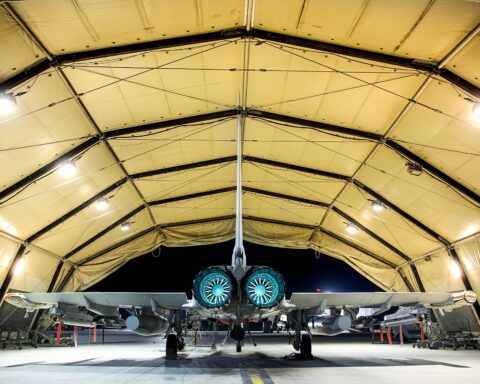
For Saudi Arabia, the request itself — however it was communicated behind closed doors — amounts to an admission that the air campaign has not degraded Houthi strike capability enough to protect Saudi population centres. The kingdom has Patriot batteries, THAAD systems, and a coalition that now includes RAF Typhoons from Britain. It is asking for Egyptian ground troops anyway. The gap between what Saudi Arabia possesses and what it needs is not air superiority or interceptor stocks; it is the manpower to guard an enormous country against a threat that can launch from any ridgeline in northern Yemen and strike anywhere from Riyadh to Shaybah. Egypt has that manpower. Whether deploying it changes the war or simply adds a second flag to the casualty lists is the question neither government has answered.
The parallel with London’s deployment is instructive on different terms. Britain committed combat aircraft under the royal prerogative — no Commons vote required, no public debate, no constitutional threshold. Cairo is being asked to do something more exposed: deploy ground troops under a process that requires a two-thirds supermajority, a National Defence Council consultation, and a public record of every member who voted yes. The political cost of the British deployment was absorbed quietly; Egypt’s will be borne in the open. Every Egyptian soldier injured or killed on Saudi soil will land in parliament before it lands in the headlines.
The Houthi Warning to Cairo
The Houthis have been working Cairo from two directions simultaneously. Mohammed al-Bukhaiti delivered the soft approach: “We do not expect Egypt to become involved in aggression against Yemen. Egypt is bigger than that.” The compliment was barbed. Bukhaiti said Egyptian involvement would place Cairo in “the same camp as the United States and Israel” — framing a potential deployment not as Arab solidarity but as collusion with enemies of the Islamic world. For an Egyptian public already sensitive to any perceived association with Israel, the accusation carries weight even when it comes from a movement with little credibility in Cairo’s political establishment.
The harder line came from Yahya al-Ra’i, speaker of the Houthi-run parliament in Sanaa, who wrote directly to Egypt’s parliamentary speaker Hisham Badawy warning that involvement “would pose a grave danger to its national security.” Al-Ra’i accused Saudi Arabia of “aggression and siege” against Yemen for over 12 years and rejected any Egyptian participation that would drag Cairo into “the same trench” as what he called “takfiri forces” and Israel. The letter was itself an escalation: an unrecognized parliamentary speaker writing to a recognized one, institution to institution, asserting a kind of procedural equality while delivering what amounted to a threat.
The Houthi strategy is transparent. They are weaponizing Egypt’s own institutional memory — the catastrophe of 1962-67 — while simultaneously threatening to make Egypt a target if it proceeds. The Houthi exemption declared for Madinah and Makkah was part of the same campaign: an attempt to claim Islamic legitimacy by offering selective protection of holy sites while continuing to strike everything else. If Egyptian troops arrive at Saudi airports and a Houthi missile hits one of those airports, Egypt transforms overnight from a bystander absorbing economic losses to a belligerent absorbing casualties.
The threat extends beyond rhetoric into Egypt’s remaining economic lifeline. The Houthis have physically occupied Mayyun Island in the Bab el-Mandeb strait, and their campaign against Red Sea shipping has already gutted Suez Canal revenues. A formal Egyptian military deployment to Saudi Arabia would give the Houthis a pretext — real or manufactured — to escalate specifically against Egyptian-flagged vessels or Egypt-dependent transit routes, turning what has been collateral revenue damage into targeted economic warfare against a named belligerent. Cairo’s planners are weighing the Saudi deposits they protect by saying yes against the shipping income they risk by entering a war they have so far absorbed only as bystanders.
The Makkah Pact and Egypt’s Next Step
Egypt’s Foreign Minister Badr Abdelatty said Egypt is “seriously considering” joining the Makkah Joint Defence Agreement, signed by Saudi Arabia, Turkey, and Pakistan in August 2026. If Cairo signs, the three-nation pact becomes a four-nation coalition joining two of the largest Arab armies with the biggest Muslim-majority military in the world. Turkey took 74 days to submit the pact to its own parliament and has still not ratified it; Egypt appears to be moving faster, though “seriously considering” remains several steps short of a signature.
The Makkah pact matters because it would provide an institutional framework that the bilateral relationship currently lacks. There is no standing defence treaty between Egypt and Saudi Arabia. A parliamentary authorization under Article 152 creates a one-time presidential power, not a durable alliance. The Makkah agreement, by contrast, would commit Egypt to a multilateral defence architecture with defined signatories, at least the outline of shared command, and a political cost of withdrawal. For Cairo, signing would mean trading the current ad-hoc authorization for something more permanent — and considerably harder to walk away from.
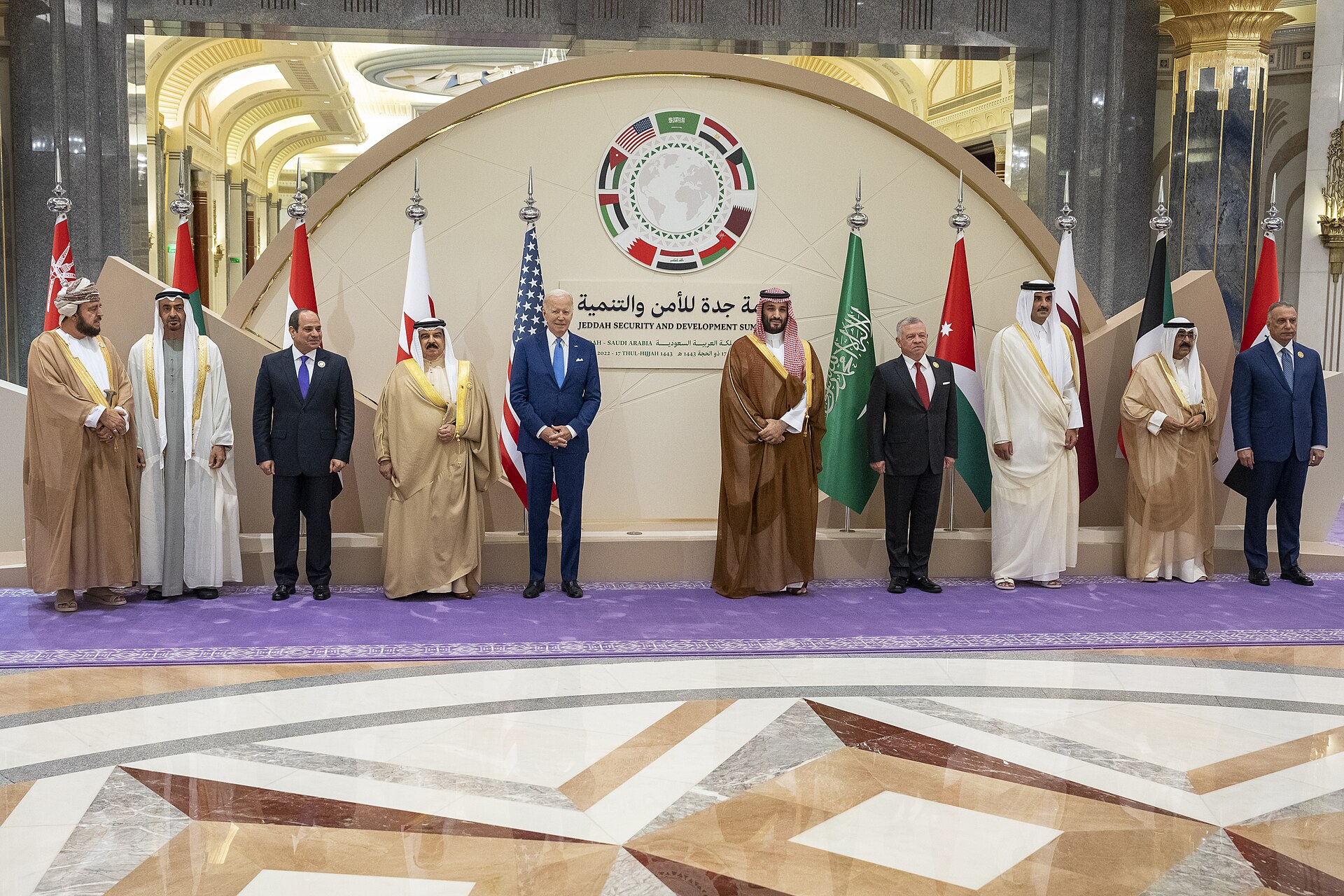
Egypt’s deliberation has a regional audience that extends well beyond the parliamentary chamber. Every day the vote is delayed is a day in which other potential contributors — Kuwait, Bahrain, Jordan — watch Cairo’s constitutional process for signals about the commitment’s terms, its risks, and its political price. If Egypt’s parliament attaches conditions, those conditions become a template for smaller states. If it grants an open mandate, the pressure on others to follow without safeguards of their own intensifies. Egypt is not voting for itself alone; it is setting the terms of engagement for whatever multilateral force the Makkah pact is intended to produce.
Crown Prince Mohammed bin Salman met Sisi in Cairo on 15 September, about five weeks before the parliamentary request. Egypt’s presidency said afterward that Saudi and Gulf security was inseparable from Egypt’s own — language that reappeared almost unchanged in the speeches of pro-government and opposition MPs alike during the emergency sessions. The EGX30, Cairo’s benchmark stock index, dipped in early trading on 19 October as the sessions opened before closing 0.4 percent higher, a pattern suggesting markets had already priced in the political trajectory and were trading the procedural uncertainty, not the outcome.
The 26 October vote will confirm what the deposits, the maturity dates, and the NDC session already decided. Parliament will authorize the deployment, and Sisi will gain the constitutional power to send troops when Saudi Arabia formally asks. What no vote can guarantee is that a defensive deployment stays defensive in a conflict that has defeated every boundary set by every government that has entered it. Fawzi’s generation went to Yemen in 1962 promising the same thing Sisi promised the military academy graduates — defence, not war — and the lesson of that deployment is written in the Sinai, not in Sanaa.
Frequently Asked Questions
Has Egypt formally agreed to send troops to Saudi Arabia?
No. As of 22 October 2026, parliament has not voted. The authorization is scheduled for 26 October and requires a two-thirds majority of 398 out of 596 House members under Article 152. Even if approved, the authorization grants the president a conditional power to deploy if Saudi Arabia makes a formal request, and no such request has been publicly confirmed. The resolution would not specify troop numbers, unit types, or a deployment timeline — parliament authorizes a presidential power, not operational details.
How does Article 152 of Egypt’s constitution work?
Article 152 requires the president to consult the National Defence Council and then obtain approval from at least two-thirds of the House of Representatives before deploying armed forces on a combat mission abroad. The NDC completed its consultation on 18 October, approving “all necessary and possible forms of support.” The parliamentary vote is the remaining constitutional requirement. Once authorized, the president has discretion over the size, composition, location, and timing of the deployment. Parliament controls the gate; the president controls everything on the other side of it.
What safeguards has the opposition proposed?
Ghad Party MP Ayman Nour proposed 10 conditions including a fixed duration rather than an open-ended mandate, a defined geographic scope restricting operations to Saudi territory, regular parliamentary reporting on the deployment’s status, and an explicit exclusion of any operations inside Yemen. The full list has not been published in detail. Nour’s proposal draws on the conditions that democratic legislatures in other countries typically attach to military authorizations — conditions that Egypt’s parliament has rarely imposed on executive action. Whether any safeguards survive into the final resolution text will be determined on 26 October. Pro-government MP Mostafa Bakry separately said discussions were underway with Iranian Foreign Minister Araghchi on halting attacks, suggesting a diplomatic track running parallel to the military authorization.
Could Egyptian forces be sent into Yemen?
Every public statement from Egyptian officials has ruled this out. Sisi said he was “speaking only for defence,” and lawmaker Reda Abdulsalam specified that any deployment would be limited to defending vital Saudi facilities rather than sending soldiers across the border. Former assistant foreign minister Mohamed Hegazy said Egypt’s stance should not be read as “a move toward war.” The institutional lesson of 1962-67, when a supposedly limited deployment escalated into a five-year campaign involving 70,000 troops in Yemeni mountains, is the main reason every speaker has drawn this line explicitly. Whether the line holds if the war’s operational pressures shift is the question the parliamentary debate has not addressed and probably cannot answer in advance.
When did Egypt last contribute forces to a Saudi-led coalition?
In March 2015, Egypt contributed four warships to the Gulf of Aden and air force assets for the Saudi-led coalition intervening in Yemen. Military spokesman Mohamed Samir explicitly denied ground operations at the time. President Sisi extended the naval deployment for at least six months in August 2015. In 2017, coalition spokesman Ahmad Asiri briefly claimed Egypt had offered around 40,000 conscripts for Yemen, then clarified this referred to an earlier Egyptian proposal for a common Arab military force at the Arab League, not a Yemen-specific deployment. No Egyptian ground forces served in Yemen during the 2015-era coalition. The 2026 authorization, if it produces troops on Saudi soil, would represent a qualitatively different and more exposed commitment than anything Egypt provided a decade ago.
The House of Saud Daily Briefing
Saudi Arabia's news in 3 minutes, every morning. Free. See today's issue