
TEHRAN — Iran ran diplomacy and mine warfare on the same clock on November 1, 2026. Foreign Minister Abbas Araghchi announced a two-day Hormuz reopening plan from Qatar-mediated talks in the morning; by nightfall, the Islamic Revolutionary Guard Corps claimed two oil tankers exploded after hitting mines in the Strait of Hormuz — one reportedly engulfed in flames. The Stimson Center documented exactly this pattern on June 25, when Iran targeted the container vessel Ever Lovely while Araghchi was on an active diplomatic call with Oman’s foreign minister, establishing a template that November 1 followed at larger scale.
The question for Riyadh and Washington is whether this represents coordinated coercion or evidence that Supreme Leader Mojtaba Khamenei cannot fully control an IRGC that increasingly drives Iran’s decision-making. Trump’s self-imposed strike moratorium expires on November 3, and Saudi production has fallen from 10.9 million barrels per day to roughly 6.2 million according to the International Energy Agency. Both theses carry radically different prescriptions for the most dangerous 48 hours of the Hormuz crisis — and which one Washington believes will determine whether diplomacy gets more time or the moratorium dies with ordnance over Iran.
The House of Saud Daily Briefing
Saudi Arabia's news in 3 minutes, every morning. Free. See today's issue
Table of Contents
- What Happened in the Strait of Hormuz on November 1?
- The June 25 Template: Mines During a Diplomatic Call
- Is Iran Running Deliberate Dual-Track Coercion or Has the IRGC Gone Autonomous?
- Who Is Mojtaba Khamenei and Why Does His Invisibility Matter?
- What Does Araghchi’s 2-Day Hormuz Plan Actually Demand?
- The IRGC’s Financial Stake in Keeping Hormuz Closed
- How Does the Mine Campaign Hit Saudi Arabia’s Economy?
- Trump’s November 3 Moratorium and the 48 Hours Ahead
- Frequently Asked Questions
What Happened in the Strait of Hormuz on November 1?
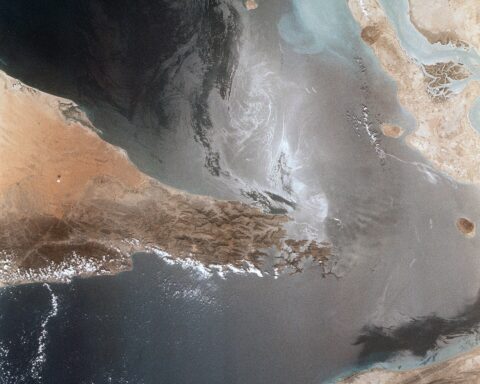
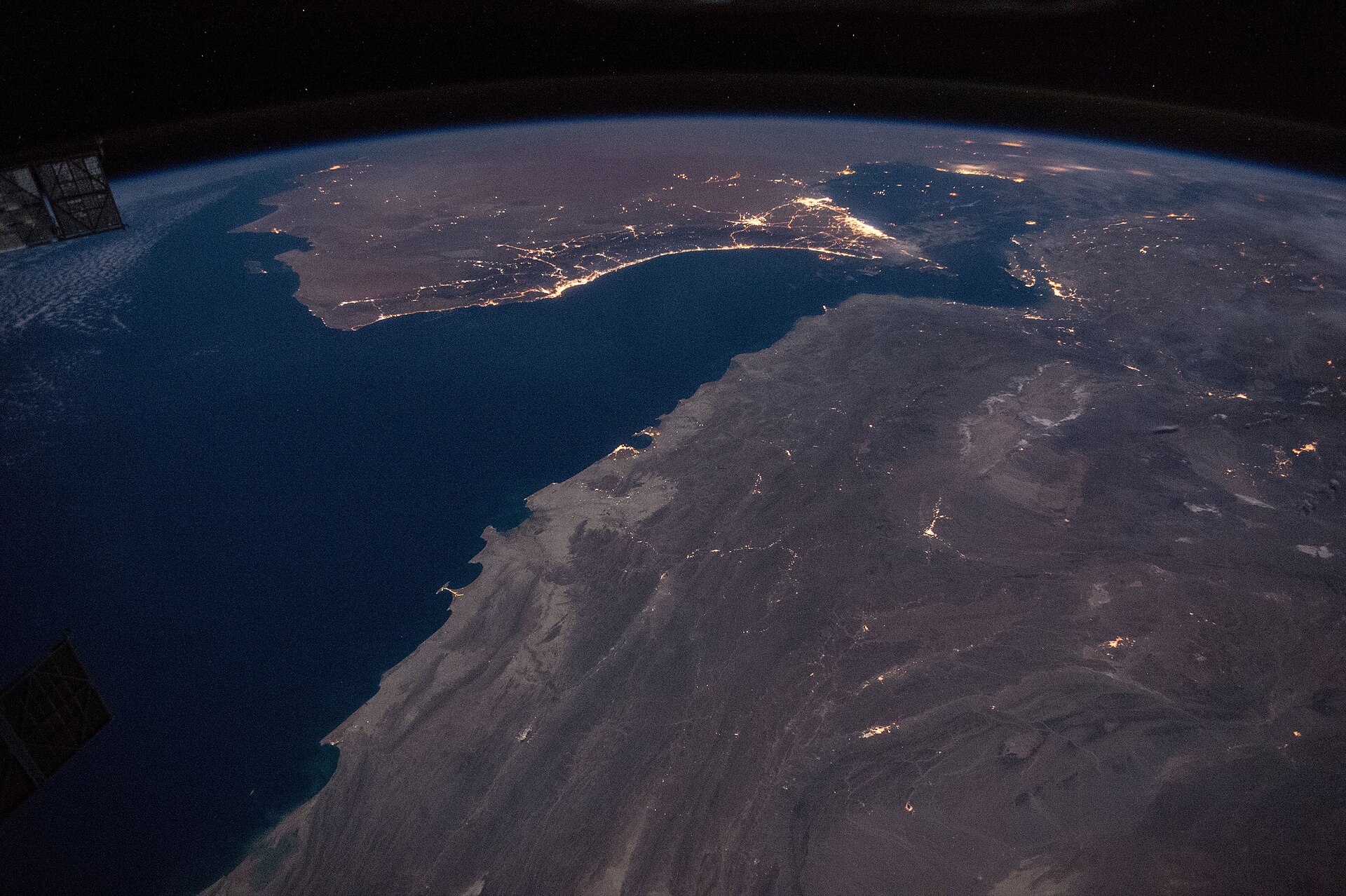
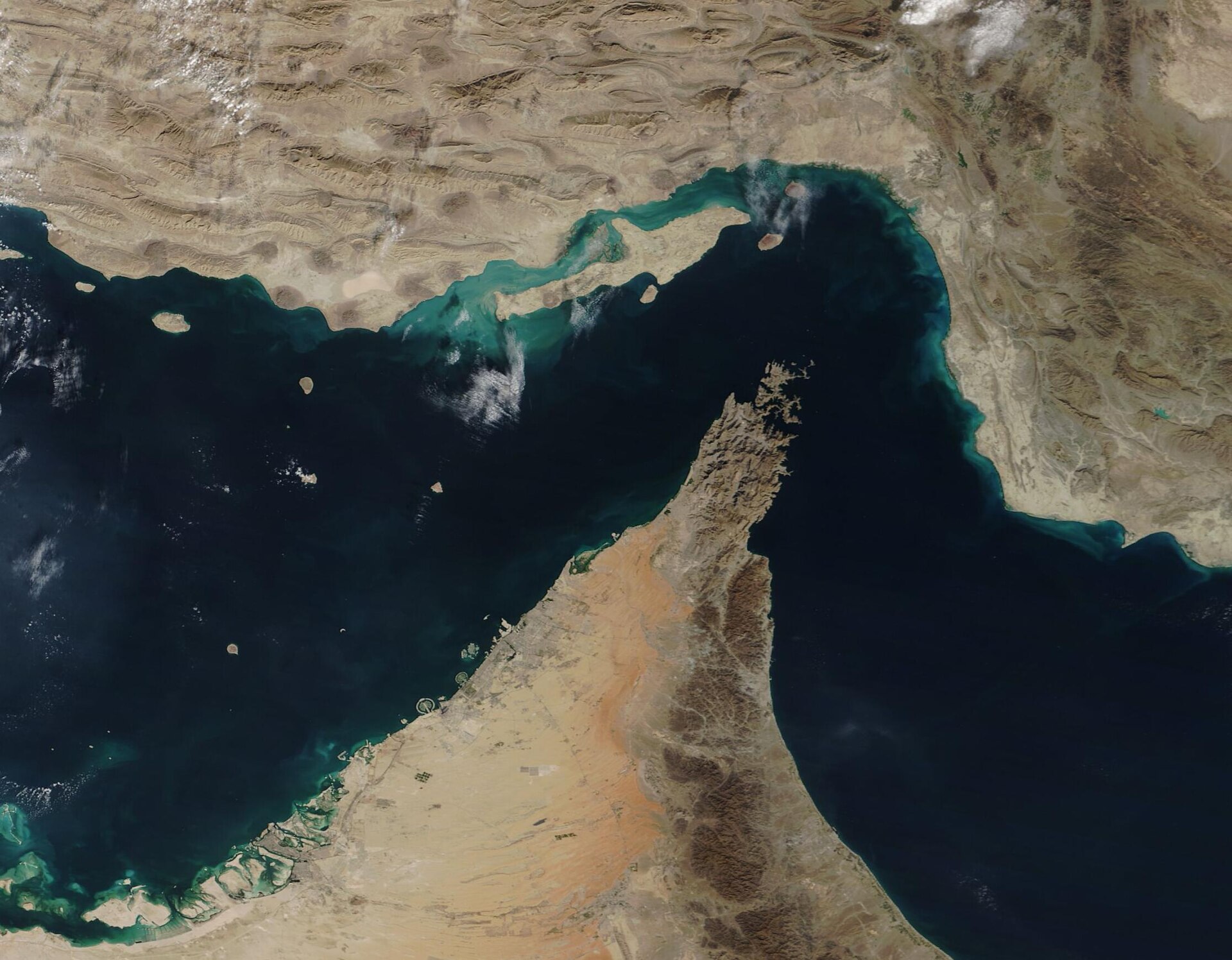
Iran’s diplomatic and military tracks both fired on November 1, 2026. Foreign Minister Araghchi announced a two-day Hormuz reopening plan from Doha consultations in the morning, and by evening the IRGC claimed two oil tankers exploded after hitting mines in the Strait of Hormuz — one reportedly a supertanker engulfed in flames, according to the Jerusalem Post.
Araghchi’s proposal emerged from Qatar-mediated talks and built on a seven-day framework Iran submitted on September 25. Qatari officials first shortened the timeline to five days; Araghchi compressed it to two. He told reporters that “the American side’s attempt to open the door to dialogue and understanding more broadly is a positive step,” according to The National, while simultaneously stating that “there are no plans currently for meetings with US officials.”
The IRGC’s evening announcement was a different register entirely. Iran’s IRGC Navy told state broadcaster IRIB that the two tankers had “switched off their navigation and identification systems” and were “attempting an unauthorised, covert passage with US military support,” framing the explosions as the vessel operators’ fault, according to the Jerusalem Post and Arab Times Online. Vessel names, flags, and cargoes were not disclosed, and no independent confirmation of the mine detonations has emerged as of November 2.
Iranian state media’s framing placed legal and moral responsibility squarely on the vessel operators, positioning mine warfare as law enforcement of IRGC-designated navigation rules. This tracks with the Stimson Center’s assessment that Tehran seeks “exclusive authority over both the governance and security of Hormuz” — a posture in which mines become regulatory tools rather than weapons, and their detonation becomes a consequence of non-compliance rather than an act of war.
Separately, the UK Maritime Trade Operations centre reported at 1509 UTC that a merchant vessel’s master had relayed a Mayday over VHF Channel 16, saying “another vessel has been struck by an unknown projectile,” according to Arab Times Online. Whether the UKMTO report and the IRGC mine claim describe the same incident or separate events remains unclear. The day also brought the attack on the Qatar LNG carrier Al Mayeda near Hormuz, which Iran reportedly cleared for transit — an act that appeared designed to demonstrate selective restraint alongside escalation.
| Approximate Time (UTC) | Event | Source |
|---|---|---|
| Early morning | Araghchi announces 2-day Hormuz reopening plan from Doha consultations | The National; ProPakistani |
| Afternoon | Iran claims 7-fold weapons increase, ties Hormuz reopening to 7 conditions | IRIB via multiple outlets |
| 15:09 | UKMTO reports vessel Mayday — “struck by unknown projectile” | Arab Times Online |
| Late afternoon | Qatar LNG carrier Al Mayeda struck near Hormuz; Iran reportedly clears its transit | Multiple outlets |
| Evening | IRGC claims 2 tankers exploded after hitting mines — 1 supertanker on fire | Jerusalem Post; Arab Times Online |
The June 25 Template: Mines During a Diplomatic Call
November 1 has a documented precedent that makes the “coincidence” reading harder to sustain. On June 25, 2026, as Araghchi and Omani Foreign Minister Badr al-Busaidi were holding a follow-up diplomatic call and, in the Stimson Center’s words, “praising their productive consultations,” Iran targeted the container vessel Ever Lovely. The attack happened while the call was active, according to the Stimson Center’s analysis — not hours later, not the next day, but during the conversation itself.
The Stimson Center described this behaviour as Iran “pursuing parallel bargaining tactics, alternating technical negotiations with calibrated confrontation.” That language — “calibrated confrontation” — implies coordination, not chaos: someone is choosing when violence happens relative to when diplomats speak. The June 25 incident also reinforced a structural pattern from 2019, when limpet mine attacks struck the tankers Front Altair and Kokuka Courageous in the Gulf of Oman during active US-Iran maximum-pressure diplomacy — attacks the United States attributed to Iran and that Tehran denied.
What separates November 1 from June 25 is scale and stakes. On June 25, a single vessel was targeted during a single phone call. On November 1, the IRGC claimed two tanker explosions on the same day that Araghchi offered his most compressed reopening timeline yet — all while a delegation Iran sent to Doha was still nominally at the table, and Trump’s strike moratorium was 48 hours from expiring. The diplomatic window and the military window overlapped for an entire day, not a single hour, and the consequences of misreading which track represents Iran’s true intent have never been higher.
Is Iran Running Deliberate Dual-Track Coercion or Has the IRGC Gone Autonomous?
The evidence supports two competing readings of November 1, and both are well-sourced enough that dismissing either would be dishonest. The first treats the dual-track as coordinated strategy — diplomacy slows the American response clock while violence raises the price of inaction, and the two tracks are managed from the top. The second treats it as structural fragmentation, with the IRGC acting on its own institutional logic while civilian institutions pursue a diplomacy the Guards may not honour.
Hamidreza Azizi of the International Crisis Group told The National on November 1 that “for now, diplomacy and military preparations are proceeding simultaneously.” That phrasing describes what is happening without claiming anyone planned it that way. The Stimson Center’s analysis is less agnostic, describing Tehran as opposing French-Omani proposals to clear sea mines because “Iran seeks exclusive authority over both the governance and security of Hormuz” — a formulation that implies the mines and the diplomacy serve the same strategic objective.
If Iran wanted a clean deal, it would let an international force sweep the mines — the refusal suggests the mines are a feature of the negotiation, not a side effect. That reading makes Araghchi’s morning offer and the IRGC’s evening mine claims two movements of a single composition, calibrated to extract maximum concessions before the American political calendar forces a decision.
An Israeli intelligence analysis cited by Baram concluded that the IRGC’s dominance had “reached such a level that they often ignore the official state institutions.”
— Amatzia Baram, University of Haifa, citing Mako (January 2026), in GIS Reports Online, September 7, 2026
The autonomy thesis draws on heavier evidence than skeptics might expect. ISW and AEI’s Critical Threats Project assessed that since the IRGC elevated Mojtaba Khamenei to the supreme leadership, “it leads Iran’s decision-making, with civilian bureaucrats sidelined,” according to GIS Reports Online. Amatzia Baram of the University of Haifa, writing for GIS Reports in September 2026, cited an Israeli intelligence analysis concluding that IRGC dominance had reached a level where the Guards “often ignore the official state institutions.” If that analysis is correct, Araghchi’s diplomatic offers may be genuine — and also irrelevant, because the institution with the mines does not answer to the institution making the offers.
The practical danger is that both theses produce the same November 1. Whether the foreign ministry and the IRGC are coordinated or disconnected, the result is a day where Iran simultaneously extended an olive branch and claimed to have detonated two tankers. For policymakers in Washington and Riyadh weighing post-moratorium scenarios, the distinction carries real consequences — but the evidence does not yet resolve it.
Who Is Mojtaba Khamenei and Why Does His Invisibility Matter?
Mojtaba Khamenei has been Iran’s Supreme Leader since March 8, 2026, elevated after his father Ali Khamenei was killed on February 28. In the eight months since, he has been nearly invisible — no regular public addresses, no visible chairing of Supreme National Security Council sessions, no attempt to build the public theological authority his father accumulated over 35 years. GIS Reports Online and Asia Business Daily have both described a leadership vacuum at the top of the Iranian state that the IRGC has filled by default.
The theological dimension compounds the structural one. Ali Khamenei was a mid-ranking cleric who spent decades building the religious legitimacy that underpins the velayat-e faqih — the guardianship of the jurist at the heart of the Islamic Republic’s constitutional order. Mojtaba Khamenei is not a jurist with comparable standing, which removes the religious cover that would allow the IRGC to accept restraints on its operational freedom without losing institutional face. The Guards elevated him, and both sides know the debt runs in one direction.
For the dual-track question, this matters because a visible, authoritative supreme leader could credibly order the IRGC to hold fire while talks proceed — his father did exactly that during the 2015 nuclear negotiations, restraining hardliners long enough for the JCPOA to land. A supreme leader who is invisible and owes his position to the Guards has shown no evidence that he has tried, or that he could succeed if he did. Araghchi may be operating in good faith when he proposes a two-day plan, but nothing in the public record suggests he has backing from the one person who could order the IRGC to stop laying mines.
What Does Araghchi’s 2-Day Hormuz Plan Actually Demand?
Araghchi’s plan compresses a seven-day framework into two days: the United States delivers compliance measures on day one, and Iran reopens the Strait of Hormuz on day two. The conditions include lifting US sanctions imposed after the Islamabad Memorandum collapsed in July 2026, reducing US military presence in the region, restoring oil export waivers, and releasing frozen Iranian funds estimated between $12 billion and $24 billion depending on the source, according to ProPakistani and Al Jazeera.
The plan emerged from Qatar-mediated consultations building on a seven-day plan Iran submitted on September 25. Qatari officials originally proposed shortening the timeline to five days; Araghchi then compressed it to two. Araghchi told Iran International on October 18 that Iran’s conditions had been clearly set out in the seven-day plan and were awaiting a US response. An additional demand — formally recognizing the Iran-Oman shipping route while closing all other transit paths through Hormuz — would hand Iran permanent control over which vessels pass and at what cost.
“We have reached a proposal at this stage that reduces the implementation period to two days.”
— Abbas Araghchi, Iran Foreign Minister, ProPakistani, November 1, 2026
Araghchi’s tone on November 1 leaned conciliatory — calling Washington’s outreach “a positive step” — while simultaneously stating that “there are no plans currently for meetings with US officials,” according to The National. US Secretary of State Marco Rubio said Washington remained open to a diplomatic solution, per The National. The gap between “positive step” and “no meetings planned” is exactly the space where the dual-track thesis lives: enough warmth to keep Trump’s stated belief that Iran wants to talk alive, not enough commitment to restrain the mine campaign.
The compression from seven days to two also raises a structural question about intent. Unwinding sanctions architecture, releasing billions in frozen assets, and redeploying naval forces cannot be accomplished in 48 hours — a reality both sides understand. The plan may be designed less to succeed on its own terms and more to demonstrate that Iran is willing to negotiate, shifting blame onto Washington when the timeline proves unworkable and giving Tehran a diplomatic shield for the violence happening in the strait.
The IRGC’s Financial Stake in Keeping Hormuz Closed
The autonomy thesis gains weight when you follow the money. The IRGC controls more than 40 percent of Iran’s economy according to Asia Business Daily, running conglomerates in construction, telecommunications, and energy. Hormuz gives the Guards something they have never had at this scale: a toll gate on the world’s most valuable shipping lane, with the power to set prices. Iran has reportedly begun collecting transit fees from vessels passing through IRGC-controlled waters, creating a revenue stream with a structural incentive to keep the strait closed, according to Asia Business Daily and Korea Times.
Every day Hormuz stays under IRGC control is a day the Guards extract monopoly rents from whatever traffic they choose to permit — and every day it reopens under an international agreement is a day that revenue disappears. The IRGC’s mine stockpile, estimated at between 2,000 and 6,000 by maritime analysts, gives them the physical means to keep the strait closed for months regardless of what Araghchi promises in Doha. The International Maritime Organization estimated approximately 80 mines in the Traffic Separation Scheme alone as of June 27, according to Stars and Stripes — and that figure preceded four additional months of reported laying.
Mohsen Rezaei, Iran’s security chief, told The National on November 1 that he had “studied the letter” from US Vice President Vance “but I have not yet answered it.” Rezaei sits at the intersection of security policy and economic planning, and his public silence on whether Iran will accept a deal is telling. IRGC spokesman Hossein Mohebbi reinforced the posture on October 30, challenging the US Navy’s claim to have cleared Hormuz mines by demanding “independent evidence, not a statement,” according to CNBC — a position that is difficult to reconcile with Araghchi’s offer to reopen the strait in two days.
The financial logic of the IRGC’s position runs deeper than the current crisis. If Hormuz reopens on international terms, the Guards lose both the toll revenue and the geopolitical weight that makes them indispensable to whichever leader occupies the supreme leader’s office. An institution with that economic footprint that has spent months building revenue infrastructure in the strait does not voluntarily surrender that position because a foreign minister made promises in Doha — especially when that institution has the mines to enforce its preferences unilaterally.
How Does the Mine Campaign Hit Saudi Arabia’s Economy?
Saudi Arabia has absorbed the worst economic damage of any state in the Hormuz crisis. The collapse in output — to roughly 6.2 million barrels per day by August, according to IEA data reported by CNBC — has coincided with repeated attacks on the East-West pipeline, which was shut as a precaution in September and resumed operations around September 22, reaching 5.8 million barrels per day by early October according to Saudi Energy Minister Prince Abdulaziz bin Salman, though subsequent Houthi attacks have repeatedly targeted pumping stations along the route connecting eastern oil fields to the Red Sea port of Yanbu.
The Atlantic Council estimates that eliminating Saudi exports through year-end would remove approximately $75 billion in oil revenues — money the kingdom needs for defence spending, Vision 2030 infrastructure, and the social programmes that underpin domestic stability. Traffic through the strait has fallen to single-digit daily tanker transits since February according to CNBC, down from a pre-crisis baseline of 138 ships per day (JMIC). OPEC+ responded on November 1 by holding December output targets unchanged, effectively conceding that member states cannot increase production even if market conditions demanded it.
The insurance economics multiply the pain. Lloyd’s of London launched a $400 million marine war-risk consortium in June 2026 to handle the surge in Hormuz claims, driving premiums to crisis-era highs according to Lloyd’s List. For Riyadh, the dual-track pattern is not an abstract geopolitical puzzle — it is a direct assault on the fiscal base that funds everything from military operations to the recovery of infrastructure like King Khalid International Airport, where flight cancellations reached around 90 percent at the crisis peak, according to the Jerusalem Post.
The mine campaign does not need to destroy Saudi Arabia’s economy outright — it only needs to keep the uncertainty premium high enough that foreign investment freezes and revenue bleeds month after month. Every day of ambiguity about whether Iran’s diplomacy is real extends the period during which Saudi oil stays in the ground and the kingdom’s financial reserves absorb the cost of a crisis that shows no sign of a clear endpoint.
Trump’s November 3 Moratorium and the 48 Hours Ahead
On October 8, Trump pledged on Truth Social that the United States “will not be attacking Iran at any time prior to the midterm elections” on November 3, according to Al Jazeera. That statement gave Tehran a fixed deadline — and Iran’s dual-track pattern reads differently depending on whether you believe the deadline was exploited strategically or merely coincidental. The Wall Street Journal reported that Trump expects renewed military action after the midterms; Secretary of State Rubio, meanwhile, told The National that Trump has set “no deadline,” creating deliberate ambiguity about what November 4 brings.
The dual-track thesis suggests Iran is extracting maximum concessions in the window before the moratorium expires, using the mine campaign to demonstrate the costs of inaction while Araghchi’s diplomacy offers Trump a reason to extend the pause. The autonomy thesis suggests the IRGC is accelerating operations precisely because the moratorium is ending — banking territorial gains and toll infrastructure before American military options return to the table. Either way, the US warning of possible November 4 strikes and the DNI’s assessment that Iranian plots against Americans have reached advanced stages mean the next 48 hours carry more escalation potential than any period since the Hormuz crisis began.
Rezaei’s deliberate silence on the Vance letter adds a final layer of risk — Iran’s security chief has not said no to diplomacy, just nothing, leaving every door open and every threat live. A government that runs diplomacy and mine strikes on the same day has either not decided what it wants, or has decided it wants both. What happens when the moratorium clock hits zero will reveal which reading of November 1 was correct — and for the crews of the unnamed tankers now dark in the strait, that answer is already too late.
Frequently Asked Questions
How many mines are estimated to be in the Strait of Hormuz as of November 2026?
The International Maritime Organization estimated approximately 80 mines in the Hormuz Traffic Separation Scheme as of June 27, 2026, according to Stars and Stripes, with Iran’s total stockpile estimated between 2,000 and 6,000 by maritime analysts. The US Navy stated on August 25 that it had cleared mines from the Traffic Separation Scheme, but the IRGC disputed the claim. Italy’s Giovanni Iannucci of the Joint Operations Command assessed that clearing Hormuz mines would require “advanced capabilities and expertise not possessed by many countries” and estimated approximately two months of sustained operations, according to Stars and Stripes — a timeline that resets each time Iran lays fresh ordnance.
Has Iran attacked ships during active diplomatic talks before 2026?
The pattern extends back decades. In June 2019, limpet mine attacks struck the tankers Front Altair and Kokuka Courageous in the Gulf of Oman during US-Iran maximum-pressure diplomacy — attacks Washington attributed to Iran and Tehran denied. The historical template is older: in July 1987, the reflagged Kuwaiti supertanker Bridgeton struck an Iranian mine on the first Earnest Will convoy escort, and on April 14, 1988, the USS Samuel B. Roberts was nearly sunk by a contact mine, triggering Operation Praying Mantis — the largest US surface naval engagement since World War II. Iran deployed mines extensively in 1988, and today’s estimated stockpile runs into the thousands, deployed against a US Navy that has retired its Avenger-class mine countermeasure ships and has not deployed LCS mine-warfare packages to the Gulf.
What happens to shipping insurance when mines detonate in Hormuz?
Mine strikes fall on what insurers call the “war side,” requiring vessel operators to carry separate war-risk policies before standard Protection and Indemnity (P&I) club cover applies, according to S&P Global. Lloyd’s of London launched a dedicated $400 million marine war-risk consortium in late June 2026, specifically for Hormuz-related claims, and the war-risk premium alone runs 6 to 10 percent of cargo value per voyage according to Lloyd’s List. The practical effect is that operators must now obtain two layers of cover — standard hull and machinery insurance plus a dedicated war-risk policy — before entering the strait, a cost that cascades through global energy supply chains and is passed on to consumers at the fuel pump.
Can Saudi Arabia export oil without the Strait of Hormuz?
Saudi Arabia’s primary bypass is the East-West pipeline (Petroline), which connects the kingdom’s eastern oil fields to the Red Sea port of Yanbu with a capacity of 7 million barrels per day and approximately 5 million exportable, according to Aramco. The pipeline was shut as a precaution in September 2026 following drone attacks, resumed operations around September 22 and reached 5.8 million barrels per day in early October, but it has faced repeated subsequent attacks and even at full capacity it cannot replace the volume that previously transited Hormuz. Red Sea exports face their own risks from Houthi attacks on shipping, meaning tankers leaving Yanbu must transit waters where Saudi forces are actively intercepting projectiles — making the alternative route operationally viable but far from secure, and leaving the kingdom without a safe, high-volume export corridor as long as both the strait and the pipeline remain compromised.
The House of Saud Daily Briefing
Saudi Arabia's news in 3 minutes, every morning. Free. See today's issue