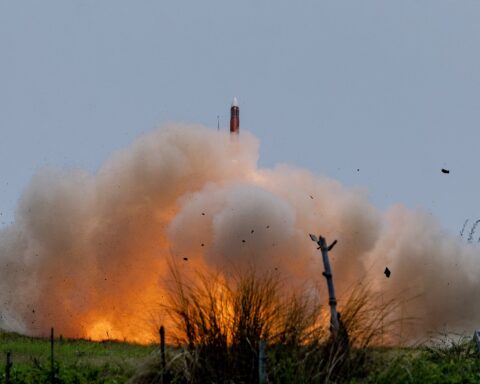

RIYADH — Saudi Civil Defense pushed emergency alerts to mobile phones across three southwestern cities on Sunday — Abha, Khamis Mushait and Jazan — and lifted all three within hours, after the Saudi-led coalition announced it had intercepted and destroyed a Houthi ballistic missile and a separate drone aimed at southern Saudi Arabia. No casualties or damage were reported.
Khamis Mushait sits roughly 100 kilometres from the Yemeni border in the Asir mountains and hosts King Khalid Air Base, the Royal Saudi Air Force installation that serves as the coalition’s primary southern command hub and the launching pad for its air campaign over Yemen — a facility that Houthi ballistic missiles have targeted on at least four separate occasions since October 8, all intercepted according to coalition statements. An emergency alert in the governorate surrounding the coalition’s main strike base carries a weight that a similar warning in a purely civilian area would not, a point the Houthis themselves underscored when their military spokesman Yahya Saree named KKAB as a target on September 8 in an address reported by CNN.
The House of Saud Daily Briefing
Saudi Arabia's news in 3 minutes, every morning. Free. See today's issue
Table of Contents
- What Triggered the Alerts in Abha, Khamis Mushait and Jazan?
- Coalition Intercepts Missile and Drone Aimed at the South
- Why Does an Alert in Khamis Mushait Carry Different Weight?
- How Often Have Houthis Targeted the Abha–Khamis Mushait Corridor?
- No Houthi Claim, No Confirmed Damage
- Frequently Asked Questions
What Triggered the Alerts in Abha, Khamis Mushait and Jazan?
The warnings arrived through the National Early Warning Platform for Emergencies, Saudi Civil Defense’s cell-broadcast system that pushes alerts directly to mobile phones within a defined geographic area. Residents in all three cities received notifications instructing them to follow safety instructions, but Civil Defense did not specify the nature of the threat in any of the three warnings, according to reports from Anadolu Agency and JFeed.
Anadolu Agency’s initial report, filed at 16:24 UTC, named only Abha and Khamis Mushait, with the all-clear for both confirmed at approximately 15:44 UTC according to open-source tracking by OSINT613. Saudi Civil Defense announced on X that the earlier warning for both cities had been lifted. A follow-up report from Anadolu at 19:02 UTC added Jazan as the third area, and the General Directorate of Civil Defense announced separately that the danger in Jazan Region had passed, according to Saudi Gazette, with the Jazan alert logged at approximately 9:41 PM local time — 18:41 UTC.
All clear in Abha and Khamis Mushait. The earlier warning for both cities is lifted.
Saudi Civil Defense, via X, November 1, 2026
Whether the three cities faced a single coordinated inbound threat or whether Jazan’s warning stemmed from a separate incident hours later is unclear from the public record, and civil defence alerts in this conflict have repeatedly preceded Houthi strikes, according to reporting by AFP and the Express Tribune. The coalition’s own announcements about the interceptions it carried out on Sunday referenced only “southern Saudi Arabia” without naming the specific cities the weapons were aimed at.
Coalition Intercepts Missile and Drone Aimed at the South
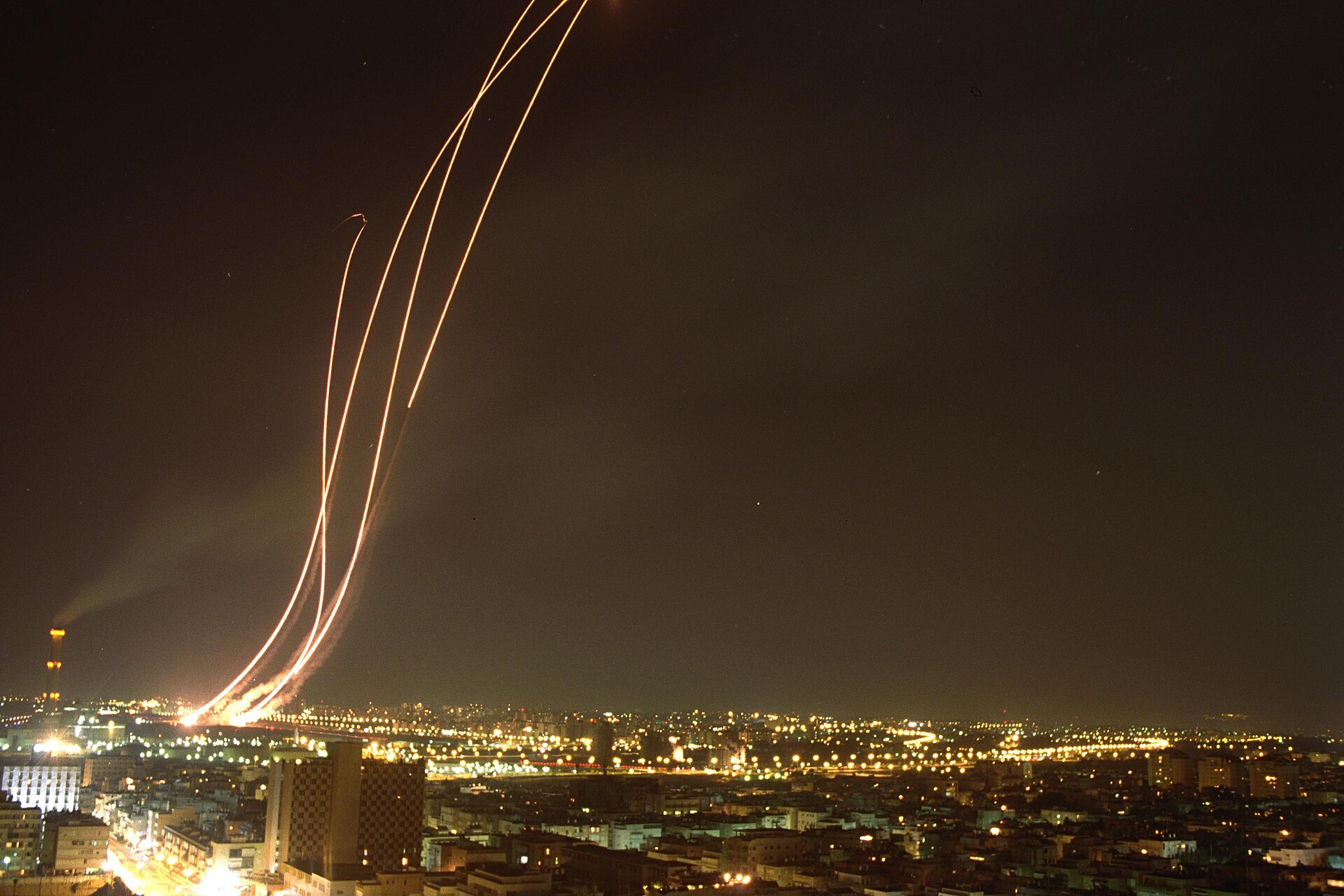
Maj. Gen. Turki al-Maliki, the coalition spokesman, issued two separate announcements on X on Sunday confirming the interception and destruction of a Houthi ballistic missile aimed at southern Saudi Arabia and, separately, the interception and destruction of a Houthi drone also targeting the south, according to reporting by Yemen Online and the Saudi Ministry of Defense via the Saudi Press Agency. Al-Maliki did not name the specific intended target of either weapon.
In a broader statement the same day, al-Maliki said the Houthis had been conducting ongoing attacks on civilians and civilian infrastructure, using their resources to build up ballistic missiles and drones, and warned that they would face consequences if they did not stop. The intercepts came on the same day the coalition announced it had conducted what it called a “qualitative” operation to neutralize Houthi ballistic missile and drone resources in Yemen — a pre-emptive strike on the launch infrastructure the coalition was simultaneously defending against over the south.
Sunday was an exceptionally busy day for coalition air operations across the country. Beyond the two intercepts over the south and the offensive strike on Houthi resources, the coalition also reported seven separate attacks near Mecca and Medina, all denied by the Houthis, a volume of simultaneous defensive and offensive activity that pointed to a sustained tempo of Houthi launches across multiple fronts.
Why Does an Alert in Khamis Mushait Carry Different Weight?
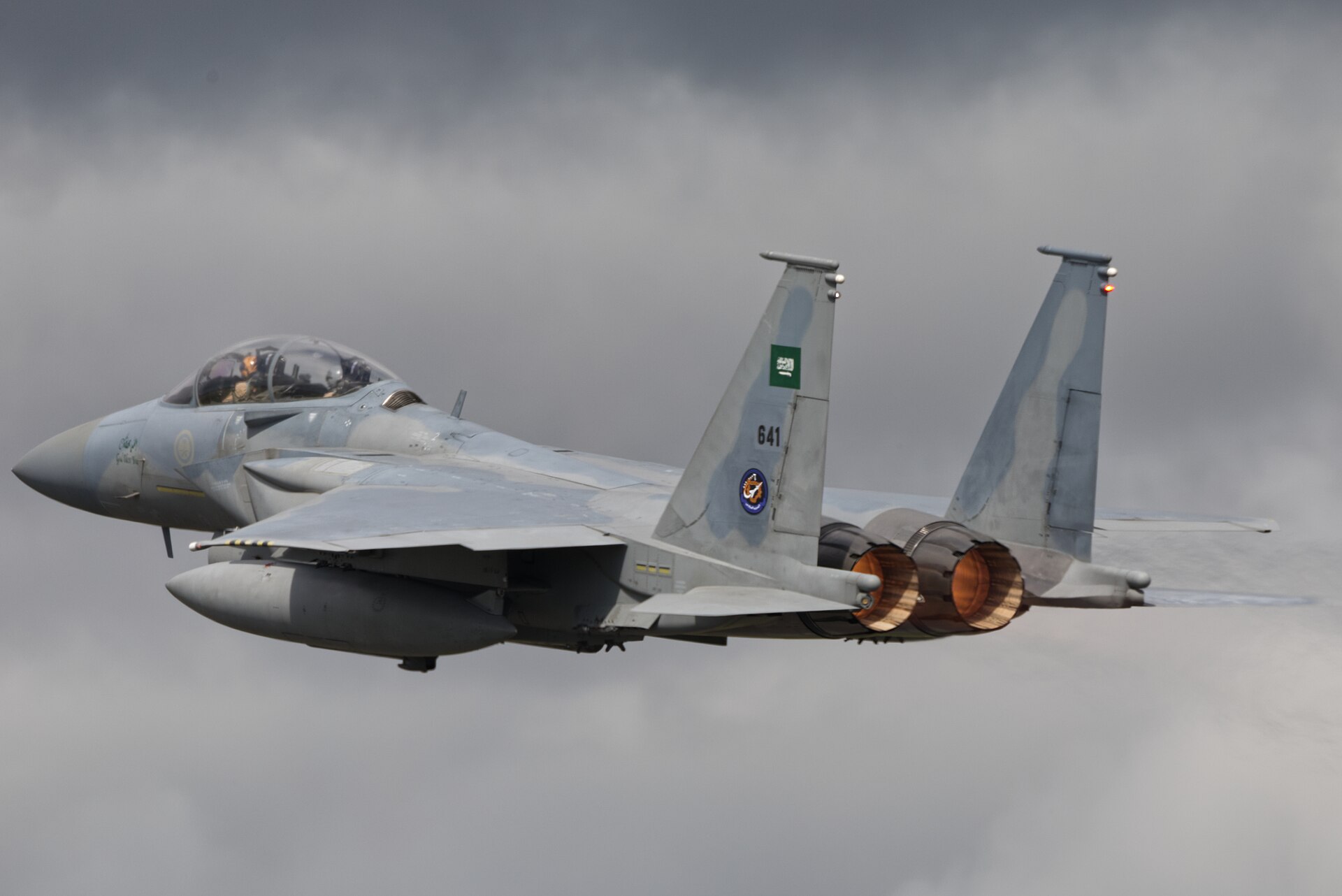
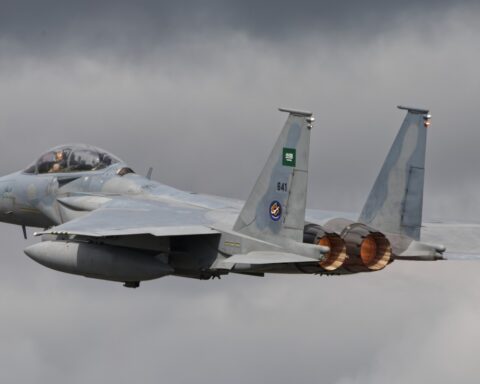
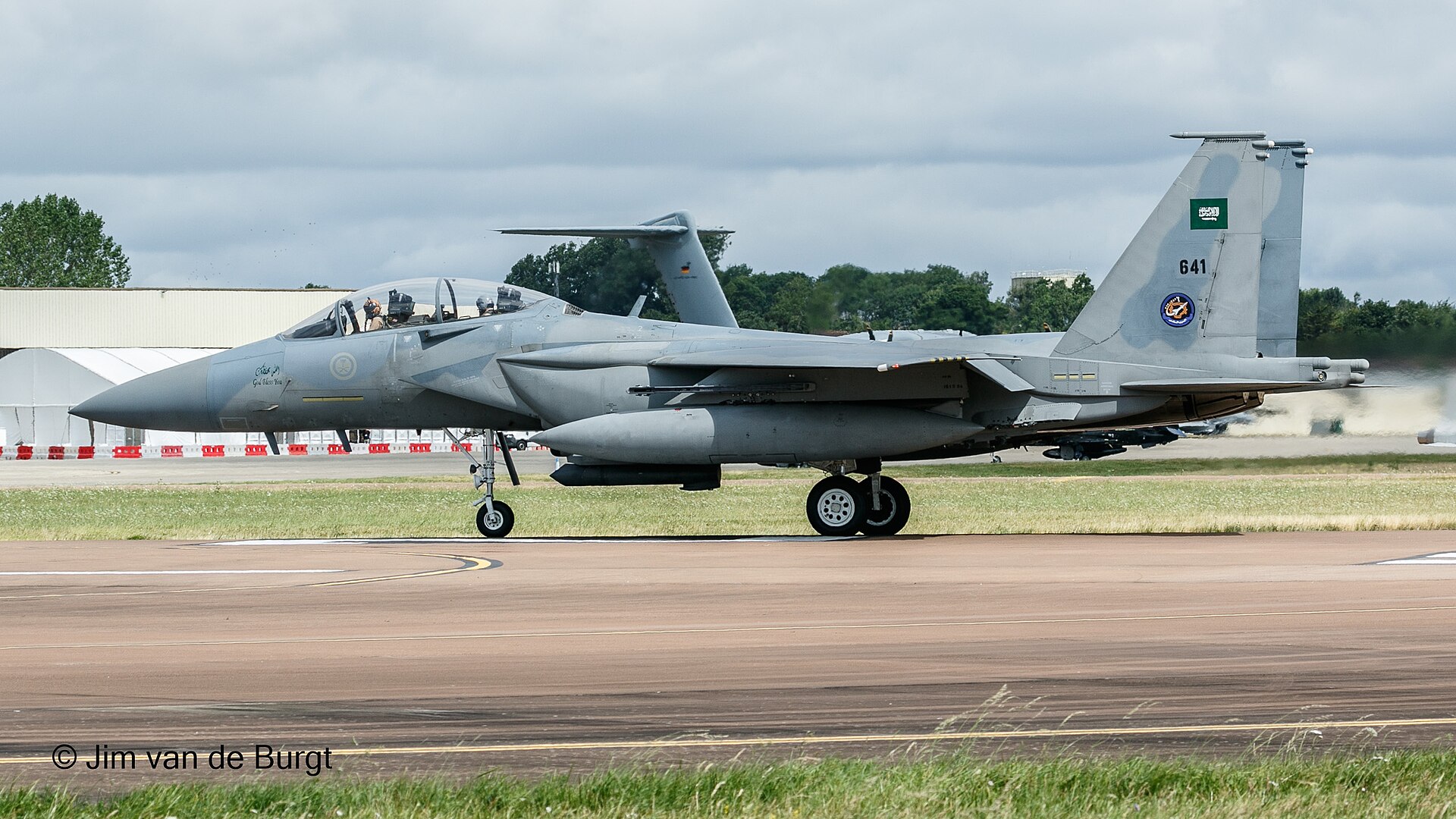
King Khalid Air Base sits at 2,050 metres elevation in the Asir mountains, hosting RSAF Wing 5 — which includes No. 6 Squadron flying the F-15SA and F-15S Strike Eagle and No. 55 Squadron operating the F-15SA — and has served as the primary launching pad for coalition airstrikes over Yemen since the Saudi-led intervention began in March 2015, a campaign now in its twelfth year. Multiple coalition nations flew combat sorties from the facility throughout the intervention, according to Gulf Times and AFP, and the base’s proximity to Yemen — roughly 100 kilometres from the border — gives coalition aircraft the ability to reach Houthi targets in northern Yemen within minutes of takeoff.
That proximity is also the base’s vulnerability. The multi-front assault plans the coalition has developed against Houthi positions depend on the sortie generation that KKAB’s infrastructure makes possible, and a strike that damaged the runway, fuel storage or hardened aircraft shelters could degrade the coalition’s ability to sustain its current tempo over Yemen in a way that would reverberate across the campaign — a consequence qualitatively different from the damage a missile could inflict on a civilian neighbourhood, however devastating that would be for the people in it.
Abha International Airport, the civilian installation in the same metropolitan area that has itself been struck repeatedly, is a separate facility from KKAB, though both draw fire from the same adversary. The Houthi missile campaign has reached as far north as Riyadh, more than 800 kilometres away, but the southern cluster remains the most persistently targeted zone in the country, in part because of the military value concentrated on the KKAB airfield and in part because the border’s proximity shortens the flight time of every inbound weapon.
How Often Have Houthis Targeted the Abha–Khamis Mushait Corridor?
The Abha–Khamis Mushait–Jazan corridor has been among the most frequently targeted areas in Saudi Arabia throughout the Houthi campaign, a pattern that long predates the current escalation. In June 2019, two separate Houthi attacks on Abha International Airport killed one Syrian national and wounded a combined 47 people across both incidents, according to The Defense Post.
The current phase of the conflict has accelerated the tempo. On July 13, the Houthis fired missiles and drones at Abha International Airport after Saudi airstrikes hit Sanaa airport’s runway, and coalition spokesman al-Maliki said air defences had dealt with ballistic missiles aimed at southern Saudi Arabia, according to AP reporting via News4Jax. By September the attacks on the southwestern cluster had grown deadlier: on September 8 and 9, Houthi missiles and drones targeted Khamis Mushait, Abha and Jazan, injuring at least 73 civilians across the southwestern cities, according to CNN. It was in that September 8 address that Saree named King Khalid Air Base by name, alongside Aramco sites in Najran and Abha and Jazan’s industrial complex, as reported by CNN and NPR via the Associated Press. Six days later, on September 14, Houthi ballistic missiles and drones struck Khamis Mushait, Abha and Taif, wounding 13 civilians and damaging seven houses and two vehicles, according to Khaleej Times.
| Date | Target Area | Weapon | Outcome | Source |
|---|---|---|---|---|
| Sept 8–9 | Khamis Mushait, Abha, Jazan | Missiles, drones | 73+ wounded | CNN |
| Sept 14 | Khamis Mushait, Abha, Taif | Ballistic missiles, drones | 13 wounded, 7 houses damaged | Khaleej Times |
| Sept 26 | Khamis Mushait | 2 ballistic missiles | Both intercepted | migflug |
| Oct 6–7 | KKIA (Riyadh), Abha Int’l Airport | Missiles, drones | 3 killed, 36 wounded | BBC |
| Oct 8 | Khamis Mushait | Ballistic missile | Intercepted | AP/NY1 |
| Oct 13 | Riyadh, Khamis Mushait | 3 ballistic missiles | Intercepted | Free Press Kashmir |
| Oct 24 | Riyadh, Khamis Mushait | 2 missiles | Intercepted | UA.NEWS |
| Oct 25 | Khamis Mushait | Cruise missile | Intercepted | Iran International |
| Nov 1 | Southern Saudi Arabia | Ballistic missile, drone | Both intercepted | al-Maliki/SPA |
The table shows a pattern the coalition has sustained so far: every missile aimed at Khamis Mushait that it has publicly acknowledged has been described as successfully intercepted, a record extending through four October incidents and into Sunday’s interceptions. But the frequency places a persistent demand on the air defence assets protecting the base, a demand that runs in parallel with the coalition’s need to defend Riyadh from drone and missile threats and to cover the holy cities — all simultaneously and with a finite inventory of interceptors.
No Houthi Claim, No Confirmed Damage
No specific Houthi claim for Sunday’s threat to the three southwestern cities was found in a review of Houthi statements and media. Yahya Saree, the military spokesman who has taken credit for previous operations against the Abha–Khamis Mushait corridor, made no public statement about the November 1 incident, and Houthi media on the evening of Sunday renewed general threats against Saudi oil facilities and aviation, according to a Khaleej Times live blog, without offering details about specific targets or weapons used in any southern operation.
The silence sits against a pattern. When Houthi weapons have reached or threatened high-value targets, Saree has typically claimed the operation within hours, often with descriptions of the weapons used and the intended target — his September 8 naming of KKAB, alongside Aramco facilities and Jazan’s industrial complex, in an address carried by CNN and NPR, demonstrated that the group is willing to publicly identify military bases when it considers the operation worth publicising.
The absence of a claim could mean several things — the weapons may not have been part of an operation the Houthis wanted to publicise, or they may have originated from other elements of the Iran-aligned network — but what the record shows is that Civil Defense treated the threat as serious enough to push alerts to three cities at once, and the coalition treated it as serious enough to announce two separate intercepts on a day when it was already reporting attacks near the holy cities and conducting offensive strikes on Houthi launch infrastructure. The Houthis said nothing about any of it.
Frequently Asked Questions
What is Saudi Arabia’s National Early Warning Platform?
The National Early Warning Platform for Emergencies, launched in July 2022, is Saudi Civil Defense’s cell-broadcast system that sends warnings directly to mobile phones within a geographic zone without requiring an app download or internet connection, according to Arab News. The platform uses a distinctive audio tone for threat alerts and a different notification for all-clears, and it works through the same cell tower infrastructure used by regular phone service, meaning any powered-on mobile phone within the alert zone receives the message regardless of carrier or handset settings.
Is King Khalid Air Base the same as King Khalid International Airport?
No, and the confusion is common in reporting on the conflict. King Khalid Air Base, known as KKAB, is a military installation in Khamis Mushait, roughly 900 kilometres south of Riyadh in the Asir mountains, that hosts RSAF Wing 5 and serves as the coalition’s primary southern command hub for the Yemen air campaign. King Khalid International Airport, known as KKIA, is Riyadh’s main civilian airport, located roughly 35 kilometres north of the capital. Both have been targeted by Houthi missiles since the current escalation began, but the operational implications of a strike on each are entirely different.
Were flights at Abha International Airport affected?
None of the sources reviewed reported flight disruptions at Abha International Airport in direct connection with Sunday’s emergency alerts. Abha’s airport is a separate civilian installation from KKAB, though both sit within the same metropolitan area and both have been the subject of Houthi attacks in previous months. Travellers monitoring disruptions across Saudi Arabia can check the House of Saud travel status guide for the latest information on airport and flight operations.
What did the coalition mean by a “qualitative” operation?
The coalition’s use of “qualitative” — a term that appears in its Arabic-language statements and English translations — refers to precision strikes on specific pre-identified military targets rather than broad area operations. In this case, the coalition said the operation targeted Houthi ballistic missile and drone resources, meaning the production, storage or launch infrastructure used to build and fire the weapons that have struck Saudi cities and military installations throughout the current conflict. The coalition did not disclose the number of targets struck or their precise locations in Yemen.
Has Saudi Arabia disclosed how its air defences coordinate with the Civil Defense alert system?
Saudi Arabia does not publish detailed information about its air defence protocols or how threat detection feeds into civilian alert decisions. The National Early Warning Platform operates as a civil defence notification tool managed by the General Directorate of Civil Defense, separate from the military’s air defence command, which explains why the coalition’s interception announcements and Civil Defense’s all-clear notifications on Sunday came through different channels and on slightly different timelines. The civil-military separation means the two sets of announcements should be read as parallel records of the same threat environment rather than as a single coordinated statement.
The House of Saud Daily Briefing
Saudi Arabia's news in 3 minutes, every morning. Free. See today's issue