
RIYADH — Saudi Arabia’s General Authority of Civil Aviation extended the suspension of flight operations at King Khalid International Airport on November 4, citing the need “to complete the necessary procedures to verify the safety of the airport facilities and their readiness” — the same language GACA has used for every extension since October 12, and it landed on the same day the Houthis claimed a ballistic missile had scored a direct hit on the airport. Saudi Arabia confirmed nothing about a strike. GACA said nothing about a strike. The extension itself was the only official Saudi response, and by November 5, Riyadh’s primary international airport — the future site of the 120-million-passenger King Salman International Airport that anchors Saudi Arabia’s aviation ambitions — remained closed to normal operations, with no date for reopening and two NOTAMs still in force barring unrestricted access.
The gap between those two facts — an administrative action that assumes damage without admitting an attack — has become the defining feature of KKIA’s month-long disruption, and it is a gap that airlines, insurers, regulators and the architects of Vision 2030 are all pricing in real time. At least 19 people have been killed in confirmed strikes on the airport since October 6, six aircraft worth approximately $375 million in insured value were damaged, and Saudi carriers relocated up to $4 billion worth of planes out of Riyadh. Cathay Pacific has cancelled all flights through January 31, 2027, and Delta and Singapore Airlines have postponed planned Riyadh route launches to March 2027 — dates that presume the airport will be safe in four months, a bet GACA’s own silence makes harder to price with each extension.
The House of Saud Daily Briefing
Saudi Arabia's news in 3 minutes, every morning. Free. See today's issue
Table of Contents
- GACA’s Extension and the Language of Non-Confirmation
- What Did the Houthis Claim on November 4?
- A Month of Strikes, Suspensions and Silence
- How Are NOTAMs and International Regulators Responding?
- Which Airlines Have Suspended Riyadh Flights?
- KSIA, 330 Million Passengers, and the Credibility Problem
- What the Suspension Costs
- The Makkah Pact’s Air-Defence Gap
- Frequently Asked Questions
GACA’s Extension and the Language of Non-Confirmation
GACA’s November 4 extension, reported by Roya News and corroborated by the Saudi aviation journalist Ayman Mat on X, used language that has become a bureaucratic formula since the authority’s first post-attack statement on October 12. The phrase — “to complete the necessary procedures to verify the safety of the airport facilities and their readiness” — appeared in GACA’s initial response to the October 10 attack (reported by ARN News Centre and the Saudi Press Agency), and it has reappeared with each subsequent extension, never accompanied by a duration, an end date, or any reference to the military events that prompted it.
The October 10 attack killed 12 and wounded more than 300, according to Saudi authorities and reported by Reuters, AP and Al Jazeera, after missiles struck Terminals 3 and 4. That attack Saudi Arabia acknowledged — the coalition spokesman Turki al-Maliki called it “a full-fledged war crime,” as reported by Bernama on October 12. The November 4 extension, by contrast, follows a Houthi claim that Saudi Arabia has neither confirmed nor denied, and GACA’s standard language does the work of treating the airport as potentially unsafe without ever saying why it might be.
No duration has been specified for any GACA extension since operations were first suspended. The authority operates through its @ksagaca X account and the Saudi Press Agency, issuing what it calls a “بيان” — a formal statement — that reads identically each time. The absence of an end date means every airline, every insurer and every passenger planning travel through Riyadh is operating on GACA’s implied timeline: the suspension lasts until it doesn’t.
What Did the Houthis Claim on November 4?
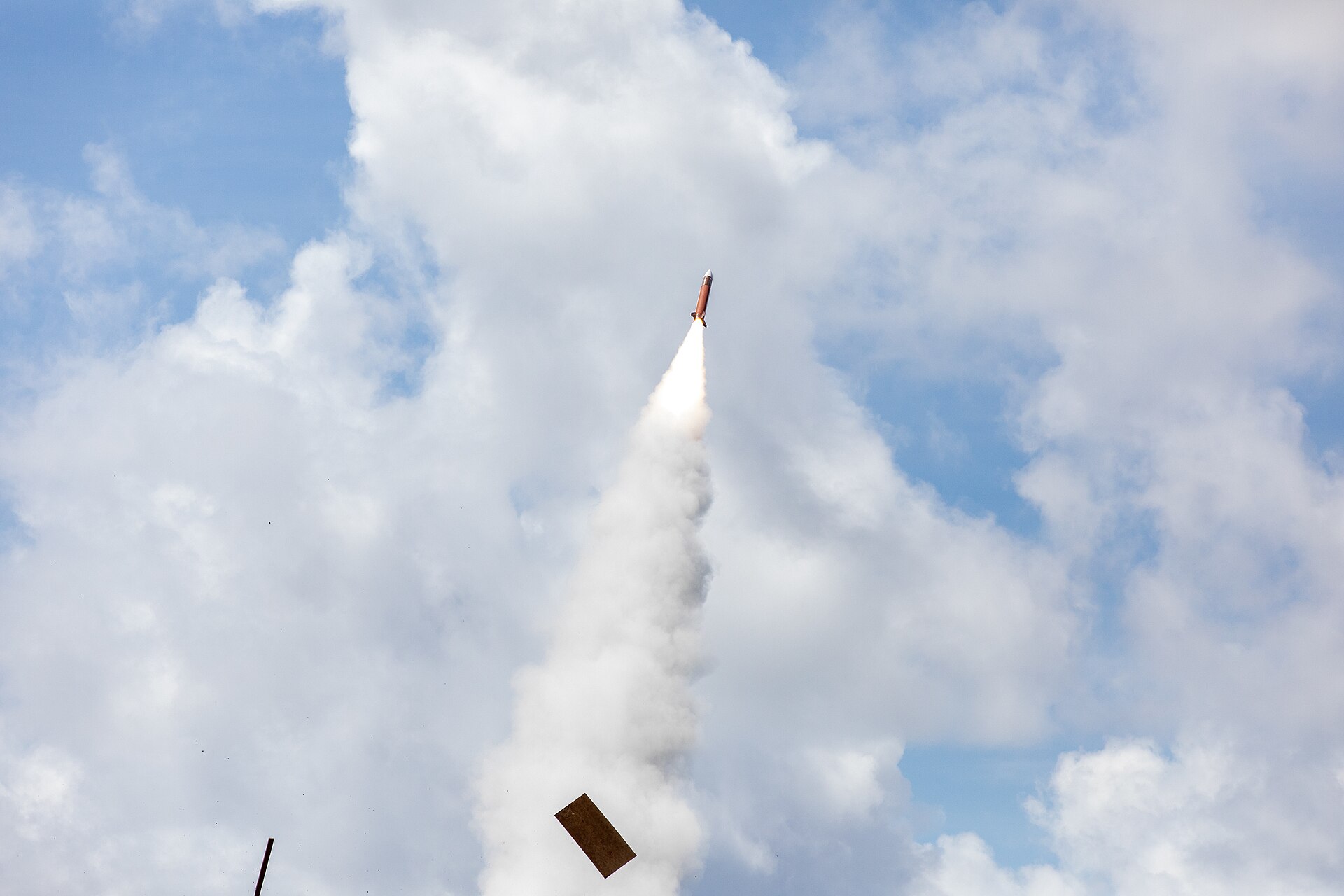
Houthi military spokesman Yahya Saree posted on X that Houthi forces had launched ballistic missiles at KKIA on November 4, claiming a direct hit and what he described as major damage at the airport — in Arabic, he wrote that the strike was direct and caused extensive damage to the facility, as reported by Siasat and Voice of Emirates. Saree also warned international airlines, airport employees and travellers that Saudi airspace was unsafe except over Makkah and Madinah, a warning delivered in Arabic on his official account and paraphrased by DPA.
Saudi Arabia has issued no statement confirming or denying the November 4 Houthi claim. No coalition spokesman has addressed it, and GACA’s extension statement made no reference to a missile, a strike or any military event, referring only to the procedural language about verifying the safety of airport facilities. The pattern is consistent with Saudi Arabia’s handling of previous Houthi claims at KKIA — acknowledging confirmed strikes through al-Maliki’s office while declining to address claims it cannot or will not verify.
Saree’s November 4 statement was part of what appeared to be a coordinated multi-front announcement. The same day, according to Siasat, Houthi forces claimed a ballistic missile attack on Aakefah camp in Jizan province, an attack on a Border Guard command facility, and operations in Najran — a breadth of claims that, whether accurate or not, signals the Houthi campaign’s continued tempo across Saudi Arabia’s southern and central regions.
A Month of Strikes, Suspensions and Silence
KKIA’s disruption did not begin on November 4, and the current extension sits on top of a month of confirmed attacks, partial reopenings, and re-closures that have turned Riyadh’s primary airport into something closer to a military installation than a civilian hub. The Houthi campaign against Saudi airports began with attacks on Abha airport on July 13, but KKIA’s own ordeal started on October 6-7, when the first confirmed strike killed one Sudanese national and injured eight, according to BBC reporting and Saudi civil aviation authorities.
The escalation was rapid. On October 8, a second strike damaged a parked Saudia A321 (registration HZ-ASI), and GACA confirmed three additional fatalities. Two days later came the attack that defined the crisis: missiles struck Terminals 3 and 4 on October 10, killing 12 and wounding more than 300, confirmed by Saudi authorities and reported by Reuters and AP. The following day, October 11, Terminal 4 was hit again, killing one Pakistani national and injuring 11, with BBC reporting the attack. On October 12, GACA issued its first extension, on the same day three missiles were launched at the airport — all intercepted, according to Reuters and Al Jazeera.
A partial reopening came on October 25, when Terminals 1 and 2 resumed limited operations, and Riyadh Air moved selected flights to Prince Naif Airport. But two NOTAMs issued October 17-18 — A3650/26 and A3651/26 — remained in force, requiring GACA approval for every individual arrival and departure and barring KKIA as a diversion airport, as reported by aerospaceglobalnews.com. The reopening was conditional, the restrictions were severe, and the Houthi campaign continued. By November 4, a second Indian national had died from injuries sustained in the October 10 attack, bringing the confirmed toll from that single day to 14, as confirmed by ANI and Indian outlets.
| Date | Event | Confirmed by |
|---|---|---|
| Oct 6-7 | First KKIA attack: 1 killed, 8 injured | BBC, Saudi civil aviation |
| Oct 8 | Second strike; Saudia A321 (HZ-ASI) damaged; 3 more killed | GACA |
| Oct 10 | Terminals 3 and 4 struck; 12 killed, more than 300 wounded | Saudi authorities, Reuters, AP, Al Jazeera |
| Oct 11 | Terminal 4 hit again; 1 killed, 11 injured | BBC |
| Oct 12 | GACA extends suspension; 3 missiles intercepted | Reuters, Al Jazeera |
| Oct 17-18 | NOTAMs A3650/26 and A3651/26 issued; prior permission required | aerospaceglobalnews.com |
| Oct 21 | KFIA Dammam struck; 2 killed, 8 injured | Saudi civil aviation |
| Oct 25 | Terminals 1 and 2 reopen (limited, prior permission only) | GACA, multiple outlets |
| Nov 4 | Houthis claim ballistic missile strike; Saudi Arabia silent; GACA extends suspension | Roya News, @AymanMatNews/X; Houthi claim: Siasat, Voice of Emirates |
How Are NOTAMs and International Regulators Responding?
The regulatory architecture around KKIA has grown steadily more restrictive since October, and the November 4 extension adds another layer to a regime that already treats Riyadh’s airspace as a managed risk zone rather than an open commercial corridor. Two NOTAMs remain in force from October with no expiry date: A3650/26 requires GACA’s explicit approval for every individual arrival and departure at KKIA, while A3651/26 removes the airport from the list of available diversion airports — meaning no aircraft encountering an emergency elsewhere in Saudi Arabia can be directed to Riyadh, as reported by aerospaceglobalnews.com.
International regulators have layered their own restrictions on top. The European Union Aviation Safety Agency issued a safety bulletin on October 9, valid until November 16, covering operations in Saudi airspace. The Federal Aviation Administration issued its own warning on October 11, effective until December 10. Both remain in force as of November 5, and both were issued before the most recent Houthi claims — their expiry dates, set weeks ago, will test whether the agencies extend them based on the November 4 developments or let them lapse on schedule.
The combined effect is a three-tiered restriction: GACA’s own suspension with no end date, NOTAMs that require individual permission for every flight, and international safety bulletins that give foreign carriers regulatory cover to stay away. For an airline calculating whether to resume Riyadh service, the question is not which restriction to follow but which one expires last — and at the moment, none of them has a confirmed end date that the airline can build a schedule around. The FAA warning, with its December 10 expiry, is the longest-dated of the international restrictions, and any carrier whose home regulator defers to the FAA — which includes most Gulf-based operators flying US-built aircraft — has a ready-made justification for staying away through at least mid-December, regardless of what GACA decides.
Dammam’s King Fahd International Airport was also struck on October 21, killing two and injuring eight according to Saudi civil aviation authorities, which means the restriction environment extends beyond Riyadh. The combined NOTAM and safety bulletin regime across Saudi Arabia’s primary airports has created a patchwork of access restrictions that makes network planning — the basis of hub economics — effectively impossible for international carriers operating on seasonal schedules.
Which Airlines Have Suspended Riyadh Flights?
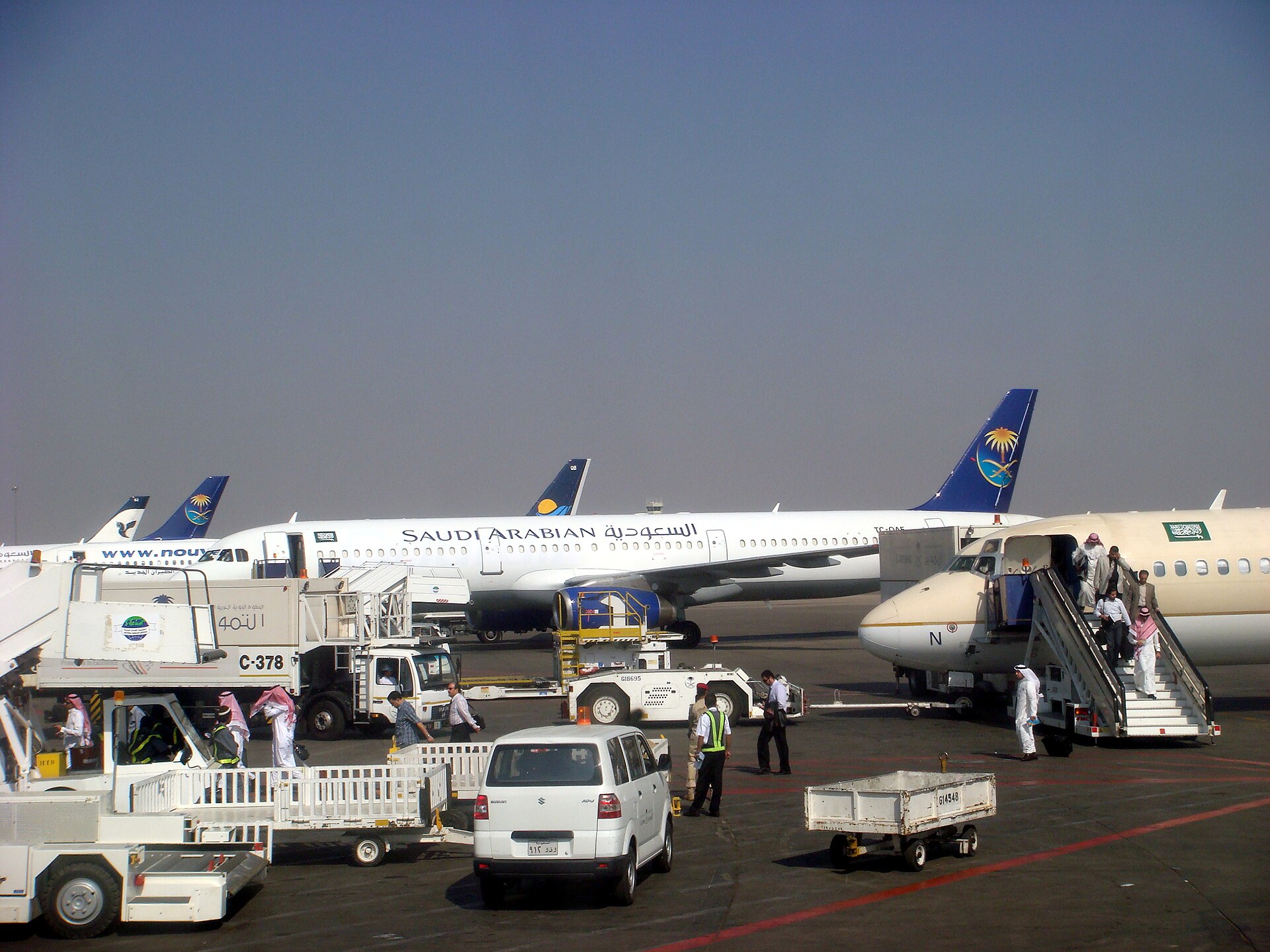
The airline response to KKIA’s disruption has moved well beyond the cautious suspensions of the first week and settled into what amounts to a medium-term withdrawal from Riyadh. The longest confirmed suspension belongs to Cathay Pacific, which has cancelled all Riyadh flights through January 31, 2027. Delta Air Lines and Singapore Airlines have each postponed planned Riyadh route launches to March 2027, according to aerospaceglobalnews.com — routes that were supposed to anchor Saudi Arabia’s campaign to position KKIA as a global connecting hub.
KLM has suspended operations to both Riyadh and Dammam through November 27, according to an official statement published on news.klm.com. The Lufthansa Group — covering Lufthansa, Swiss and Austrian — has suspended through November 18. Philippine Airlines is out through November 29, and Akasa Air through November 30. flydubai has extended its suspension, though the exact end date is unclear, and Emirates is operating to Jeddah only. Etihad’s suspension end date remains disputed between sources citing November 5 and November 19.
| Airline | Suspension End | Source |
|---|---|---|
| Cathay Pacific | January 31, 2027 | Multiple outlets |
| Delta Air Lines | March 2027 (route launch postponed) | aerospaceglobalnews.com |
| Singapore Airlines | March 2027 (route launch postponed) | aerospaceglobalnews.com |
| Akasa Air | November 30 | Multiple outlets |
| Philippine Airlines | November 29 | Multiple outlets |
| KLM | November 27 | news.klm.com (official) |
| Lufthansa Group | November 18 | Multiple outlets |
| flydubai | Extended (date unclear) | Multiple outlets |
| Emirates | Jeddah only | Verified record |
| Etihad | Unclear (sources conflict) | Multiple outlets |
The pattern is not just duration but direction: each extension has pushed end dates further out, and the gap between the most optimistic returns (Lufthansa, November 18) and the most pessimistic (Delta and Singapore, March 2027) spans four months. Saudi carriers are the only operators still serving KKIA, and even they have dispersed aircraft to other airports — the Wall Street Journal reported that carriers moved planes worth up to $4 billion out of Riyadh, and an internal insurance report reviewed by the WSJ put the combined insured value of six aircraft damaged in October’s strikes at approximately $375 million.
KSIA, 330 Million Passengers, and the Credibility Problem
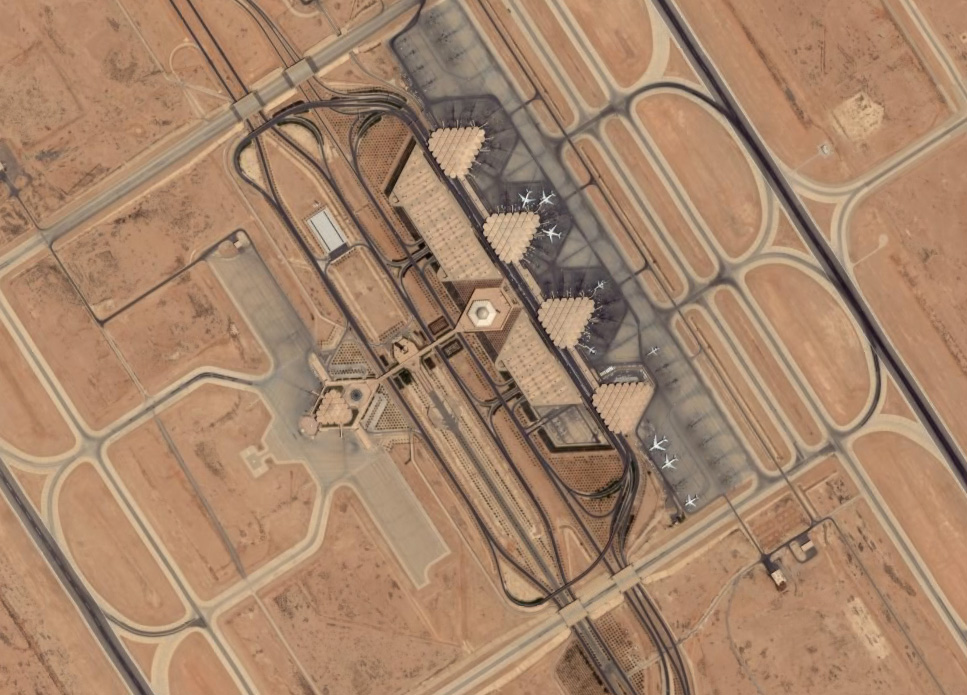
KKIA’s 57-square-kilometre site is not just an airport — it is the footprint of King Salman International Airport, the megaproject designed to handle 120 million passengers a year by around 2030 and 185 million by 2050, according to multiple KSIA sources and Saudipedia. The facility was planned with six parallel runways and a Terminal 6 expansion that would add 40 million passengers per year of capacity, with construction groups selected as recently as March 2026, according to KSIADC via MEED. GACA’s national target of 330 million annual passengers by 2030 — published by GACA and reported by flyasm.sa — runs through this site.
The distance between those numbers and the reality of November 5 is measured in more than months. Every week that KKIA operates under suspension or NOTAM-restricted access is a week in which no new carrier commits to Riyadh, no construction crew works with confidence that the runway they are building will be served by the airlines it was designed for, and no investor prices the KSIA megaproject without a risk premium that did not exist before October 6. The pre-budget statement of September 30 forecast Saudi real GDP falling 3.6% in 2026, with the deficit estimate raised to 245 billion riyals from 165 billion — driven primarily by oil-sector disruption — and the aviation sector’s contribution to recovery depends on an airport that is, as of this writing, functionally offline.
The competing narratives are stark. Saudi Arabia is simultaneously building one of the world’s largest airports on a site that it cannot keep open to normal traffic, marketing itself as a global aviation hub while its primary airport operates under military-grade access restrictions, and pursuing a passenger target that assumes exponential growth from a base of near-zero international service. None of these contradictions are unresolvable — wars end, airports reopen, airlines return — but each day of suspension makes the path from here to 120 million passengers steeper, and GACA’s refusal to specify an end date means neither the airlines nor the investors can model the gradient.
What the Suspension Costs
The financial architecture around KKIA has shifted as decisively as the regulatory one, and the numbers accumulate in a way that no GACA extension statement can contain. Saudi carriers’ decision to relocate their fleets out of Riyadh — a fleet-protection move documented by the Wall Street Journal — removed capacity from an already restricted hub, turning KKIA from an operating hub into a liability on the balance sheet even before the November 4 extension.
The insurance dimension extends well beyond the damaged aircraft. War-risk premiums across the Gulf have risen sharply since the Hormuz blockade resumed in July, and the Houthi campaign against Saudi airports has layered aviation-specific risk onto a market already repricing maritime and energy exposure. The EASA bulletin and FAA warning provide insurers with the same regulatory cover they provide airlines — a formal basis for declining coverage or demanding premiums that make scheduled service uneconomical. An airline calculating the cost of returning to Riyadh is not simply weighing fuel and crew against ticket revenue; it is weighing the risk-adjusted cost of operating into an airport where 19 people have been killed in confirmed attacks since October 6, under safety bulletins that remain active, with a civil aviation authority that will not say when the suspension ends.
KKIA was generating revenue losses estimated by Arabian Gulf Business Insight at $50 million when operations were disrupted in mid-October, a figure derived from the 169 departures cancelled daily during the initial suspension period. A month of restricted or suspended operations, with international carriers withdrawn and domestic service reduced, compounds that figure in ways that scale beyond the airport itself — hotel bookings, conference attendance, business travel, the entire service economy that depends on Riyadh receiving international visitors at volume. The FII summit was postponed to 2027 following the airport crisis, with Reuters reporting that big banks and private-equity firms had privately relayed safety concerns to organizers; expected speakers included Jamie Dimon, Stephen Schwarzman and Larry Fink. The postponement removed the kingdom’s flagship investment conference from the calendar while the airport serving it remained under suspension.
The Makkah Pact’s Air-Defence Gap
The GACA extension also exposes a gap in the Makkah Joint Defence Pact’s operational credibility that no diplomatic communiqué can paper over. The pact — signed by Saudi Arabia, Pakistan and Turkey, with Syria negotiating membership and Turkey’s parliament having cleared ratification in committee on October 27 without a date for a full General Assembly vote — was designed to create a collective defence architecture for exactly this scenario. A month into a sustained Houthi campaign against Saudi civilian infrastructure, the airport serving the kingdom’s capital is closed, the civilian authority is issuing extensions without explaining what triggered them, and the pact’s joint command structure remains, as documented in the November 2 analysis, incomplete.
Can Kasapoglu of the Hudson Institute framed the airport attacks as part of a broader Iranian-coordinated escalation strategy, writing in an analysis titled “Iran and Its Houthi Proxies Target Saudi Airports and Gulf Shipping” that the campaign reflects deliberate targeting of civilian infrastructure. Iran’s foreign minister Abbas Araghchi offered to mediate Saudi-Houthi talks during October’s airport crisis, as reported by the Jerusalem Post — a diplomatic overture that placed Tehran in the position of proposing to broker a ceasefire for attacks its proxies were carrying out, while Saree’s November 4 warning that Saudi airspace was unsafe came from the same organisation Iran insists it does not direct.
The question the extension raises is whether the Makkah Pact’s air-defence commitments — including the coalition’s interception of drones over Makkah and the Eastern Province — can protect a civilian airport reliably enough to let GACA lift the suspension and let airlines return. Interception works most of the time, as the October 12 intercepts demonstrated, but the October 10 attack killed 14 people at the same airport that the system was defending. For an airline or an insurer, “most of the time” is not a safety case, and GACA’s repeated extensions suggest the Saudi civil aviation authority has reached the same conclusion.
The strike was a direct hit and caused major damage at the airport.
Yahya Saree, Houthi military spokesman, November 4 (paraphrase of Arabic statement via Siasat/Voice of Emirates)
GACA’s silence, the coalition’s silence, and the extension itself form a response that communicates through administrative action what Saudi Arabia will not say in words: the airport is not safe enough to operate normally, the threat has not been neutralised, and the timeline for resolution is not within GACA’s control. The next extension — or the announcement that operations have resumed — will come when the military situation changes, not when the bureaucratic language does. On November 5, Riyadh’s airport sat under suspension, its runways built for 120 million passengers a year serving no international flights, its expansion site quiet, and GACA’s formal statement — verifying the safety of facilities whose readiness cannot be confirmed — repeating for the fourth week running.
Frequently Asked Questions
Is King Khalid International Airport open as of November 5, 2026?
KKIA is under a GACA-issued suspension extended on November 4, 2026, with no announced end date. Two NOTAMs — A3650/26 and A3651/26 — require GACA’s explicit approval for every individual flight and bar KKIA from serving as a diversion airport. Saudi domestic carriers are operating limited services under these restrictions, but international carriers have largely suspended operations, with return dates ranging from mid-November to March 2027.
What international safety bulletins apply to Riyadh flights?
EASA’s safety bulletin, issued October 9, remains valid until November 16, 2026. The FAA’s warning, issued October 11, runs until December 10, 2026. Both provide regulatory cover for carriers to suspend Riyadh operations without breaching contractual obligations to passengers, and neither has been extended or revoked in response to the November 4 events — a decision that will come before their respective expiry dates.
How many people have been killed in attacks on Saudi airports since October 6?
At least 21 people have been killed in confirmed attacks on Saudi airports between October 6 and November 4. At KKIA, the October 10 attack killed 14 in total — 12 on the day and two more who died from injuries, including a second Indian national confirmed by ANI on November 4. The October 6-7 attack at KKIA killed one, the October 8 attack killed three, and the October 11 attack killed one, bringing the KKIA total to at least 19. The October 21 attack on Dammam’s King Fahd International Airport killed two more. These figures cover Saudi-confirmed events only and do not include the November 4 Houthi claim, which Saudi Arabia has not addressed.
What is the King Salman International Airport project?
KSIA is a megaproject planned for KKIA’s 57-square-kilometre site, designed to handle 120 million passengers annually by around 2030 and 185 million by 2050, with six parallel runways. Terminal 6 construction, adding 40 million passengers per year of capacity, had construction groups selected in March 2026, according to KSIADC. The project is a cornerstone of Vision 2030’s aviation targets, which call for 330 million passengers annually across Saudi Arabia. Whether the current disruption affects KSIA’s timeline has not been addressed by Saudi authorities.
Did Saudi Arabia confirm the November 4 Houthi missile claim?
No. As of November 5, Saudi Arabia has issued no statement confirming, denying, or addressing the Houthi claim of a ballistic missile strike on KKIA on November 4. GACA extended the airport suspension on the same day using its standard procedural language, which references “the safety of the airport facilities” without mentioning any military event. The coalition spokesman has not addressed the claim.
The House of Saud Daily Briefing
Saudi Arabia's news in 3 minutes, every morning. Free. See today's issue