
TEHRAN — Iran’s Supreme Leader Mojtaba Khamenei declared on November 4 that the United States has suffered “an irreversible fall” in military and soft power, warning that any further strikes on Iran will trigger a wider war — hours after President Donald Trump told the Wall Street Journal he “did the right thing” striking Iran and “would have done it again.” The dueling statements came one day after Democrats flipped at least seven Senate seats and projected a 228-plus seat House majority, a result Trump himself attributed to the war.
The collision is more than rhetorical. Khamenei’s statement, released on the anniversary of the 1979 US Embassy seizure, told Iranians that the midterm results prove the US is weakening and that any concession would invite further American demands. Trump’s interview told Americans that the war was right, even if it cost Republicans Congress. Both men are now locked into positions that make any deal harder — while Saudi Arabia, absorbing daily Houthi strikes on its airports and oil infrastructure, has issued no public response to either leader’s remarks.
The House of Saud Daily Briefing
Saudi Arabia's news in 3 minutes, every morning. Free. See today's issue
Table of Contents
What Did Khamenei Actually Say?
Mojtaba Khamenei — who has not appeared in public since becoming Supreme Leader on March 8 and communicates exclusively through written statements — published a message on November 4 timed to Iran’s National Day of Fighting Global Arrogance, the annual commemoration of the 1979 US Embassy seizure. The statement ran on the official rahbar.ir website and Telegram, and was carried by AFP, Dawn, and Tasnim News Agency.
Its core claim was sweeping: “The declining power and hegemony of the United States has suffered an irreversible fall in both dimensions of its hard military power and its international soft power.” Coming from a leader whose country has been at war with the US for nine months, that is not analysis — it is political instruction to Iran’s establishment. The midterms are to be read as proof of American weakness, not as an opening for negotiation.
The threat was direct. “Should such aggressions be repeated, the war’s scope will become much wider,” Khamenei wrote, according to AFP and Dawn. He warned that “the slightest inclination towards surrender will embolden the arrogant enemy” and described the American goal as “the unconditional surrender of the Iranian nation.” Those expecting a shift in US policy after the midterms, he said, are “seriously mistaken.”
That last line matters most. Iranian reformists and the diplomatic faction around President Masoud Pezeshkian had argued that a Democratic Congress could open a door to a deal. Khamenei shut it. The statement rejects not just American terms but the internal Iranian argument for talking — a message aimed as much at Tehran’s own government as at Washington.

Trump’s ‘I Would Have Done It Again’
Trump’s election-night telephone interview with the Wall Street Journal was blunt. “Iran was a piece of it,” he said, acknowledging the war’s role in Republican losses. “I did the right thing. I would have done it again.” He told Fox News separately: “I think a part of it was Iran, but at the same time people understood the importance of what I’ve done with Iran.”
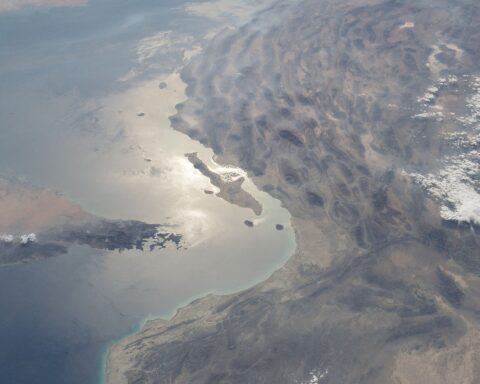
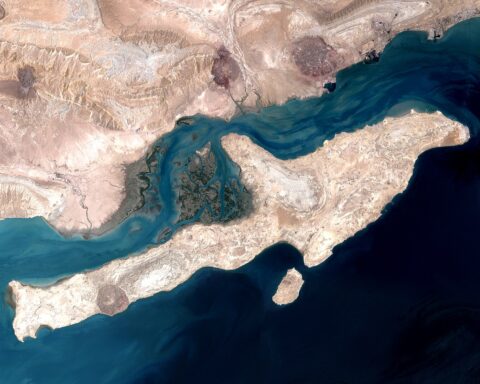
Earlier on Tuesday, before polls closed, Trump had told the Financial Times he was “locked and loaded if we need to go, but there may be no reason for it,” adding that the US had “no immediate plans” to strike Iran. The gap between “no immediate plans” and “would have done it again” is the space in which the next phase of this war will be decided. His moratorium on further Iran strikes expired on November 3 without a deal, and the US struck Iranian launchers on Qeshm Island the same day — a fact confirmed to the Wall Street Journal by US officials that night.
Trump also acknowledged that Vice President JD Vance’s assessment — that the war cost Republicans the midterms — was “largely true because it drove the gasoline up.” An AP-NORC poll from July found 64% of Americans said the Iran war was not worth fighting, with just 28% approving of Trump’s handling of it. The midterm results bore that out: Democrats are projected to hold 54 Senate seats after flipping at least seven, including Texas, Iowa, Kansas, Ohio, Maine, North Carolina, and South Carolina, according to NBC Washington, CBS News, and Fox News Decision Desk. Democrats are projected at 228-plus House seats.
Vance Breaks With the White House
Vice President Vance was the first senior administration figure to say what the numbers showed. “The reason we lost is the war. The president himself said so last night,” Vance posted on X on November 4. He added: “If you’d like to argue it was worth it, that losing the Senate for the next 6 years was worth it, then do so.” In a separate statement, Vance said: “Everyone knows why we lost. And any honest conversation about where we go from here must start there.”
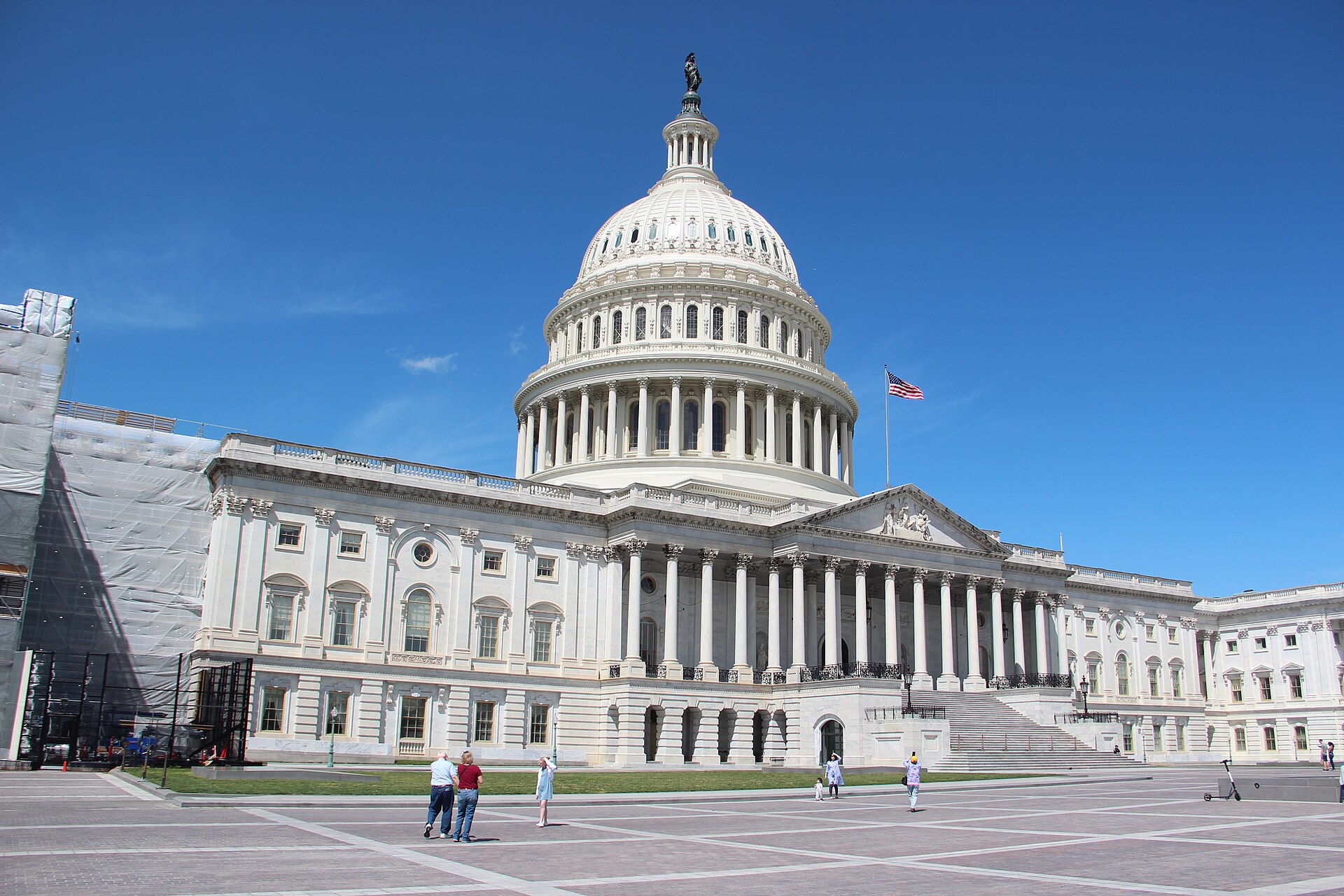
That kind of public dissent from a sitting vice president is rare enough to be news on its own. It sets up a policy fight inside the administration at exactly the moment Trump faces the question of whether to authorize further strikes on Iran. Congressional Democrats now have subpoena power, budget leverage, and confirmation authority — not enough to stop a president from making war, but enough to make every escalation more expensive politically. Trump has already shown he understands the domestic cost. Whether that translates into restraint depends on whether he believes a deal is possible, and Khamenei’s statement was designed to make him doubt it.

Iran’s Hardliners Claim Victory
Khamenei was not the only Iranian official to treat the midterms as vindication. Parliament Speaker Mohammad Bagher Ghalibaf posted on X: “Conscience or the cost of living, Americans said NO TO WAR, and we endorse this message. If the US govt betrays their public will to serve international paymasters and blackmailers, it will learn our NO comes with a Nightmare.” Judiciary chief Gholamhossein Mohseni Ejei told AFP that Trump had been “defeated both militarily and politically.”
The statements are politically functional, not just triumphalist. They establish a line that Iran’s hardliners — who control the security apparatus and the nuclear program — will use to argue against any diplomatic concession. If the midterms prove America is weak, the logic goes, then there is no reason to give Washington anything. That framing directly undermines the split visible within Iran’s leadership, where Pezeshkian’s government had signaled openness to talks and where Iran’s foreign ministry had engaged with Qatar-led mediation. The hardliners are not just celebrating — they are foreclosing the diplomatic faction’s options.
Analysts watching from outside saw a different risk. Omid Memarian, a journalist and political analyst, told Iran International that the election result “may even have increased the likelihood of an attack” — the argument being that Trump, now facing a hostile Congress in January, has a narrowing window to act without legislative interference. Barbara Slavin, a distinguished fellow at the Stimson Center, told the same outlet that the result could increase Trump’s incentive to push ahead with a planned offensive during the transition period.
Why Is Saudi Arabia Silent?
As of November 4, Saudi Arabia had issued no public statement responding to Khamenei’s wider-war threat or Trump’s pledge to strike Iran again. The kingdom’s position is structurally unenviable. It is absorbing sustained Houthi attacks — a ballistic missile was claimed against KKIA on November 4, and the coalition intercepted three drones in the Makkah region the same day — while the two powers whose war created that threat are competing to sound tougher.
Former Biden White House senior adviser Amos Hochstein captured the dynamic in an interview with The National on November 2: without a settlement, “you’re left with a regime that is weakened but angry, vengeful, and one that has a long memory.” He also noted that there has been no US reaction to Houthi strikes on Saudi territory — “somehow that doesn’t merit any reaction from the United States.” Saudi oil exports have fallen sharply with both the Hormuz and East-West pipeline corridors under pressure, as the Makkah Pact still lacks a joint command.
Riyadh’s silence is not passivity — it is the sound of a government with no good options. Endorsing Trump’s war risks further Iranian retaliation through the Houthis. Criticizing it risks alienating the only ally with the firepower to reopen Hormuz. The kingdom’s stated vehicle for collective defense, the Makkah Pact signed with Pakistan and Turkey, has yet to produce a unified command structure. Saudi Arabia is the third party under active fire with the least control over how this ends.
Can Qatar’s Talks Survive This?
Qatar said on November 3 that the US and Iran “are committed to mediation efforts and are reviewing proposals aimed at bridging their differences,” according to Reuters and Al Jazeera. Secretary of State Marco Rubio had said on October 31 that “talks have actually never stopped,” confirming that Qatar-led indirect talks were ongoing and that Trump had not decided on new strikes. Qatar had been running a mediation track through Doha, working to compress Iran’s proposed Hormuz reopening timetable from seven days to two — a process that coincided with Trump’s earlier threats to “give Iran the hammer.”
But Khamenei’s statement directly challenges the premise of that mediation. If “the slightest inclination towards surrender will embolden the arrogant enemy,” then Iran’s negotiators have no room to offer concessions — or at least no political cover for doing so. Trump’s “do it again” posture creates the mirror problem: any deal that looks like backing down is now more dangerous for him domestically, with Vance publicly attributing the midterm disaster to the war and a Democratic Congress preparing oversight hearings.
The structural problem is symmetry. Khamenei cannot yield to a president who just lost Congress for starting this war — it would validate the reformists he overruled and weaken his authority. Trump cannot yield after saying he would strike again — it would confirm the narrative that the war was a political mistake with no strategic payoff. Both men need the other to move first, and both have just told the world they will not. Whatever survives of Qatar’s mediation will have to navigate that gap, with Houthi missiles still landing on Saudi airports as a daily reminder that the war’s cost falls most heavily on the party with the least say.
Background
The US-Iran war began on February 28, 2026, and is now in its ninth month. Ali Khamenei, Iran’s previous Supreme Leader, was killed in the opening exchange; Mojtaba Khamenei, his son, was named Supreme Leader on March 8. He has governed entirely through written statements, never appearing in public. The Supreme Leader’s November 4 statement is an annual fixture tied to the 1979 Embassy seizure anniversary, but this year’s was notably more assertive given the active war.
Trump imposed a moratorium on further strikes against Iran ahead of the midterms, which expired on November 3 without a deal. That same day, US forces struck Iranian launchers on Qeshm Island, confirmed by US officials to the Wall Street Journal. Iran fired on a US aircraft over Hormuz the same day. The Qatar-mediated track had been running through Doha for weeks, but as of November 4 no breakthrough had been announced.
FAQ
Does a Democratic Congress have the power to stop Trump from striking Iran again?
Not directly. The president retains independent war-making authority under existing authorizations. However, a Democratic Congress can launch investigations, restrict defense spending through appropriations riders, delay or block senior Pentagon and State Department confirmations, and demand classified briefings. The War Powers Resolution allows Congress to force a withdrawal vote, though no president has accepted the resolution as binding. The practical effect is friction, not a veto — every escalation now comes with a higher political price tag, but the legal authority to order strikes remains in the Oval Office.
Why does Khamenei’s statement matter if Iran has already been talking through Qatar?
In Iran’s system, the Supreme Leader outranks the president on matters of war and foreign policy. Pezeshkian and Foreign Minister Abbas Araghchi can negotiate, but they cannot accept terms the Supreme Leader has publicly rejected. Khamenei’s statement effectively draws a floor beneath Iran’s position: nothing that looks like surrender. If the Qatar track produces a deal, it will have to be framed as something other than Iranian concessions — mutual de-escalation, face-saving language, a third-party guarantee. The statement does not kill diplomacy, but it narrows the corridor to almost nothing.
What is the National Day of Fighting Global Arrogance?
Iran marks November 4 each year as the anniversary of the 1979 seizure of the US Embassy in Tehran, when revolutionary students took 52 American diplomats hostage for 444 days. Iran’s Supreme Leader traditionally issues a statement on this date regardless of the political calendar. Ali Khamenei used the occasion for 35 years to argue that neither US party would change Washington’s posture toward Iran — a line his son Mojtaba repeated almost verbatim this year.
How many Senate seats did Democrats flip, and what does that mean for the next two years?
Democrats are projected to hold 54 Senate seats after flipping at least seven, with NBC Washington, CBS News, and the Fox News Decision Desk all calling the same result. Combined with a projected 228-plus House majority, they will control both chambers from January 2027 — giving them committee chairmanships, subpoena power, and confirmation authority over the Pentagon and State Department. For the Iran war specifically, any request for supplemental war funding, new sanctions legislation, or arms sales to Gulf allies will face Democratic gatekeepers from the moment the new Congress is seated.
Has Mojtaba Khamenei ever appeared in public as Supreme Leader?
No. CBS News reported on November 4 that Mojtaba Khamenei has not appeared in public since being named Supreme Leader. All of his communications have been through written statements published on the official rahbar.ir website and via Telegram. This is unprecedented for the position — his father Ali Khamenei regularly led Friday prayers, addressed military commanders, and received foreign dignitaries. The absence has fueled speculation about his security and health, though no official explanation has been given.
The House of Saud Daily Briefing
Saudi Arabia's news in 3 minutes, every morning. Free. See today's issue