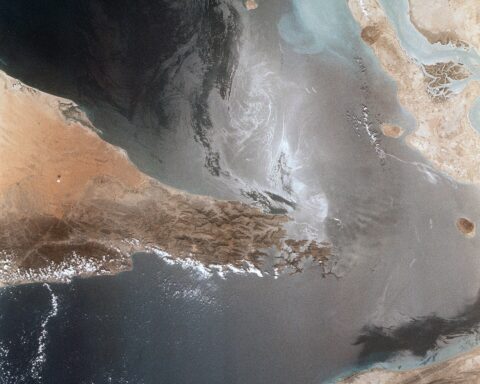
RIYADH — The Makkah Joint Defence Agreement reaches the expiry of the Trump administration’s Iran strike moratorium on November 3, 2026, without a joint military command, shared data links, compatible munitions across its three signatories, or full ratification by Turkey. Signed on August 7 in Mecca by Saudi Arabia, Turkey and Pakistan, the pact borrows NATO’s collective defence language — an attack on one is an attack on all — but 87 days later it remains, in the assessment of the Middle East Council on Global Affairs, operationally unready: its three signatories still lack the shared data links, common command architecture and compatible munitions that collective defence requires. Pakistan’s Foreign Office, after completing ratification on October 23, said that “matters related to the agreement, its ratification, and operationalisation remain under discussion by the three parties.” The pact’s first real test arrives tomorrow.
Table of Contents
- What Does Article 2 of the Makkah Pact Actually Require?
- 87 Days From Signature to Crisis
- Does the Pact Have a Joint Military Command?
- Pakistan’s Deployment and the Gap Between Ceiling and Floor
- Why Has Turkey Not Ratified the Makkah Pact?
- France and Britain Outside the Pact
- How Does Iran View the Makkah Defence Pact?
- The Baghdad Pact and the Weight of Precedent
- What Happens After November 3?
- Frequently Asked Questions
What Does Article 2 of the Makkah Pact Actually Require?
Article 2 of the Makkah Joint Defence Agreement states that “in the event one of the parties is subjected to an armed attack or military aggression by another country or group of countries, the parties shall immediately provide assistance to the party under attack, utilising the full range of mutual assistance measures available to them.” The full 16-article text was published on October 21 by The National and Dawn, drawn from documents submitted to Turkey’s parliament.
The House of Saud Daily Briefing
Saudi Arabia's news in 3 minutes, every morning. Free. See today's issue
The language is deliberately broad. The Jewish Institute for National Security of America noted that the pact uses “aggression” rather than “armed attack” as its trigger, making it “broader and less defined than NATO’s Article 5.” NATO’s Washington Treaty confines the obligation to “armed attack” and requires each ally to take “such action as it deems necessary” — a formulation that preserves sovereign discretion. The Makkah pact’s Article 2 instead commits signatories to provide assistance “immediately” using “the full range” of measures, which on paper is a stronger obligation than anything in the North Atlantic Treaty.
Whether that paper obligation translates to operational reality is a different question. The Arab Center Washington DC assessed that the signatories “define threats differently, no joint command or published text exists, and the pact seemingly does not cover drone strikes.” The text was unpublished at the time of that assessment, but the ambiguity around drone and missile attacks — the primary weapons the Houthis use against Saudi Arabia — persists. No signatory has clarified whether a Houthi drone strike on Riyadh constitutes the “armed attack or military aggression by another country” that triggers Article 2.
The word “country” matters. The Houthis are not a country. Iran backs them and arms them, but Tehran does not formally claim the Houthi campaign as its own. Iranian state media describes the war as a Saudi conflict with “the Yemeni people,” not an Iranian operation. If Article 2 requires aggression “by another country,” and the Houthis are a non-state actor operating from Yemen, the pact’s trigger may not apply to the attacks Saudi Arabia is actually absorbing. Saudi Arabia, Egypt, Pakistan and Turkey issued a joint statement on October 11 calling the Houthi attacks “a blatant violation of international law,” according to CBS News, but that formulation stopped short of naming Iran as the aggressor state.

Article 7 establishes the Strategic Political and Defence Committee, composed of foreign ministers, defence ministers and chiefs of general staff. This committee met in Riyadh on October 5 and agreed to “activate collective deterrence measures,” according to Al Jazeera. Prince Khalid bin Salman, the Saudi defence minister, announced the decision. It was the first formal invocation of the pact’s machinery — 59 days after signing.
The pact bars withdrawal for 10 years. That provision, confirmed by Middle East Eye’s publication of the text, binds the three states to the framework regardless of changes in government or strategic circumstances through at least 2036.
87 Days From Signature to Crisis
The timeline from signature to moratorium expiry compresses what alliances normally take years to build into less than three months. The four scenarios Saudi Arabia faces after November 3 all assume some form of the pact’s deterrent value, but the record of those 87 days reveals how much remains aspirational.
| Date | Event | Source |
|---|---|---|
| September 17, 2025 | Saudi-Pakistan bilateral defence pact signed | Globalsecurity.org |
| August 7, 2026 | Makkah Joint Defence Agreement signed by Saudi Arabia, Turkey, Pakistan | Kuwait Times/AFP |
| August 31, 2026 | First pact meeting of ministers and military chiefs, Istanbul; secretariat established in Saudi Arabia | Oman Observer |
| September 10, 2026 | Pakistan says it is “not considering an immediate military response” to Houthi strikes | CES Intelligence |
| September 25, 2026 | Foreign ministers of three signatories meet to arrange urgent military chiefs meeting | Al Jazeera |
| September 26, 2026 | Military chiefs hold joint meeting in Riyadh | Gulf News |
| October 5, 2026 | Committee agrees to “activate collective deterrence measures” | Al Jazeera |
| October 20, 2026 | Turkey submits pact to parliament | Middle East Eye |
| October 21, 2026 | Full 16-article text published from Turkish parliamentary documents | The National; Dawn |
| October 23, 2026 | Pakistan ratifies | Middle East Eye; Dawn |
| October 26, 2026 | Field Marshal Munir joins Saudi and Turkish officials for Tehran talks | Al Jazeera |
| October 27, 2026 | Turkish parliamentary committee approves pact by majority vote | Turkish Minute |
| October 31, 2026 | Syrian FM says Syria is in negotiations to join the pact | The National |
| November 2, 2026 | No full Turkish parliamentary vote scheduled; moratorium expires tomorrow | — |
The Doha Institute described the Makkah agreement as “the first collective security framework involving both Arab and non-Arab states since the establishment of the Baghdad Pact in February 1955.” That comparison is historically accurate and not reassuring — the Baghdad Pact collapsed within three years of signing, after Iraq’s 1958 coup pulled out its anchor state.
Does the Pact Have a Joint Military Command?
The Makkah Defence Pact does not have a joint military command structure, integrated air defence network, or shared communications architecture. The Middle East Council on Global Affairs assessed that combined air and maritime defence between the three signatories “require shared data links, a common command-and-control architecture, and compatible munitions — none of which presently exist across the three militaries.” The expected near-term steps, according to the Geopolitical Monitor, are “joint exercises, liaison officer exchanges, and selective procurement convergence” — none of which have been confirmed as completed.
A secretariat was established following the August 31 meeting in Istanbul, based in Saudi Arabia and headed by a Pakistani secretary-general for a three-year term. That is an administrative body, not a command structure. The Middle East Institute assessed that the pact “borrows NATO’s solidarity language without its institutional machinery” and called the NATO comparison “misleading.”

NATO took two years from the 1949 Washington Treaty to establish SHAPE, its integrated military headquarters, and decades to build the interoperable command architecture that makes Article 5 more than words on paper. The Makkah pact has had 87 days. The question is not whether that is enough time — it plainly is not — but whether the signatories intend to build what alliances require, or whether the agreement serves a different function altogether.
The Lowy Institute offered one answer: the pact is “best understood as strategic insurance whose deterrent value currently rests on uncertainty.” If adversaries cannot be sure what the pact commits its members to do, the ambiguity itself becomes the deterrent. That logic holds until the deterrent is tested, which is what November 3 may bring.
Pakistan’s Deployment and the Gap Between Ceiling and Floor
Pakistan has deployed approximately 8,000 troops to Saudi Arabia, according to unnamed security officials cited by The Daily Star. One full Pakistan Air Force squadron of 16 aircraft has been stationed at King Abdulaziz Air Base in the Eastern Province since April 11, 2026 — predating the Makkah pact by nearly four months, under the bilateral Saudi-Pakistan agreement signed in September 2025. Reuters reported the deployment includes two drone squadrons and an HQ-9 air defence system financed by Riyadh.
The pact allows for up to 80,000 Pakistani troops. The gap between 8,000 deployed and 80,000 authorised is the distance between a symbolic commitment and a war footing. Pakistan’s army spokesperson declined to disclose exact numbers.
Pakistan’s defence minister, Khawaja Asif, has repeatedly characterised Pakistan’s role as support rather than direct combat, telling interviewers that the pact is “purely defensive” and that any activation depends on the nature and scale of aggression. That framing, from a pact signatory’s defence minister, is among the most telling assessments of the agreement’s operational state. If Pakistan’s own minister describes the pact’s military contribution in primarily defensive and conditional terms, the collective defence clause has not been activated in any meaningful sense.
Field Marshal Asim Munir — promoted to that rank in May 2025 — joined Saudi Defence Minister Prince Khalid bin Salman and Turkish intelligence chief Ibrahim Kalin for talks with Iranian officials in Tehran on October 26, according to Al Jazeera. That Munir attended in person signals Pakistan’s diplomatic investment in the pact framework, even as the military contribution remains modest relative to the ceiling.
A Pakistani military spokesperson said on October 19 that attacks on Saudi Arabia “will trigger a collective response,” according to Business Recorder. That statement was firmer than the defence minister’s October 6 assessment. The gap between what Pakistan says and what Pakistan does defines the pact’s operational ambiguity: the political rhetoric escalates with each Houthi strike, but the deployed force structure has not changed materially since the pre-pact bilateral arrangements.
Pakistan’s dual role — security partner and diplomatic mediator — also complicates its pact obligations. Islamabad helped broker the June Islamabad Memorandum between the US and Iran, and Field Marshal Munir’s presence in Tehran was as much about negotiation as deterrence. A state that is simultaneously guaranteeing another state’s defence and mediating with that state’s adversary faces contradictions that no treaty text can resolve.
Why Has Turkey Not Ratified the Makkah Pact?
Turkey is the only signatory that has not completed ratification of the Makkah Joint Defence Agreement. The pact was submitted to Turkey’s parliament on October 20, and the relevant parliamentary committee approved it by majority vote on October 27, according to Turkish Minute. No full General Assembly vote has been scheduled as of November 2.
Turkish Foreign Minister Hakan Fidan stated on August 8, the day after signing, that the pact “does not identify Iran, or any other country, as a common threat.” That framing — delivered to Al Jazeera within 24 hours of the ceremony — was aimed directly at Tehran. Turkey maintains diplomatic and economic ties with Iran that it does not intend to sacrifice for a Saudi-led security architecture.
The ratification gap creates a legal ambiguity. Saudi Arabia and Pakistan have both ratified. Turkey has signed but not ratified. Whether Article 2’s collective defence obligation applies to an unratified signatory is untested. The pact’s text, as published, does not specify when obligations attach — at signature, ratification, or some other threshold.
Turkey’s committee approval was by majority, not unanimity, suggesting domestic political friction around the commitment. The committee vote on October 27 cleared one procedural hurdle, but the full General Assembly vote — the step that would make Turkey’s commitment legally binding under Turkish constitutional law — has no date.
France and Britain Outside the Pact
France and Britain have both deployed military assets to support Saudi Arabia’s defence, but neither is a signatory to the Makkah agreement. Their contributions are bilateral arrangements operating under separate legal frameworks.
France deployed troops, radars and air defence systems to protect Yanbu port and energy infrastructure, with operations beginning around October 13, 2026, according to Arab News. President Macron described the mission as strictly defensive. France has not disclosed troop numbers. Whether French radar and air defence data is shared with the Royal Saudi Air Force is unknown — a gap that matters operationally, since effective air defence requires integrated sensor networks, not separate national bubbles.
Britain initially deployed an RAF Voyager air-to-air refuelling tanker, based at RAF Akrotiri in Cyprus, according to The National. On October 20, Britain announced it would also deploy RAF Typhoon fighter jets to Saudi Arabia for defensive counter-air missions — protecting Saudi cities and infrastructure from Houthi drones and missiles — according to Al Jazeera and the Washington Post. The Ministry of Defence has not disclosed the number of Typhoons or their basing location in Saudi Arabia. Britain has not placed these forces under the Makkah pact’s collective framework or its secretariat.
The bilateral nature of these deployments means they operate outside the pact’s collective framework. France and Britain answer to Paris and London, not to the Makkah pact’s secretariat or its Strategic Political and Defence Committee. They could be withdrawn at any time without invoking the pact’s 10-year lock-in provision.
The US embassy drawdown provides a contrasting data point. While France and Britain add assets, the United States is reducing its diplomatic presence — the State Department ordered staff out of Saudi Arabia as the embassy moved to emergency staffing. Washington approved 100 military advisers for intelligence support, according to CNN, and a proposed $24.3 billion sale of 48 F-35A fighters, according to The Aviationist, but neither has translated into combat forces in theatre.

How Does Iran View the Makkah Defence Pact?
Iran’s public response to the Makkah pact has been dismissive, though the dismissiveness has grown louder as the pact’s membership has expanded. Mahmoud Nabavian, a member of Iran’s parliamentary security commission, said “Saudi leaders should understand that cooperation with Türkiye and Pakistan would not guarantee their security,” according to The New Arab. His colleague Ebrahim Rezaei called the agreement a “paper agreement.”
Iranian state media framed the October 5 activation as “Turkey and Pakistan join the Saudi war against the Yemeni people,” according to coverage compiled in the Wikipedia entry for the agreement. That framing serves two purposes: it delegitimises the pact by casting it as aggression rather than defence, and it warns Turkey and Pakistan that joining Saudi Arabia’s conflicts carries reputational costs in Tehran.
The more interesting Iranian response comes from outside the government. Hamidreza Azizi of Iran Analytica reported that Iranian commentators were split on the pact, with some former officials proposing that Iran seek to join rather than oppose it. Former Khatami-era official Abdollah Ramazanzadeh “proposed that Iran take the initiative and seek to join the trilateral pact,” according to Iran Analytica. That proposal — which has no chance of acceptance — reveals that at least some Iranian strategic thinkers see the pact as a durable feature of the region rather than a provocation that will dissolve.
The Council on Foreign Relations was blunter in its assessment of what the pact signals to all parties, including Iran: “The U.S.-led Middle East order is over. The Mecca Agreement proves it.”
The Baghdad Pact and the Weight of Precedent
The Doha Institute’s comparison to the Baghdad Pact is worth examining. That agreement, signed in February 1955, brought together Iraq, Turkey, the United Kingdom, Pakistan and Iran — a configuration that shares two members with the Makkah pact. It was designed to contain Soviet influence in the Middle East. It collapsed when Iraq’s 1958 coup removed its anchor state, and its successor organisation, CENTO, dissolved in 1979 after Iran’s revolution and Pakistan’s withdrawal.
The Makkah pact shares structural features with both its predecessor and its context. Like the Baghdad Pact, it joins states with fundamentally different threat perceptions. Turkey’s primary security concerns remain the PKK and the Syrian border. Pakistan’s military establishment is oriented toward India. Saudi Arabia faces Iranian proxies on its southern border and Iranian naval power in the Gulf. A collective defence agreement works when members agree on what they are defending against. The Makkah pact’s signatories do not.
Turkish FM Fidan’s August 8 insistence — that the pact names no state as a common threat — makes this explicit. Saudi Arabia signed the pact because of Iran. Turkey signed despite Iran. Pakistan signed for reasons that mix security commitment with economic partnership — Riyadh is financing Pakistan’s HQ-9 deployment. These are not the same motivations, and divergent motivations produce divergent responses when the Article 2 trigger is pulled.
The Arab League Collective Security Pact of 1950 offers another precedent. It was never operationally activated during either the 1948 or 1967 wars — the moments when collective Arab defence was most needed. The GCC’s own mutual defence provisions were not activated during the Yemen conflict that began in 2015. The Middle East’s history of collective security agreements is a history of agreements that exist on paper and fail in practice.
What Happens After November 3?
The Trump administration’s moratorium on striking Iran expires on November 3 — the date of the US midterm elections. Trump stated on October 8 that the US “will not be attacking Iran at any time prior to the midterm elections,” according to The National. What follows that date is one of the sharpest uncertainties in Gulf security.
Iran’s Supreme Leader Mojtaba Khamenei ordered new target lists on October 31, according to The Indian Express. The Araghchi two-day Hormuz reopening plan, submitted as a last diplomatic gambit, has not produced a breakthrough. The Trump administration says Iran wants to talk while tanker attacks in the Strait of Hormuz continue.
For the Makkah pact, November 3 is the date its deterrent value gets priced. If the US strikes Iran, the pact becomes one element of a broader US-led campaign. If the US does not strike, Saudi Arabia’s security depends on whatever the pact can actually deliver — which, as of this writing, is 8,000 Pakistani troops, 16 Pakistani fighters, a French defensive deployment at Yanbu of undisclosed size, one British tanker aircraft and an announced Typhoon fighter deployment of undisclosed size, no joint command, no integrated air defence, no Turkish ratification, and a Syrian negotiation to join a framework that does not yet function.
The Arab Center Washington DC’s assessment — “diversification without substitution” — captures the pact’s current utility. Saudi Arabia has diversified its security partnerships beyond the United States. It has not found a substitute for what the United States provides: the ability to project decisive force against a state-level adversary. The Makkah pact may mature into that substitute. It has not done so in the three months since signing.
The pact’s framers may not have intended it to be ready by November 3. Alliances are built in decades, not quarters. The 10-year withdrawal lock suggests the signatories are thinking on that timescale. But the Houthis struck Riyadh’s King Khalid International Airport on October 10, killing 12 and wounding 309 according to Al Jazeera, citing GACA — other reports put the injured at 308; the death toll later rose to 13 after an Indian victim subsequently died of injuries. They struck again on October 11, killing a Pakistani resident at Terminal 4, according to CNN. The attacks on Saudi Arabia from Houthi positions in Yemen have not paused for the pact’s maturation schedule.
The crown prince’s two appeals to Trump in September for US strikes on the Houthis, both declined according to CNN, underscore what the pact has not replaced. Saudi Arabia assembled an alliance. It still needs the United States.

Frequently Asked Questions
When was the Makkah Joint Defence Agreement signed and by whom?
The agreement was signed on August 7, 2026, in Mecca by Saudi Arabia, Turkey and Pakistan. It grew from a Saudi-Pakistan bilateral defence pact signed on September 17, 2025. Turkey joined after negotiations that included a $2 billion Saudi-Turkish energy agreement signed during President Erdogan’s February 3, 2026 visit to Riyadh, according to France 24. The bilateral between Saudi Arabia and Pakistan had already placed Pakistani jets at King Abdulaziz Air Base four months before the trilateral pact was finalised.
Can a member leave the Makkah Defence Pact?
The pact bars withdrawal for 10 years from the date of signature, according to the full text published by Middle East Eye. That lock-in extends through 2036. No mechanism for suspension short of withdrawal has been published, and the pact does not specify consequences for a signatory that refuses to honour an Article 2 invocation while remaining formally inside the agreement. By comparison, NATO has no minimum membership period — any member may withdraw after one year’s notice under Article 13 of the Washington Treaty.
Has the pact’s collective defence clause ever been formally invoked?
The Article 2 collective defence clause has not been formally invoked using the treaty’s own language. The closest event was the October 5, 2026 committee decision to “activate collective deterrence measures,” which used general language rather than the specific Article 2 trigger of “armed attack or military aggression.” In September, when Houthi attacks continued, Pakistan stated on September 10 it was “not considering an immediate military response,” according to CES Intelligence. The absence of a formal invocation means the pact’s most consequential provision remains untested.
How does the Makkah Pact compare to NATO’s Article 5?
The Makkah pact’s Article 2 and NATO’s Article 5 share the principle of collective defence but differ in three material ways. First, the Makkah pact uses “aggression” as its trigger while NATO uses “armed attack,” making the Makkah trigger broader but less precise, according to JINSA. Second, NATO requires each ally to take “such action as it deems necessary,” preserving sovereign discretion, while the Makkah pact commits to “the full range of mutual assistance measures” — a stronger nominal obligation. Third, and most consequentially, NATO has 75 years of institutional machinery behind Article 5, including SHAPE, integrated command structures and interoperable forces. The Makkah pact has a secretariat and no confirmed joint exercises.
Is Syria joining the Makkah Defence Pact?
Syria is in negotiations but has not joined. Syrian Foreign Minister Asaad al-Shaibani said at the Manama Dialogue on October 31 that “discussions are currently underway to evaluate Syria’s entry into the Makkah alliance,” according to The National. He added that “regardless of whether Syria is in the pact or not, or any other pact, Syria is part of the security of this region.” Syria denied reports it had been asked to send ground troops to Yemen, according to Dawn. No timeline, mechanism or conditions for Syrian accession have been published.
The House of Saud Daily Briefing
Saudi Arabia's news in 3 minutes, every morning. Free. See today's issue