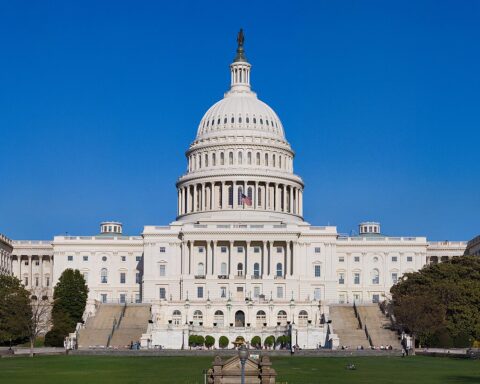
WASHINGTON — Senate Democratic leader Chuck Schumer pledged on November 4 to “end the war” after Democrats won control of both chambers of Congress in the November 3 midterm elections, a result that gives the incoming majority war powers authority, committee chairmanships, and spending leverage over President Donald Trump’s military campaign against Iran.
For Saudi Arabia, the shift carries operational consequences beyond the domestic political fight. The US capabilities Riyadh has depended on since the war began on February 28 — Navy mine-clearance operations in the Strait of Hormuz, air-defense systems that have intercepted Iranian missiles, and military advisers embedded under a bilateral defense agreement — are the capabilities a determined Congress can defund. No Saudi official has publicly addressed that vulnerability.
The House of Saud Daily Briefing
Saudi Arabia's news in 3 minutes, every morning. Free. See today's issue
Table of Contents

What Tools Do Democrats Have to End the War?
Democrats will hold three instruments when the new Congress convenes on January 3, 2027: war powers resolutions, spending authority, and committee subpoena power. Representative Jason Crow of Colorado outlined the strategy on November 4, telling Foreign Policy that Democrats would “pursue war powers resolutions and appropriations cuts” and that “the war has got to end.”
The votes have already come close. The Senate has voted on Iran war powers resolutions 14 times this year, ABC News reported. Both chambers passed one for the first time in June — a non-binding 50-48 vote with four Republican crossovers: Rand Paul, Susan Collins, Lisa Murkowski, and Bill Cassidy, according to the Washington Post. ABC News confirmed it was the first time both chambers had approved an Iran war powers measure. On September 24, a concurrent resolution failed 49-50, one vote short; Rand Paul, Susan Collins, Lisa Murkowski, and Thom Tillis voted yes — Cassidy switched to opposing — the Washington Post reported. The House passed its own war powers resolution 220-204 in September, with seven Republicans joining, according to CBS News.
The new majority changes the floor math and the committee rooms. House Democratic leader Hakeem Jeffries went further on November 5, urging Trump to end the war before the new Congress convenes and warning that Democrats would run Defense Secretary Pete Hegseth “out of town,” Slate reported. Al-Monitor reported that Democrats were also preparing to challenge Gulf business ties alongside the war, opening a second front of scrutiny beyond the military campaign.
“We are going to end the war.”
— Senator Chuck Schumer (D-NY), November 4, 2026 (Bloomberg Government)
The December 11 Deadline
Democrats have one pressure point before the new Congress takes office. The government’s current continuing resolution expires on December 11, according to the Carnegie Endowment, creating a lame-duck funding fight where outgoing and incoming legislators must negotiate. Any must-pass spending bill becomes a vehicle for war-related conditions.
Trump’s $1.5 trillion defense budget request is “dead on arrival” under incoming Democratic appropriators, Slate reported on November 5. Bloomberg Government noted that Democrats plan to use their new leverage to “ramp up Iran war scrutiny,” with the defense request among their primary targets. The political ground is shifting on both sides of the aisle. Al Jazeera reported on November 5 that Trump’s own congressional allies were already “distancing themselves from the Iran war” after the midterm losses. Republican resistance to war-related riders on the spending bill is weaker than it was before November 3.
The structural limits remain. Jennifer Hendrixson White, a visiting scholar at the Carnegie American Statecraft Program, wrote that “a Congress in opposition to a sitting president faces limited options” and that Democrats “lack a veto-proof majority in either chamber.” Overriding a presidential veto requires 67 Senate votes — a threshold no Iran war vote has approached this year. But a spending fight operates on different rules. The president cannot spend money Congress does not appropriate, and he cannot keep the government open without a bill that passes both chambers.
What US Capabilities Can Saudi Arabia Not Replace?
The domestic political debate in Washington tends to frame the war in terms of constitutional authority and spending. In Riyadh, the question is more concrete. Three US military functions sustain Saudi Arabia’s wartime position, and none has an equivalent outside the American alliance.
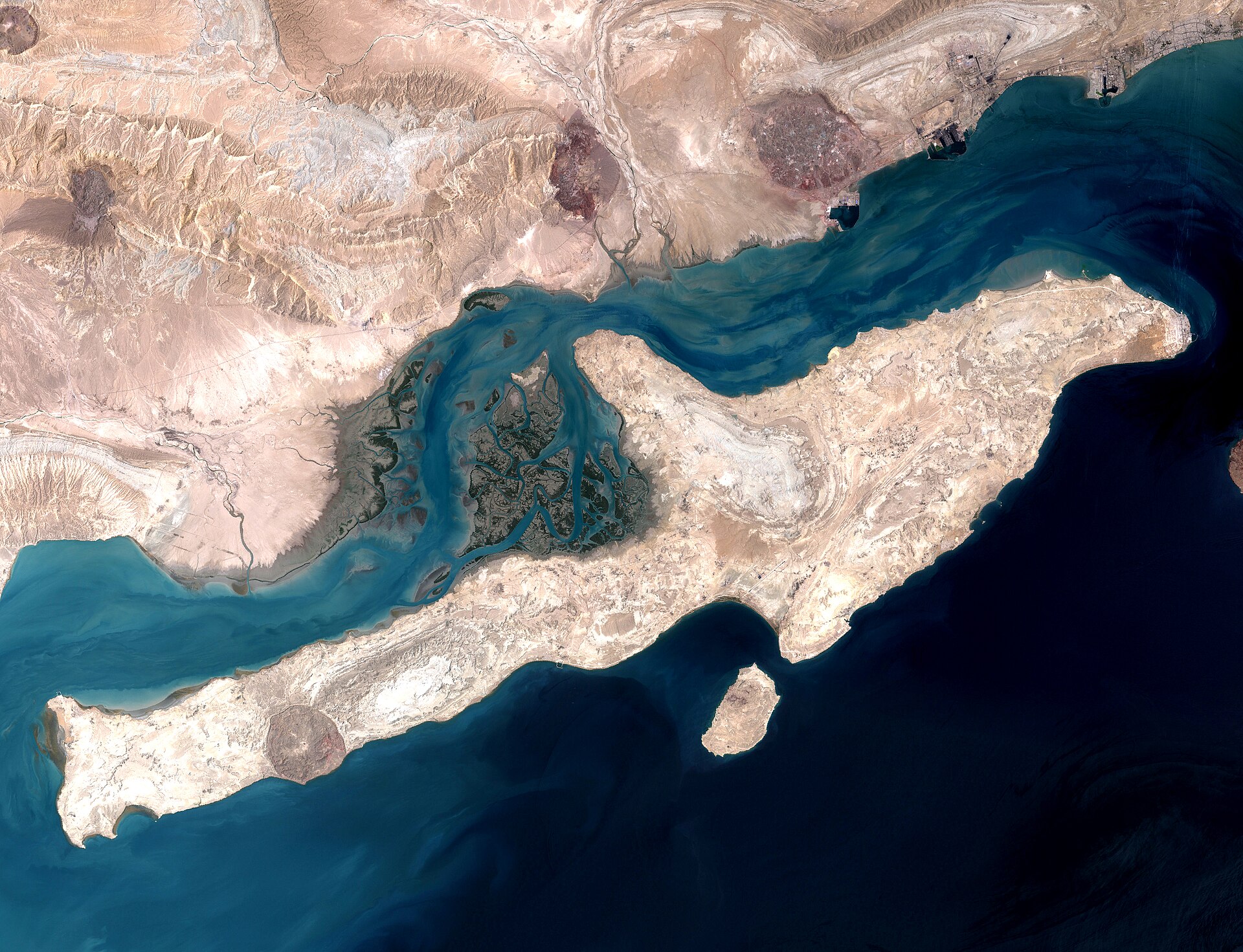
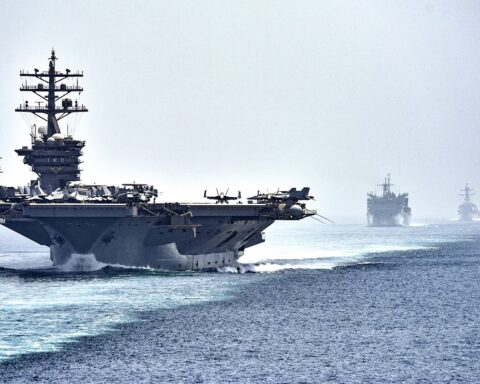
Mine-clearance in the Strait of Hormuz has been a US Navy operation since April 11, when the destroyers USS Frank E. Peterson and USS Michael Murphy began sweeping the waterway with underwater drones, Navy divers, and SEALs, according to Naval News and DefenseScoop. Trump declared all mines removed from the international transit lane on August 25, Axios reported. Task and Purpose noted sparse CENTCOM updates on whether the clearance was complete.
That gap matters. The Navy’s Avenger-class mine countermeasure ships — purpose-built for the mission — had already been retired from the Fifth Fleet. Their replacements, Littoral Combat Ships carrying mine-warfare mission packages, had undergone limited operational testing even within the US Navy, Naval News reported. If Congress defunds the naval presence that keeps the transit lane open, there is no allied fleet waiting to take over. Saudi Arabia operates no comparable mine-countermeasure capability. Some 135 ships have been turned around since the Hormuz blockade resumed on July 14, according to Gulf News.
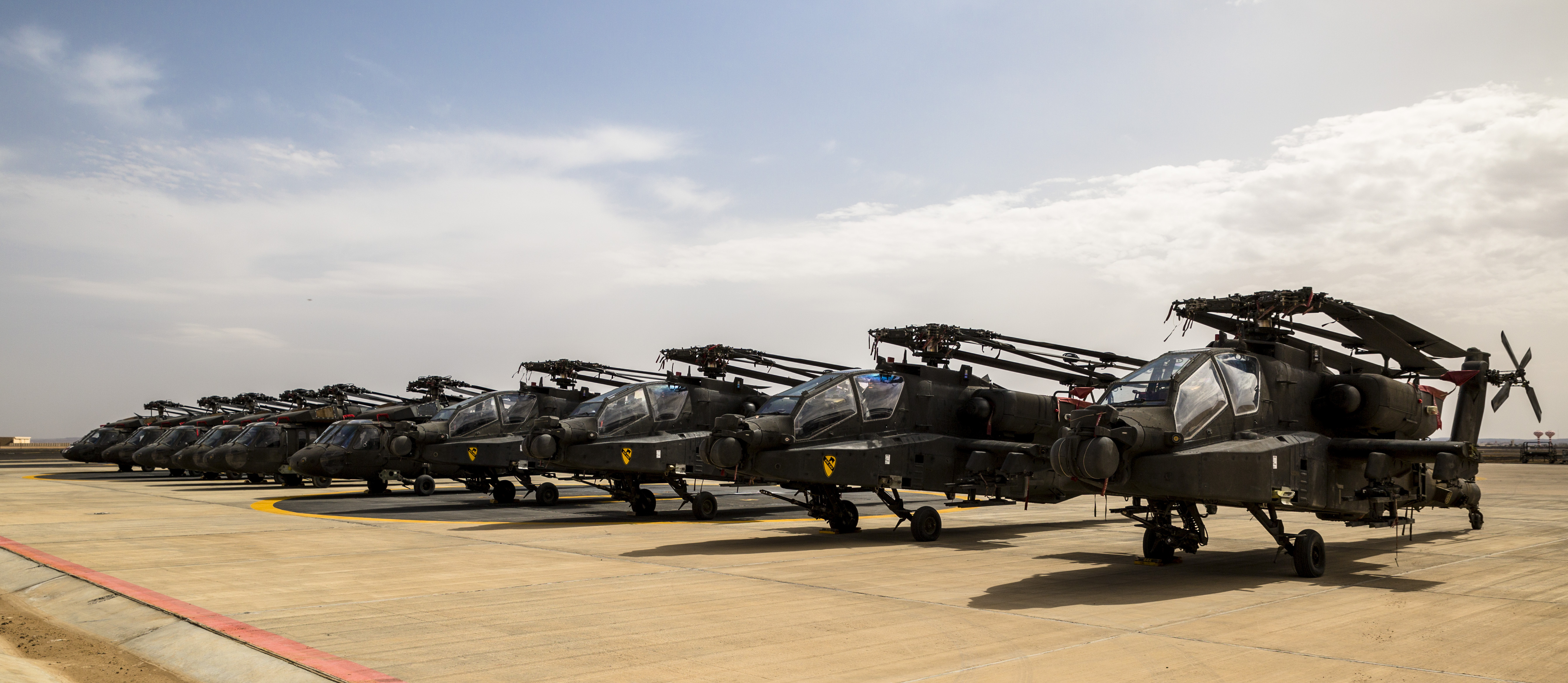
Air defense is the second dependency. The THAAD battery at Prince Sultan Air Base was operating at reduced effectiveness after its AN/TPY-2 radar was damaged in an early Iranian strike, EurasianTimes reported. Patriot PAC-3 batteries bore the brunt of subsequent missile engagements. An Atlantic Council analysis concluded that Saudi Arabia and the UAE had determined “only the United States can supply the missile defense and extended deterrence they need.”
The third is the advisory and command layer. CNN reported in October that more than 100 US military advisers were operating in Saudi Arabia under the defense agreement signed on November 18, 2025. Secretary of State Marco Rubio confirmed the agreement publicly — on September 23 and again on October 5 — but declined each time to describe its operational specifics, according to Al Arabiya and The National. Crown Prince Mohammed bin Salman made two direct appeals to Trump in September for US strikes on Iranian targets. Trump declined both, CNN reported on October 10. The pattern — Riyadh asking for more than Washington will provide, Washington providing just enough to maintain the relationship — now faces a Congress that has pledged to provide less.
How Is Tehran Reading the Democratic Win?
Tehran moved within hours to frame the results as vindication. Mohammad Bagher Ghalibaf, speaker of Iran’s parliament, wrote on social media that “Americans have said ‘NO TO WAR,'” CNBC reported on November 4. Iran’s Foreign Ministry said the results showed “Americans reject war,” according to CBS News.
“If the US govt betrays their public will to serve international paymasters and blackmailers, it will learn our NO comes with a Nightmare.”
— Mohammad Bagher Ghalibaf, Speaker of Iran’s Parliament, November 4, 2026 (NPR)
Supreme Leader Mojtaba Khamenei posted on X that “the process of the US’s collapse has accelerated,” NPR reported. The public messaging was uniform: Washington’s own voters had repudiated the war.
The private picture is more fractured. Iran International reported on November 4 that Iranian elites are split over what to do with the opening. Hardliners see the Democratic win as confirmation of American weakness and want to press for maximum concessions on the Strait of Hormuz, where Khamenei and Trump have exchanged warnings for weeks. Pragmatists in the foreign ministry see the same shift as a chance for a narrower deal — one that might allow partial reopening of the waterway without requiring the full Iranian withdrawal Washington has demanded.
Vice President JD Vance provided an unexpected data point from inside the administration, blaming the Iran war for the Republican Party’s midterm losses, Slate and Bloomberg Government reported. The concession came from Trump’s own vice president, not an opposition figure — and it undercuts any argument that the war retains broad domestic support.
The Makkah Pact and Riyadh’s Silence
The alternative security framework Riyadh assembled — the Makkah pact, which has no joint military command — does not fill the gap a US withdrawal would leave. Pakistan has contributed approximately 8,000 troops to Saudi Arabia, according to Reuters. Turkey’s parliament had not ratified the agreement as of October, Al Jazeera reported on October 20. The pact provides political solidarity. It does not provide mine-countermeasure ships or integrated radar networks.
Michael Ratney of the CSIS Middle East Program wrote in September that Saudi Arabia had sought “direct U.S. military engagement” from Trump, who declined. The relationship had not “reached a breaking point,” Ratney added, but the distance between what Riyadh wants and what Washington will deliver is the space Democrats now plan to widen.
No Saudi government statement has addressed the Democratic congressional victory or the prospect of reduced US military support — a silence that contrasts with the speed of Tehran’s public response and the volume of Washington’s internal debate. The scale of the dependency is documented: the Congressional Research Service reported that the administration had invoked emergency provisions to expedite more than $30 billion in arms to Gulf partners and other regional allies since February 28, bypassing standard congressional review (CRS R48971). A separate CRS report put the direct cost of the war at $38 billion as of August 1 (CRS R48887). Those figures are now subject to oversight by incoming Democratic committee chairs who have pledged to end the war that produced them.
Background: War Powers and the Iran Conflict
The War Powers Resolution of 1973 gives Congress authority to direct a president to withdraw forces from hostilities it has not authorized. Section 5(c) allows this through concurrent resolution — a mechanism that does not require presidential signature. The executive branch has argued since the Supreme Court’s 1983 ruling in INS v. Chadha that Section 5(c) is unenforceable, though no court has ruled directly on the question, according to Just Security and The Deep Dive.
The current conflict began on February 28, 2026, when Iran launched strikes against targets in Saudi Arabia and the wider Gulf region. A Brookings Institution session in May 2026 argued that February 28 should have triggered formal congressional notification and a request for authorization — the step the administration never took, and the omission Democrats have made the centerpiece of their legal argument. The Strait of Hormuz blockade added an economic dimension. The proposed $24.3 billion F-35 sale to Saudi Arabia, first reported by The Aviationist in September, remains in congressional review — and the Democratic majority will now chair the committees that oversee arms sales.
The distinction between a war powers resolution and a spending fight matters for what comes next. Trump can veto a resolution. He cannot veto the absence of funding. If Democrats decline to appropriate money for specific operations, the president has no override mechanism. That asymmetry — between a challenge the executive can block and one it cannot — shapes every calculation in Washington and, by extension, in Riyadh.
Frequently Asked Questions
Has Congress ever forced a president to end a military operation through the War Powers Resolution?
No president has complied with a congressional directive under the War Powers Resolution since its enactment in 1973. The closest precedent came during the Saudi-led Yemen campaign: Congress passed resolutions in 2018 and 2019 directing Trump to end US support, and Trump vetoed both. The constitutional question — whether Section 5(c) allows binding withdrawal orders through concurrent resolution — remains untested in any federal court, which is why Democrats are pursuing the spending route in parallel.
What spending leverage do incoming Democratic committee chairs hold over the war?
Chairs of the Senate and House Appropriations committees set the terms for all discretionary spending, including defense. They can decline to fund specific operations, attach conditions requiring the president to obtain formal authorization, or invoke the Arms Export Control Act to request extended review periods on arms sale notifications. The current continuing resolution does not include a war supplemental, according to Breaking Defense — meaning any new war funding requires affirmative action by a Congress now controlled by Democrats.
Could the Makkah pact replace US military support for Saudi Arabia?
The pact’s most acute limitation is structural. It has no joint command, meaning no unified decision-making authority for air defense or maritime operations. Turkey — the signatory with the most capable military — had not ratified the agreement as of October, Al Jazeera reported. Even if fully ratified, no pact member operates mine-countermeasure vessels in the Strait of Hormuz; only US Navy assets have done so in the current conflict. The pact was designed for political solidarity, not as an operational substitute for the US defense agreement.
The House of Saud Daily Briefing
Saudi Arabia's news in 3 minutes, every morning. Free. See today's issue