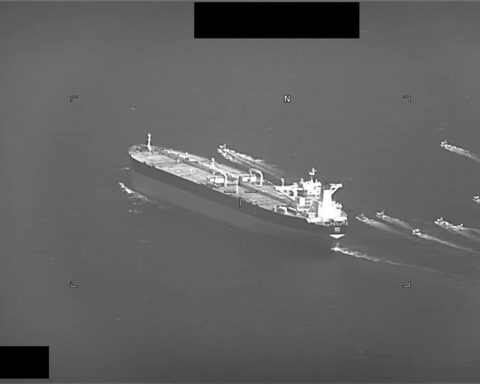
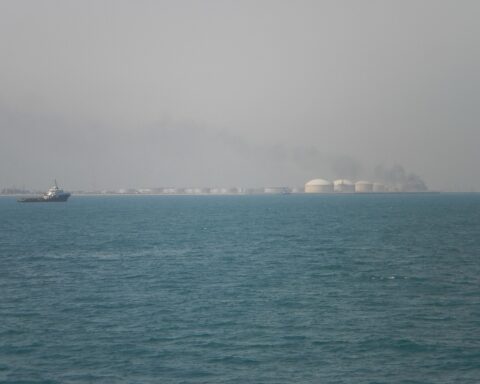
TEHRAN — Iran’s Islamic Revolutionary Guard Corps claimed on November 5 that two oil tankers and a tugboat caught fire after striking naval mines on what it called an “unauthorized route” in the Strait of Hormuz, while the United Kingdom Maritime Trade Operations separately reported a tanker struck by two projectiles in the Persian Gulf. The revised claims, carried by Al Jazeera, Ynet, and The Hans India, came hours after Democrats secured control of the United States Senate — timing that senior Iranian officials used to declare the midterm results a rejection of President Trump’s Iran war.
The IRGC’s mine claims and the UKMTO advisory described different vessels, different locations, and different weapons — mines in the strait versus unidentified projectiles approximately 50 nautical miles north of Qatar’s Madinat ash Shamal, according to ABC News and Iran International. No vessel names, flag states, or operators were confirmed in any of the day’s incidents. Supreme Leader Mojtaba Khamenei dismissed expectations of a US policy shift, President Trump warned of a possible “heavy hit” on Iran, and incoming Senate Majority Leader Chuck Schumer pledged to use the “power of the purse” to end the war — three responses aimed at three different audiences, none of which could act immediately.
Table of Contents
What Did the IRGC Claim on November 5?
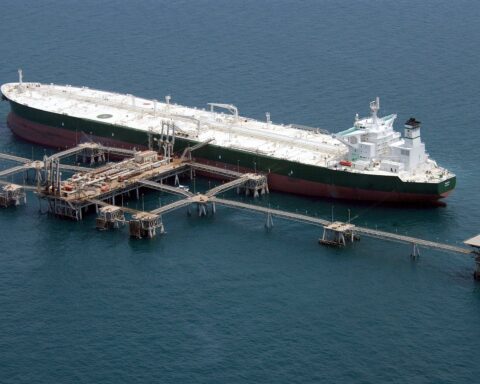
The IRGC’s November 5 announcements comprised at least two distinct categories of incident. In the Strait of Hormuz, the Guard said two oil tankers and a tugboat caught fire after striking naval mines while transiting what it designated an “unauthorized southern route,” according to Reuters via Al Arabiya and Arab News. The IRGC framed the fires as a consequence of vessels defying its navigation orders — not as offensive operations — a posture Iranian state media maintained throughout the day, per Al Jazeera.
The House of Saud Daily Briefing
Saudi Arabia's news in 3 minutes, every morning. Free. See today's issue
Earlier on November 5, the IRGC had claimed two tankers and a tugboat caught fire under the same circumstances. The three-vessel count — two tankers and a tugboat — appeared to describe the same incident from multiple IRGC statements rather than a separate escalation. The IRGC disclosed no ship names, flags, or operators in either announcement.
Separately, UKMTO issued an advisory for a tanker struck by two unidentified projectiles approximately 50 nautical miles north of Qatar’s Madinat ash Shamal — a location in the Persian Gulf proper, not the strait, according to ABC News and Iran International. The weapon described was projectiles, not mines, suggesting a different attack method and a different vessel from those in the IRGC’s account.
The Guard also said its electronic warfare units captured two American-made Lucas-type drones intact during the same Hormuz operation, per DID Press and Energy News. It accused Washington of directing commercial vessels into mined lanes — placing blame for the fires on the United States rather than on its own mine fields.
The claims added to a disputed tally. Iran’s state broadcaster IRIB had claimed 11 tankers caught fire in the nine days before November 5, a figure the United States disputed. The National Security Journal reported that Iranian state television had at different points claimed as many as seven ships struck or mined in a single cycle, while UK monitors confirmed only two.
Iran Celebrates Midterms While IRGC Escalates
Iranian officials responded to the Democratic midterm victories with a coordinated campaign that celebrated the results in Washington while the IRGC simultaneously escalated in the strait. The National News described the posture as Iran “preparing for further attacks rather than assuming the US election will produce a diplomatic breakthrough.”
Supreme Leader Mojtaba Khamenei dismissed the notion that congressional turnover would alter American policy. “Anyone expecting a shift in US policy due to one party taking over is seriously mistaken,” he said, according to Reuters via the Tribune India. Khamenei warned that any renewed American strike on Iran would produce “a far more expansive war.” His official X account carried a broader assessment: “The process of the US’s collapse has accelerated,” per Yahoo News and Iran International.
Anyone expecting a shift in US policy due to one party taking over is seriously mistaken.Mojtaba Khamenei, Supreme Leader of Iran, November 5, 2026 — Reuters via Tribune India
Parliament Speaker Mohammad Bagher Ghalibaf posted that the American people had voted “no to war,” according to the Kyunghyang Shinmun and The National News. Mohsen Rezaei, secretary of Iran’s Supreme National Security Council, called the midterm outcome a “political defeat for Trump in Washington,” per The National News.
The timing was difficult to dismiss as coincidental. The IRGC had intensified Hormuz attacks in the weeks before the November 3 midterms, exploiting Trump’s public pledge not to strike Iran before the vote — a moratorium that expired on November 3. Iran International reported that Iran hit at least nine vessels in a single week in October, a pace not seen in months.
The November 5 escalation arrived on the day the Senate majority was confirmed, allowing Tehran to address two audiences at once: a domestic population watching for signs of American weakness, and a Washington establishment absorbing its election results. Khamenei’s warning against expecting a policy shift — directed explicitly at anyone placing hopes in the Democratic majority — served both.
How Did Trump and Congressional Leaders Respond?
President Trump acknowledged that the Iran war had carried a political price. The conflict was “partly responsible” for Republican midterm losses, he said, according to CBS News, but added that he would “do it again.” Trump also warned of a potential “heavy hit” on Iran in response to the tanker escalation, per Gulf News.
The admission marked a departure from Trump’s pre-election framing, in which he had portrayed the Iran campaign as a strategic success that voters would reward. The Democratic sweep of both the Senate and the House left Trump facing a Congress with new subpoena power and the procedural capacity to force war powers votes to the floor without Republican cooperation.
Senate Democratic Leader Chuck Schumer, preparing to become majority leader in January, framed the result as a mandate. “We are going to end the war,” Schumer said, according to TRT World and JFeed, pledging to use the “power of the purse” through the incoming majority. He did not specify a legislative timeline.
Iran appeared to be testing the gap between the election result and any congressional action — escalating during a lame-duck period when neither the old nor the new Congress held effective control over war authorization. Schumer’s pledge was prospective. The IRGC’s mine claims were immediate.
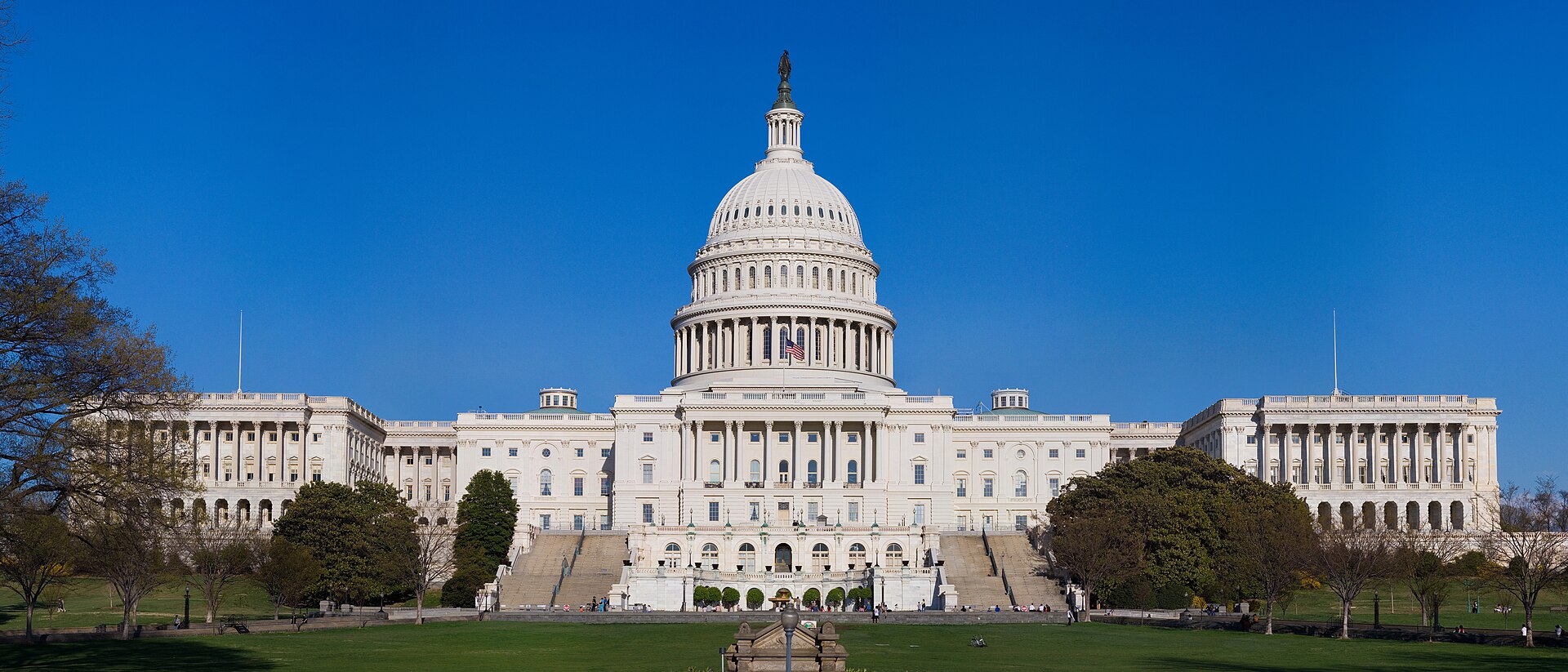
Can a Democratic Senate End the Iran War?
A Democratic majority changes who chairs committees and what legislation reaches the floor. It does not, on its own, end hostilities. The War Powers Resolution of 1973 allows Congress to direct the withdrawal of forces from unauthorized conflicts, but a joint resolution passed under the act can be vetoed — and overriding a veto requires 67 Senate votes, a threshold no Iran-related measure has approached.
The Senate has voted 13 times to constrain Trump on Iran since the war began. Twelve of those votes failed. One succeeded: on June 23, a war powers resolution passed 50–48, according to CNN and Roll Call. The White House dismissed the result, citing what it called Republican absences, and said the vote had “no significance.”
The most recent attempt, on September 24, failed 49–50, per NPR and CBS News. Democrats needed five Republican crossovers and got four — Rand Paul, Susan Collins, Lisa Murkowski, and Thom Tillis. Democrat John Fetterman voted no. That was the final war powers vote before the midterms.
Schumer’s “power of the purse” language pointed toward appropriations restrictions — cutting or conditioning funding for Iran operations through defense spending bills. This path would require either a veto-proof majority or a government funding standoff in which the White House agreed to conditions in exchange for keeping the government open. Democrats have pursued neither to date.
The new majority’s real leverage lies in oversight: hearings, subpoenas, and the ability to set the Senate calendar. Whether procedural control can translate into policy change before the IRGC escalates further — or before the next election cycle compresses the political window — is the question Schumer’s caucus has not yet answered publicly.
What Has the Hormuz Shipping War Cost?
The cumulative toll was substantial by any measure. The International Maritime Organization recorded 128 maritime incidents involving commercial vessels since the war began in late February, according to the United Against Nuclear Iran tracker as of November 4. At least 24 sailors had been killed, including 12 on a single tanker during one week in early October, per UANI and CNBC.
UKMTO recorded 30 attacks on commercial vessels in October alone — a monthly record, according to Middle East Eye and CBS News. A prior UKMTO advisory called the threat “severe” and assessed further attacks as “highly likely.”
| Metric | Current | Pre-Conflict | Source |
|---|---|---|---|
| Hormuz oil flows (bpd) | ~11.7 million | ~14.5 million | Breakwave Advisors, Nov 3 |
| War-risk premium (% of hull) | 6–10% | ~0.25% | Marcus Baker / Marsh, Oct 18 |
| Supertanker voyage cost (war-risk) | ~$20 million | Minimal | The Boston Report, Oct 18 |
| Daily ship transits | Restricted | 138/day | JMIC |
| Maritime incidents since Feb | 128 | — | UANI tracker, Nov 4 |
| Sailors killed | 24+ | — | UANI / CNBC |
War-risk insurance premiums for a Hormuz tanker transit reached 6–10 percent of hull value per voyage by October, according to Marsh insurance broker Marcus Baker as reported by The Boston Report — up from roughly 0.25 percent before the conflict. For a supertanker, that translated to approximately $20 million per voyage. Covers were re-rated every 24 hours, meaning each new IRGC claim could immediately raise costs across the waterway.
Hormuz oil flows averaged approximately 11.7 million barrels per day in October, per a November 3 report by Breakwave Advisors, well below the pre-conflict baseline of roughly 14.5 million barrels per day, per Breakwave’s own pre-war measure. Saudi oil exports stood at an estimated 5.52 million barrels per day in October, according to Kpler. Breakwave expected elevated risk premiums to persist.
Background
The IRGC declared the Strait of Hormuz closed to unauthorized transit on October 26, establishing the legal framework it now invokes to characterize tanker fires as the result of defiance rather than attack. Before the conflict, the strait carried an average of 138 ships per day, according to the Joint Maritime Information Center.
The broader pattern of tanker strikes intensified through October and into November. On November 3, the United States struck targets on Iran’s Qeshm Island after Iran fired on US aircraft — the first confirmed American strike since Trump’s pre-election moratorium expired, according to the Wall Street Journal.
Qatar had been mediating a narrower agreement on Hormuz passage, but Iran called the latest US reply “not convincing” on the morning of November 5. The diplomatic track and the military escalation continued in parallel, with no sign that either was constraining the other.
Frequently Asked Questions
What are the Lucas-type drones the IRGC claimed to capture?
The Lucas is a small American-made tactical reconnaissance drone designed for maritime and coastal surveillance, typically launched from warships or shore installations. The IRGC claimed on November 5 that its electronic warfare units captured two intact Lucas-type drones during the Hormuz operation, per DID Press. The US military has not confirmed or denied the claim, and no images of the captured drones have been independently verified.
How does the IRGC define an “unauthorized route” in the Strait of Hormuz?
Since its October 26 declaration closing Hormuz to unauthorized transit, the IRGC has designated specific lanes through the strait as requiring its coordination. Vessels transiting without approval are classified as operating on “unauthorized” routes. International maritime law does not recognize this framework — the Strait of Hormuz is an international waterway under the United Nations Convention on the Law of the Sea, which guarantees transit passage to all vessels regardless of a coastal state’s designation.
What is the War Powers Resolution’s 60-day clock?
The 1973 War Powers Resolution requires a president to withdraw forces from hostilities within 60 days of deployment unless Congress explicitly authorizes the operation. It also mandates 48-hour notification to Congress when forces enter or are likely to enter hostilities. Every president since Nixon has maintained the resolution is unconstitutional, and the Supreme Court has never ruled directly on the question. Trump has cited this position to dismiss congressional demands for Iran authorization.
Why do tanker insurance premiums reset every 24 hours in a conflict zone?
War-risk insurance for vessels transiting conflict zones operates on short-term “breach” policies covering a single voyage or a defined period, typically 24 hours to seven days. Unlike standard hull insurance, war-risk premiums are recalculated daily based on the current threat environment — a mine strike in the morning can raise premiums for afternoon transits. This mechanism means that each new IRGC claim, verified or not, has an immediate economic effect on every vessel approaching the waterway.
The House of Saud Daily Briefing
Saudi Arabia's news in 3 minutes, every morning. Free. See today's issue