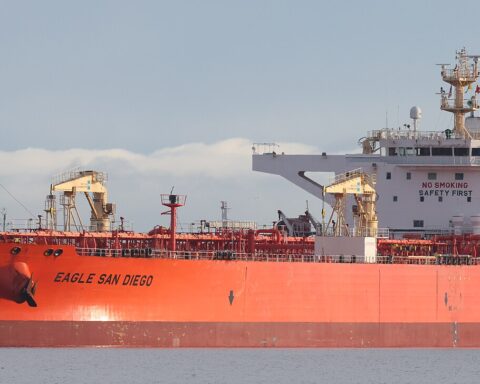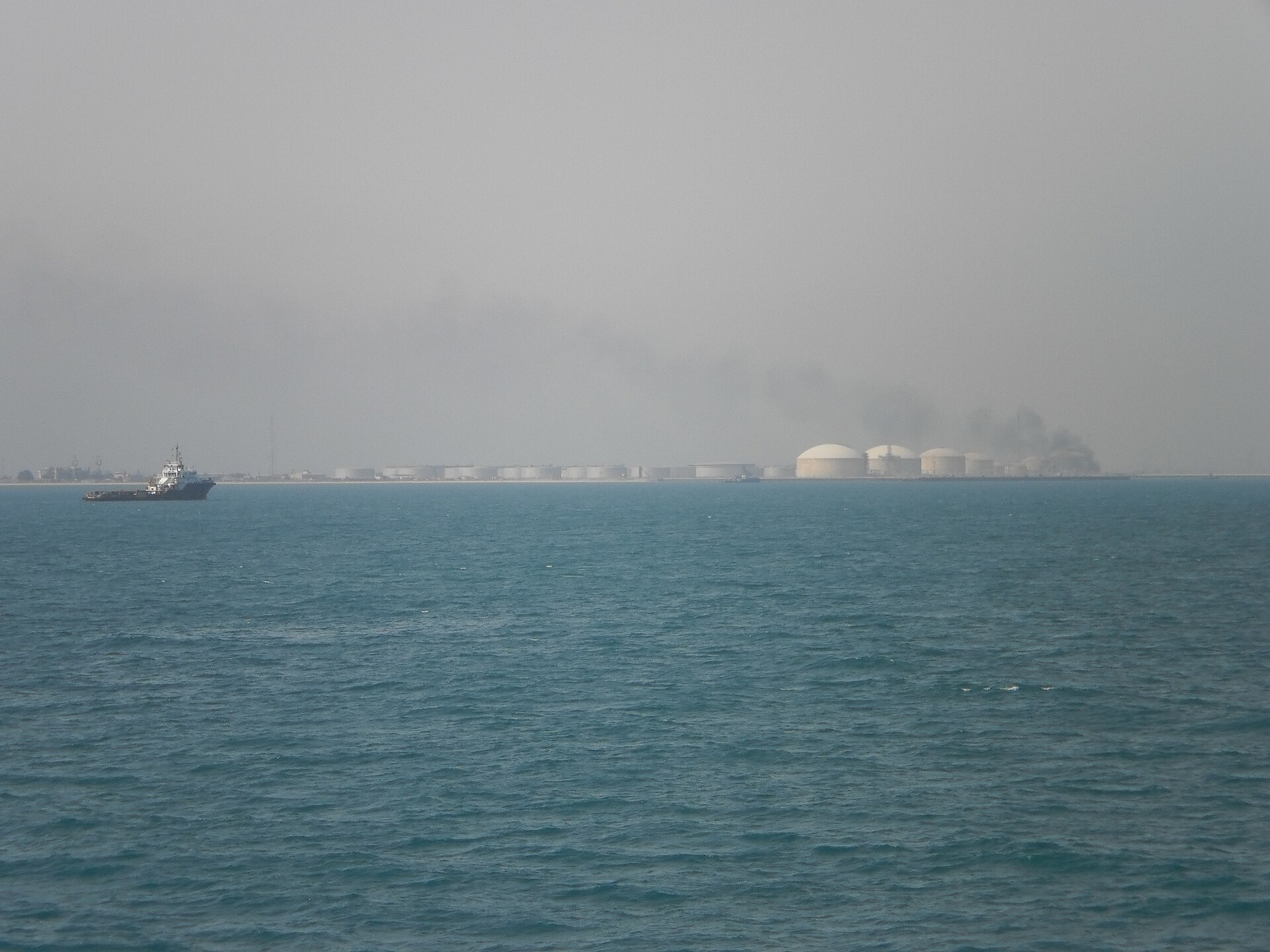

DHAHRAN — Saudi air defenses intercepted a drone targeting Aramco’s Shaybah oil processing facility in the Rub’ al-Khali on October 21. Falling debris from the interception killed two residents and injured two others after striking a contractor’s vehicle outside the facility perimeter, the Saudi Ministry of Energy said in a statement carried by the state news agency SPA.
Shaybah is one of Aramco’s largest producing fields and one of its most isolated — a processing complex deep in the Empty Quarter, more than 1,000 kilometers from Houthi-controlled territory in northwestern Yemen. The same day, the US State Department ordered the departure of non-emergency government personnel from Saudi Arabia, citing “increased hostilities” by the Iran-backed Houthi movement, according to The National.
The House of Saud Daily Briefing
Saudi Arabia's news in 3 minutes, every morning. Free. See today's issue
Table of Contents
What Happened at Shaybah on October 21
The ministry identified the dead as a Filipino national and a Nepali national. The two injured were a Pakistani national and an Indian national. All four were described as “residents” in the ministry’s statement, and the ministry attributed the casualties to falling debris from the interception rather than a direct strike on the facility.
A fire broke out in a contractor’s vehicle outside the facility’s perimeter. The ministry confirmed there was no impact on oilfield operations and said “relevant agencies took the necessary measures.” It “expressed condolences to the families,” the SPA statement said.
No Saudi government statement identified who launched the drone. The ministry’s language was confined to the interception, the casualties, and the operational status of the field. The Houthi movement has claimed or been linked to the large majority of drone attacks on Saudi energy infrastructure during the 2026 escalation, but Riyadh has not formally attributed the October 21 interception to any group.
The interception registered on oil markets the following day. Brent crude rose 4 percent to $113.17 per barrel on October 22, and West Texas Intermediate gained 2.4 percent to $99.47, CNBC reported. The price movement came amid a broader pattern of supply-side anxiety: Houthi attacks on oil infrastructure, pipeline disruptions, and the continued closure of the Strait of Hormuz had already pushed crude well above $100 a barrel through October.
How Far Is Shaybah From Houthi-Controlled Territory?
Shaybah lies on the northern edge of the Rub’ al-Khali, approximately 10 kilometers south of the border with Abu Dhabi. The field is roughly 1,000 to 1,200 kilometers from Houthi-controlled territory in northwestern Yemen, a distance confirmed by Al Jazeera and Voice of America in their reporting on the August 2019 Houthi drone attack on the same facility.
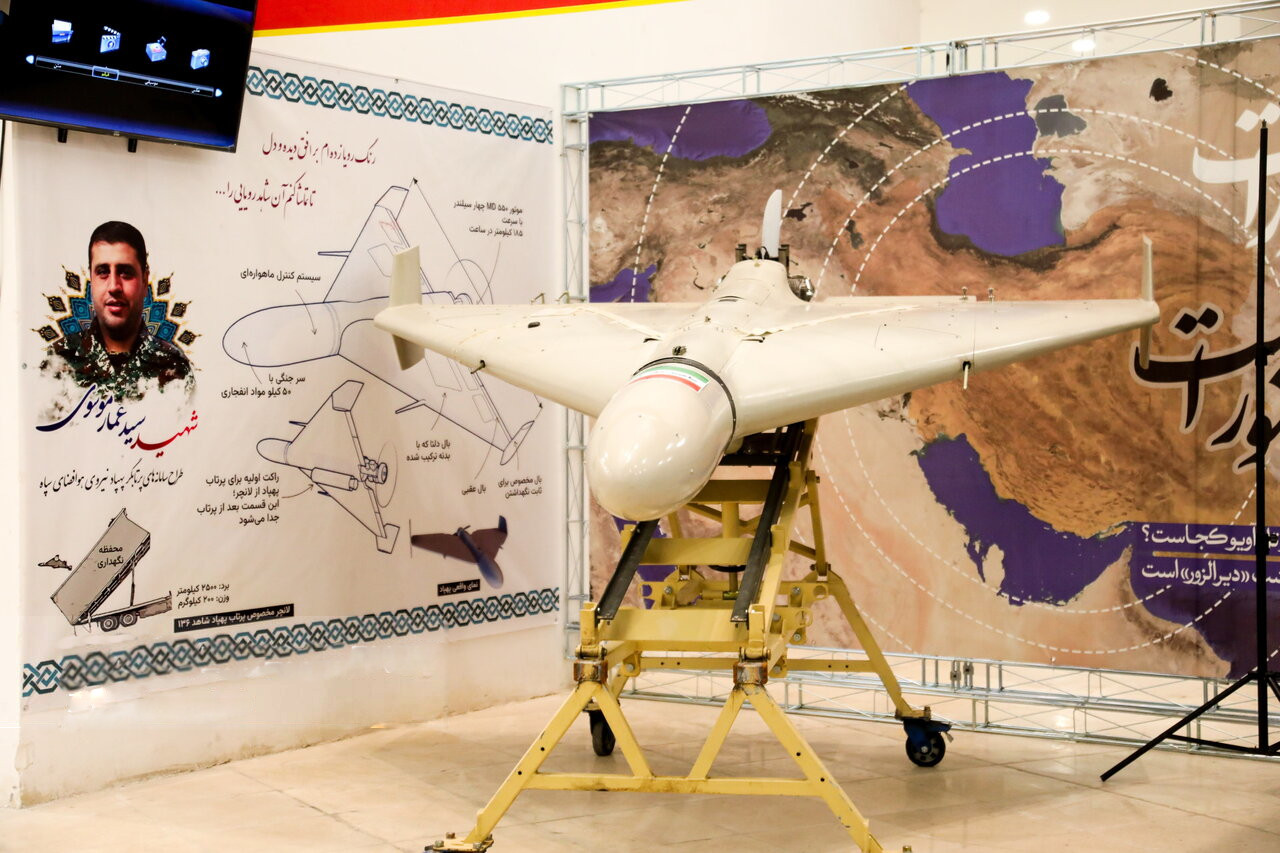
That distance falls within the range of the Houthis’ long-range drone platforms. The Houthis claim their Samad-3 drone can travel 1,500 kilometers, a figure that would place Shaybah within reach from launch positions in Yemen’s northwest. No Saudi or US statement identified the drone model or launch location for the October 21 interception.
A shorter launch geometry is also possible. The Houthis hold territory in al-Jawf and Marib provinces in northeastern and central Yemen, well east of the northwestern strongholds near Saada. Al-Jawf borders Saudi Arabia’s Najran and Jizan regions in the south, and a launch from those provinces would cover less distance than the 1,000-to-1,200-kilometer measure from northwestern Yemen. No source has confirmed the specific launch province for the October 21 drone.
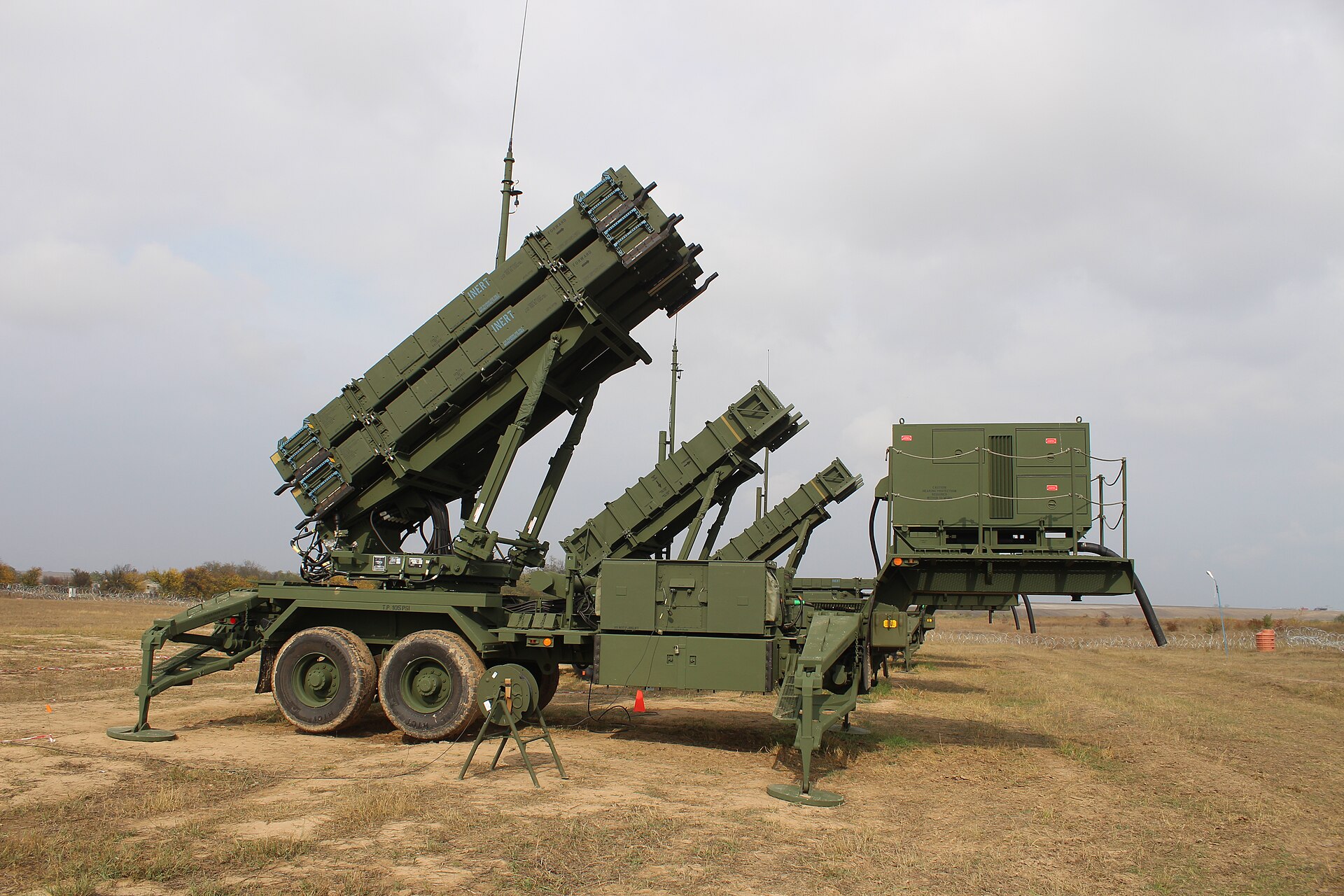
Shaybah’s isolation is the core of the coverage problem. The field sits at the southeastern corner of the Saudi energy estate, separated from the air defense concentrations around Riyadh, the Eastern Province coast, and the western provinces by open desert. A drone that reaches Shaybah has crossed most of the Arabian Peninsula’s width, and no public reporting has confirmed what air defense systems are deployed at the field.
The Houthi Claim and the Saudi Response
Houthi military spokesman Yahya Saree issued a statement around the same period listing Shaybah among seven targets in a wave of operations, according to This Is Beirut. Saree claimed fires broke out at the Aramco facilities and the Shaybah oil field. The other claimed targets included Yanbu, King Khalid International Airport, Abha International Airport, radar systems, Khamis Mushait Air Base, and what Saree described as a Saudi Navy task force camp.
No independent source confirmed a direct strike on the Shaybah facility. The Saudi government confirmed only the interception-debris incident — a fire in a contractor’s vehicle outside the perimeter — and stated there was no impact on production. The discrepancy between Saree’s claim of fires at Aramco facilities and the Saudi account of a single vehicle fire has not been resolved by satellite imagery or third-party reporting. Whether the drone intercepted at Shaybah was part of Saree’s nine-target wave or a separate, unattributed attempt remains unclear from the available reporting.
The US State Department took a broader view. Spokesman Tommy Pigott, announcing the ordered departure of non-emergency staff from Saudi Arabia on the same day, cited “increased hostilities against Saudi Arabia” by the Iran-backed Houthi movement, according to The National. His statement addressed the security environment across the kingdom rather than the Shaybah interception specifically, but the timing — both announcements on October 21 — placed the two events in the same news cycle.
The attempted attack resulted in the deaths of two residents, one Filipino and one Nepali, and injuries to two residents, one Pakistani and one Indian due to falling debris following the interception.
Saudi Ministry of Energy, via SPA, October 21, 2026
Shaybah’s Role in Saudi Oil Exports
Shaybah holds estimated reserves of more than 14 billion barrels of extra-light crude and approximately 25 trillion cubic feet of natural gas, according to Saudipedia. Aramco raised the field’s maximum sustainable capacity to 1 million barrels per day in 2016, from 750,000 barrels per day, Bloomberg reported. The field’s extra-light Arab Extra Light grade is among the most commercially valuable in Aramco’s portfolio.
Crude from Shaybah travels 645 kilometers by pipeline to Abqaiq, the kingdom’s largest processing hub. From Abqaiq, crude feeds the Ras Tanura and Juaymah export terminals on the Gulf coast and, through the East-West pipeline, the Red Sea terminals at Yanbu. That export network has been under sustained attack. The East-West pipeline was shut down on September 11, resumed around September 22 after the Saudi Energy Minister confirmed the restart. A further attack on approximately October 5 damaged a pumping station along the route; flows reached 5.8 million barrels per day by October 6, The National reported.
The East-West pipeline has a design capacity of approximately 7 million barrels per day, with about 5 million barrels exportable through Yanbu, according to Aramco. Its role has expanded since the closure of the Strait of Hormuz forced Saudi Arabia to reroute crude to the Red Sea coast. Disruption at Shaybah — the field that feeds the pipeline’s origin at Abqaiq — would ripple through both the Gulf and Red Sea export corridors.
The compound itself is built for remote operations: an airstrip, housing for approximately 1,000 workers, and a fire station. It sits near the UAE border, surrounded by the dunes and gravel plains of the Rub’ al-Khali. Workers rotate in and out by air; the nearest Saudi population center is hundreds of kilometers away. The field’s output depends on that single pipeline to Abqaiq, and Abqaiq’s processing throughput depends, in part, on Shaybah’s feed.
How Does the Shaybah Interception Fit the Wider Drone Campaign?
Shaybah has been a repeated target. Saudi air defenses intercepted multiple waves of drones aimed at the field across several days beginning March 7, according to Arab News, Bloomberg, and Arab Times Online. Saudi authorities described one drone intercepted on March 12 as “an Iranian drone,” Arab Times Online reported. Those March interceptions produced no confirmed casualties or facility damage.
The campaign has reached across the full breadth of Saudi Arabia’s energy estate. A fire broke out at Aramco’s Ras Tanura terminal on March 2, Anadolu Agency reported. A drone hit the SAMREF refinery at Yanbu on March 19, Marine Insight reported. Overnight attacks on April 7 and 8 closed the 465,000-barrel-per-day SATORP refinery, and an attack on an East-West pipeline pumping station on April 9 cut flows by 700,000 barrels per day, according to The New Arab. Aramco’s Dhahran headquarters was damaged by fire on October 13.
An Associated Press investigation published in late October linked Russian satellite data to all 40 Iran-backed strikes on Saudi Arabia during the current conflict, reporting that targeting information was shared with the Houthis and other Iran-aligned groups. The Saudi-led coalition struck Houthi missile and drone infrastructure in Yemen on November 1, part of an ongoing effort to degrade the launch capacity behind the campaign.
The August 17, 2019 attack on Shaybah established the field as a Houthi target years before the current escalation. Al Jazeera reported that the Houthis claimed ten drones, and a fire broke out at a gas facility within the Shaybah complex. Saudi Arabia acknowledged the fire at the time. Voice of America noted the field was “more than 1,000 kilometres from Houthi-controlled territory in northwestern Yemen,” confirming the drone range to Shaybah at that date.
The October 21, 2026 interception — seven years after the 2019 fire — produced confirmed fatalities at Shaybah, though the deaths resulted from debris rather than a direct strike on the field’s processing infrastructure. Since March, drones or missiles have struck or been intercepted at Ras Tanura, Yanbu, the East-West pipeline, Aramco’s Dhahran headquarters, multiple Saudi airports, and the Shaybah complex in the Empty Quarter.
Frequently Asked Questions
What type of drone was intercepted at Shaybah on October 21?
No Saudi or US government statement identified the drone type or its launch location. The Houthis’ primary long-range platform is the Samad-3, which the Houthis claim can travel 1,500 kilometers; independent analysis by Voskuijl et al. puts the range at approximately 1,800 kilometers, with an estimated payload of about 18 kilograms. Both figures exceed the distance from northwestern Yemen to Shaybah.
Were the casualties Aramco employees or contractors?
The Saudi Ministry of Energy described all four casualties — two dead, two injured — as “residents.” The fire occurred in a contractor’s vehicle outside the facility perimeter, suggesting but not confirming that the victims were employed by a third-party contractor rather than directly by Aramco. No subsequent statement from Aramco or the ministry has clarified their employment status. Shaybah’s compound houses approximately 1,000 workers, a mix of Aramco staff and contractors who rotate through the remote facility on scheduled shifts.
What air defense systems protect oil facilities in the Empty Quarter?
Saudi Arabia does not disclose air defense deployments at specific installations. The kingdom’s broader inventory includes long-range air defence systems, but no source has confirmed which platforms are permanently stationed at Shaybah. The field’s isolation presents a coverage challenge distinct from the Eastern Province coast or Riyadh, where overlapping defense layers are concentrated.
How has the 2026 drone campaign affected Saudi oil output?
OPEC data showed Saudi crude production fell to 6,967 thousand barrels per day in March 2026, down from 10,882 thousand in February — a drop of nearly 4 million barrels per day reflecting the cumulative impact of strikes on production and processing infrastructure, according to Hellenic Shipping News. Saudi Arabia’s OPEC+ target for November was 10.5 million barrels per day, Enerdata reported, but actual output has remained well below that ceiling throughout the escalation. The global price response has been compounded by the ongoing Hormuz closure, which Iran has tied to seven conditions.
The House of Saud Daily Briefing
Saudi Arabia's news in 3 minutes, every morning. Free. See today's issue