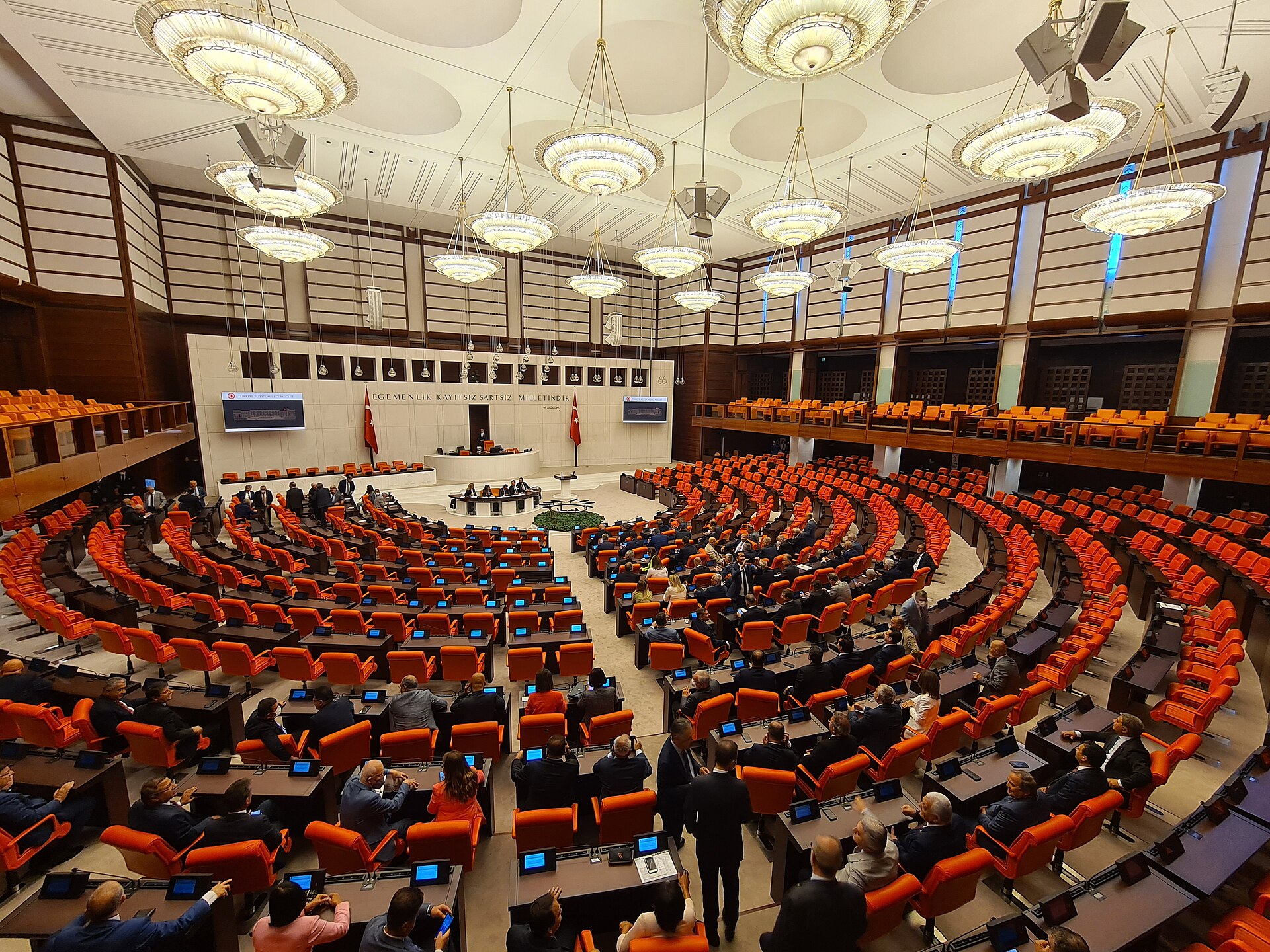

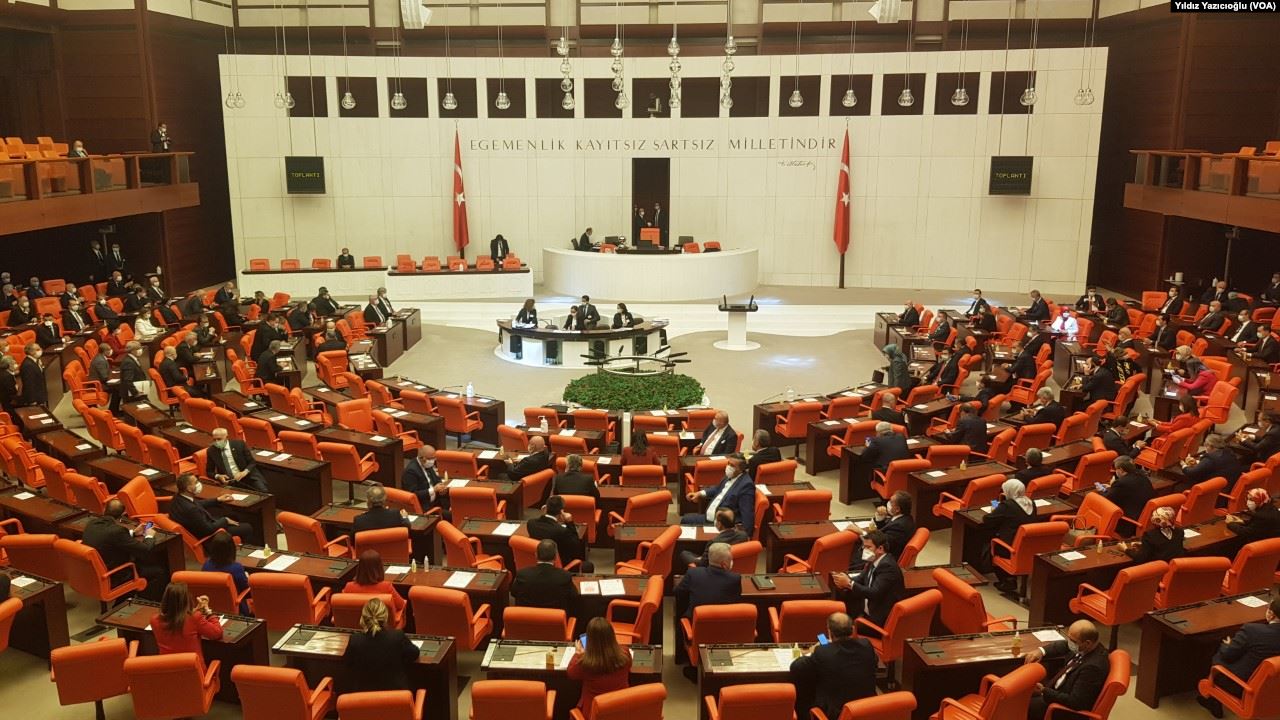
ANKARA — Turkey’s Grand National Assembly voted 279 to 119 on November 5 to ratify the Makkah Joint Defence Agreement, completing domestic ratification across all three signatories — Saudi Arabia, Turkey and Pakistan — of the mutual-defence treaty signed in Makkah on August 7, according to Anadolu Agency. The vote makes the pact legally binding among its members, but deploying Turkish troops to Saudi Arabia requires a separate parliamentary mandate under Article 92 of Turkey’s constitution, and no such mandate is before parliament or envisaged, according to Turkish officials.
The ratification arrived three months after the three countries signed the agreement, and nine days after Turkey’s parliamentary foreign affairs committee cleared the bill on October 27. Pakistan completed its own ratification on October 23. Saudi Arabia ratified months earlier. The pact treats an armed attack on any member as an attack on all three and prohibits withdrawal for 10 years, but it has no integrated command structure, no joint force, no announced budget and no deployment schedule — a combination that has prompted analysts and adversaries alike to ask whether the agreement amounts to a genuine military alliance or an expensive piece of diplomatic signalling.
The House of Saud Daily Briefing
Saudi Arabia's news in 3 minutes, every morning. Free. See today's issue
Table of Contents
The Vote and What It Means
Of approximately 592 voting members in the 600-seat assembly, 398 participated in the November 5 vote, according to Pakistan Observer and the Express Tribune. The governing AKP and its nationalist coalition partner, the MHP, supplied the bulk of the 279 votes in favour. The opposition DEM Party and Yeni Party voted against, warning the pact could drag Turkey into regional conflicts, according to Middle East Eye and Al-Monitor. The main opposition CHP backed the bill overall, though some lawmakers raised concerns about compatibility with Turkey’s NATO obligations — Mehmet Guzelmansur, a CHP parliamentarian, told reporters that “clear rules are needed so the agreement does not contradict Türkiye’s other international obligations,” according to the Express Tribune.
Turkey was the last of the three signatories to ratify. Pakistan’s parliament approved the agreement on October 23, and Saudi Arabia had completed its domestic process months before that. With all three ratifications done, the final formal step is depositing the last ratification instrument with the pact’s permanent secretariat, hosted by Saudi Arabia, according to Samaa TV and the Tribune. President Erdogan was expected to publish the ratification law in Turkey’s Official Gazette later this week, according to Middle East Eye.
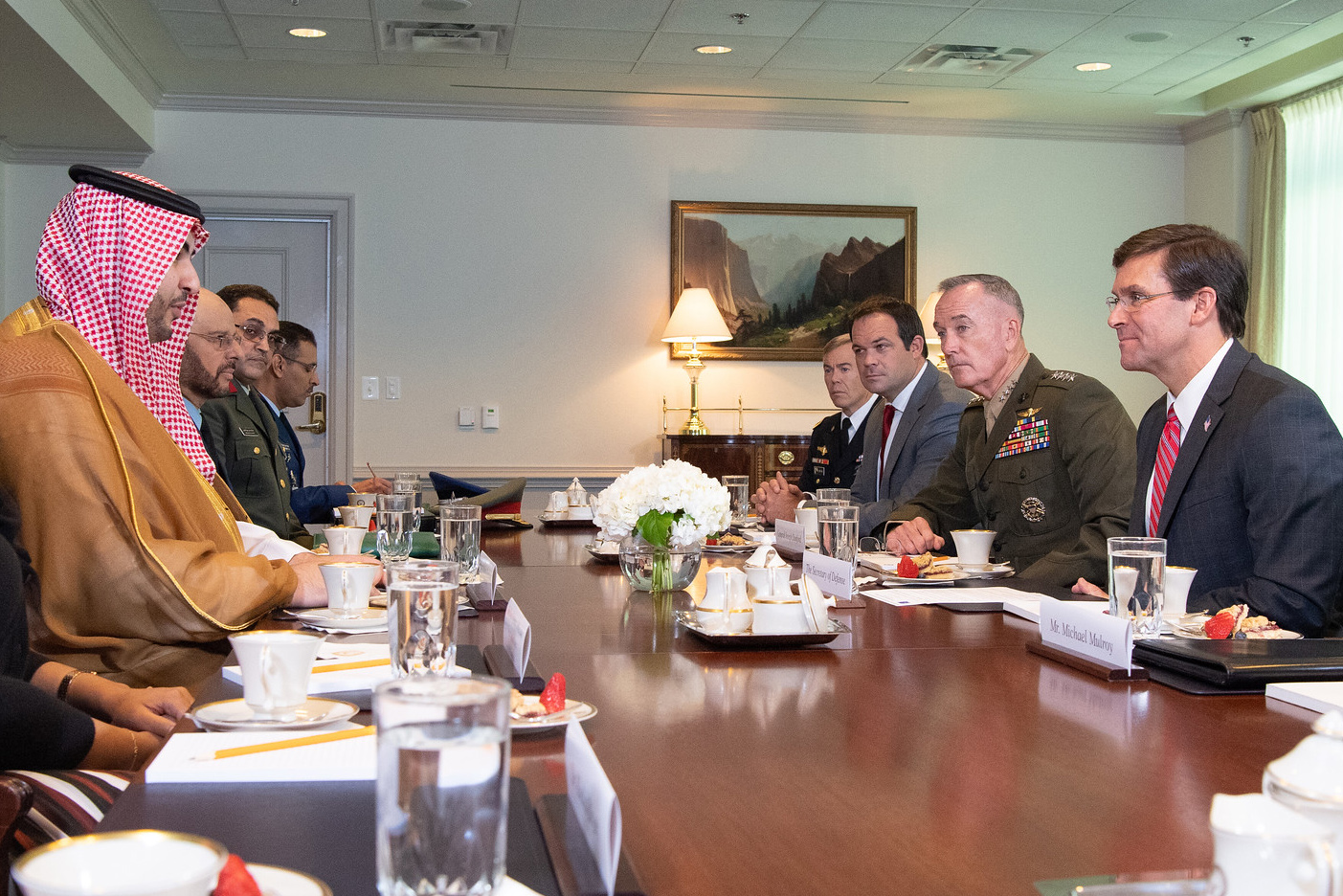
The pact was signed in Makkah on August 7 by Saudi Arabia, Turkey and Pakistan, and its 16 articles include a collective-defence clause — an armed attack on one member is treated as an attack on all, according to Breaking Defense and Britannica. Members cannot withdraw for the first 10 years. But the comparison to NATO’s Article 5 ends at the phrasing, because the Makkah agreement creates none of the institutional machinery that makes collective defence operational: no standing headquarters, no integrated command, no force-planning process, no interoperability standards and no cost-sharing formula, according to Britannica and Forbes.
What Does Turkey Actually Have to Do Now?
In practical terms, ratification alone commits Turkey to very little beyond the treaty’s legal obligations. Under Turkey’s constitution, ratifying an international agreement is one parliamentary action — deploying troops abroad is another, requiring a separate motion under Article 92 that must pass the full assembly with its own debate and vote, according to Al-Monitor and the Express Tribune. Turkey’s Deputy Foreign Minister Levent Gumrukcu told the parliamentary committee during the ratification hearings that “no deployment is currently envisaged under the alliance,” according to Pakistan Tribune and Samaa TV.
Defence Minister Yasar Guler said on October 8 that “Turkey does not envisage its troops engaging in combat or offensive operations against the Houthis,” though he added the extent of Turkey’s support “would be determined after the agreement’s ratification,” according to Turkish Minute. That statement now carries more weight, because the ratification Guler conditioned his answer on has happened — and the question of scope moves from hypothetical to live.
That constitutional two-step — ratification under Article 90, troop deployment under Article 92 — is the distinction Turkey’s government has leaned on throughout the ratification debate. The committee chairman, who was not named in press reports, told lawmakers that “the alliance is entirely about defence, and not for attacking other countries.” Foreign Minister Hakan Fidan said on August 8, the day after the signing, that the pact “does not identify Iran, or any other country, as a common threat,” according to Al Jazeera.
Turkey has used Article 92 mandates before — for its presence in Qatar, for operations in Syria, and for its role in Libya — but each of those required its own parliamentary authorisation with a specific geographic and temporal scope. As of November 6, no such motion for Saudi Arabia exists, and no Turkish official has indicated when one might be introduced, according to committee testimony reported by Pakistan Tribune.
A Pact Without a Command Structure
The gap between the Makkah pact’s language and its institutional reality has been the central tension since the agreement was signed. The collective-defence clause is unambiguous — an attack on one is an attack on all — but the pact establishes only two bodies: a Strategic Political and Defence Committee composed of the three countries’ foreign and defence ministers, and a permanent secretariat hosted by Saudi Arabia, according to Breaking Defense and Britannica. Both are administrative and consultative, not operational. Britannica explicitly states the pact “does not create an integrated command structure.”
There is no published budget, no cost-sharing formula between the three governments, and no public force-contribution schedule specifying what each member is expected to provide, according to Forbes. The IISS described the agreement in August as formalising “a key geopolitical realignment under way since the Hamas attacks of 7 October 2023.” Chatham House called it “an experiment in regional self-reliance — rather than a joint defence or war-fighting alliance.” Foreign Policy published a piece on August 25 arguing the agreement was prone to collective-action failures.
The pact was formally invoked on October 5, when Saudi Defence Minister Prince Khalid bin Salman said the committee had agreed to “activate collective deterrence measures… in response to the attacks and all those responsible for them,” according to Al Jazeera. That invocation came after months of escalating Houthi strikes on Saudi airports, oil facilities and cities — including the October 10 strike on King Khalid International Airport that killed 14 and wounded 309, according to Al Jazeera and the BBC. But the activation produced no visible joint military response, and no combined operations have been announced in the weeks since.
Pakistan Is Already There
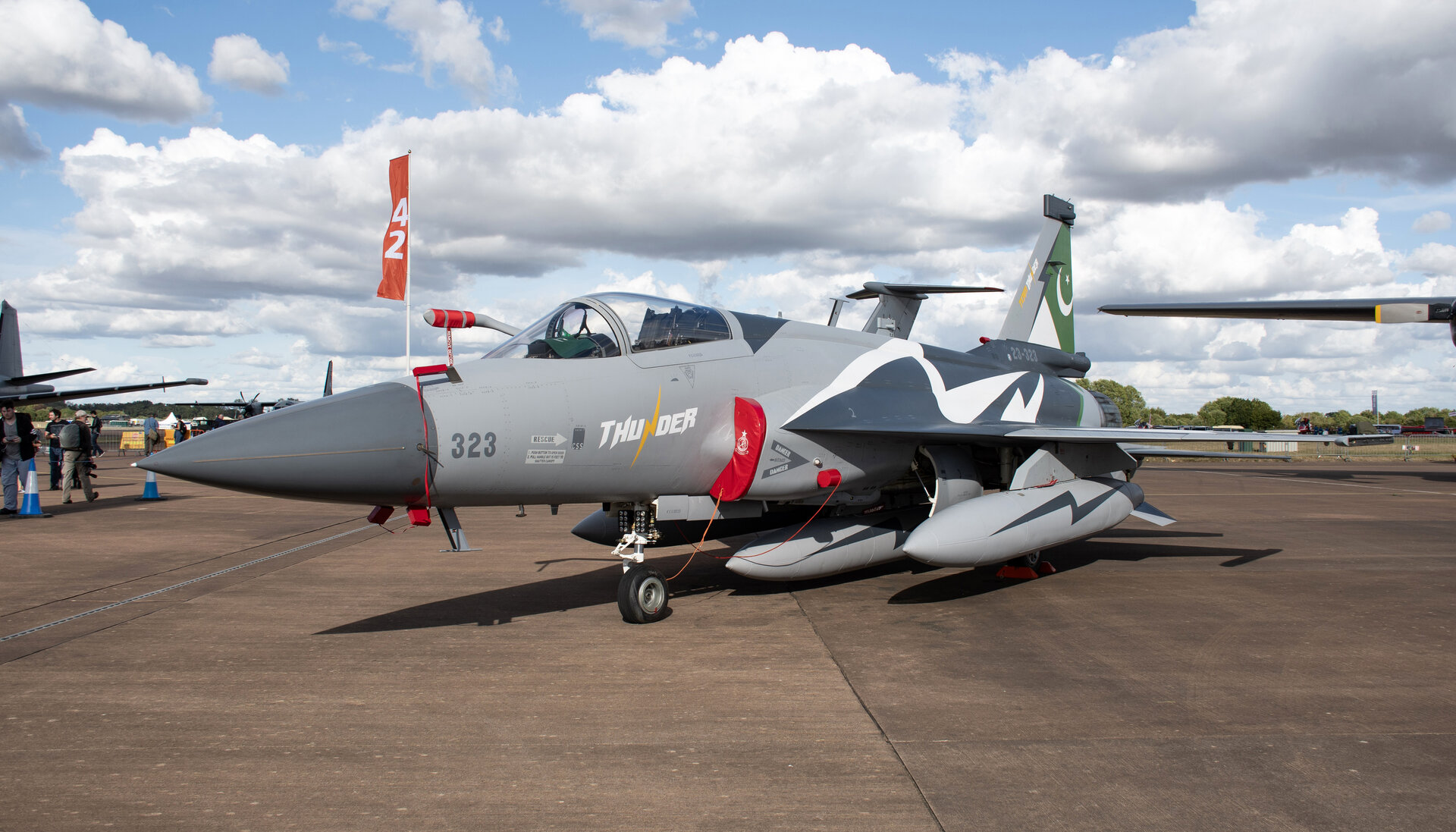
While Turkey’s contribution remains theoretical, Pakistan’s is already on the ground. Reuters reported in May that approximately 8,000 Pakistani troops, a squadron of around 16 mostly JF-17 aircraft, two drone squadrons and a Chinese-made HQ-9 air-defence battery were deployed to Saudi Arabia, financed by Riyadh, under a bilateral defence pact signed in September 2025 — a year before the trilateral Makkah agreement, according to the Standard and Reuters. Those forces are stationed at King Abdulaziz Air Base and other locations in the kingdom, according to WION, Dawn and Arab News.
Pakistan’s defence minister said in October that combat “is practically being conducted by Saudi Arabia’s own forces,” with Pakistan and Turkey in a “supporting role,” according to Al Jazeera. That framing — Pakistan as a supporting player rather than a co-belligerent — has been consistent across Pakistani government statements and reflects Islamabad’s desire to avoid being cast as fighting a war against the Houthis, who are backed by Iran, Pakistan’s neighbour. The bilateral Pakistan-Saudi pact of September 2025 was described by the IISS as part of a broader geopolitical realignment.
The approximately 8,000-troop deployment makes Pakistan’s presence the largest foreign military contingent in Saudi Arabia outside the American footprint, and it predates the Makkah pact by nearly a year. That matters because it demonstrates that the bilateral relationship between Riyadh and Islamabad did not need a trilateral agreement to function — Pakistan was already there, already flying patrols, already operating air-defence systems. The Makkah pact adds a legal framework and a political signal, but the forces arrived under a different contract.
Turkey’s Gulf Footprint and What Riyadh Wants
Turkey’s existing military presence in the Gulf is concentrated at a single facility: the Khalid bin Walid barracks in Doha, Qatar, home to the Turkey-Qatar Combined Joint Force Command, whose Khalid bin Walid headquarters opened in December 2019, with an estimated 2,000 troops according to AGSI. Estimates of the Turkish troop presence at the base vary — some analyses put the number higher — but the Qatar deployment is the closest precedent for what a Turkish military presence in Saudi Arabia might look like, and Saudi Arabia has reportedly sought a “Qatar-style” base arrangement, according to Türkiye Today and Turkish Minute.
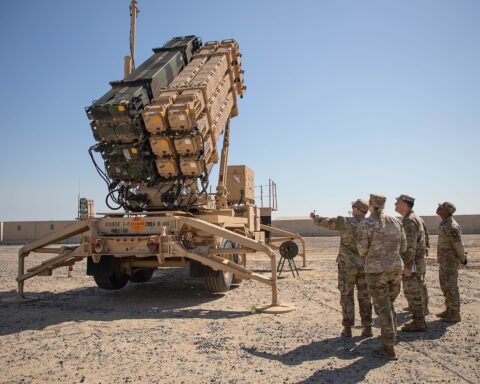
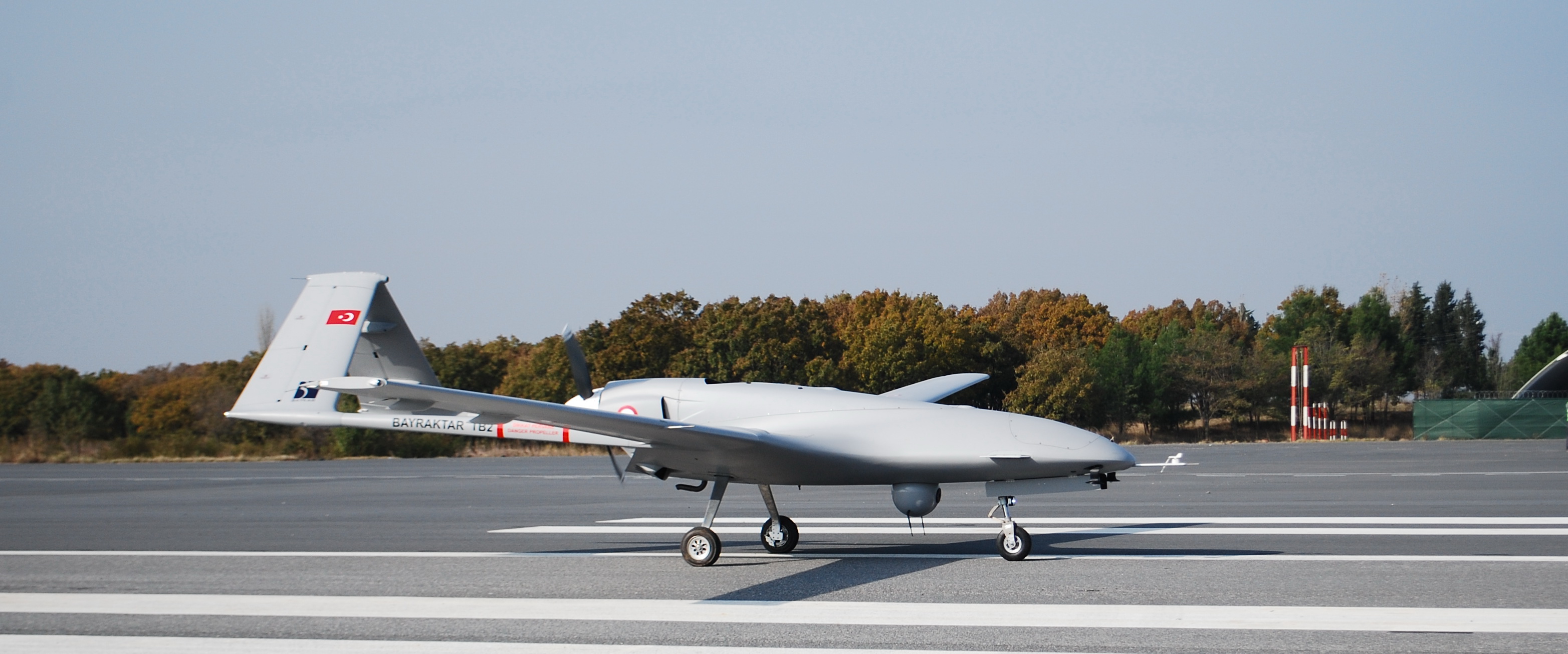
Middle East Eye reported in October that Turkey’s planned role under the Makkah pact centres on air-defence systems to defend Riyadh, Makkah, Madinah and the western leg of the East-West pipeline, with at least one command base planned. Turkey manufactures and operates its own air-defence systems — including the HISAR-A and HISAR-O medium-range systems — and has also acquired the Russian S-400, a purchase that complicated its relationship with NATO but demonstrated Ankara’s willingness to operate outside the American supply chain.
The Houthi attacks that prompted the pact’s invocation have struck across Saudi territory, from airports in the south to Riyadh in the centre to oil facilities in the Eastern Province, and the most recent wave on November 5 included a missile targeting the Madinah region that four Arab states condemned. Turkey’s ratification vote happened on the same day as that interception — a coincidence of timing that both governments will have noted.
How Iran and Turkey’s Opposition Responded
Iran has treated the Makkah pact with a mix of dismissal and alarm that shifted between August and November. When the agreement was signed, Ebrahim Rezaei, a member of Iran’s parliamentary National Security and Foreign Policy Commission, called it a “paper agreement” and said Iran’s armed forces could “confront major powers,” according to Middle East Forum and the New Arab. That contemptuous tone changed after the October 5 activation, when Iranian state media condemned Turkey and Pakistan for joining “the Saudi war against the Yemeni people.”
Fidan’s statement that the pact “does not identify Iran, or any other country, as a common threat” was aimed squarely at Tehran, and Turkey has maintained that line throughout the ratification process. Ankara’s calculation is visible in the architecture of its commitments: ratify the treaty, signal solidarity with Riyadh, but leave the troop-deployment question for later — and for a separate vote that can be calibrated to the moment. Turkey’s trade relationship with Iran, its shared border and its complicated history of simultaneous cooperation and rivalry in Syria, Iraq and the Caucasus all argue for keeping the pact’s anti-Iranian implications as ambiguous as possible.
Inside Turkey, the opposition vote split along predictable lines. The DEM Party, which draws heavily from Kurdish constituencies and has historically opposed Turkish military engagements abroad, voted against. The Yeni Party warned of entanglement, according to Middle East Eye. The CHP’s position was more nuanced — the party supported ratification but pushed for guardrails, with Guzelmansur’s call for “clear rules” reflecting a broader concern that the AKP might use the pact as a vehicle for executive-driven military commitments that bypass proper parliamentary scrutiny.
What Comes Next
The ratification is complete, but the operational questions it was supposed to answer remain open. The pact has been signed, ratified and invoked — and it still has no joint command, no combined force, no deployment schedule, no published budget and no confirmed timeline for any of those things. Saudi Arabia faces a 58-day window before the newly elected Democratic Congress takes office on January 3, during which its diplomatic options on Hormuz and the Houthi war could narrow, and the Makkah pact’s credibility as a deterrent will be tested against that clock.
The formal entry into force still requires the deposit of the final ratification instrument with the secretariat and the publication of the law in Turkey’s Official Gazette, both expected within days. After that, the Strategic Political and Defence Committee — the pact’s only institutional body with decision-making authority — will presumably meet to discuss force contributions, timelines and the scope of collective action. Whether those meetings produce deployments or declarations will determine whether the Makkah pact belongs in the same category as a functioning military alliance or remains what Foreign Policy called “a pact without impact.”
Turkey’s last comparable foreign military commitment — the Qatar deployment — took months to build up from the initial 2016 agreement to a functioning base with rotating personnel and equipment. Even if Ankara decides to move quickly, the constitutional requirement for an Article 92 mandate means a deployment motion is weeks away at best, and parliamentary calendars are not known for speed when the subject is sending troops into a war zone. The pact signed in Makkah on August 7 is now law in all three countries, and on paper it is the most ambitious mutual-defence agreement in the Middle East outside the US alliance network — which makes the distance between the paper and what happens next all the more visible.
FAQ
Does Turkey’s ratification automatically deploy troops to Saudi Arabia?
No. Under Turkey’s constitution, ratifying an international treaty (Article 90) and authorising troop deployments abroad (Article 92) are separate parliamentary actions requiring distinct votes. Turkey’s Deputy Foreign Minister confirmed during committee testimony that no deployment is currently planned. A separate Article 92 motion would be required before any Turkish soldier could legally deploy. Turkey’s precedents for this process — Qatar in 2016, Libya in 2020 and Syria — all involved distinct parliamentary mandates specifying geographic scope and duration.
Can any member leave the Makkah pact if circumstances change?
Not for 10 years. The agreement’s 16 articles include a clause prohibiting withdrawal for the first decade after entry into force, according to Breaking Defense and Britannica. After the lock-in period expires, withdrawal procedures would be governed by the pact’s own terms, which have not been published in full. The lock-in distinguishes this agreement from more flexible security consultations like the GCC’s Joint Defence Agreement, which has no equivalent restriction, and from NATO, which allows withdrawal with one year’s notice under Article 13.
Has Syria formally joined the Makkah pact?
Not yet. Syrian Foreign Minister Asaad al-Shaibani said “discussions are currently underway to evaluate Syria’s entry into the Mecca alliance,” according to The Media Line and Middle East Eye. The discussions remain at the evaluation stage, and no formal accession protocol has been announced. Damascus’s potential membership would extend the pact’s geographic reach considerably, extending the mutual-defence umbrella from the Arabian Peninsula through the Levant to Anatolia and South Asia.
How does the Makkah pact compare to Pakistan’s existing bilateral agreement with Saudi Arabia?
Pakistan signed a separate bilateral Strategic Mutual Defence Agreement with Saudi Arabia in September 2025, a year before the trilateral Makkah pact. That bilateral agreement is the legal basis for Pakistan’s current deployment of approximately 8,000 troops, JF-17 fighters and an HQ-9 air-defence system to the kingdom, according to Reuters. The Makkah agreement adds Turkey as a third party and introduces a collective-defence clause, but Pakistan’s operational presence preceded and does not depend on the trilateral framework.
What military systems could Turkey contribute under the pact?
Turkey manufactures the HISAR family of short- and medium-range air-defence systems and operates the Russian S-400 long-range system. Middle East Eye reported Turkey’s planned role focuses on air-defence coverage for Riyadh, Makkah, Madinah and the East-West pipeline. Turkey also produces the Bayraktar TB2 and Akinci combat drones, which proved decisive in Libya, Syria and the 2020 Nagorno-Karabakh conflict — giving Ankara options that do not necessarily require large troop numbers, though any deployment of these systems would still require an Article 92 mandate.
On the day Turkey completed ratification, the coalition intercepted two Houthi ballistic missiles over Najran province — the first confirmed interception since Turkey became the pact’s third full member.
The House of Saud Daily Briefing
Saudi Arabia's news in 3 minutes, every morning. Free. See today's issue