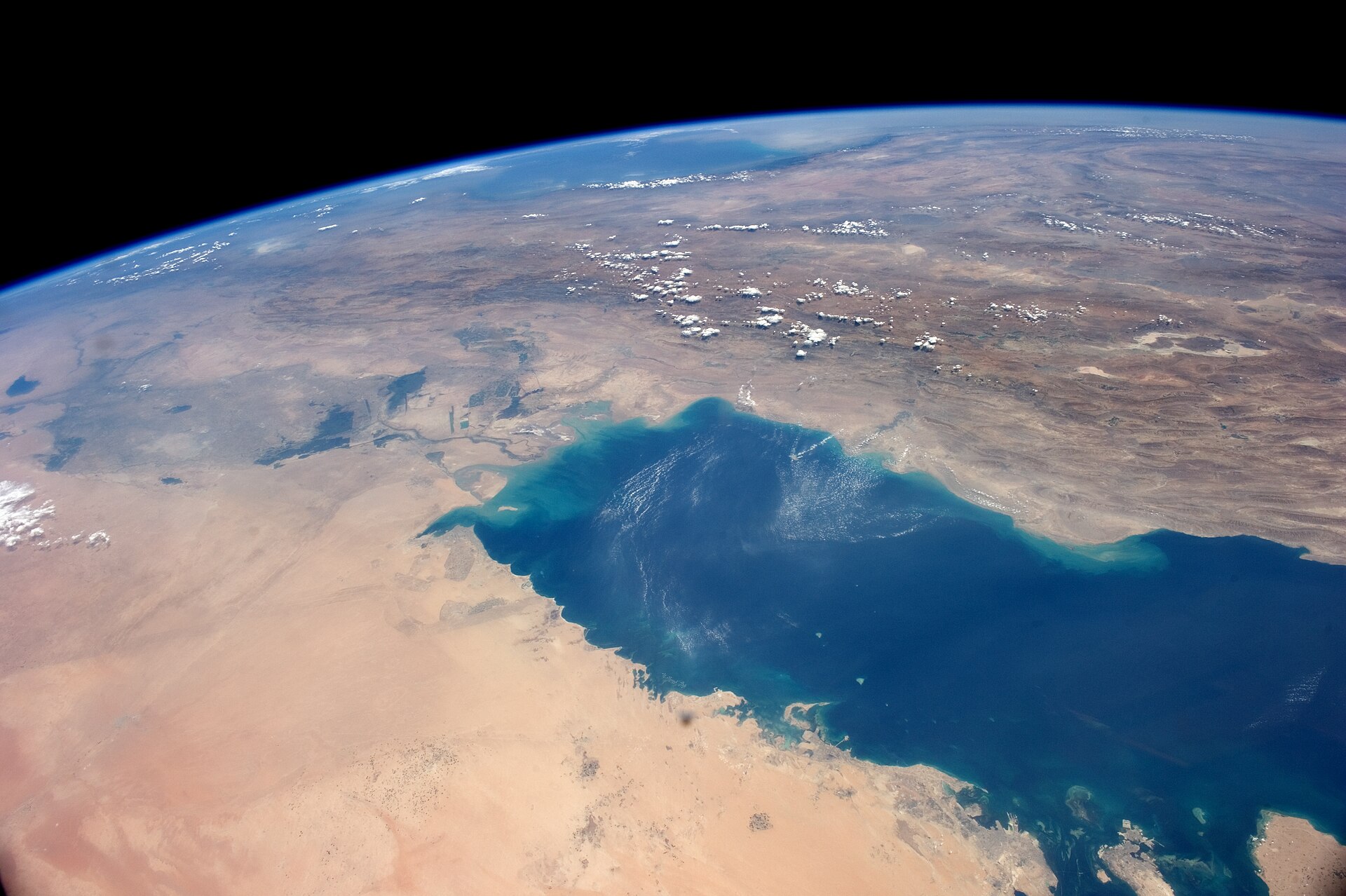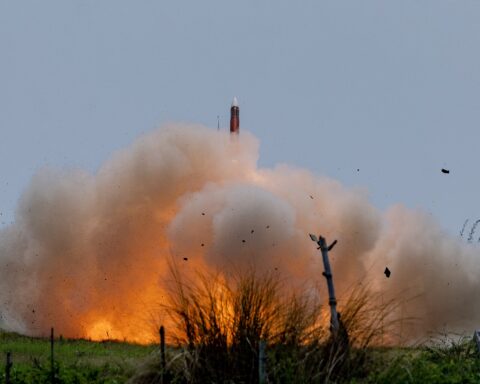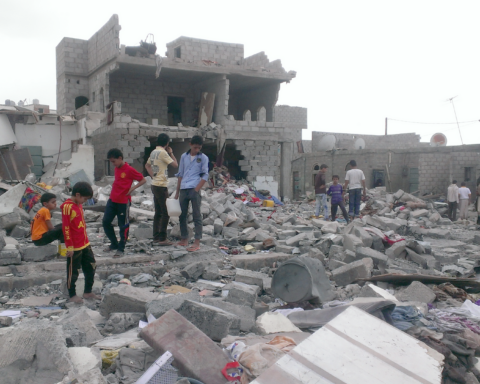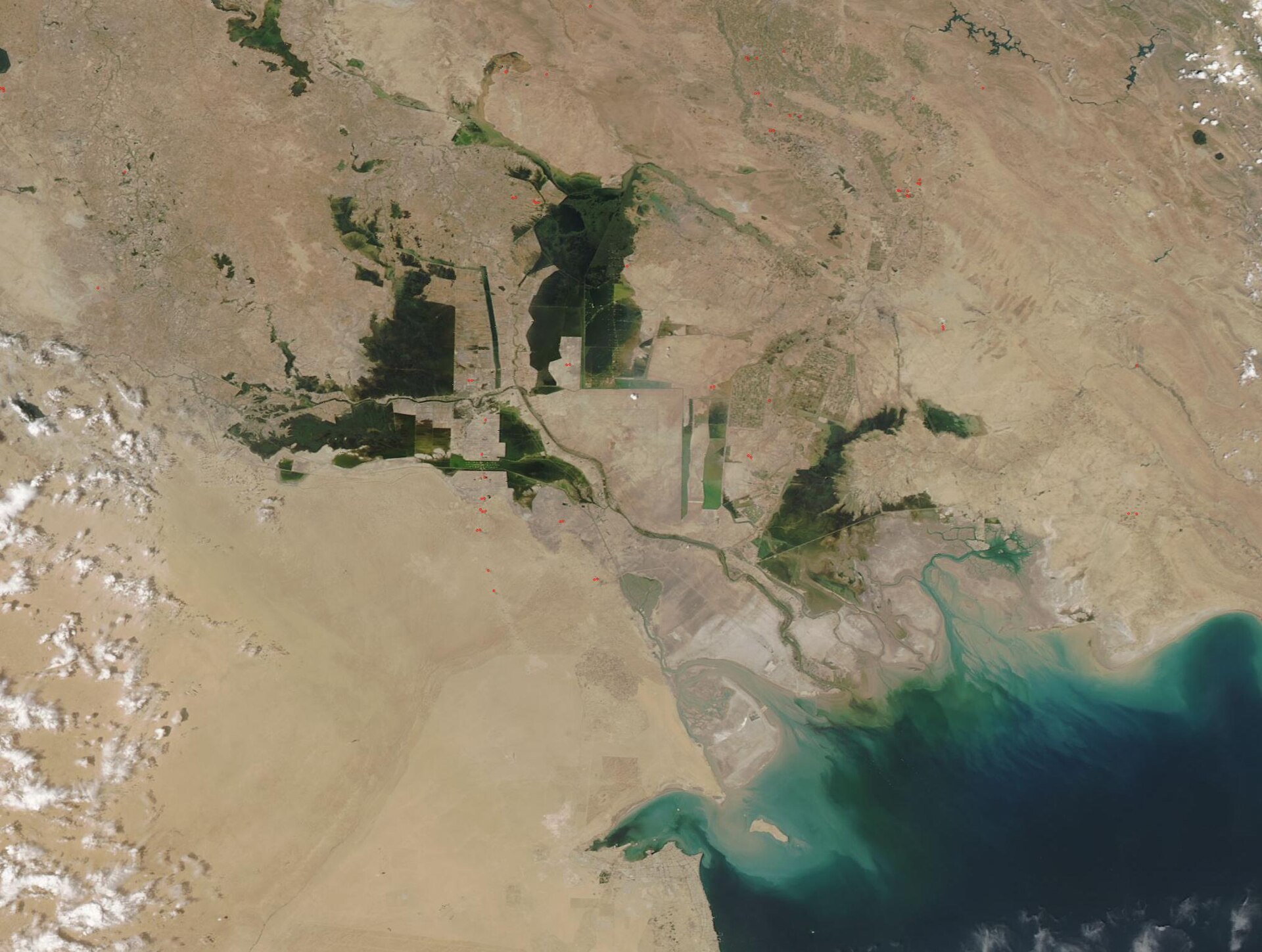

WASHINGTON — Twenty people in a Tampa office are the newest front in America’s economic war against Iran, and the proxy network answered before the week was out. CENTCOM Commander Admiral Brad Cooper announced Task Force Iron Gate on November 7, a unit of roughly 20 civilian and military personnel assigned to cut off weapons, dual-use technology, and revenue flowing across Iran’s seven land borders and Caspian Sea coastline — extending a naval blockade that CENTCOM claims has prevented more than $25 billion in Iranian crude exports since July 14. Trump amplified the effort the next day on Truth Social, declaring that “very little gets into, or out of, Iran.” Within hours, an explosive-laden drone struck the Khor Mor gas field in Iraq’s Kurdistan Region, halting all gas production and knocking approximately 2,800 megawatts off the Kurdish power grid, according to Kurdistan’s Ministry of Electricity — no group claimed the attack. The twin events land at a moment when Brent crude sits around $98 a barrel, the Qatar-mediated 48-hour ceasefire framework has stalled after the midterm results, and a newly Democratic Congress is weeks from challenging Trump’s war authority.
Table of Contents
- What Is Task Force Iron Gate?
- The Sea-to-Land Escalation
- What Does the Khor Mor Strike Signal?
- Can 20 People in Tampa Seal 7 Land Borders?
- Saudi Arabia’s Revenue Dilemma
- What Happens to the Qatar 48-Hour Plan?
- The IRGC’s Counter-Move: A Lifted Missile Cap
- What Does a Democratic Congress Mean for the Iran War?
- The Map After Iron Gate
- Frequently Asked Questions
What Is Task Force Iron Gate?
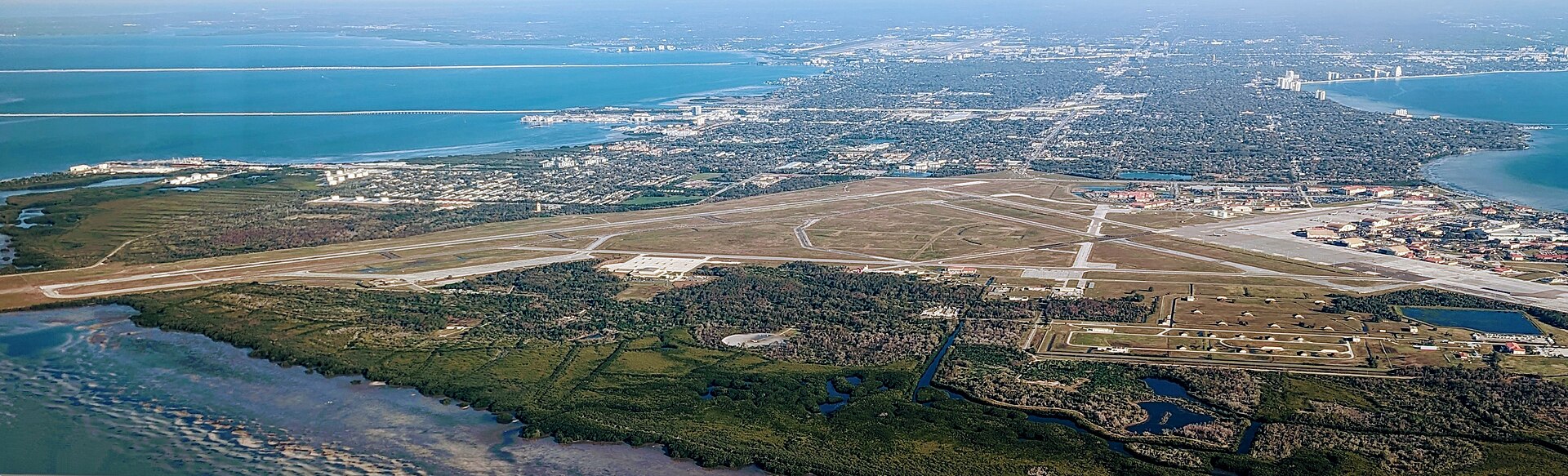
Task Force Iron Gate, announced by CENTCOM on November 7, consists of roughly 20 civilian and military personnel based at CENTCOM headquarters in Tampa, Florida. Its stated mission is to disrupt the movement of advanced weapons systems, dual-use technologies, sanctioned materials, and what CENTCOM describes as illegal revenue streams across Iran’s land borders and the Caspian Sea, according to Townhall. Cooper framed it as a complement to the existing naval campaign: “The establishment of Task Force Iron Gate reinforces the success of our ironclad blockade against Iran at sea,” he said in the CENTCOM announcement.
The House of Saud Daily Briefing
Saudi Arabia's news in 3 minutes, every morning. Free. See today's issue
Trump took ownership of the effort on November 8. In a Truth Social post at 3:46 p.m. ET, the president declared: “Task Force Iron Gate is in full force and effect in the Islamic Republic of Iran. Coupled with history’s greatest Naval Blockade, very little gets into, or out of, Iran!” — capitalising “Naval Blockade” as though it were a formal operational title.
“Task Force Iron Gate is in full force and effect in the Islamic Republic of Iran. Coupled with history’s greatest Naval Blockade, very little gets into, or out of, Iran!”
— Donald Trump, Truth Social, November 8, 2026
On the ground, the most visible move so far has been financial pressure on Iraq. The US Treasury asked Iraq to close all but two of its border crossings with Iran, according to Iraq’s foreign minister, as reported by Fox News on November 8. The Iraq-Iran border stretches 1,599 kilometres — the longest of Iran’s seven land frontiers — and has been the primary overland artery for both legal trade and sanctioned goods moving between the two countries. Which two crossings the Treasury wants kept open remains unspecified.
The Sea-to-Land Escalation
Iron Gate extends a pressure campaign that began at sea on April 13, when the US Navy first imposed its blockade on Iranian ports. It was reinstated on July 14 after the Islamabad Memorandum’s ceasefire collapsed. By October 10, CENTCOM claimed 135 ships had been turned around, according to CBS News. The Maritime Executive reported on November 8 that CENTCOM-sourced data suggests roughly 80 percent of Iran’s seaborne trade has been cut off, though independent verification does not exist.
The problem is that Iran’s economy has not collapsed on Washington’s timeline. According to the Maritime Executive on November 8, rail freight via Turkmenistan into Iran has risen as much as 40 percent in recent months. AIS transponder signals have gone dark near the Caspian ports of Bandar Anzali, Nowshahr, and Amirabad. A truck queue of approximately five days has built at the Bazargan crossing on the Turkey-Iran border. The evidence reads as a map of adaptation — as the maritime chokepoint tightened, trade migrated across the Caspian, through Central Asian rail corridors, and overland through Iraq and Turkey. The Caspian route is difficult for the United States to monitor, let alone interdict. Those ports sit on a body of water bordered by Russia, Kazakhstan, Turkmenistan, and Azerbaijan — none of which has joined the US pressure campaign.
| Front | Detail | Source |
|---|---|---|
| Naval blockade in effect since | July 14, 2026 | CENTCOM / context extract |
| Ships turned around | 135 (as of Oct 10) | CENTCOM via CBS News |
| Crude exports blocked (claim) | $25 billion+ (unverified) | Townhall / CENTCOM |
| Iron Gate announced | November 7, 2026 | Townhall |
| Iron Gate personnel | ~20, Tampa | Townhall |
| Iraq crossings targeted | All but 2 asked to close | Iraq FM via Fox News |
| Turkmenistan rail freight | Up ~40% | Maritime Executive |
| Bazargan crossing (Turkey-Iran) | ~5-day truck queue | Maritime Executive |
| Caspian AIS signals | Dark near 3 Iranian ports | Maritime Executive |
The task force’s creation is, in one reading, an acknowledgment that the naval blockade alone was insufficient — that Iran’s economy, under immense pressure but not yet broken, had found alternative routes that carrier groups in the Persian Gulf could not reach. What CENTCOM frames as complementary escalation, Iran’s state-affiliated Mehr News Agency described on November 8 as “a confession of military failure,” arguing that the US had been unable to close the war from the water and was now resorting to economic tools it lacked the personnel to enforce.
What Does the Khor Mor Strike Signal?
The drone that hit the Khor Mor gas field in Chamchamal district, Sulaimani governorate, in the late hours of November 8 struck a gas storage and LPG production unit, started a fire, and halted all gas production at the facility, according to Kurdistan24. Iraq’s prime minister said an initial assessment found no casualties. Dana Gas, the UAE-based operator that runs Khor Mor within the Pearl Petroleum consortium alongside Crescent Petroleum, reported in January 2026 that output had reached above 700 million standard cubic feet per day, after a KM250 expansion in October 2025 raised design capacity to 750 MMscf/d, according to a Dana Gas press release.
The power loss was immediate and severe. Kurdistan’s Ministry of Electricity said approximately 2,800 megawatts of generation capacity disappeared from the grid — a figure that the Archyde news service, citing Kurdish authorities, described as between two-thirds and 80 percent of the Kurdistan Region’s total electricity supply. For a population of roughly six million people, the arithmetic translates into a humanitarian problem: hospitals running on generators, water-treatment plants offline, households in November cold without heating, all from a single drone that initial assessments suggest caused no direct casualties.
No group has formally claimed the attack, and attribution remains circumstantial. Abu Mujahid al-Assaf, a figure associated with Kataib Hezbollah — the Iran-backed Iraqi militia — made a veiled reference to Khor Mor within 24 hours of the strike, telling media: “We do not want to air dirty laundry in public, nor open the files of [Khor Mor],” according to the Jerusalem Post on November 9. Kurdish authorities have previously attributed similar strikes on energy infrastructure to Iran-backed Iraqi groups, but neither Baghdad nor Erbil has named a perpetrator for this attack.
The strike fits a proxy pattern that preceded Iron Gate by months. Saudi Arabia said it intercepted drones launched from Iraq at oil facilities on July 27 and subsequently struck militia targets inside Iraq in coordination with CENTCOM, according to Asharq Al-Awsat — establishing Iraq as an active theatre of proxy operations in the broader US-Iran war. The November 8 drone targeted a UAE-operated gas field that supplies Iraqi Kurdistan’s power grid — not a Saudi or American asset, but one operated by a Gulf Arab company in a region whose government has been broadly aligned with Washington. The choice of target, if it was a choice and not opportunism, suggests a willingness to inflict economic pain on the broader coalition rather than limiting retaliation to the two primary belligerents.
Can 20 People in Tampa Seal 7 Land Borders?
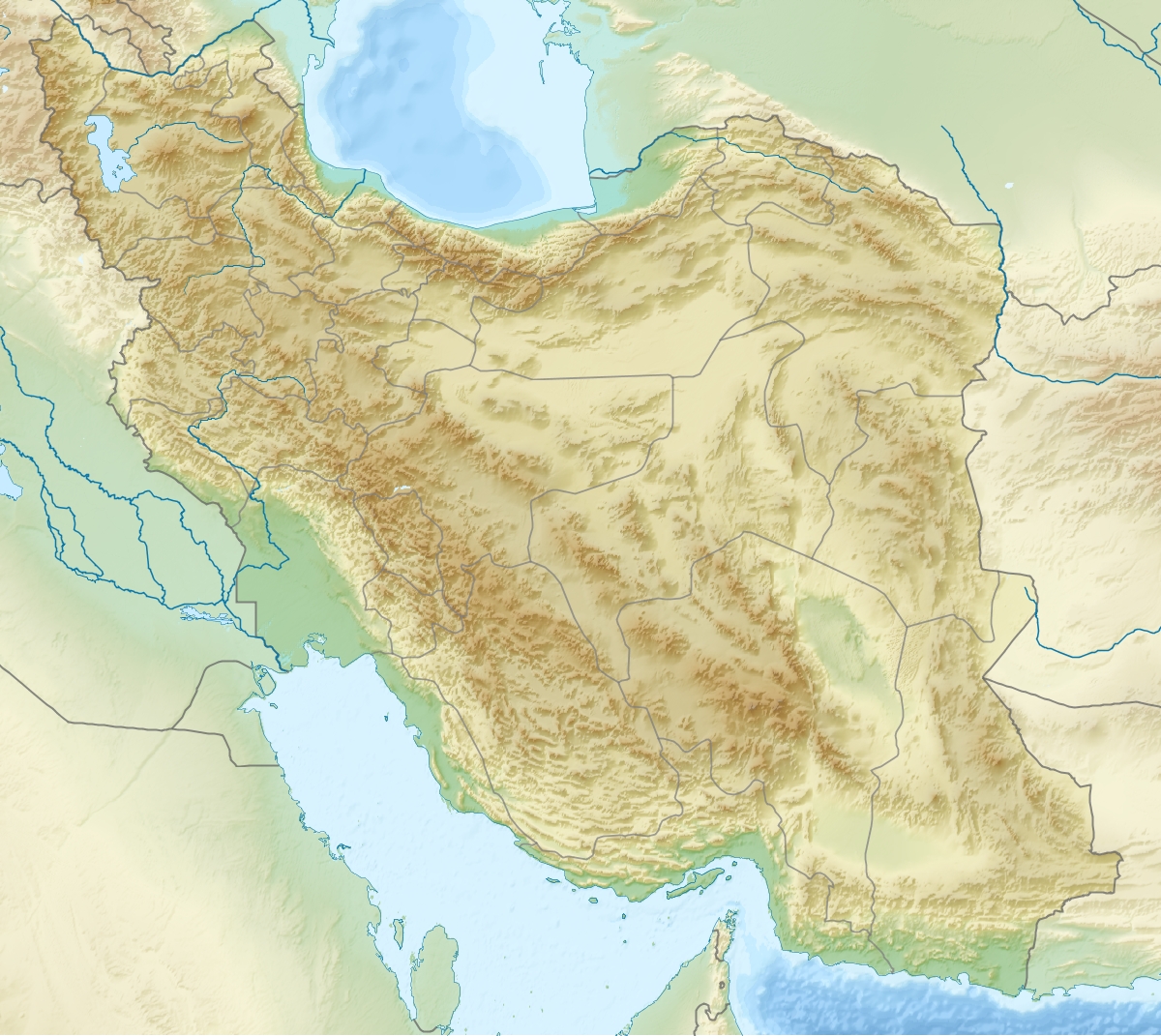
Iran shares land borders with seven countries — Iraq, Turkey, Armenia, Azerbaijan, Turkmenistan, Afghanistan, and Pakistan — and has a Caspian Sea coastline facing Russia, Kazakhstan, and Turkmenistan, three states with their own economic reasons to maintain Iranian trade routes. Russia, which has deepened military ties with Tehran throughout the conflict, has clear incentives to keep northern transport corridors open, according to Iran International on November 8. Kazakhstan and Turkmenistan have economic relationships with Iran that predate the current war and would survive it — both are transit states along corridors that have already absorbed higher freight volumes since the naval blockade tightened.
IRGC spokesman Brigadier General Hossein Mohebbi dismissed Iron Gate the same day it was announced, calling it “merely wordplay” and saying the Americans “cannot achieve their objectives of imposing severe economic pressure,” according to Middle East Eye citing Fars News via Reuters on November 8. He noted that Washington had predicted Iran would suffer economic collapse within two weeks of the naval blockade — a prediction that, roughly four months later, has not materialised — and said Tehran had prepared for sustained economic pressure and maintained close ties with neighbouring countries.
“The Iron Gate plan is merely wordplay. The Americans cannot achieve their objectives of imposing severe economic pressure.”
— Brig. Gen. Hossein Mohebbi, IRGC spokesman, November 8, 2026
Mehr News Agency, the semi-official Iranian outlet, went further, arguing that Iron Gate “aims to compensate for the limitations of military tools” and “faces the same obstacle as earlier maximum-pressure policies” — the gap between exerting pressure and converting it into political concessions. The outlet observed that 20 personnel in a Florida office cannot physically control seven international borders and a sea coast, a point that sounds like propaganda but also happens to be a fair description of the logistical challenge. Whether Iron Gate’s actual function is intelligence coordination — using signals data, financial tracking, and partner-nation cooperation to identify smuggling networks rather than physically patrolling borders — is a question CENTCOM’s public statements have not addressed.
Saudi Arabia’s Revenue Dilemma
Brent crude closed at approximately $98.32 on November 7, down more than 12.5 percent over the trading week on hopes of a diplomatic breakthrough, according to Trading Economics. But the market’s optimism may be misplaced. Rapidan Energy Group’s Bob McNally projects crude above $100 a barrel if fighting resumes, and Rapidan put the probability of renewed hostilities at 80 percent, according to CNBC on November 7. RBC’s Helima Croft cited “deepening escalation concerns in the Gulf” running in direct contrast to the market’s pricing of a deal that does not yet exist.
For Saudi Arabia, the arithmetic is uncomfortable whichever direction the price moves. The IMF puts the kingdom’s fiscal breakeven oil price at approximately $86.60 per barrel, but Bloomberg Economics calculates it closer to $94 when Public Investment Fund spending is included. Riyadh revised its 2026 budget deficit upward to 245 billion riyals from a budgeted 165 billion, according to Reuters via Zawya on September 30 — a gap of 80 billion riyals that reflects both falling oil revenue and the mounting cost of a conflict that was not in any forecast. The war’s disruption of both the Strait of Hormuz and the East-West pipeline has forced difficult routing decisions on every barrel Saudi Arabia produces.
The Khor Mor strike adds a variable that the oil market has not yet priced. If Iran-backed groups are prepared to target energy infrastructure in Iraq’s Kurdistan Region — a facility operated by a UAE company, feeding an Iraqi grid — the implied threat extends to energy assets across the Gulf that depend on stable overland supply chains. Saudi crude exports through the Strait of Hormuz totalled approximately 5.5 million barrels per day before the war, representing about 38 percent of total Hormuz crude flows, according to 2024 EIA data. That pre-war baseline has become largely academic since the IRGC declared the strait fully closed on October 26.
What Happens to the Qatar 48-Hour Plan?
Iran sent a nuclear proposal to the United States via Qatar on Thursday, November 6, according to Fox News. Iranian Foreign Minister Abbas Araghchi said that mediation had “temporarily stalled” after the midterm results, and that Iran was waiting for mediators to resume, Fox News reported on November 8. Under the reported 48-hour framework — details of which come from secondary sources and should be understood as the broadly reported outline rather than confirmed terms — Iran would reopen the Strait of Hormuz on day two in exchange for a US naval blockade lift and the release of a portion of frozen assets, while the United States would insist on IAEA access to bombed nuclear facilities.
Qatar’s prime minister said there had been “significant progress” and that both sides were reviewing proposals, according to the Jerusalem Post on November 7 — though “reviewing” and “agreeing” are separated by a distance that months of shuttle diplomacy have failed to close. The original seven-day roadmap that Araghchi submitted via Qatar on September 25, which included the unfreezing of approximately $12 billion in Iranian assets, was rejected by the White House, according to the Wall Street Journal. Trump told CNBC on November 8 that further strikes on Iran were “highly unlikely” if there is progress on Tehran’s nuclear programme and reopening of Hormuz. He added: “You’ll know soon enough.”
Iron Gate complicates the diplomatic track in both directions. Tehran’s negotiating position depends on demonstrating that American pressure cannot break Iran’s economy — a claim that becomes harder to sustain if the land blockade gains traction, and easier to sustain if it doesn’t. Washington’s leverage depends on making Tehran believe the economic vise will only tighten, but the task force’s modest scale — 20 people, no treaty obligations from transit states, no enforcement mechanism at the Turkmenistan or Pakistani borders — invites the question of whether the escalation is real or performative. Araghchi offered the other side of the equation: he warned that Iranian forces would “rain down hell” if Washington chooses war over the diplomatic proposal, according to Fox News on November 8.
The IRGC’s Counter-Move: A Lifted Missile Cap
The same 24-hour window that produced Iron Gate also produced one of the IRGC’s most explicit escalation signals. Brigadier General Hossein Mohebbi announced the removal of a self-imposed 2,000-kilometre — approximately 1,240-mile — ballistic missile range limit, saying: “That restriction has been lifted for us,” according to AP via Fox News on November 8. Iran maintained the cap voluntarily for years as a diplomatic gesture. It meant that Iranian ballistic missiles could not reach targets beyond the Middle East and parts of southern Europe. Lifting it places US bases in Diego Garcia and potentially parts of eastern Europe within stated Iranian range, though whether the IRGC possesses the tested hardware to exploit the new ceiling remains an open question. Mohebbi added that Iran was developing new weapons that would “astonish the entire world” if a third wave of confrontation erupts, and warned that Iran’s next strikes would leave adversaries “crippled for years.”
The timing pairs an American economic escalation with an Iranian military capability expansion — Washington tightening the financial siege while Tehran signals that its reach has grown longer. The United States has not struck Iran’s nuclear facilities beyond the initial campaign, and Iran has not directly attacked American personnel or warships — a set of boundaries both sides appear to be maintaining even as the pressure mounts. Mohebbi’s announcement, framed as a response to “threats,” shifts the deterrence equation by placing targets that were previously out of stated range within it.
Iran’s supreme leader, Mojtaba Khamenei, offered his own framing from social media, stating that “the process of the U.S.’s collapse has accelerated,” according to CNBC on November 7. The remark — aimed squarely at a domestic audience navigating the economic pain of the blockade — served the same function as Trump’s “history’s greatest Naval Blockade,” which was aimed at an American audience sceptical of a war with no clear end date.
What Does a Democratic Congress Mean for the Iran War?
Democrats won both chambers of Congress in the November 3 midterm elections, and the 120th Congress convenes on January 3, 2027, according to CNBC. The incoming majority has signalled its intention to bring a war powers resolution to a vote, challenging Trump’s authority to conduct military operations against Iran without explicit congressional authorisation. Trump retains veto authority, and no two-thirds override majority appears likely in either chamber. The political terrain shifts anyway: every floor vote on war powers forces Republican members to defend an open-ended Iran conflict at a moment when the exit strategy remains undefined.
The pressure point is more immediate than January. Government funding expires on December 11, and any war supplemental request would need to pass through a lame-duck Congress in which Democrats hold the leverage of their incoming majority. RBC’s Helima Croft flagged this expiration as a constraint on the administration’s ability to fund expanded operations — including Iron Gate — without concessions on war-powers oversight, according to CNBC on November 7. The proposed $24.3 billion sale of 48 F-35A fighters to Saudi Arabia, notified to Congress on September 17 according to The Aviationist, now faces Democratic committee chairs who are historically more sceptical of Gulf arms deals. They are more inclined to attach conditions on human-rights oversight and end-use monitoring — terms Riyadh has resisted in past negotiations.
For Riyadh, the congressional calendar introduces a variable that Gulf diplomacy cannot influence — the possibility that the American political system will constrain the military posture that Saudi Arabia’s defence architecture depends on. The December 11 funding deadline arrives 23 days before the new Congress is seated.
The Map After Iron Gate
On Saturday morning in Sulaimani governorate, the Kurdish power grid was still running close to two-thirds down from the previous night’s drone strike — a single attack that nobody has formally claimed, aimed at a facility operated by a UAE company, supplying power to an Iraqi region that had nothing to do with the original US-Iran confrontation. In Tampa, 20 people were beginning their work on a problem that the US Navy, with carrier groups and interdiction teams deployed across the Persian Gulf and the Arabian Sea, has spent four months trying to solve from the water.
The Bazargan truck queue had not cleared, the Turkmenistan rail line was still running above its normal volume, and the Caspian transponders near Bandar Anzali were still dark. Iran’s economy has not collapsed, the Strait of Hormuz has not reopened, and the conflict’s newest front — stretching across the full length of the Iraq-Iran border and into the gas fields of Kurdistan — was less than 48 hours old.
Frequently Asked Questions
What legal authority does Task Force Iron Gate operate under?
No public source has identified the specific presidential order or statutory authority that authorises the task force. The US Treasury’s Operation Economic Outcast, which targets financial transactions supporting Iran, appears to provide the broader operational framework into which Iron Gate fits, according to the Maritime Executive on November 8. The distinction between a military task force conducting physical interdiction and a sanctions-enforcement operation using financial intelligence — and the different legal authorities each requires — has not been clarified by CENTCOM or the White House.
Has the Khor Mor gas field been attacked before?
Yes. The facility has been the target of drone and rocket attacks in August 2023, February 2025, and November 2025, according to the Jerusalem Post on November 9. The Kurdistan Regional Government has repeatedly requested that Baghdad provide dedicated drone defence systems for the site, requests that have not been fully met. The October 2025 KM250 expansion — which raised design capacity to 750 million standard cubic feet per day — made Khor Mor more productive and potentially a higher-value target than in earlier attacks.
How much crude does Saudi Arabia export through the Strait of Hormuz?
Saudi Arabia’s main alternative to the Strait of Hormuz is the East-West pipeline, which carries approximately 5 million barrels per day of exportable crude capacity, according to 2023 EIA data. The pipeline was temporarily suspended in September 2026 as a precaution and requires weeks to reach full throughput after restarting. The Hormuz route carried approximately 5.5 million barrels per day before the war — roughly 38 percent of total Hormuz crude flows per 2024 EIA data — a volume now largely disrupted since the IRGC declared the strait closed in October 2026.
The House of Saud Daily Briefing
Saudi Arabia's news in 3 minutes, every morning. Free. See today's issue