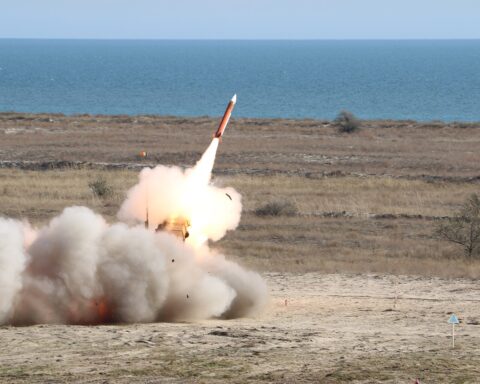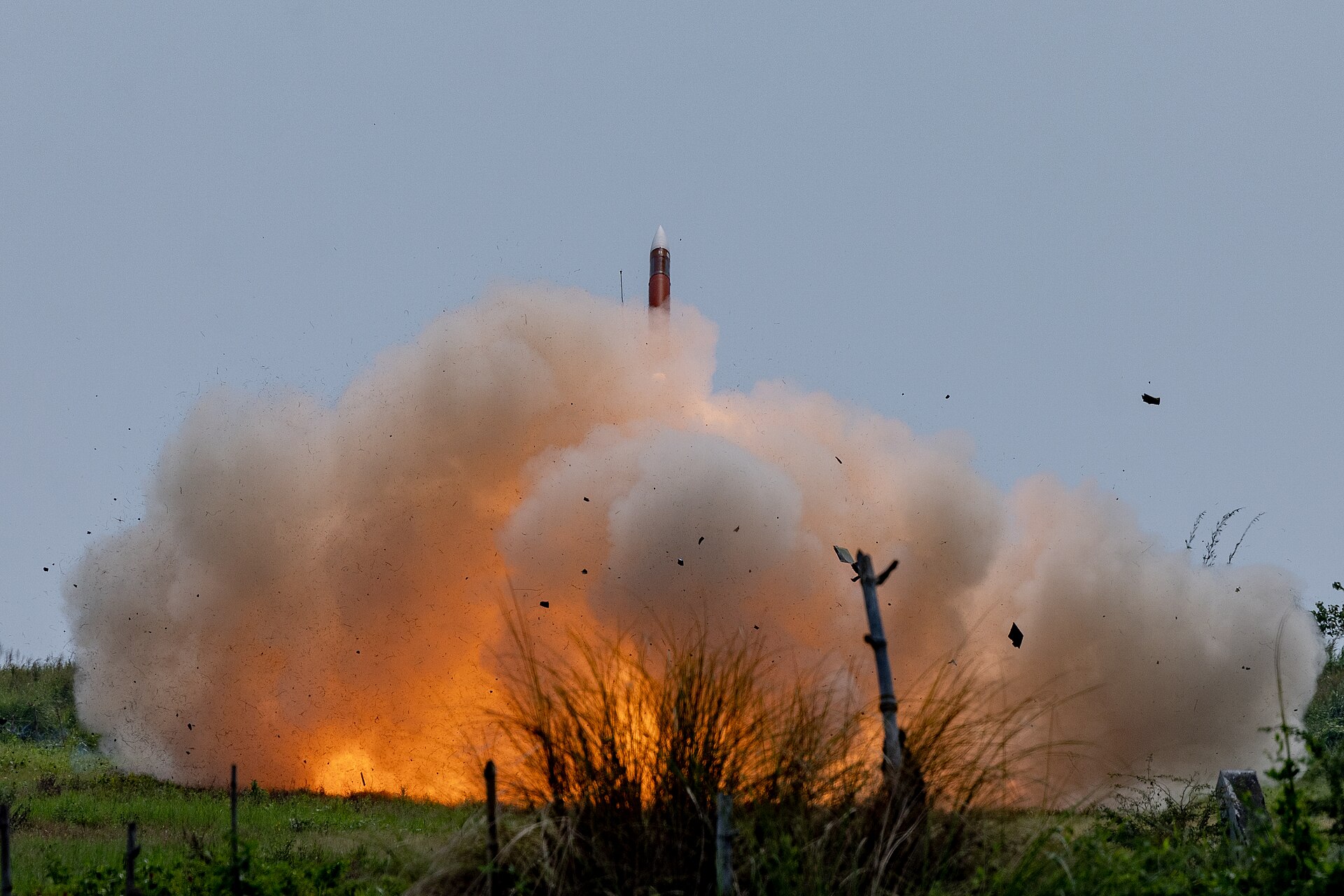

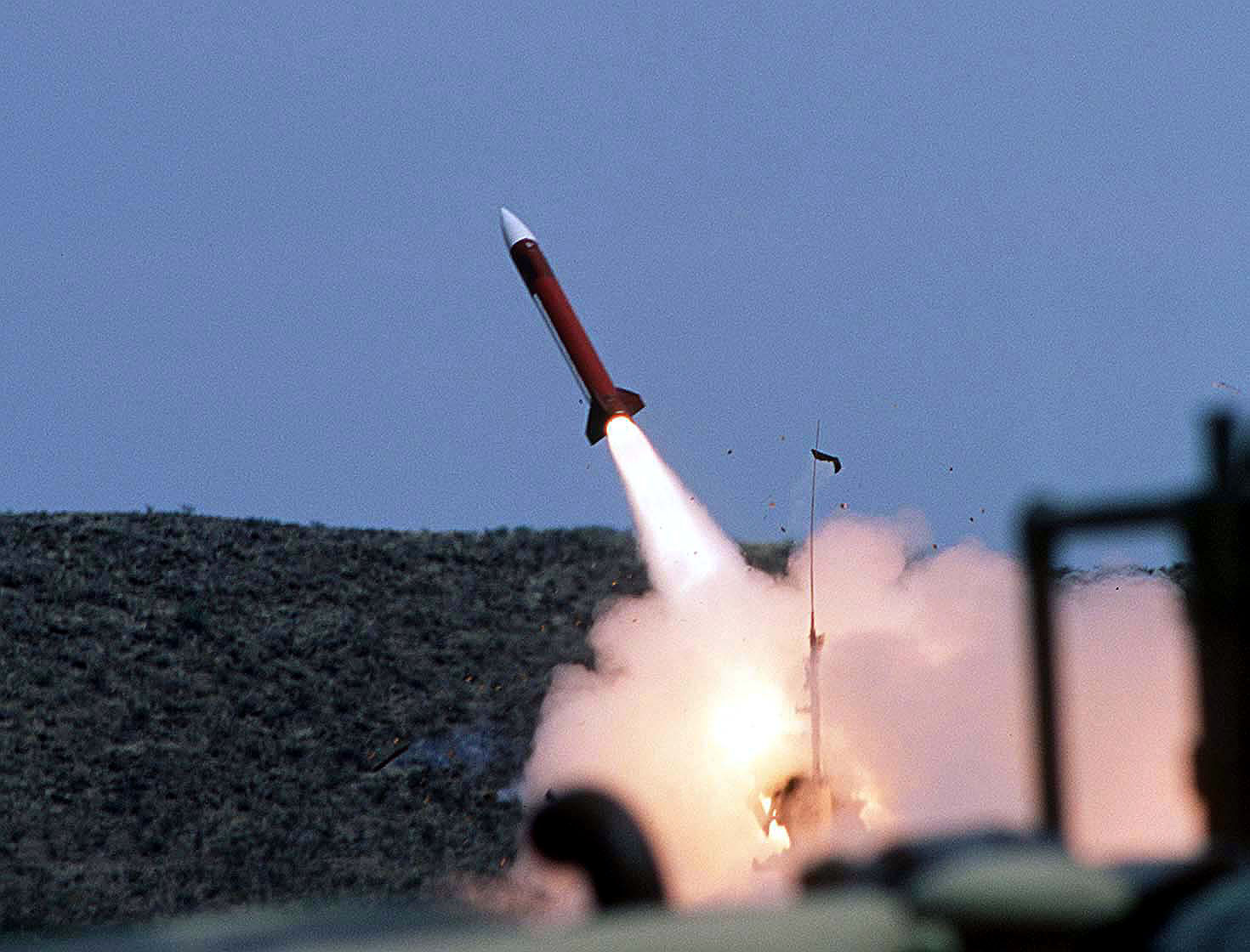
RIYADH — Saudi-led coalition air defences intercepted two ballistic missiles fired by the Houthis at Riyadh on Sunday, coalition spokesman Maj. Gen. Turki al-Maliki said, but falling debris struck Aramco’s administrative tower in the King Abdullah Financial District hard enough to shatter glass across what witnesses described as multiple floors. The Saudi Energy Ministry, via the Saudi Press Agency, confirmed that “no injuries or deaths” resulted from the incident and described the damage as the consequence of an “attempted attack, resulting in limited damage from debris” — a framing that stood in sharp contrast to Houthi military spokesman Yahya Saree’s claim of six separate operations hitting targets across the kingdom.
What unfolded in the early hours of November 8 was not just a missile engagement but an information event, with two narratives diverging before the dust had settled. Iran’s Mehr News Agency ran its account under the headline “Several explosions reportedly heard in Saudi capital Riyadh on Sunday,” hedging every assertion with “reportedly” and naming no sources, while Saree listed targets spread across Saudi Arabia including oil facilities, an airport, and troop positions in three provinces — none of which any independent source confirmed were struck. The only physical evidence that a projectile of any kind reached its approximate target area was the damaged facade at KAFD, and even that is attributed by Saudi officials to interception debris rather than a direct hit.
Table of Contents
What Did the Coalition Say It Intercepted?
Al-Maliki’s statement was direct: coalition “air defences intercepted and destroyed two ballistic missiles launched by the Houthi terrorist militia towards Riyadh,” according to The National News. The phrasing followed the template Saudi officials have used throughout this war — “destroyed” placed alongside “intercepted” to leave no room for the suggestion that any warhead reached its intended destination. Saudi Civil Defence had issued a danger alert for Riyadh shortly before residents heard multiple loud booms, then posted an all-clear within minutes telling citizens “the danger has passed in Riyadh City” and instructing them to follow Civil Defence guidance and “avoid gathering and filming,” according to Middle East Eye.
The House of Saud Daily Briefing
Saudi Arabia's news in 3 minutes, every morning. Free. See today's issue
But the count of what was actually fired and intercepted shifted depending on which outlet carried the story. Arab News reported that the coalition also intercepted two cruise missiles aimed at Riyadh and the southern region, along with a drone. Kuwait Times, citing the Kuwaiti state news agency KUNA, said three missiles in total were intercepted — two ballistic targeting Riyadh and one ballistic targeting the Eastern Province. A Reuters witness confirmed hearing “several loud explosions” in the capital, a description consistent with multiple interceptions but offering no independent count of projectiles, according to TASS.
The discrepancy matters because the total number of projectiles fired at the capital on a given day is a basic metric of the threat, and on November 8 no single official source provided a definitive figure that other outlets corroborated. Al-Maliki’s “two ballistic missiles” remains the only count directly attached to a named coalition spokesman — everything else was sourced to unnamed officials or news agencies paraphrasing coalition statements, which leaves the question of how many projectiles the Houthis actually fired at Riyadh without a settled answer.
What Happened to the Aramco Tower in KAFD?
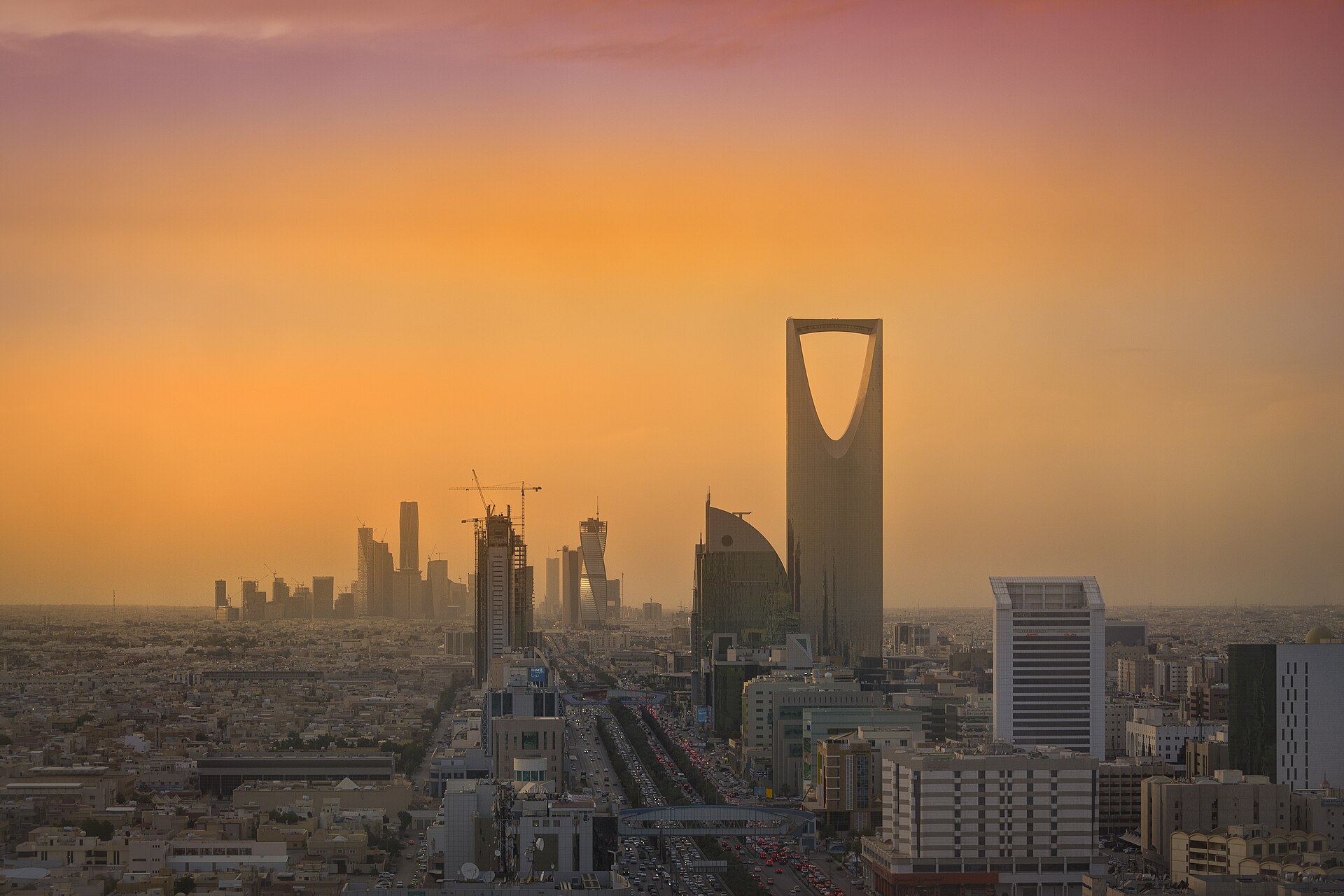
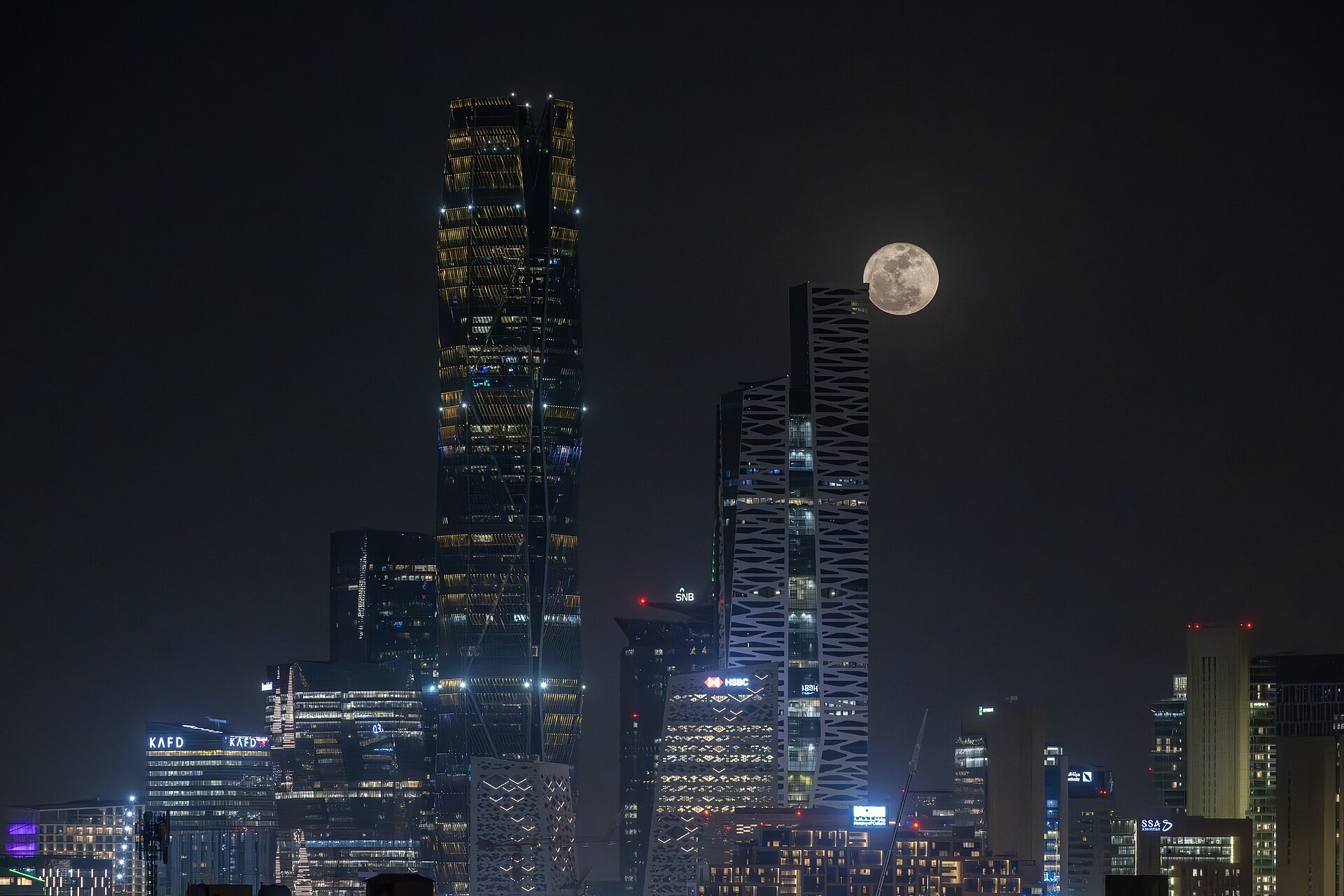
The damage to the Aramco tower in King Abdullah Financial District is the one piece of physical evidence that survived both sides’ competing narratives intact. Multiple witnesses told AFP that the building had sustained visible damage, and the agency’s dispatch, carried by France 24, included a direct quote from one witness at the scene.
“Aramco tower in KAFD has been targeted, that’s the sure thing.”
— AFP witness in Riyadh, France 24, November 8, 2026
Two additional witnesses independently confirmed the damage to AFP, with one describing how “multiple floors appeared damaged” with broken glass and damage to part of the facade, according to France 24. The Saudi Energy Ministry, in a statement carried by SPA and reported by Bloomberg, chose its words with care: the Aramco administrative building had been subject to an “attempted attack, resulting in limited damage from debris,” with “no injuries or deaths caused by the incident.” That single word — “debris” — is doing substantial work in the Saudi official account, placing the damage firmly in the category of interception byproduct rather than Houthi success, and no Saudi government source confirmed that any Houthi projectile made direct impact on the building.
The distinction is more than semantic in a war where both sides are fighting over the narrative as fiercely as they contest physical ground. If the KAFD damage came from a falling interceptor or missile fragment after a successful shootdown, the coalition’s air defence system functioned as advertised — the building took collateral damage, which is an acknowledged risk of urban interceptions. If a Houthi projectile or part of one evaded the defence net and struck the tower directly, the coalition’s intercept narrative breaks down. Saree’s six-operation claim would then carry credibility it cannot otherwise draw from independent evidence. On the available evidence, neither version can be definitively confirmed by independent sources.
What the Houthis Claimed
Saree announced what he described as “six operations using ballistic and cruise missiles and drones against targets in Saudi Arabia and Yemen,” according to The National and Tribune India, citing the news agency ANI. The target list was expansive: King Khalid International Airport, Aramco oil storage tanks and a distillation tower in Riyadh, Aramco facilities at Khurais, pumping station No. 8 in Dawadmi, and Saudi troop positions in Najran, Al-Jawf and Ma’rib. Saree also claimed “numerous deaths and injuries” among Saudi forces, a claim that no independent source, relief agency, or Saudi military statement has corroborated.
The gap between what Saree claimed and what independent evidence supports is, by now, a recurring feature of Houthi military communications in this conflict. The KAFD building damage is the only confirmed physical consequence of the November 8 attacks, and Saudi authorities attribute even that to interception debris. No independent source confirmed damage to KKIA, to Aramco facilities at Khurais, to the Dawadmi pumping station, or to any Saudi military position on this date. The pattern is consistent with Saree’s claims the previous day, when he listed six operations including KKIA and Aramco targets that also went unconfirmed by any source outside the Houthi information ecosystem.
That does not mean every claim is fabricated — the fog of war is thick enough that some projectiles may have reached secondary targets without generating the kind of visible damage or independent reporting that would confirm it, particularly at military sites in remote areas where journalists have no access. But Saree’s statements function as much as strategic messaging as military communication, projecting capability to a domestic audience and to Tehran regardless of whether every named target was actually struck, and the absence of any independent verification for five of his six claimed target sets on November 8 speaks for itself.
How Did Iranian State Media Frame the Attack?
Mehr News Agency, Iran’s government-controlled English-language outlet, published its account on November 8 under the headline “Several explosions reportedly heard in Saudi capital Riyadh on Sunday.” The piece used “reportedly” and “reports indicate” throughout, named no sources, and framed the events as “following early-morning attacks by Yemeni armed forces on strategic targets within Saudi Arabia.” It also asserted that a fire had broken out at Aramco’s Abqaiq facility — a claim that no independent outlet, satellite imagery service, or Saudi official has confirmed.
The hedging is itself revealing, because Mehr News Agency does not ordinarily hedge when it has confidence in its information. Iranian state media outlets routinely present IRGC operational claims as established fact and amplify Houthi military statements without caveat, so the decision to lead with “reportedly” suggests either that Mehr’s editors were working from social media rather than from Houthi or IRGC sources directly, or that they recognised the full scope of Saree’s claims could not be independently supported and chose to insulate the agency’s credibility from a narrative that might not hold. Either reading tells the observer as much about the information chain as it does about the explosions themselves.
The broader information environment on November 8 was already saturated with competing claims from multiple fronts — US forces had disabled the M/V Huda near Hormuz hours earlier, the IRGC had reported two tankers hitting mines, and US strikes on Iranian targets near Qeshm Island were continuing. The Riyadh explosions were one thread in a day that produced more claims than any newsroom could independently verify in real time, and Mehr’s hedged language may simply reflect that reality rather than any deliberate editorial choice.
Attacks on Riyadh Follow November 6 and 7 Incidents
The November 8 intercepts followed interceptions on the two preceding days; on November 6, Saudi air defences destroyed a drone in the Riyadh region, according to Arab News, and on November 7, the coalition intercepted a Houthi cruise missile over Riyadh — the latest in a series that has made the Civil Defence alert-and-all-clear cycle a feature of daily life in the capital.
The established rhythm is now familiar to Riyadh residents: Civil Defence issues a warning, residents hear booms — sometimes the deep rumble of distant interceptions, sometimes sharp enough to rattle windows — the coalition announces a successful intercept, and Civil Defence posts an all-clear. Saudi Arabia’s education ministry had only recently announced the return of in-person schooling in Riyadh after weeks of remote learning, according to The National, a decision that signalled institutional confidence in the air defence net even as the attacks continued at daily tempo. Whether parents share that confidence after successive days of overhead detonations is a question the ministry’s announcement did not address.
The last confirmed instance of interception debris causing injuries in Riyadh was October 13 to 14, when coalition intercepts of two Houthi cruise missiles sent fragments into residential areas, injuring 4 people and damaging 15 homes, according to SPA and Al Arabiya. The November 8 KAFD damage placed the air defence system’s debris footprint inside Riyadh’s primary commercial and financial district — a location that carries weight far beyond the physical cost of broken glass, given that KAFD is one of the crown prince’s showcase developments and home to the Saudi Exchange. Aramco’s decision to maintain an administrative tower there put a marquee name inside a building that sits within interception-debris range of the capital’s air defence envelope, and November 8 demonstrated what that proximity costs when the system works as designed.
Background
The Houthi campaign against Riyadh escalated sharply in early October after a series of strikes on King Khalid International Airport killing passengers and staff between October 6 and 11, according to Al Jazeera and GACA. The deadliest single incident, on October 10, killed 13 and wounded 309, according to GACA as reported by Al Jazeera. Those attacks prompted Saudi Arabia to launch Operation Dawn of Yemen, a coalition offensive in which the coalition said 100 jets flew, according to Al Arabiya, and led to the activation of collective deterrence measures under the Makkah Joint Defence Agreement, which Prince Khalid bin Salman announced on October 5, according to Al Jazeera.
Since then, the Houthis have sustained a tempo of roughly daily missile, cruise missile, or drone launches at Saudi targets including Riyadh, KKIA, Aramco facilities, and southern cities, while the coalition has reported intercepting the vast majority of these projectiles. The attacks take place against the broader backdrop of the US-Iran confrontation over the Strait of Hormuz, where the IRGC has laid mines and the US Navy continues enforcement operations. Qatar’s 48-hour de-escalation plan, announced on November 6, had produced no ceasefire or visible pause in operations by the time ballistic missiles were fired at Riyadh on Sunday morning.
Frequently Asked Questions
Was King Khalid International Airport damaged on November 8?
Houthi spokesman Yahya Saree claimed KKIA was among his targets, but no independent source — including Saudi authorities, airlines, or aviation agencies — confirmed any damage to the airport on November 8. KKIA had previously suffered direct strikes in October that killed passengers and staff, shut the facility for days, and prompted the suspension of most commercial operations. Saudi Arabia’s General Authority of Civil Aviation had not issued a new closure or restriction related to the November 8 attacks at the time of reporting, suggesting airport operations were not disrupted beyond the standard Civil Defence alert window. Travellers should consult their airline and government advisories for the latest on Saudi Arabia’s current travel status.
What is KAFD and why does the Aramco tower damage matter?
King Abdullah Financial District is a planned financial complex in northern Riyadh designed as the kingdom’s financial hub and a centrepiece of Vision 2030 economic diversification. It houses the Saudi Exchange (Tadawul), the Capital Market Authority, and major private-sector offices. Aramco maintains an administrative tower there separate from its operational headquarters in Dhahran. Debris damage to a KAFD building carries disproportionate symbolic weight because the district was built to project Saudi Arabia’s image as a modern financial capital — visible damage to its skyline, even from interception debris, undermines that image in ways that a hit to an industrial facility in the Eastern Province would not.
How many Houthi missiles has the coalition intercepted over Riyadh since October?
No single official source has published a cumulative count of Houthi projectiles intercepted over Riyadh since the escalation began. Coalition interception announcements are released per incident rather than as running totals, and the counts per incident vary between outlets — the November 8 attack alone produced figures ranging from two ballistic missiles, per al-Maliki’s statement, to as many as five projectiles including cruise missiles and a drone, per Arab News. Individual intercept statements are available in the coalition’s press releases and in the reporting of outlets including Arab News, The National, and AFP, but no aggregated tally has been published by any government or international body.
Did the US play any role in the November 8 interceptions?
Neither the coalition nor the US military disclosed whether American personnel were involved in the specific November 8 intercepts. The US has deployed over 100 military advisers to Saudi Arabia under a joint command for intelligence support, according to CNN, and Saudi air defences rely on American-supplied Patriot systems for ballistic missile interception. Those systems require American maintenance, software updates, and spare parts — a supply chain that gives Washington a structural role in the kingdom’s air defence architecture even when US military personnel are not directly involved in a given engagement. The proposed $24.3 billion sale of 48 F-35A fighters, announced in September, according to The Aviationist, would deepen that dependency further.
The House of Saud Daily Briefing
Saudi Arabia's news in 3 minutes, every morning. Free. See today's issue